Willie McFarlane: Coach

Willie McFarlane’s career as a professional sprinter is   at this link
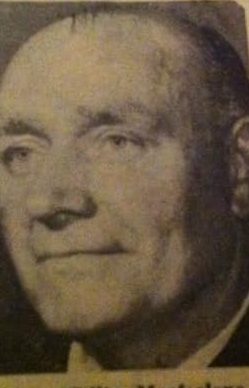
 

Willie McFarlane as a professional runner was a contemporary of another athlete who would go on to become a coaching stalwart of amateur athletes – Allan Scally was a distance runner who won Powderhall twice and went on to work with Shettleston Harriers.   Both men ran during the 1930’s and, although they may have done some coaching before or during the war, they were known best for what they did after after the war was over.   Willie McFarlane was always ‘Willie McFarlane of Glasgow’ and in Glasgow the main running tracks after the three football grounds of Hampden, Ibrox and Parkhead were Westerlands, the Glasgow University ground, and Scotstoun, the home of Victoria Park.   Willie, Victoria Park AAC and Scotstoun were a good fit.   

In discussions about how he trained his athletes, there is one thing that is always mentioned – they did plenty of starts, lots of starts.  After 30 yards or so it was “Aye, that’ll do!”   Most of his athletes were known as fast out of the blocks.   Willie Jack, Ronnie Whitelock and Mike Hildrey were all very quick off their marks.  The other aspect of his training that is noteworthy was that he used lots of massage.  That seemed to be more typical of professional athletes than of amateurs at that time.  It was to be several decades before massage became available to athletes at SAAA championships and although it was encouraged there were so few masseurs that it was generally only those who could make their own arrangements who were able to use their services.     Back to Willie and his training: Jimmy Christie in his article on Willie Jack’s training (link below) said 

“His training covered practically every distance stretching 150, 220. 300 and 330 yards. Dashes over 10.20. 30 to 60 yards but all the time concentrating on his start the most important aspect of any sprint.”

We are 10 years too late in investigating the matter but whatever he did, it worked.   The club records for the 100 yards and 100 metres are held by Mike Hildrey (9.6 in Dublin in 1961) and Willie Jack (10.5, London, 1954).   Incidentally, Jack’s 10.5 from 1954 would have ranked him number 3 in Scotland in 2019, Hildrey, pictured below, also has a 10,5 to his credit from 1961.
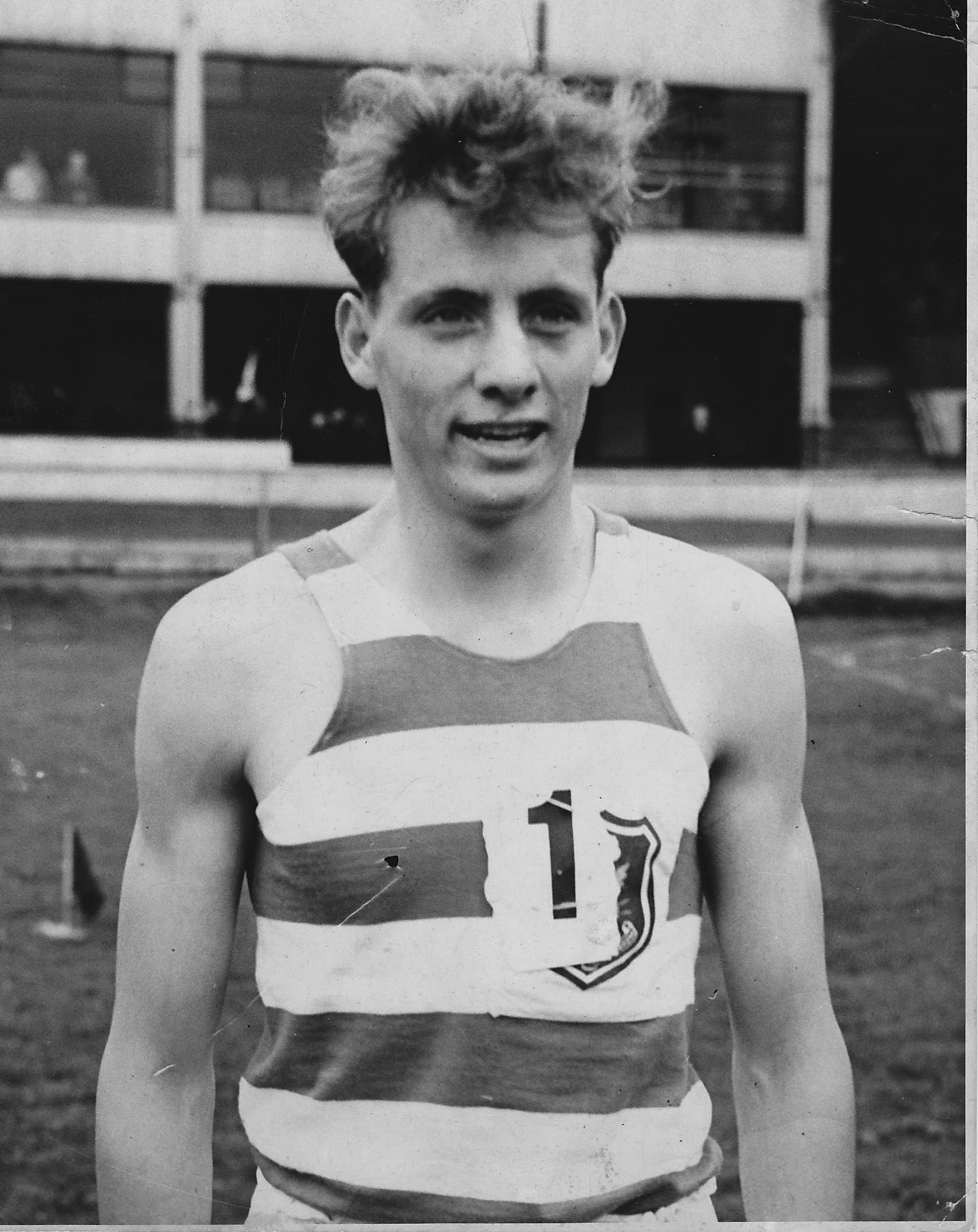
The question asked about any coach in Scotland is this:  “Aye, but who has he produced?”   Willie’s list covers the 1950s and the start of the 1960’s.   McFarlane’s sprinters dominated the scene.   Look at the statistics, there are a lot and you could while away some time working out the various permutations in any one year.

100y was won by Victoria Park runners in 1951, 1952, 1953 (all Willie Jack), 1955, 1956 (both Alan Dunbar), 1957, 1959 (both R Whitelock), 1960 (M Hildrey), 1962 (Whitelock again).  9 gold medals in 10 years.   

They had second places in 1950, 1953, 1954, 1956, 1959, 1960, 1961 and 1962 with bronze in 1953, 1954 and 1961.   In 1953 they had all first three places.

220y was won by the club men in 1946 (George McDonald), 1950, 1951, 1952, 1953 (all Willie Jack), 1960 and 1961 (Mike Hildrey).   There were second places in 1949, 1950 (G McDonald), 1954, 1955 (Robert Quinn), 1956 (Alan Dunbar), 1957 (R Quinn), and 1961 (A Dunbar), with third places in 1947, 1948 (G McDonald), 1953 (Ronnie Whitelock), 1955 (A Dunbar) and 1960 (Alistair Ballantyne).

The 4 x 110 relay was won by the club in 1949, 1951, 1952, 1953, 1954, 1955, 1956, 1957, 1958, 1959, 1961.   11 sets of gold medals in 13 years.   In 1955, the first three teams were all Victoria Park with the C team beating the B team for second place.   In 1956, the club’s B team won with the A team being third, split by Glasgow University and only half a second between the two VPAAC teams.   

Scottish 100 yards records were set on 20th May 1952 (Willie Jack, the previous record had stood since 1935), 22nd June 1957 (Ronnie Whitelock), 25th June 1960 (Mike Hildrey), 10th June 1961 (Hildrey), 19th August 1961 (Hildrey).

The Medley Relay (880y, 220y, 220y, 440y) was the other old established relay.   The Scots loved it.   The club’s record here was 1952, 1953, 1954, 1955, 1962.   Second in 1947, 1948, and 1956 plus third in 1958, 1959 and 1960.
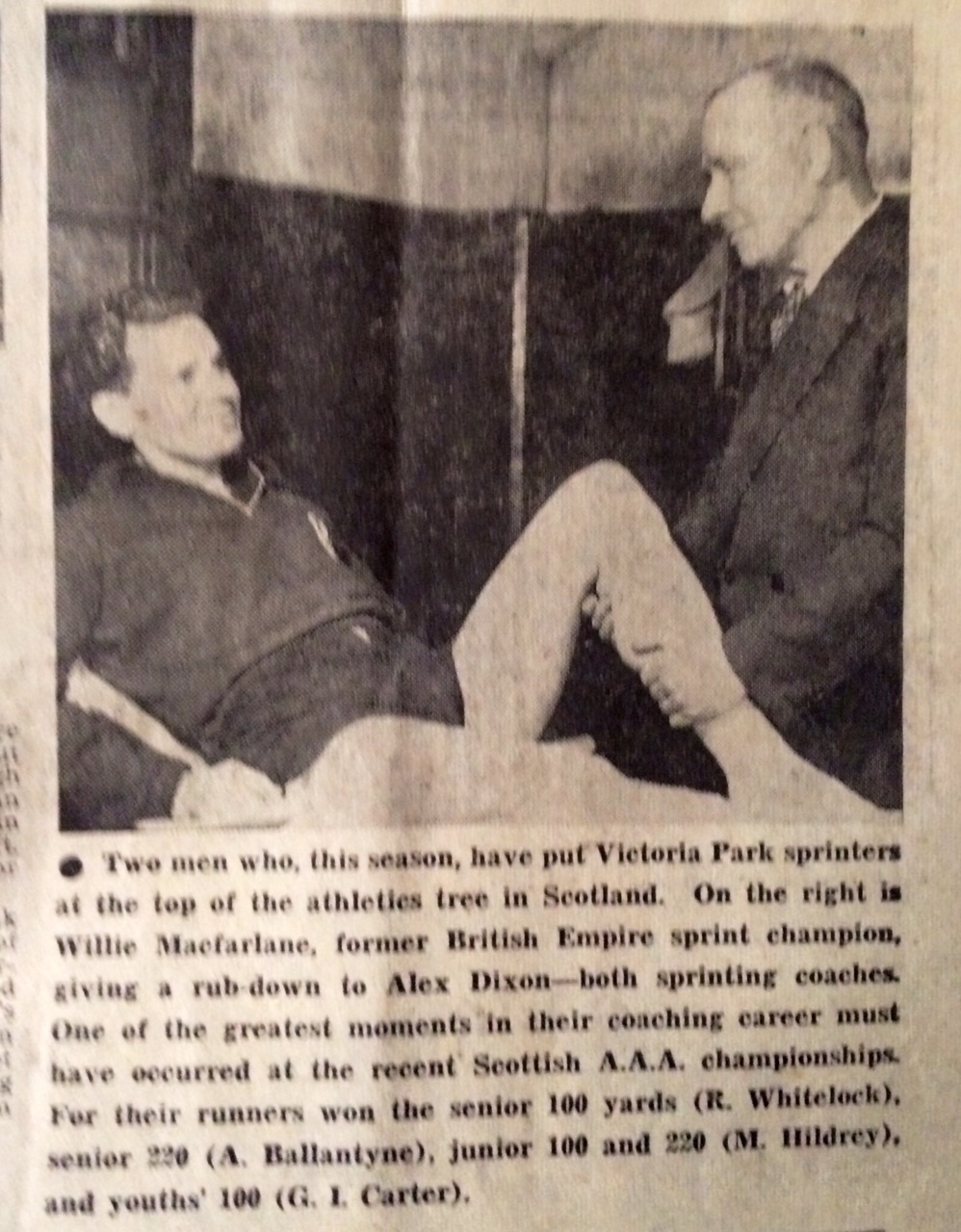
They really amazing statistics.   There was no doubt in anybody’s mind about McFarlane’s part in all this success.  In his centenary history of the SAAA, Keddie comments “The Victoria Park coach in those days was the great professional sprinter of the 30’s Willie McFarlane,”  and reference is made to him in ‘The Past Is A Foreign Country’, by Colin Shields and Arnold Black when talking about Willie Jack.   They say

“In the 50’s the hot bed of Scottish sprinting was centred in Glasgow where Victoria Park sprinters trained at Scotstoun Stadium.   A production line of sprinters, coached by former professional sprinter Willie McFarlane poured forth from Scotstoun to such a degree that they won the national 100 yards titles eight times and 220 yards titles six times during the decade. 
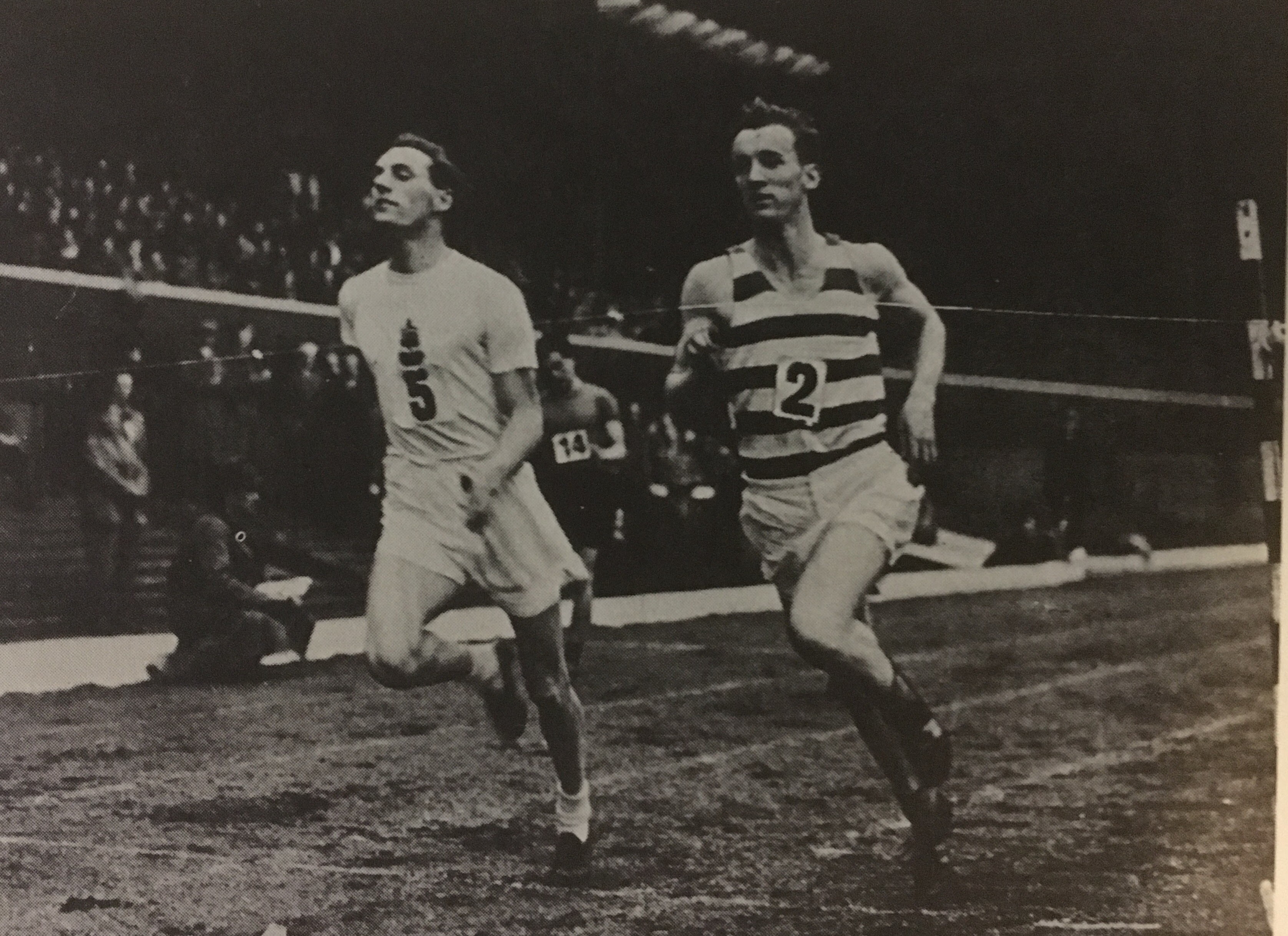
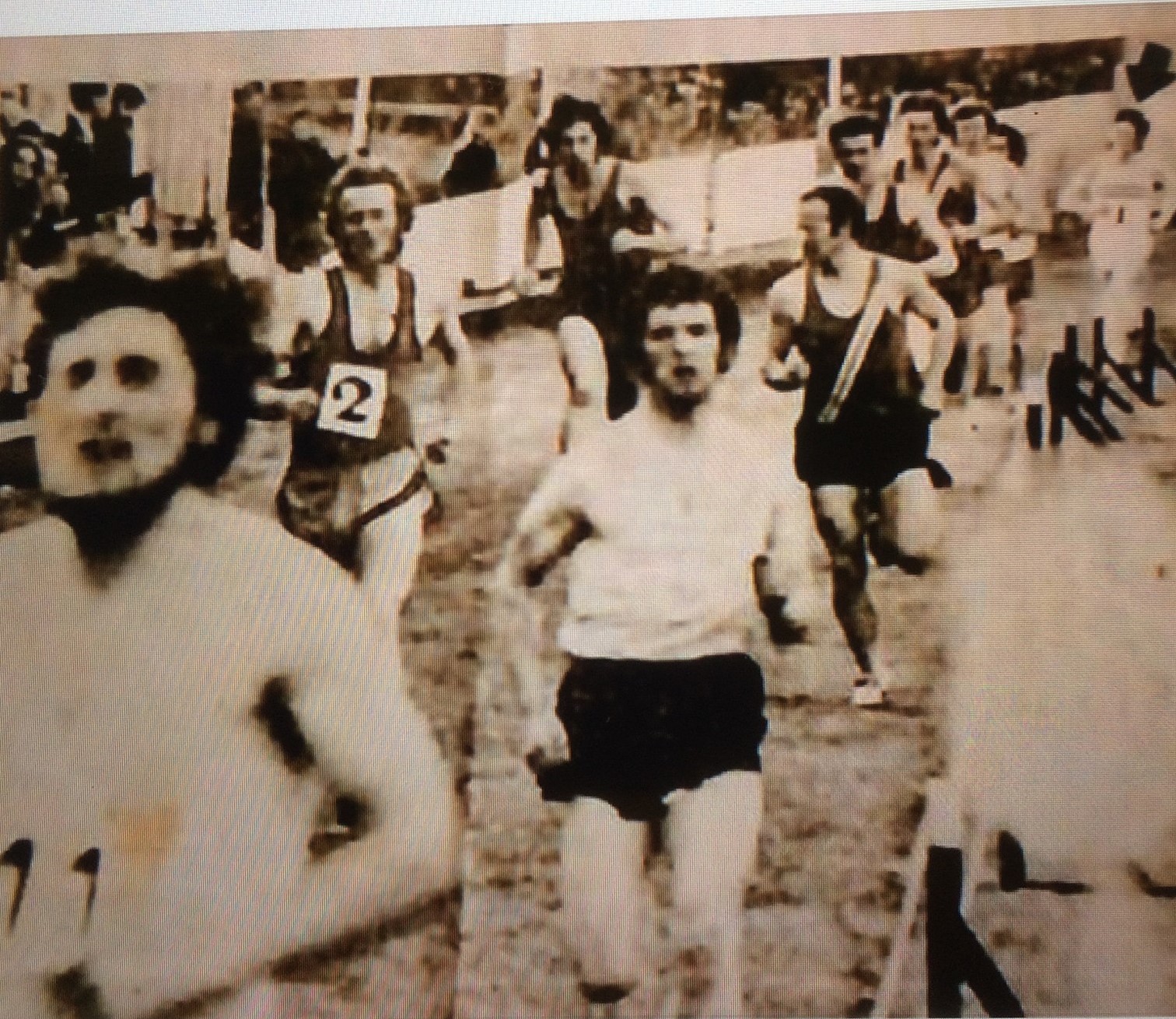
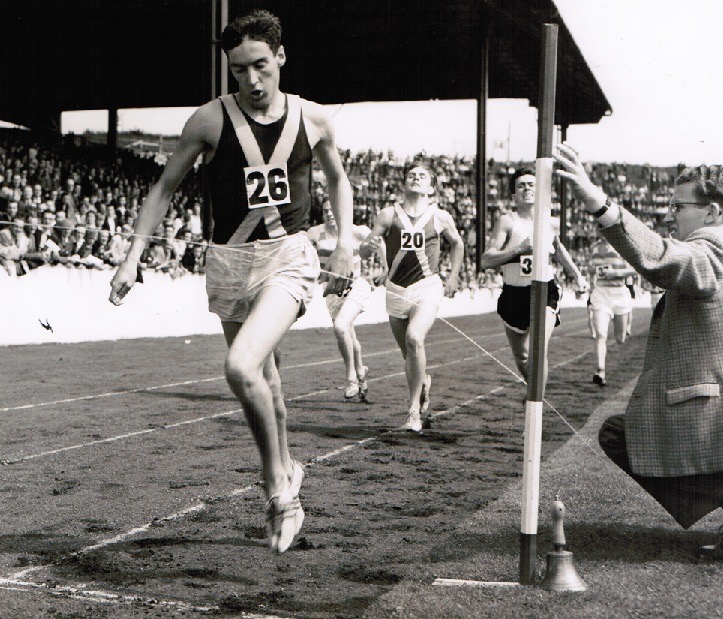
   Willie Jack, 2, in the blue and white of Victoria Park AAC

Willie Jack (20.12.1930 – 98.12.1938) 

There is complete coverage of Willie’s career in ‘The Past Is a Foreign Country’ by Arnold Black and Colin Shields.   It was a superb career and when it is realised that he was only 22 when he retired in 1953 it is quite amazing.   He won the Scottish championship double of 100 and 220 yards in three consecutive years 1951, 1952 and 1953, having won the Junior 220 yards in 1948.   In each of these years he qualified for the final of the AAA 220 yards but was selected for the Olympic Games of 1952 after running second to Macdonald Bailey at the White City in 10.5.  At the Olympics he ran 11.05 in his heat of the 100, 10.94 in the second round and 11.01 in the semi-final.   In the relay the team of Mac Bailey, Jack, Jack Gregory and Brian Shenton won their heat in 41.3, ran 41.34 in the semi-final and finished fourth and out of the medals in the final in 40.85.   He the  took part in the British team’s post Olympics tour of Europe.   He was McFarlane’s first really big star runner.   The performances below have the year, the event, the time, Scottish ranking that year.   

There is a very good and detailed profile of Willie Jack on pages 12 and 13 in the ‘Scots Athlete’ magazine for June 1955 at

http://salroadrunningandcrosscountrymedalists.co.uk/Archive/The%20Scots%20Athlete%20Volumes/Volume%209/SA%20Vol%209,10-11.pdf

Ronald H. Whitelock  (14.10.1932-7.12.2012) 

There is an obituary which is a good summary of Ronnie’s sporting career  at this link, but the bare statistics are as follows.   

1959 100y 9.8 1 ;

1960 100y 9.9 2

1961 100y 9.9/9.6w 3

1962 100y 9.9u/9.8w 3

CR: Sco: 1 100y ’59, 1 100y ’62, 2 100y ’60, 3 100y ’61.

Alan S. Dunbar (26.02.1934-1.07.2011)  

There is an excellent Scotsman obituary for Alan that covers his career as an athlete but also his wider life at this link but the vital statistics of his running career appear below.

1959 100y 9.92;  220y 22.5 11

1960 100y 10.0 4;  220y 22.3 7

CR: Sco: 2 100y ‘59; , 2 220y ’60.

Michael G. Hildrey (15.10.41) 

Described by Black and Shields as “Hildrey joined Victoria Park AAC and was coached by the great professional sprinter of the 1930’s, Willie McFarlane who produced such great sprinters as Willie Jack, Alan Dunbar and Ronnie Whitelock.”

There is more detailed information about Mike on the scotstats.net website at this link.   Mike ran in all the major championships other than the Olympics – SAAA, AAA, European and Empire Games

1959 100y 10.0/9.8w 4;   220y 22.1 5

1960 100y 9.8 1 ;  100m 10.7 1  200m 21.3 1

1961    100y 9.6 1;  100m 10.5 1; 200m 21.1 1;  440y 50.3r 

1962 100y 9.9/9.7w 3; 220y 21.2 1

1963 100y 9.9/9.8w 2; 220y 22.04

CR: Eur ‘62 200 (sf);   Com ’62 100y (qf),  220y (sf).   GB: 2 AAA220y ‘61, 3 AAA220y ’60.

CR (continued): Sco: 1 100y ‘60, 1 220y ‘60, 1 220y ‘61, 2 100y ’61.

And you can read about Bobby Quinn at  this  link .
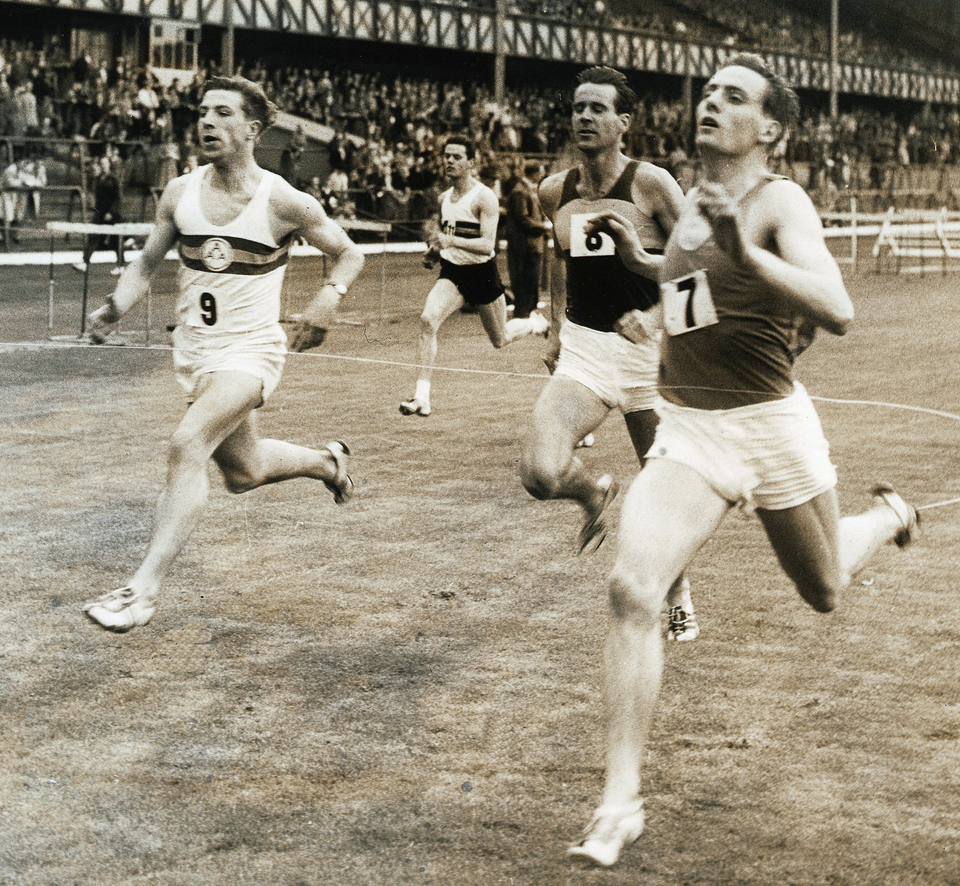
Mike Hildrey (7)

McFarlane was without doubt a very good coach indeed and it was unfortunate that he was not available for Scottish international duties because of his past professional involvement.  He would certainly have been involved in the present day.   Stuart Hogg, John Freebairn, Eric Simpson and Alastair Macfarlane , all former professionals, have all been involved with the various national teams and squads.   It is a pity, or maybe an injustice, that he is not better known today.

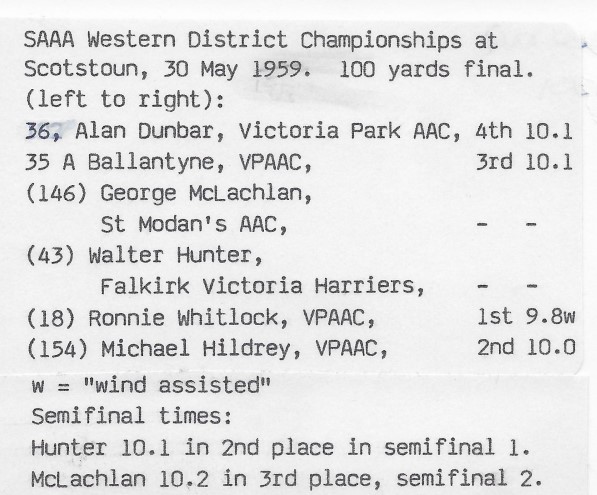
The picture is of four Victoria Park sprinters in the final of the West District 100 yards at Scotstoun 1959.   Ronnie Whitelock second from the right.

[Thanks go to Hugh Barrow and Arnold Black for assistance on this page, and to Graham McDonald for the superb picture above]
 

Obituary: Alan Dunbar

Obituary: Alan Dunbar, drama teacher, athlete and theatre director

Alan Dunbar, drama teacher, athlete and theatre director.

Born: 26 February, 1934, in Stranraer.

Died: 1 July, 2011, in Edinburgh, aged 77

ALAN Dunbar for ten years brought to the drama department at Queen Mary College (QMC) a drive and enthusiasm which is fondly remembered to this day. He had a passion for drama which he communicated to his students with an infectious energy.

Alan Sisson Dunbar was educated locally at Stranraer, and in 1952 began three years of study at Jordanhill College of Education. He also attended the Royal Scottish Academy of Music and Drama where his fellow students included Mary Marquis, Fulton Mackay, Andy Stewart and John Cairney. Dunbar was keen to pursue his interest in athletics so turned to teaching and in 1956 embarked on a seven-year stint as a lecturer in drama, firstly at Langside College and then at Central College, both in Glasgow. The lifestyle worked well – drama school through the week and running on Saturdays.

In 1970 Dunbar moved to Edinburgh and lectured on communication at Napier College before, in 1979, being appointed senior lecturer in communication and drama at QMC. It was a post to which he was ideally suited, and his dedication to teaching and drama much enhanced the department’s reputation. Dunbar decided to retire in 1989, and his description of that decision typified his nature: “I decided to chuck the job and take a chance.”

It was indeed a brave move yet it paid off quicker than he expected. He was offered a post lecturing at Edinburgh University in presentation skills and worked as a freelance journalist. He had already contributed to the Evening Citizen in Glasgow and The Scotsman on athletics in the 1960s and later was heard on both Radio Clyde and Radio Forth. From 1980 to 1987 he was a sports presenter on BBC Scotland, and he became involved with the Edinburgh Acting School (EAS), where he was a guest director and a member of the company for 20 years.

Dunbar did some exceptional productions for EAS, particularly on the Edinburgh Fringe where he directed Joe Corrie’s Hogmanay, Willy Russell’s Stags and Hens, and two particularly demanding plays which proved very successful, John Byrne’s The Slab Boys and Arthur Miller’s The Crucible.

Anna Tinline, principal of EAS, remembers his work there with much affection. “Alan directed many shows with great enthusiasm, expertise and intellect.The students loved working with him and he encouraged self-discipline, team work and professionalism at all times. I can honestly say that not once did I ever hear him raise his voice or speak to anyone in an angry tone, even though his patience was tested on many occasions.”

Dunbar was a member of one of the outstanding Victoria Park relay teams that were victorious at many of the Scottish meetings in the 1950s. He represented Scotland in the 1958 Empire Games in Cardiff but was knocked out in the second round. It is thought that a muscle injury stopped Dunbar being chosen for the Great Britain team that competed at the 1956 Melbourne Olympics. He was fondly remembered at the Victoria Park Club as a fine athlete and was one of their youngest presidents.

In 1957 Dunbar took a principled stand against the ruling authorities in Scottish athletics when he withdrew from the national 220 yards final at New Meadowbank – the principal athletics venue in Edinburgh prior to the stadium built for the 1970 Commonwealth Games. Dunbar protested at the condition of the cinder track, and more than 50 athletes signed his petition objecting to it. His efforts proved unsuccessful in the short run.

Dunbar was a born enthusiast and faced up to the lengthy illness at the end of his life with typical good-hearted resolution. He brought that commitment and zest for life to all aspects of his life – professional and personal. Anna Tinline recalls: “Alan rejoiced when various members of EAS did well, and when his beloved grand-daughters won poetry competitions. He was a wonderful storyteller and shared his knowledge and skills so generously.”

He is survived by Margaret, his wife of more than 50 years, two daughters and two sons.

  • The above obituary appeared in the Scotsman of  18th July, 2011.
 

Ronnie Whitelock: Obituary

Sprinter;

Born: October 13, 1932; Died: December 7, 2012.

Ronnie Whitelock, who has died aged 80, was one of the best loved and respected life members of Victoria Park Athletic Club (now Victoria Park City of Glasgow AC). An exceptionally talented sprinter, he was part of an era when the Scotstoun club held its own with the best clubs in Britain.

Whitelock joined Victoria Park at Scotstoun as a junior in 1947 and was quickly promoted to the senior squad where he was coached by the late double Powderhall New Year Sprint champion Willie McFarlane.

In his early days, he enjoyed success at the Rangers Sports, the Glasgow Police Sports and a variety of Highland Games at the then venues of Ibrox Stadium, Hampden Park, Helenvale and Westerlands.

In 1956 he was part of the winning Victoria Park 4×110 yards relay team at the Scottish AAA Championships at Meadowbank. The team was Alan Dunbar, Bobby Quinn, Harry Quinn and Whitelock. This group became lifelong friends who continued to meet regularly and rib each other about past glories – and there were plenty of them. His best year on the track was probably 1957, winning gold at the Scottish Championships over 100 yards with a time of 9.8 seconds, winning gold in the 4×110 yards relay, competing for Scotland and competing for Great Britain against Russia at White City, the latter success earning him life membership of Victoria Park.

Known for his lightning quick starts, he went on to win two more Scottish sprint titles in 1959 and 1962 and was a member of the winning Victoria Park 4×110 yards relay teams on four occasions and represented Scotland in at least four international matches.

Hugh’s Gems 5

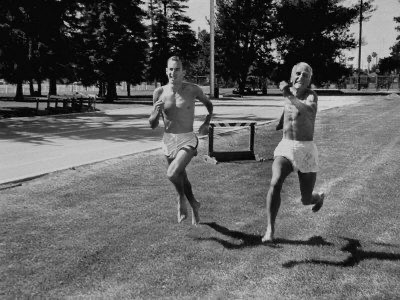
Hugh’s photographs and cuttings see a steady stream of visitors – let’s face it, most of us like pictures on the internet, but the mix of topics and the historical rarity of many of the items make them a real joy to see.   We start with Herb Elliott and Percy Cerutty running together illustrate perfect Percy’s dictum of “You might run faster but you don’t run any harder!”   Others have said so since but Percy was the first.

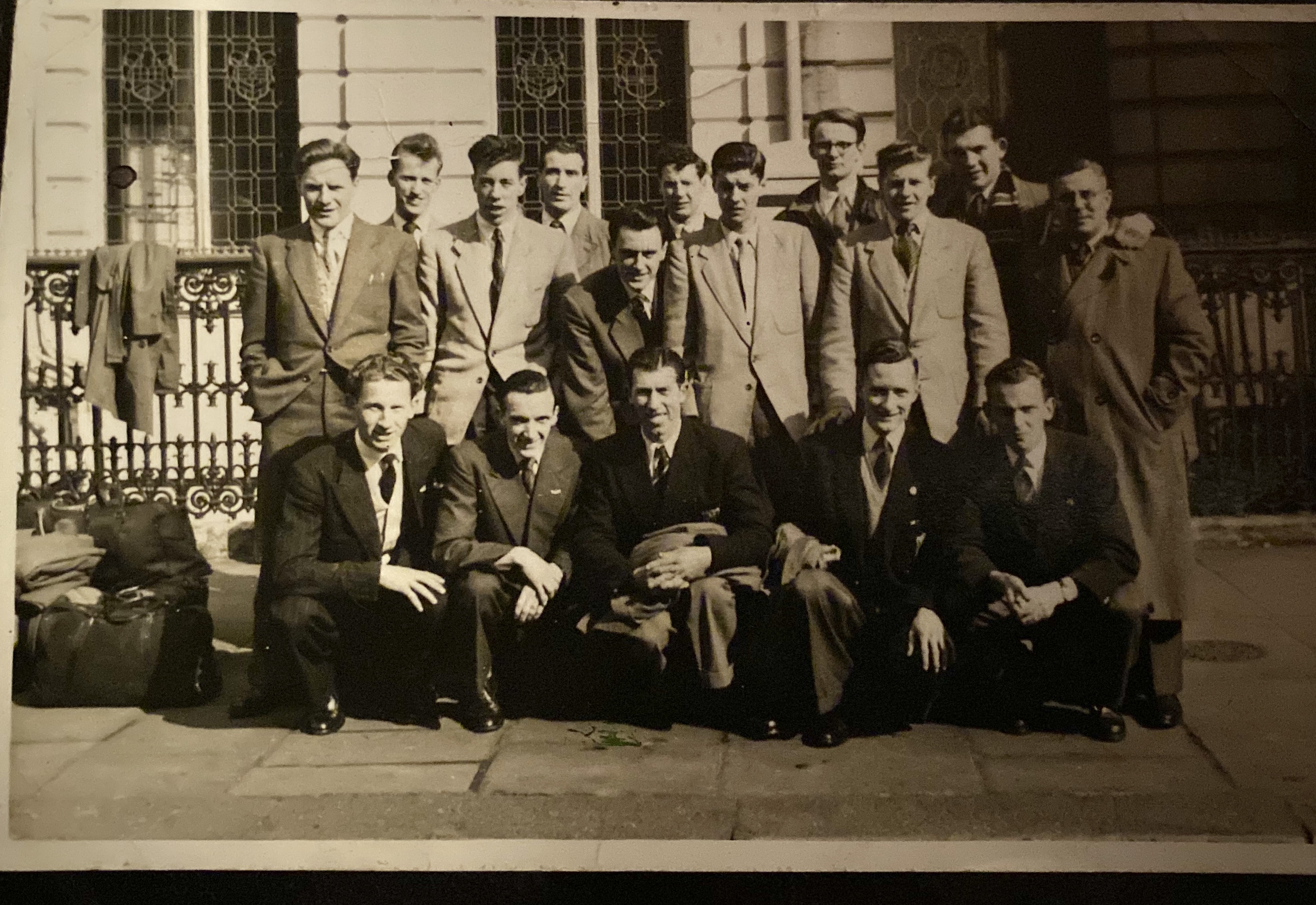
Then the Victoria Park London to Brighton team from the 1950’s

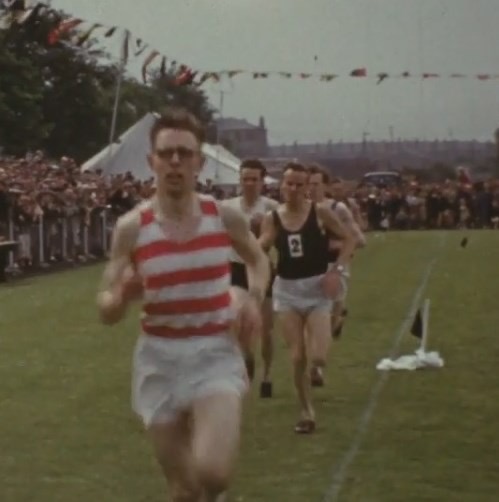
From Singers Sports in Clydebank: Ian Binnie in the black, possibly Bob Steele from Vale of Leven leading

Spot Ian McCafferty in this pro race from Carluke

No prizes for recognising Rangers Sports at Ibrox

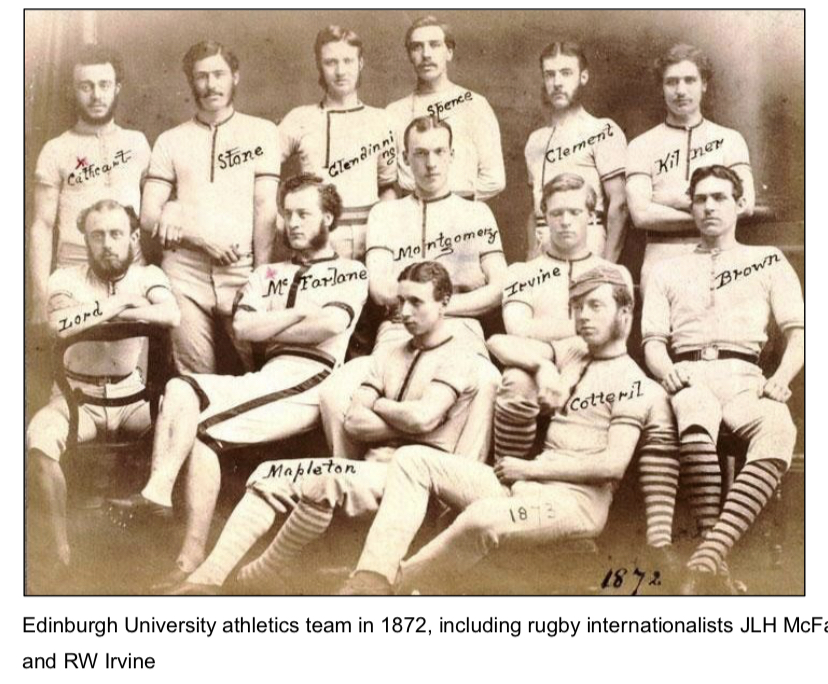
Before any of our times: Edinburgh University team from 1872

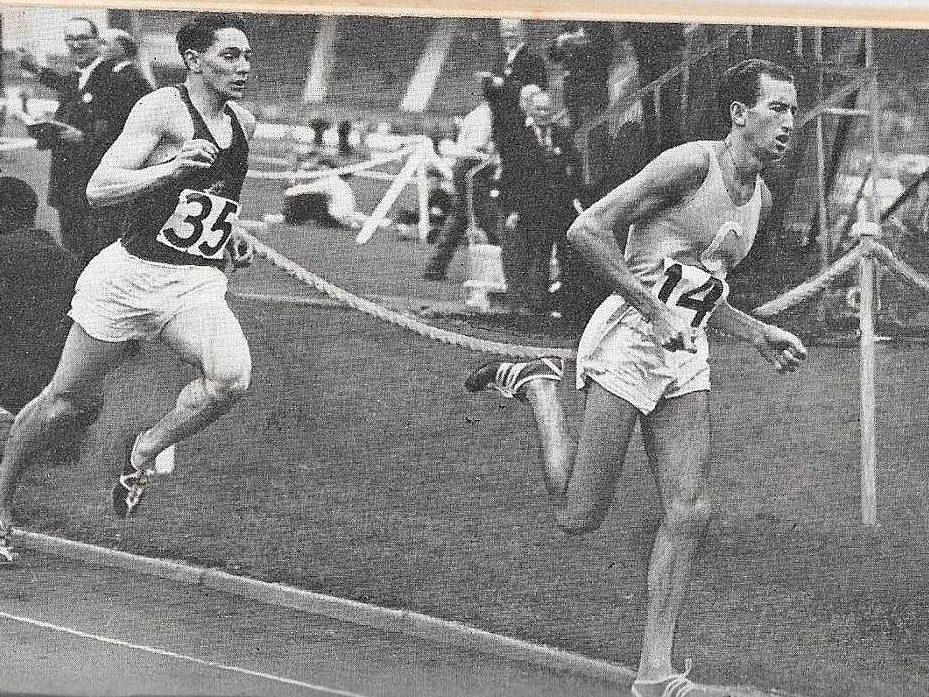
Herb Elliott leading Mike Rawson

…

Typical Fixture Lists

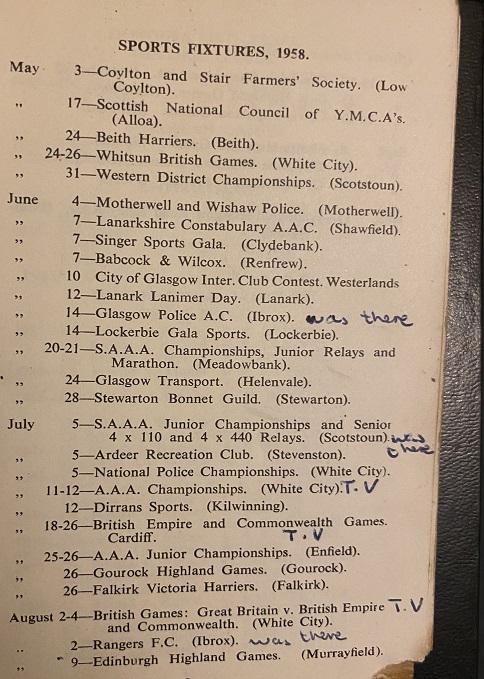
.The athletic seasons used to have a rhythm to them – on the track there were the early season fixtures which led to the National Championships at the end of June, then they tailed off in a host of highland games, sports meetings and invitation extravaganzas which usually included events for domestic athletes.   On the road there was the build up to the SAAA Marathon Championship.

In each case the build up was just that – on the track there were Club, County, District, SAAA and AAA Championships in that order with other meetings of varying sizes where athletes could get the races that their programme demanded, or which were used at times to amend perceived deficiencies – eg if a runner felt that the season wasn’t going as planned, he could find a shorter race or two fr sharpening purposes; like wise if he needed to strengthen a bit there were over distance races to help him do that.   This season is shown in the Victoria Park AAC racing programme for 1958.   Many of these have disappeared from the calendar including the Big Two of Rangers Sports and Edinburgh Highland Games. 

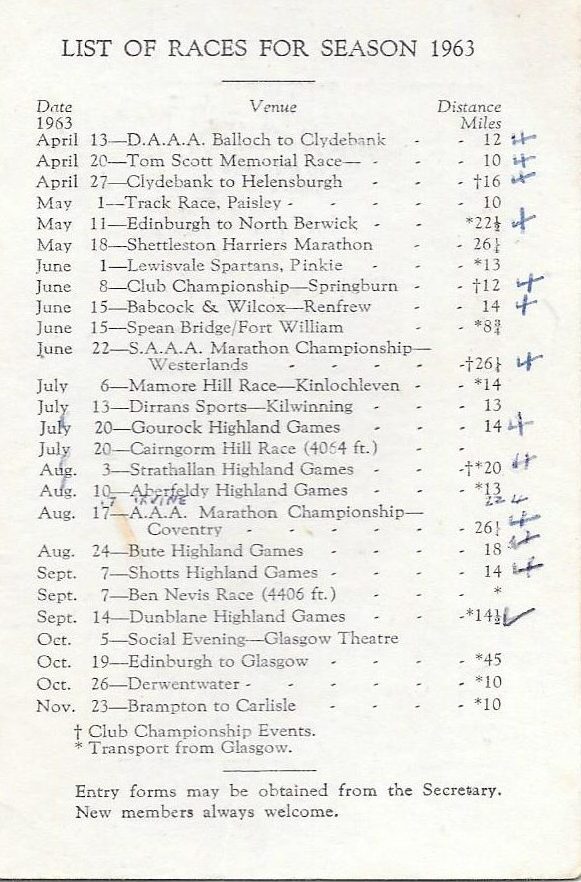
On the road, the Scottish Marathon Club had been formed in 1944 and organised a summer programme that led to the SAAA Marathon Championship at the end of June.   The value of the SMC to road runners cannot be over estimated.   They had their own championship consisting of races at 12 miles, 16 miles and 20 miles which all led to the marathon.   They worked hard at persuading meetings with no road races to include some road race in their programme, and where one had a road race, the club tried (usually successfully) to have it over a distance that would help the progression to the full distance.   Often these races came after the championship so that people reluctant to step up the distance could have a go at it when the spotlight was not shining with a view to running the marathon the following year.

Compare the programme below with races between 10 and 45 miles with current fixture lists which seem to go from 5K to 10K to 10M to half marathon with a jump from there to the event itself.


.


The Last International: The Documents

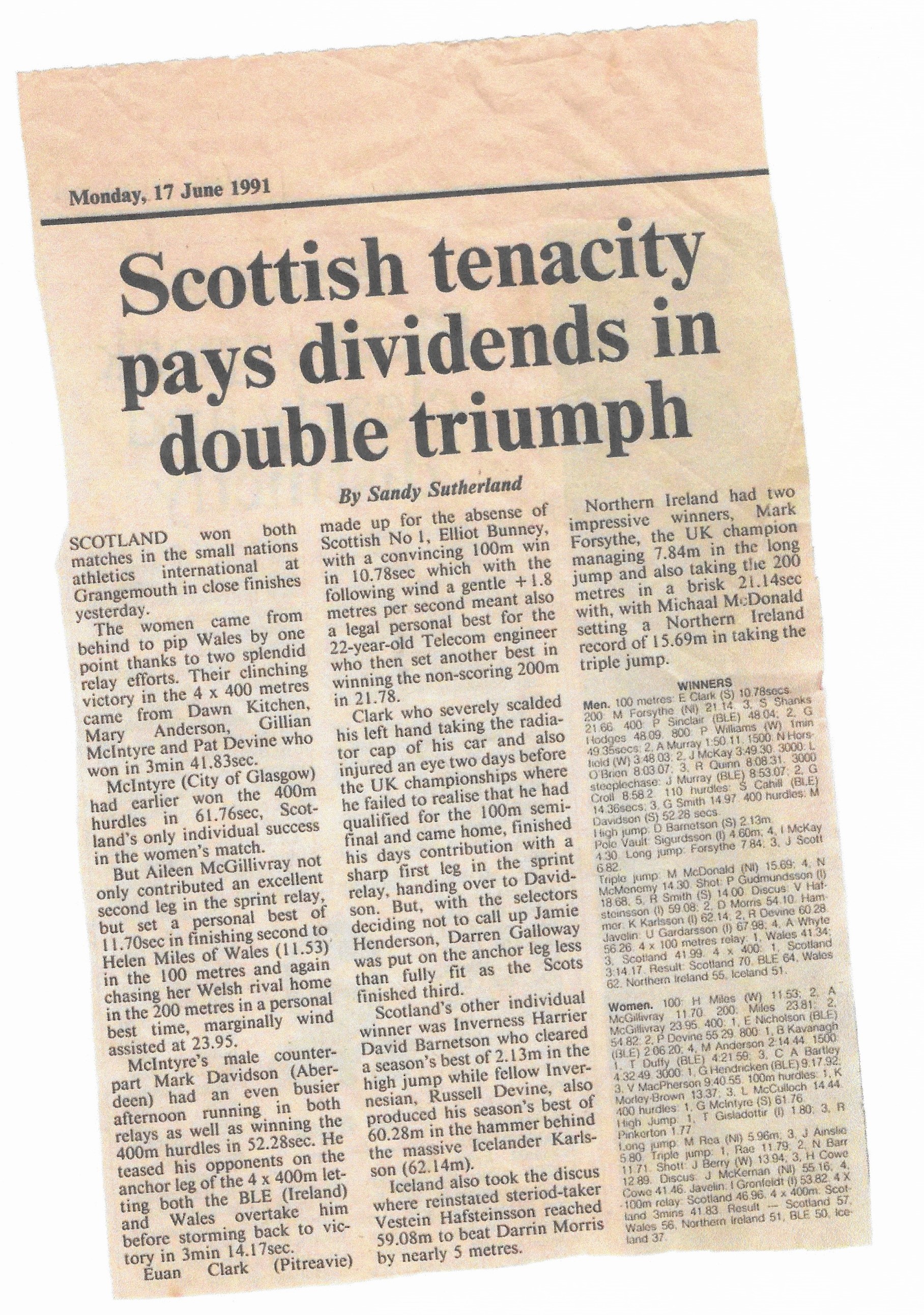
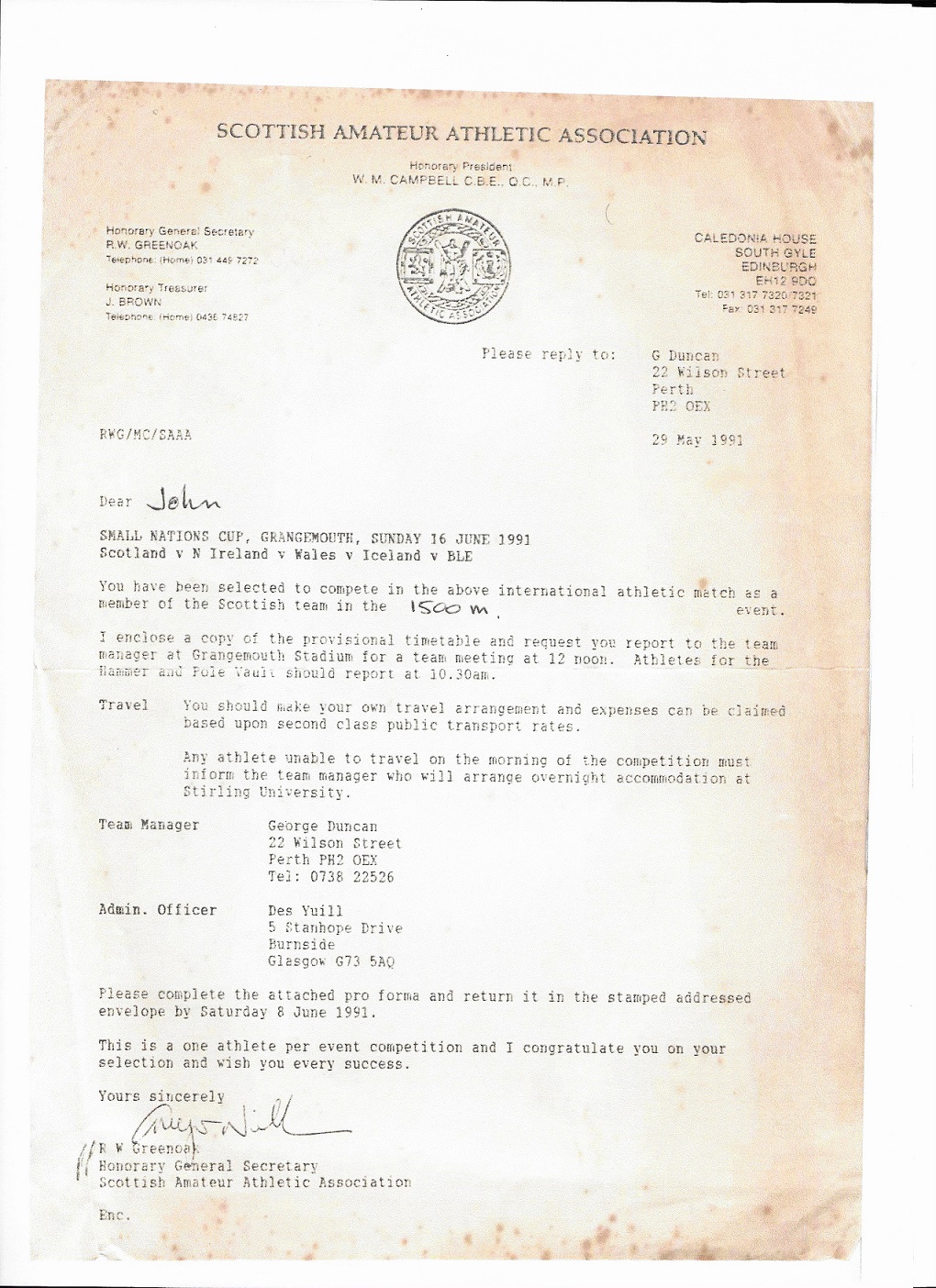
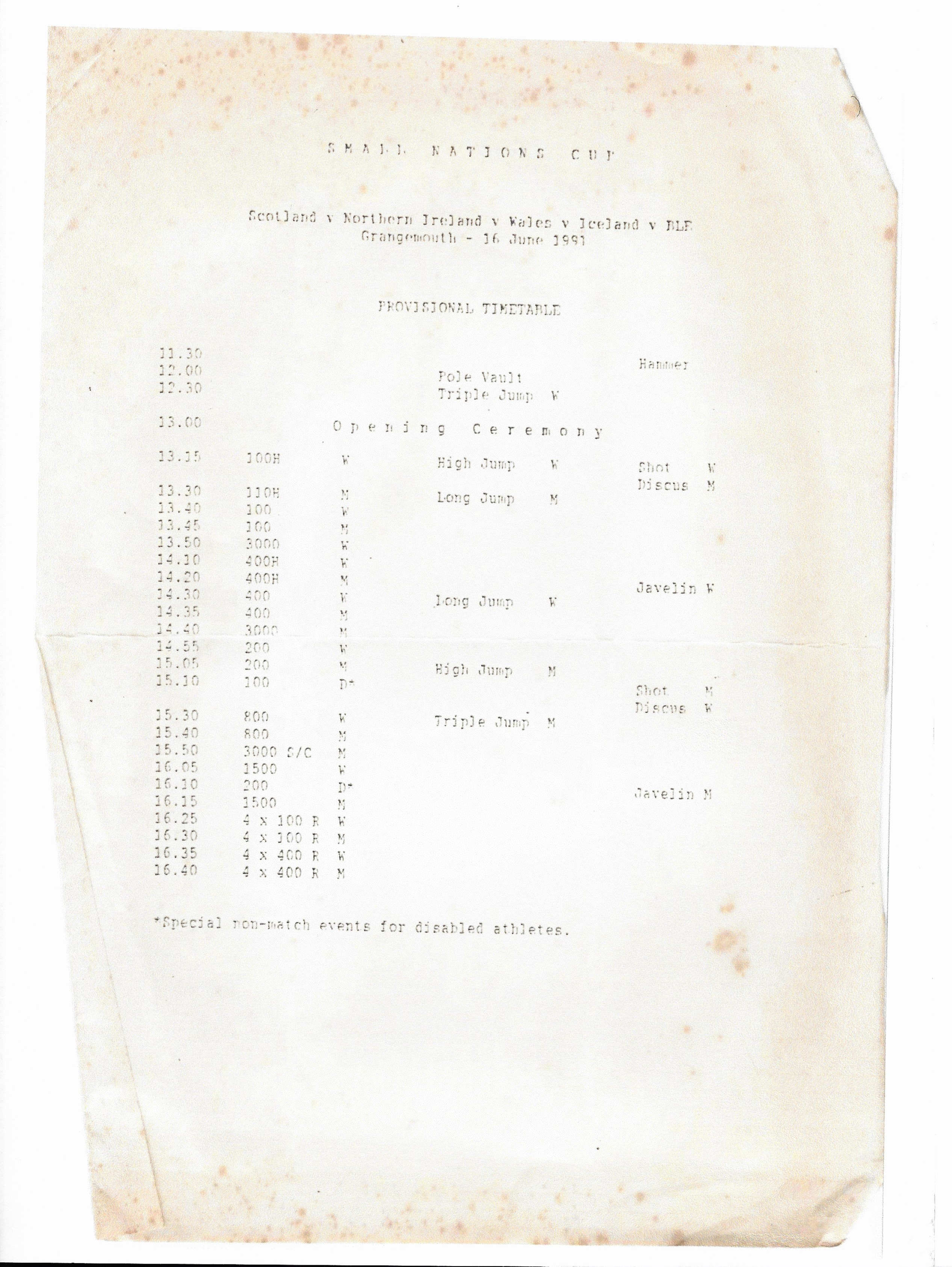
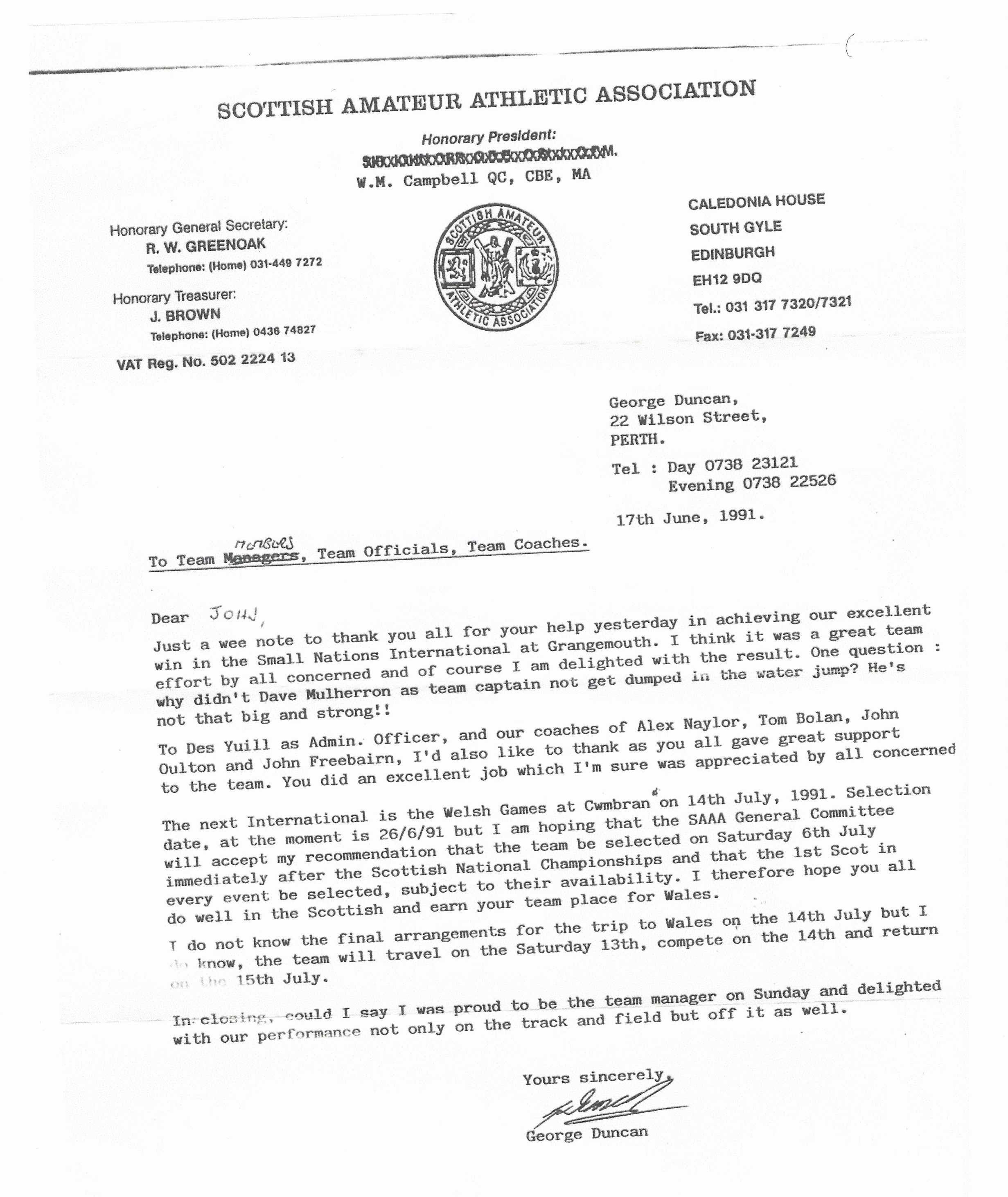
The match was a resounding success from the Scottish Point of View as the following report from the ‘Glasgow Herald’ on the following Monday made clear.   For the benefit of the current generation, the documentation that the athletes received is reproduced below (the programme is already on site) from John Mackay’s memorabilia.   It is interesting to see how things were handled.

The first thing that the athletes received was the selection letter which was the same for every international.

Having received the invitation, the athlete received the instructions and administrative details including the timetable and order of events.   These were sometimes sent out in advance but were often issued on the day of competition.

And finally, there was the letter of thanks and congratulations, where these were due, after the meeting.   Things were very civilised in the olden days!

Graham Laing: 1982

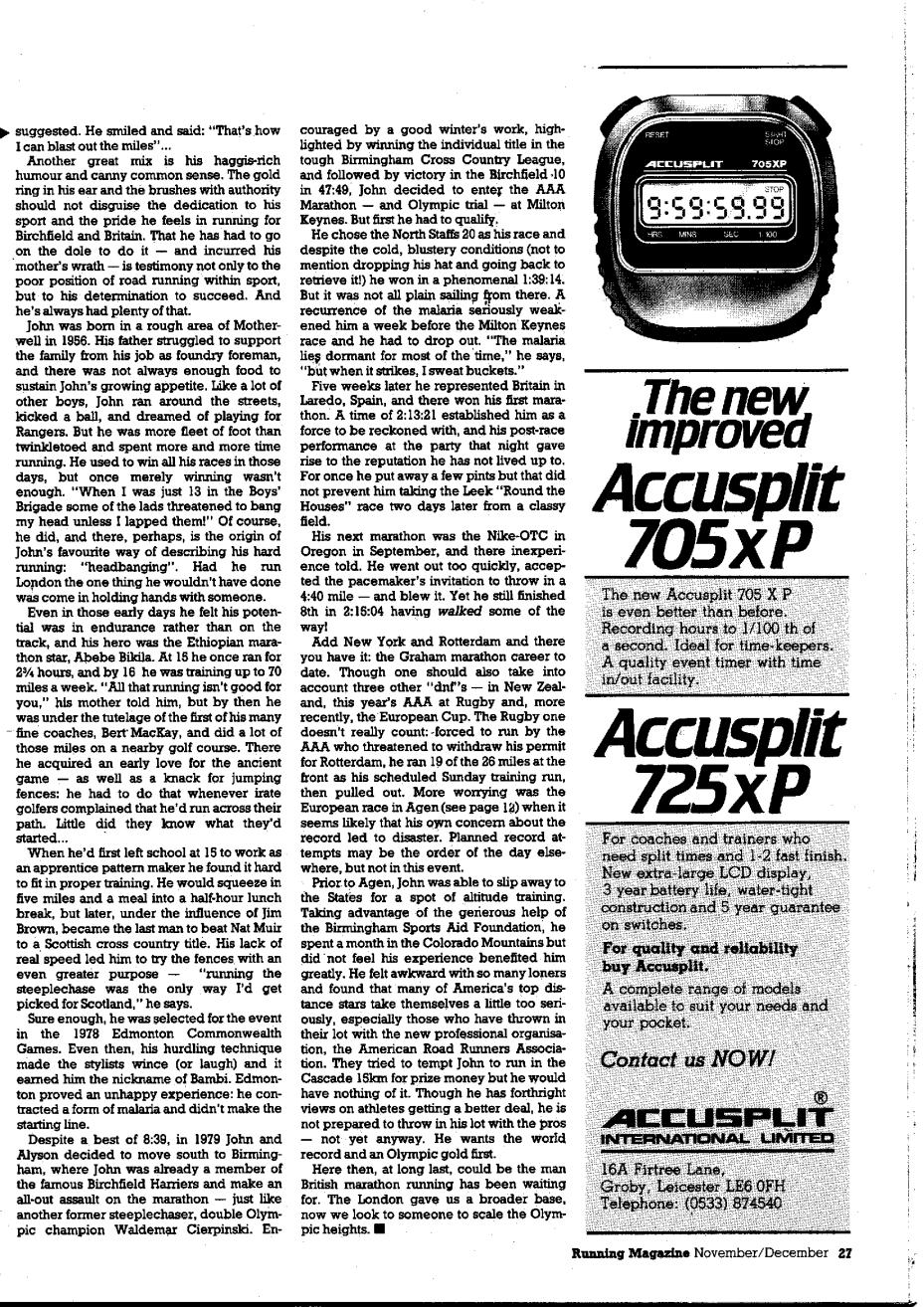
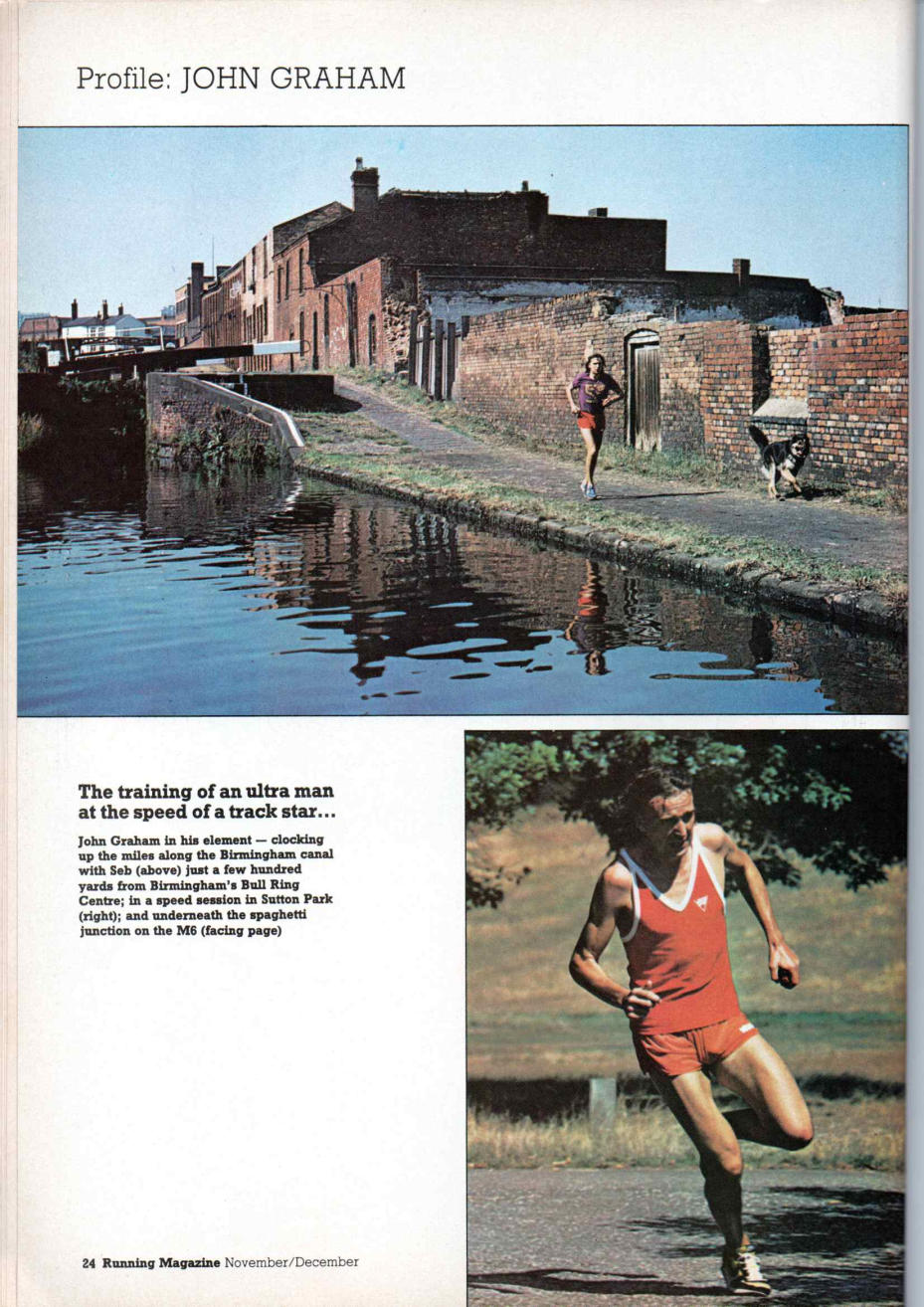
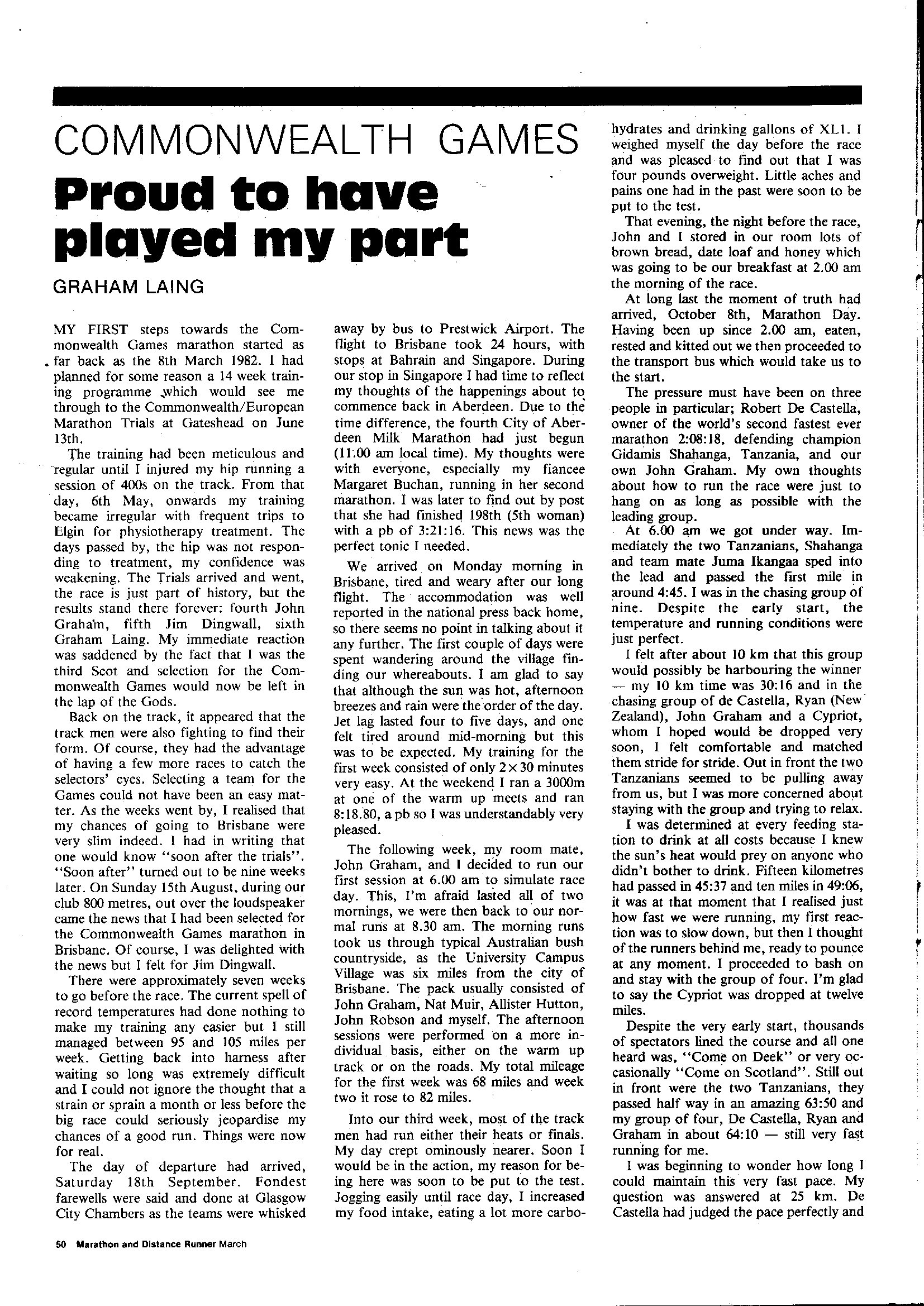
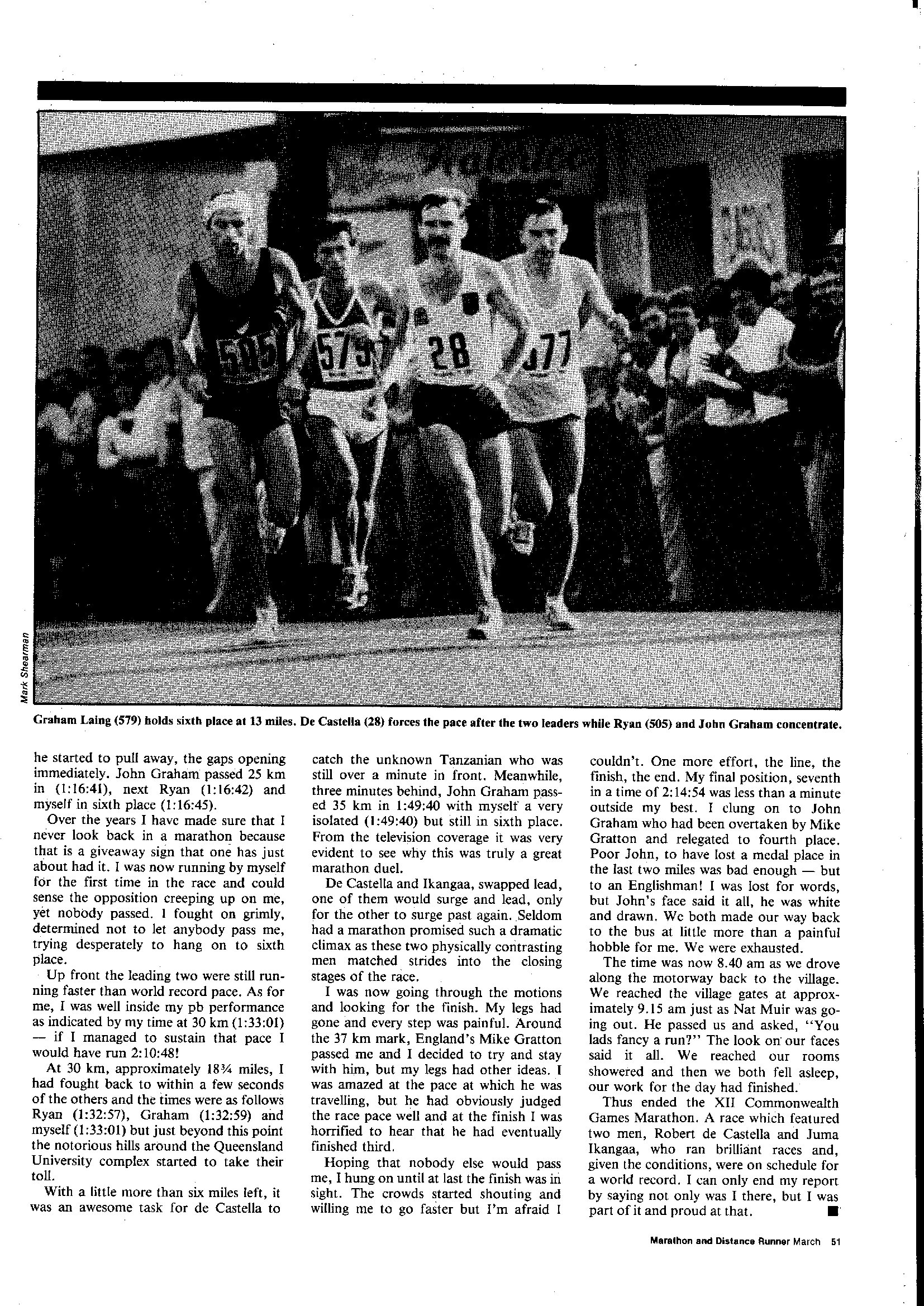
Graham Laing was a very good runner indeed and he ran for Scotland in the Commonwealth Games in 1982.   Joe Small has sent us this article from the ‘Marathon and Distance Runner’ which was actually written by Graham and describes the lead up to the race and the event itself.