Aberdeen AAC

6 Stage Relays

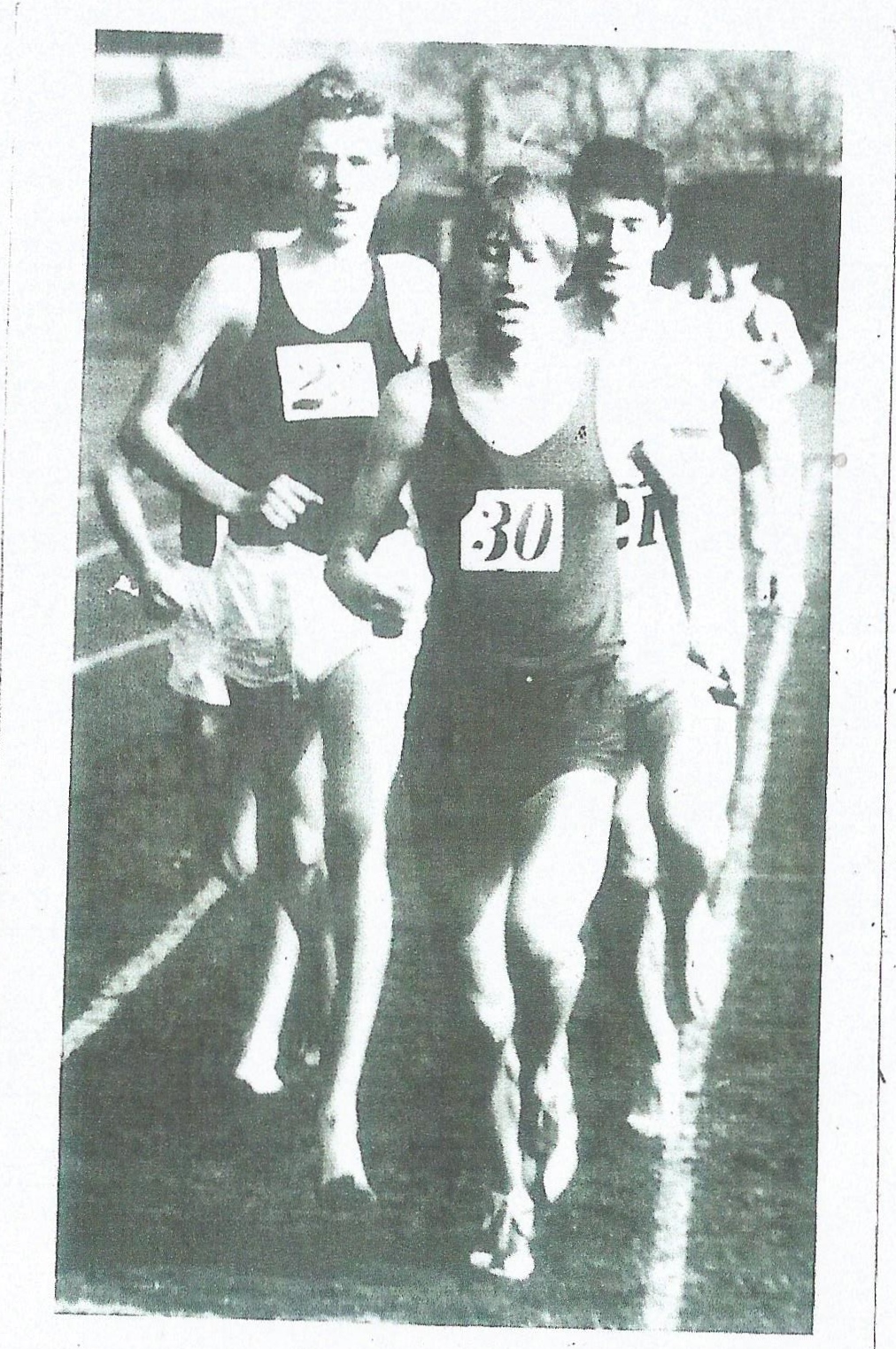
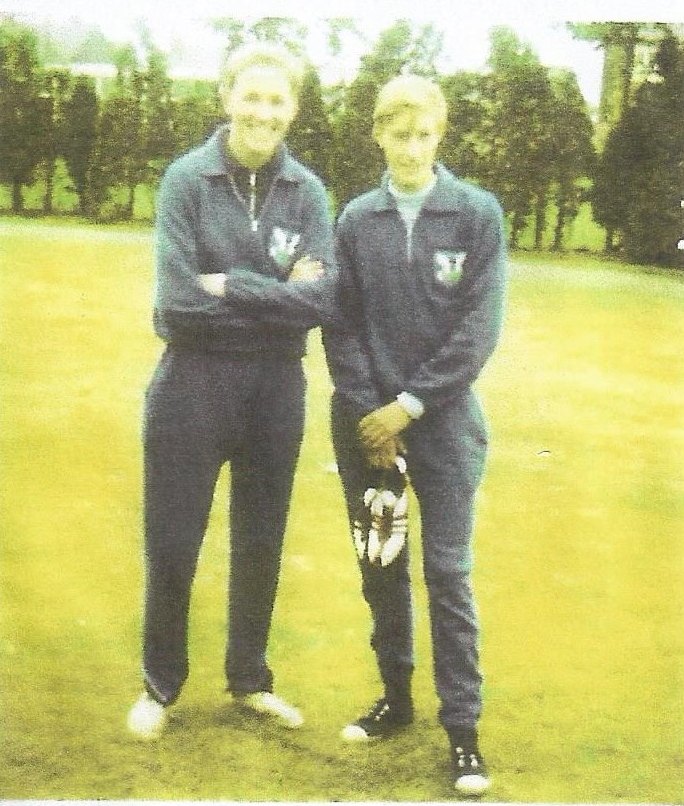
I was quite surprised in the mid-eighties when Mike Murray and Ray Cresswell came all the way down from Aberdeen to run in the British Milers Club races.   To travel 150 miles each way to race for less that two minutes, at your own expense, speaks volumes for their determination.   They were well worth their place in the races and they were highly respected by the other runners.   Both are mentioned in this collection of profiles by Colin Youngson who knew all of the runners mentioned here well.

“Most of Aberdeen Amateur Athletic Club’s best men have been profiled already (Alastair Wood, Steve Taylor, Mel Edwards, Bill Ewing, Fraser Clyne, Graham Laing, Colin Youngson, Rab Heron, Donald Ritchie, Peter Wilson and Jim Doig).   Aberdeen enjoyed two peak periods: between 1961 – 74 (three silver medals in the E-G, four silver and two bronze medals in the Senior National).   Then there was 1980 to 1989 (three gold medals and four bronze in the E-G, three bronze in the Senior National; two silver in the CC Relay and two bronze in the Six Stage Relay.)   A real sign of future promise came in the 1976 Scottish Junior National Cross-Country when AAAC won team gold with Fraser Clyne, Graham Laing, Danny Buchan and Steve Cassells.   However the Fast Pack for the Eighties must include Graham Milne, Mike Murray, Ian Matheson, Ross Arbuckle, Simon Axon, Chris Hall, Ray Cresswell and Dave Duguid.  

Graham Milne   a gritty determined runner with a strong finish, first ran the E-G for Aberdeen in 1972, finishing third on Stage One and handing over to Ian Stewart to launch that great athlete on his amazing surge to the finest stage record in the entire history of that event.   AAAC won team silver that year, and Graham played his part (once more on the first leg) when they obtained bronze medals in 1973.   A year earlier, Graham had won team bronze in the National.   After those performances, there was a long wait before his team became competitive once again with the best in Scotland.   In the interim, Graham moved north to Moray District.   He really liked Stage One of the E-G and was third again (for Forres Harriers) in 1978; and second (for AAAC), only two seconds behind Colin Donnelly in 1979.   Then in 1980, Graham won team silver in the Scottish Cross-Country Relay along with Edwards, Clyne and Laing.   He gained another silver medal in 1982 with Ross Arbuckle replacing Edwards.   In the Senior National, bronze team medals were secured in 1982, 1983 and 1986.   Graham’s best individual place was nineteenth in 1980.  It was bronze again in the Six-Stage Road Relay in 1981.   As a veteran, he won team gold in the National Veterans Cross-Country Championships and also in the Alloa to Bishopbriggs Eight Stage Relay (The Vets E-G!)

Aberdeen’s E-G team finished third in 1981 and also in 1982 (with Graham third fastest on Stage Four).   The  scene was set for a real triumph: Aberdeen’s first team gold medal in Scottish Senior events.   Graham was back on the first leg and came in only eight seconds behind second place.   By the end of the next stage, Graham Laing was not far behind the leaders, Bellahouston Harriers, and a race-long battle ensued between those two rivals before Aberdeen squeezed home forty seconds clear, having recorded the second fastest time ever of 3:35:40.   One of Aberdeen’s heroes that day was Craig Ross, who charged into the lead on Stage Four.   (Craig a 2:20 Scottish International marathon man, mainly ran for Dundee Hawks or Fife but this performance was the highlight of his time in an AAAC vest, although he also won the race with Dundee in 1989)

1983 was also the year that Graham Milne ran his fastest ever marathon (2:21:27).   He too represented Scotland in that gruelling event.   He proved his endurance further in two Jogles (1972 and 1982).   His other personal bests included 14:32.5 (5000m), 30:54.4 (10000m) and 66:57 (half marathon).   Graham went on to become a successful veteran runner winning Scottish championship medals in several age-groups.

Mike Murray   with his athletic loping stride, looked every inch a track specialist.   Indeed in 1984 he set an Aberdeen AAC record for 800m (1:52.4) and also ran 1500m in 3:50.58.    Mike was a member of the elite British Milers Club.   However, partly because he trained a lot with that hard man, Peter Wilson, Mike also became an invaluable part of his club’s road running team, not only in the 1982 John o’Groats to Land’s End Relay, but also in the Edinburgh to Glasgow which he ran eleven times winning six medals.  

Although AAAC won bronze medals in the 1981 E-G, when Mike tackled Stage Three, his best efforts were all on Stage Seven.   It had been obvious during the April 1982 Jogle that he was an excellent downhill runner, and the route on the penultimate stage allowed him a chance to demonstrate speed and flexibility.   Mike could be relied upon to maintain a gap, gain places or extend a lead.   Further bronze medals were gained in 1982, 1987 and 1989 but the finest achievements were in 1983 and 1986.   In both cases Fraser Clyne completed the sixth leg, passed on to Mike Murray and made it possible for Colin Youngson to hold on to the lead.   The result was two gold medals for the north-east club, both won in dramatic fashion.

Mike also won two bronze medals in the Six Stage Relay (1981 and 1989).   Then Metro Aberdeen broke away and Aberdeen AAC struggled in the E-G, although Captain Murray continued to do his best.   Yet he trained harder for a while after he turned forty and, having joined Metro eventually, was part of the team which won silver medals in the 1999 Scottish Veteran Harriers Six-Stage Relay.

Simon Axon   was a Welsh Junior Cross-Country International who moved to Scotland and ran for Inverness Harriers before heading south to live and work in Aberdeen, and to join AAAC.   He made his debut for North District in the 1984 E-G finishing fifth in a high quality Stage One.   In 1985 he turned out for Aberdeen and was given the responsibility of tackling the long Sixth Stage.   His new team finished sixth.   However other key athletes had made their first appearance for Aberdeen in the race that day: Jim Doig and Ray Cresswell as well as Colin Farquharson.   When Chris Hall joined too, the 1986 Aberdeen E-G outfit looked formidable.   Simon moved up three places to fifth on the difficult second stage, only sixteen seconds behind the fastest time.   This allowed Jim Doig to blister into the lead on Stage Three, and eventually Aberdeen AAC won by over a minute.   In 1988, Aberdeen led from Stage Three onwards and Simon kept a healthy lead on Stage Seven which was just as well because the last leg runner had developed hamstring problems and only finished 21 seconds ahead.   Still, that was a second gold medal for Simon Axon and he added a bronze in 1989 when he moved past ESH on the final leg.   In 1988 Simon had finished twenty second in the National Crocc-Country when his team finished third.

Simon Axon ran very well at longer distances too.   He completed the 1986 London Marathon in 2:19:53.   In 1987 he not only won the prestigious Inverness Half Marathon (65:44) in April, but also that June reduced his best time at Gateshead to an impressive 64:25.   Over 10K, he won the Aberdeen 10K in 1989 and 1990.

Although Ross Arbuckle has represented Cambuslang Harriers for much of his career, he started out with Aberdeen and in fact ran for Scotland in the 1980 World Junior Cross-Country.   Previously he had shown outstanding talent on the track as an Under-17 Youth (800m in 1:56, 1500m in 4:01.1 and 3000m in 8:42).   As a senior he improved to 1:53.5 and 3:55.8.

Ross won the three senior team medals with AAAC: bronze in the 1981 E-G; silver in the 1981 Six-Stage Relay and bronze in the 1982 National Cross-Country.   With Cambuslang, he went on to win team gold in the 1988 National (thirteenth finisher), a full set of medals in the Cross-Country Relay, including gold in 1987, and bronze in the Six-Stage Relay.   To this day he continues to be a modest, popular but very successful veteran athlete.   He won several team gold medals in the National Veterans Cross-Country, and frequently represented Scotland in the annual Masters Home Countries Cross-Country International.  

Ray Cresswell   always had considerable talent and as a Junior ran 1500m in 3:58.4.   His Senior bests include 1:54.24, 3:50.0 and 8:24.82.   In the E-G, he was part of a winning team in 1986 and 1988 (when he was fastest on Stage Three, moving from third to first.)   In addition he won bronze medals in the 1988 National (twentieth finisher) and the 1989 Six-Stage Relay.  

Ian Matheson   was another brilliant young athlete who trained immensely hard.   He was rumoured to be covering 100 miles per week at the age of 16!   Ian won East District Cross-Country titles as a Senior Boy (1980) and a Youth (1982).   Before the age of 20 he could run 5000m in 14:46, 10000m in 30:49 and the steeplechase in 9:30.7.   He continues to hold the AAAC Senior club record for 5000m (14:18.9).   However his real forte was as a hill runner, since he represented Scotland in the 1989 World Championships.   In the National Cross-Country Ian won team bronze in 1988, and added another bronze in the 1989 Six Stage Road Relay.   He also ran well in the E-G, helping Aberdeen towards victory in both 1983 and 1988.

Chris Hall, an eccentric, flamboyant Welshman, joined Aberdeen in 1986.   There was no doubt that when in the mood he was a classy performer.   In the E-G, he won gold in 1986, bronze in 1987, gold in 1988 and bronze in 1989.   Chris also won team bronze medals in the 1988 National (eleventh finisher) and the 1989 Six-Stage Relay.   After he moved to Dundee and ran for the Hawks, he won another gold medal in the 1991 Cross-Country Relay.   Chris was very successful in road races.   For example, he won the Aberdeen 10K in 1991 and 1992 (29:57).   His track bests included 14:20.58 and 30:26.26.   In addition, Chris ran a half marathon in 65:02.

Dave Duguid   a stylish athlete, ran well as a Junior and went on to record Senior best times including 8:39 (3000m), 9:13.9 (3000m steeplechase), 31:04.8 (10000m) and 68:36 (half marathon).   He won the Aberdeen 10K in 1988.   In the E-G, he won bronze in 1987 (as did Rob Taylor and Gary Zeuner) and gold in 1988 when he kept the lead on Stage Four, as well as bronze in 1989 (with Rob contributing again).  

Gordon Rimmer

Rimmer 1

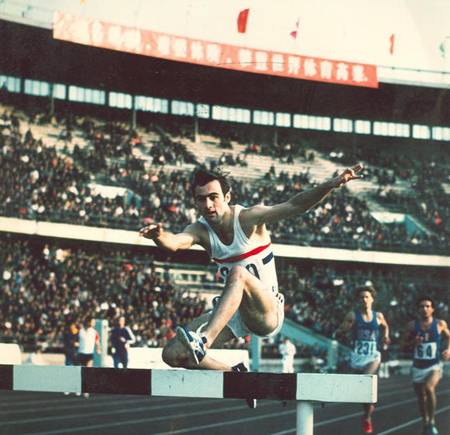
In a GB vest in Peking, 1980

When Gordon Rimmer and his twin Steven started appearing in the Scottish ranking lists in the mid 1970’s with their club affiliation listed simply  as ‘RAF’ very few knew very much about them: this was a state of affairs that would not last for long.   They both represented Scotland and won medals with several successful Cambuslang Harriers teams and Gordon would go on to become a top flight steeplechaser who would be cruelly deprived of selection for the Olympic Games in 1980.   If there is any doubt about his quality, look at his personal bests which have a range from 1500m to 10 miles.

Event Time Year Venue Remarks
1500m 3:45.7 1980 Holland 1st in RAF Match
1500m (i) 3:45.8 1981 Cosford 3rd, Phillips Games
3000m 7:57.8 1983 Loughborough 2nd in RAF Match
3000m (i) 8:05 1980 Cosford 5th in AAA Indoor Champs
2 Miles 8:34.5 1979 Crystal Palace IAC Invitation
5000m 13:48.1 1979 Meadowbank 1st in Edinburgh Games
10,000 m 29:54.4 1977 Crystal Palace 2nd in Open meeting
2000m S/chase 5:34.2 1979 Gateshead 2nd in Invitation
3000m S/chase 8:26.6 1980 Belgium 1st in Invitation
5 Miles Road 23:08 1980 Wolverton 5 Course Record
10 Miles Road 48:17 1980 Henlow 1st in RAF Championships

The two steeplechase times rank him 20th and 22nd on the British All-Time lists and the 3000m steeplechase time ranks him third in the Scottish All-Time list behind Tom Hanlon and Andrew Lemoncello although Lemoncello is the only one to have won a AAA’s title.     He ran in two world cross-country championships for Scotland and won national steeplechase titles both north and south of the border as well as being in the RAF Athletics Association Hall of Fame.    It is clear just from the figures that we have a very talented athlete in Gordon Rimmer.
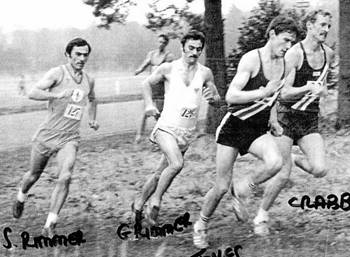
Rimmer 2

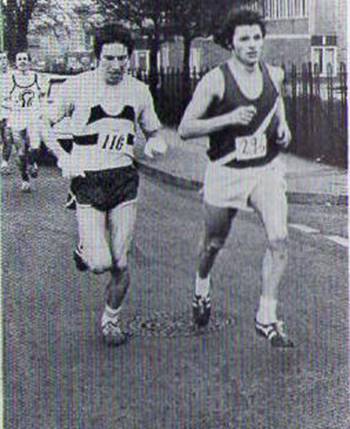
In the photograph above Steve and Gordon Rimmer tracking Steve Jones and Ray Crabb.    Steve was about 18 months later in starting serious running than Gordon and tended not to do as much cross-country.  He ran many more 800m and 1500m races and in his last year in the 1500 he got it down to 3:46.    As boys in Irvine, they went to Irvine Royal Academy before the whole school moved to Ravenspark School, now renamed as Irvine Royal High School!    The PE Department required that every male pupil would take part in the school boxing tournament.   As their friend and schoolmate David Hall recalls, ” For most that meant getting in to the ring and lying down after a punch or two.   For them it was ‘let’s both get to the final so that we can fight each other on finals night.’   Finals night was an evening event with boxing fans arriving from all over Ayrshire, many in full dinner-suit and dickie-bow.   Gordon v Steven was the final in the first year but was staged as an exhibition thereafter – by public demand.   They knocked seven bells out of each other.   I don’t think they could have rigged the draw every year so that they met in the Final.   Although Big Bill Cochrane the gym teacher  would probably have introduced ‘seeding’ long before the concept was dreamt of at Wimbledon.   They were the best of pals, though, and I seldom saw them having cross words with each other.

Gordon’s athletic career is profiled below where, after a summary of the year, his own view of the season just past is added.   This is followed by his own detailed replies to the questionnaire which are most informative.

Born on 9th August 1956, he ran in the National Junior Cross Country Championships for his home town club of Irvine AC and finished 19th, one place in front of a young Charlie Haskett and four in front of future club-mate Eddie Stewart racing for West of Scotland Harriers.   Competing as Cambuslang Harriers/ Royal Air Force in Scotland. His competitions however were mainly in England.  (In fact in the course of his career he competed for Vale of Aylesbury, Newark AC, Holbeach AC and Thames Valley Harriers although Cambuslang is the club he represented longest and is most associated with.)   On 19th June he was thirty ninth in the Rex Foulkes 20 km road race in Aylesbury in 67:39, on 4th September he ran in the Witney 12 mile road race in which he was thirty fourth in 68:52, on 29th September he was third in the RAF Benson Benson 7 miles road race in 35:52 and finally on 27th November he was twenty third in the Wolverton 5 miles road race.

The following year, 1977, he really drew himself to the attention of the Scottish athletics public.   In the course of the year he had wins at Banbury (cross-country), indoors at Cosford (8:31.0 for 3000m) and again over 3000 metres at Isleworth (8:27.6) with second places at Milton Keynes (Bucks Cross-Country Championships), Wantage (in the Grove 7 miles road race) and over 10,000 (29:54.4) metres at Crystal Palace in a Southern Counties Open Meeting.  By the end of the year he was ranked seventh in Scotland for the 10000m, 26th for the 5000m (14:34.8), fourteenth in the 3000m (8:23.8) and twenty eighth in the 1500m with 3:57.2.   Over the country he was nineteenth in the Scottish Junior Cross Country Championships at Glenrothes.

Of 1977, he himself says, In 1977 I continued to do mainly road and cross-country races with the odd 5000m for Vale of Aylesbury (he had joined the club the year before – see his replies to the questionnaire below) in a minor track league but have no record of times, etc.   I managed to get into my first race in Scotland whilst home on leave in Irvine.   I contacted my old school teacher, Andy Rennie, who managed to get me registered for the Scottish Junior Cross Country Championships to represent Irvine at Glenrothes.   As no one else from Irvine was going, he arranged a lift for me to meet up with the Cambuslang Harriers bus and I went along with them.   I remember it being my toughest race by far and I finished up 19th with Nat Muir, John Graham and John Robson taking the first three places.   On the way back home on the bus, Dave Cooney (now chairman) of Cambuslang asked me if I was interested in joining them, which I did to help them and also to get myself more “noticed” in Scotland competing for them.   I also finished 12th in the RAF Championships which had a wealth of talent in depth and this got me into the RAF Squad for the Inter-Services team and further RAF races.   I continued to travel round competing in road races between 5 and 10 miles.   My breakthrough on the track came when I entered an open 10000m event at Crystal Palace in October at the end of the season and I astounded myself and a few others by coming second in 29:54.4.   It was then that I started training properly with the help of Bob Wallis (who started training Steve Jones!) and Alan Warner, the RAF Cross-Country Team Manager.”

1978 was even better at all distances and his rankings at the end of the year were impressive.   The range was wide.   He ran several 3000m races indoor and out: at Cosford he raced 8:30.8 in the Southern Counties v the RAF v the Army in April where he won.   He also won 3000m races for the RAF v Midland Counties, for the Combined Services v Southern Counties but his quickest time for the year at that distance was 7:59.7 when finishing sixteenth at Crystal Palace Grand Prix Meeting.   There was  a Two Miles in 8:55 at Crystal Palace in an IAC Invitation Meeting.   There was also a whole series of 5000m races with good times in the Inter-Services at Portsmouth (second in 14:20), Notts Salute To Sport Meet in Harvey Haddon Stadium (fifth in 14:06.8), Cosford (second in the Royal Air Force Championships in 14:36.8) and in the Notts League Division 1 (14:37.8).    And there was a result not generally noted that year – Jnr Tech G Rimmer was second in the RAF Championship Steeplechase in 9:40.2.   Of course he ran on the road that summer with the 1977 RAF Henlow 10 Miles in which 341 finished he was second in 51:13.   His best 10 mile time that year was at Whittlesey where he was third in 49:18.    He was by now a regular in RAF representative teams – he turned out against Midland Counties and Universities Athletic Union, and against Eastern Counties and Cambridge University; fourth in the RAF Cross Cross-Country Championships and sixth in the Inter-Services Cross-Country Championships.   Back in Scotland he was tenth in the West District Cross Country Championships at East Kilbride where with team mates Rod Stone, Bob Anderson, Peter Preston, Colin Donnelly and Gordon Eadie the team was fourth.  In the  In the November he ran his first Edinburgh to Glasgow for Cambuslang Harriers on the sixth stage where he maintained the club in fourth position.   By the end of 1978 he was placed fourth in the 3000m rankings with his time of 7:59.7, seventh in the 5000m with 14:06.8 and seventeenth in the 1500m with 3:51.0.

Gordon’s review of 1978 says “In 1978, my first year as a Senior, things started to take off on road, country and track.   I didn’t run in the Scottish Championships as I was finishing my final examinations and getting “posted” out of training to RAF Lossiemouth in the north of Scotland.   I did however make the journey back down south for the RAF Championships and came a fantastic fourth behind John Wild, Ray Crabb and Steve Jones.   Although I now had training schedules to work to, I was still racing here, there and everywhere as I loved racing and was so competitive that I was starting to enjoy the success.   The travelling to the races in England from Lossiemouth was affecting my work and my training so that after only five months the RAF team manager got me a move to RAF Cranwell in Lincolnshire where I rejoined my twin brother Steve and joined Newark Athletic Club.   I started to get Steve more interested in racing too and we started training well together.   In June I had a huge jump in pb when I ran 14:37 for 5000m for Newark to set a league record, a week later I broke 50 minutes for the first time at Whittlesey 10 Mile Road Race and a week later came second in the RAF 5000m taking another second off the pb.   In the next few weeks I progressed to 14:20 to be second in the Inter-Services 5000m just behind Julian Goater and beating Scottish Internationalist Rees Ward for the first time.   Having someone like brother Steve to train with and push me a bit harder was obviously paying dividends and in the next few weeks won a 3000m in 8:05 in a Combined Services  v  Southern Counties  AAA at Crystal Palace, I then smashed my pb for 5000m running for Newark when I ran 14:06 which is still a club record.   This rise in form got me my first invitation into a top class meeting: the Rotary Watches at Crystal Palace where I finished 16th breaking 8 minutes for the first time at 3000m (7:59).  Moorcroft won and Rod Dixon of NZ was second.   If that wasn’t highlight enough in my short career, I was given an invite to the Coca-Cola meeting in which I ran Two Miles where a certain Steve Ovett won in a world best time beating a certain Henry Rono into second place.”   
Rimmer 5

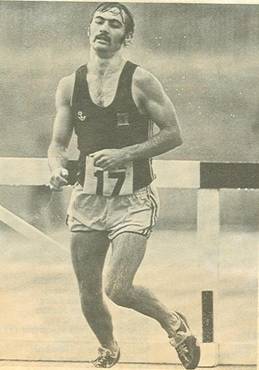
Gordon winning the UK Steeplechase at Birmingham in 1979

1979 for Gordon Rimmer was a major step up in class from an already very good career.    Starting with fifth place in a quality field at the Scottish National Cross Country Championship and selection for the international in Limerick he earned selections for Scotland and Great Britain on the track.    The official SAAA Handbook written by John Keddie states: “1979 saw the appearance of a newcomer to steeplechasing in Gordon Rimmer (Cambuslang Harriers).   His progress in the event was spectacular that year.”   and his progress from 8:52.7 when winning the SAAA Championships in June via 8:44.2 in the AAA’s Championships in June to 8:39.2 when winning the UK closed, was detailed and it pointed out that the latter time was the second fastest ever by a Scot.   He also won the RAF Steeplechase in 9:11.8 and on the same day was second in the 1500m in 3:52.2 (with brother Steven third in 3:53!)   The year was so good for him in the event  that it would be worth looking at it in detail after noting that he also raced a 2000m steeplechase in 5:34.21 at Gateshead at the end of the season in which he was second.

Time Position Venue Event Date
8:52.7 1st Grangemouth Scottish Champs 16 June
9:11.8 1st Cosford RAF Champs 27 June
8:58.2 4h2 Crystal Palace AAA Champs 13 July
8:44.2 8th Crystal Palace AAA Champs 14 July
8:53.0 2nd Aldershot Inter Services Champs 18 July
8:39.2 1st Birmingham UK Closed Champs 12 August
8:40.2 3rd Crystal Palace GB v Russia 28 September

While these results were the talking point, there was a lot more to Gordon Rimmer’s season than that.   A Series of good 1500’s with a season’s best of 3:49.7, a 3000 m best of 8:06.0, Two Miles in 8:34.5, a whole host of 5000m times including a best of 13:51.1 when winning for the RAF against the South Netherlands a 14:44.9 when winning for Scotland against Greece and Wales in Cwmbran.     There were also many first class road and cross country races .   For instance in the Edinburgh to Glasgow, he again ran the long sixth stage and recorded the second fastest of the day when maintaining sixth place for his club.   With such a season under his belt, and 1980 being Olympic year, he must have had selection in his sights.

He says, “1979 saw me gain my first Scottish International Cross-Country vest by finishing fifth in the Scottish Championships at Livingston and gaining my place in the team for the World Championships at Limerick.   I also represented the strong RAF team to win the Inter-Services Cross-Country in fifth position behind fellow internationals Julian Goater, Steve Jones, John Wild, Ray Crabb and Roger Hackney.   After a few warm up RAF track distances over shorter distances, I went on a pre-season tour with the RAF to Holland for a match against the South Netherlands and I smashed my pb by going under 14 minutes for the first time in winning the 5000m in a new RAF record of 13:51.0.   I had won the Lincolnshire 5000m county championships in an easy race on the Saturday and went back on the Sunday to watch brother Steve in the final of the 1500m.   Although I hadn’t entered, on impulse I asked if I could run the 3000m steeplechase, with no technique and finding it a very tough event I won in 9:15 in my first attempt at the event.    I stuck with the 5000m and got my first Scottish track vest in a match against England, Belgium and Norway at Gateshead where I came fifth behind Dave Moorcroft and Nick Rose, again running under 14 minutes.   The following week was the SAAA Championships at Grangemouth and I decided to take a gamble and despite not being established in the event, to enter the steeplechase instead of the 5000m as I thought that event was weaker both in Scotland and the UK.   It paid off and I won my first SAAA title and broke 9 minutes for the first time winning by 12 seconds in 8:52.7.   I then won the RAF 3000m steeplechase and took second in the 1500m on the same day.   A couple of weeks later I had the pleasure of joining brother Steve gaining his first Scottish vest for 1500m whilst I won the 5000m in the Scotland  v  Wales  v  Greece at Cwmbran.   I then lowered my pb for the ‘chase again and won the UK Championships on a rain soaked track in Birmingham in a time of 8:39.2 with fellow Scot John Graham in fourth.   Less than a week later, I travelled back home to compete in the Edinburgh Games at Meadowbank where I won the 5000m in my pb of 13:48.1 beating Jim Dingwall, Brian McSloy, Ian Gilmour, Allister Hutton, Lawrie Spence and Jim Brown for one of my most satisfying races.   I was invited back to Crystal Palace for the International Invitation Two Miles where I ran over 20 seconds faster than the previous year for the eighth fastest time in the UK that year.   The following week I ran in an invitational event at Gateshead  in the 2000m steeplechase where I finished second in 5:34.2 which is still second on the Scottish all-time and 22nd on the UK all-time lists.   A week later I gained my GB vest in a match against Russia at Crystal Palace where I finished third in 8:40 – just one second outside my pb.   What a year!   From taking up the steeplechase to be UK Champion and gaining a GB vest!”
Rimmer 4

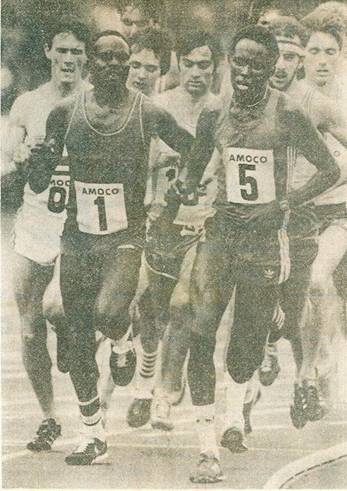
Running with the quality!   Steve Jones, Henry Rono, Gordon Rimmer, Filbert Bayi and Nat Muir in the Amoco International 3000 metres in 1980.

1980 started as had 1979 with a  series of very successful races.   He was second in the New Year’s Day race over 4.5 miles on the road at Beith and then on the first Saturday in the New Year he won the prestigious Nigel Barge Road Race by only two seconds from that famous fast finisher, Jim Dingwall.   On the country, he led the RAF to its victory in the Sir Sefton Brancker Trophy against the Civil Service and Middlesex teams.    And at Cosford on 26th January he ran 8:05.0 for the indoor 3000m.    Excellent running on road, cross-country and indoor track – 4 races, all in January.     On 2nd February, he was sixth in a very hard fought Scottish Cross Country Championships and won selection for the International to be held at Longchamps Race Course in Paris.   He and his brother Steve had led the Cambuslang team in the Scottish Championships to third place.   The team, which included Rod Stone, Alex Gilmour, Eddie Stewart and Duncan McAuley,  won the club its first ever SCCU medals.   Four days after the Scottish Championships he ran in the RAF Championships at Halton where he was fifth and on the 29th February he was also fifth in the Inter-Services Cross Country Championships.   Another month, another four races.    The background for the summer was being well and truly built up.   March and April were quiet months In May he ran his first 5000 metres of the season when he was second in 14:01.8 for Scotland against Northern Ireland.   The first 1500m came five days later when his time in winning in Holland in the RAF v South Netherlands race was 3:45.7.    In the Inter-Counties at Birmingham at the end of May he was third in 8:40.1 and at this point he was ready for an excellent racing season.

On 4th June at the Louvain Invitation Meeting in Belgium he set what was to remain his lifetime best for the steeplechase: 8:26.6.   Then on 14th June he was fourth in the first Heat in 8:58.8 and then in the Final the following afternoon, he had the most unlucky steeplechase race of his life.   There are times when every steeplechaser hits a hurdle but to do it in an Olympic trial race – words can’t describe it!    He hit a hurdle in the back straight rather heavily and then fell at the final hurdle to eventually finish fifth in 8:42.2.   He had every reason to think that the selectors would look favourably on his chances given his form the of the previous year and then again this year, particularly in view of the Louvain time.   He was clearly not a one fast time wonder of an athlete – he was a seasoned and consistent performer.   The following weekend he ran in the SAAA Championships and won comfortably in 8:54.5.    In July, on the ninth he ran 1500m in 3:46.4 in the Inter-Services Championships, 8:07.2 for the 3000m at the Amoco International at Crystal Palace and 8:47 for the steeplechase at the Bislett Games in Oslo.   The excellent running – 8:26.6 for the ‘chase, 3:45.7 for 1500 and 14:01 for 5000 – was in vain: he had a bad race at the UK Championships and he was not selected for the Olympic Games.   On 8th August in the International Athletes Club Invitational at Crystal Palace, he ran the steeplechase in 8:39.6: on 16th in the Edinburgh Invitation Games, he was out in the 5000m where he recorded 14:10.5; on 25th he was in the steeplechase at the British Meat Games (a good 8:37.9)  and on the 31st he ran in the Scotland v England v Norway v Yugoslavia he was in the 300m where he was timed at 8:04.2.   In September there were three top class steeplechases: on the 6th at the AAA Championships he was second in the steeplechase in 8:40.0; on the 20th at the Eight Nations Games in Tokyo he was 6th in 8:41.7 and then one week later he was second in Beijing in the Peking International in 8:33.7.   What a way to finish the summer – second in the AAA’s, two international appearances, all in good times and a defiant shake of the fist at the selectors.   Most runners would have taken a month or two off after such a summer, but that was not Gordon’s way.   In October he travelled to Inverness with Cambuslang for the Scottish Four Man Cross Country Relays where along with Irish Internationalist Rod Stone and Scottish representatives Alex Gilmour and Eddie Stewart he was part of the winning team and in the Edinburgh to Glasgow in November he helped the team to second place and their first ever medal when he ran the sixth stage again and pulled the team from sixth to second with the fastest time on the stage.    (Incidentally after the team had dropped to fourth on the seventh stage, it was brother Steve who pulled them back up to second on the final leg.)    November ended with a win in the Wolverton 5 Miles Road Race on the 29th and the RAF account of it says: “The 1980 race was a tremendous contest between International steeplechasers Roger Hackney and Gordon Rimmer with Rimmer getting the edge in 23:08.”   This was a new course record, the previous one (23;20) having been set by Ron Grove in 1969.   Given that Hackney had been selected for the Games and (despite being faster) Gordon hadn’t, it must have been a sweet victory.

3000m Steeplechase Times: 1980

Time Position Venue Event Date
8:40.1 3rd Birmingham Inter-Counties Champs 26th May
8:26.6 1st Louvain Invitational 4th June
8:58.8 4th/H1 Crystal Palace UK Championships Heats 14th June
8:42.2 5th Crystal Palace UK Championships 15th June
8:54.5 1st Meadowbank SAAA Championships 21st June
8:47.0 8th Oslo Bislett Games 15th July
8:39.6 9th Crystal Palace IAC Invitation 8th August
8:37.9 2nd Crystal Palace Invitation 25th August
8:40.0 2nd Crystal Palace AAA Championships 6th September
8:41.7 6th Tokyo Eight Nations Games 20th September
8:33.7 2nd Peking Invitation 27th September

His reprise of the wonderful year: “How was I going to follow the successes of1979 in 1980?   It was a good start with a win in the Nigel Barge Road Race, and I then went on a winter training weekend for steeplechasers to Lilleshall and on the same weekend, down the road at RAF Cosford it was the AAA’s Indoor Championships.   So I entered on the day and finished fifth in the 3000m in 8:05 despite no specific training.   A week later I finished sixth in the Scottish Cross-Country Championships in my home town of Irvine behind Nat Muir, John Robson and Allister Hutton and selected for the IAAF World Championships in Paris.   Four days later I finished fifth in the RAF Championships again highlighting how strong the RAF were.   I also finished fifth in the Inter-Services Championships behind Jones, Crabb, Wild and Hackney of the RAF.   I couldn’t believe it when I went straight into the first RAF athletics match in April and opened up with a pb and RAF record winning the 1500m in 3:46.8.   I again teamed up with brother Steve in the Scottish team against Northern Ireland and Luxemburg in a wind-swept Meadowbank Stadium.   I was beaten in the 5000m in a photo-finish with the same time as Nat Muir (14:01.8).   I then went on to the annual tour to Holland with the RAF and broke my own pb and RAF record again winning the 1500m in 3:45.7.   I then started my steeplechase programme for the season finishing third in the Inter-Counties in a near-pb of 8:40.   I was invited to the Ivo Van Damme invitation in Belgium to run the steeplechase with Dennis Coates and John Davies.   The afternoon before the race Nat Muir, Mick McLeod and us three steeplechasers went for a two mile warm up jog and got lost, ending up doing nearly eight miles before we found the house we were staying at.   Well, that warm up worked – I won the race in a sprint finish from the Belgian champ in a huge pb of 8:26.6.   (A new Scottish record and 6th on the UK all-time list.)   Thirty one years later it is still third on the Scottish all-time list and 21st on the UK all-time list.   The next goal was the UK Championships and Olympic trials.   After qualifying on the Friday night I thought I was up for the Final where in quite a fast race at the bell, Roger Hackney and I were 20 yards clear but on the back straight I lost concentration and rapped the barrier.   With 200 metres to go Staynings overtook me and I panicked and sprinted too soon.   I came to the last barrier still in third but my legs collapsed as I tried to hurdle it and I fell over it.   I eventually picked myself up and trailed in in fifth having taken 79 seconds for the last lap to Staynings 61.   What was so disappointing was I still had the fastest time but didn’t get picked for the Olympics in Moscow.   Staynings, Hackney and Reitz went and none of them ran as fast as my 8:26.6 even when they got there.   I won my second Scottish  steeplechase title at Meadowbank in a modest time of 8:54.   I ran 3:46.4 in the Inter-Services 1500m and a good 8:37 to finish second in a 3000m steeplechase in an invitational race at Crystal Palace behind Olympic medallist Maminski of Poland.   I ran quite a few more ‘chases under 8:40 including second in the AAA’s beating an out of shape Henry Rono.   These races got me picked for GB in the Eight Nations Games in Tokyo, a small consolation for not making the Olympics.   In Tokyo I finished sixth in 8:41 but went on to Peking and improved to second in the good time of 8:33.7.  I came back from the end of a long track season with a buzz and anchored RAF Cranwell to victory in the RAF Road Relay Championships starting over a minute behind British Fell Champion John Wild and going on to win by nearly a minute.   However the thrill of the season was to anchor Cambuslang to their first ever team gold medal at the Scottish Cross-Country Relays up in Inverness.   It was a close race all the way between Cambuslang and Clyde Valley.   I took over dead level with Ron McDonald of Clyde Valley, I had no idea who he was, I just knew I felt great and no one was going to pass me.   All the Cambuslang runners were shouting me on and telling me to keep going.  I didn’t know he was a good finisher but anyway he didn’t know how good my finish was as I sped away up the last hill to win the title for Cambuslang and post the fastest time of the day.   The following month, brother Steve and I travelled back to the homeland to run in the Edinburgh to Glasgow Relay for the unfancied Cambuslang.   I took over on the long sixth leg and passed a few people and made huge inroads into John Graham’s (Clyde Valley’s) lead to post the fastest time of the day for the lap and gaining the silver medal for the first time for Cambuslang Harriers.   Two weeks later I ran in the Wolverton 5 Mile Road race which I had run in the last four years, improving every year.   Well, not only did I go and win it this year beating fellow steeplechaser Roger Hackney, Nick Lees and Tony Simmons but I smashed the long standing course record in 23:08.   The final race of the season for 1980 was the IAC Team Cross-Country event at Crystal Palace.   I was representing the RAF against Scotland, Ireland, Wales and all the English regions and a few other national teams.   The short fast course suited my style and I helped the RAF team win by a huge margin.   Ethiopians took the first two places followed by RAF runners Julian Goater, Steve Jones, myself and Roger Hackney in sixth, John Wild in twelfth and brother Steve in twenty sixth closed in to easily take the team title.   What a great year despite missing out on the Olympics.

Gordon only had three races in 1981 – all in January.   On the 10th he was third in the 1500m at the Phillips Cosford Indoor Games in 3:45.8.   A day later he was fourth in the RAF Cross-Country Championships and at the end of the month (28th) he was third equal in the Sir Sefton Branker RAF v Civil Service and Middlesex teams match.     This was down to serious injury and it was to be twenty months before he could compete again.    He says, “I started 1981 winning the Beith New Year Road Race from Lawrie Spence.   I was having niggly groin and Achilles pains.   I was mixing speed work and endurance trying to combine the indoor and cross-country events.   I started off with an excellent start to the indoors 1500m.   After qualifying in the Heats on the Friday night, I took it on after a few slowish laps to be beaten in a sprint finish by Colin Reitz and Tim Redman.  I was only 0.1 off my outdoor pb in 3:45.8 and also beat Ken Newton, Glen Grant and Steve Flint  who all ran under four minutes for the outdoor mile.   I finished fourth in the RAF Cross-Country two weeks later with my groin strain flaring up even more and that was my last race until almost two years later, November 1982.   I also had to turn down a GB indoor vest after being offered a place against France at Cosford.  

After his year out he started the 1982/83 season and his first race was on 21st November 1982 when he ran in the Icknield Cross-Country League at Thetford and finished second and a week later at the Lyme Regis Open Cross-Country Meeting he won in a time of 32:29.  Of his return he says “I had finally recovered from a long lay-off with groin strain/hernia op and inflamed Achilles tendon.   I had moved to RAF Wittering on promotion and joined Holbeach AAC as my “English” club. trying to regain race fitness, I ran a couple of low key races for them where I came first or second.”

Came 1983 and on 9th February he ran the RAF Cross-Country Championship at Halton where he was seventh, three days later in the Eastern Counties Cross Country Championships he won in a time of 47:40.   The race was far from a cakewalk however and the Thetford and Watton times reported it as follows: “Driving snow and a biting wind did not stop Gordon Rimmer storming to victory in the Senior event.   Over nine miles of mud-caked slush , Rimmer, of Holbeach AC,  never looked in any danger as the large field strung out behind him.   He completed the course in 47 minutes 40 seconds – over a minute ahead of his nearest rival, Neil Thin of Cambridge University.”   On 25th February, Gordon was fourth in the Inter-Services Cross-Country Championships.   he won the Stanwick 10 miles in 49:06.   Track started and on 4th May, running in a 3000m at Enfield for the RAF against Southern Counties and Wales, he turned in a time of 8:08.8 to be third and on 18th May he went one better to be second in the 3000m at Loughborough in 7:57.8 when the RAF took on Midland Counties and Loughborough University.   Gordon returned to Scotland on 18th June when he was second in the SAAA 5000m in 14:01.8 and on the 25th at Chalfont St Peter he won the local Carnival Road Race in 27:41.    On 3rd July at the Dewhirst Invitation Games at Spalding in the 300m he won in 8:05.7 and on 13th July at Cosford there was a win in the Inter-Services Championships 1500m in 3:46.9.    On the track at Haringey in London on 7th August Gordon was first in the 5000m in the BAL Semi Final in a time of 14:08.1; on 13th August he won a 5000m in the British League in 14:11.5 , ending the month with a victory in the Bracknell 5 in 23:47.   The results were good –  8 victories, two second places, a third and a fourth from 13 races; the times were good – 3:46, 7:57.8, 14:01 and 23:47 for 5 Miles.   The 3000m was to be a personal best.    Unfortunately he was so plagued by injury that he had to stop running seriously at that point when, at 27, he should have been at his peak.

“I came a reasonable eight in the strong RAF Championships with Jones, Hackney, Wild and Goater taking the first four places.   I thought I still wasn’t race fit enough to make it worthwhile to travel up to the Scottish Championships but nevertheless three days later won the Eastern District Cross-Country Championships by over a minute helping Holbeach to win the team title.   Less than two weeks later I had improved enough to take fourth place in the Inter-Services Cross-Country.  In between the cross-country and the track season,  I won the Stanwick 10 in 49:06 beating Ian Orton in fourth who had travelled down on holiday from Scotland by almost three minutes.   Having decided to give up the steeplechase, I opened the track season with an 8:08 3000m for the RAF, then followed it up with a new pb in the 3000m in the RAF  v  Midlands  v  Loughborough match finishing second behind Steve Jones in a time of 7:57.8.   I then travelled up for the Scottish Championships (I believe the Centenary of the SAAA) and finished second to Allister Hutton in the 5000m in a time of 14:01.   I was one of four Cambuslang runners (Callum Murray, RAF/Cambuslang, Eddie Stewart and Alex Gilmour) in the top eleven who all ran under 14:30 showing the depth in those days.   I then ran my last race for Holbeach in their own Dewhirst Invitation Games, winning the 3000m beating Chris Robison in a time of 8:05 on a cinder track.   I also won the Inter-Services 1500m title in 3:46.9 beating Chris Robison, Steve Jones and Glen Grant.   I was then posted to RAF Halton in Buckinghamshire and joined Thanmes Valley Harriers as they were in the top athletics league.   I won a couple of league and cup matches for them in times around 14:08.  I then ran in what proved to be my last race, winning the Bracknell 5 Miles in 23:47.   I was suffering recurring groin strain, and knee and Achilles injuries which unfortunately cut my career short while I was still improving.”  
Rimmer 3

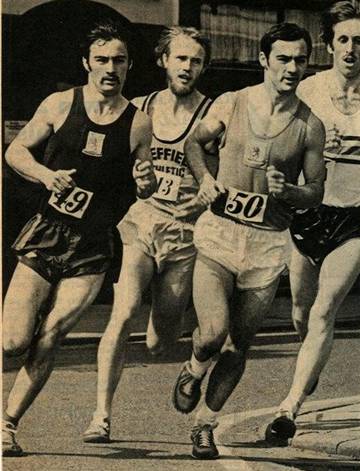
Gordon (49) and Steve (50) in the Newark 10K Road Race, June 1979

GORDON answers the Questionnaire

Name:   Gordon Rimmer

Club:     Ronhill Cambuslang Harriers/Royal Air Force

Date of Birth:   9th August 1956

Occupation:   RAF Aircraft Engineer, current post Manager Ground Training School, RAF Brize Norton

How Did You Get Involved In The Sport?   I never ever trained or had any interest in running whilst at school, my mother did not want Steve (my twin brother) and I playing around the housing estate while our parents were at work, so we used to go to the playing fields in Irvine to play football most weekends and holidays.   We used to leave it to the last minute to go home for tea and ended up running the mile plus to get home as fast as we could.   The first time I “raced” was secondary school, Ravenspark Academy, cross-country races where I came second.   School friend David Hall tried to get me to join his running club but I wasn’t interested.   I joined Irvine ATC cadets and tried most sports, getting in the Scottish ATC Boxing team and had trials for the Scottish rugby team at scrum half.   Irvine entered a team for the Ayrshire ATC Cross-Country Championships where I came sixth and was picked to represent the county in the Scottish ATC Championships.    On no training I finished fifth in the Scottish at Arthur’s Seat in Edinburgh and was picked to represent Scotland in the British Championships.   I came nowhere but was part of the winning Scottish team.   I then joined the RAF the following year (1974) aged 17 and started a three year apprenticeship at RAF Halton in Buckinghamshire.   I tried to get into the Unit football team but wasn’t good enough.   My Flight Commander was in charge of the Cross-Country team and he persuaded me to have a go in the London Services Cross Country League.   I remember running my first race on a very muddy hilly course at High Wycombe wearing my service issue white plimsolls and finished twentieth crawling up the last hill on all fours.   My Flight Commander told me that was really good, so I continued racing in the league matches without doing any training.   In 1975 I started boxing training and won the RAF Under 19 Championship and when I tried my first Cross-Country race at the end of the year I had a dramatic improvement and finished in the top three in most races.   I joined Vale of Aylesbury AAC in 1976 and that’s where my athletics career began.   Aylesbury were a big road running club and I competed mostly in road races, especially 10 milers.  

Did You Ever Have a Coach?    I never had what you call a proper coach.   A guy called Bob Wallis who was an RAF runner who wrote some schedules for Steve Jones early in his career also wrote some for me.   Then Alan Warner, the RAF team manager took over – again just writing schedules, not really advising me.   That was probably part of my downfall and made me injury prone as I think I raced far too much without much planning.

What Do You Get Out Of The Sport?   With the hard training and racing it certainly made me extremely disciplined and hugely competitive, along with a very good team spirit, attributes which I was able to transfer to make my professional and personal life so much more successful.   I met a tremendous amount of runners who became friends, many of whom I still keep in touch with.   I was able to visit many countries which I would never have done otherwise.   It has also left me with many nice memories to look back on, and a scrap book to show my children and grandchildren hopefully.

Can You Describe Your General Attitude To The Sport?    When I took up the sport it was a recreational hobby which developed into a serious pastime where I had lots of fun.   It would have been nice if the prize money and appearance money had been around in my time but that’s just life.   I never had any specific diet and regularly ate junk food.   Steve and I were called the Tupper Twins (after the comic hero runner Alf Tupper) as on the way to the Inter-Services Cross Country Championships when the team bus stopped for a ‘snack’ all the other runners were having a cup of tea and a teacake, Steve and I would order sausage, beans and chips just a couple of hours before the race.   We certainly always had a few drinks the night before races, whether it was the Inter-Services or the Scottish Cross-Country Relays!   Goodness knows how good I could have been if I hadn’t drunk so much and had a nutritionist, physiotherapist, coach and agent.   I am disappointed with the quality and lack of depth within the sport both in Scotland and the UK and would love to be part of a programme to promote running to the younger  generation.

Has Any Individual Or Group Had a Marked Effect On Either Your Attitude To The Sport Or To Your Performance?   Bob Wallis, an RAF runner and early mentor to Steve Jones gave me my first planned training sessions and later on Alan Warner, the RAF team manager, took over “coaching” me through the postal system.   Early inspiration from watching telly was Lasse Viren, Ian Stewart and Brendan Foster.   When I started running at a higher level Steve Ovett was not only an inspiration but would always say hello to everyone, even at just a Southern Counties v RAF match at Crystal Palace.   He even shouted me on in the steeplechase in Oslo when he was there to run the mile, a true sportsman and gentleman.

The RAF squad obviously had a great influence.  At any other time my performances would have made me  hero in the RAF but I was made to look “ordinary” when I first got into the squad with it full of internationals: Steve Jones (World marathon record holder, GB steeplechaser, 5000m and 10000m internationalist), Julian Goater (English National Cross-Country runner and GB 10000m runner), John Wild (English Cross-Country runner and steeplechaser, British Fell Champion), Ray Crabb (English Cross-Country and road runner, 2:13 marathoner), Roger Hackney (GB steeplechaser).   It certainly provided motivation just to make the RAF team.   One year I finished higher up in the Scottish Championships than I did in the RAF Championships!   However they were all a great bunch of lads and we had many great tours and many great social nights.

Newark Athletic Club were very helpful in our initial progression from club to international athletes and Steve and I had many enjoyable track sessions and Midland League races with them as we were improving our pb’s.   Dave Cooney of Cambuslang inviting me into their team gave me great opportunities to come back to Scotland for championship races an particularly in the road and cross-country races which I enjoyed immensely.   I remember one year my sister came to watch the Edinburgh to Glasgow relay and followed the race round in the Cambuslang team bus.   Dave and the Cambuslang team were always so friendly and welcoming and what a fantastic team spirit, equal to if not better than the RAF squad.   I still keep in touch and went along to Sutton Park this year (2011) to shout them on winning the British Masters road relay gold medal.   They have also made Steve and I life members of the club.
Rimmer 6

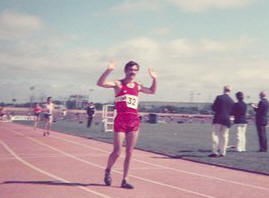
Speaking of Steve, my training partner and life-long competitive twin brother, we certainly drove each other on to better performances and I think made an even stronger bond between us than any other brothers.   Being so competitive made us do pb’s even in training!

What Do You Consider Your Best Performance?   Despite a relatively short athletics career, I have had many memorable and satisfying performances.   Ones that spring to mind are

Winning the UK Steeplechase Championships in 1979;   Winning the Edinburgh Games 5000m in my pb of 13:48 beating a host of Scottish internationals.   I never really enjoyed the mud of cross-country but one tremendous performance was the IAC Invitation Team Cross-Country at Crystal Palace in 1980, the short course and surface suited my style and I came fifth behind two Etiopians, Julian Goater and Steve Jones but beating the likes of Roger Hackney, John Wild, Steve Kenyon, Dave Lewis, Eamonn Coughlan, Nick Lees, Dennis Coates and by some considerable distance, fellow Scottish internationalists including brother Steve, Jim Brown, Brian McSloy, John Graham, Ian Gilmour, Graham Laing and now a Cambuslang athlete Iain Campbell (who gave blood the previous day!)

The most pleasing performance was anchoring Cambuslang to their first Scottish title in winning the Cross-Country relay championships in Inverness in 1980 after the three other runners Rod Stone, Eddie Stewart and Alex Gilmour putting me in neck and neck with Ron McDonald of Clyde Valley on the last leg and going on to lift the title for them gave me such a fantastic feeling when we beat the favourites, Clyde Valley.

But the obvious best performance was my lifetime pb of 8:26.6 for the 3000m steeplechase in Belgium in 1980, a new Scottish record and sixth on the UK All-Time list at the time, and Nat Muir was cheering me on.   Nat told me later as the Belgian champ passed me with 100m to go, Mike McLeod said to him “Looks like your Mate’s lost it.”   Nat said “Don’t worry, I’ve seen his sprint finish,” and yes, I passed him with a few metres to go.

What Do You Consider Your Worst Performance?   It may not have been my slowest race, 8:42.2, for the 300m steeplechase but it was the UK Championships/Olympic Trials at Crystal Palace in 1980.   Two weeks after setting my top time in the UK (8:26.6) I felt confident that I would get in the top three and qualify for the Moscow Olympics.   At the bell, Roger Hackney and I were 30 yards clear but I had a horrific last lap rapping one barrier after losing concentration and then falling over at the last to finish fifth.  The first three went to Moscow but none of them ran as fast as my time even when they got to the Olympics.

One other performance I remember that hurt was the RAF 1500m championships in 1980.   I had never won that title and I was in great form and new I could outsprint any of them – Jones, Goater or Hackney.   On the second lap we were still bunched with Jones leading, I was second with junior Mark Flint in third and Hackney fourth.   All of a sudden I went tumbling to the ground, Hackney had pushed Flint who then caught my training leg.   I picked myself up but finished fourth with Jones winning.   The RAF picked me ahead of Hackney to team up with Jones in the Inter-Services, and I showed my form winning the title beating Jones, Glen Grant from the Army and Chris Robison from the Navy.

What Do You Do Apart From Running To Relax?   I am a family man and love going for walks in the country with Gill my wife and our little Yorkshire Terrier George.   I watch lots of sports on telly and keep abreast of athletics with many websites – SATS, Power of 10, etc.  

I tried to make a comeback every year when I was 40 and 45 as it was a new Vet year, although I always gained speed quite quickly it never lasted long, either knee, calf or Achilles always flared up and cut any hopes I had of a comeback.   I have been a golf fanatic for many years and still remain very competitive, having won quite a few competitions, particularly one-to-one match play competitions.   I am 55 this year and having put on quite a few pounds, I realised that my knees in particular wouldn’t let me even jog to lose weight, so I have taken up cycling to lose weight and keep fit.   Who knows if I will take it up competitively but I really enjoy it.

Were There Any Goals That You Did Not Achieve?   It would have been an honour and great experience to run in the Olympics and also to be able to tell friends about it many years later. 

I think, due to injuries, I never reached my potential pb’s in 5000m and 1500m in particular.   I achieved my pb for 3000m just a few weeks before injury forced my retirement, so I will never know how fast I could have gone.  I really think I could have done the sub four minute mile after I had given up the steeplechase.   As I said before, without nutritionists, coaches and agents and particularly physios I did well but could have done better.   I particular, my warm-up was touching my toes twice before embarking on a hard training run.  I took up steeplechasing because it was a weaker event, but found out that it was a really tough event and the constant jarring on landing over the barriers took its toll on my body, especially as I only had little legs and it felt like a high jump at speed every time I hurdled a barrier.   So having a fitness advisor would have had a huge effect on my career, I’m sure.   Having to give up at age 27 still achieving pb’s was indeed a cruel blow to end my short but successful career.  

I think I raced far too much: as well as results in my profile, I was running every Wednesday in cross-country league matches or RAF matches as well as racing virtually every weekend.  

What Has Running Brought You That You Would Not Have Wanted To Miss?   The friendship and camaraderie of both team mates and opponents, the mutual respect for each other.   The excitement of racing and the feeling of success when you win gives you such a rush, especially when you beat someone better or achieve a pb and in particular I loved a sprint finish, gliding past many a runner to win in a 1500m race.

Can You Give Details Of Your Training?   It’s such a long time ago but what I remember, I was never a big mileage man: 60 – 70 miles max.

Winter Season

Sunday:   14 Miles Easy.

Monday: 5 miles easy lunchtime; 3 x 5 minutes hard [3 min recovery] evening.

Tuesday:   5 miles easy lunchtime; 7 miles tempo run evening.

Wednesday:   RAF or League Cross-Country League race.

Thursday:   5 miles easy lunchtime; 5 x 3 minutes hard [two minutes recovery] evening.

Friday:   5 miles easy lunchtime; 7 miles tempo run if no race on Saturday.

Saturday:   Race or 7 miles hard.

Summer Season

Sunday:   10 – 12 miles.

Monday:   5 miles easy; 8 x 3 minutes hard [1 minute recovery]

Tuesday:   5 miles easy; 12  x  200m [200 metres jog recovery] or  6 x 400 metres.

Wednesday:   race or 7 miles tempo run.

Thursday:   5 miles easy; 20 x 100 metres flat out on football pitch [jog behind goals recovery]

Friday:   5 miles easy; 7 miles hard if no race on Saturday.

Saturday:   Race or  miles hard.

What Changes Would You Like To See In The Sport?        It’s nice to watch the Diamond League races with all the pace makers and athletes doing fantastic times and help them achieve pb’s.   However I preferred competing in “races” (we had no pace makers in my day) so every race was different and you didn’t know who was going to do what and had to react to different challenges throughout the race.   I agree with the fantastic prize money and appearance money as you have a relatively short career in athletics.

In these days of computer games, etc, the strength in depth in athletics is very poor – particularly in UK athletics.   I like the programmes like JogScotland and Run England just to get people off their backsides and do a bit of sport.   The Parkruns are also very good once you have got people interested in jogging.   It’s a shame the World Cross-Country Championships became a GB team as it was the highlight of some of the Scottish runners careers.

I am coming to the end of my RAF career and would love to get involved with some sort of management or events organisation in athletics in Scotland or England as a second career.

The questionnaire raises some very interesting questions, not the least of which is – if Gordon could do what he has done without medical/physiological backing and training advice, why can’t the present generation do better with all that assistance????   However, Gordon’s story is fascinating in its own right and I’d like to thank him for his help in preparing it.
Tom O’Reilly

TP 1

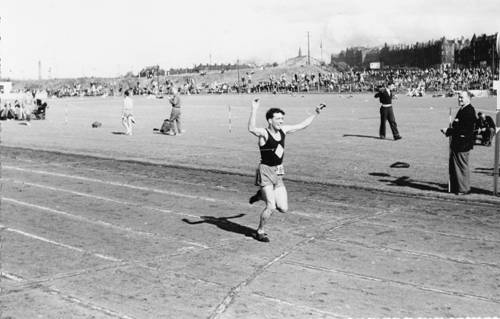
Tom winning the SAAA steeplechase in 1958

I first met Tommy when we both ran in the handicap mile at Singer’s Sports about 1960 – I was third and he was well in front after starting well behind me.   He was very friendly and we got on well but, as I was to find out later, Tommy got on well with everybody.   Despite being Scottish steeplechase champion and the first ever SAAA record holder for the steeplechase, he had no hidden agenda and was consequently respected and liked by everybody.    He raced on the track, on the road, over the country and on the hills with success; he competed in events from 800m to marathon, from short hill races like the one at Campsie Glen and fearsome ones like the Ben Nevis.     He is a member of Springburn Harriers and has represented the club in County, District and National Championships and in the prestigious Edinburgh to Glasgow relay.

Name:   Thomas O’Reilly

Club:   Springburn Harriers

Date of Birth:   8th September 1932      [Tom died in November 2022 at the age of 90]

Occupation:   Coppersmith, John Browns; Coppersmith/NDT Foreman, Rolls Royce.   Now retired.

Personal Bests:   Marathon 3:04, Half Marathon: 77 Minutes (age 50),   Ben Nevis:   1 hour 56 minutes 03 seconds (1960)    (Other pb’s below:   B McA)

How did you get involved in the sport?   I had run in a sea cadets sports day and was first in one race and second in another.   This led me to think I was God’s gift to athletics.   After joining Springburn Harriers I thankfully soon realised I was not as good as I thought I was!

Has any individual or group had a marked effect on either your attitude to the sport or to individual performances?   I think I was thankfully influenced in my early years by the conduct, attitude and dedication of the committee members and the running members of Springburn.

What exactly do you get out of the sport?   The satisfaction in my modest achievements, the feeling of well-being you have when you are fit and running well, and last but by no means least, the friendships that I have made over the years which have lasted a lifetime.

Can you describe your general attitude to the sport?    In my early years it was a quest for fitness and improvement of performances, but now it’s  just be as fit as you can be.   And enjoy your daydreams and memories of yesteryear, but when that man fires the gun, if you are not fast, you are last, so just go!

What do you consider your best performance/performances?   Obviously my two steeplechase championships and the two Scottish records, something I never thought possible, but I think that the third team place in the 1964 Midlands cross-country relays, where I was undoubtedly the weak man in the team, and was expected to lose places on the third leg but the ability to hurdle barbed wire fences (four in the last half mile) was a great asset to have and so it proved – I held on to third place on the day.

What ambitions do you have that remain unfulfilled?   To be picked for the Olympics and to win the lottery!   But to be serious, idf I can get a bit of fitness and get on to the track again, I will be happy.

What do you do apart from running to relax?   I enjoy a day in the hills up north, and I also still have a few sections of the West Highland Way to do.

What did running bring you that you would have wanted not to miss?   Discipline, achieving something in the sport, goals to aim for friendships and wonderful memories.

What do you consider your best races?   Both my Scottish championships and the third place in the cross-country relay.

… and your worst?    My worst race for various reasons was the Scottish Three Island Peaks Race in May 1986.   The race started in Oban at 2:30 pm on the Friday and the first leg is a short sharp run up round McCaig’s Folly then back down into Oban for the sail to Mull where we had to run Ben More (3,169 feet), down to Jura to run the three Bens of Jura and then round to Arran to run Goatfell and finally to finish in Troon on the Monday.   What was to follow during the race I can only put down to the fact that I had run in the Lochaber Marathon the previous Saturday (winning the Over 50’s age group) and not giving myself a chance to recover.   We came off Ben More just as it was getting dark with about seven and a half miles of road still to run.    With four miles to go I was in a dark place, I had said to Dave McKirdy that I had nothing left to give.   Without a word, he took my pack off and put it on along with his own and then said, “You can run now”.   I was able to jog the remaining miles to Salen and the yacht.   That was Davie at his best.

Can you give some details of your training?   My training was never that scientific.   I had always enjoyed running hills so I based my training on hill sessions with the occasional long runs – and at times they developed into hill sessions.

*

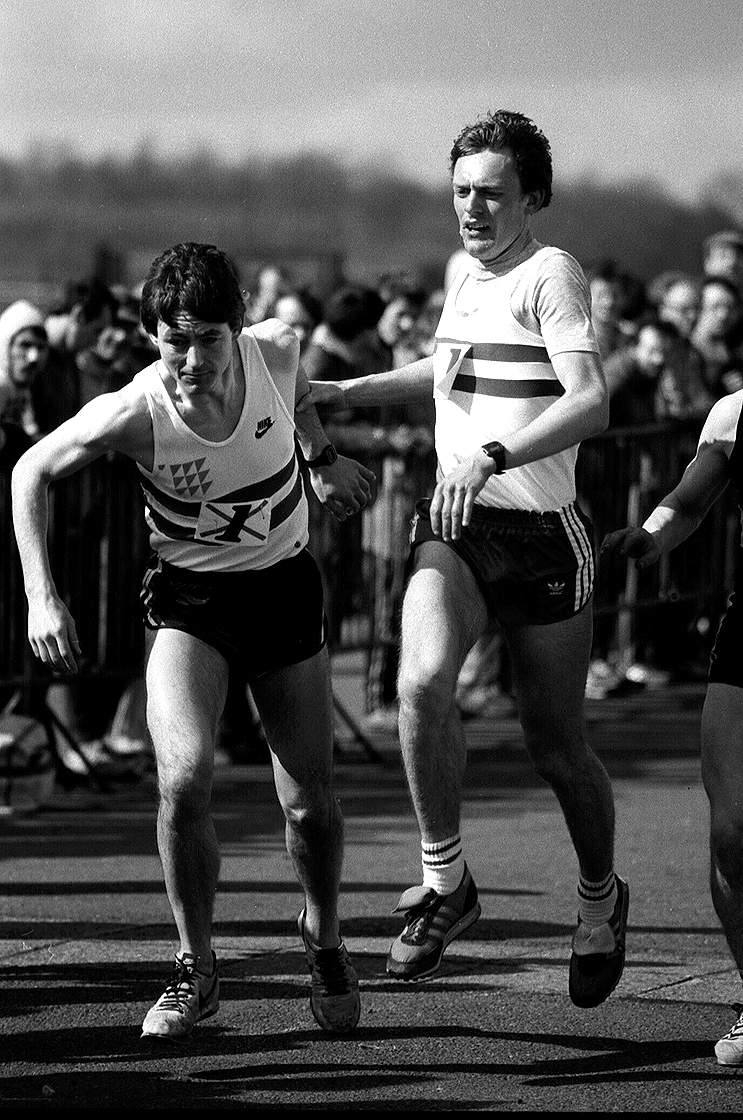
 As he said above, Tom had been a runner for Springburn from 1951.   In 1952 as a Junior runner he was forty ninth in the National and he would go on representing the club in major competitions right up until 1977.   If we start there at the beginning of 1952, the first race that was reported in the ‘Scots Athlete’ was the Midland District Championship on 2nd February where  Springburn Harriers was third team with Tommy being a non-counting runner in fifty second place.    In the National a few weeks later he finished 49th in the Junior Championships.   He was still a first year Junior in 1952.   By 4th October though, he was a member of the first team which finished eighth in the McAndrew Relays.   Tom was on the second leg and the team was S McFadyen (16:30), T O’Reilly (16:38), T Lambert (16:08 and J Stevenson (16:55).   A month later, on 1st November, he was again in the club’s first team which unfortunately finished thirteenth with the team this time being K Rankin (14:22), T O’Reilly (14:29), S McFadyen (14:24) and J Stevenson (14:02).   The teams were well matched with the runners all having very similar times.   In November came his first taste of the Edinburgh to Glasgow and the picture above, by George Barber, is taken from the front of the ‘Scots Athlete’: the stage winner was George White of Clydesdale (number B 4) with Tommy back in fourteenth place.    He was to run on every stage of this magnificent race before he was done with it in 1977.   The Inter-Counties was held on December 13th that year and Tommy O’Reilly was selected for the Lanarkshire team and finished twentieth.   Into January and the Midlands Championship was held at Lenzie where Springburn Harriers finished fifth with Tommy 61st.   On 28th February in the National, Tommy was still a Junior and had a disappointing run to finish in 53rd.

He did not appear in any track rankings of championship reports that summer but in November he turned out in the Midland Relay at Stepps and ran second in the team that finished seventh.   The runners were S McFadyen (15:21), T O’Reilly (15:22), A Stevenson (15:28) and Tommy Tracey 13:56.   The arrival of Tommy Tracey was to help the club to several trophies and medals – but so was the maturing of Tom O’Reilly.     In the Edinburgh to Glasgow Relay later in November, he was on Stage Four and moved the team from tenth to eighth (it was to finish fourth) with the fourth fastest time of the day on his stage.   In February 1954 Springburn was third in the Midland Championship with Tommy 28th.   The National in 1954 was his first as a Senior but the trail at Hamilton was familiar to him by now and he finished 57th in a field of over 200.

In November 1954 he ran the first stage of the Midlands Relay where the team of O’Reilly (17:16), DG MacKay (17:43), RF McLean (17:10) and T Tracey (16:46) finished fourth and just out of the medals.   In the 1954 Edinburgh to Glasgow he again ran the fourth stage and again made up ground (fourth up to third) with fifth fastest time on the leg to help his club win bronze medals for third place.   In the Midland Championship on 29th January at Lenzie the team was again third and Tommy was 37th finisher.   Springburn only dropped to fifth in the National but Tommy O’Reilly was twenty fifth and the first man from the club across the finishing line.   Later that year he joined the RAF to do his National Service  and although it took him out club teams for the following winter – he even missed the E to G – it improved him as a runner.

When you see that a runner was in the RAF, you immediately think of all the very good Scots who have run for the service with distinction.   Men like Joe McGhee, Alastair Wood and steeplechaser Gordon Rimmer all come to mind as do the many non-Scots like Derek Ibbotson, Steve Jones, Roger Hackney and Julian Goater.   When the RAF officer asked the new intake if they were interested in sport, Tommy responded immediately with athletics.   He won the trial with some ease – three two mile laps saw him go to the front at the start of the second and win on his own.   The sergeant in charge of the team was Sergeant Bill McMinnis who had won the Doncaster to Sheffield Marathon in 2:33 in 1954 and was an established English and British International.   When Tommy won the race the following week, which McMinnis missed because he was running for Britain in Czechoslovakia, in a time faster than McMinnis’s course record, notice was taken and Tom and Bill became firm friends.   It was a friendship that lasted well beyond their time in the services.    Tommy was then posted to a station where the top man in the athletics team was a chap called Danny Gallagher who had been a professional in Scotland and was also a very talented runner.    Many friendships forged in the Services lasted and Danny became another of Tommy’s long lasting friends.    Fate also plays a part in the development of any running career.    Tommy was charged with setting out a trail for an RAF championship and he chose one which just by chance suited his knowledge of the local terrain and his talents.    When it was heard that McMinnis himself was coming to run, all Tommy’s RAF friends came along to see him getting a right good doing by the great McMinnis!    Tommy won.   Then several weks later he had a letter from McMinnis saying that he (McMinnis) had been selected for the RAF team but had declined saying that they should pick Tommy.    They did so and Tommy gained his RAF vest.    He was also approached by Derek Ibbotson to request a transfer to Ibbotson’s squad but turned it down for personal reasons.    Tommy pointed out that when he was ranked twelfth in Britain for the steeplechase, there was a note at the foot of the list saying “a noteworthy performance” and it was Ibbotson who had run a steeplechase twenty seconds slower than Tommy had done but there had been one hurdle missing in each lap.    The time in the RAF clearly suited Tommy.    The regular hours, time for training, companionship and structures competition led to  an improvement in his performances – his first Edinburgh to Glasgow when he returned to Civvy Street produced the second fastest time on the eighth leg.

Having missed the whole of the Scottish 1955-56 winter season serving Queen and Country, Tommy started the following season in the traditional opener, the McAndrew Relay on the first stage in a team of O’Reilly, Rooney, McCormick and Ballantyne which finished fourth.   In the Midland District Relay at Stepps on 3rd November, Tommy ran first in the team which again finished fourth with Rooney, McCormick and Tracey as his team mates.   As noted above, he was on Stage Eight of the E-G two weeks later and ran a very good race to be second fastest in the field.   The heavy, hilly trail at Hamilton was not to his liking in 1957 and he finished outside the first 100 – 109th – in the team that was eighth.  He continued his adjustment back to civilian life that summer but one item in the report on the SAAA Championships in June that year in which an RAF man excelled is of interest.   “D Shaw (RAF) followed the holder FG Nelson (Bellahouston Harriers) for a few laps in the steeplechase but then went ahead and won in the new best championship time of 9 min 22 sec beating Nelson by 35 yards.   The former champion was also inside the previous best time.”    The steeplechase championship race was run over 3000m for only the third time, previously held over Two Miles there was no Scottish record, native, national or all-comers record on the books.    There was of course the slight problem that there was only one track equipped with a water jump in Scotland and, since that was in Edinburgh, training for the event and encouraging runners to take it up were both difficult.

The winter of 1957-58 had the Edinburgh to Glasgow run on the third Saturday in November and Tommy took his place back on the first stage where he was ninth for a team that finished sixth and in the other major event of the year, he was seventy fourth.   At this point he was doing good club standard running but things were to change that summer, and again an element of chance was present.   The SAAA Championship entry forms came out and beside each event there was a time, height or distance in brackets.   These were the ‘standard performances’ and athletes achieving or bettering these marks received a standard medal.    This was the Association’s way of encouraging athletes to improve – and it might well be an idea whose time has come around again in 2012!   Tommy went through all these times and decided he would have a very good chance of getting a medal in the steeplechase.    He was a good runner and he could hurdle.   On the day he knew that Clark Wallace of Shettleston was probably the best in the field so he latched on to him.   After a couple of laps he looked back and saw that they were well clear of the third runner and felt that he was on for a silver medal.    Then it dawned on him that he could maybe win it and at the gun he took off.   And won.    The second RAF man to win the event in two years.   The standard was only 10 minutes 10 seconds and his time of 9:41.2 meant that he had his standard – but he also had gold!

Although he was good on all surfaces, he still regards himself as primarily a track runner and that showed up again the following year.   Like all runners in all clubs, he raced all summer – roads, track events at sports meetings, highland games and championships.  He set his personal best for the one mile in summer 1959 when he ran 4:23.8.   One typical race that year was a short-limit handicap at Carluke  where the race report read: “The principal event at Carluke Rovers open sports meeting was the invitation one mile short limit handicap in which the Scottish record holder G Stark (Edinburgh Southern Harriers) was running from scratch. At the end of the first lap, Stark was just behind R McKay (Motherwell YMCA) and J More (Kilmarnock) who started from 10 and 15 yards respectively. In the meantime however, the Scottish steeplechase champion, T O’Reilly, off 35 yards, was setting a good pace over the seven lap course and by half distance it did not look like Stark would catch the leaders. Soon afterwards, McKay and More left Stark and he had to be content with sixth place – 6.2 seconds behind O’Reilly the winner.”   A seven lap one mile race on grass: to get an idea of how tight it was, think that indoor tracks at present are four laps to the mile!      This race however was in August and in July Tommy had already won his second SAAA steeplechase title.   John Linaker was the fastest in Scotland at the time and another in the race who had beaten Tommy frequently in the past had been J More (Kilmarnock): not matter how Tommy ran the race, More would come past with a rush up the finishing straight.   Tommy O’Reilly was thought to be looking forward to third place.   But never the man to give in before the race was run, he simply took off when the starting gun fired.    He just ran away from the rest.   And won again.    The first to congratulate him after the race was More who had finished about 350 yards back.   He said that Tommy had taken ten yards out of him at every hurdle and water-jump.   30 obstacles made that about 300 yards so it was probably an accurate enough calculation.   The even better news though was that the SAAA had decided to keep records for the event and so the first ever Scottish record holder for the event was Tommy with his time of 9:12.2.    It was covered in the ‘Glasgow Herald’ as follows: In the senior events best championship performances were established in the 440 yards, 3000m steeplechase and pole vault.”    Not a lot of coverage there, then.    The results further down the page noted that he had won in 9:12.2 with JH Lineker second and R Renton third.    The record stood for six years until Lachie Stewart broke it on 12th August 1965.

When asked about his steeplechasing ability at a time when there was still only one water-jump in the country, he said that he was never the best runner, but he could hurdle.    He says he can’t boast about it because he had nothing to do with it – it was just an ability that he had.    And maybe even one that he developed, he certainly had no fear of hurdling cross-country fences, walls of hedges as we will see when we come to the 1962 cross-country season.   He was also not slow on the flat – see the report on the race above at Carluke and it was also in 1959 that he was invited into a race at Ibrox against his old RAF colleague Derek Ibbotson, England’s Frank Salvat and Scotland’s Graham Everett.

Times can be deceptive, especially when we are talking about the 1950’s when they were run on cinder and grass tracks.   Both were seriously affected by the weather unless they were well-drained and very few were.   Many were not even level!   What can’t be tinkered with is a man’s competitive record and Tommy was a very good head-to-head racer on the road and especially on the track.    If we look at his Edinburgh to Glasgow record we get a table like this.

Year Stage Position/progress Comment   Year Stage Position/Progress Comment
1952 1 14th     1965 8 Held 9th  
1953 4 10th to 8th 4th fastest   1966   DNR  
1954 4 4th to 3rd 5th fastest   1967 8 Held 7th  
1955   DNR RAF   1968   DNR  
1956 8 Held 10th 2nd fastest   1969 8 8th to 7th 2nd fastest
1957 1 9th     1970 3 Held 9th  
1958 1 No information     1971 7 4th to 5th  
1959 4 Held 15th     1972 1 18th 21 years after his first run
1960 1 5th     1973   DNR  
1961 8 Held 14th     1974   DNR  
1962 1 11th     1975 5 Held 11th  
1963 6 Held 12th     1976   DNR  
1964 1 12th     1977 2 4th to 20th  

Several points emerge:   (1) He is one of the very few men to run all eight stages for his club in this event.   (2) Leaving aside the last run, he had a net gain of 4 places and only lost 2.   (3)  The last run ins atypical and to me represents a desperate ploy by his club at a time in his career when he should not have been looking at this difficult stage: but it is a mark of his team spirit that he agreed, probably reluctantly, to do what his club required of him.   The club though had been very good indeed throughout the 1960’s on road and country with several outstanding track men and that has been noted elsewhere on this website and Tommy contributed to this success.

Since he is regarded by many as being primarily a steeplechaser we should look at his career in that event.   We have already noted his two SAAA titles and his record but he went on to win more medals in the event at National level.   He continued to run well on the track and won bronze in the SAAA steeplechase in 1960, 1961 and 1963. In 1961 John Linaker won from RA Henderson of Braidurn AAC with Tommy third.    The report said, “JH Linaker, who is English born, had a splendid run in the steeplechase easily outstripping his rivals, who included JP O’Reilly (Springburn) whose previous best time he beat by nine seconds.”    Interestingly enough, Tommy’s team mate Eddie Sinclair won the Three Miles from Alastair Wood in 14:05.   Tommy’s best time for the steeplechase that year was 9:31.6.    In 1961, he was again third behind Linaker (again) in 9:26.6 and A Ross (Edinburgh Southern).   His best that year was 9:42.6.   Unplaced in 1962, he had better luck in 1963 when he was second behind John Linaker (timed at 9:24.6) and in front of HD Brown (Anglo-Scottish).    This ended a period when he won five SAAA Championship medals in six years – two gold, one silver and two bronze.   But there’s more: as has been said, there was no water-jump in the West and so the event did not appear in the District Championships until 1961 when there was one at Westerlands.   Then in 1971 when the West District Championships went to Carluke for two years, there was again no ‘chase in the District event!    In between times Tommy did well in the District Championships.   He had been third in the Mile in 1959; in 1960 when there was no event in the West John Linaker won the equivalent race in teh East Championships in 9:10.4.   In 1961 Tommy was second behind Charlie Meldrum and one place ahead of fellow Springburn man Moir Logie to take the silver medal.   He went one better the following year when he won from Lachie Stewart and Jim Finn in 9:53.8, and in 1963 he was second to John Linaker and ahead of Lachie Stewart at Dam Park in Ayr to take silver.   Linaker’s winning time was 9:25.8.   In 1967 a new generation of steeplechase runners appeared and in the West District Championships on 29th May, he was third behind Joe Reilly and Tom Patterson with the winning time being 9:57.4.   He won one more medal at the District Championships and that was in 1969 when he was third behind Hugh Elder and Jim Sorbie in a time of 10:05.   In 1970 they went to Carluke and there was no steeplechase.

His annual rankings in the event were as follows:    1959:   9:12.2  (1);  1960: 9:31.6 (7);  1961:  9:42.6 (5);   1962:  9:53.8 (13);  1963:  9:48.2 (8);  1964: 10:01.2 (16);  1969: 10:05.0 (24);  1970: 9:44.0 (7)

Although he was a good runner over the shorter cross-country races, it’s probably fair to say that it was never his favourite surface.   That he could run well in the relays at the start of the season is illustrated by the story if the Midland Relays in 1969.    The ‘young lions’ such as Harry Gorman, Duncan Middleton and especially Eddie Knox were starting to come through as outstanding seniors.   In the trial for the team to represent the club in the Midland Championship, Mike Bradley (SAAA’s and AAA’s champion miler and Scottish international runner), Harry Gorman (a very good club runner indeed) and Eddie Knox (Scottish track champion in several age groups and world junior cross-country champion) all moved away in a group at the start.   Tommt was intent on following them but was running on his own just a bit back from them but clear of the rest of the field, so they encouraged him to run with them for a bit before he dropped back a bit at the finish.   However he was clearly in the team and not as sharp at that point as the others.   The running order selected was Harry Gorman first, Mike Bradley second, Tom third and Eddie Knox last.   As I said, Harry was a very good athlete but at that point in his career he could be a bit erratic and the Midland Relay was a day when he finished down the field n twenty first place.    Mike ran a first-rate second stage to pull in no fewer than eighteen places and hand over to Tommy.   The thinking at the time of selection was that the first two would get a good place and if Tommy could hold it or limit the drop, then Eddie could have a real go on the last part of the race.   Tommy took over in third and held it for a bit but was being overhauled when they came into the last half mile.   There was a fence.   He cleared it and as he landed turned and saw the next three or four guys climbing over and passing him – but there were three more fences in that last half mile and he took no prisoners at all at any of them, regaining third place and giving Eddie a lead of just a couple of feet from the fourth runner.   Eddie ensured a safe third place and bronze medal for the team.   A good run from a very competitive athlete and team man.    The fences might have helped, but his attitude and track speed were maybe also key factors.

TP 2

Shortly after Tom became a veteran athlete, he answered a questionnaire set by Hugh Barrow in 1981 and that is printed below.

Personal Bests (including your best veteran performances): 220 yards: 24 seconds;   440 yards: 53 seconds;   880 yards: 2:00;   Mile: 4:22;   Two Miles: 9:18;   3000 steeplechase: 9:12.2;   As a Vet:   200 metres: 25.5;   400 metres:  56.5;   3000 flat: 8:52.

How did you originally start in athletics  In my early teens I was a member of a sea cadet company and ran in the Glasgow cadet championships with some success.   On ;leaving the cadets and looking for another interest I joined Springburn Harriers on 1st August 1951.

What do you consider to have been (a) your best performance?   3000m steeplechase in 9:12.2.    (b) Your worst performance?   Scottish Three Island Peaks race – 3 days 20 hours.

What are your goals as a veteran?   To compete as long as I am able, and let people see that life can begin at 40 and extend the band of friendship that is so much part of Vets athletics.

Give details of your training: Over the past few years, like a lot of the Vets, I have had my share of injuries: when the injury clears I build up my fitness on steady running.   When a level of fitness is reached where I can start to think of hill sessions or whatever , I seem to be injured again, and so it goes on.

What do you do to relax?   Long easy runs, a glass of homemade wine with friends, a cider or two after a race, hill walking.

Where do you think veteran athletics goes from here?   Veteran athletics have come a long way in the past years, and are still moving forward, but we must never lose the sight of the simplicity of its original aims.   Where we are not organised is at club level.   I know East Kilbride have started out along this road and I hope my club will follow their lead shortly.   This is not meant as a reflection on the clubs  but on the individual Vets, myself included.

TP O’Reilly enjoyed a long and successful career as a veteran runner.   Turning 40 in 1972 (vets athletics started at the age of 40 in the late 1960’s and the M35 category did not come into being until the twenty first century).   One of his first big triumphs was in 1973 when Bill Ramage, who was an enthusiastic competitor in vets athletics, asked him if he’d like to compete in the English Veterans Cross-country championships at Birmingham.   Tommy was a bit doubtful but agreed and they persuaded Tony White to complete the three-man team.   Tony came from Birmingham and insisted that they stay with his family there.   They did stay there in comfortable surroundings, had a good night’s sleep and then competed.   Bill was eleventh, Tom was twenty third and they had a wait until Tony crossed the line in fifty third .   Looking over the scorers shoulders Bill and Tom thought that they were second team but said nothing, convinced that they were mistaken.   But they weren’t – second team in the English National.   Tony’s first big medal and he was straight off to phone home about it.   The picture above was taken at the course after the race.

 In the Scottish Veterans Cross-Country Championships, he won eleven individual medals in the M40, M50, M60, M65 and M70 age-groups including four victories: M60 in 1996 and 1997 and M65 in 2000 and 2002.   His last two medals, in 2004 and 2006, were both silver in the M70 category.   But he ran in more than cross-country championships, and as an M70 vet in 2004 he won the Coatbridge 5K in 22:27, the Christmas Handicap 5 Miles in 35:44, the Scottish Veterans Walter Ross 10K at Lochinch in 45:04, the Scottish Veterans Glasgow 800 10K in 48:23 and the Alistair McInnes Memorial 5 Miles in 35:31.   His best track times in the twenty first century so far are 2:57.46 for 800m in 2006 which won the Scottish Masters Championship and 5:58.94 for 1500 indoors in 2006.    As an M80, I wouldn’t be surprised to see him have another go on the track soon!

Tommy let us borrow some of his photographs and we have them on show here – Tom O’Reilly’s photographs .   


Bill Mullett

Mullett 1

Bill Mullett (right) with Don Faircloth

For all that Bill Mullett ran in three ICCU Championships for Scotland and raced in the Edinburgh to Glasgow and in the National cross-country championships he is a bit of an unknown quantity in Scottish athletics.   His name is not known to many current practitioners of the sport.   In an effort to put this right, Colin Youngson has penned this profile of a Scottish steeplechase gold medallist and record holder.    The search for information goes and and it is hoped to add to the profile.

Bill Mullett was a British international steeplechaser and a Scottish International cross-country runner.   Although he lived mainly in the south of England, William Arthur Mullett was born in Tarbert, Argyll on 13th November, 1947.   Bill’s main club was Brighton & Hove AC, but in Scotland he represented the outstanding Shettleston Harriers.   In 1967 having only just turned 20 years of age, he ran for the Glasgow club in the Edinburgh to Glasgow Relay, recording the second fastest time on the Seventh Stage.   After a thrilling final-stage sprint between his team-mate Henry Summerhill and Aberdeen’s Terry Baker, Shettleston shared silver medals in second place.   However travel difficulties prevented Bill in sharing in his Scottish club’s frequent gold medal successes in this prestigious event over the next six years.

He participated successfully in three successive Scottish National cross-country championships.  In 1968 at Hamilton, Bill finished third in the Junior event leading Shettleston to team gold medals.   Then at Duddingston in 1969, he raced to third in the Senior event behind Dick Wedlock and Fergus Murray.   Shettleston finished second team.   Finally in 1970 at Ayr Bill won his third and fourth National bronze medals whene he ended up just behind Jim Alder and Dick Wedlock and his team also finished third.

Bill Mullett represented Scotland in the ICCU Championships three times.   In 1969 at Clydebank, Scotland finished fifth with Bill a team counter in fifty fourth position.   At Vichy in 1970, Scotland was fifth again but Bill improved to a fine twenty fifth and second counter behind Lachie Stewart.   However he had a less successful run in terribly muddy and windy conditions at San Sebastian in 1971 and did not score for the team in 114th position.

Mullett 2

As a steeplechaser, Bill Mullett’s best season was 1969.   After early season performances of 14:23 (5000m) and 29:42 (10000m), he improved his 3000m steeplechase best by 18.8 seconds to become Scottish National record holder with 8:40.8 achieved on 1st September at the White City, London, breaking the previous record of 8:41.2 set by Alistair Blamire at the same venue on 2nd August.   Bill ended up on top of the Scottish ranking list a mere 0.2 seconds ahead of Gareth-Bryan Jones.   On six occasions Bill ran 8:55 or better and he also made his British international debut.   Commonwealth Games Year, 1970, was a disappointment.   Bill Mullett was unable to reproduce his form of the previous season running only 8:56.8 and failed to gain selection for Edinburgh.   In 1971 he did not break nine minutes and he seems to have been injured in 1972.  He did have a very good season, however, in 1973 when his times included 3:52.9 for 1500m, 8:08.0 for 3000m, 1:43:45 for 20 miles and 8:48.2 for 3000m steeplechase.   In a closely contested SAAA steeplechase final in June, he defeated Alistair Blamire to win gold at last.   Bill’s best was a winning performance at Crystal Palace in August and he ran 8:51.5 or better four times that year.   In 1974 he concentrated on the flat and improved his 5000m personal best first to 14:07.8 (a win at Brighton in August) and then to 14:06.2 (another win at Crystal Palace in September).

Bill Mullett’s final steeplechase performance (8:53.4) was a victory at Warley in August, 1975.   The Scottish yearbook comments that despite being considered a ‘veteran chaser’ (at only 27!) he still displayed ‘masterly technique’ to finish third in that season’s rankings.   After that Bill continued competing.   He recorded at 5000m time of 14:19.4 in 1977, made his marathon debut (2:31:49) at Harlow in 1979 and improved this time considerably to 2:22.35 when he finished fifth in the 1981 Essonne marathon in France.

Bill Mullett peaked early and very impressively achieving a great deal in the late 1960’s.   Then despite injuries, he continued to produce good times over a variety of distances for several years.   Rival Alistair Blamire remembers him as a pleasant, modest and, friendly bloke.   When he (Bill) ran his National record Alistair was behind him in sixth place in 8:44.   Alistair points put that they both ‘arrived’ in the same year and ‘disappeared’ the next.

That is where Colin’s review of Bill’s career concludes and it can be seen that with cross-country championship medals, Edinburgh-Glasgow medals, ICCU runs of quality, a steeplechase record and several top class performances to his credit, Bill Mullett should be better known in the country than he is.   


John Lineker

Lineker 1

John Linaker leading Lachie Stewart in the SAA Championship, 1966

John Linaker was a grand all round athlete who ran well on all surfaces – road, cross-country and track (both indoors and out).    Colin Youngson has covered his career below in some detail but it might be appropriate to say a word or two about his predecessor as Scottish steeplechase record holder, T.P. O’Reilly of Springburn Harriers.   Tommy was a fine athlete who trained hard and raced hard – and raced a lot!    He loved the Highlands of Scotland, particularly those of the West Coast and raced all over the highlands: Kinlochleven, Spean Bridge, Fort William and many more.   A keen gardener he collected specimens of heather from wherever he was racing and transplanted them to his own garden at home in East Kilbride.   He sang in the Gaelic (he had a fine singing voice) and many a bus trip home was enlivened and enriched by Tom singing at the back of the bus while all those who had just run in the Mamore Hill race slumbered their way home.   But he loved to run and had a whole string of race successes to his name.   One of the first sports meetings I attended on demob after National Service was at Ibrox Park where Tom won the steeplechase – in those days it was the done thing to place hedges in front of the water-jump barrier (see the picture on Bill Ewing’s page) and just ran away from all the other entries.   It was no surprise to find that he  had just broken the National Record for the steeplechase – in fact it was the first ever recorded record for the 3000m steeplechase.   He ran in many Edinburgh to Glasgow races for his club, ran in many National Championships and turned out in all the wee Tuesday night inter-club fixtures that helped fill up the programme in the 1950’s and 60’s.    Remember too when you look at his times, not only was he leaping the hedge as well as the barrier and water, he was running on cinder tracks as well.   He was a remarkable athlete and still turns out in SVHC races from time to time as an M70.   Although Tommy was a talented athlete who ran well in the steeplechase, he was not a true specialist.    John was.    I agree totally with Colin’s ‘take’ on the situation – John Linaker was the man, above all others, who turned the  event from a refuge for those who had not quite made it, to one for genuinely fast men who had the technical ability to deal with the barriers at speed.   What follows is Colin Youngson’s profile of John Linaker.

In “Scottish Athletics” (the centenary publication of the SAAA), John Keddie wrote very well about Scottish steeplechasing in the late 1950’s and 1960’s.   “It was rare for runners to specialise in the event.   Some cynics considered it an event for distance runners who had not quite made the grade on the flat.   On the other hand technical ability and a high degree of application were certainly required to negotiate successfully the 28 hurdles and seven water jumps!   Not an event for the faint hearted!   However in the 1960’s there was one Scottish based runner who concentrated on steeplechasing.”

“Although John H Linaker was born in England of English parents on 16th November 1939, his family came to Rosyth in Fife when John was still a baby.   His father worked in the dockyards.   In 1956 John joined his first athletics club, Pitreavie AAC.   At that time Pitreavie was only registered for track and field, so John and the other distance lads ran for Kirkcaldy YMCA over the country.   By 1958-59 Pitreavie was also registered for cross-country so John could represent his club in the winter too.   Even when he ran for Motherwell YMCA between 1961 and 1964, since he went to work in that area, he always remained a member of Pitreavie.   He returned to live in Rosyth and represent his main club in 1964.    In addition to his Scottish domicile, he married a Scottish wife who in her own right was a prominent figure in Scottish athletics (as Esther Watt she won the SWAAA 100 yards in 1960 and 1961 and the 220 yards in 1960 and 1962, and was 100 yards record holder at 11.2 seconds.)”

John Linaker had things very much his own way in the Scottish 3000m steeplechase championships after finishing third to Tom O’Reilly (Springburn Harriers) in the 1959 event.   Four wins in succession from 1960 included, in 1962 a Championship Best and All-Comers record of 9:02.2.   Subsequent wins in 1965 and 1966 took his total of championship wins to six making him the most successful competitor in the history of the event up to 1982.   Small in stature he may have been, and by no means a stylish runner, but he always showed tremendous grit and became a sound hurdler.”

“The 1966 Scottish championship steeplechase was a classic.   There were two principal actors: defending champion John Linaker and leading challenger Lachie Stewart” (who later became a true Scottish great with his unforgettable victory in the 10000m at the Edinburgh Commonwealth Games in 1970).   In 1965 Lachie had broken Tom O’Reilly’s Scottish Native Record with 9:07.8 and on 28th May, 1966, had become “the first man in Scotland to break the nine-minute barrier with 8:59.0.”   (Although Linaker had run 8:56.2 in June 1965 when running for Scotland in Birmingham.)   “On 30th May 1966 at the White City, John Linaker ran in the English Inter-Counties Championships for his native Lancashire and gained a magnificent fourth place in a high-quality race with 8:50.2.   A classic duel was therefore anticipated at the SAAA Championships, and so it turned out to be.   Linaker was the better hurdler but Stewart as expected showed his paces between the hurdles only to be pulled back by Linaker’s superior hurdling.    There was nothing in it right up to the last water-jump when Linaker with a fine clearance put daylight between himself and Stewart, which he maintained down the finishing straight and over the final barrier, amidst great excitement.   Both athletes were suitably rewarded: Linaker with an All-Comers Record of 8:48.8 and Stewart with a new Native record of 8:49.4.   Neither was to run faster in Scotland.”

“Two weeks later it was Lachie Stewart’s turn to shine, this time at the AAA Championships where he finished third behind two very good GB steeplechasers, Maurice Herriott (seven AAA steeplechase gold medals and one bronze and Ernie Pomfret (five silvers and one bronze).   Lachie’s time was a Scottish National Record of 8:44.8, the fastest time he ever ran.   Lachie did have the satisfaction that season of representing Scotland at the Empire and Commonwealth Games in Kingston, Jamaica, and Great Britain at the European Championships in Budapest, although he didn’t really run up to form in either of these events.   John Linaker, however, running for Scotland produced a great run at Kingston, where he finished seventh with a brilliant 8:41.6.   After that he competed for another season or two but never regained his 1966 heights.”   However John’s 10000m best – a very good 29:17.2 – was set in 1968.

As has been mentioned, John Linaker was also an outstanding cross-country runner.   Running for Kirkcaldy YMCA, he won the East District Youth Cross-Country Championship in 1958 and was second in the National Cross-Country Youths (Under 17) race.   The next year he represented Pitreavie AAC and moved up to first in the East Junior and second in the Scottish Junior.   Then in 1960 John Linaker won the Scottish Junior Cross-Country Championship, 51 seconds clear of Jim Alder!   Previously he had triumphed in the East District SENIOR CC!   He also beat Andy Brown to win the Scottish YMCA Championships.

In 1962 he was eighth in the Senior National for Motherwell YMCA.   His greatest cross country triumph was in 1963 when he won the Senior Scottish title and led his team to gold.   Colin Shields wrote in the SCCU centenary book: “The Motherwell pair, Andy Brown and John Linaker, together with Alastair Wood (Aberdeen) went into an early lead, drawing well clear of the field.   Running together as a group they were out on their own with just a mile to the finish when Brown, hoping to retain his title, broke clear with a strong burst.  But his rivals were faster finishers than him, Linaker being SAAA Steeplechase champion and Wood Three Mile champion, and they overtook him with half a mile to go.   Linaker timed his finishing sprint to perfection winning by ten yards from Wood with Brown a further ten yards behind.   Motherwell won the team race by just nine points from Edinburgh Southern Harriers.”   John Linaker was selected for the Scottish team for the International Cross-Country race at Hippodrome de Lasarte in San Sebastian.   Andy Brown finished first Scot home in eleventh position with Alastair Wood31st, John Linaker 36th and Scotland finishing eighth team.

By 1966 he was running for Pitreavie AAC once more and finished fourth in the Senior National behind Fergus Murray, Lachie Stewart and Jim Alder.   In the International CC Race at Rabat, Morocco, John Linaker was 34th.   Lachie Stewart was 12th, Ian McCafferty 14th and Jim Alder 16th.   With Andy Brown 48th and Jim Johnstone 78th, the Scots were sixth and chagrined to miss a bronze medal by only 18 points.

This was followed by a poor National for Linaker in 1967 – 21st but many in front were from the New Zealand team.   However he finished fourth in 1968.   Athletics Weekly reported: “After about two miles, Lachie Stewart (Vale of Leven), Alistair Blamire (Edinburgh University), John Linaker, and Jim Wright (Edinburgh Athletic Club) were out in front with a yard covering the four of them.   The next two miles saw no further change.   Reaching six miles in 30:00, Blamire led Linaker by four yards with Stewart and Wright close behind.   With a mile to go, Blamire still headed the field with Stewart now fighting back.   With half a mile to go, Stewart took a narrow lead, and although Blamire fought hard, the reigning champion retained his title by a five yard margin.

  1. JL Stewart   37:09;   2.   A Blamire   37:10;   3.   J Wright   37:20;   4.   J Linaker   37:23.”    Linaker was selected for the International CC in Tunis but did not count for the team in 57th place.   John Linaker’s last success in the National was eighth place in 1969.

Although Pitreavie AAC did not take part in the Edinburgh to Glasgow Relay, John Linaker became a member of Motherwell YMCA during 1961 to 1963 and his new club had considerable success in the premier winter road race.   In 1961 Motherwell ended up with a bronze medal but Linaker’s impact on the event was explosive.   Running the Second Stage he siurged from thirteenth to second, creating a new stage record of 28:54, 56 seconds better than the second fastest man – future international Calum Laing of Glasgow University – could manage.

Motherwell YMCA won the race in 1962 and 1963.   In the former, John moved his club into the lead with the fastest time on Stage Six,1:32 better than his rivals; and in the latter he repeated the feat with 32:20, only five seconds off the record, overtaking the well-known international Alastair Wood of Aberdeen AAC and finishing 27 seconds faster than him.   Having obtained two gold medals and three fastest times, he did not run in this race again, having moved back to Pitreavie AAC.

Lineker 2

John Linaker to Bert McKay in the Edinburgh to Glasgow

Nowadays in 2011, John is still very active indeed: getting great satisfaction from planting thousands of trees on estates; recording programmes about walking routes and music for Hospital Radio; cycling and acting as volunteer Manager at Scottish Youth Hostels.   Looking back at his career he tells a tale of outpacing his girlfriend round his five mile loop when she was on a bike – so she didn’t speak to him for a week!   On another occasion, he was left lying spread-eagled on the pavement after failing to jump an 18inch garden fence, and then had to explain to his girlfriend’s mum why the fence was in two pieces: a difficult task when he was supposed to be the Scottish steeplechase champion!

John reflects that at times he used to train too hard but this was because he loved running longish distances.   The results he achieved were not because of a deliberate aim of clobbering everyone in sight, but just the result of training hard.   He feels that distance runners get tremendous pleasure from running up and down hills through the countryside in every season and all sorts of weather.   He is not sure that some modern athletes – perhaps training on a track with a stopwatch and pulse monitor – gain similar pleasure.   The race itself may be the end result but it is not the only thing that matters.

John is not uninterested in athletics history but suggests that it is nearly impossible to transmit some feelings that linger in the memory: that last hurdle, that last charge for the line, with the mind saying go on, go on, while the body pleads for release.   Still articles such as this may let future generations know that we were not always a bunch of geriatrics!

I have two main memories of John Linaker – one from 1966 and one from 1999!   My first Senior race was in early October 1966 at the Kingsway Relays in Dundee.   I was warming up with mu Aberdeen University team mates, jogging round the course in reverse.   We reached the top of the finish hill and gazed down the path which ran between Caird Park and the Kingsway itself, in order to watch the first stage runners approaching.   To my awe, a lone runner appeared and rapidly came nearer, an incredible distance in front of his unfortunate pursuers.    The champion, running  with power and total control, turned out to be John Linaker of Pitreavie, an athlete who had not long returned from the Commonwealth Games in Jamaica where he had run faster than anyone previously representing Scotland with a steeplechase time of 8:41.6.   Over 2.9 miles he was more than two minutes faster than I managed and at the time I could only dream of being anything like as fast as him.   From 1986 onwards, in the M45, M50 and M55 age groups, John Linaker made a comeback to veteran athletics, setting an impressive range of Pitreavie AAC records for 800m, 1500m, 3000m, 5000, and 10000m and the London Marathon in 1997 in a fantastic M55 time of 2:40:46.   In 1990 he won the M50 title in the Scottish Veterans Cross-Country Championships.   He won three M55 Scottish Veterans titles in succession from 1995 – 1997.   In addition in 1992 he won the M50 800m and 1500m in the Scottish Veterans Indoor Championships.   he coached his daughter Isobel who broke the Scottish Under 15 records for 800m and 1500m in the early 90’s and was selected for the European and World Schools Championships.

I had been delighted to get to know this cheerful enthusiastic man who was very modest about his past achievements.   My second main anecdote about John Linaker dates from late September 1999.   I was 51 and cautiously plodding round what has turned out to be out to be my last completed marathon.   He was less than two months from his sixtieth birthday and we were both taking part in the Puma Edinburgh Marathon on an imaginative course from Dunfermline, over the Forth Road Bridge and all the way to Meadowbank Stadium, Edinburgh.   Around the 17 mile mark I was tracking an Aberdeen team-mate when a voice exclaimed, “What are you doing back here?”   It was John Linaker who was thoroughly enjoying himself, and rapidly moving up the 5000 strong field.   I explained that I was no longer properly trained for the event and had dropped out of the Lochaber Marathon the previous year.   We chatted for a few moments and then he said, “Right, see you later, I’d better stick to my pace.”   Off he went and, although he had a little trouble in the last few miles and let me overtake him, he finished 209th in a thoroughly respectable 3:01:04.  He can also boast of outsprinting Lachie Stewart at the end of a race and not many can say that – but then points out that “of course, there was a water-jump and another barrier before the finish!”    His parting, wise words linger in my memory:

“You have to run to your own rhythm.”


Tom Hanlon

Tom Hanlon 1

Tom Hanlon, SAAA Championships, 1995

By any standards Tom Hanlon was a phenomenal athlete.   Starting with the Euro Junior Championships in 1985, he became a Scottish and British Internationalist, Olympic athlete, European Championships athlete, World Championship athlete twice, twice a Commonwealth Games representative plus World cross-country runner as a junior and a GB road runner.   Domestically ten gold medals for the E-G (almost all turning in the fastest time on the stage), plus silver and bronze, top ranked Briton in the steeplechase six times and multi-Scottish track champion with the steeplechase record set in August 1991 in Monaco.    And yet with a career spanning almost 20 years he is not as well known as many other international athletes.   He really should be and I’ll try to cover his career here although it might appear as a serial.   There is just so much to cover – and it may be the case that the high points can be recognised for what they are if they appear gradually and don’t overwhelm by their quantity.   Let’s start with his place in the Scottish All-Time Rankings.

Event Time Date Ranking
1500m 3:38.09 June 1982 5th
3000m 7:51.31 July 1992 5th
5000m 13:39.95 June 1989 11th
2000m S/chase 5:21.77 June 1992 1st
3000m S/chase 8:12.58 August 1991 1st

There should have been another one there – he was undoubtedly good enough to run faster over the classic mile distance.   I actually saw him and timed him inside the magic four minutes for the race.   There was a Scottish Select competing in Birmingham at Birchfield Harriers Stadium against Midland Counties and Birchfield.   Tom made no secret of his intention to run a sub four so there were three Scottish watches that I knew of plus one held by an English coach and fellow BMC member.   He went straight to the front and ran slightly inside the 60 seconds a lap required and crossed well clear of Rob Harrison, GB Internationalist and Birchfield Harrier.   The time keeping was manual and he was given a time fractionally outside 4 minutes.   All of the ‘unofficial but experienced’ timekeepers got the same time to the tenth of a second.   The English coach with the watch said what the Scots did not: “If it had been Rob in front he’d have been given under 4 minutes.”   Not too many sub fours are solo runs.   Although he was best known as a track runner Tom was so talented that he would have been world class in any aspect of endurance running that he chose so before looking at his wonderful record as a steeplechaser I would like to have a look at his career over the country and on the roads.

Born on 20th May 1967, he first appears in the National Cross Country results as a Junior Boy (Under 13) in February 1981 running for Edinburgh Southern Harriers and finishing fifth.   A year later as a Senior Boy (U15), he was twenty fourth before winning his first championship on 26th February 1983 as a Senior Boy.   As a Youth (Under 17) he was third in 1984 and second in 1985 and his first years as a Junior (Under 20) were the same – third and second.   He didn’t run the National often as a Senior Man but he did win it in 1991 Running for Racing Club by 33 seconds from Irish Internationalist and fellow steeplechaser Peter McColgan of Dundee Hawkhill Harriers.   There were two runs in the IAAF World Junior Cross Country Championships – in 1985 and 1986.    The 1985 selection caused some controversy – the selectors had omitted Cambuslang’s Eddie Stewart from the team to go to Lisbon when he had finished seventh in the national and instead took finishers one to six and number eight (Colin Hume of ESH) and had also omitted Pat Morris of Cambuslang from the Junior team and preferred Hanlon who was still a Youth.   Cambuslang called for a special general meeting of the SCCU but to no avail, the selections stood.   This sort of controversy was to pop up from time to time during Tom’s career through no fault of his at all.   When Edinburgh Racing Club first appeared on the scene, organised by Alan Robson it was immediately joined by several really top class runners, in the main from the Edinburgh clubs to start with and they were given immediate clearance under the existing rules to race for the club.   They cleared up wherever they competed but the other clubs objected to what they saw as a club with no youth policy, no women’s section and no development policy other than recruiting senior men athletes from them.   Alan Robson who set up the club said that they were just trying to have a club that could compete on equal terms with the best in Britain as the other Scottish clubs were not doing so.   Nowhere was their dominance so obvious in Scotland as in the Edinburgh to Glasgow Relay where they were unbeatable for their entire existence.   Tom had competed in the race for ESH in 1986 (winning bronze), 1988 (silver) and 1989 when the team was sixth.   Thereafter between 1991 and 2002 Tom ran in ten E-G’s and won ten gold medals running the fastest time on his stage every year bar one when he was second fastest.    It was the same story in all the other Scottish winter team races.   For instance after gaining a gold and a silver with ESH in the Scottish Six Stage Road Relays, it was another four with Racing Club and there were seven golds in the four man Cross-Country Relay Championships.   This would have been a notable career for most distance runners but it is as a steeplechaser that Tom Hanlon is best known and it is the track career that must take the rest of this profile.

Tom’s progression as a senior on the track was rapid:  Having just turned 19, in June 1986 in the match between Scotland, Ireland and Catalonia he was fourth in the steeplechase in 8:47.49  at Lloret de Mar in Spain, a week later in the AAA’s v Loughborough running as a guest, he won the 2000m steeplechase in 5:33.87and in Athens at the World Juniors on 20th July he was fourth in the 2000m steeplechase in 5:32.84.  In the Edinburgh Commonwealth Games that year,  and finished tenth in the Final in 8:53.56.In 1987 he topped the national rankings at One Mile with the time from the race at Birmingham of 4:00.1, the 3000m with 7:58.6 ( these times were ahead of Alistair Currie in the Mile and Nat Muir in the 5000m) and the 3000m steeplechase while he was seventh n the 1500m with 3:47.   He won the SAAA 1500m in 3:47.58, took ten seconds from his best steeplechase time with 8:28.29 at the AAA’s championships and had his first race for GB seniors which was written up by ‘Scotland’s Runner’ as follows: “Steeplechaser Tom Hanlon had an outstanding senior debut for Great Britain, setting a Scottish record of 5 min 28.34 secs to win the 2000m event in the match against Poland and Canada at Gateshead.”

He started 1988 by winning the SAAA Indoor Championships running what Doug Gillon called ‘an astute race’ and then won the 1500m in in the Scottish Select v Midland Counties match in 3:44.2.   In the ESH Club Profile in ‘Scotland’s Runner, Doug referred to Hanlon’s Steeplechase in Duisburg last year of 8:27.60.   In the 1988 Olympic Trials he was sixth in the Final of the event in 8:41.99 and not picked for the Games.   He had of course won the SAAA 1500m championship for the second time in 3:47.3 – it was a very close run thing with Geoff Turnbull of Valli Harriers second in 8:47.79, Adrian Callan third in 3:47.88 and Alistair Curries fourth in 3:47.89.

The information in the next section is taken largely from Alan Campbell’s excellent article in the now-defunct ‘Scotland’s Runner magazine of August 1988 and outlines the start of his career.   Born in West Germany, Hanlon lived in Northern Ireland, Hong Kong, Malaysia, Singapore and Yorkshire because his father was in the Royal Signals regiment.   This all took place before he was 12 years old when the family settled in Edinburgh.   He was the youngest of six children, four boys and two girls, and joined Edinburgh Southern Harriers soon after arrival in the city.   Tom earned eight O grades and three Highers (English, History and Biology) while he was winning Scottish Schoolboys titles at the 200m steeplechase.   He was coached by Bob Steele of ESH at this point – Bob was an experienced runner and coach who had moved to Edinburgh from the Vale of Leven in connection with his work for British Gas.   He took what is now called a ‘gap year’ on leaving school but kept working on his athletics and was fourth in the World Junior Championship 3000m steeplechase in East Junior, winning in the process his first GB vest.    Competing in the SAAA Senior championships he was second and broke nine minutes for the first time.   Campbell then asks, “By one of these strange coincidences – or is it just a small world? – Hanlon had been attracted to the steeplechase while watching on television the 1978 European Championships.   There was a big pileup at one of the barriers and”, recalls Hanlon, “it was like one of those ‘what happened next?’ questions.”   The drama inspired the youngster to set up his own steeplechase course in the back garden with clothes poles and other convenient hurdles!   A coincidence because in that race was Dennis Coates, the steeplechaser who had set a British record of 8:18.95 in the semi-finals of the Montreal Olympics in 1976 – a mark which remained for six years.   And in the autumn of 1985 it was to Dennis Coates’ old coach, Gordon Surtees, that Hanlon turned for tutelage.  Surtees was aware of Hanlon through his involvement as national junior middle distance events coach and was just taking up his job as senior steeplechase coach when he was approached by the Edinburgh athlete.   Like John Anderson and his Scottish athletes, Surtees and Hanlon have a long distance relationship, communicating regularly between Cleveland and Edinburgh.”   And Gordon Surtees is the coach that assisted Hanlon to all his major triumphs.

Surtees had come into athletics following a career as a footballer and, after an unenjoyable spell as an administrator, became a coach.   He had been coaching successfully for several years when approached by Hanlon and when asked by Campbell what his secret was he replied: “I try to lead by example.   I haven’t missed a day’s training for six and a half years and with my work and coaching commitments that means getting up at 5:30 every morning and doing my run then.   I keep myself fit and have very strong principles.”  His attitude to the 3000m steeplechase was that the higher up you get, the more important technique becomes.   In a time of 8:30 he reckoned that 30 seconds is technique so the obvious thing was to work hard on the 8 minutes running.   How did he rate Hanlon alongside Coates?   “I think Tom will beat Dennis’s British record out of sight,” Surtees predicts.   “We’re working Tom a little differently because he is so much faster and technically advanced than Dennis, while in terms of mobility he’s in a class of his own.”   It was the speed and technique that marked Tom out as a steeplechaser with the ability to go all the way.   His 1500m best of 3:38.5 set in Dijon, France, in June ranked him third British athlete at the distance up to the beginning of July.   “If he’s going to be a world class steeplechaser he’s got to have a good mile or metric mile under his belt.   He’s got a good  bit to come yet in that direction”, Surtees says.

Hanlon actually ran for GB in the European Indoor Championships in Budapest over 1500m and was at the time current SAAA champion over that distance.    Back to Alan Campbell, “Surtees’ prediction that Hanlon would beat Dennis Coates six year record was made before the weekend of July 8-10 when, astonishingly for a guy just turned 21, the ESH athlete responded with two times taking him within seconds of that long-standing mark.   Prior to his runs at Crystal Palace (July 8) and Nice (July 10), Hanlon had set a Scottish record of 8:27.6 in Munich last September [1987] – his first run on the European circuit.   Earlier this season [1988] he recorded 8:28 at Lausanne in Switzerland.   Like most British athletes with a chance of making the Olympics, Hanlon is following a carefully planned and deliberately restricted schedule of appearances this summer.   The game plan had been to run at the Bislett Games but the 3000m steeplechase was cancelled so the next step was two hard back-to-back races at the Peugeot Talbot Games and Nice (inside 48 hours and simulating Olympic heats and finals.)

Those eager to monitor Hanlon’s progress during the ITV coverage of Crystal Palace on the Friday evening (July 8) were at first alarmed that the bold boy had got lost in transit between Edinburgh and London.   As television coverage started at 8pm the steeplechase was already underway as link man Nick Owen handed over to commentator Alan Parry.   “There’s a fascinating domestic battle (in this race) apart from the appearance of the two world class Kenyans,” we were told as the bell sounded with five laps left to race.   Indeed there was but according to the commentary the only two Britons in the race were Eddie Wedderburn and Roger Hackney.   “Roger is very anxious to post a good time,” we were informed.   Two laps on there was still no mention of Hanlon (although he had visibly moved up from ninth to seventh and was still very much within spiking distance of the ‘fascinating domestic battle’ and indeed the ‘world class Kenyans’).   With just 1200m to go there was a superb irony when the commentary changed tack: “We haven’t seen anything of Colin Reitz yet this season'” said Parry.   Unbelievably with the bell sounding for two laps remaining, Hackney out of contention having tripped, and Hanlon lying in a handy fifth place, the Scot still hadn’t been mentioned!   But at last, 600m from home, our man was picked up.   He finished fourth in 8:21.7, although again the camera was still conspicuous by its absence when both he and Wedderburn (third) crossed the line.   Less than two days later, it was Nice where Hanlon finished seventh but again improved the Scottish record, this time to 8:20.7.”

Later after returning home, Hanlon said “I should have had Eddie Wedderburn on Friday but I let my concentration slip and had a bad last waterjump and barrier.   I held off the pace at the start because I was feeling dead beforehand and knew the race was going to be fast.   At Nice I did the same sort of thing.  In the end I ran out of legs because of the race on Friday otherwise a time of 8:17 was there.”   Rowlands, Wedderburn and Reitz had all run sub 8:20 in 1988 with the latter having run 8:12.11.   The plan however was to work on quality training rather than quantity and the specific targets were Commonwealth and European Games in 1990.   “I won’t commit myself to any question on the Olympics, ” said Surtees,” If he qualifies from the AAA’s trials it’s a bonus, and if he goes to Seoul I would expect him to have a go in any case – Tom is prepared to take on anybody in the world on and to run from the front if he has to.”   Hanlon was at that time working at Marr Associates and his Arts Director was fellow ESH member Jim Devine (a 1:52 800m runner) who would accompany him on his lunchtime run.

His training at the time was said to be:   Monday:   6 miles steady;   Tuesday:   10 x 400m in about 60s with 60s recoveries and they would both be reduced as the season went on;   Wednesday:   5 miles steady;   Thursday: 40 minutes fartlek;   Friday:   100m, 800m, 600m, 200m with 400m jog recovery, Saturday:   40 minute run;   Sunday:   One hour (10 – 12 miles)    It also pointed put that Tom is religious about performing mobility and stretching exercises which he regarded as essential for the steeplechase, in the mornings and evenings.   The above is a typical weekly schedule in the summer and his favourite training area was said to be the wooded Corstorphine Hill.   At the end of 1988 he topped the 1500m rankings with 3:38.39 and the steeplechase with 8:20.73.    His best times in 1988 can be summarised in the following table.

Event Time Position Venue Meeting Date
1500m 3:38.59 3rd Dijon, France   11 June
1500m i 3:43.73 4th Ht 1 Budapest European Indoors 5 March
2000m S/chase 5:26.62 1st Gateshead v Hungary, Guest 14 August
3000m S/chase 8:20.73 7th Nice Nik/GP 10 July
3000m S/chase 8:21.77 4th Crystal Palace Peugeot/GP 8 July
3000m S/chase 8:21.77 4th Brussels VD/GP 19 August

At the very start of 1989 in his Commonwealth Games preview in ‘Scotland’s Runner’, Doug Gillon when speaking of the qualifying times said: “To my surprise, some of the guidelines even err on the side of being generous to the athlete.   Tom Hanlon falls inside the ‘A’ guidelines of 3:40 for the 1500m, the time that the selectors envisage as seeing an athlete well placed in the final.   Hanlon, of course, after the disappointment of failing to qualify for the steeplechase in Seoul despite earlier in the season having set two Scottish records in a weekend, has had his appetite sharpened for his main event.   But on the evidence of Seoul – two Kenyans and an Englishman inside 8:08 – the steeplechase A guideline of 8:38 does not hint at the promise of a medal.”   The 1988/’89 season started with a win in the East District Indoors Championship 3000m in Kelvin Hall in 8:05.87 but in the SAAA Indoor Championship he could only finish second to Irishman Mark Kirk after missing five weeks with viral problems.   He was nevertheless selected for the European Indoors in Stuttgart on 12th February where he clocked 7:52.56.

True to form when it came to the UK Championships and Trials he was involved in some controversy not of his own making.   He had entered the 5000m as had many others – too many others to have them all run in the same race.   Tom found himself in the A race along with the top men such as Steve Cram while the other Scots were in the B race.   This really angered Ian Hamer in particular: he claimed rightly that Tom Hanlon had never beaten him in a 5000m race so why had he been in the A race?   Tom ran an excellent 5000m and was timed at 13:39.95 which was inside the standards for selection for the Auckland Games.   Hamer won the B race in a slightly slower time and finished running up the home straight gesticulating at the selectors in the stands and shouting abuse at the top of his voice.   Again controversy, but none of it down to Tom, as Ian himself made clear.   On 11th June in a GB  v  Hungary  v  International Select at Portsmouth Tom was second in the steeplechase in 8:35.77 behind Seoul runner-up Peter Koech but ahead of the reigning Olympic Champion Julius Kariuki.   In the Europa Cup, he was fourth in the steeplechase in 8:35.81.   He had by now qualified for the Auckland Commonwealth Games in two events – the 5000m and the steeplechase.

He won his third SAAA 1500m title in 3:42.42 from Geoff Turnbull (3:42.69) after a slow procession through 1200 metres.   ‘Scotland’s Runner’ ran the headline “Hanlon notches another record before heading for Barcelona” and the article read “Tom Hanlon has continued to excel towards the end o the season with a record breaking run in Koblenz.  The Edinburgh athlete took 3 seconds off his 3000m steeplechase record with a time of 8:16.52 at the West German international meeting.   He said of his performance: “I wanted to get a fast time because of the flak I had been getting because of my World Cup selection.”   This is the second time Hanlon has bettered his record this season and the sixth time in total.   His time puts him fifth in the Commonwealth behind three Kenyans and Graham Fell.”     The 1989 Scottish Rankings had him top in both 5000m and 3000m steeplechase, with the steeplechase time being the fastest in Britain for the year.   To man in the British rankings would be held by Tom Hanlon in 1989, 1992, 1993, 1994 and 1995!

1990 was a big year with two international Games taking place – the Commonwealth Games in Auckland, New Zealand at the start of the year and the European Championships in Split, Yugoslovakia at the end of August/start of September.    There was a lot of talk in the newspapers and athletics magazine before the team left about the small size of the team and the cost of the exercise.   Tom was asked to reply to a short (six questions) questionnaire for the January issue of ‘Scotland’s Runner’ and he said that he would run in the steeplechase and “possibly also in the 1500m”.  His stated aim was to take on the Kenyans, gain a good position and personal best time.   His plans for after the Games were to take a break and try for the Europeans.   He was quoted extensively by Doug Gillon in the second edition of the magazine for 1990 on the subject of money saying that it was a popular misconception that athletes near the top had a lot of money.   He had competed in several major Games and meetings and not been paid a penny.   In fact he had given up his job three or four weeks before the Auckland trip because he felt it was not fair to have four or five weeks in NZ at his employers expense – the Games were costing him about £10000 lost money in total.   In the Games in Auckland, for whatever reason – none of the sources consulted said anything – he ran 8:45.76 for twelfth place.   In May he went to the annual BMC fixture in Wythenshawe, Manchester and was timed at 1:49.5 for 800m a week after winning a 5100m in 3:45.76 in Edinburgh.   On 10th June at Antony in France he was fourth in a 3000 metres in 7:53.41.   He won the SAAA 1500m for a fourth consecutive time using his sprint finish yet again to win in 3:47.69 with one of his heroes, Steve Ovett, back in sixth place.  On 10th August he competed in a Grand Prix in Belgium where he ran 8:16.31 and a week later in a flat 3000m in Gateshead he 8:01.77.  He was clearly in good shape for the Europeans.   In Split he ran much better than in Auckland and was second in his heat in 8:21.26 and only slightly slower in the Final where his time of 8:21.73 was only good enough for sixth place of the six finalists – the race was won by Olympic champion Kariuki whom he had beaten a year earlier.   He finished the summer with a 2000m steeplechase at Sheffield in the McVitie meeting and ran 5:22.96 for second.

Tom Hanlon 2

Adrian Callan, Peter Fleming, Steve Scott (USA), Tom Hanlon and Alistair Currie

Although 1991 would feature the European Cup and the World Championships the year started with news that Alan Robson and some other members of Edinburgh Southern Harriers (now temporarily called Caledon Park Harriers after their sponsors) and were thinking of forming a new club, despite Alan Robson’s comment that “I don’t want to rip this club apart.”   There was a break away Tom was one of those who made the break.   There was a lot of publicity – little of it good – for the new club, to be called Reebok Racing Club.   However he had his own plans for the year and they started with a win on a flattish, firm, grassy course to take the Scottish Cross-Country Championships.   Reebok then won the Scottish Six Stage Road Relay Championship with Tom, the two Robson brothers, Gordon Crawford, Brian Kirkwood and Martin Coyne the runners on the day.   Reebok entered  a team in the Scottish Track and Field League and Tom ran in the 400, 800 and even competed in the high jump for the club.   He was selected for the European Cup competition and finished sixth and travelled to the World Championships in Seoul, Korea.   ‘Scotland’s Runner’ commented as follows: “Edinburgh’s Tom Hanlon felt good before and during his 3000m steeplechase and indeed Frank Dick rated him as an outside chance for a medal,   However on the day he could only finish eleventh in 8:41.14.   This was 23.12 seconds down on the time he had set as a faster qualifier.   In the final he was the victim of the punishing pace set by the eventual winner, Moses Kiptanui of Kenya, who led for the last two thirds of the race.   Tokyo’s sapping heat also took its toll.”

During the season he had won the AAA’s 3000m championship in 8:02.11.   His best times were 3:39.21 at Crystal Palace in July and 3:41.06 at Tonsberg in Norway for the 1500m, 7:56.82 at Belfast in June for the 3000m, and 8:12.58 (Monte Carlo in August), 8:16.34 (Lausanne in July), 8:17.43 (Zurich in August), and 8:18.02 in Tokyo at the end of August for the steeplechase.

1992 was all about the Olympics Games in Barcelona in August and his season was particularly active in June and July with an interesting mix of races.   On 11th June he ran in a 2000m steeplechase at Caserta in Italy where he was second in 5:21.77 and a week later he won a 3000m steeplechase in an international against Kenya at home in Edinburgh.  Then there were two very good performances at the AAA’s Championships in Birmingham where on the 27th June he ran 3:40.77 in the heats of the 1500m and then in the Final the following day he was second in 3:38.08.   On 4th July he went to Bislett in Oslo for a 3000m steeplechase and ran a 8:13.65 followed by Crystal Palace on the 10th for a third place in the TSB Invitation meeting 3000m flat race where he was third in 7:51.31.   In Nice on the 15th it was another steeplechase where he was sixth in  8:14.73.

Preparations complete he headed with confidence to the Olympic Games in Spain.   He had been seventh in the world the previous year, Scotland’s highest ranked male athlete, and had run faster at every distance in 1992 than that year.    Given the strength of the Africans, the Kenyans in particular, he had a difficult task but he started his campaign well with a second place in the third heat in the first round in 8:27.46.   Fifth in the semi-final in 8:26.91 meant that he was the only Briton out of three to qualify for the final eight.   The second round was faster than the first round and the final, as expected a faster race, was faster yet again for Tom.   he was sixth behind three Kenyans, an Italian and a German in 8:18.14.   Every round quicker than the one before, the only Brit in the final  and a good tactical race: who could have asked for more?   After such  good Games, what could we expect in 1993?

Tom Hanlon 3

Tom Hanlon leading Brian Scally (Shettleston Harriers)

1993 started on a controversial note.   At the last Commonwealth Games in 1990 there had been a lot of criticism, much of it justified, of the administration of the team (note, I do not criticise the officials – these are the people who hold tapes, rake pits, judge races and so on: it is usually the administrators of the sport who are the targets of criticism!) and there was bad feeling in Auckland with emails being sent anonymously to some of them and ill-thought out statements made by the management team.   Tom was one of the athletes  singled out for criticism although he denied it and others said he was not involved.   The previous winter (19920 there had been an incident at the National Relays when a loud-mouth from one of the Greenock clubs shouted an obscenity at Hanlon as he was about to take off on the last stage for his club.   he gave the best possible answer by bringing his team home first.   There was a great deal of criticism in the Press and in dressing-rooms around the country, but taken together the two incidents had upset Tom and he said in a long interview given to Doug Gillon that he would never run for Scotland again, but concentrate on GB selections.   He had a bad winter however and missed five months training.   However later in the summer he ran at Pau in France where his time was 8:31.48.   On 2nd July Tom turned out for Britain against the USA in the TSB Games at Meadowbank and won the steeplechase with a fast run off the last waterjump in 8:36.24.   “But I am not interested in the World Championships unless if I cannot be a medal contender,” he said.    Then, back in action, on 5th July in Stockholm it was 8:28.51, on 21st July in Nice he raced to 8:21.58, 4th August in Zurich he recorded 8:28.04 and on 7th August in Monte Carlo 8:19.99 completed his pre-world championships programme.   Despite his remarks at Meadowbank in June, he was in Stuttgart for the World Championships.   The report in ‘Scotland’s Runner’ read: “Tom Hanlon discovered that as he had feared, a second winter of missed training is no way to prepare for the Kenyans in the 3000m steeplechase.   Injury cost him the better part of five months, and although there was only one round before the final, the Leslie Deans Club man had to work hard to survive, getting through as fastest loser, fifth in 8:23.16.   He thought a fast even pace from the gun was his best hope in the final and tried to ensure that, leading for the opening two laps before fading rapidly to the rear, last of the 15 finishers  in 8:45.62.   Only the Italian, Lambruschini, spoiled a Kenyan sweep.”

In 1994 he had the top five Scottish times for his specialist event – 8:29.74 at Meadowbank on 8th July, 8:27.74 at Stockholm on 12th July, 8:20.4 at Monte Carlo on 2nd August and then 8:31.50 and 8:36.06 at the European Championships in Helsinki.   1994 was of course also a Commonwealth Games year and true to his words at the start of 1993, he was not there.   This prompted the comment in the ‘Scottish Athletics Yearbook’ “Tom Hanlon recorded the top five performances of the season in this demanding event but, continuing his policy of internationally representing Great Britain but not Scotland, ran only in the European Championships and did not appear against the Kenyans in the Commonwealth.   He reached the Helsinki Final but disappointingly returned his slowest time in his most important race.”    The following year (1995) he topped the rankings in the 3000m with 7:56.71 in a Grand Prix at Crystal Palace in London and also of course topped the Scottish rankings with times of 8:24.37 at Gateshead in an international fixture for Britain and 8:34.81 in another race at Hechtel in Holland on 22nd July.    This time the Yearbook reported, “Tom Hanlon showed his undoubted ability in this technically demanding and gruelling event with an easy victory in 8:24.37 after returning from injury in an international match with USA at Gateshead with his only other run being a sub 8:35 clocking in Holland.”  

In 1996 he topped the rankings again with 8:06.09 indoors at Birmingham in February to top the 3000 metres and was second in the steeplechase rankings with 9:00.03 at Birmingham where he failed to qualify for the final of the AAA’s Championship.   The writer in the Yearbook for 1997 looking back at 1996 was scathing in his attack on the SAAA’s.   “Injury-hit Scottish record holder Tom Hanlon had only one race all summer, finishing a dismal 12th in his heat at the AAA’s and the antagonism between this talented athlete and the Scottish athletic authorities that prevented him from realising his enormous talent on the track is one of the most regretful events of the past decade.   So much has been lost in middle distance and steeplechase performances because the Scottish authorities did not arrange a rapprochement with Hanlon and allow a full blossoming of  his talents for Scotland in International competition.”   And of course, he was right.   I knew no one who thought that Hanlon had been well treated by the authorities – he had been quite forthright in his criticisms of the team management at Auckland but everyone had moved on and the team management had changed almost entirely so at least an attempt could have been, should have been made to bring both sides together.

1997 was not a good year – he was fourth in the 3000, ratings with a time of 8:15.5 and top of the steeplechase lists with 9:02.66 – which is some indictment of Scottish standards in the event.   He took part in the SAF steeplechase championships and won it with the above time.    “For the first time in decades (1963 to be precise) no Scot bettered 9 minutes for the event with Tom Hanlon’s 9:02.66 – amazingly his first steeplechase win in a decade of outright dominance of the event – proving good enough to head the rankings even though it is almost 50 seconds slower than his best.   It was Hanlon’s only outing of the season over the barriers.”.    By 1998 he was nowhere in the rankings – “no appearance in the rankings for Tom Hanlon, due to injury, for the first time in over a decade.”

His athletics career record was really outstanding and one of the best by any Scots athlete ever despite the lack of a medal at a major Games.   This record was as follows:

Year Event Place
1985 Euro Junior 200m S/Ch 4th
1986 World Junior 2000m S/Ch 4th
1986 Commonwealth Games 10th in Final
1988 European Indoor Championships 1500m Heats
1989 European Cup 4th
1989 World Cup 9th
1990 Commonwealth Games 12th in Final
1990 European Championships 6th in Final
1991 European Cup 6th
1991 World Championships eleventh
1992 Olympic Games 6th in Final
1993 World Championships 15th in Final
1994 European Championships 10th in Final

His Championships record includes:

Scottish Champion at 1500m in 1987, 1988, 1989, 1990

Scottish Steeplechase champion 1997

AAA Under 20 2000m steeplechase champion in 1985, 1986

AAA 3000m steeplechase champion 1991.

The total of Scottish titles would have been greater but for the fall-out with the SAAA after 1990.

This was an absolutely outstanding record and it would be very interesting to look at his fastest steeplechase races, ie those up to and including 8:20.   There are 13 in all – Monte Carlo seems to be a favourite venue – three of the times were set there.

Time Venue Place Date
8:12.58 Monte Carlo 3rd 3/8/91
8:13.63 Oslo 3rd 4/7/92
8:14.73 Nice 6th 15/7/92
8:16.31 Brussels 4th 10/8/90
8:16.34 Lausanne 3rd 10/7/91
8:16.50 Edinburgh 1st 19/7/92
8:16.52 Koblenz 4th 23/8/89
8:17.43 Zurich 3rd 7/8/91
8:18.02 Tokyo 1 h1 29/8/91
8:18.14 Barcelona 6th 7/8/92
8:19.40 London 5th 14/7/89
8:19.99 Monte Carlo 4th 7/8/93
8:20.04 Monte Carlo 9th 2/8/94

The ‘Athletics Weekly’ list of all-time performances in the steeplechase started with Mark Rowland in Seoul, then it had Colin Reitz in Brussels  and Tom was third with his run in Monte Carlo in 1991 and the note said: “The Scot was a fine sixth in Barcelona and here was a close third to Olympic Champion Joseph Kariuki.”

Graeme Croll

Graeme Croll 1

Graeme (1) in the SAAA Championships in 1991.   He won in 9:05.5

I first met Graeme in the late 80’s when he was a member of John Radigan’s East Kilbride AAC training group along with several other very good young athletes.   He ran with several good East Kilbride Senior Men’s teams in the Edinburgh to Glasgow and switched clubs to Cambuslang Harriers in 1991 after John left to go to England for business reasons.   Graeme went on to become a very good all-round distance runner but particularly in the steeplechase where his talent stood out and he won several Scottish championships.    Before we go to his story in detail, we can look at Graeme’s replies to the questionnaire.

Name:   Graeme Croll

Club/s:   East Kilbride AAC, Cambuslang Harriers, Wolverhampton and Bilston AAC, Thames Valley Harriers and Giffnock North AAC.

Date of Birth:   1st February, 1966

Occupation:   Firefighter

Personal Bests:

Event Time
800m 1:56
1500m 3:50.2
Mile 4:09
3000m 8:07
5000m 14:05
10000 Track 29:50
10K Road 29:30
10 Miles 49:40
Half Marathon 64:50
Marathon 2:41:44
Steeplechase 8:40.439

How did you get involved in the sport?   I played football but could always run and run, so at 19 I thought I’d join a club and that was it!   That was in 1985 and I had run my first marathon when I was 18 in 3:16:00.   My best two years  were 1995 and 1996.   I soon found that I had a flair for the steeplechase and my times came down quite quickly winning my first Scottish title in 1988.

Has any individual or group had a marked effect on either your attitude to the sport or to individual performances?   No one in particular: I just liked to watch the top athletes and get inspired.

What exactly did you get out of the sport?   Apart from a fit and healthy lifestyle, I got to international standard and the opportunity to see a lot of countries around the world, and a bity of recognition within the athletics world.

Can you describe your general attitude to the sport?   Very positive and competitive, especially when I was at a high level.   I loved having the feeling that you were flying.   You knew you had to be selfish at times to train and achieve this.   I didn’t drink for 10 years when I was training hard.

What do you consider to be your best ever performance/performances?   I had a lot of great runs in my career and I remember them all.  The one that meant most to me has to be my first ever Scottish steeplechase title in 1988 at Crownpoint.   I had had my first Scottish vest two weeks before that where I came second taking 12 seconds from my pb.   I knew this race was it and I ran it perfectly, not hearing the spectators as I was so focused and, hitting the front with 300m to go, I took another 10 seconds from my pb to 8:51 – the first time under 9 minutes.   My other great one was the Scottish Half Marathon where I came ninth and first Scot in 64:50.   Again another perfect race.

And your worst?   My worst has to be my first London Marathon: having run  25 miles in training in 2:30, I went off too fast and hit the wall.   I still have to master the distance.

What ambitions do you have that are still unfulfilled?   There are a few regrets that I never got to the Commonwealth Games and I wish I had found athletics at an earlier age as I think I could have knocked on the Olympic Door???   Ambitions have changed now with age as I have taken up the triathlon and want to get the pb’s down for that as I’m still competitive.

What did you do apart from running to relax?   Just the usual: out for good food, DIY, sunbathing (when we had sun!)

What did running bring you that you would have wanted not to miss?   A fit and healthy lifestyle, the competition between your club mates and rivals and seeing the world.

Can you give some details of your training?   I was never a high mileage athlete but focused on quality.   During the summer, I would be 35 0 40 miles per week max and would up that to around 50 in the winter months.   When I did marathon training I would go up to 70, any more I found too hard.   I have kept a diary of all my training since 1986 and it is nice to look back over the good and bad times.

Graeme Croll was a first class endurance runner with six Scottish steeplechase championships and one at 10000m to his credit, he was also very good on the road and over the country with many gold medals to prove the point.   He also picked up Scottish representative honours in all three disciplines.    He was unfortunate to be running at the same time as Scotland’s best ever steeplechaser (Tom Hanlon who is still twelve second plus ahead of the second on the all-time list) but Graeme is above Alistair Blamire, John Linaker, Lachie Stewart and Bill Mullett.   With several places in the top ten at the National Cross-Country Championships, he would ten years earlier have run in the World Championships: unfortunately all his best running over the country was done after the four home countries had been merged into a single British team.   His quality is undeniable.

He started his athletics with East Kilbride AAC on the outskirts of Glasgow and quickly proved his worth.   While there he ran in four Edinburgh to Glasgow Relay teams between 1985 and 1988 and there was no East Kilbride team in the 1989 race.   He was selected to run on the very difficult second stage against all the top runners from the top twenty clubs in the country.   At barely twenty years old and totally inexperienced, the first race was a very big task but he ran well enough to maintain fourteenth place for his club.   A year later in 1986 he dropped two places but 1987 was really difficult.   The very good Ian Archibald led the field on the first stage leaving the young Graeme totally exposed just ten seconds clear of runners such as Calum Murray, Ian Hamer, Peter McColgan and Chris Robison.   He dropped to ninth but actually did well in limiting the damage to that extent.   The following year he was bold enough to tackle the second leg for the fourth time and actually improved his club position from thirteenth to eleventh with eighth fastest time of the day and one of the two men he caught was Ian Hamer.   The club was not in the event the following year and his next appearance in the event was to be for Cambuslang Harriers in 1990.   His progress over the country was just as marked.   In February 1987 he ran into thirty sixth place to be third East Kilbride runner (Ian Archibald was fourteenth) in a team which finished nineteenth.   The year later he did not run but in 1989 on that dreadful day at Wilton Lodge in Hawick with snow everywhere and no firm footing anywhere he was sixty ninth but very few ran to their ability that year!   His last run for EKAAC in the National was in 1990 when he was twenty first over the Beach Park Course in Irvine.   His track running also showed signs of improvement and he won his first SAAA steeplechase title in 1988.  He had been asked soon after he joined the club if he would like to run the steeplechase for East Kilbride in the Scottish Men’s League, he did and ran at Wishaw finishing with a time outside 10 minutes but he had enjoyed it.  He moved to Cambuslang Harriers in March 1990 and although he competed for several other clubs (two in England and currently he is running for Giffnock North) that is the club to whom he gave his best years and with which he will always be associated.

*

1990 was a good year for Graeme.   He set a Division Two of the Men’s League record for the steeplechase of 8:52.8 and a week later he won the West District Championships steeplechase with 8:56.7.  He set his personal best for the 800m of 1:56 in June – that remained his personal best despite it being clear to all that he could have been much quicker.   He just did not run mny at all. There were two representative outings in July: on the 24th he was in Vienna where he did not run too well and was seventh in 8:52 but one week later on a trip to Iceland for the match against Iceland and Ireland he won the steeplechase in 9:09.   The [poor time is down to a poor flight over, poor accommodation in a dormitory where some athletes used sleeping bags and not a nice day for the meet itself.   Still, a win is a win.   He was running a series of Sri Chinmoy races on Glasgow Green with Adrian Callan and it was suggested that he turn out for Wolverhampton and Bilston AAC in England in the British League as several other Scots were doing at the time.   He did and turned out for them in August in the GRE Gold Cup Final where he was third in the steeplechase in a new pb of 8:48.9.   That was cut down to 8:48.0 in August at the Inter District match at Grangemouth.   On 29th August he took part in a quite extraordinary paced 3000m at Crown Point where the first eight were between 8:05 and 8:09 with Graeme fifth in 8:07.   Placed runners were David Donnet (1), John MacKay (2), Robert Fitzsimmons (3), Adrian Callan (4), Graeme Croll (5), Peter Fleming (6), Billy Coyle (7), Bobby Quinn (8).   Graeme travelled to Ayr for the half marathon in September where he ran a very good pb of 66:57 for fifth place.   In November 1990 he ran the fourth stage of the Edinburgh to Glasgow and taking over in fifth which was his highest ever position in the event, he held the position.      The club, having won the Scottish Championship was invited to the European Clubs Championship in France and finished a quite outstanding sixth.   Graeme was the top Cambuslang man home when he crossed the line in 30th place to be followed by Charlie Thomson (34th), Eddie Stewart (35th), Jim Orr (43rd), Doug Runciman (47th) and Stephen Wyllie (54th).   The race was won by one of the Castro twins in 31:38 with Graeme not far behind in 33:34.    On 23rd March 1991 he ran in the Six Stage Road Relay and running on the fifth stage he moved up from third to second but the team fell back again to fourth and out of the medals.   .In February 1991 he finished in ninth position in the National in a tight finish: it was his first time in the top ten and he was timed at 40:06, Chris Hall (DHH) was 40:07, George Braidwood was 40:08 and Charlie Thomson 40:09!   The team was first and he had a gold team medal for the first time in a National championship.

In summer 1991 Graeme won his second SAAA Steeplechase title in 9:05.50

In the first of the major winter events in 1991 – 1992, the National Cross Country Relay in October, he was not in the A Team but he was clearly the fastest in the B Team and seventh fastest of all the teams in the event that day.  Came  the E-G and Graeme ran the sixth stage on which he again maintained his position: this time he was third at both change-overs and the team picked up to second and he got his second major team medal.   He improved his position in the National yet again and this time he was sixth finisher and the team was first.    Then on 28th March 1992 in the Six Stage Relay, Graeme was fourth fastest long stage of the day and the team finished third.

The national rankings for summer 1992 had Graeme fourth in the 3000m list with a time of 8:00.1 and second in the 3000m steeplechase behind Tom Hanlon with 8:44.4 run at Grangemouth on 30th August.   he also ran 8:51.88 at Meadowbank on 2nd August, 8:52.07 at Meadowbank on 4th July and 9:06.04 at Sheffield on 6th June.   In the SAAA Steeplechase in 1992 he was second to the Englishman Wayne Aylesbury which gave him a silver to add to his two gold medals already won.   His finishing time was 8:52.07 with George Matheson (ESH) third in 8:57.58

In the National Relay in October, 1992, Cambuslang were once again first team with new man Tommy Murray turning in the fastest time of the day on the first stage and Graeme being fourth fastest overall.   In the E-Git was back to his old favourite from his East Kilbride days – the second stage in the 1992 Edinburgh to Glasgow but this time he moved the club up from third to second but there were to be no medals that year.   He missed the National in 1993 but in the Six Stage Road Relay he ran the third (short) stage and ran the fourth fastest of the day moving the club up to third from sixth and helping it to second place and silver this time.

1993 saw Graeme win the SAAA steeplechase in 8:53.1 and it would be the first of four consecutive championship wins.  The ‘Glasgow Herald’ said  “It was a runaway steeplechase win”  and runaway it was with the second man (Billy Jenkins of Glenpark) finishing in 9:07.07.

Graeme ran on the last stage of the National four-man cross-country relay in October, 1993, and he was asked to run the sixth stage in the E-G when he held on to eighth place and saw the club move up to bronze medal winning position by the finish.  At the end of January 1994 he was second to Tommy Murray in the West Disstrict Championships at Linwood with his club winning the team race.   The National Cross-Country Championships in 1994 saw what might well have been his best ever race when he placed third in 33:13 (behind Chris Robison in 32:45 and Tommy Murray in 33:06) with Cambuslang winning the team race again and adding to his gold collection. Graeme appeared in both British and Scottish ranking lists at the end of another good summer on road and especially track.   His flat 3000m time of 8:10.32i (second in the Scottish Indoor Championship to Chris Robison) ranked him seventh in Scotland and sixteenth in Britain, his best steeplechase was 8:49.00 finishing ninth at Sheffield on 12th June  which ranked him second in Scotland and thirteenth in the UK.    He also had runs at 8:50.30 at at Sheffield when he was second in the second Heat of the AAA’s Championships,8:53.26 when he won his second consecutive steeplechase at Meadowbank 8:54.50 in May when finishing second in the Small Nations international at Istanbul, 8:56.5 when finishing first at Grangemouth and 8:59.10 at Meadowbank on 8th July.   The Statistical Year book said, after commenting n Tom Hanlon’s really excellent steeplechasing,”Graeme Croll was one of the others under 9 minutes but failed to dip under 8:40 as expected.”

In the National Cross Country Championship Relay in 1995, the team finished second but Graeme was still well up the field with fourth fastest time.   It was bronze for Cambuslang in the Edinburgh to Glasgow with Graeme again holding his position – this time he took over in third and handed over in third.   In the National in February 1995 he was again third in the National Cross-Country Championships – this time behind Keith Anderson (an Anglo only recently signed by Cambuslang) and Chris Robison but ahead of Adrian Callan, Tommy Murray and John Robson.   The team was again first to close in.   In the Six Stage in March he ran the second (long) stage and had fourth fastest time of the day moving the team from fourth to first.   Graeme was never a big mileage runner and for the eight weeks from the start of February in 1995 he covered60, 70, 73, 68, 51, 79, 67 and 70 miles.

 On the 26th March he went to Alloa where he was second to Stephen Wyllie in 67:37 – just one week before the London Marathon.   “I was a bit naive!” he said and the result was a 2:46 London Marathon.   He had been going well and had sponsorship from Asics who had put him up in the Tower Hotel in London and he could almost certainly have run better than he did.  Later in the year, Graeme had possibly the best competitive week end of his life at the SAAA Championships in late June..   On the Friday night he ran in and won the SAAA 10000m in 29:50.69, and then he went out in the steeplechase the following afternoon – and won that as well, this time in 9:00.98.    The Statistical Yearbook said of the 10000m victory, “The National Championship race emphasised its position as the most important race of the season when six of the seven fastest times of the season were achieved with with the three medallists all under 29:56.   However when 29 year old steeplechaser Graeme Croll, out on a Friday night warm-up for his speciality the following day, wins the Scottish title from long distance specialists the lack of achievement in this lack-lustre event is cruelly emphasised.”   The truth was probably that the other steeplechasers, knowing how good he was at that point, just showed him too much respect.  One of the men who finished behind him in the Glasgow race said, “We all knew that he had run the night before and we all knew that he couldn’t have fully recovered. But we all sat back and no one would push it out.   We were all waiting for a medal and when Graeme took off we weren’t able to do anything about it.   Someone should have pushed it early on.”   However it worked, he had his third championship in a row!   Doug Gillon wrote it up in the ‘Glasgow Herald’ on 26th June, as follows: “Graeme Croll won the steeplechase for the third successive year, completing a unique championship double and laying claim to the title of the iron man of Scottish athletics.   Less than 19 hours earlier the Cambuslang man had won the 10000m title.   He now plans to run in the ‘chase at the AAA championships so long as he can get time off work.”   For the record he won the 10000m by six seconds from S Wright of Gateshead.    In 23rd July at Sheffield he ran his fastest time of the summer – 8::40.49 when finishing second and that time was enough to make him number seven in the British Rankings.  He also featured in the British rankings for 3000m (8:23.4 for 71st), 5000m (14:17.3 for 43rd) and his winning time in the SAAA event placed him 21st in the 10000m rankings.   At the end of summer of 1995, Graeme was ranked at 21st in the 1500m with a time of 3:52.5 run at Crown Point in August: it was the first time for many a year that he was rated at the shorter (for him) distance.   The 3000m time was again a noteworthy performance – a paced race had been set up at Crown Point with Adrian Callan and himself the intended beneficiaries of the pace to be carried by John MacKay and Billy Coyle of Shettleston.   Adrian, unusually for him, dropped out and Graeme carried on for a time of 8:05 with four-lap splits of 4:26, 4:32 and 4:32 plus that last 200.    Although he had no coach as such, he had been advised that year by Scottish Staff Coach Gordon Crawford.   At ten miles he was ranked eighth with 49:45when winning at Millport on 10th September – not many have broken 50 minutes at Millport and the race at that time was billed as just over 10 miles, so it was a very good mark, with the 5 mile time being 25:35.   As if to emphasise his good form that year, he was second in the Glasgow University Road Race on 12th November when he was second in 22:30.  Glen Stewart equalled the course record with a time of 22:18 and Tommy Murray was third in 22:50.   His best half-marathon was 67:37 when finishing second in the Alloa race in March.   Also in the 1995 Road Race Rankings, he was eighth in the 10K with 29:51 which he ran at Cumbernauld in May.

 Into the winter of 1995-96 and  the good vein of form continued.  Cambuslang was third in the National Relays with Graeme the seventh fastest time overall .   Then on the long sixth stage of the Edinburgh to Glasgow he moved up a place from third to second where he had equal fastest time with Phil Mowbray and the team took silver.   In the National there was a slight drop in his finishing position when he was ninth and saw his club finish second to Leslie Deans.  In March 1996 he did not run in the Six Stage Road Relay and the team finished fourth and out of the medals. he did run in the BAF Cross-Country Championships and World Trials at Ashington County Durham on 3rd March where he finished a creditable forty seventh.

 In summer 1996 Graeme was not ranked at 3000m, 5000m or 10000m and his steeplechase time was considerably slower than the year before.   He had the top two times in the rankings ahead of Tom Hanlon (9:00.03) with 8:51.34 at Meadowbank in June and 8:52.2 when winning at Crown Point in August.   In May 1996, Graeme was second in the Polaroid Helensburgh 10K in a pb for the distance of 29:35 which by the end of the season had ranked him fifth fastest in the country: a good start to the year.   He won his fourth SAAA steeplechase title, this time in 9:04.4.   Having won it in 1991, then again in ’93, ’94, ’95 and ’96 and having been second to the Englishman in 1992, he had come very close to six wins in succession.   The statisticians had this to say:Graeme Croll’s best was almost 11 seconds slower than in 1995 but he was the only Scot to better 9:00 for this event.   Croll won his sixth national title, equalling Linaker’s record for the event, with his nearest challenger over 20 seconds behind”   In August he turned in a time of  9:08 for a Sri Chinmoy Two Miles at Glasgow Green when finishing second to Adrian Callan and had good 5Kwith a time of 14:30 when winning at East Kilbride. On August 18th he travelled down to Leyland with Chris Robison for the ten miles and ran 49:38.  He went further up the rankings as the distances increased and he was second fastest half-marathon runner with 64:51 run in the Glasgow event where he was eighth.

This Half Marathon was possibly his best ever run.  Run on 25th August with a huge field he finished first of all the talented Scots who ran and the pictures below show how relaxed he was at the finish – no strain or fatigue obvious from the way he was running.   His father, Hugh, who had run for Victoria Park at one time, was there at the ten miles point and cheered Graeme on, following him down the road to give as much encouragement as he could.

Graeme Croll 2

Graeme’s Glasgow Half Marathon, 1996 – almost finished

Picture by Ian Watson

In November 1996 he was out on the long, exposed sixth stage of the relay and pulled the club up from fourth to third and the team was out of the medals in fourth.  At the end of the season in the National he was again in the first ten when he crossed the line in fourth place behind Robison, John Downes (an Irishman from Salford) and Bobby Quinn and immediately ahead of Tommy Murray and Keith Anderson whom he beat in the National for the first time.   The fact that Downes was an Irishman living in the North of England was roundly criticised by the cognoscenti but he was allowed to run.    The following summer (1997) started with the half-marathon at Reading where he was ninth in a time of 66:00 on March 16th and two weeks later on 30th March he won the Alloa Half-Marathon in 66:35.   In April he turned out for Thames Valley Harriers in the 12 Stage Relay, running the fourth stage in 23:05 which was the same time as Olympian and London Marathon winner Eamonn Martin.   Also in April he ran half of the London Marathon in 67:30 and stayed at the front of the race for the first five miles.   Graeme appeared in none of the track ranking lists for the year, not even the steeplechase, and with Tom Hanlon basically out of the event (he only ran one and that was in 9:02), no Scot was under 9 minutes for the event.

Winter 1997/98 saw the National Four Stage Relay in Dundee won by Mizuno with a weakened Cambuslang, minus Graeme Croll, finish down at twelfth.   The Edinburgh – Glasgow in November was also without Graeme and the team was down in fourth place.   Graeme was down in forty sixth place in the National in 1998 – by far his lowest for many years.   He continued to run well again and was anchor man for the team which was third in the Six Stage in March.   In summer 1998, Graeme was again missing from the steeplechase rankings but was at number twenty one in the 5000m with a time of 14:37.5when winning at Grangemouth in May.   He also had a 14:50.2 at Crown Point in Glasgow in June in a BMC Regional Race where he was second.   On the roads he appeared again in the ten limes where he was third with a time of 49:31 at Newry, Ireland in late September, and the half-marathon, ninth with 68:08 at Glasgow in August.

Graeme missed the Four Stage in October, 1998, and the Edinburgh to Glasgow in November, the National in February 1999 and the Six Stage Relay.   That summer he again failed to run in the steeplechase and it was obvious that he had run his lest in the event that he had graced for so long.   He was not even ranked in road races in summer 1999 and the Power of 10 website, which is notoriously incomplete but usually manages to get most of the big things right, does not have a race recorded for him between 1998 and 2004.   That doesn’t tell the whole truth though

Back in cross-country action he ran the fourth stage in the Four Stage National Relays in October 1999 in a team which, although crossing the line in fifth place, was promoted to fourth after Inverclyde was disqualified.   In the Edinburgh to Glasgow, the team finished fourth with Graeme on the fourth stage where he held third place with equal third fastest time.   At the National Championship in February he was placed seventeenth and was a member of the Cambuslang winning team.   In the Six Stage he ran the last leg for the club’s winning team with fifth fastest time on the last stage and in summer 2000 he was ranked twenty fifth for the 10K with a time of 31:26 run at Glasgow on 3rd September and twenty first for the half marathon when he turned in a time of 71:56 for the Alloa race in March..

In the Winter 2000 – 2001, Four Stage Relay, Graeme ran on the fourth stage for the first team which finished fifth at Falkirk; he ran a time of 13:31 which was the fastest for the club but could only lift it up one place.   In the E-G in November he was out on the sixth stage for the second placed Cambuslang, having taken over in second, he held the position with the fifth fastest time on the stage.      In 2001 the Cambuslang team was second in the National Cross-Country Championship behind Hunters Bog Trotters but Graeme was not a member of the winning team.   On the roads in 2001, Graeme was nineteenth in the 10K with 31:35 which he ran at Alexandria in the final Polaroid race, he  ran in the 10 miles at Lytham and was placed sixth with his time of 51:54 and twelfth in the half marathon with 69:21at East Kilbride in June.   The next few years were lean years and Graeme missed more National Championship team races than he started.   The following season started with Graeme absent from both the four-stage cross-country relay and the Edinburgh-Glasgow and into 2002 where he was again missing at the time of the National and also the Six-Stage Road Relay.   Nor is there any record of him running during the summer of 2002.   Graeme was also posted missing at the start of season 2002-2003, being absent from the four-stage national cc relays and from the last ever Edinburgh to Glasgow over a new course that wended its way through country parks and back alleys as well as the occasional piece of road when no better surface could be found.   and after Christmas, he again missed both Championships.    In the winter of 2003 – 2004 he did not run in any of Cambuslang’s five teams in the National Relay Championships in October and of course there was no Edinburgh to Glasgow any more; in February 2004 he missed the National but in April he was out on the first stage of the Six Stage Road Relays where he finished fourth with a time in the first six on the afternoon for the short stage.   The team was third and Graeme had his first National medal for several years.

Summer 2004 saw the return to racing of Graeme Croll.   On 7th March he travelled to St Anne’s for the Firefighters 10 where clocked 55:39 and on 8th May he turned out in the Dick Wedlock Firefighters 10K in Pollock Park with second place in 32:53.   On 17th June in the Greaves Sports Running Festival 10K in Rouken Glen Park in Glasgow he was fifth in 34:46.   IN the World Firefighter Games International Half Marathon in Worksop on 31st August he was third in 72:49.   None of these were great times but he was back and as a V35.

Winter 2004 – 2005 he was not in any of Cambuslang’s five teams in the National Four Stage Cross-Country Relay.   At Christmas he won the Strathclyde Police and Fire Service Christmas Handicap over a 5 mile trail at Lochinch in 25:20.   Again missing the National in February, 2005,    Back in the first team for the Six Stage Relay in March, Graeme was fifth on the first stage but close enough up for the team to be in front by the third stage and eventually win the race. giving him another gold team medal for his collection.   That summer he was again racing on the roads with better times than the previous year.   On 6th March he was again at St Annes for the 10 miler and timed this year at 54:47 (almost a minute up on last year), On 15th May he was in the Firefighters 10K International at Lochinch and won in 32:26 (almost half a minute up).   On 16th June he was in the Greaves Sports 10K in Rouken Glen again and this time he ran 34:13 (half a minute faster).   And on 4th September he tackled the Great Scottish Run Half Marathon in Glasgow where he clocked 76:32.   He came into the 2005 – 2006 cross-country season in better fettle than the previous winter but he seems to have sworn off cross-country, probably as an injury prevention measure.   He was, however, out in the Six Stage, this time running the long stage two and held on to fifth place in the team that finished third giving him another national team medal.   In his final summer as a V35, Graeme was again back on the road.   In March it was the St Annes 10 Miles where he was fifth in 55:25, then in May at The Dick Wedlock International Firefighters 10K he won in 33:08, a month later it was the Greaves Sports 10K in Rouken Glen where he was fourth in 33:48 and in August he ran a Track 5000m in the Scottish Men’s League 16:06.9 .   Although he clearly still had a lot to give, he transferred allegiance to Giffnock North AC in his first year as a V40.

Graeme Croll 3

Graeme’s first year as a V40 and as a member of Giffnock North, was his most active on the track for some time, but his first run for his new team was the six-stage road relay in March when he ran on the final (long) stage and pulled them fron ninth to seventh place.   On the 22nd April, 2007, he ran at Grangemouth in the Scottish Men’s League Division One match at Grangemouth in the 5000m where he was first in the B string race in 15:44.2 before going back on to the roads on 12th May for the International Firefighters Dick Wedlock 10K race at Lochinch which he won in 33:29.   Into June and at the Greaves Sports 10K in Rouken Glen he an into second place in 33:34.   On the track there were two more races that summer – both in the Scottish men’s League: on 24th June at Grangemouth he was third in the 5000m in 16:00.26 and on 5th August at East Kilbride in the Central & Southern League he was second in the 3000m in 9:30.04.    In 2008 however his best runs were all on the road he started the year with twelfth (and third vet) in the Jack Crawford Open 10K at Springburn in 34:53 and that set him up for the National Championships a month later where he was seventy fifth finisher over the Falkirk course.   On 12th June it was again the Rouken Glen 10K where he was sixth finisher and first vet in 34:43.   Two weeks later he was back in East Kilbride for the Calderglen Harriers 10K Trail Race where he was third in 36:46.   His summer season ended with the Great Scottish Run Half Marathon in which he was third veteran to finish in the very good time of 76:40.

2009 was his busiest year for a long time with ten races being included in the Power of Ten lists.   He turned out in the Renfrewshire County Five Mile Championships in February where he was fifth and first vet in 26:13.   On 22nd March he ran in a race that he seemed to like, the Alloa Half Marathon, and finished eighth and first vet in 74:11.   On 12th April in the Tom Scott memorial Road Race over ten miles he was fourteenth and, again, first vet in 54:18.   Then there were two races in four days in May – on the sixth he he ran the Troon Tortoises 10K (seventh and first vet) in 33:30 and on the ninth in the International Firefighters Dick Wedlock 10K race he was first in 31:19, and at the end of the month he tackled the Edinburgh Marathon (not known for fast times) where he ran 2:59:29.   On 26th June he returned to the Calderglen Harriers 10K Trail Race where he was third and first vet in 36:56.On 6th September he again raced the Great Scottish Run Half Marathon where he was third vet in 74:16..    Then right at the end of the year he turned out in his club’s Christmas 4.8 miles which he won in 26:23.   Ten races, six first vet prizes, one first outright victory and a third vet’s award.   Seven out of ten isn’t too bad!

There were only two ranked races in 2010 – the Alloa Half marathon where he was eleventh and second vet in 75:15.   That was in March and then the Greaces Sports 10K where he was third and first vet in 34:30.   In 2011 Graeme ran in the Polaroid 10K in Clydebank where he was timed at 44:27 (???) in May and the Polaroid 10K at the Vale of Leven in June where he was timed at 38:51.   In November he ran in the Bellahouston 10K where he was fourth vet with a time of 36:18 and then at the end of November in the Renfrewshire Cross Country Championships he was third vet and fourteenth overall.

Graeme Croll 4

UK Championships at Crystal Palace, 1997

Where too now for Graeme Croll?   He’s looking fit and clearly enjoying his sport – which is just turning out to be triathlon.   He just kept getting wee niggly injuries but he could swim (at one point he worked in a swimming pool) and had always been a leisurely cyclist so he looked at the triathlon and did a sprint one in 1911 at Tighnabruaich and found that there were several other runners involved in this event and has decided to carry on with it.   He now has a better running base than he had last year and intends doing three sprint triathlons and two Olympic triathlons this year with the final one being in the World Firefighters Games in Australia.   Watch for the results.   I asked about hill running as an option but he had just run one – at Conic Hill, Balmaha – and hadn’t enjoyed the experience and has no intention of taking it up regularly.

That’s Graeme career so far and when you look at the various times that he ran – well sub-50 minutes for the 10 miles plus at Millport, 66 for the half-marathon and maybe especially the 8:05 for the 3000m – then his times for the steeplechase might have been a bit quicker.   After the enthusiastic John Radigan left East Kilbride and moved to England, Graeme never had a coach although he did some sessions with Alex Naylor’s squad and in 1996 he was mentored or advised by Gordon Crawford, a very good coach and a steeplechaser himself who after a spell as Scottish Staff Coach for the Steeplechase,  moved to other forms of sport including training and fitness work with professional rugby teams including the Scottish National squad.   Friendly, well-liked by those in the sport, Graeme has written himself into the record books and history of the sport.

Ian Gilmour

Ian Gilmour

Ian Gilmour (2) and Alistair Blamire (1)

Ian Gilmour, born in Salisbury (Wiltshire) of Scottish parents, is a Scottish International athlete whose exploits are known to very few in the sport at present.   An international runner on the track and over the country, he ran for both Scotland and Great Britain while based in the English midlands where he was a member of the Wolverhampton and Bilston club.   For a spell, Clyde Valley had probably the best steeplechasing double act in the United Kingdom with Ian and John Graham being the men responsible.   The following profile has been written by their Monkland Harriers/Clyde Valley AAC team-mate Joe Small, who tells me that with Jim Brown having run a steeplechase in 9:06, the club probably had the best act in Britain.    Over to Joe.

Ian Gilmour was an Anglo-Scot, born in January 1952, who managed to maintain a remarkably low profile whilst becoming a Great Britain internationalist and competing for Scotland at Commonwealth Games and in the World Cross-Country Championships.  An Ayrshire born father qualified him to compete for Scotland    Primarily known as a steeplechaser on the track, he was equally adept on the road and over the country.

He started his athletics career as a high jumper and was good enough to win the English schools junior title in 1966, equalling the championship record.   He started to show some promise as a cross country runner around the same time, winning his county title having finished seventy third the year before.   He only started training seriously when he started at Birmingham University in 1970.

He first came to prominence in Scotland when finishing third behind Ronnie McDonald and Jim Brown in the 1971 Scottish Cross-Country Championships junior race at Bellahouston Park.  As a total unknown he hitchhiked up to Glasgow to compete and remembers Jim Brown saying to him after the race, “Who are you?”  Discussions then followed between Ian and Tommy Callaghan, who coached Ronnie, and Ian thereafter ran for Monkland Harriers and subsequently Clyde Valley AAC when in Scotland.   Following that third placing he competed in the ICCU World Junior Championships, finishing in thirteenth place in 24:49, which along with Jim Brown in third in 24:02 and Ronnie McDonald in fourteenth in 24:51 resulted in the Scottish team picking up the silver medals behind and England team consisting of Nick Rose, Ray Smedley and Steve Kenyon., an excellent result for the young Scots.   On teh track in 1971 he was timed at 8:25.6 for 3000m indoors and was ranked third in the Scottish junior lists over 5000m with a time of 14:31.2, the two runners ahead of him being Jim Brown and Ronnie McDonald.   Improvements in 1972 saw him record times of 3:51.7 for 1500m, and at 3000m and 5000m times of 8:11.6 and 14:07.0 ranked him fourth and tenth respectively in the Scottish senior lists for the year.

Ian Gilmour 1

Ian is Number 6 behind Dennis Coates, number 18

1973 saw his first recorded steeplechase times.   Indoors a third place Phillips Cosford Games in 5:35.6 kicked off his season.   He finished fourth in the British Clubs Cup final with a time of 9:19.6 for the steeplechase, ending the year third in the Scottish rankings with a time of 8:56.6 behind Alistair Blamire and Bill Mullett.   1974 started with a victory in the AAA’s indoor 2000m steeplechase with a time of 5:34.6, good enough for second in the UK Ranking list.   He also picked up a bronze medal in the World University cross-country championships.   Outdoors in summer he had an early season clocking of 8:58.6 in a British League fixture, finishing second behind Gareth Bryan-Jones, followed by a third place finish in the Inter-Regional Championships with a time of 8:53.6.   With four runs during the summer between 8:45.0 and 8:45.4 including second in the SAAA Championships, ninth in the AAA’s, third in the Scotland v Norway and third in the AAA’s inter-regional championships, he produced his consistently good performances, sufficient  to rank tenth in the UK Best Performer lists for that year.   At other distances, a 3:48.5 1500m indicated improvement at the shorter distance, he also recorded 8:17.0 for 3000m at Crystal Palace in a race which Ronnie McDonald won in 7:55.4.

The next year, 1975, saw further gains as he topped the Scottish rankings with a steeplechase best of 8:43.6.   With six runs under nine minutes, including victories in the British Universities Championship, Scotland v Iceland, third in the British Cup match behind John Wild and Andy Holden and fourth in the Inter-Regional Championships, his position as Scotland’s number one steeplechaser was confirmed.   At 5000m he finished fourth in the Scottish Championship in 14:04.0 behind David Black, Jim Brown  and Jim Dingwall.   An injury-hit 1976 followed with only two early season results recorded.   Following an indoor 3000m in 8:12.6, a 5000m of 14:14.4 and an 8:59.2 steeplechase, both in May, were the only notable times for that year.   The steeplechase time still saw him ranked third in Scotland.

Back in action in 1977, a victory  in the AAA’s Inter-Counties championship in difficult conditions with a time of 8:48.4 was followed a week later with fourth in the UK championships with a personal best of 8:40.9.  In the European Clubs Cup final Ian finished third in 8:48.8.   The Phillips Gateshead Games saw a sixth place finish in 8:35.8, another personal best, the race being won by the Ethiopian, Tura.   At 1500m he ran 3:48.9 in the AAA v Loughborough match and 3:51.5 in a British League fixture, finishing second to John Robson.

Arguably, Ian’s best year was to follow.   In 1978 he ran his fastest ever time and represented Scotland in the Commonwealth Games in Edmonton.   He ran a 1500m personal best of 3:47.6 in a British League Match finishing second to fellow Scot Laurie Reilly with a 5000m in 13:57.6 soon after.   In the steeplechase, a British League match in early May saw victory in 8:48.8 heralding good times to follow.   Ian was picked to represent Great Britain v East Germany over 3000m steeplechase in June.   However the results seem to indicate that no steeplechase took place, instead he finished eighth in 14:35.08 with Lawrie Spence seventh.   Nick Rose won in 13:26.6.   Fourth place at the Phillips Night of Athletics at Crystal Palace in a time of 8:45.2 was followed by victory in the SAAA Championships in a time of 8:38.9, setting a National record and championship best performance; in second John Graham set a Scottish Native record of 8:44.1.   In July Ian finished third in the UK National Championships at Meadowbank  setting a new national record of 8:31.09 behind Dennis Coates and John Davies and securing a place in the Commonwealth Games team.

A fifth place in the AAA’s Championships in 8:43.7 followed..    At the Commonwealth Games in Edmonton, fourth in his heat in 8:56.53 secured his place in the final where he eventually finished eighth in 8:49.7, the winner being Henry Rono who led a Kenyan 1-2-3 for the medals.   In September he ran 8:06.6 to finish fourth in a very close 3000m race at the McEwan’s Games in Gateshead, Steve Cram winning in 8:05.8 from Julian Goater, 8:06.0, and Lawrie Spence, also 8:06.0!

1979 saw another good run indoors to win the AAA’s 2000m steeplechase in 5:40.2.   Outdoors two runs at Gateshead proved notable.   A 5:35.95 2000m steeplechase for fourth on the the Scottish All-Time list.   His first outdoor steeplechase saw an 8:34 timing, however an injury three days later prevented him running in the Europa Cup having just been chosen for the British team.   A second place over 3000m steeplechase in the Gateshead International Games in 8:34.8 behind Rosendal of Norway, saw him again top the Scottish ranking list.  A late season 5000m timing of 13:50 was followed by more injury, which together with a bout of food poisoning finished his season.   A notable run on the roads saw him record a time of 47:25 for ten miles at Barrow.

After recovering from a bout of pneumonia in October 1979, he went altitude training in April 1980, however further injury in May 1980, to quote Ian, “ended my Olympic dream   I was in the form of my life when ity happened.”   Other performances that year were second to Gordon Rimmer in the Scottish Championships in 9:01.9, in the UK Championships he failed to qualify for the final with his time of 9:16.45 although later in the year he clocked a time of 8:43.75 and in the IAC/Coca-Cola International finishing in eleventh place.   In September he competed in the British Meat Games finishing seventh in 8:51.55.   At the AAA’s Championships a time of around nine minutes saw an eighth place finish.    In 1981 he had times of 8:50.2 for second in a match in Yugoslavia, 8:59.6 for second in the SAAA Championships and 9:01.0 gave him a fourth place finish in an international in Greece.

Having moved to Teeside in 1981 (and trained with Denis Coates) he had, by his standards a poor year while adjusting to the new environment.   In 1982, having decided to concentrate on road running, he produced a third place finish in the Great North Run behind Mike McLeod and Kevin Forster.   A time of 29:19.9 for 10000m on the track was followed by a 28:51 10K on the roads in Manchester.   Numerous road race wins in 1982 culminated in victory in the Holmfirth 15 in November, timed at 75:03.   He also surprised himself by recording a personal best 8:01 for 3000m on the track at Stretford behind Dave Lewis.   His career at the top level ended in 1983.   However there was an attempt (unsuccessful according to Ian) at the marathon distance recording 2:27 in London,”I knew I was struggling beyond the halfway mark and it showed.”

Ian Gilmour 2

Ian Gilmour (186) in a road race in England for Wolverhampton and Bilston

On the roads, his best running came in the Edinburgh to Glasgow Relay.   He took part in the race on six occasions, appearing to have a preference for the fourth stage.   Aftre running the Second Stage in his first appearance in 1972, he finished fourth on the First Stage the following year.   He ran equal fastest on the fourth stage in 1974 sharing the same time as steeplechase rival Alistair Blamire.   1975 saw him run the fastest leg on Stage Four to help Clyde Valley to third place, repeating the fastest time on the Fourth Stage in 1980 as Clyde Valley won the race for the second time in a row.   One other run to be mentioned was in the inaugural Scottish Six Stage Road Relay in Strathclyde Park in 1979.   Picked to run the last leg, Ian was handed a lead of 26 seconds over Edinburgh Southern Harriers with a close finish anticipated.   Unfortunately he was up against an inspired Allister Hutton who closed the gap within two miles and finished over 90 seconds ahead of Ian.   As he passed us near the finish he shrugged his shoulders as if to say, “What could I do?”

Equally at home on the country, he represented Scotland on four occasions at the IAAF World Championships with a best placing of  74th in 1973.   Further finishes were 110th in 1975, 84th in 1978 and 122nd in 1981.   At the Scottish Cross-Country Championships his best performance was a third placing in 1975 behind winner Andy McKean and runner-up Adrian Weatherhead.   Other results included eighth place in 1973, sixth in 1978 and fifth in 1981 helping Clyde Valley to third place in the team race.

What happened next?   Now living and working in Austrralia, Ian is qupoted as saying “work took over, but I have never stopped training.   I love it too much.   I took up triathlon when I moved to Australia and finished tenth in my age group at the 2009 World Championships at the sprint distance, representing Australia.”   He also says that prior to concentrating on athletics when he was eighteen, his main sporting interest was golf where he played off a handicap of 4!   Ian says “Having a Scottish father who got me taught by a professional; when I was ten was a great help”   An outstanding all round sportsman then: high jumper, golfer, steeplechaser, road and cross country runner and now a triathlete!

In summary, Ian was an excellent all-round distance runner, whose time of 8:31.1 for the 3000m steeplechase still ranks fourth on teh Scottish All-Time list, 23 years later, and his 8:38.9 SAAA title win in 1978 still remains the Championship Best Performance.   On a personal note, having run on the same team in a number of races with Ian I would describe him as a very modest, thoroughly decent individual who, as the saying goes, ‘let his running do the talking.’

At the Scottish Championships in 1978 Ian was awarded the Crabbie Cup which was awarded annually to the athlete whose performance in the Senior Championships is considered by the General Committee to be the most meritorious – having been won by all the real top stars over the years (Allan Wells, Menzies Campbell, Lachie Stewart, etc – it is a real honour.

Gareth Bryan Jones

Gareth B-J

David Gareth Bryan-Jones was an Anglo-Welsh steeplechaser who represented Great Britain at the 1968 Olympic Games in Mexico City. He was born on the 25th of February 1943 in West Kirby, Merseyside and grew to six feet in height, with a racing weight of 150 pounds.

The above information fails completely to convey the personality and achievements of the man who, in athletics and orienteering circles, is always referred to – with affection, respect and admiration – simply as ‘Gareth’, with no need to supply the surname. He continues to be charismatic and influential, more than forty years after Mexico. On occasion, Scots have been suspicious of Anglos who somehow came to represent Scotland. Gareth has lived here for 45 years. We have been very lucky to have him and should be grateful for his extensive contribution to Scottish sport.

Gareth Bryan-Jones attended Leeds University before going up to Edinburgh University in 1965. His first year there was Scottish Cross-Country Champion Fergus Murray’s last and it seems likely that the school of hard training that Fergus had established had its effect on the fitness of Gareth, who was strong enough to thrive. By the time the 1966 National CC took place, he had become a vital member of the winning team – Edinburgh University Hare & Hounds Club.

Despite the fact that Gareth is best known as an Orienteer and an Olympic steeplechaser, the first aspect of his career to be explored in this profile will be his participation in the Edinburgh to Glasgow Road Relay. This was the event which gave most of his running contemporaries the chance to watch the man in full flow. Gareth ran ten E to Gs in succession, winning ten medals – six golds, one silver and three bronze. Gareth was known for reliability, maximum effort for the team and consistent excellence.

Edinburgh University won the race in 1966, with Gareth extending the lead on the long, important Stage Six. He was third fastest behind Mel Edwards and Jim Alder but faster than Ian McCafferty. EU enjoyed a repeat victory in 1967, with Gareth once again moving away from the opposition and setting a time which was only slower than that of Fergus Murray (now ESH).

By 1968, after the Olympics, Gareth Bryan-Jones had moved to ESH and his new team ended up third, with Gareth equal fastest with Lachie Stewart (the future Commonwealth gold medallist for 10,000m) on Stage 6. I remember clearly watching the action on a steep downhill through Airdrie. Lachie was well clear but Ian Stewart (only one year before he won European 5000m gold and two years before his Commonwealth win in Edinburgh) seemed to be whizzing past at an incredible speed. Gareth, however, was pulling him in by 15 seconds, and was working harder than I thought possible for mere humans who wished to continue living! (I believe his former EU team-mates tried to give him the nickname of ‘The Horse’!) Gareth thinks that this run demonstrated the beneficial effects of six weeks altitude training in Mexico and was one of the best road runs he ever had. At his best, only great Scottish distance runners like the Stewarts were Gareth’s equals.

ESH won the E to G in 1969, well ahead of Shettleston. Gareth stayed in first place and was second-fastest on Stage Four to Dick Wedlock, the Scottish CC Champion. 1970 produced silver medals for ESH, with Gareth fastest on Stage Four, just holding off Norman Morrison. Then in 1971 it was bronze again, with Gareth second fastest on Stage Four to the flying Jim Brown. Another bronze was won by ESH the following year, with Gareth setting a new stage record on the Seventh Leg.

Gareth Bryan-Jones finished his E to G decade in style, with three ESH wins in succession. In 1973 he set a record on the Eighth and last Stage, extending the lead from 37 seconds to more than two minutes. Then in 1974 he made me very happy, because I was by now a team-mate and he held on grimly on the last stage, where he was second-fastest, finishing 32 precious seconds in front of a charging Jim Dingwall (EAC). As he sweated past with a mile or so to go, in control but working hard, he asked calmly, ‘How far is he behind’ and I was glad to reassure him that the gap looked wide enough to ensure victory. Then in the E to G record-breaking year of 1975, Gareth rounded things off perfectly by breaking his own best time for the last stage to ensure that ESH defeated a formidable EAC team by more than two minutes in an excellent 3.33.52.

Had he continued in athletics, who know how many more medals he could have won? Our loss was Orienteering’s gain – but what a strong, classy runner!

Two very good runs on the road for Gareth Bryan-Jones were in 1968 when he started his Olympic year by winning the prestigious Nigel Barge Road Race. Then he was second in the Tom Scott 10 mile race from Law to Motherwell, only ten seconds down on local man Ian McCafferty, who went on to become one of Scotland’s finest.

Next: Cross-Country running. In the 1966 National CC, he was seventeenth and part of the outstanding team that won very easily: Edinburgh University. 1967 resulted in another win, with Gareth 18th.  He improved that autumn with fourth in the annual SU versus SCCU match. In 1968, having previously won the British Universities title,  EU won the National by only one point from AAAC, and Gareth was second counter in tenth place. He was selected for the Scottish team for the International CC at Tunis, finishing a team counter in 47th position, with Scotland only just missing out on bronze in fourth place.

1969 produced gold medals for Gareth’s new team, Edinburgh Southern Harriers. He was 9th and ran for Scotland once more, this time in the International CC on the fast but hilly course at Dalmuir Park, Clydebank. This was a fantastic occasion for Scottish spectators. Gareth was a team counter in 43rd place, with Scotland fifth.

Then in 1970 ESH won again, with Gareth 13th. Yet again he was selected to run for Scotland in the International CC, ending up 57th, with his team fifth. If only Scottish cross-country runners were as good nowadays!

After five successive team gold medals for Gareth Bryan-Jones, his final four Nationals were only slightly less successful. He finished ninth in 1972, uniquely for him without a team medal and did not run in 1973. Gareth explains that he had a lift from Chas Meldrum to the SU v SCCU CC match in St Andrews (in late November 1972) and near Milnathorp they were involved in a car crash when a car pulled out of a side road right in front of them. Gareth was thrown through the windscreen, but stayed in the car (a Lotus) as his legs were held by the dashboard.  He ended up with a very sore head, 38 stitches in his face and head, and a few less teeth. He didn’t run again until the New Year and had no opportunity to race before the 1973 National CC. Since Gareth wanted some sort of a race, a friend told him that the Scottish Score Orienteering championships were being held on Sherrifmuir so he ran in that competition. That was how Gareth started orienteering. He is sure that he did run the 1973 National CC and finished 21st, although this is not recorded in the official results. ESH won National CC silver medals in 1971, 1974 and 1975, with Gareth 18th, 10th and 17th.  He always contributed well and was renowned for consistently good running. Had he continued for another five years, undoubtedly he would have shared in many more ESH successes.

 Still, between the E to G and the National CC, in 19 races over ten years, Gareth won no fewer than 11 team gold medals, four silvers and three bronze.

Gareth Bryan-Jones first ran the 3000m steeplechase while at Leeds University in 1964, finishing in 10.13. Having moved to Edinburgh University, he won the British Universities steeplechase in 1966, improving to 9.02. In addition, he ran in that year’s AAA championships, finishing 10th in 9.00. In 1967, a week before the SAAA Championships, he retained his BUSF title in 8.52. Then on the 24th of June at Grangemouth he only just failed to catch Bill Ewing (Aberdeen AAC) who won the Scottish Championship in 8.55.2.

However, as John Keddie wrote in his centenary history of the SAAA, “in the following season, Bryan-Jones came into his own. Splendid victories in the 1968 Scottish Championships (8.40.6 – a CPB and All-Comers’ record) and the AAA (8.36.2) ensured his selection for the Great Britain team for the Mexico Olympics, which were of course held at ‘altitude’. This proved disadvantageous to the athletes from sea-level, especially in the distance events. As a result athletes from higher altitudes generally swept the board in these races, including the steeplechase which produced a surprise winner in Amos Biwott of Kenya, previously unknown to international athletics. Alas, Bryan-Jones, like so many Europeans, simply couldn’t produces his home form.” He was seventh in his heat, in 9.16.8, five seconds slower than the time recorded in another heat by John Jackson, who he had defeated easily at the AAA event, and also in the GB v Poland match, but faster than Maurice Herriott, who had won silver at the 1964 Olympics in Tokyo. This was undoubtedly disappointing for Gareth and so many others but he showed his true world rating at the Commonwealth Games two years later.

In 1969 Gareth looked set for another fine season after a series of marks under 8.50. However after running 8.41 in a heat of the AAA, despite easing off in the last two laps, he was injured in the final and lost his title. Gareth had taken the lead with three laps to go by overtaking on the inside of the water-jump. Unfortunately he landed near the edge of the water, and the boards and matting did not extend to the edge. The sad result was that he landed half on the matting and half on concrete, breaking a bone in his foot. This also deprived him of the chance of earning selection for the European championship in Athens, although he had already decided he would not go to Greece for political reasons. Previously Gareth had won the East District steeplechase in 8.41.0; and retained his Scottish title in 8.46.2. Bill Mullett (Brighton and Hove / Shettleston H) topped the Scottish list with 8.40.8 but Gareth’s seven races averaged 8.45.1, which was superior to 8.46.4 (Alistair Blamire (EU/Shettleston H) and 8.48.4 (Mullett).

1970 produced the fastest steeplechase by Gareth Bryan-Jones. “Athletics Weekly” tells the story of his build-up to the Edinburgh Commonwealth Games. After running well on country and road, Gareth attempted his first steeplechase of the season in the Scottish League at Pitreavie on 26th April, winning in 9.07.6. Next on 16th May he won at Sale (8.54.8). A week later at the East District championships in Edinburgh he took a break from hurdling by winning the 5000m in 14.04.0. On 30th May he won at Meadowbank in 8.57.0. Then on the 5th of June (at Meadowbank once again) Gareth sealed selection by winning the SAAA title in 8.41.8, well in front of Bill Mullett, Bill Ewing and Dave Logue (EU), who was selected by Northern Ireland for the Commonwealth Games steeplechase.

On June 13th Gareth ran 8.42.6 but was defeated by England’s Gerry Stevens (8.38.6), who ran a very fast last lap. Yet Gareth had raced frequently and had not yet peaked.

On 11th July, Gareth completed his preparations with another second place (8.46.6) at the White City in London. Running for GB versus East Germany, once again Gareth was outkicked by Gerry Stevens (8.44.0). They defeated the two East Germans – fourth was a certain Waldemar Cierpinski (9.04.8), who later astounded the athletics world by winning two Olympic marathon gold medals (in 1976 and 1980), probably with the assistance of performance-enhancing drugs.

On the eve of the Commonwealth Games, Gareth Bryan-Jones was ranked 6th, behind two Australians, two Kenyans and an Englishman. However Mel Watman believed he might have a chance of winning a medal.

In Edinburgh’s Meadowbank Stadium, with which Gareth was so familiar, the steeplechase heats took place on Wednesday July 22nd. AW reported: “In Heat One, Olympic champion Amos Biwott (Kenya) wore socks, which was not so odd really as he never got them wet: as in Mexico he leapt the entire water jump! He ran a personal best of 8.37. Pending world record holder Kerry O’Brien (Australia) was quite content to let him go.” Heat Two was won by Olympic silver medallist Ben Kogo (Kenya) in 8.44.8, in front of his team-mate Ben Jipcho (who later became for some time the best middle-distance athlete in the world), Tony Manning of Australia and Gareth Bryan-Jones of Scotland (8.52.6). There were five to qualify from each heat, so this was comparatively stress-free for Gareth.

The final was only one day later. The AW report is as follows. “What was shaping up as a classic confrontation between world record holder Kerry O’Brien and Olympic champion Amos Biwott resulted in the race being won by neither …. such is the unpredictability of athletics. Biwott at least came away with a medal but poor Kerry had nothing to show for his labours except bruises and the memory of falling headlong into the water jump while in the lead………

The incident happened on the penultimate lap. Earlier in the race Andy Holden (AAA champion and World Student Games silver medallist) had led past 1000m in 2.50.4 and O’Brien had been ahead at 2000m in 5.40.8. At that stage only Grant McLaren of Canada had been detached and nine men were grouped within a space of some 15 metres.

At that fateful water jump O’Brien was on the inside and just ahead of his team-mate Tony Manning when his spikes caught the rail and he fell at full stretch, leaving Manning out on his own. Holden, who was directly behind O’Brien as he approached the jump, found his way obstructed and his rhythm broken. At the bell (7.18.6) Manning led from Ben Jipcho, Holden, Biwott, Ben Kogo and Gareth Bryan-Jones.

Over the last lap Manning extended his lead to over 20 metres, winning in the fine time of 8.26.2, his second 1500m taking only 4.10.6. Jipcho, in becoming Africa’s first man under 8 and a half minutes, held off Biwott, who himself improved by several seconds. Bryan-Jones, with a late run, passed Holden for fourth – both registering worthy personal bests. Bernard Hayward broke Tony Ashton’s Welsh Record with 8.39.8 – no less than 17.6 seconds faster than his pre-Games best!

1                    Tony Manning (AUS) 8.26.2 (UK All-Comers and Games record)

2                    Ben Jipcho (KEN) 8.29.6

3                    Amos Biwott (KEN) 8.30.8

4                    Gareth Bryan-Jones (SCO) 8.33.8

5                    Andy Holden (ENG) 8.34.6

6                    Ben Kogo (KEN) 8.36.2

7                    Bernard Hayward (WAL) 8.39.8

8                    Gerry Stevens (ENG) 8.49.4

9                    Grant McLaren (CAN) 8.55.4

Kerry O’Brien (AUS) dnf.”


Gareth’s time was the fastest-ever by a Scottish representative; and topped the British ranking lists for 1970. Having peaked, he ran only one further steeplechase that year, for GB on Sunday 2nd August during the European Cup Semi-Final in Zurich. AW reported: “He took the lead with about 650m to go and with only half a lap remaining was 20m ahead. However he tired badly and misjudged the final water jump, coming to a dead stop after landing. Jean-Paul Villain of France (8.46.4) sprinted past in the straight, but Bryan-Jones (8.47.6) pluckily managed to stay ahead of the others.”


By October, Gareth was steadily working his way back to full fitness by running the usual domestic road and cross-country relays for a winning ESH team. He was presented with the Harry Scott Memorial Trophy, as the member of an Edinburgh or Lothian club who was judged to have made the most meritorious performance during the season. This was an award he had previously received in 1968. In both 1968 and 1968 he had been joint-winner of the George Crabbie Cup for the best performance at the SAAA championships, sharing this trophy with Lachie Stewart and Alistair Blamire respectively.


1971 was, inevitably, less successful for Gareth Bryan-Jones, although he won the East District and SAAA steeplechases (his fourth Scottish title in a row) and was unlucky to miss the Olympic qualifying mark by 0.2 of a second when finishing third in the Coca-Cola meeting at Crystal Palace on 10th September. His time – 8.38.2 – topped the Scottish ranking list. (A footnote on the East District race, which he won very easily in 8.59.2, was that I came a very poor second (9.44.0) in my only season attempting the event. It was a relief that he did not lap me. By season’s end I was left with a broken wrist and a badly-pulled hamstring to warn me that the steeplechase is a very, very tough event, best left to heroes like Gareth!). Our favourite Welsh Scotsman also ran a marathon in the very respectable time of 2.23.47 when fourth in the Edinburgh to North Berwick event in early May.

In 1972 Gareth topped the ranking list again with 8.48.0 but was not up to his usual high standard, although he won races at Crystal Palace and Meadowbank. In 1973 he was dogged by illness (mainly persistent headaches and flickering eyesight, caused by after the car crash in late 1972) and narrowly failed to break nine minutes. In 1974 he made a comeback and despite having a season’s best of 8.55.6 won four times, defeating amongst others the Scottish list-topper Ian Gilmour.

Then in 1975 Gareth Bryan-Jones became for the fifth and final time Scottish steeplechase champion. His season’s best was 8.47.8, again second-fastest to Ian Gilmour. By 1976 Gareth’s main sport was orienteering. In 1973 he had been hooked immediately on that sport. Part of the attraction was the terrain, which was much more to his liking than cross country races involving laps on flat fields. In addition he had a family by now and orienteering was a much easier sport to compete in with his family.

Gareth Bryan-Jones had a long and illustrious career as an orienteer. He won many championships and represented Scotland and Great Britain. His best result in the British Championships was 3rd in 1978 at Tentsmuir. He won British age-group championships at M45, M50, M55 and M65. In addition he played a major role in organising international events (such as the Scottish 6-Day) and working on important committees, especially for Forth Valley Orienteering Club, which is one of the most successful clubs in Britain, having won several UK team and relay championships. Along with Martin Hyman, Geoff Peck, Carol McNeill and Tony Thornley, Gareth was involved in setting up the British Orienteering Squad and coaching system. At its start, Chris Brasher, Martin Hyman, John Dyson and John Disley all thought orienteering could learn a lot from the UK distance training heritage, which in the 1970s was very strong. Gareth also wrote a book called “Orienteering Techniques” which was considered ‘a must for orienteers of all standards from beginner to elite’.

In 1987 Gareth was presented with the Silva Award by British Orienteering. This was “to honour those who have contributed in a special way to the development of orienteering over a period of years”. He won the Scottish M60 orienteering at least five times between 2003 and 2010; and in 2004 and 2006, representing Ochil Hill Runners, won the Scottish M60 Hill-Running Championship. Gareth had become a regular hill runner. He and John Bryant had always talked about and sometimes done a run on their birthdays as many miles long as they were years old.  John’s son Mathew did this every year and is now up to nearly 40. Gareth decided he must try and run 60 miles when he was 60 so he ran St Cuthbert’s Way with two friends and his son. As they got to Lindesfarne, Colin Butler said, “The West Highland Way is only 30 miles longer – we should do that next year.”  Colin was injured but Gareth had a go – didn’t succeed in 2003 but did manage the whole way in 2004 in just under 24 hours. He has an ambition to run it again when he is 70. Gareth managed to run the 2011 Highland Fling (53 miles from Milngavie to Tyndrum) in just under 11 hours. Gareth’s daughter Kirsty was for some years a GB Orienteering International and is a very active hill runner for Dark Peak; and his son Ali does well in ultra-races like the West Highland Way.

I will let fellow hill-runner Dave Hewitt have the last word on Gareth Bryan-Jones, a real achiever without a trace of condescension. In July 2010, Dave reported on ‘The Maddy Moss’, a low-key mid-week hill race in the Ochils near Stirling. “Race marshals are unsung heroes. The man who opted to stand on The Law, happy to spend 45 minutes or so in a downpour, saying “Well done, follow the fence, then the flags” to everyone who passed, was Gareth Bryan Jones, who ran the steeplechase for Great Britain at the 1968 Mexico Olympics. Mexico City sunshine, Maddy Moss rain – it still comes under the same athletics umbrella.”

Alistair Blamire

001

Alistair Blamire , Number 30, leads with Fergus Murray directly behind

Alistair Blamire was a superbly talented all-round distance runner who is seriously under-rated.   Whether it were on the roads or the track, over the country or the hills, he ran well.   He ran well in individual races and also in team events such as the Edinburgh to Glasgow.   Had he been running in the twenty first century he would have been a real stand out.   As an athlete he came from good stock.   His father, JR Blamire,  had won the Inter-Scholastic Under 14 100 yards in 11.6 seconds and 300 yards in 41.2 in 1928  and his uncle, G Blamire, won the 300 yards in 1930 in 41.6.   For times by 13 year olds these are still very good times.   The following profile has been written by his good friend and rival, Colin Youngson.   Colin writes:

“Athletics Weekly” on January 17th 1970 included “Who’s Who in British Athletics” featuring a successful steeplechaser. The questionnaire was answered as follows.

Full name: James Robert Alistair Blamire.

Born in Edinburgh on 13th of July 1946.

Height: 5 feet 10 inches; Weight 130 lbs.

Pulse at rest: 52-55.

Student of architecture.

Clubs: Edinburgh University AC; Shettleston Harriers.

No coach: (advised by Frank Horwill as a junior).

Lives at Kirkconnel (Dumfriesshire).

‘Always had a great interest in athletics as a boy and began training seriously in April 1963.’

tarted at 880 yards and mile; favourite event now is cross-country.

Best marks:

440 yards – 54.1 (1964)

880 yards – 1.57.0 (1965)

1500m – 3.51.1 (1969)

Mile – 4.14.6 (1965)

3000m – 8.10 (1969)

2 miles – 8.53.4 (1969)

3 miles – 13.37.0 (1968)

5000m – 14.07.2 (1969)

6 miles – 29.26 (1968)

marathon – 2.29.47 (1967)

3000m steeplechase – 8.41.4 (1969)


Annual progress at mile, 3 miles and steeplechase:

1962 – 4.50.2

1963 – 4.30.1

1964 – 4.20.9, 15.10.0, 4.23.2 (1500m SC)

1965 – 4.14.6, 14.34, 9.31 (3000m steeplechase)

1966 – 4.14.7, 14.16.8, 9.27.4

1967 – 4.22.7, 14.16.8, 9.32.6

1968 – 4.18.4, 13.37.0, 9.08.6

1969 – 3.51.1 (1500m), 14.07.2 (5000m), 8.41.4

GB International (3000m steeplechase) 1969

002

A modest looking Scottish Schools champion

Most pleasing performance: “breaking the Scottish Schools 1500m steeplechase record by 12 seconds in 1964”. Most likes: “winning and setting personal bests and also that it is an individual’s sport in which performance is dependent to a large extent on oneself”. Dislikes: “injuries and the mental staleness which seems to affect me every track season”.

Ian Gilmour

Alistair (1) and Ian Gilmour (3)

John Keddie had some more to add in his centenary history of the SAAA. He makes clear that, on 28th June 1969 at Grangemouth, Alistair Blamire’s SAAA silver medal-winning 8.46.2, (which was the same time recorded by the gold medallist, British champion Gareth Bryan-Jones), was a Scottish Native Record (which lasted for 9 years), since Gareth was Welsh by birth (but Scottish by residence). Earlier in the year Alistair had beaten Gareth’s championship best in the British Universities Championships at Motspur Park, with a time of 8.50.6, which stood for 32 years. In addition, Alistair’s best-ever mark of 8.41.4 on 2nd August 1969, when fourth in the AAA Championships at the White City, was a Scottish National Record. (Although Blamire defeated Bill Mullett (Brighton and Hove / Shettleston H) on that occasion, and at the SAAA, it was the Anglo-Scot who gained revenge by setting the season’s final Scottish National Record with 8.40.8 on 1st September, when they both competed for GB against France at the White City) Keddie wrote: “In many respects these were palmy days for Scottish steeplechasing, since between 1966 and 1969 Scotland could point to no less than five steeplechasers – Lachie Stewart, John Linaker, Gareth Bryan-Jones, Alistair Blamire and Bill Mullett – who attained full British representation.” In that peak track running year of 1969, Alistair Blamire also raced well in Brno, Czechoslovakia and Verona, Italy; and averaged an impressive 8.46.4 for his eight steeplechases.

Competition for the Scottish team to take part in the 1970 Commonwealth Games in Edinburgh must have been intense. Sadly, illness affected Alistair Blamire (he was diagnosed with a chronic stomach illness in late 1969, which affected his training and led to inconsistency in his performances for the remainder of his running career) – in the end only Gareth Bryan-Jones was selected. In fact Blamire does not appear in the Scottish Athletics Yearbooks for seasons 1970 and 1971.

However Alistair made a steeplechase comeback in 1972. Despite representing Shettleston Harriers, he became East District champion; and then Scottish Champion (at Meadowbank on 24th June in 8.58.4); before adding a season’s best by winning at the same venue on 29th July of 8.56.8. In 1973, Alistair Blamire ran consistently well all season, although he narrowly lost his SAAA title to Bill Mullett. Nevertheless, Alistair’s 8.43.8, achieved at Crystal Palace on 13th July, was top of the Scottish rankings for the season. Unfortunately, this was not enough to secure selection for the 1974 Christchurch Commonwealth Games.

Subsequently, Alistair’s track form tailed off. Representing ESH, he was third in the 1974 SAAA. In 1975 he tried the Scottish Marathon instead, finishing a distant sixth,  in 2.26.20. This was a considerable disappointment as he had had some success at the half marathon distance, finishing fourth, third and second in three successive attempts at the Morpeth to Newcastle road  race. He seems to have retired after 1978.

Now this section of the website is devoted to Scottish steeplechasers. My opinion is that the key statement in the AW questionnaire above is: “favourite event – cross-country”. Although there is no doubt that Alistair Blamire was a very good steeplechaser, his athletic career was much more varied.

By the time I made his acquaintance, this apparently fragile athlete with steely determination was part of the all-conquering Edinburgh University cross-country squad who annihilated all opposition at Scottish University, British University and Scottish National levels. On the track, I remember watching him engaging in very close 3 mile battles with his EU rival Ian Young (Springburn H); and winning both the 5000m and the steeplechase at the1969 Rowland Shield, which involved runners from 14 Scottish and English Universities at Maiden Castle Sports Centre in Durham.

Alistair Blamire’s cross-country progress had been very impressive. The record book shows that he finished ninth in his first attempt at the Scottish Junior National CC Championships in 1965, third counter in a winning Edinburgh University Hare and Hounds Club. His team-mates were Roger Young, Ian Young and Jim Wight. In 1966 EU could only managed third team, but this time Alistair won individual bronze, behind Ian McCafferty (Motherwell YMCA) and Eddie Knox (Springburn). Finally in 1967 he finished a close second to the brilliant Eddie Knox, who shortly afterwards won gold at the ICCU Junior CC in Barry, Wales. In his centenary history of the SCCU, Colin Shields wrote of the Scottish Junior National race: “This was the closest of the day, with Eddie Knox and Alistair Blamire locked together throughout the five mile race. Neither would give way, whatever the pressure applied by the other until, in the final 100 yards, Knox forced his way ahead for a narrow 1 second victory over Blamire. The Edinburgh student, however, had the satisfaction of leading his team-mates to a win over Shettleston and Springburn, giving Edinburgh University a double triumph (they had also won the Senior team title) only ever achieved in modern times by Victoria Park.” Edinburgh had already won the BUSF team championship that year, when they defeated Oxford, Cambridge and London Universities at Parliament Hill Fields, London, emulating the victory of the 1950 Edinburgh team. Alistair ran for the Scottish Senior team in the ICCU race in Barry.

In 1968, Alistair Blamire produced perhaps his most memorable race – in the Scottish National Senior CC, which was the last to be held at Hamilton Racecourse. Colin Shields summed it up in this way. “With Ian McCafferty’s wedding being held on the same day as the National Championship, Lachie Stewart (Vale of Leven AAC) started favourite to score a repeat victory in the Senior race. But he did not have it all his own way, for Alistair Blamire, runner-up in the 1967 Junior championship and one of the most improved runners of the year, gave him a determined challenge throughout the race. The pair were neck and neck throughout the entire seven and a half mile race, with Stewart gaining his expected win only in the last few strides to finish one second clear of the gallant Blamire……..Edinburgh University won their third team championship in a row by the narrowest possible margin of one point from Aberdeen AAC. The places of the two teams were as follows: 1) EUH&H (Alistair Blamire 2, Gareth Bryan-Jones 10, Dave Logue 13, Ian Hathorn 19, Alex Wight 24, Jim Wight 25) Total 93 points. 2) Aberdeen AAC (Mel Edwards 9, Bill Ewing 14, Peter Stewart 16, Alastair Wood 17, Steve Taylor 18, Joe Clare 20) Total 94 points.” Once again, Alistair Blamire won a Scottish vest for the ICCU Championships, this time in Tunis.

Alistair seemed to peak for the Scottish National CC most years. Recovering from a collapsed lung, he could only manage 18th in 1969; but was back near his best in 1970, to finish fourth, not long after becoming the East District CC champion. Then in 1971 at Bellahouston he was a close second to the formidable defending champion Jim Alder (EAC) after a race-long battle, with the 1969 winner, Dick Wedlock (of the all-conquering Shettleston Harriers) a distant third.

Although Alistair Blamire had run for EUH&H in the National, having previously won the 1971 Scottish Universities CC individual title, he represented his club, Shettleston Harriers, on one of the greatest days of their long history. A newspaper report from March 1971 has the headline: BLAMIRE LEADS SCOTS TO CROSS-COUNTRY WIN. “Shettleston Harriers won the English National Cross-Country title at Norwich yesterday – the first Scottish club to win the championship since Victoria Park in 1952. The Scottish champions were led home by Alistair Blamire in 11th place, and had a total of 282 points. Lachie Stewart, the Commonwealth Games 10,000 metres gold medallist finished 19th. The other Shettleston placings were: Dick Wedlock (24), Norman Morrison (32), Henry Summerhill (65) and Tom Grubb (131). The race was won by David Bedford, a 21 year-old London sales clerk, with a time of 47 minutes 4 seconds for the 9-mile course.”

At the 1971 ICCU event at San Sebastian, rain, hailstones and gales produced heavy mud. Alastair Blamire was fifth Scottish counter in 58th, ahead of Jim Alder.

Shettleston Harriers retained the National CC team award easily, with Alistair Blamire 3rd (surging away from Andy McKean towards the end) and Lachie Stewart fifth. Unfortunately their attempt to retain their English title was spoiled by the atrocious weather at Sutton Coldfield. Colin Shields reported: “A freak snow blizzard, which raged throughout the championship, was of such severity that one of the race officials collapsed and died on arrival at the hospital. The conditions ruined the race as a contest, with runners collapsing form exposure and exhaustion. In dreadful conditions of snow, hail and extreme cold, Lachie Stewart and other Shettleston runners dropped out, requiring medical attention, and Shettleston did not finish a team of six runners.” Alistair himself had fought into sixth place, when he was forced to give up. (I remember the event well, since I struggled home in 112th place, which was never recorded since I refused to risk hypothermia by queuing to hand in my finish number.)

Colin Shields again: “Conditions were totally different at the International Championships at Coldham’s Common, Cambridge. Bright sunshine and dry, firm underfoot conditions made it ideal terrain for Scotland’s team. Unfortunately, Ian McCafferty ran very poorly and did not score. Ian Stewart (3rd), Jim Alder (20th), Lachie Stewart (27th), Alistair Blamire (36th), Andy McKean (44th) and Dick Wedlock (71st) contributed to fourth place in the team contest.

Having missed the 1973 National and moved back east, Alistair ran for Edinburgh Southern Harriers from 1974 onwards – which meant that I became a team-mate at last! ESH finished second team in the National five times in a row from 1974 to 1978, but sadly Alastair had retired before the team victories of 1979 and 1980. Alistair was first team counter in 1974 (fourth), when he went on to gain a Scottish vest for the inaugural World CC Championships at Ghent, Belgium, finishing a team counter in 66th place. In the 1975 National, Alistair was again first home for ESH, in sixth place. His final three performances in his favourite race were 12th (1976), 7th (1977) and 26th (1978). Overall, Alistair Blamire had an admirably consistent record in the most prestigious Scottish race. He also ran in ESH’s bronze medal team in the very first Scottish CC (4-Man) Relay championship; and was on the anchor leg in the 1975 gold medal triumph (Martin Craven, Ian Elliot, Allister Hutton, Alistair Blamire).

However on the road the most renowned competition was the Edinburgh to Glasgow Relay. Edinburgh University Hare & Hounds won silver in 1964, with new student Alistair Blamire finishing fourth on the first stage, before handing over to the redoubtable Fergus Murray who promptly put his team in the lead with the fastest time on the second leg. 1965 was when, defeating previous winners Motherwell YMCA, EU smashed the record in the time of 3 hours 36 minutes 32 seconds, with a much fitter Alistair breaking the first stage record in 27.01, only a second in front of that outspoken old champion, Ian Binnie (Victoria Park AAC). Fergus ran an outstanding new record of 31.07 on the long sixth stage, taking 38 seconds off Ian McCafferty.

Even without Fergus Murray, the Edinburgh students easily retained their title in 1966, with Alistair equalling his stage one record. They won again in 1967, after a harder tussle with Shettleston, with Alistair only ten seconds slower than Mel Edward’s fastest time on stage two. Another medal-winning EU performance was in 1969, when they finished third, with Alistair third-fastest on stage six.

Then in 1972 Alistair Blamire played his part in Shettleston Harriers’ victory, by handing over second, only three seconds slower than Alex Wight’s fastest time on stage four.

In 1974, Alistair was fastest-equal with fellow-steeplechaser Ian Gilmour (Clyde Valley AC) on stage four, keeping the ESH lead which was maintained all the way to George Square. In 1975, when ESH broke EU’s ten year-old course record with 3.33.52, Alistair was handed the unenviable task of holding off the charging Andy McKean on the second stage. Blamire made it by three seconds, which meant that his ESH team led from start to finish. Alistair was the only one of the 1965 record-holders to play his part in setting the new 1975 mark.

Latterly, Alistair dabbled in fell running, breaking the record for the Carnethy Hill Race by one and a half minutes in 1975, and finishing fourth in the Three Peaks classic in Yorkshire the following year, after leading on the final summit.

Throughout his career, Alistair Blamire was plagued with shin splints or knee injuries. He never managed to maintain 100 miles per week despite the influence of the residents of ‘The Zoo’ (see Fergus Murray’s profile in Marathon Stars) but he recalls: “Generally the mileage that suited me best was about 70 miles per week, including a mix of 5 to 15 mile runs and two or three fartleks (total of around 10 sessions a week). I used to run on grass a lot, due to shin soreness, and hated training on the track (except for the odd occasion).

Sessions which I recall include the following.

-12x300m with 100 m jog – this was the suicide session that we did at Westerlands and almost always on grass. I like to think that at our best we (Albie Smith, Dave Logue, Innis Mitchell etc) did it in 15 minutes, although the distances weren’t exact).

– 18 laps (ten miles) on grass at Craiglockhart – bare feet of course!

– Fartleks on the road with Fergus (‘The Beast’) – ten miles usually and also suicidal. Fergus once invited me for a run and dinner at his place – it consisted of eating the tinned potatoes and stew first and then doing a ten mile fartlek on the Braid Hills!”

Ian Binnie once answered the question “Who were the three greatest runners?” He replied, “Emil Zatopek, Filbert Bayi and Alistair Blamire”. His explanation was that Zatopek was an obvious choice; Bayi was a true front runner, like Binnie himself; and Blamire had beaten him on the first stage of the E to G in 1965, when Ian was making a brief comeback! Don Macgregor wrote: “Alistair was 19; Ian Binnie was 38. Binnie accused Alistair of going round the Maybury roundabout (just before the finish) the wrong way!”

You may think that Ian Binnie was being satirical, which was not unusual for him. However there is no doubt that Alistair Blamire, a quiet, modest man, was an outstanding runner on track, road and especially country.

Back to Front Page