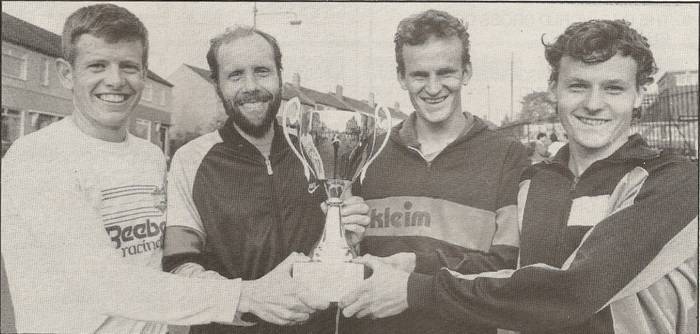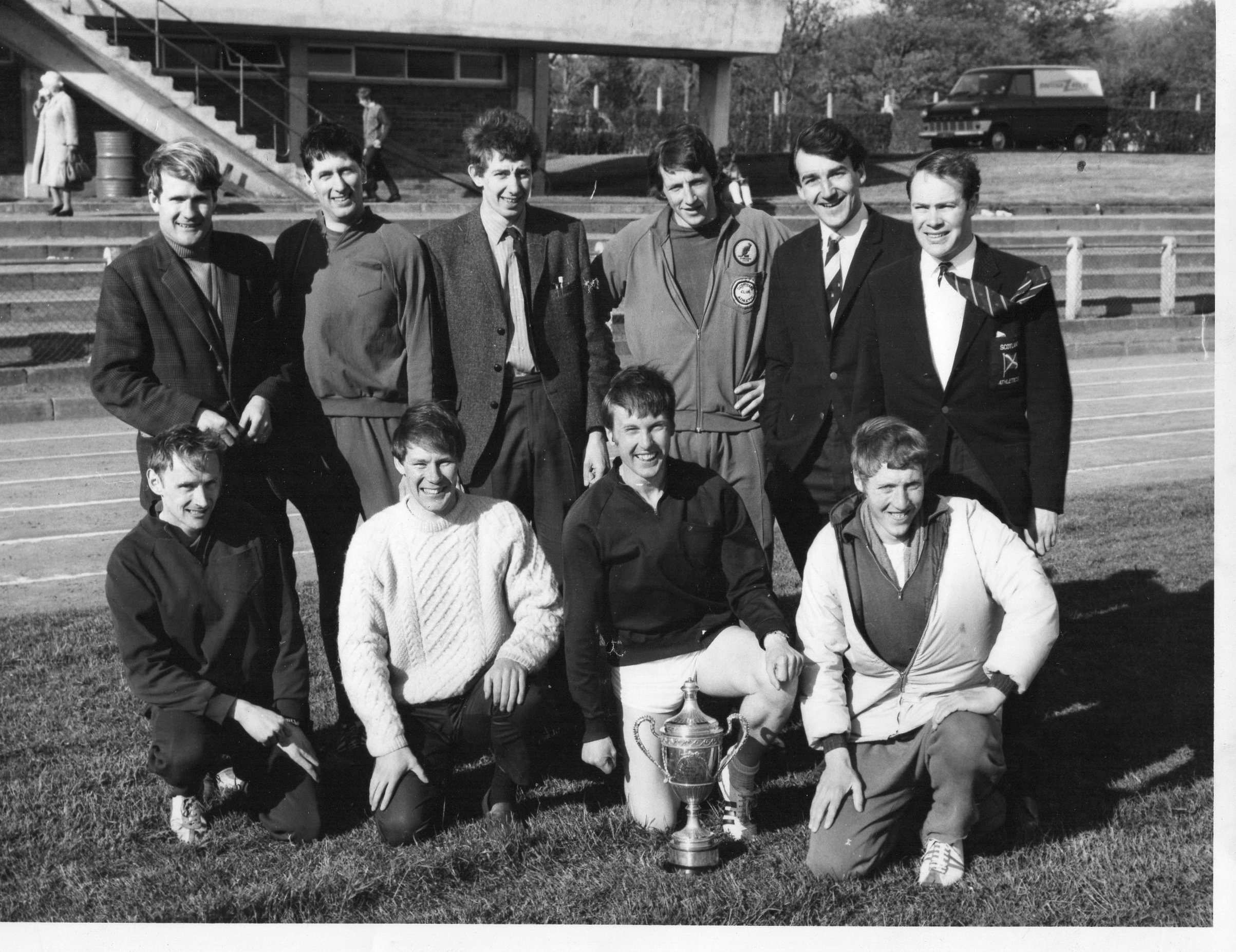
Back row: Donald Burr (team manager), John Turnbull, Len Penman, Peter Burgess, Tony Hogarth, Mike Bathgate. Front row: Tommy Tait, Ian Dobson, Adrian Weatherhead, Robin Morris.
Dam Park, Ayr, 1969, with Land O’Burns Trophy
Clubs are the lifeblood of the sport in Scotland but not all clubs which contribute to the sport are the traditional long-lived clubs, and there have been clubs which appeared for a time and then just disappeared. Some of them are the ‘clubs of champions’ which have a definite policy of recruiting only top class athletes in an attempt to win as much as they can; these clubs always go when the driving spirit gives up and moves on. But sometimes there is a club like Octavians which grows because it meets a need and after a while, when it is at its most successful, disbands. Octavians was essentially a club of the 1960’s which continued into the early 70’s and which produced and cultivated some quite outstanding talent. There is a web page dealing with the club at https://octaviansac.co.uk/ from which much of this profile has been obtained.
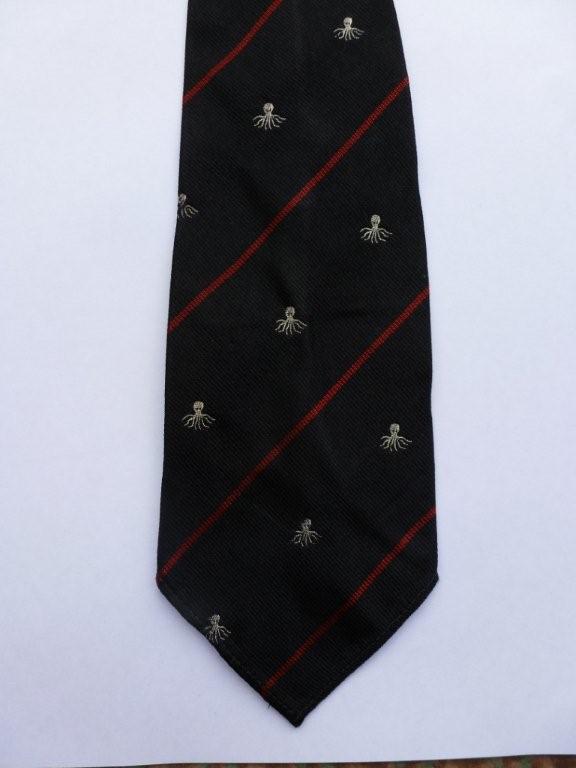
Octavians AC was formed in 1962 and was an amalgamation of eight of the Edinburgh fee paying’ schools, former pupils athletic clubs. Due to falling numbers and a consequent drop in standards, representatives of George Heriot’s School , Royal High School , Daniel Stewart’s College, Trinity Academy , George Watson’s College, Edinburgh Academy, Boroughmuir High School and Melville College met and the club was formed. George Sinclair was the club president. There was almost instant success for individuals but as time went on there were club successes too. Members were to include two Olympians (David Stevenson and David Jenkins), Commonwealth Games athletes (add John Jones and Ian Grant), GB internationalists (add Bob Hay, Adrian Weatherhead, Gordon Rule and Frank Dick) and many Scottish internationalists. There is a comprehensive list of members at their website. The club vest was white with red, white and black hoops and they even had a tie designed with an octopus motif.
Robin Morris, a pupil at George Watson’s, was one of the early members of the club, running for Octavians before he left school in 1967 in the Scottish National League at the new track at Grangemouth as well as turning out in Trophy Meetings for the club. Robin also tells us that the club moved to start training at New Meadowbank before the stadium was officially opened in 1970 but two of his biggest memories of Octavians were winning the Land of Burns Trophy at Dam Park in 1969 and the formal winding up dinner at the Balmoral Hotel !
What follows is an account of their progress from the start. It is not fully comprehensive but covers the ground in some detail.
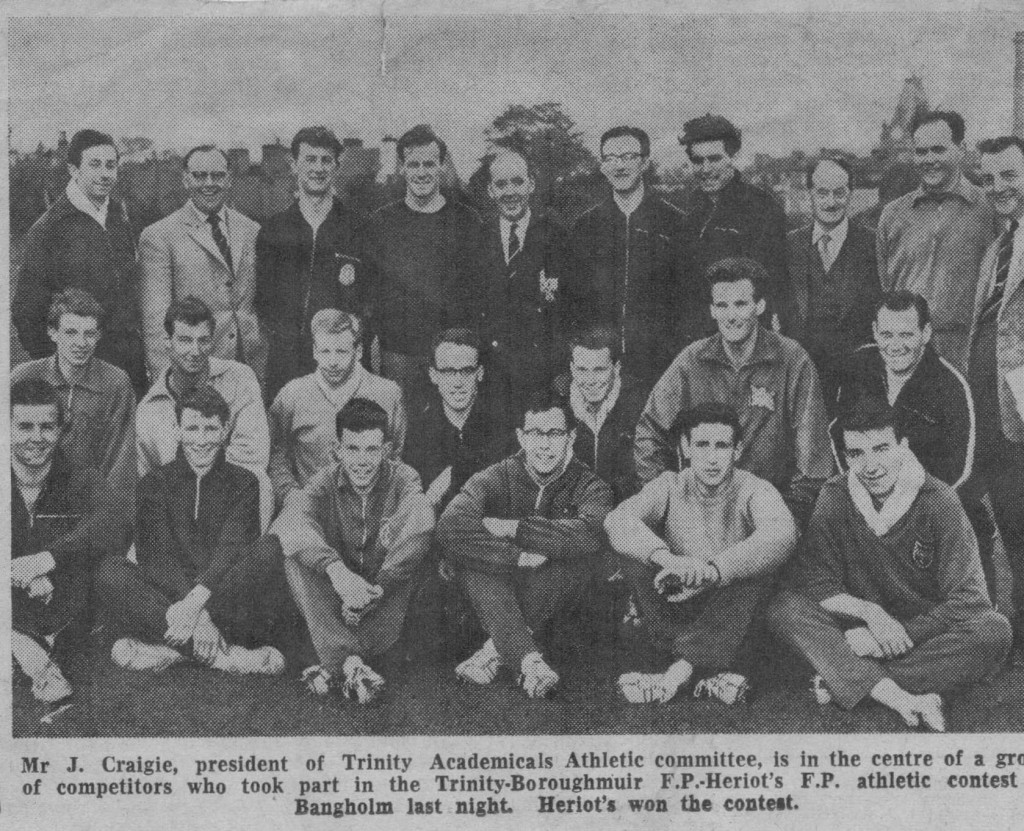
If we start at the beginning in 1962, we see that they were winning championship medals right from the start. In the East District Championships on 26th May at New Meadowbank – silver in the 440 yards hurdles (M Weir), high jump (J Jones) and shot (J McDonald); plus bronze in the 120 yards hurdles (W Proven), pole vault (J Jones) and javelin (G Thomson). Others who would represent the club in the years to come were also competing – F Dick (EUAC) and WA Hogarth (Heriot’s) among them. Proven (bronze) and McDonald (silver) were also successful at the SAAA Championships in June. The first endurance runner from the club to win an event was DW Grant who won the handicap Mile off 130 yards in 4:18.1 at the Edinburgh Police Sports at Powderhall on 7th July. The best team performance of their inaugural year was in the Land O’Burns Trophy match at Dam Park in Ayr. The meeting was for clubs by invitation only and they were third behind Bellahouston and Edinburgh Southern Harriers and ahead of Ayr Seaforth, Victoria Park (the holders), Garscube Harriers and Shettleston Harriers. Placed men were N Paterson (second, 100 yards), FW Dick (third, 880 yards, first 440 yards hurdles) and 4 x 110 yards relay (first). On the same day, Tony Hogarth running in the AAA’s junior in the colours of George Heriots School 120 yards hurdles won in 15.4 seconds. The year’s successes at both individual and team levels indicated that the schools had been correct in coming together to form a combined team. Octavians AC was essentially a track and field club – although they had good middle and long distance runners, they did not compete over the country or on the roads of the Scottish winter. By the end of the year Octavians appeared eight times in the annual ranking lists – two track and six field events. On the track, Norman Patterson was fifth in the 220 yards (22.0) and Fraser Proven 3rd= in the 120 yards hurdles (15.4 seconds). In the field events, Jack Jones was in the high jump (sixth with 1.84), in the pole vault (seventh with 3.38) and the long jump (sixth with 6.78), Willie Johnstone was seventh in the long jump (6.74), John McDonald fifth in the shot putt (13.81) and George Thomson second in the javelin (53.29).
In summer 1963 the season started with a triangular match against Edinburgh Southern Harriers and Ayr Seaforth Harriers. ESH won and Octavians were second but the cub performed well against two strong teams. Their placers were Tom Tait who won the 440 yards in 51.1 seconds, R Hay won the 440 yards hurdles in 59.6 seconds,Jack Jones who won the high jump with 5′ 8″ and C Grant who won the long jump with 20′ 8″. The East District Championships at the end of May had some notable successes, such as the one-two in the 440 yards with Tom Tait first and RL Hay second with the winning time being 49.7 seconds. Tait had already been second in the 220 yards. Fraser Proven was second in the 120 yards hurdles and Jack Jones was second in the pole vault. Proven and Hay picked up medals at the Scottish championships on 22nd June – Proven in the 120 yards hurdles (second), and Hay in the 440 yards hurdles (first). A week later and there were several Octavian members at the Braw Lads Gathering at Gala where EW Tait beat WM Campbell in the handicap 100 yards in 9.9 seconds, Tait also won the 220 yards handicap and Jack Jones won first prize in the pole vault. Jones also won that event in the Strathallan meeting in the first week in August. Tommy Tait who had not figured in too many prize lists in 1963, was chosen for the Scottish team against the Anglo Scots at Scotstoun on 10th August. Filling in for Ming Campbell, he was second in the 440 yards. Club mate Proven was second in the 120 yards hurdles behind another home Scot, A Belleh. Jones was probably the most prolific competitor for the club in 1963 and was still competing – and winning – in September when he won the pole vault at Shotts Highland Games on the seventh, and also at the Glasgow Meeting on the 14th where he was also second in the high jump.
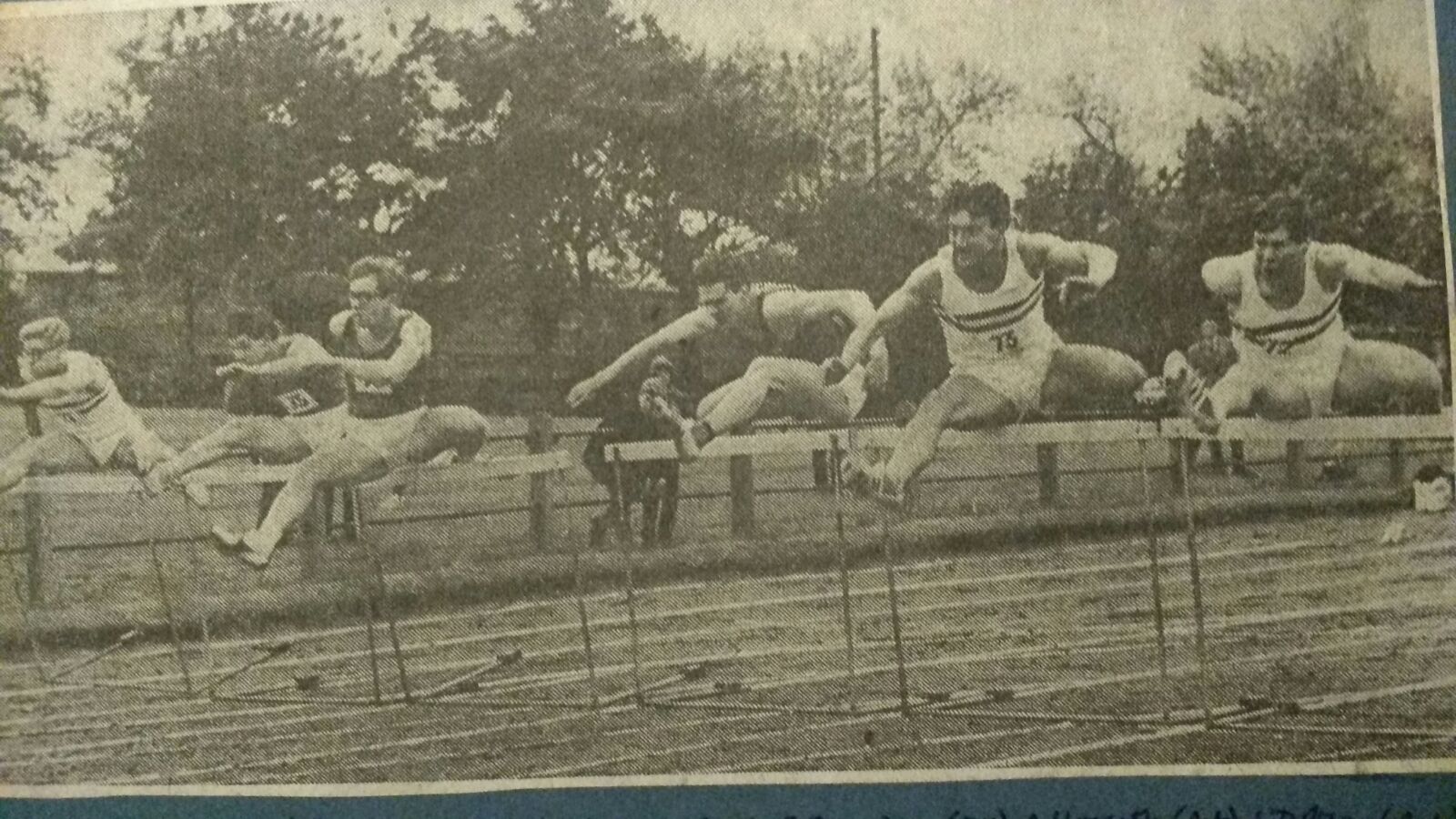
East District 120 yards hurdles, Meadowbank, 20th May 1967. Hogarth, 2nd right, on his way to a CBP of 14.7 sec; right Iain Dobson, Octavians, 2nd left Hugh Stevenson in EUAC strip.
There were not as many club men ranked nationally at the end of 1963 – three on the track and three in the field, On the track Tom Tait was 5th= in the 100m with a time of 10 seconds exactly and 6th= in the 440 yards with 49.7 seconds while Fraser Proven topped the 120 yards hurdles list with 14.8 seconds . In the field, Jones was fifth in the pole vault with a best of 3.68m, Ian Grant was ninth in the long jump with a 6.81m leap and William Noble ninth in the shot putt with a best of 13.21.
Distinguished international middle and long distance runner Adrian Weatherhead joined Octavians in 1963, and one of the ‘greats’ of Scottish hurdling, Tony Hogarth, joined the club in 1964. They along with Tommy Tait and others were coached by George Sinclair and all were real stalwarts of the club.
* Adrian was a sub four miler, GB and Scotland international runner indoors and out, on the track and over the country;
* Tony won 5 SAAA hurdles titles over 110m, 120 yards and 440 yards between 1964 and 1969;
* Tommy was a top class sprinter, hurdler and long jumper with a long career going from 1960 to 1975.
In 1964, on 16th May, Octavians began their season with a triangular match against Bellahouston Harriers and St Andrews University at St Andrews. There were several notable performances by the club’s athletes: Tait won the 440 yards with 50.6, J Turnbull won the 880 yards in 1:57.1, Hogarth won the 120 yards hurdles in 15.3, Hay won the 440 yards in 57.0, Jones won the high jump (5′ 6″) and pole vault (11.o feet), Grant took first place in the long (21′ 1″) and triple jumps (45′ 2″), Noble won the shot with 41′ 5″ and D Brown won the 6 Miles in 33:12.2.
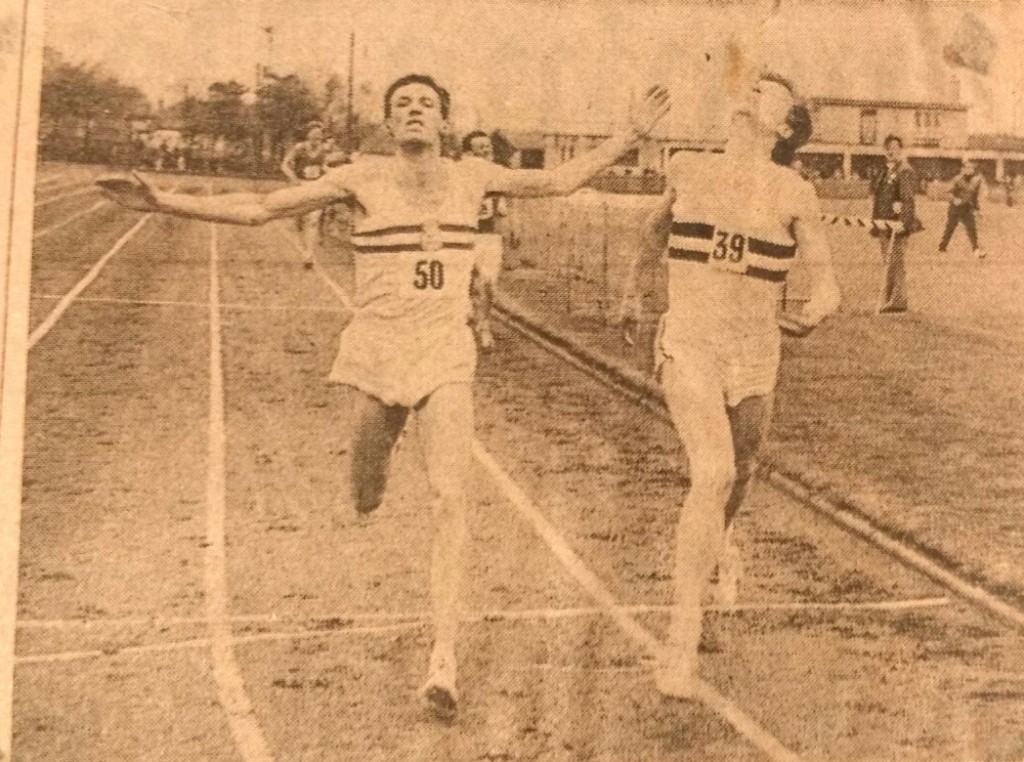
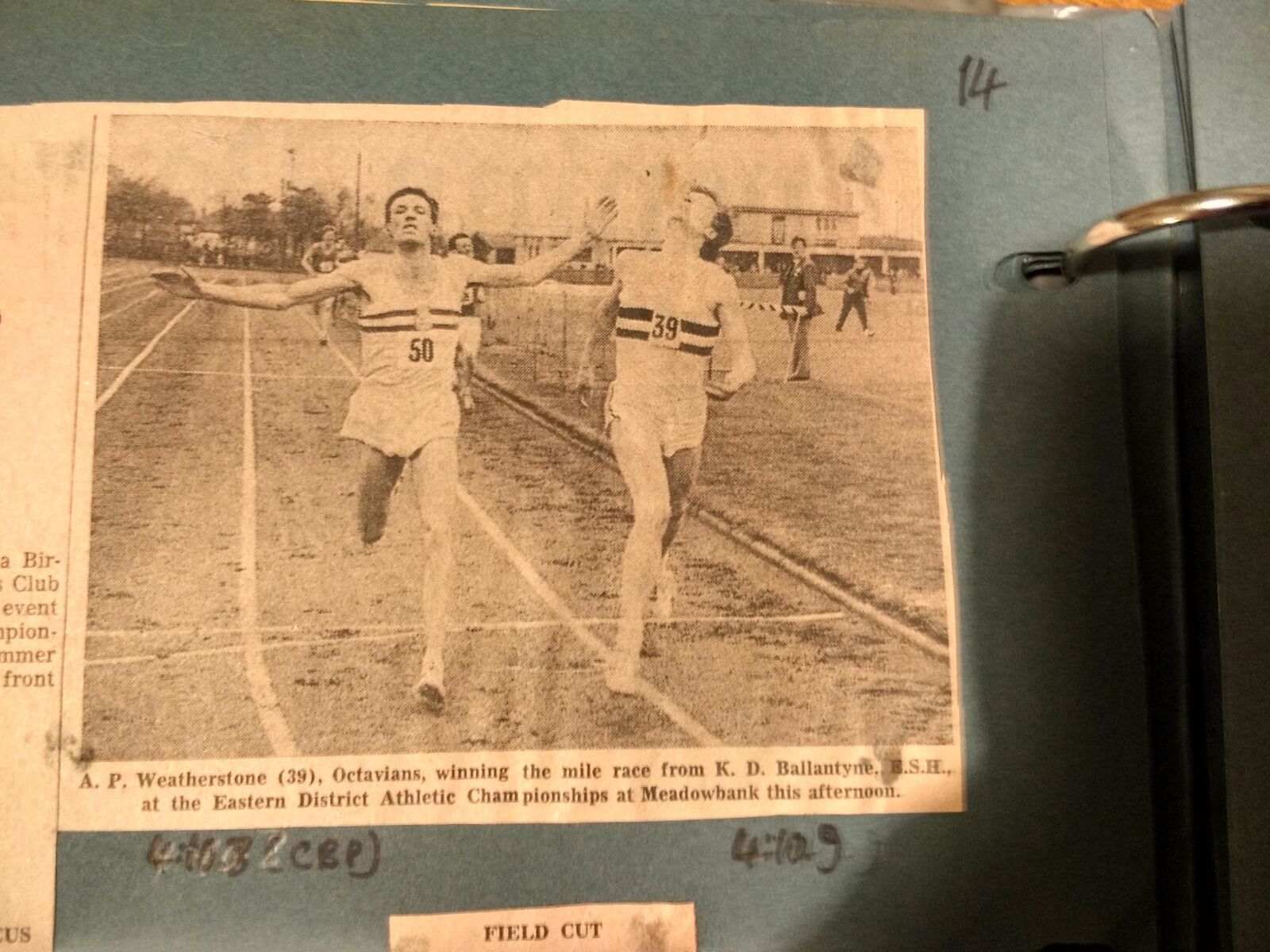
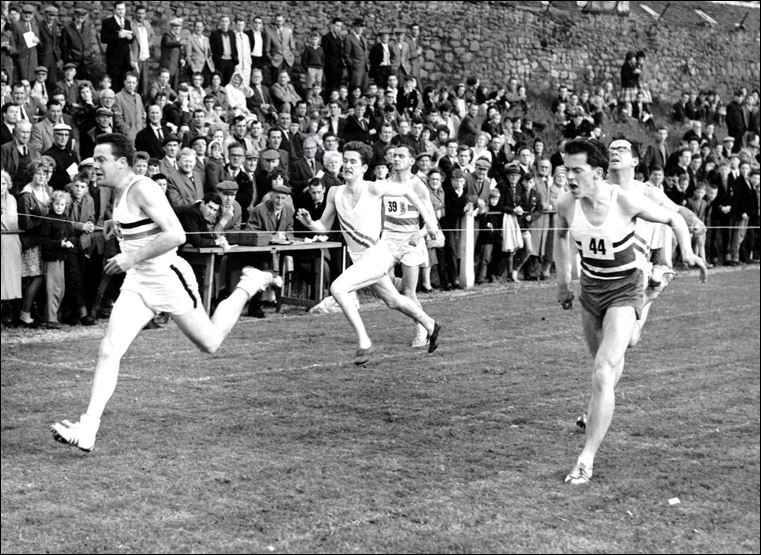
Adrian Weatherhead (39) beats Ken Ballantyne in East District Championships on 27th May, 1969, in a new Championship Best Performance record of 4:110.9, eclipsing Chris Elson’s record of 4:10.9
Before the East District Championships at the end of the month, there was a triangular match against Shettleston and Victoria Park in which they defeated Victoria Park by 97 to 88 points and going down to Shettleston 100 to 91. Therewere nine first places and six seconds to the Octavians team. They were spread through the events too, the winners being Patrick in the 100m in 10.0 seconds (he was second in the 220), Tom Tait won the 440 yards in 51.1 with D Burr second, Tony Hogarth won the 120 yards hurdles in 15.7 and 440 yards hurdles in 57.4 (Fraser Proven second in 120 and Hay second in the longer race), Ian Grant won the long jump (21′ 2″) and triple jump (42′ 8″) Derek Lyle won the discus with 127′ 2″ and both relays went their way too in times of 44.4 (4 x 110) and 3:32.1 (4 x 440). The remaining second places went to J Turnbull in the 880 yards and Jack Jones in the pole vault. It was a tremendous display of all round strength with victories in all departments other than middle distance – but then they were up against two of the strongest distance clubs in the country on all surfaces!
This whole club strength was also in evidence at the East Championships where they were equal second with Edinburgh Southern Harriers (29 points each) to Edinburgh University (47 points). The heroes who won the medals were by now familiar to all in Scottish athletics. Tait won the quarter mile in 50.9 seconds, Turnbull was second to Craig Douglas in the half mile, Hogarth and Proven had a one-two in the 120 yards hurdles, Jones was third in the long jump and second in the pole vault. As a result several were selected for the East team to meet the West ten days later. The following Saturday they defeated Edinburgh AC in a match at Redford Barracks by 78 to 58. In the East v West match Tony Hogarth took the headlines – and not just for the excellence of his hurdling. The Glasgow Herald report read : “In the first event of the night, the 440 yards hurdles, JA Hogarth, the East champion, returned the same time as the winner, RR Mills (West), but was disqualified for trailing his leg over the hurdles. Hogarth made up for this setback when he returned a personal best time of 14.7 seconds when winning the 120 yards hurdles.”
As for the other Octavians in the meeting, Tait was second in the 440 yards, Turnbull third in the 880, Proven was third in the sprint hurdles and Ian Grant won the long jump. Although entered neither Grant nor Jones took part in the Scottish Decathlon Championships on the 12th/13th June because of injury – easily understood because of the amount of competition that they had. Came the Scottish championships on 27th June and several Octavians turned out in the colours of their school athletic clubs. For instance, Fraser Proven (second in the sprint hurdles) ran under the Stewart’s FP banner, Tony Hogarth (winner of the 440 yards hurdles) was listed as Heriot’s FP although RL Hay (second in the race) was an Octavian. Ian Grant won the long jump as an Octavian with a leap of 23 feet and at Galashiels for the Braw Lads Gathering, held on the same day, S Laird won the handicap 100 yards off 6 yards. Hogarth and Hay were chosen for the Scottish team to meet Ireland at Ayr on 8th August.
Octavians were part of an Edinburgh Select which faced and defeated a Scandinavian team at Goldenacre on 18th July. Among their members taking part in a team composed of members of Octavians, Edinburgh Southern and Edinburgh University were Tom Tait who set a 440 yards pb of 49.6 seconds, RL Hay won the 440 yards hurdles in 56.3, Ian Grant won the long jump with 22′ 9″, Jack Jones won the pole vault with a clearance of 11′ 6″ and Tait was a member of the winning 4 x 110 relay team. Another member of the team was Mike Bathgate from Watsonians, who won the 100 and 220 yards sprints, and who would go on to become a valued member of Octavians. As indeed would pole vaulter David Stevenson. A week later and Edinburgh Southern beat both Octavians and Ayr Seaforthat Redford Barracks to win the Scottish League for the third successive season. This was also the first time that David Stevenson, who had been competing for the last few years as a member of Edinburgh University, turned out for Octavians won the pole vault with ‘only’ 14 feet since he found the wind troublesome. Another week on (1st August) and Mike Bathgate was running in the Octavians colours at The Strathallan Gathering where he won the 100 yards off 2 yards with team mate S Laird second of four and a half yards.
The International against Ireland at Dam Park was combined with the invitation club competition for the Land O’Burns Trophy. Members of the club were involved in both competitions and this inevitably weakened their chances in the club competition, but then all clubs could say the same thing. In the International fixture, Proven was second in the sprint hurdles with Hay gaining an unusual victory over Hogarth in the 440 hurdles in 55.1 seconds for a Scottish winning double and David Stevenson won the pole vault. In the trophy match, Bathgate was second in the 100 yards, AJ Patrick second in the 220 yards, Tait won the 440 yards in 50.5, and the club quartet won the 4 x 110 yards relay with a team of Tom Tait, Hugh Stevenson, Laird and Mike Bathgate. Stevenson is another interesting ‘capture’ for the club in 1964: a student at Edinburgh University who was to spend some time in Yugoslavia, he was a talented and experienced hurdler to add to Hogarth, Proven, and Hay.
Ranked at the end of the year were Tait (4th in 100m (9.9), seventh in 440 (49.6), Hogarth was first in both hurdles lists with 14.7 seconds and 54.9 seconds, Jones was eighth in the high jump (1.83m) and 7= in the pole vault with Ian Grant, both having done 3.58m, Grant was top of the long jump lists with 7.03m and George Thomson was tenth in the javelin with 50.90m. Bathgate and Stevenson were listed under their former clubs names since they had done most of the summer, including championships, for these clubs. It had been a very good summer for the new club with good individual performances, strong team outings and some exciting new members.
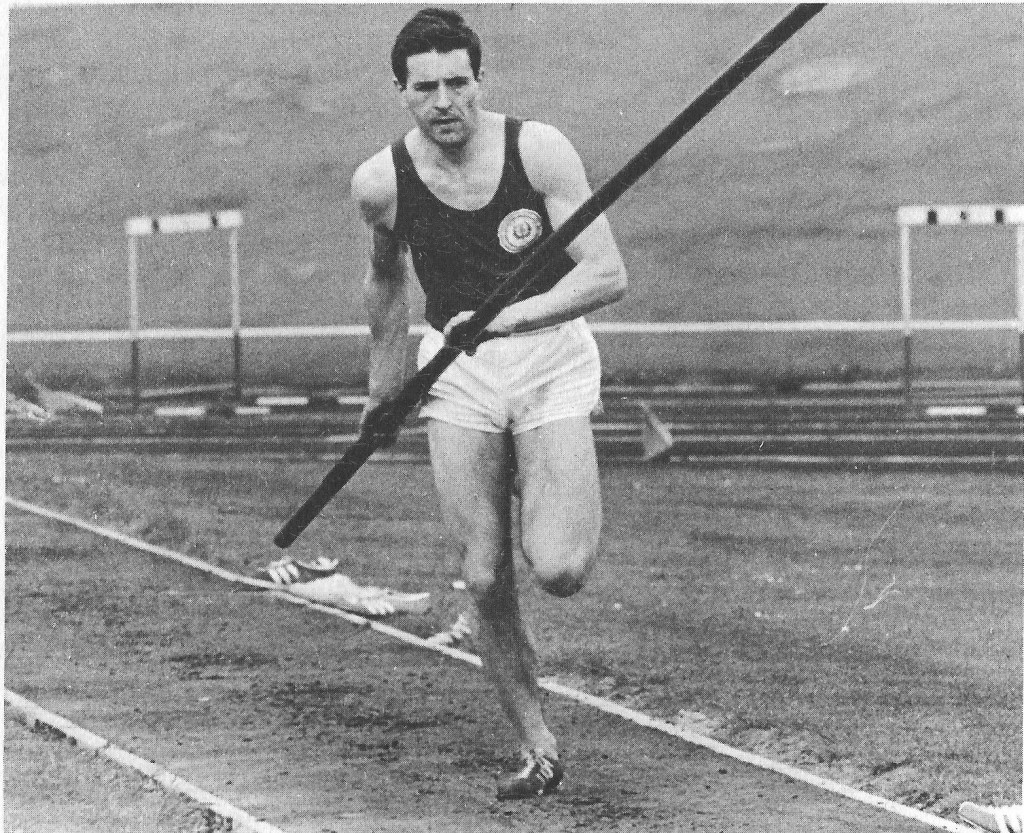
David Stevenson
1965 Track League fixtures were published in the middle of April and Octavians had matches scheduled for 8th May (v St Andrews v Edinburgh Southern), 15th May (v Bellahouston Harriers), 13th June (v Shettleston Harriers) and 3rd August (v ESH and Victoria Park AAC). The first of these was at Redford Barracks and they defeated St Andrews on an afternoon of dreadful weather. Interestingly, David Stevenson was competing for Edinburgh Southern. In the District Championships on the 29th May the club was very much in evidence. IG McCallum was second and T Tait third in the 440 yards, M Sinclair second in the 880 yards, Hogarth and Proven were first and second in the 120 yards hurdles with Hogarth also first in the 440 yards hurdles, DB McIntosh won the high jump, W Noble third in the shot putt and AL Heath won the javelin throw. Of Heath’s javelin, the report read: AL Heath, who already has a throw of 206′ 9″ to his credit this summer, once again broke DWR Mackenzie’s Scottish national javelin record of 204′ 11″ with a throw of 211′. Only the second person to throw over 200′ at Meadowbank, he is still a junior which makes his performance highly noteworthy.
On 5th June, there was a league match against Edinburgh AC at Redford Barracks which they won by 78 to 63. Winners for the club were Bathgate (100 and 220), I McCallum (440), Frank Dick (Mile), 4 x 440 relay team, F Proven (high jump) and W Noble (shot putt and javelin). Seven days later (12th June) they defeaed Shettleston at Redford by 100 points to 97. The successes kept coming – on 19th June the 4 x 110 yards relay team was third in the Scottish championships at Goldenacre. In the SAAA Championships at New Meadowbank on 26th June, Fraser Proven defeated Tony Hogarth in the sprint hurdles with 14.6 seconds to 14.8. AL Heath was second to Fraser Riach in the javelin with only one inch separating the two men – 180′ 4″ to 180′ 3″! Mike Bathgate ran in the international on 5th July at Westerlands against Brigham Young University and was second in the 220 yards, and was part of the winning 4 x 110 yards relay team. Hogarth turned the tables on Proven when he was second in the 120 yards hurdles with Proven just behind in third. This was on a Monday night and on the Saturday Hogarth worked his way through the heats to the final of the AAA championships and was fourth in 14,6. He was on the programme as ‘Heriot AC. On Sunday 11th in a meeting organised by Octavians at Redford Mike Bathgate had three wins – 100 yards in 10.3, 220 yards in 22.3 and 440 yards in 51.8 seconds. There was a second open meeting the following weekend when Tony Hogarth won two events – 120 yards and 330 yards hurdles in in 12.8 and 36.3 seconds. Then on the last day of the month in a representative match between SAAA and the British Army, Proven was second and Hogarth third in the sprint hurdles. Mike Bathgate was second in the 220 yards and a member of the relay squad that finished second in the 4 x 110 yards. Derek Lyle was third in the discus and AL Heath second in the javelin.
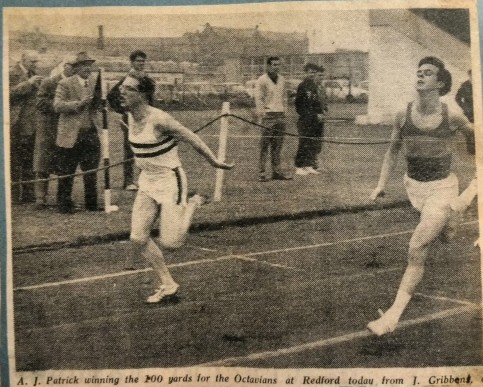
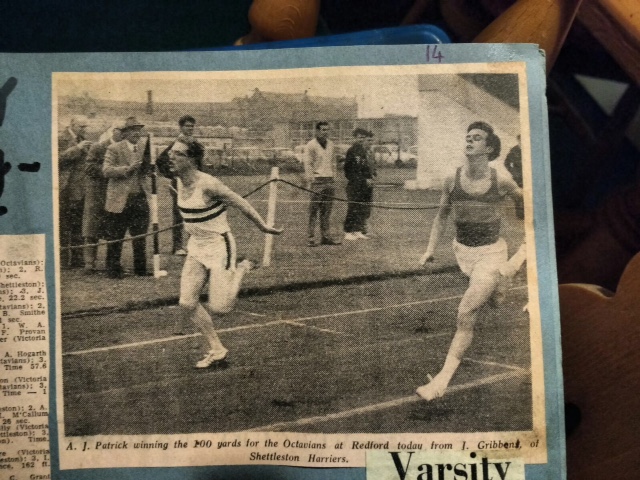
AJ Patrick (left) winning in the inter-club 100 yards from Gribben of Shettleston in 10.0 at Redford Barracks on 23rd May 1964
On 7th August the final Scottish Athletic League matches were held and Edinburgh Southern Harriers defeated both Octavians and Victoria Park and Octavians beat Victoria Park by 108 to 102 points. The only track event won by them was the 4 x 110 yards relay but the fared slightly better in the field with victories by Grant in the long jump, Noble in the shot putt and Heath in the javelin. The invitation-only Land O’Burns Trophy was held at Dam Park on 14th August and the star of the Octavians show was Tony Hogarth. “From a statistical point of view the other good run of the day was 14.6 in the 120 yards hurdles by WA Hogarth which equalled the national record. There was only a breath of wind helping him – in my opinion within the limit – yet had he gone any faster his time would not have been recognised because, as happens too often there was no wind gauge in operation. ” Apart from Hogarth, the only Octavian winners were Grant in the long jump and Heath in the javelin. In the international against Iceland incorporated into the Edinburgh Highland Games, Mike Bathgate was in the winning relay squad and Hogarth was third in the hurdles.
At the end of 1965, Mike Bathgate found himself ranked sixth in both 100 yards (10.0) and 220 yards (22.1) while Tony Hogarth was top of the 120 yards hurdles (14.6) and eighth in the 400 hurdles (56.2). Fraser Proven was second equal in the shorter event with Hugh Stevenson, as EUAC, fifth. Robert Hay was ninth in the longer hurdles race. The only field eventer ranked was Derek Lyle in the discus with 39.43 for eighth place. Alan Heath, ranked number one, was listed as Oxford University, while others like David Stevenson were now competing for other clubs with Edinburgh Southern being his choice.
The 1966 season started with an open meeting at Redford on 23rd April in which Ian McCallum won the 440 yards, Hogarth the sprint hurdles, Jones the high jump and Adrian Weatherhead running for Heriot-Watt University was first in the mile. On 21st May in a triangular match at Redford, Octavians lost to ESH but defeated Victoria Park. The only double winner for Octavians was Adrian Weatherhead who took first place in both 880 yards and Mile, while their other victors were McCallum in the 440 yards, Hogarth in the 120 yards hurdles and McPherson in the shot putt. The East District championships were held the following week and Octavians were third club in the team competition. The top men in the Octavian colours were Ian McCallum in the 440 yards (first), Adrian Weatherhead in the 880 yards (second), Hogarth and Proven (first and third in the short hurdles race), Robert Hay in the 440 hurdles (second), Jack Jones in the high jump (first), I McPherson and W Noble in the shot putt (first and third), and AL Heath in the javelin (first). All in all a very successful championships for the club.
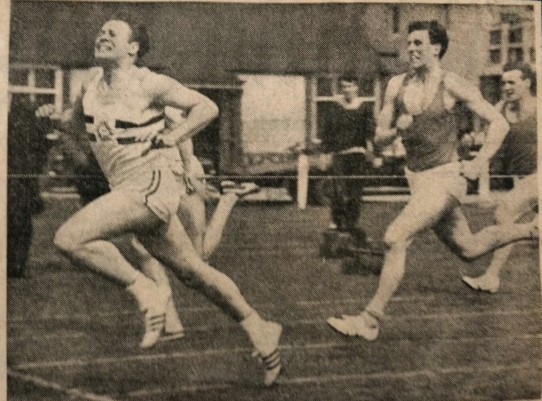
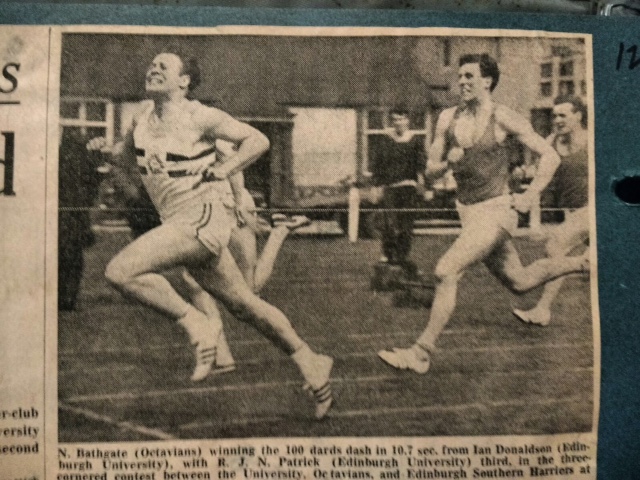
Mike Bathgate winning 100 yards in EU v Octavians v ESH
On 4th June there was a representative match held at Wolverhampton between SAAA, Midland Counties and Wales. Scotland won convincingly in a Commonwealth Games year and there were two Octavians playing their part. Ian McCallum was third in the 440 in 51.3 and Tony Hogarth was third in the 120 yards hurdles in 15.5. As has been noted, 1966 was a Commonwealth Games year and the Games were to be held in Jamaica. The turnout at the SAAA Championships on 24th and 25th June was star spangled; the best Scots athletes from whatever side of the Border were on display and only the best won the medals. The best included Octavian hurdlers Hogarth and Proven who finished first and third in 15.4 and 15.9 seconds. Ian McPherson was third in the shot putt behind Edmunds and Sutherland with a best of 44′ 4.5″ to be the third club man to take a medal. When we look at the results of the Junior championships, held on the same day at the same venue, we see several athletes from the feeder schools performing admirably – Trinity, George Heriot’s, Stewart’s were all there. Better still was the appearance of juniors running as Octavians: Bill Golden (Helen’s brother) was second in the long jump and CM Heath won the pole vault. Encouraging indeed.
The Glasgow Herald of July 25th, carried the headline “OCTAVIANS BEAT CHAMPIONS”, and read
“Octavians AC gained their first win over Edinburgh Southern when they beat the champions by 112 points to 82 in their opening Scottish League contest yesterday at Grangemouth. Octavians,113 points, also won a triangular contest held in conjunction with the league fixture in which Forth Valley participated. Edinburgh Southern Harriers had 73 points and Forth Valley 38. Four competitors gained double wins. M Bathgate (Octavians) in the 100 and 220 yards, Martin Sinclair (Octavians) in the 880 yards and Mile, AT Murray (ESH) in the 120 and 440 yards hurdles and D Walker (ESH) in the long and triple jumps. “
The list of Octavians winners included Bathgate (10.5 and 22.3 seconds), I McCallum (440 yards in 50.6), M Sinclair (1:54.5 and 4:28.7), DB McIntosh (high jump 5′ 10″), CM Heath (pole vault 11′), W Noble (shot putt 43′ 5″), P Culhane (hammer 153′ 6″), JN Burnett (javelin 176′ 2″), 4 x 110 relay (DS Bruce, TEW Tait, RJN Patrick and M Bathgate in 43.5 sec) and 4 x 440 yards relay (TEW Tait, DF McRitchie, M Sinclair and I McCallum) in 3:29.1. A very successful outing indeed.
The following week, on 30th July, the Land O’Burns Trophy meeting was held in Ayr and again the Octavians were invited along. Adrian Weatherhead just lost out in a fast 880 yards to Duncan Middleton of Springburn who recorded a meeting record of 1:53.2 seconds. Bathgate was second in the 100 yards, McCallum second in the 440 yards, Proven was second in the 120 yards hurdles, Noble won the discus, the team was second in the 4 x 110 yards relay but in the medley Relay (800/200/200/400m) the team of Weatherhead, Bruce, Bathgate and McRitchie won in 3:34.1. The team results is of particular interest this time:
- Edinburgh Southern 70 points; 2. Octavians 62; 3. Edinburgh AC 32; 4. (equal) Bellahouston and Victoria Park 31; 6. Shettleston 28; 7. Ayr Seaforth 26; 8. Springburn 18; 9. Garscube 12.
The strength of the club is clear from the above: first, they defeated such strong outfits as EAC, Victoria Park and Bellahouston; and second, the margin of victory is large. Remember, too, that the club is only in its fifth year of existence.
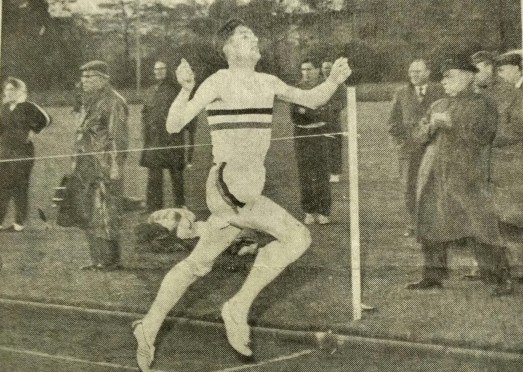
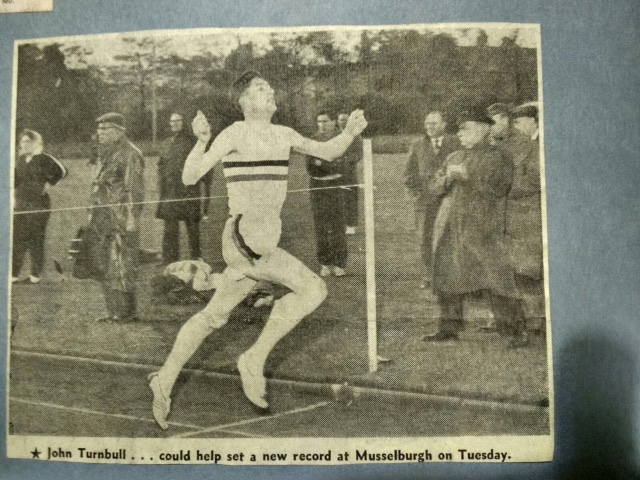
John Turnbull models the Octavians kit perfectly in winning an inter-club 880 yards at Saughton in 1963
The first Saturday in August is always the Strathallan Gathering and on the 6th August, 1966, Bridge of Allan again hosted the event. D Bruce of Octavians won the 100 yards off five and a half yards, D McRitchie won the junior 100 off 5 yards, Adrian Weatherhead won the 880 yards off 12 yards and the medley relay team was second to Bellahouston Harriers. On the very next day at Grangemouth, the club maintained their unbeaten league record when the defeated Shettleston Harriers by 124 points to 67. The winners were Bathgate in the 100 and 220 yards, McRitchie in the 440, Weatherhead in the 880 and Mile, Proven in the 120 yards hurdles, Dobson in the 440 hurdles and pole vault, Jones in the high jump, long jump and discus, Tait in the triple jump, Burnet in the javelin and finally the 4 x 110 relay team of Bruce, Tait, McRitchie and Bathgate ran a good 43.8 seconds.
On Saturday August 13th the indefatigable Adrian Weatherhead won the 880 yards at Aberfeldy. Then on 20th August at the Edinburgh Highland Games, Ian McPherson was second in the invitation shot putt behind England’s Jeff Teale and the 4 x 110 relay team was third in the SAAA Championships at the same venue. In the Scottish League match at Nethercraigs in Glasgow on the Sunday Bellahouston emerged triumphant over Octavians – 119 to 78 points – in a 19 event programme. The Octavian winners were Bathgate in the 100m, Weatherhead in the Mile, Chris Elson in the three miles, Proven in the 120 yards hurdles, and George Thomson in the hammer. Five wins out of 19 and beaten in several events that were normally bankers for the club in these fixtures while winning the three miles for the first time in several years. On 3rd September in the Shotts Highland Games, Jack Jones was second in the high jump to Cosmos Julien of Victoria Park and the relay team was second in the SAAA Medley relay championship behind Bellahouston Harriers. One of the more attractive venues on the amateur highland games circuit was held at Dunblane in a natural amphitheatre and Adrian Weatherhead finished second in the 880 yards there running from the 10 yards mark, he was beaten by Hamish Cameron off 52 in 1:59.2.
At the end of summer 1966, Octavians AC could look back on an excellent season as a team with several notable victories as well as several first rate individual performances. There were however also signs of problems to come: with two big and ambitious club track and field teams in Edinburgh, several athletes who had turned out for the club had switched club allegiance for the doubtful benefits of wider competition experience. How were their members ranked in the Yearbook that year? The number of athletes listed as club members is slighter than it should be because several who did compete regularly for the club appear for their University – eg Adrian Weatherhead raced for the club inall league matches, entered for open meetings and highland games and so on as ‘Octavians’ but because the fastest time was done in a University fixture he was listed as ‘Heriot-Watt’. In this category were such as Adrian, Martin Sinclair, Hugh Stevenson and Alan Heath (competing for Oxford University). It should also be noted that Tony Hogarth missed a chunk of the season through injury.
Those listed as Octavians were
Michael Bathgate 220y 8th 22.3; Ian McCallum 440y 8th 49.6; Tony Hogarth 120yH 1st 14.8; Fraser Proven 120yH 4th 15.1; Robert Hay 440yH 4th 56.1. Derek Lyle Discus 9th 39.81m; Pat Culhane Hammer 3rd 53.86;
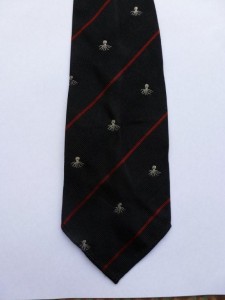
Octavians tie with octopus
1967 started on 8th April at Grangemouth with Adrian Weatherhead finishing third in a half mile promoted by Lewisvale Spartans and won by Duncan Middleton from Hugh Barrow. He followed this up with a personal best of 4:06.6 for an invitation mile at the same stadium on 13th May, again third, behind Lachie Stewart and Hugh Barrow. However when the team for the British Isles Cup at Grangemouth on 10th June was picked, the only Octavian was Tony Hogarth for the 120 yards hurdles. There was one athlete per event and the javelin man was AL Heath. Came the East District Championships at New Meadowbank on 27th May, and the club which had performed so nobly the previous year was down in fourth position with 28 points. Ian McCallum won the 440 yards in 49.9 and in the Mile “Weatherhead ran a well-judged race to win and establish a new meeting record of 4 min 10.8 sec, and his team mate, WA Hogarth hurdled flawlessly to record 14.7 , another new best time, in winning the 120 yards hurdles.” Other notable results at the meeting included Hogarth’s second place in the 440 yards hurdles, Len Penman’s second place in the high jump, Bill Golden’s third in the triple jump, DD Stevenson (Octavians) winning the pole vault, AL Heath’s third in the javelin. Tony Hogarth was out as selected for Scotland in the British Isles Cup at Grangemouth on 10th June and finished second to Stuart Storey of England in 15.2 seconds. 24 hours later he was again in action at Grangemouth in the Inter-Counties meeting representing Midlothian. He won the 120 yards hurdles in 15.2 seconds. Two races in two days, same track, same time! He was also on duty in the team in the sprint relay which won from Lanarkshire and Dumbarton. The SAAA Championships were held on 24th June at Grangemouth and Hogarth was again in fine form when he won the 120 yards hurdles from A Murray in 14.9 to Murray’s 15.0 seconds. David Stevenson won the pole vault with a clearance of 14′ 6″ while D McRitchie won the junior 440 yards in 52.8.
One of the biggest triumphs for Octavians came in the first week end of July in 1967 when Peter Burgess and David Stvenson, now competing solely for the club, dominated the SAAA Decathlon Championship. The report follows:
“BURGESS IS DECATHLON CHAMPION. PJS Buregess (Octavian AC) won the Scottish AAA Decathlon championship yesterday at Grangemouth Stadium. His total pointage of 6029 for the ten events was a highly creditable performance as it was the first time he had taken part in such a competition. He is only the third Scot to have passed 6000 points under the existing counting system. His clubmate DD Stevenson, the Scottish pole vault title holder, and the only other competitor totalled 5395 points to achieve a personal best. After the first five events on Saturday Burgess led by 3257 points to Stevenson’s 2833. The best events for Burgess over the two days were the long jump, in which he achieved a personal best and the 400 metres.
Details: Burgess: 100m 11.2 sec (786 pts); 400m 50.8 (770); 1500m 4:41 (518 pts); 110mH 16.7 (685); high jump 5′ 3 3/4″ (512); long jump 22’11 1/2″ (820); pole vault 10′ (543); shot putt 30′ 1 1/2″ (399); discus 96′ 11″ (464); javelin (147′ 2 1/2″ (562). Total pts: 6029
Stevenson: 11.3 (711); 60 sec (411); 5:40.6 (213); 19.4 (487); 5′ 3″ (493); 20′ 5″ (653); 14′ 3 1/4″ (896); 35′ 7″ (521); 105′ 5″ (522); 121′ 2″ (444). Total pts: 5395.
Stevenson won the pole vault at Gourock on 22nd July with a vault of 15′ from Gordon Rule, competing as a guest because he was still a schoolboy at George Heriots’s, who cleared 4′ 1/2″. The following week was when they travelled to Dam Park in Ayr for the Land O’ Burns Trophy meeting and again Hogarth stole the headline and most of the report. It read as follows:
“HOGARTH EXCELS AT DAM PARK. Ayr Seaforth, organisers of the Land O’Burns Trophy at Dam Park on Saturday had the understandable difficulty of finding officials at a time when many are away seeking the sun, but at least one athlete will bitterly regret the absence of a wind-gauge operator. For the second time in three years at this meeting WA Hogarth, Scotland’s fastest hurdler, sped down the 120 yards straight to national record time only to learn that the chances of ratification was as bright as a coalman’s jacket. His time, 14.5 seconds, took a fifth of a second off the record he shares with GA McLachlan and in my opinion the wind could have been within the permissible limit.
One prominent official thought that it was too strong, but all this conjecture could easily have been nullified by the presence of a gauge. It is perhaps significant that none of Hogarth’s rivals in the race, particularly AT Murray, runner-up in the Scottish championships, was clocked in a flattering time that might have suggested wind assistance.
Hogarth really excelled at this meeting. Earlier he had given Murray, the 440 yards hurdles champion, a severe jolt in that event by leading him all the way to the tape for an eight yard victory.”
Other results: 880 yards: 2. A Weatherhead; Mile: 2. A Weatherhead; 4 x 110 relay: 2. Octavians; high jump: 1. L Penman; javelin: 2. L Burnett. Team result: 1st Edinburgh Southern Harriers. When the Scottish team to meet Denmark at Edinburgh on 19th August was selected Hogarth and Stevenson were both included.
The Strathallan Gathering at the start of August again had a sprinter from Octavians among the prizes – RJN Patrick won the 220 yards off a handicap of 10 yards. But the season belonged to Hogarth. At Edinburgh Highland Games he had the headlines and the bulk of the report when he broke the Scottish record with a time of 14.4 seconds into a slight headwind on a grass track. Stevenson won the pole vault with 14′ 9″.
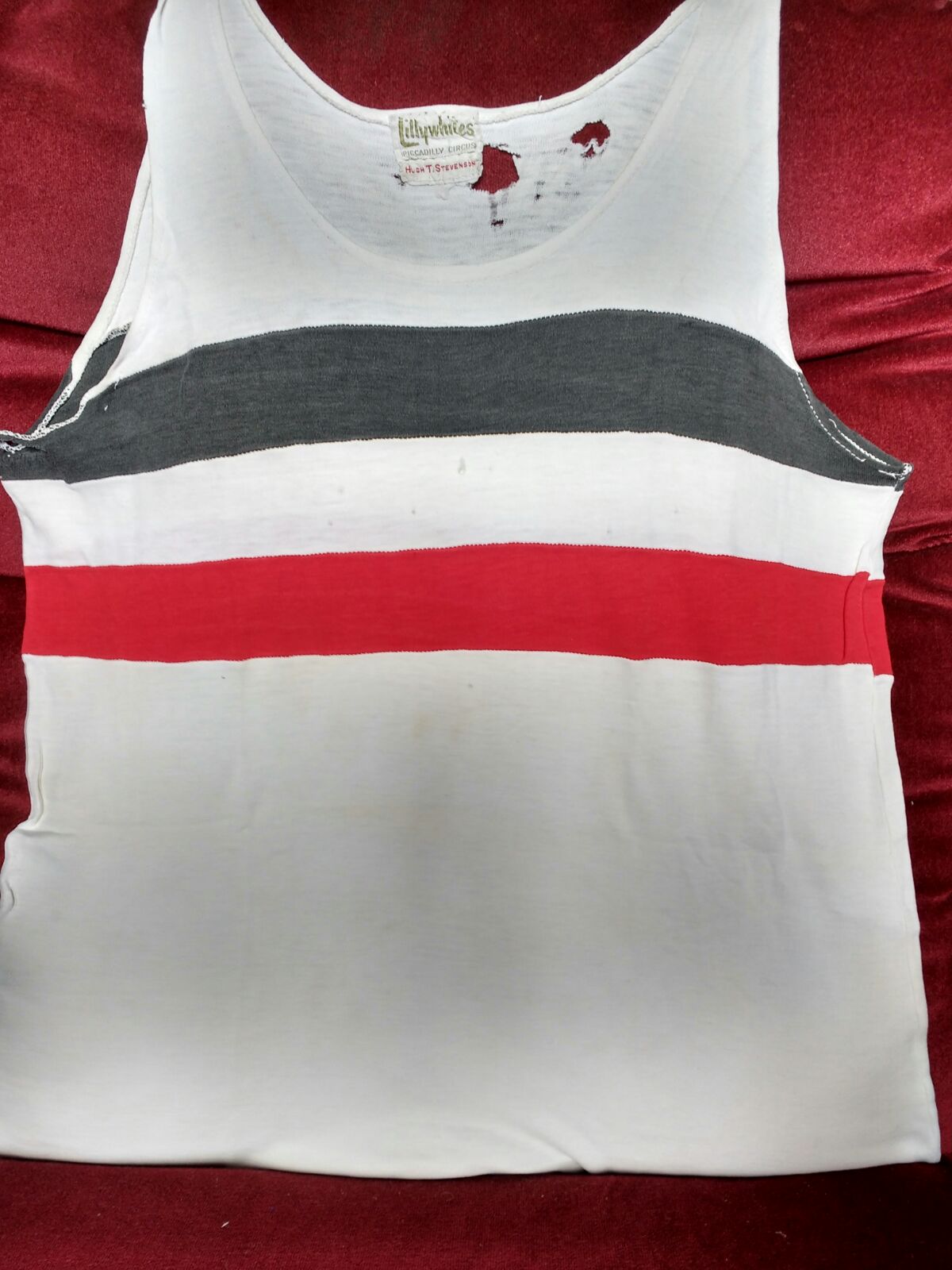
Hugh Stevenson’s Octavians vest
And so ended the season. Let’s look, in some depth at the club rankings for 1967 as listed in the annual year book:
100m: Fraser McRitchie 20th= (10.2), Gilroy Borthwick 20=; 220: Neil Patrick 10th= (22.4), Fraser McRitchie 29th= (22.9), Gilroy Borthwick 29th=’ ; 440: Ian McCallum 13th= (49.9); Fraser McRitchie 30th (50.8); 880: Adrian Weatherhead 24th (1:55.8); Mile: A Weatherhead 5th (4:06.4; 120 yards hurdles: Tony Hogarth 1st (14.4); Hugh Stevenson 5th= (15.7); Fraser Proven 7th= (15.8); Peter Burgess 14th= (16.7); 440 yards hurdles: Tony Hogarth 3rd (54.9); Hugh Stevenson 5th (56.7); High Jump: Len Penman 5th (6′ 2″); John Jones 8th= (6′ 0″); David McIntosh 16th= (5′ 10″); Pole Vault: David Stevenson 1st (15′ 0″); Stewart Seale 4th (14′ 0″); Crispin Heath 9th (11′ 9″); Ian Dobson 10th (11′ 6″); Peter Burgess 21st= (10′ 0″); Long Jump: Peter Burgess 6th (23′ 0″); William Golden 19th= (21; 4 1/2″); Triple Jump: William Golden 14th (43′ 10 1/2″); Shot Putt: William Noble 13th (43′ 6″); Stewart Seale 19th (40′ 5″); Discus Throw: Derek Lyle 6th (132′ 4″); Stewart Seale 18th (117′ 8″); William Noble 22nd (115′ 9 1/2″); Javelin: Alan Heath 2nd (208′ 11″); James Burnett 3rd (206′ 1″); Stewart Seale 9th (181′ 0″); John Jones 24th (157′ 5″); George Thomson 27th (156′ 7″); Decathlon: Peter Burgess 2nd (6029): Stewart Seale 3rd (5749); David Stevenson 4th (5395); 4 x 110 Relay: 11th (44.8); 4 x 440 Relay: 4th (3:28.6)
41 performances recorded over 17 events. Strengths? High hurdles, Pole Vault and Javelin with the Decathlon not far behind. Weaknesses? Middle and long distances and maybe, to a much lesser extent, Hammer Throw. Were it not for the efforts of Adrian Weatherhead and John Turnbull, track events from the half mile up would be pretty well non-existent.
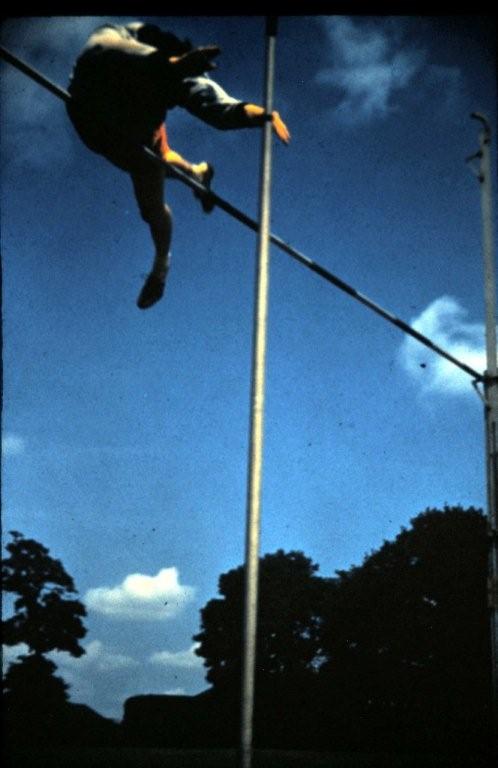
John Jones
At Scotstoun on 18th May, 1968, the only Octavian to be placed, or indeed mentioned, at the meeting at Scotstoun in Glasgow was Tony Hogarth who won the 120y hurdles in 14.7 seconds: it was a good time but equally significant was the fact that he defeated AT Murray of Ednburgh Southern who could only run 15.3 that early in the season. At the East District Championships a week later at Pitreavie, Octavians athletes were again prominent. Mike Bathgate (23.2) and Tommy Tait (23.3) were second and third in the 220 yards, Fraser McRitchie (51.6) was third in the 440 yards, Adrian Weatherhead (4:20.8) was second in the Mile, Tony Hogarth (14.4) won the 120 yards hurdles, David Stevenson (14′ 6″) won the pole vault, Peter Burgess (20’11”) was third in the long jump and Bill Golden (43′ 11″) was second in the triple jump. The SAAA team for the Home Countries international at Grangemouth on June 8th was chosen and both Hogarth and Stevenson were included. The team was then in action as a club team a week later (June 2nd), again at Grangemouth and finished second with 8 points, two less than Edinburgh Southern but ahead of Bellahouston six, Shettleston four, EAC two and Ayr Seaforth nil. No individual results for this match are available.
David Stevenson was one of four Scots who won their event at the British Isles match on 8th June with a clearance of 14′ 6″ while Hogarth was second to Alan Pascoe, his time of 14.4 seconds being only two tenths down on the Englishman. The Inter-Counties was held on the following day and there Stevenson won again (14′ 0″), and Weatherhead was second in the mile in 4:16.1 – only one tenth of a second behind Dick Wedlock. On the same weekend, the Scottish Decathlon Championship was held at Scotstoun and was won by Peter Burgess with 5764 points from fellow Octavian Stewart Seale who had 5183 points. As a result of his consistently good pole vaulting David Stevenson was selected for the GB team for the international on June 29th in Berne in Switzerland.
And he continued to excel – in the SAAA Championships on 22nd June, he set a new championship best performance of fifteen feet one and a quarter inches. It was two feet better than the runner-up, Gordon Rule of George Heriot’s School. Rule also set a British Junior record of fourteen feet seven and three quarters when winning the Junior championship. Ian Dobson of Octavians was third in the event. Other club men to pick up national championship medals were Weatherhead (third in the Mile in 4:13.8), Hogarth (hurdles first in 14.9), Peter Burgess (third in long jump 22′ 8 3/4″),
On 9th July the new track at Grangemouth was opened officially and Octavians won the Mile medley relay in 3:34.5. Edinburgh Southern was possibly the best club in the country in terms of success in inter club fixtures – they had not been beaten for several years – then Octavians put a stop to it when the won on 24th July in a league match at Grangemouth – the top men were Mike Bathgate in both 100 and 220, Ian McCallum in the 440, Martin Sinclair in the 880 and mile, D Mcintosh in the high jump, Crispin Heath in the pole vault, William Noble in the shot putt, Pat Culhane in the discus and JN Burnett in the javelin plus victory in both relays! This was followed by another good team performance in the Land O’Burns Trophy meeting at Ayr where they lost to Edinburgh Southern by 62 points to 70. The only event that they won in the eight club contest was the mile medley so it was another very good team performance. D Bruce won the 100 yards at Strathallan on the first Saturday in August. Back to League business and on Sunday, 8th August, the defeated Shettleston Harriers at Grangemouth but, again, there were few event winners: 440 yards: D McRitchie, high jump and long jump J Jones, javelin N Burnett and 4 x 110.
In the Aberfeldy HG 880 yards, Adrian Weatherhead emerged as the winner and at the Ednburgh Highland Games, in heavy rain, the club’s relay teams did well – they were third in the 4 x 110 relay (behind Garscube Harriers and Edinburgh Southern in 43.4 and although they were second in the 4 x 440, they were unfortunately disqualified. On August 21st at Nethercraigs in Glasgow the club was beaten by Bellahouston Harriers by 119 to 78. The individual winners were Mike Bathgate 100 yards, Adrian Weatherhead Mile and F Proven 120 yards hurdles. The next fixture was at Shotts HG where in the SAAA Mile Medley Relay, Bellahouston won from Octavians in 3:32.1 with Octavians on 3:33.4.
Octavians then won the final league match, held at Saughton in Edinburgh, but for the second year in succession, finished second overall. Bellahouston won the title with Edinburgh Southern, the previous year’s winners, were third. Octavian winners at this match were Bathgate 220 yards, McCallum 440 yards, Weatherhead Mile, Dobson 440 yards hurdles, J Jones high jump, shot putt W Noble, javelin N Burnett plus the 4 x 110 relay.
The highest ranked club members at the end of 1968 were Thomas Tait (seventh in the 100 yards), Adrian Weatherhead (10th in 880, 9th in the Mile), Tony Hogarth (1st in 120yH), Len Penman (10th in high jump), David Stevenson (1st in pole vault), Crispin Heath (9th in pole vault), Peter Burgess (5th in decathlon),and Jack Jones (7th in decathlon)
These were the men in the top ten in the country and again there were others who competed for the club and who were ranked for it in 1967 (such as Stewart Seale (4th) and Ian Dobson (10th) in pole vault, Seale (10th) in the decathlon) who appeared under their University colours in 1968.
Mike Bathgate (left) and Robin Mackenzie (right) at Musselburgh, 1961. The club vest can be seen clearly here, modelled by Bathgate: black, white and red bands.
1969 started with a bang – Octavians won the Land O’Burns Trophy. Normally held at the end of July, the new date was 17th May and suited them down to the ground but the win was not without controversy. The report went as follows:
OCTAVIANS PIP SOUTHERN FOR BURNS TROPHY
Edinburgh Southern Harriers went away from Dam Park, Ayr, on Saturday convinced that they, and not Octavians, should have won the Land O’Burns Trophy. It is easy to see why they thought this but difficult to sympathise with the line of reasoning. The ruling that forced team managers to declare their teams 45 minutes before each event was the root of the trouble. Edinburgh Southern, in common with a few of the other 11 clubs, were too late in submitting their names for the first race, the 440 yards hurdles, and so their man, Sandy Robertson, Scotland’s number two last year, had to spectate while Octavians Peter Burgess and Ian Dobson gained 9 points for taking second and third places behind Ricky Taylor (Ayr Seaforth).
This race must have assumed mammoth proportions in the minds of Southern officials as the meeting drew to a close and the final pointages – Octavians 45 and Southern and Ayr Seaforth 44 – were given out. There was even a suggestion from the beaten club that they would have to reconsider taking part in the meeting next year, but we can only hope that they decide to compete again. Without them (holders during the past four years) the standard would suffer a decline.”
The result was a triumph for the club since they had been travelling to Ayr since their inception with some good and some very good performances by their men – this was a superb team effort when such as Leslie Piggott, Lachie Stewart, Ian McCafferty, Crawford Fairbrother and others of the very top quality were performing. The Octavian points winners included Peter Burgess (2nd 440 yards 50.7 and 2nd 440 yards hurdles 59.1), Tony Hogarth (1st 120 yards hurdles 16.1 sec) and Len Penman (2nd high jump 5′ 10″). So few firsts and seconds, yet the trophy was won – no wonder the heroes pictured at the top of the page were smiling so much. Let’s just list the names – Mike Bathgate, Tommy Tait, Pete Burgess, John Turnbull, Adrian Weatherhead, Robin Morris, Tony Hogarth, Ian Dobson, Len Penman, and the manager who managed to get them all declared timeously, Donald Burr.
Two weeks later at the East District Championships at Grangemouth, they were not in the first three teams to finish. Edinburgh Southern took it from Edinburgh University and Heriot-Watt University. There were nevertheless some good performances by club athletes. Peer Burgess again ran well in the 400 yards and finished third in 49.8, Adrian Weatherhead produced his usual sterling performance to be second in the 1500m in 3:48.3 (but unfortunately he was running for Heriot-Watt that afternoon), Tony Hogarth won the sprint hurdles in 14.9, and Ian Dobson won the pole vault (but he was competing under the Heriot-Watt banner).
Burgess gained the recognition that his form deserved when he competed for a Scottish team at Leicester against Midland Counties. He competed in the long jump and finished second with a best of 23′ 4″. In trhe Scottish championships at Grangemouth on the last Saturday in June, the only Octavian to win a medal was David Stevenson who won the pole vault with a 14′ 6 1/2″ leap. The season progressed with a number of the regular fixtures until the start of September when, in an inter-club contest at Grangemouth, the finished fourth club of six.
Nevertheless in the ranking lists of 1969 we see that Tony Hogarth had six of the top eight times for 110m hurdles and seven of the top 21 as well as winning the Scottish and East District championships; in the pole vault, David Stevenson and Stewart Seale had all of the top ten times between them, Peter Burgess had first, fourth, sixth and seventh decathlon performances, Adrian Weatherhead was ranked in 800m/1500m/Mile,/3000m and 5000m, and the list indicates Octavians ranked in the 100m (3), 200m (1), 400m (4), 800m (1), 1500m (1), 5000m (1), 110m H (4), 400m H (3), HJ (1), PV (5), LJ (2), TJ (-), Discus (2), Hammer (-), Javelin (1), and Decathlon (3). After the brilliant start at Dam Park, club results dipped a bit but the standard and number of individual performances was as high as ever.
1970 started with Adrian Weatherhead in an Octavians vest racing against the best middle distance runners in the country at Hampden Park at the Scottish Cup Final, between Aberdeen and Celtic, over 1500m. He shared the early pace-making with Lachie Stewart before being outsprinted by both Stewart and Craig Douglas. This being Edinburgh’s Commonwealth Games year, there were lots of inter-club matches where athletes were warming up early in their search for qualifying marks but the Scottish League had changed its format and there were now meetings with six or even eight teams at the same venue. Octavians first such match in 1970 was on 9th May at Scotstoun. The winning team was Bellahouston Harriers (10 points), followed by Victoria Park (8), Octavians (6), Edinburgh Southern (4), Edinburgh AC (2) and Shettleston (1). There were only two winners for the team that day – Hogarth (hurdles) and Jones (pole vault). The other two Edinburgh teams were ahead of them in the team contest linked with the East District championships where Octavians were out of the first three. In the championships at Meadowbank on 23rd May, the club’s medallists were Bathgate (3rd 100m 11.0), Weatherhead (1500 1st 3:53.5, 5000m 2nd 14:27.2), Hogarth (2nd 110H 15.2), IC Grant (110H 16.0), DD Stevenson (1st pole vault 14′ 8 1/4″) and Stewart Seale (3rd pole vault 14′ 4 1/4″). Weatherhead had a superb championships with his run in the 5000m being really praiseworthy. One of the names missing from the District championships roll call was that of Peter Burgess – winner of the Scottish decathlon title for the past two years. The reason was probably that the championship in question was to be held the following week. He couldn’t repeat his victory – the title was won by David Kidner with Burgess back in sixth. He was making a comeback from a back operation in February and this was his first competition since then. There was an Octavian in second place though, and that was IC Grant who had last competed in this competition in 1963, finished with a total of 5762 points.
The SAAA Championships were held early in 1970 to assist both competitors and selectors. David Stevenson won the pole vault with 14′ 8 1/4″ with Stewart Seale third on 14′ 1 1/4″. Adrian Weatherhead, who had run so well in the East Championships was a bit below form when he finished third in the 5000m.
David Stevenson was selected for the Games with Gordon Rule the other Scot in the event. Rule was 6th with a clearance of 4.50m (which incidentally was the same height as Wales’s David Lease who became Scottish National coach slightly more than 20 years later) with Stevenson ninth (4.40m). In the Decathlon, Ian C Grant was top Scot finishing eighth with 6048 points: Kidner, the other Scot, was ninth with 6030 points. So – the two Octavians were in the top ten in their events with marks that were more than respectable.
Appearances by Octavian members were a bit spaced out after the Games and when it came to the inter-county championship on the third Sunday in August, the Midlothian team which had won the previous year had only three athletes out, one of whom was Mike Bathgate who was unplaced. In the Edinburgh Highland Games on 24th August the only Octavian in action seemed to be David Stevenson who was third in the pole vault.
1970 was a mixed kind of season for the club with no notable team victories – the Land O’Burns was won by Victoria Park – so how did they fare in the rankings? Looking only at the top ten places, we see Octavians placed as follows: Tony Hogarth 4th 110m hurdles 15.1, IC Grant 8th 110m hurdles 15.9, 7th high jump 1.83m , 1st Decathlon 6313, David Stevenson 1st= pole vault 4.50m, Stewart Seale 3rd pole vault 4.42, Peter Burgess 6th pole vault 3.50m, 4th decathlon 6044. Adrian Weatherhead appeared in the 1500m , Mile, 3000m, 5000m lists but as a member of Polytechnic Harriers, Crispin Heath was listed for his University and there were others in a similar category.
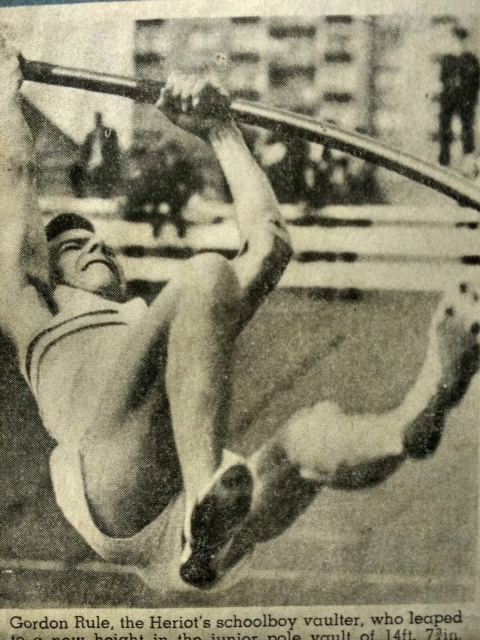
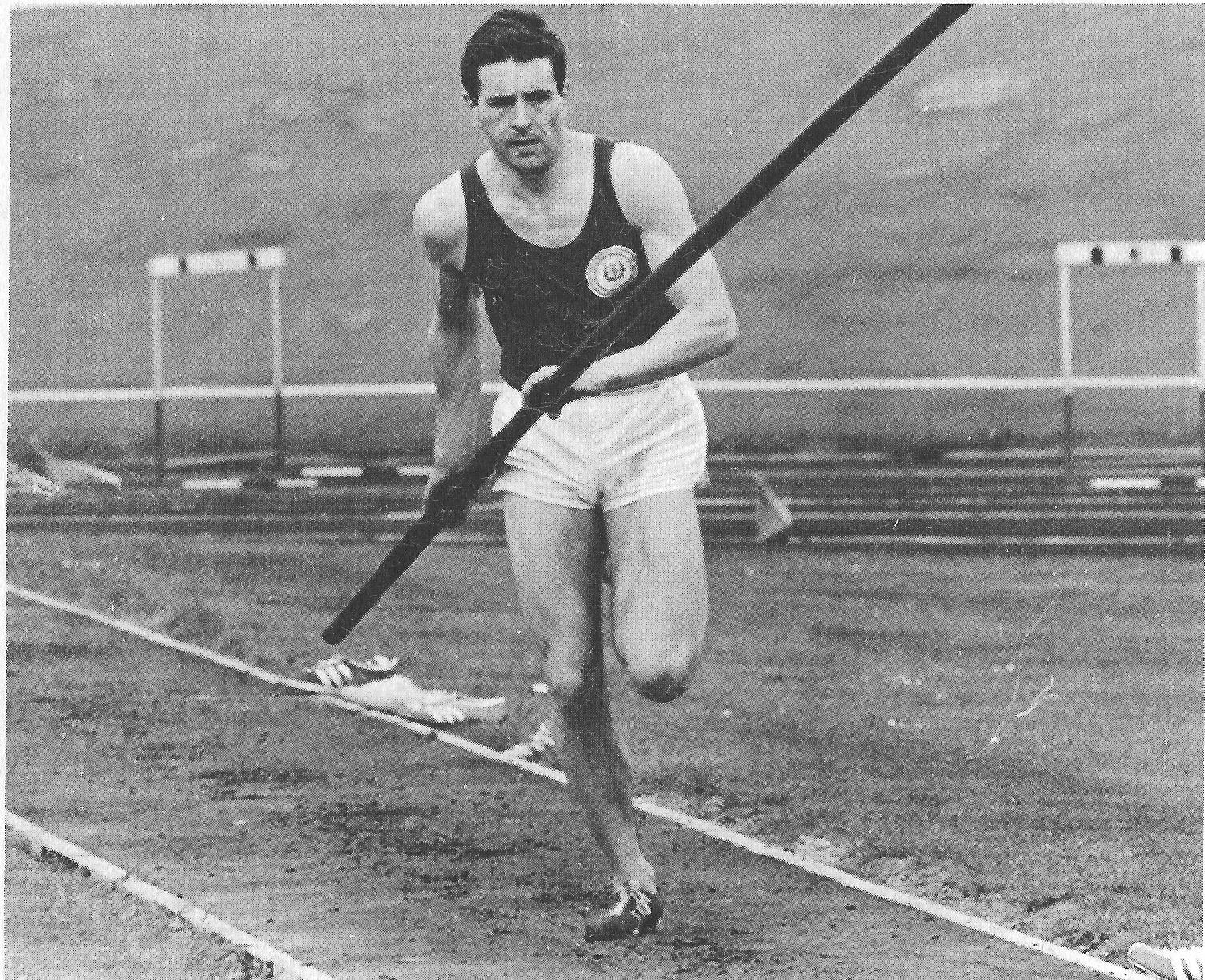
Gordon Rule vaulting at Grangemouth
1971 was to be the last year for Octavians, one of Scotland’s most successful clubs. Adrian Weatherhead again ran in the pre-final race at Hampden on cup final day and finished third in the 1500m in 3:55. The first team fixture was the Land O’Burns Trophy on 15th May and again there was some controversy. Edinburgh Southern won the event but the report started as follows: “That handsome piece of silverware, the Land O’Burns Trophy, finished up on Saturday in the custody of Edinburgh Southern Harriers but with a couple of events remaining Octavians and Victoria Park were ostensibly ahead. Then it was pointed out to officials that Edinburgh Southern had not been credited with the correct number of points in the 110m hurdles, and a quick burst of arithmetic showed that Southern were in the lead. They scored enough points in the relay to stay there, taking the trophy with 49 points, one ahead of Octavians, Victoria Park had 46, Bellahouston 30, Shettleston 29 1/2 and Ayr Seaforth 25 1/2.”
There was not one single Octavian victory despite their second place but the the winners were largely Commonwealth Games competitors from the Games of 1970 (McCafferty, Morrison, Murray, Birkmyre) with some others in terrific form (Wood, Robertson). It was however a team event and the team did well. It didn’t do as well in the East District Championships on 28th May, finishing sixth in the team contest. Individual successes included Adrian Weatherhead (3rd in the 800m), Robin Morris (3rd in the steeplechase), Bill Golden (3rd in the high jump) and Bill Gentleman (3rd in the discus, 2nd in the hammer). A week later on 5th June there were no medals for any of the relay teams from the club in the national relay championships, but Adrian Weatherhead was involved in a hard race at Rawyards Park in Airdrie. Ron Marshall reported in the Glasgow Herald: Ronnie McDonald, the Monkland Junior, came from behind in beating Adrian Weatherhead (Octavians) by 4 yards in 4 min 4 sec. Soon after the start, the race developed into a march with Weatherhead taking the junior through at a merry pace. McDonald eventually came through in the final straight.”
Adrian’s time was 4:04.6. His reward for the consistently high standard of his running was to be invited to the Emsley Carr Mile at Meadowbank on 12th June. The race was won by Peter Stewart with Adrian sixth on 4:4.1, two seconds ahead of Ian McCafferty on 4:06.1. The pair met up again in the 5000m at the Scottissh championships on 26th June in the 5000m “Ian McCafferty always looked as though he had outright control of the 5000m. Adrian Weatherhead offered stern opposition and actually led the Commonwealth silver medallist past the bell. But that state of affairs wasn’t destined to last. McCafferty produced a perky burst, capitalised upon it, and that was that.” Weatherhead ran a personal best of 13:57.2. The only other club medallist was David Stevenson in the pole vault where was second to Gordon Rule. Good as the time was, Adrian was not finished with the distance for the season: on 24th June at the AAA’s championships in London’s Crystal Palace, he finished third in 13:47.4 behind Mike Baxter and Alan Blinston. The athletics yearbook commented that he had narrowly missed selecting for the European Games . Only Ian Stewart ran faster that year with Mc Cafferty’s best being 13:52.0, Fergus Murray’s 13:57.2 and Lachie Stewart’s 13:58.6 At the year end, he was number three on the scottish all-time list for 5000m (as well as number four in the 1500m). Ocyavians had good cause to be proud of their man’s running. On the same day in the Scottish Decathlon championship, Peter Burgess was second to Stewart McCallum with a total of 6552 and personal bests in long jump, 110m hurdles and javelin.
On the 9th August at Meadowbank the first ever Octavians Relay meeting was held. It was the biggest meeting of its kind of Scotland and it is surprising that no such meeting had been held on a regular basis before. England had the Bracknell Relays, we had nothing. The Octavians meeting would go on to one of the annual classics on the athletics calendar. It was fitting that they should win the 4 x 110 metres relay with a team of Bathgate, Hogarth, Tait and Burgess in 43.5 seconds. Other events included 4 x 200, 4 x 400, 4 x 1500 and 4 x 100m hurdles for senior men; 4 x 100m and 4 x 800m for youths; 4 x 100m and 4 x 800m for boys; 4 x 100, 4 x 200, 4 x 400 and 4 x 800m for women; 4 x 100 and 4 x 800m for Junior women; and finally, 4 x 100 and 4 x 800 for Girls. A huge meeting to organise but also a huge success.
They were back at Meadowbank for the Edinburgh Highland Games meeting on 23rd August which incorporated a match against Belgium. Adrian won the 1500m in 3:44.7, Robin Morris was third in the steeplechase in 9:32.2, and Peter Burgess ran in the winning Scottish 4 x 100 relay team.
The club folded at the end of season 1971. Complete rankings for the final season as far as they are available are as follows.
100m: P Burgess 9th 10.9; T Tait 16th 11.0; M Bathgate 16th= 11.0; A Ward 11 .2; (G Borthwick ESH 6th)
200m: T Tait 19th 22.5; M Bathgate 32nd 22.8; (G Borthwick 4th)
400m: P Burgess 14th 49.9; A Ward 16th 50.4
800m: A Weatherhead 15th 1:54.4 1500m: A Weatherhead 2nd 3:40.9;
5000m: A Weatherhead 2nd 13:47.4 3000m Steeplechase: R Morris 15th 9:39.2
110m hurdles: P Burgess 14th 15.8 400m hurdles: A Nicholson 7th 55.5
4 x 100m: 4th ranked club 43.5. 4 x 400m: 6th ranked club3:27.8
High jump: P Burgess 21st 1.75m Pole vault: D Stevenson 2nd 4:26; P Burgess 4th 4:10m
Long jump: P Burgess 10th 6.92m Triple jump: Alistair Ni cholson 26th 13.00
Shot putt: P Burgess 27th 11.42m Discus: W Gentleman 17th 36.58; P Burgess 19th 16.20
Hammer: W Gentleman 9th 44.34
Decathlon: P Burgess 4th 6552 pts
In addition to Weatherhead, Hogarth (hurdles 2nd), Proven (hurdles 5th) and Stevenson (pole vault 1st) were on the all-time list at the end of 1971.
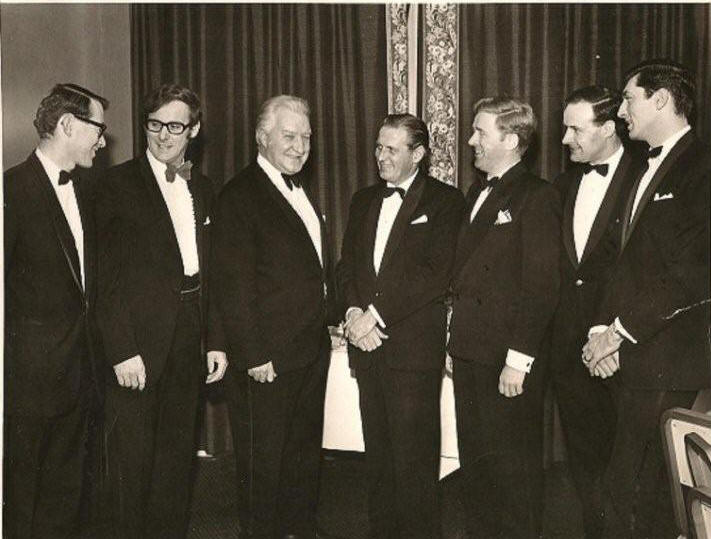
The Octavians final dinner at the Balmoral Hotel, 1971
With the standard within the club so high, why did the club fold after only ten years? The Octavians AC website is at www.octaviansac.co.uk and it suggests that –
“The Club became a victim of its own success, as the team was principally made up of District and National Champions and both Scottish and G.B. Internationals, as a result youngsters found that they could not get into the team; so they went elsewhere. The Club folded in 1971 then, after providing two trophies – one in the form of a baton for the Octavian Relays at Grangemouth, the other a Sword to be awarded annually at the Carnethy Hill Race meeting ( won by club member Robin Morris)”
The club was unique in many ways. First, it had a closely defined eligibility system which consisted of eight, specified schools in Edinburgh. This would seem to indicate a higher-than-average pool of inherited ability with an attendant work ethic fostered by the schools in question. Was it a proper athletic club? Yes, it certainly was with properly qualified coaches and top grade officials prepared to work with them. In this it differed from the ‘clubs of champions’ which typically consist of a bunch of good quality athletes who club together for the purpose of winning prizes, with no coaching or proper support structure. A list of the club’s members (all of them), officials and coaches is available at their website at the address above.
Those local clubs which had previously cultivated these establishments as sources of talent were possibly disappointed at the establishment of the club and may even have recruited several former members of Octavians but the club could maybe have continued. There was always a good supply of athletically talented recruits available from the eight schools – for evidence of this one only needs to look at the Scottish Schools championship results and the numbers of athletes from these schools competing at the East District Championships every May. Although it was never a cross-country club, with development of the endurance events – only Turnbull, Morris and Weatherhead were ever ranked or won medals for the club in contrast with the very high numbers of hurdlers and decathletes produced – they could have been even more successful. The argument that the youngsters could not get into the team is probably accurate but surely the team management could have found a way to filter the new blood in? But these are all “what ifs …” What is sure is that it was a very good club that had all too short a life.
Finally, one of the club’s best servants, Tom Tait unfortunately died on 7 Feb 2015 and there is a full obituary at :
http://www.scotsman.com/news/obituaries/obituary-thomas-ewart-warriston-tait-athlete-1-3697128
Group photographs are almost all from the Octavians website
Pictures of Bathgate, Patrick, Hogarth, Weatherhead, Rule and Turnbull from Hugh Stevenson