Colin Donnelly

EE CD 1

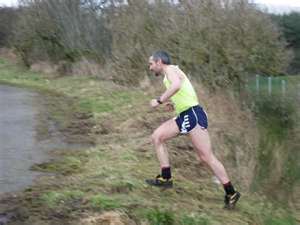
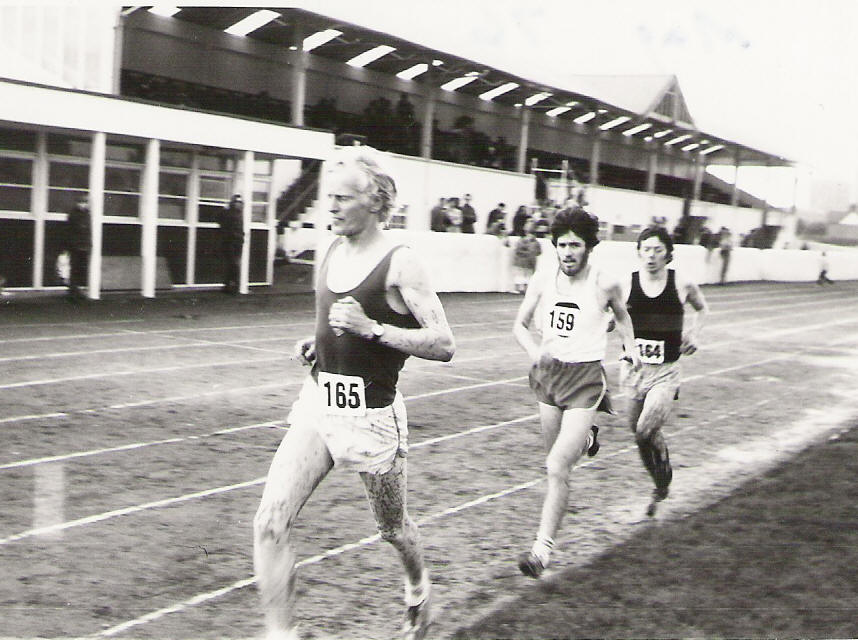
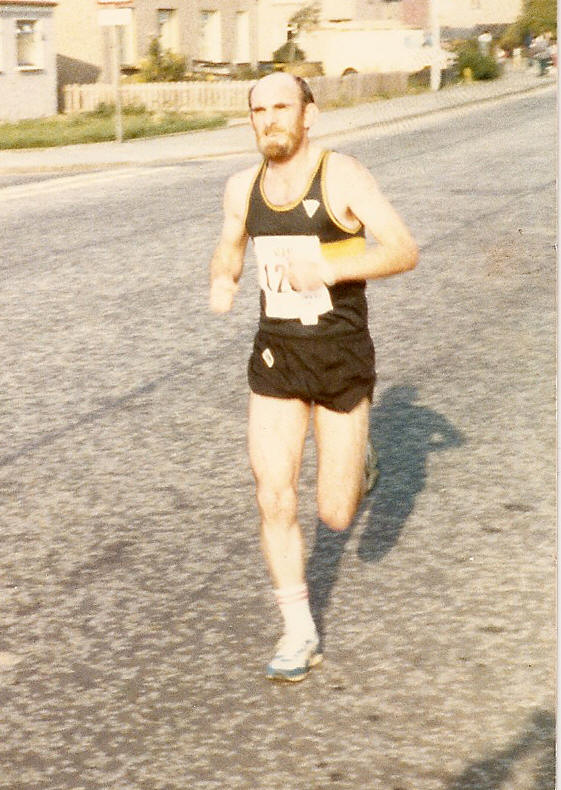
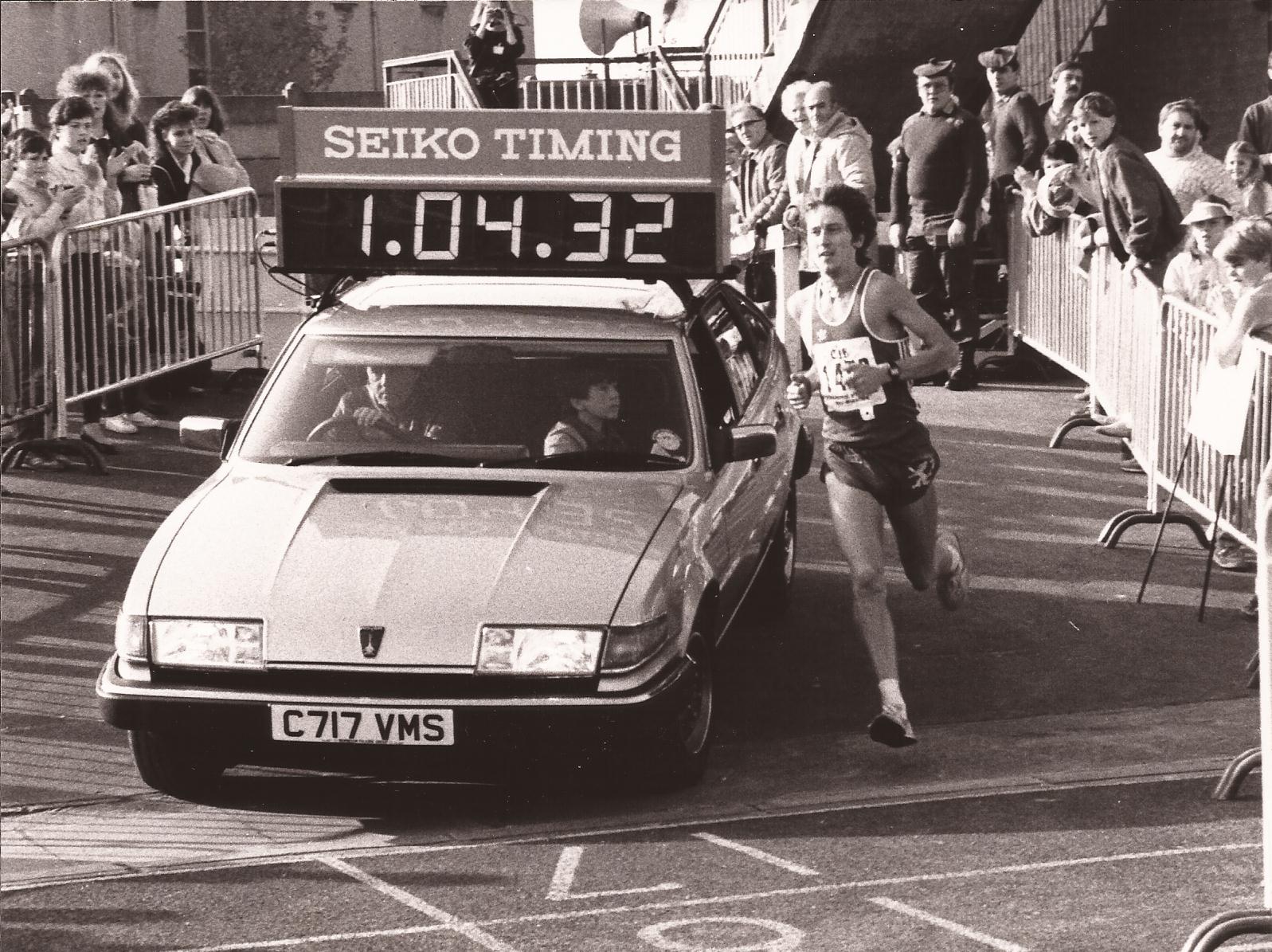
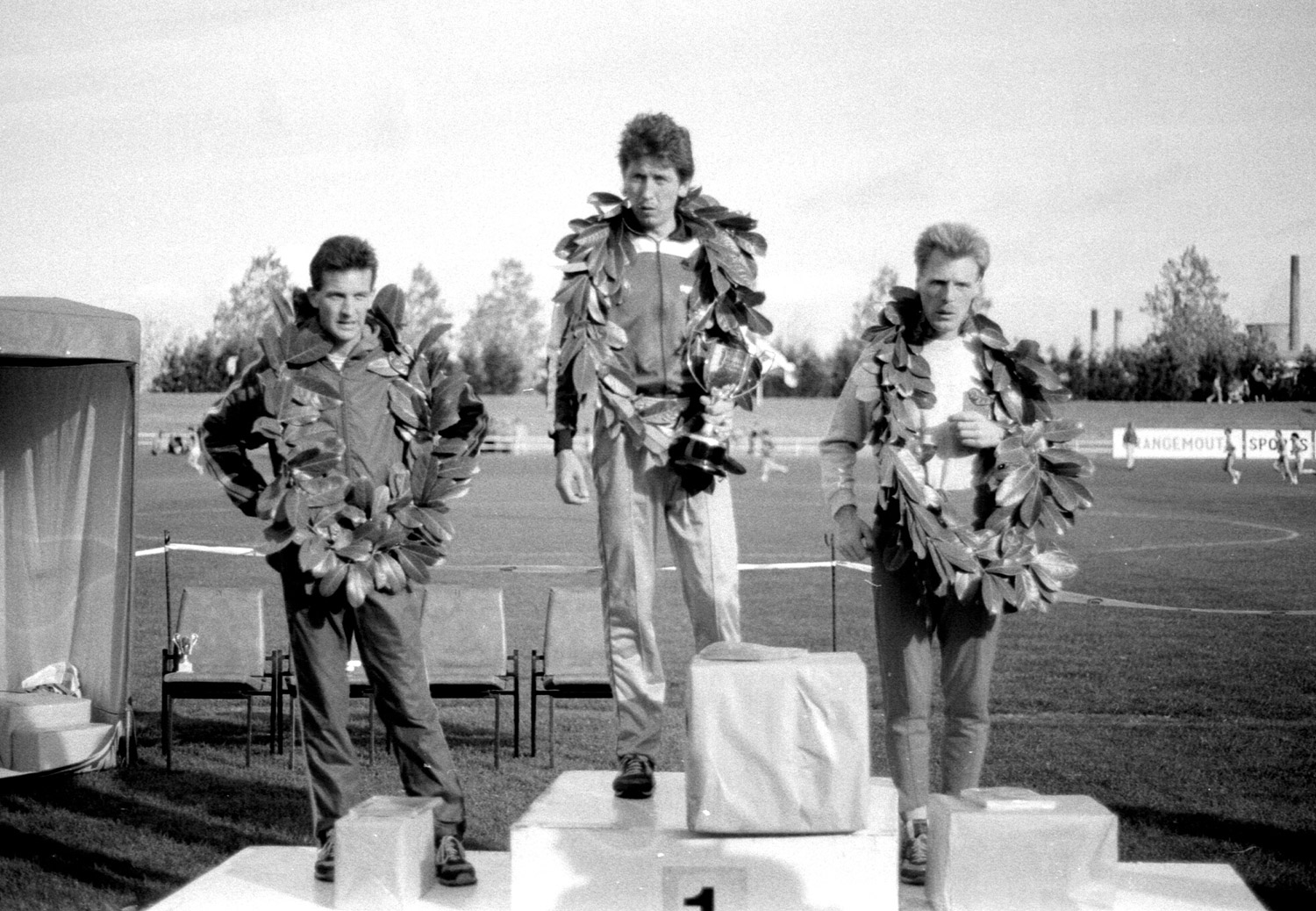
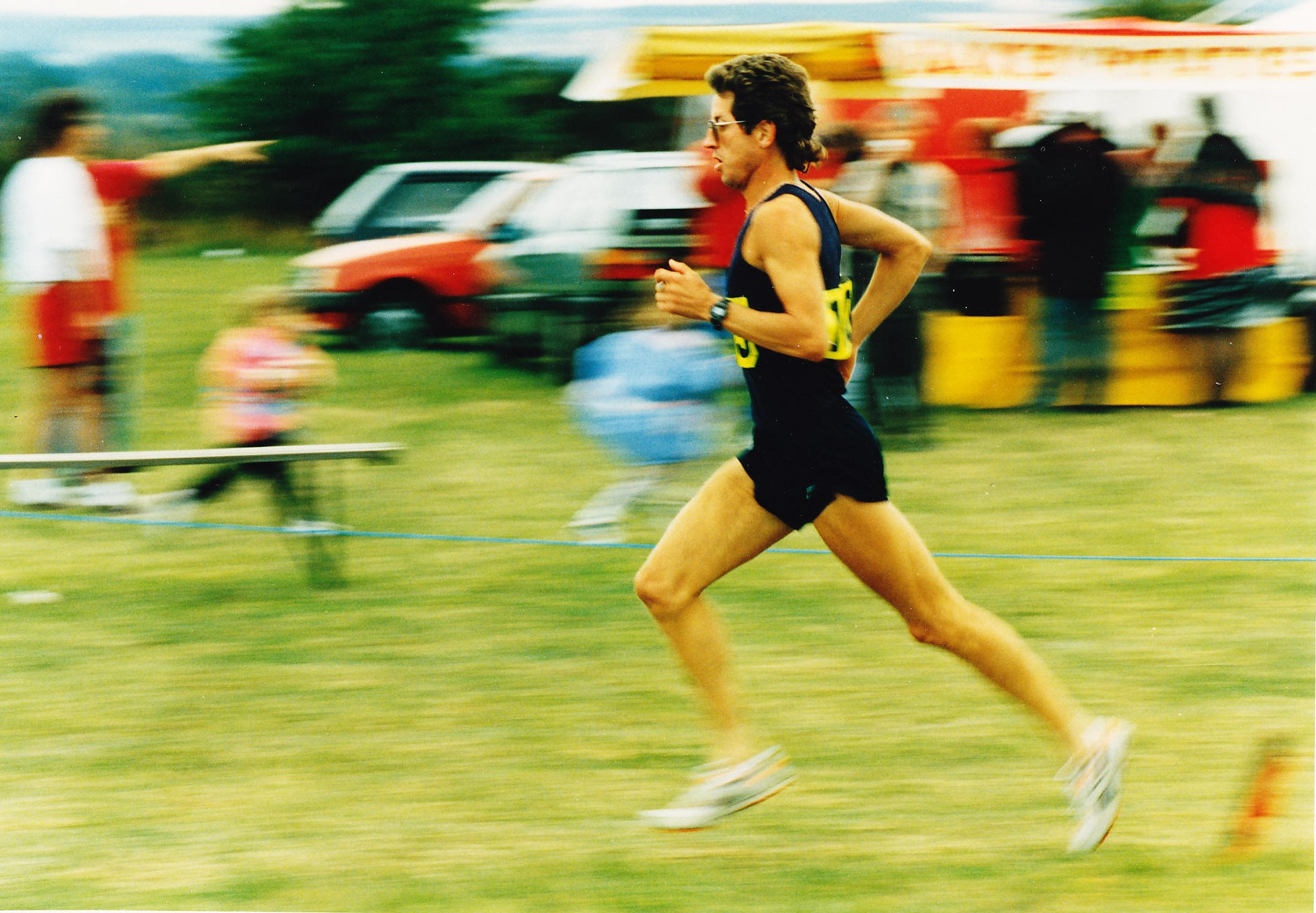
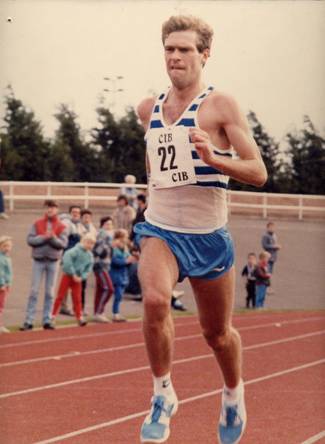
Colin Donnelly was born in 1959 and has excelled in two branches of long-distance athletics: cross-country and, especially, hill running. An internet debate about who is Britain’s best-ever fell-runner comments: “Colin Donnelly had (and still has) the speed and endurance to set even more records. He has more or less soloed every long-distance challenge there is, without support or route advice. If he was better organised, he could have achieved more than anyone else. Perhaps that is the way the great man likes things to be: out there on his own, doing things his own way”. While I agree that Colin has always been a very unusual individual, he has also been an exemplary team-man for his only cross-country club – Cambuslang Harriers.

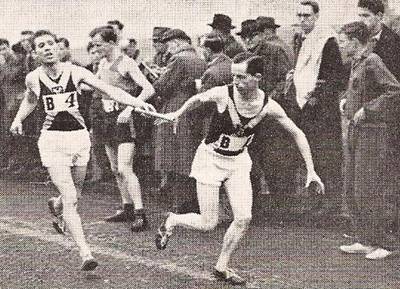
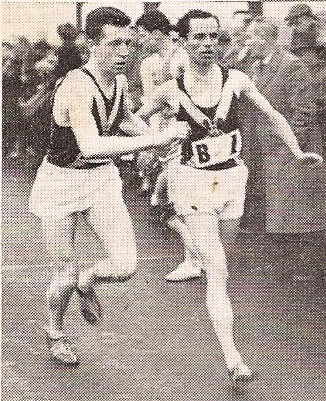
According to the club history, Colin Donnelly joined around 1976 as “a novice runner with lots of raw talent”. He ran for them in the Scottish CC Relay in 1977 and in 1978. I well remember the latter occasion, at Beach Park, Irvine. Despite the distance being too short for me, somehow I had squeezed into the talent-loaded ESH team and Allister Hutton had handed me a seventeen second lead. Young Colin scorched after older Colin and very nearly caught up before his impetuousness and my stamina took effect. As I edged clear again, before handing over to the flying Ian Elliot who ensured victory, the bellowed insults of a Cambuslang ‘supporter’ rained down on the poor tired youngster. He still gained three seconds and handed over second, although his team was eventually edged out of third. Not surprisingly after such an unfair ear-bashing, Donnelly avoided this event thereafter; but his record in the National CC was to be truly amazing.

Around the same time, Colin Donnelly studied at Aberdeen University and once or twice I kept him company on a training run. Apparently he ran sixty miles per week, as hard as he could. When I suggested that a few slower recovery sessions might be a good idea, he ignored the suggestion completely. He also turned up on a trip to the Isle of Man Easter Running Festival. No doubt he ran well, but what I remember is his total innocence about the probable effects of beer-drinking on an inexperienced young fellow! However before very long he became a mature, disciplined, teak-hard competitor.

Colin’s first appearance in the Scottish Junior CC National was in 1979, when he finished a respectable 20th. His debut in the Senior National took place in 1981, when he was third counter for Cambuslang in 29th place. No sign of what was to come!

For several years, Colin was in the RAF and based in Wales, where he made a considerable mark on the hill-running world, as will be described later. Consequently it was 1987 before he featured once more in the Senior National for Cambuslang Harriers – a team which was to dominate the event utterly for the next twenty years.

Perhaps the quickest way of communicating details of Cambuslang’s fantastic run of success is a simple list. 1987: Colin 12th, team bronze. 1988: 6th, team gold. 1989: 12th, team gold. 1990: 15th, team gold. 1991: 5th, team gold. 1993: 8th, team gold. 1994: 9th, team gold. 1995: 8th, team gold. 1996: 22nd, team silver. 1997: 24th, team gold. 1998: 11th, team gold. 1999: 7th, team gold. 2000: 11th, team gold. 2001: 17th, team silver. 2002: 11th, team silver. 2003: 16th, team gold. 2004: 21st, team gold. And finally, at the age of 48 in 2008: 20th, team gold. Colin Donnelly amassed a total of no less than 14 team gold medals (plus three silver and one bronze) during a period in which Cambuslang Harriers won 16 titles. Has anyone ever shown such consistent team spirit and excellence?

Not surprisingly, Colin continues to run very well indeed as a veteran. In Scottish age-group cross-country championships he won M40 titles in 2000 and 2001; M45 in 2007 and 2008; M50 in 2010; and (of course) a number of team gold medals. Perhaps his finest race as a ‘Master’ was a superb win (M40) for Scotland in the 1999 Five Nations Home Countries CC International at Grenville College, Bideford, Devon.

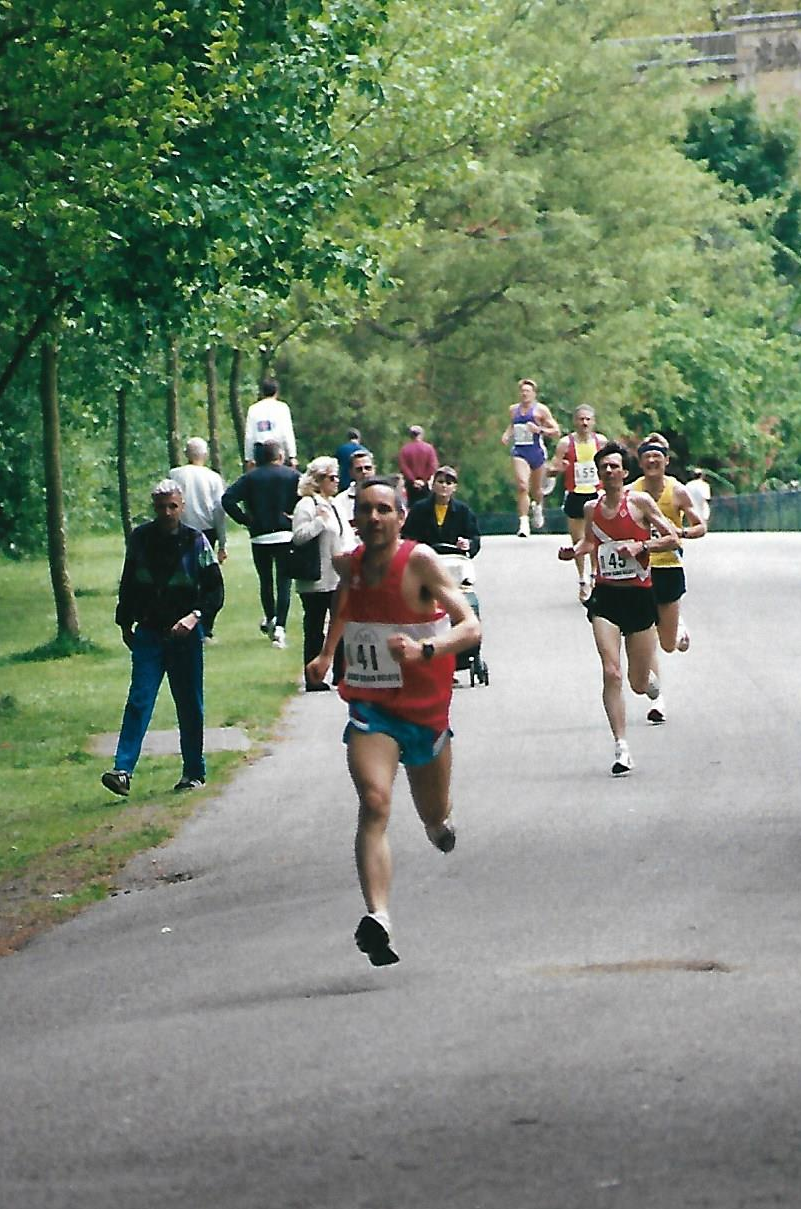
Colin, wearing a Cambuslang vest, moving his team from sixth to first on stage four of the 2000 British Masters 8-man road relay in Manchester

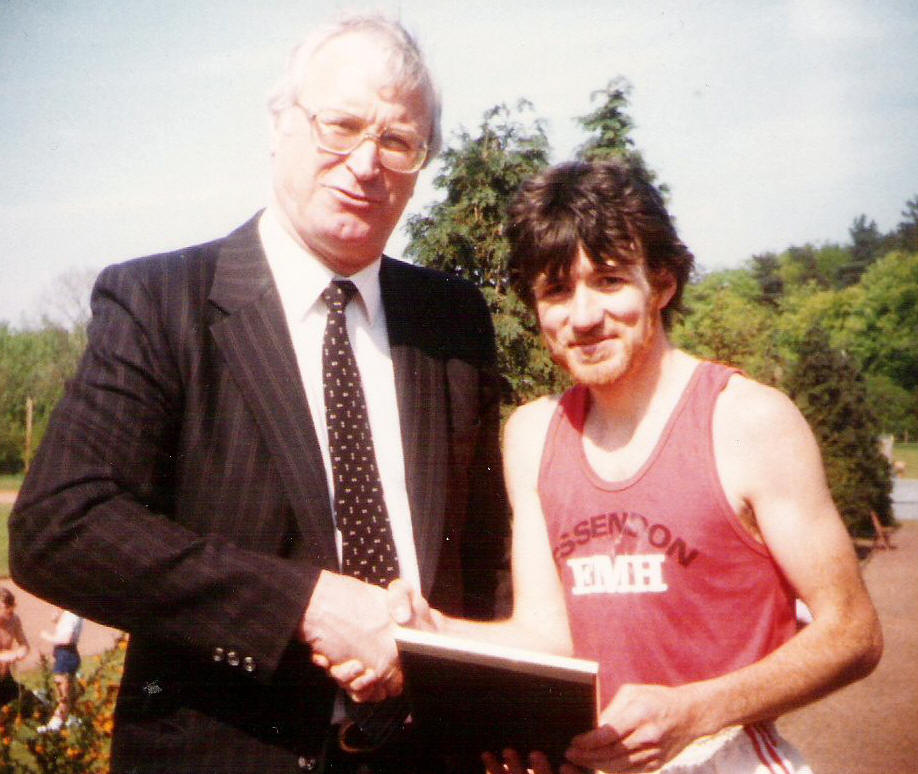
However, Colin Donnelly’s main claim to fame isn’t cross-country at all! He burst onto the hill-running scene with victory in the Ben Nevis Race in 1979 – the youngest man to win this famous event. He won it again in 1986; and lost to Gary Devine by only five seconds in 1988. In the interim Colin Donnelly had dominated fell-running, especially near his home in Wales, where he set many records, some of which have never been beaten, for example the Welsh 3000s (26 miles from the top of Snowdon to Foel Fras, including some 13,000 feet of ascent and fourteen summits). In 1988, when he was a local Eryri Harrier, Colin’s time was an astounding four hours 19 minutes.

Colin Donnelly’s hill race victories are countless, but include the Snowdon Race, Cader Idris (6 wins), Buckden Pike, Shelf Moor, Carnethy, Kentmere Horseshoe and the Manx Mountain Marathon (31.5 miles, 8000m ascent).

Colin Donnelly was British Fell-Running Champion three times in the late 1980s. In the WMRA World Mountain Running Trophy, he represented Scotland in eighteen successive races between 1985 and 2002 (plus another one in 2004): an almost unbelievable record. Colin’s greatest run, which displayed exceptional descending skills, secured a silver medal in the 1989 men’s individual short race at Chatillon-en-Diois, France. In addition, he was in the Scottish team (Tommy Murray, Bobby Quinn, Colin Donnelly and Graeme Bartlett) that won silver medals in 1995 (Arthur’s Seat, Edinburgh).

On the 22nd of September 2001, in Ustron, Poland, Colin Donnelly won the M40 Masters World Mountain Running Championship by an enormous margin of 91 seconds. In 2002 (Innsbruck, Austria) he was third; and in 2005 (Keswick, England) second M45 to Dave Neill of England.

Colin Donnelly shows no sign of retiring or even slowing down much. He is based in Lochaber and in 2011 ran eight hill races. This year he had competed twice by mid-January. He is a truly remarkable runner and it seems likely that there are many triumphs to come.

This profile of Colin was updated in 2022 by fellow hill-runner Denis Bell whose comments on his friend are in two articles and  can be found at the link below:

A different perspective  

Phil Dolan

EE PD 1

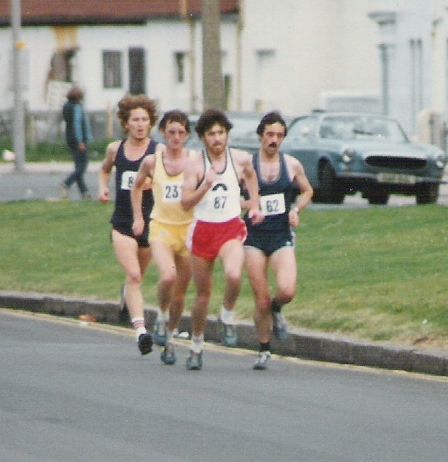
Phil Dolan (87) at Saltcoats


Philip joined Clydesdale Harriers in 1966.  It is always interesting to find how young people come into the sport in football-dominated Scotland.   He had dabbled in athletics during his first three years at St Pat’s High School but in fourth year he was told by the Head of PE to choose between athletics and football after he had just beaten the pupils in the school who had been training for cross country.   Clydesdale Harriers at that time organised a Youths Ballot Team and Individual Race and as his football match that afternoon was cancelled, he ran in the Senior Boys race finishing thirteenth out of almost 100 cross country and road runners and in the process defeating Alan Simpson of Clydesdale Harriers and with only one Clydesdale Harrier (John Tonner) ahead of him.   In his own words ~

“After the race I was standing at the finish awaiting the older lads from the school who were competing in the Youths Race.   Billy Hislop and George White of Clydesdale Harriers approached and, recognising me as having defeated Alan Simpson, enquired as to which club I belonged to.   I informed them that I ran for my school but I would have to choose a club to run the Dunbartonshire Championships.   They asked me my name and said they knew my Dad and that I would be running for Clydesdale the following week.   Needless to say I ran for Clydesdale the following week.”

 He was one of a group of good young runners but was the only one who made anything of himself as an athlete.   Of the other three in his age group, Alan Simpson was maybe the most stylish, John Tonner was probably the most overtly ambitious but he was to find fleeting fame as a coach of schoolboys rather than as an athlete in his own right and Tom MacKay had other priorities.   Philip had some qualities that set him apart quite early on.   First he knew what he wanted from the sport; second he was prepared to listen to others and consider the advice before taking it and finally he was prepared to do the work.   He was also prepared to travel to get the races he felt he needed.   The old saying “You can’t say that you want to be a ski-er and never leave Maryhill: you have to go where the snow is”, might have been written for Phil.   He raced all over Britain and Ireland, ran in Europe and even travelled to America to run in the Boston and New York Marathons.   Probably the most travelled of any Harrier I met or heard of, he was also among the most versatile endurance runners and ran with distinction on the track (where he ran for Scotland), on the country (where he raced in two World Championships and competed for several small Scottish teams on the Continent) as well as on the roads and over the hills where he set numerous course records.   He was also a long time Committee Member particularly during the 1980’s when the club was under threat locally.   His experience was invaluable at that point. He is currently working as a coach in the club.   In addition to all that, there was the work he has done for charity. 

In Club Championship Races


Born in 1951, he joined the club at the age of 15 and  proceeded to win the JD Semple Junior Cross Country Cup awarded annually to the Youths age group (Under 17) for the two years when he was eligible, 1968 and 1969, before winning the Junior Cross Country Championship Cameron Shield (for Under 20’s) in 1970, 1971 and 1972.   He then moved up to Senior Ranks where he won the Challenge Cup (the Senior Cross Country Championship Trophy) in 1973 and for nine of the next eleven years.   His domination did not stop there – the Hannah Cup for the cross country handicap was also won nine times in eleven years, the  Sinclair Trophy for the Five Miles Road Race was taken home eight times in nine years, the Harold Wright Trophy for the first club man home in the National Cross Country Championships was won eleven times in thirteen years and the Dan MacDonald Trophy for a points contest over the winter season was won nine times in eleven years – and the first win in every one of these was in 1973 which was the first year in which he was eligible to win them!   Counting youth and junior championships he won club cross country championships in thirteen consecutive years!    He could have won more because neither his ability nor his application went away nor was he injured but he missed some championships because he was running for a National or District Select somewhere on the day when the club race was being held.   For instance his run of successes in club championships came to a temporary halt in 1977 when he missed the Hannah Cup race on 15th January because he was racing for Scotland at Mallusk in Ireland.   The race was won by Ireland’s Gerry Deegan from Brendan Foster with Phil twentieth and second Scot to finish.   He then missed the club championship race on 4th February because he was again racing for Scotland this time in San Sebastian in Spain.   It is also the case that at this point in the club’s history the opposition within the club was stronger than at any time since pre-1914.   When he won the senior championship he followed Ian Donald (winner in 1965, 66, 67, 68, 69) and Allan Faulds (winner 1970, 1971 and 1972), who were both considerably good athletes with many club trophy victories in the Hannah Cup, Sinclair Trophy, etc, and who had run for Scottish selects several times with Allan having captained four man Scottish teams over the country.   These were the runners he had to beat for club championships.   Allan in particular had a big influence on young Philip who says,   “Allan spoke of WINNING races.   He brought a controlled determination and aggression which gave me a new perspective when competing.   The first Dunky Wright Road Race took place in March 1972.   Allan was determined to win the inaugural race.   I was a third year Junior and I had benefited from my training at Westerlands; been a non travelling reserve for the World Junior Cross Country and with an increased level of confidence.   Taking my cue from Allan I hung on the coat tails of Allan and Pat and finished fourth to Allan’s victory.”   The actual result was Allan first in 28:46, Pat second in 28:48, Colin Martin of Dumbarton third in 29:00, Phil fourth in 29:22 and Doug Gemmell fifth in 29:31 with Clydesdale winning the team race.

EE PD 2

As A Cross Country Runner

EE PD 3

His top achievements over the country had to be representing Scotland in the World  Championships twice.   The bad news was that the two venues were Wrexham in Wales in 1976 and Bellahouston in Glasgow in 1978, so no foreign trips for Philip!    He also ran for three man Scottish teams in invitation races on the Continent as well as for Scottish selects – eg in the annual Scotland v N Ireland v Scottish Universities at Stirling and Cumbernauld – all over the British Isles.     He is pictured, left in the Scottish colours.   It was the form in these days for invitations to run in European races to come to the AAA’s in England who then decided who should get them.   It will surprise no one to hear that the majority went to English squads and that Scotland Wales and Northern Ireland did not appear to get their fair share.   However back to the narrative.

A lot of Phil’s success over the period was down to his hardness as an athlete.   All endurance athletes have to be hard and all successful endurance runners have to be really hard.   With the possible exception of Ian Donald, Phil was the hardest man I have ever run with or against.   This might have been because he never had an easy path in the sport.   Early on he linked up with Cyril O’Boyle.   Cyril had won numerous titles in Ireland, both North and South, and was a notoriously hard trainer.  He talked about the sport, thought about it and argued about it at every opportunity.   He even read about other similar sports and attended seminars in the local library involving long distance cycling and swimming coaches. Two things about Cyril: Every run with Cyril was a hard one – but not too hard.   He was not silly and one of his lines was to the effect that if you could not do the same run the next day, then you were training too hard.   The second thing was that every run with Cyril was an education – challenging statements were thrown out at you, information was passed on and when he said halfway through a hard 10 miler “Now, you’re an educated man, how is it that….” You knew some debate was about to start!   And once you started on an answer, the boot went in.

When Philip became a Junior (Under 20) athlete, he was racing against Ian Donald, Douglas Gemmell, Ian Leggett and Allan Faulds inside the club, at County level there were runners of the standard of Colin Martin and Billy Cairns of Dumbarton and in other races he was a contemporary of Olympians Frank Clement and Donald McGregor, 800 metres record holder David McMeekin, Grand Prix runner Nat Muir, the outstanding Allister Hutton, Jim ‘The Guv’nor’ Dingwall and many others who would always give him a hard race.   The background given to him by Cyril was further developed by racing week in and week out against this high quality opposition.   His own standard was really high – one of his regular opponents said that if medals were given for quality performances from the Nigel Barge Road Race in January to the Midlands Championship in December, Phil would be an outstanding candidate.   Others were as strong, some were faster but few were as hard.    On one occasion when Scottish and British Internationalist Ian Stewart lost an exceptionally hard track race against the German Harald Norpoth, he was lying at the side of the track afterwards when the TV interviewer asked if he had any words of congratulation for the winner.   Ian, still lying on the ground raised himself on his elbow, grabbed the microphone and more or less snarled into the camera “That was a bloody hard race Harald, you won tonight but next time we meet you can expect more of the same!”   No quarter given.   Phil was every bit as tough in racing terms.   If we look at his first seasons as a Junior athlete which included races with the Senior team it will give an indication of what I mean.   Prepared to listen to advice, he was advised by Ian Donald to apply for permission to train at Westerlands, the Glasgow University Grounds at Anniesland in Glasgow.   There was a good blaes track set within large, good quality, grassy grounds which incorporated a three hundred metre straight at one side.   Lots of top endurance runners trained there.   He says:  “Observing and training with the likes of Lachie Stewart, Dave Logue, Mike Bradley, Dick Hodelet and Graeme Grant opened my eyes to ‘proper’ training.   Only Cyril had ever spoken about training of that tempo and intensity summer and winter.   No other Harriers came close.”

At the start of the 1970-71 season he was still a Junior and turned out in the McAndrew 4 x 2.5 mile road relay – the traditional opener for the winter season.   He didn’t even make the first team.   The top team was Douglas Gemmell (14:24), Ian Donald (14:27), Allan Faulds (14:01 and Ian Leggett (14:16) and the team was fourth.   Phil was in the B team and ran the first stage in 14:37 followed by Brian McAusland (14:36), Sandy McNeil (15:34) and Bobby Shields (14:50) to see the team finish twelfth.    In the County Relays the following week he was in the B Team again and his time was 18 seconds slower than Douglas Gemmell who was the slowest in the A Team.   Detailed results are in the section on the County Championships.     Came November and the Allan Scally four stage road relay at Shettleston and he was in the first team for the first time.   The team was Ian Donald (24:09), Doug Gemmell (23:47), Phil (24:26) and Ian Leggett (23:16).   Then came the Edinburgh – Glasgow 8 stage road relay where the team did well to finish fifth with Ian Donald seventh on the first stage, Douglas Gemmell eighth on the second stage, Ian Leggett seventh, Bobby Shields seventh, Brian McAusland sixth, Allan Faulds fifth, Sandy McNeil tenth and Phil Dolan fifth at the finish.   Picking up five places on the last stage of this highly esteemed race when the field was quite strung out was a notable debut.   In the Midlands Relays at Bellshill he was again in the first team.   The team was Ian Donald (12:00), Douglas Gemmell (12:00), Allan Faulds (11:48) and Phil Dolan (12:28).   He was maybe in the first team but he was not the fastest in the club yet.

The year ended and so did the relays and in the club’s Hannah Cup handicap cross country race he was third finisher and fourth quickest over the heavy Braidfield Farm trail.   He was the club’s third finisher in the Midlands Championship at Stirling a week later with Allan Faulds thirteenth, Ian Leggett eighteenth and four places ahead of Philip who was followed by Ian Donald in twenty fifth and Bobby Shields in thirtieth.   Not eligible for the club senior championships, he won the Junior race from John Tonner and watched Allan Faulds win the senior race from Douglas Gemmell.   His next race with the Seniors was in the club’s Sinclair Trophy for the Five Mile Road Race.   Allan Faulds won in 29:19 from Doug Gemmell (29:26) and Phil Dolan (30:18).   That was his first season against the big boys and he was a member of one of the top club squads in the country.   There have been many years when running of the standard he displayed at that time would have won every trophy in the club!   He went on from there and as an indicator of the high standard over a number of years, he finished in the first ten of the Midlands District Cross Country Championships over a ten year period and most of these were seconds or thirds at a time when the District boasted of many top class athletes such as Frank Clement, Alan Partridge, Lawrie Spence, Lachie Stewart, Norman Morrison and many more.

EE PD 4

In the County Championships between Bill Yate (Maryhill) and Colin Martin (Dumbarton)


On the Track

If the cross country running showed Phil as a competitor, his running on the track was an indication that he did have a lot of ability – the strange thing is that many even now think that Phil did everything on hard work and not on ability.   The truth is that all top athletes need both.   Many athletes are gifted (eg Willie Sheridan of Victoria Park and Westerlands) but lack the application or motivation to develop these gifts; many others are prepared to work long and hard but don’t make it because the ability isn’t there.   Ability is not a purely physical thing: Derek Parker of Kilbarchan was the first man I heard say that running was 100% physical and 100% psychological.   Phil had both: to see this one only needs look at the times recorded.   His best track times are as follows:

880 yards: 1:57 (on a cinder track)

1500 metres: 4:00

3000 metres: 8:25

5000 metres: 14:17

10000 metres: 30:07

(The 10000 metres was a track time – there were few if any 10K road races at that time and he would assuredly have been faster in a road 10K)

By any standards these are considerably good times.   Even now in 2006 they would have ranked him 40th (800), 29th (1500), 8th (3000), 3rd (5000) and 2nd (10000).   His best marathon time of 2:21 would also have seen him in second place!   That is not only down hard work.    In fact, given that a senior athlete can run any number of races in a league match, he would make a welcome addition to any club currently in the league running every distance from 800 to 5000 in each match.   Having trained and argued and discussed athletics with Cyril he thought about running and what he was doing.   BUT unlike many of the present day athletes (but like many of Scotland’s all time greats such as Andy Brown, Lachie Stewart and Ian McCafferty) he raced often and on all surfaces – tartan, grass and cinder all came alike.   He ran in Highland Games meetings all over Scotland.   Unlike today, the top runners raced each other often.   Club teams at Gourock, Cowal or Strathallan, individual races at other Games plus Open Graded Meetings plus championships (County, District National) all went into the mix.   ‘The mix’ is maybe the most appropriate phrase to use.   While he was doing this he was running the Mamore Hill Race, the Gourock 14 miles, the Balloch to Clydebank 12 and the Helensburgh 16 miles.   There are several differences there from the present day.   First the frequency of races; second the range of distances run; thirdly the mix of track with road and hill running.   His reward for consistently good performances was to be selected to run for Scotland on the track.   There were two such occasions, both over 10,000 metres and they were both within the British Isles at Cwmbran in Wales and at Meadowbank.

On the Roads

With a marathon best of 2:21 and a time of less than six hours for 56 miles, he basically has nothing left to prove.   His first race over 10 Miles in the Tom Scott Road Race saw him turn in a time of 50 minutes exactly and would have ranked him first in Scotland in 2006 where the fastest time was 51:17!    As on the track, he raced everywhere he could.   In Boston in 1977 with the temperature at 80 degrees when the race started at 12 noon, he was the first runner from outside the American continent to finish when he crossed the finish line in 2:23.   Common agreement was that the weather had added at least three minutes to the times and certainly I had never been outside 2:50 for the distance but recorded 3:02 on the day.   It was a superb run in which he defeated the best Japanese runners (including Olympian Akio Usami), the best German runners, the best Irish runners (including previous winner Neil Cusack) and all the English representatives including Stan Curran who was running very well indeed at that point.   The following year he went to the New York marathon but unfortunately he had injured a ligament in the World Cross Country Championships that year and rushed back into training a bit too early.   The injury recurred and hampered preparations for the marathon and he only recorded 2:25 (this would have placed him fourth in the current Scottish rankings!).    In competitive terms, he twice won the Dublin Marathon against top class opposition and slightly nearer home took first place in the Preston to Morecambe ‘Milk Marathon’ sponsored by the Milk Marathon Board.   The downside was that he had to drink a pin of milk on finishing the race but there was some compensation – he had his photograph taken with a couple of ‘glamour’ models.   The pictures never made it to the ‘Clydebank Press’.  He was, however, easily the best marathon runner the club ever produced.


Several points should be made here.   Like all of the wonderful and even not so wonderful runners of the era, he had a choice of distances: Tom Scott was 10 miles, the Balloch was 12 miles, Gourock was 14 miles, Helensburgh was 16 miles, Rothesay was 18 miles, Strathallan was 21 miles, Edinburgh to North Berwick was 22.6 miles.   The choice at present is largely 10K, 10 miles or half marathon.   This has an effect on the development of distance runners.   Phil ran all road racing distances with success and set records at distances from six miles to fourteen on the roads. 

On the Hills.

 All Clydesdale Harriers run on the hills at some point and Phil was no exception.   The club has produced hill runners who have smashed records all over Scotland: Bobby Shields, Ian Donald, Brian Potts, Ian Murphy and more recently John Kennedy in very long hill races like the Lairig Ghru and Prasad Prasad in the shorter ones such as the Callander Crags and Ben Sheann.   Phil ran all distances.   He ran the short Neilston Pad race three times and won it.   He also ran in the medium distance Carnethy Hill race where he ran it once finishing second to Martin Weeks of Bingley Harriers.   His favourite however must have been the really gruelling Mamore Hill race at Kinlochleven.    The trail went from the Island Park in the village round to the start of the Lairig Mhor, now part of the West Highland Way, over part of the Lairig and then up to the 2500 feet shoulder of A’Cailleach before plunging down to the road and then racing seven miles on the road back to the park.   Many of the very best in Britain had run this one including Alistair Wood from Aberdeen who set a course record. Phil not only set a record for the course but then broke his own record the following year with a time of 1:37:23.   And that was for fourteen miles including almost 3000 feet of ascent.   (As a side note to this, he helped me win a trophy for a race I never ran.   Having raced the event several times I was down to compete as part of a four man club team.   I failed to turn up because of illness but with only three to count the club won and was presented with four plaques.   I got my plaque the following Tuesday at Whitecrook!)   These races at Kinlochleven must rank among Phil’s best ever runs and had hill running had the profile it has at present he would surely have added to the national vests won for track and cross country.   The Mamore was not the only one he ran but was the one in which he placed himself firmly in the ranks of superb hill runners.

Phil also ran the much shorter Cathkin Braes Hill Race in 1975 in 24:06 from Alan Partridge of East Kilbride AAC who was timed at 24:11 avenging his second place to the same athlete of a year earlier.   He also ran the race in 1977 as part of his preparation for the Boston Marathon.    The furthest he travelled for a hill race was to the Isle of Man in 1970 when he ran the Peel Hill race defeating the Olympic silver medallist and world class steeplechaser Maurice Herriott from Birmingham who was the pre-race favourite.   In fact the officials were so confident that Herriott would win it that they stood there not realising Phil had been to the top and back until he handed then the card given to all athletes at the top!   Herriott knew better and told Phil that he had figured him as his main rival when he saw him warming up.   At the same meeting which lasts for several days, he won the 1500 metres Island Championship and was victorious over the reigning champion in the 800 metres.    Quite a week’s work.

Charity Work 

Phil worked with the Royal Bank of Scotland and was asked by the bank to take part in a ‘Corporate Walk’ to raise money by the Stars Organisation for Spastics.   It was an organisation run by many of the top stars of stage and sport to raise money for charity.    If it still exists it is on a much lower level and has had a change of name.   (It is a pity that no matter how accurate a term is, it has been demonstrated time and again that it becomes demeaned and no one at present uses the word ‘spastic’ in conversation.   This in no way demeans the work done over the years by medical people and charitable organisations using the term.)   At the time it was a major fund raiser for many charities with members such as Kenneth McKellar, Bill McCue, Jack Milroy, the Krankies and Johnnie Beattie from the stage and Jock Wallace and John Greig from the world of sport as members.   Phil took part in the Corporate Walk but with a difference – he asked if he could run it.   The event took place round Pollock Estate and he covered 42 miles the first year – then he did 46 the second year.   Not content he went from there to 52+ miles then finally up to 56 miles in less than six hours!   He had raised thousands of pounds from these events (as well as from the sponsorship he carried in several marathon races) and was consequently made a full member of the association.   His name appears on the headed note paper alongside Gordon Brown, Dougie Donnelly,  Billy McNeill and the rest.

EE PD 5

Phil with Jock Wallace (Manager of Rangers FC)

Although we have looked at the various strands of his athletics career separately for the sake of clarity, they were all intertwined all year every year.   In a typical year, the winter was all cross country and short road races and then in summer it was track, hills and road running up to marathon distance.   In my opinion his best year was 1977 where he had a good cross country season which included two selections for small Scottish teams (Mallusk and San Sebastian) before going into the summer where he raced two marathons – Boston where he recorded 2:23:00 and the Scottish Championships in 2:21:59.   In between he ran the 10,000 metres for Scotland in 31:24.8 in the International against Greece at Meadowbank.   On the hills, he won the short hill race at Cathkin Braes and set another record in the 14 miles Mamore Hill Race.   In September he ran 5000 metres in 14:17.9.   Then in October it was back to the Cross Country season with the McAndrew Relay starting the roundabout again for 1978 where he finished fourth, and was unlucky not to be third, in the Scottish Cross Country Championship and be selected for the International Cross Country fixture!   And this intensity was kept up for at least ten years as a Senior.


Any review of Phil’s career must come to the conclusion that he was one of the best all round endurance athletes that the club has ever produced.   His top performances stand comparison with any of the Scottish athletes of his generation and he had victories over several of the domestic ‘greats’ at that time.   What were his best performances?   On the country he had his international vests; on the roads his marathon in Boston where he defeated many of the world’s top competitors in temperatures seldom experienced in Scotland; on the hills, the two Mamore victories must be a source of great pride to him; and finally, using his talents and gifts for running to raise money for those less fortunate was well recognised by those outside the sport.   Phil was a great credit to his family, to the club, to the sport and mainly to himself.


Jim Doig

EE JD 1

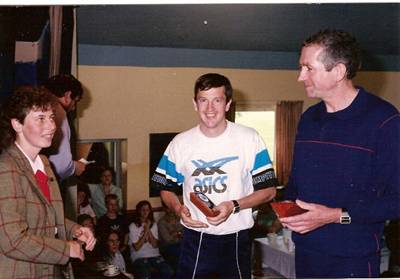
Barbara Grant of Letterewe Estate presenting winning team awards for the Great Wilderness Challenge to Jim Doig, centre, and Ben Preece in 1989

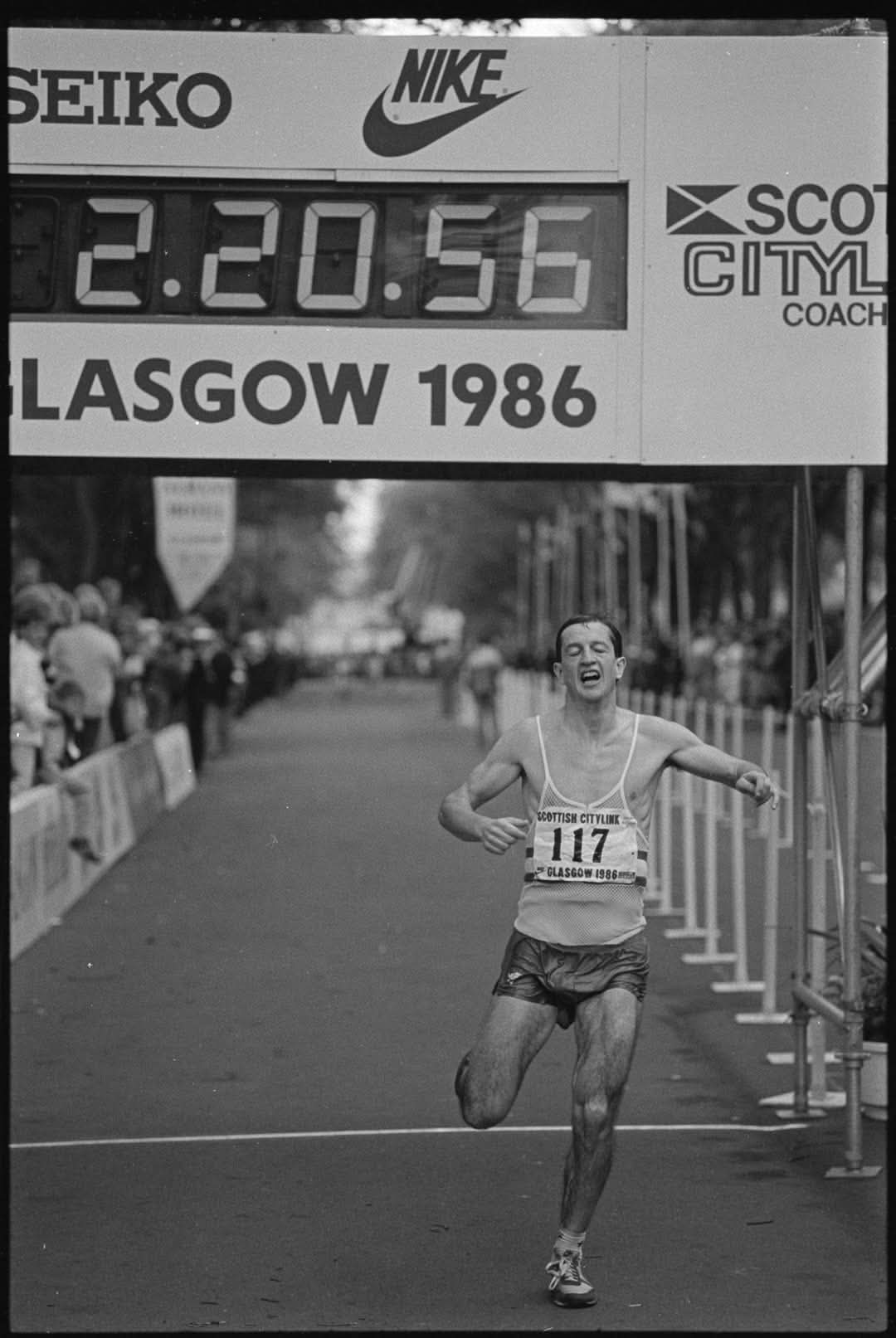
Jim Doig as is indicated below had a short career as a marathon man but had immense talent – his first appearance in the Scottish Ranking Lists was in 1986 when he was sixteenth with a time of 2:20:56 run in Glasgow in September of that year.   

Colin Youngson put the following tribute together.

*****

In January 1992 Jim Doig died tragically young at the age of 34 from meningitis.   However he had packed a great deal into his short life and is remembered with admiration and great affection by those who knew him.   Jim was multi talented, extremely determined and modest.   I clearly remember duelling with him during some very competitive Aberdeen training runs and races (before he outpaced me).   His loss lingers sadly, since he was a wonderfully supportive team-mate, sensitive, thoughtful and cheerful company. I like to remember how delighted he was when, in November 1986, Aberdeen AAC won the prestigious 8-StageEdinburgh to Glasgow Road Relay (Jim put us into the lead with the fastest time on Stage 3; and he cheered me on when I was fastest on Stage 8).

In a second edition of Jim’s fascinating and detailed booklet about his adopted home, the ancient Deeside village of Kincardine O’Neil,  his partner Linden Tapper wrote the following.   (Some extra detail has been provided by Fraser Clyne).

“Those who knew him may be surprised that he had time to sit down and write this history, since his public passion was running.    Latterly he devoted his time to marathons.    Many local people will remember seeing him  pounding the Deeside roads, out in all weathers.   His training paid dividends.   He won both the 1987 Reykjavik marathon and the 1989 Bermuda marathon and represented Great Britain in the 1988 European Cup Marathon in Belgium.

Before taking to the roads he was a well known orienteer  representing both Scotland and Great Britain.   (Jim won the native Scottish title in 1981 and 1983; was a regular in the Scottish International squad in the early 1980’s and competed for Britain in the 1984 Trans-Atlantic Cup in Boston.)

His real pleasure though was not from running on the roads but from running in the hills and forests.   He felt privileged to be training in such beautiful countryside.   The Cairngorms are a short drive from Kincardine O’Neil and this was where he spent some of his happiest hours (with companions like Ben Preece and Jonathan Musgrave.)   Jim was born in Forfar in 1957.   he graduated from St Andrews University in 1979 with an honours degree on Computational Science.   He worked for a couple of years in Dalkeith before moving to Aberdeen in 1982 to work for Shell as an instrument engineer.”

EE JD 2

Fraser Clyne wrote the following in ‘The Green Final’ Aberdeen local paper.

“The death of Aberdeen marathon runner Jim Doig (34) from meningitis came as a great shock to the North East’s athletics community.   In 1990 he was ranked second in Scotland with a fine personal best of 2 hours 17 minutes  58 seconds set in that year’s London Marathon which was won by fellow Scot Allister Hutton.   Despite hsi achievements at international level, the one performance that gave Jim greatest satisfaction on the domestic scene came when he helped Aberdeen AAC win the Edinburgh to Glasgow road relay title in 1986.

Although extremely successful on the road racing circuit, Jim was more content running in the quieter surroundings of the Scottish countryside.   He loved training in the forests and hills near his home in Kincardine O’Neil home on Deeside and often travelled further afield to take in a few Munros during some of his log runs.  

In 1986 he became one of a select band of long distance fell runners to have successfully negotiated the Bob Graham Round  – a demanding 72 mile course of rough hill country encompassing 42 Lakeland peaks with 27000 feet of ascent and descent – which has to be completed within 24 hours.   In 1988 and 1990 he he won the sort of race to which he was undoubtedly best suited – The Great Wilderness Challenge, a gruelling 25 mile run from Dundonnell to Poolewe through some of Scotland’s most spectacular scenery.  

Always a source of inspiration and encouragement to those around him,  Jim will be fondly remembered by his family and friends.”


Willie Day

EE WD 1

WILLIE DAY: FRIEND AND RIVAL

By Colin Youngson

“Willie Day is a good friend and was one of my closest running rivals.   On many occasions we battled fiercely on country and road, over short relay legs or long distances and there was seldom much between us at the finish.   At no time was there any ill-feeling: on the contrary, we joked and took the mickey out of each other frequently as well as ending up in the pub afterwards.   Such a relationship was not possible with certain other runners!

Our first head-to-head was in May 1971 when I only just managed to get away from Willie and Colin Martin to win my first SAAA medal. – bronze in the track 10 miles – a very long way behind Lachie Stewart and Donald Ritchie.   By October Willie won the first stage of the McAndrew Relay in 13:46 which was third fastest on the day.   I was more than thirty seconds down.   However a month later I ended up one in front of him after a gruelling and disappointing cross-country race for Scotland B Team against Northern Counties at Catterick.   We both attended the ‘International Training Sessions’ at Cleland Estate, Motherwell, rubbing muddy shoulders with real stars.   In the 1972 National I was nineteenth and – surprise, surprise! – Willie was twentieth! 

Although Willie Day had his moments on the country, in my opinion his best surface was road.   Certainly he ‘murdered’ me on 20th May, 1972, when he won the 15 miles Drymen to Scotstoun classic by more than four minutes.   (He also won the race in 1974).   The see-saw nature of our encounters continued a month later when he dropped behind myself and the inimitable Alastair Wood at 15 miles in the SAAA Marathon Championship.   I lasted one more mile before the old fox strolled away for an easy victory.   Willie dropped out and I hit the wall before struggling in third.   The point is that Willie hung on as long as he could rather than pacing himself into the medals.   His tactics were frequently gung-ho, Willie might blast off at the start or stick in ferocious surges mid-race.   At times he paid for it especially when he wasn’t particularly fit, but what the hell?   No one could accuse him of cowardice!    Running was meant to be dramatic and to be fun!

When I skim through my records, there is a great deal to prove how evenly matched we were.   At times I might be a fair bit ahead, but you could be sure that not long afterwards Willie would repay the compliment in style.   His best period was when he was training with the charismatic Jim Dingwall and several others in the excellent Falkirk squad.   I have a puzzlingly vague memory of coming through from Edinburgh one Saturday morning to stay with Jim and train with him and Willie.   It seems likely that we did a hard ten miler that day, followed by a serious period of real ale rehydration in The Wheatsheaf and The Woodside.    Sunday morning featured twenty or more serious miles of hangover cure!  No wonder Willie ran his fine marathon pb in 1977 to win silver in the Scottish behind Jim’s championship record.   I was fourth that day but still managed 2:19:35 with the added pleasure of watching Willie receding rapidly over the horizon.   His success couldn’t have happened to a nicer guy.

Nevertheless when the three of us attempted the International Enschede Marathon in Holland that August, on a very hot day, we all blew up.    Willie was only two places in front of me but we both beat Jim!   Willie and I couldn’t stop laughing at excerpts from the book I was reading – ‘The Fall and Rise of Reginald Perrin’; and on the ferry back we drowned any sorrows in the company of boozy superstar Ron Hill!

Three significant race memories to finish.   In May 1975 I won the Drymen after an exhausting struggle to hold off Willie Day.   My tactic was to go mental up the hills on the Stockiemuir Road up to Queen’s Drive at the five mile point.   Unfortunately Willie’s downhill skills were much better than mine and I only just managed to stay clear.   Whew!   Sandy Keith was third. Only a few weeks later I won the Scottish Marathon in a lifetime pb with Sandy a close second which suggests that Willie should have entered too.   Still he fulfilled his marathon potential two years later.  

In April 1978 only three were bold enough to turn up at the Coatbridge track for a successful attempt on the (soft) Scottish Native Record for 20K.   Willie and I used to joke that any long ‘Highland Games’ road race in Scotland around then was liable to be won by one of us or Doug Gunstone.   In turn we took the lead for two laps maintaining the steadiest of five-minute miles until the others tired a little, and I moved away.   At the hour (19300m) I was only 96 metres in front of Willie who, for reasons best known to himself, then stopped dead allowing Doug to take second at the 20K finish a couple of minutes later.   The three old rivals were a bit disappointed because we only just missed out on running 12 miles in the hour but it was an impressively smooth ‘team’ performance nevertheless.

In 1988 when I turned up at Dalmuir Park, Clydebank, to make my debut in the Scottish Vets Cross-Country Championships, who should be there but Willie?   He claimed to be less fit than he used to be but still set off like a smooth headed rocket!   No one else went with us and when Willie slowed down he left me in a clear lead.   Eventually I managed to win by 24 seconds from Archie/Ken Duncan of Pitreavie and Graham Milne, my Aberdeen AAC team-mate.   Yet what I remember is Willie Day charging off robustly, as usual making a real race of it!”

The above are some of the personal comments of Colin Youngson of Aberdeen, three times Scottish Marathon victor and with a total of ten marathon championship medals in his cabinet, about Willie Day and they indicate something of Willie’s competitive nature and of his popularity with other athletes of the time.   The thumbnail is of Willie winning the Strathallan Meeting 20 miles road race in 1973.

Willie winning at Bridge of Allan in 1973

As a boy, Willie raced other boys round a course made of local streets and enjoyed running but when he started work in a shop there was no time to follow up this early interest.   When he moved to work with the Post Office, there was more time and he could get some serious training done.  He joined Falkirk Victoria Harriers where the coach was Tommy Todd and his running career took off from there.   His friend, club-mate and travelling companion to many races Willie Sharp, says, “I joined FVH in the autumn of 1965 and Willie joined at almost the same time.   He was still a Junior when he started (a Junior was Under 20 then) and I remember him being called ‘the oldest Junior in Scotland because of his premature loss of hair which I think confirms that right from the start he was pretty good at Scottish club level too.   In the club championships of 1966/67, which covered 17 races (yes, 17 races over 5 months), Willie was the first Harrier home in every single one of them.”

He came to the wider sporting public’s attention when in the 1967 Scottish Junior Cross Country Championships at  Hamilton he finished tenth in a very good field where the first five were Eddie Knox (Springburn), Alistair Blamire (Edinburgh U), John Myatt (Strathclyde U), Jim Brennan (Maryhill H) and David Logue (Edinburgh U) and Colin Youngson was twenty second in the colours of Aberdeen University.   This earned him selection for the Scottish team in the International Championships at Barry in Wales where he finished twentieth.   Willie Sharp again, “At that time Willie was working for the GPO and some genius in the local rag reported his selection with the deathless headline, ‘Running Postman Rings the Bell!’ (sorry about that, Willie!)

His rise was swift.   He first appears in the Scottish track rankings as a promising steeplechase runner the following summer (1967) when he was tenth with a time of 9:45.6.   The following year he was fifteenth with a time of 9:48.6 and was placed third in the West District Championships at the Westerlands track in Glasgow.  I don’t know if he ever ran another steeplechase but he wasn’t ranked for it thereafter.   His appearances in 1969 were for the 10000 metres (twenty second with a time of 31:52.4) and Ten Miles (fifth with 52:27)   In 1971 it was the 3000 metres (fifteenth with 8:42.6), the 10000 metres (31:22.6) and – the marathon (fourteenth with 2:26:07).   He won the West District 10000 metres championship from Doug Gemmell (32:14.4) in what was usually a well supported race but which has since unfortunately fallen by the wayside.  The real surprise though was Willie finishing third in the SAAA Marathon Championship in Meadowbank.     The marathon championship was a story in itself.   It is described in “A Hardy Race” by Colin Youngson and Fraser Clyne and quoted at length in the sections on Pat Maclagan and Jim Dingwall.   And he just, as David Coleman might have said, got better and better!   Some career statistics:

 *   His career personal bests on the track were –    800 metres:   2:02                1500 metres:   4:02             3000 metres:    8:32            5000 metres:   14:20          10000 metres:   29:59 

*   On the road he ran the Tom Scott 10 miles Road Race eleven times and was inside 50 minutes nine times, his personal best being 48:01 done in April 1972; he had a half marathon personal best of just outside 67 minutes and of course his marathon best is 2:17:56

  He ran in almost all road races in Scotland at one time or another and recorded victories almost all of them at some point.   The classic races were the Tom Scott 10 miles (he ran in this one eleven times and was inside 50 minutes on no fewer than nine occasions – remarkable!),  the Haddington 10, the Balloch to Clydebank 12 miles, the Springburn 12 miles (won in 66 minutes – a record), the Airdrie 13 miles, the Shotts 14 miles, the Babcock 14 miles, the Dunblane 14.5 miles, the Clydebank to Helensburgh 16 miles, the Rothesay 18 miles (first in 1969 in 1:39:30 and in 1970 with 1:44:46), the Strathallan 20 miles and the Edinburgh – North Berwick (22.6 miles most of the time although for a few years it was full marathon distance).   And of course there was the Drymen to Scotstoun mentioned by Colin above where he had two firsts (in 1:19:48 and 1:19:02) and two seconds!.   Then there were the half-marathons at Stirling, Falkirk, Kirkintilloch, and the Isle of Skye where he set a record no fewer than three times.   

*   In the Grangemouth Round the Houses race organised by his own club where he has been second a total of six times – each time to a top class athlete – Jim Dingwall, Alistair McFarlane, Don Macgregor, Doug Gunstone and Allister Hutton were the winners in these years.    

People always ask about the training of successful runners such as Willie and when asked he says that in  the beginning when he started running under the guidance of Tommy Todd at Falkirk, he reckons he was doing about 60 – 70 miles per week with the Sunday long run being about 16 miles.   Almost all runs were from the hut at Falkirk – not the swish modern one but the old wooden one!   Tommy also had the runners doing some circuit training including sit-ups on a home-made inclined board.   Tommy died suddenly while still quite young and Willie’s training continued to develop.   He listed the following sessions that he used to do:   20 x 300 in about 50’s with 90 seconds recovery;   32 x 400 in 68’s with 90 seconds recovery;   6 x 800 in 2:15 with 5 minutes recovery;   4 x 1500 in 4:30 with 5 minutes recovery;   6 x 1 mile in 4:40’s with 5 minutes recovery and these were all done with Willie Sharp.

After he started running marathons when he was working in the Post Office he could train at night and his week worked out something like: Monday – Steady 10;   Tuesday – 15 miles;   Wednesday – 20 miles;   Thursday – 15;   Friday – 10;   Saturday – Race or 15 miles; Sunday 25 miles.    One of the 10’s would be a fartlek including eight bursts of 60 metres in a mile and the total run took about 52 minutes.   When Jim Dingwall heard from some of his friends in England that the steady 25 miles on Sunday was not a good session, they would instead do 20 fast (ie about 1:56) which was done on a Sunday morning at 8:00 am.

In this context it should be noted that he ‘Did the Diet’ just once and that was in the SAAA Marathon Championship of 1977 where he was second.   He reckoned that it worked for him but didn’t do too many marathons thereafter and so didn’t repeat the experiment.    His depletion run the previous week was done in company with Jim Dingwall and Willie Sharp: there was a club outing to Aberdour and the three were dropped off the bus at the Kincardine Bridge and they ran to Aberdour – 20 miles of it.   Then when the others were having a nice meal they were keeping off the carbohydrates and starches!

Although his career extended from the mid 1960’s until 1990, Willie’s best years were the 1970’s and we could have a look at some selected races in that decade now just to get a flavour of how well he was running.

In 1971 he really started to show at the head of the field in road race.   His run at Gourock where he was second to local boy Bill Stoddart in the 14 miler was followed by second to Don McGregor at Strathallan in 1:58:23.     His real breakthrough that  year however was with the West District victory in in the 10000 metres and his first SAAA medal in the marathon.    He started 1972 with twentieth place in the National Cross Country Championship.    Later that year he really established himself as one of the ‘big boys’ on the distance running scene with victories such as Helensburgh in a time of 1:25:18 from Pat Maclagan (winner of the SAAA marathon the previous year) in 1:25:31, and the Scottish Marathon Club 12 miler the week afterwards in a new course record of 65:00 for the long 12 miles course.  (There seemed to be a thing at the time of courses being made hard – hilly marathon courses such as the ones from Westerlands were encouraged; the Helensburgh 16 miles was recognised as being at least quarter of a mile long; the Kirkie 10 was much further and Alastair Wood at his best could only manage 55 minutes for it; the Springburn 12 was undoubtedly more than that).   These races were chosen because they were in consecutive weeks and show the form that Willie was in at that point.   This continued until at Strathallan in August he took two minutes from his previous best time with 1:55:19 when finishing second to Alex Wight.    On the track in 1972 his best time for 10000 metres was 29:59.6 placing him fifth in the championships at Meadowbank and for 3000 metres 8:34.4 for fourth place at Grangemouth in mid September.

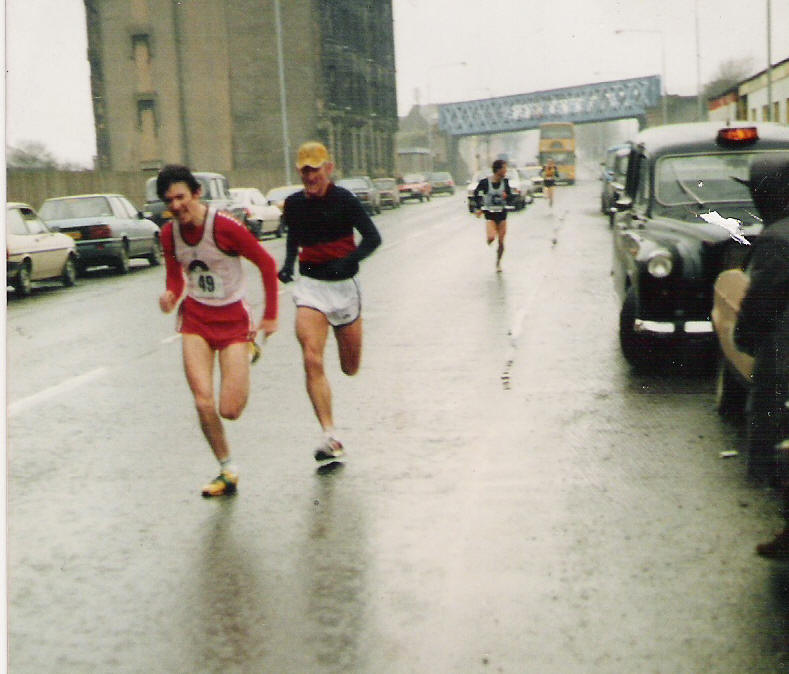
1973 started with nineteenth place in the National – his highest so far – and he went in to the summer season with another two minutes from a road race time when he was fourth at Helensburgh behind Lachie Stewart, Colin Martin and Jim Wight in 1:23:11.   Although he ran in the 1972 marathon he was unplaced in it but in 1973 he was seventh in a real star-studded field in 2:26:38 which ranked him eighth in the country..   The race was won by  Don Macgregor followed by Jim Wight, Rab Heron, Tony Moore, Colin Youngson, Martin Craven,. Willie Day and Bill Stoddart.   Alastair Wood, Fergus Murray and Alex Wight dropped out.     It should be noted that earlier in the season he had travelled to Maasluis in Holland for their International Marathon.   He entered himself and when they were offered a choice of accommodation he asked to be boarded at the home of a local policeman who showed him the ropes as far as organisation, etc, were concerned.   In the race itself Willie and Jeff Norman (England) moved away from the rest and as the race progressed they went further and further out on their own.   They went through 20 miles in a fraction outside 1:40 before Willie who, by his own reckoning afterwards, did not take enough fluid blew up at 23 miles and struggled home in sixteenth place.   Jeff Norman was able to ease back a bit but still won in 2:18:12.8.  In the picture below Norman is number 61

 In  1974 he showed what a tough competitor he had become when he started the season with a 49:40 for the Tom Scott race: although he was less than a minute behind the winner, he was fifth across the finishing line.   Ahead of him were Jim Dingwall (EC) 48:45; Doug Gunstone (EAC) 48:46; Martin Craven (ESH) 48:48 and Sandy Keith (EAC)!   Came the Clydebank to Helensburgh on 26th April he had another brilliant run winning it in 1:24:13 from Alistair McFarlane (1:24:57) – a future SAAA Marathon champion.      By the end of the summer season 1974 he had run 14:51.2 for 5000 metres and 31:07 for the 10000 metres in July. He again entered the Maasluis race where he was eighth this time in 2:25:24 (the winner did 2:21:11)  in May which ranked him twelfth in Scotland.   Coming in to the winter, he showed good form on the first stage of the Edinburgh to Glasgow in November when he was second on the first stage in 27:26: two seconds slower than stage winner Colin Youngson running for Edinburgh Southern and no less than twenty seconds up on third placed Jim Alder.     He finished the cross country season by being twenty first in the National.

Into the summer season in  1975 he ran the Clydebank to Helensburgh again in April, this time finishing third in his slowest time for several years (1:27:50) behind winner Phil Dolan (Clydesdale) in 1:26:25 and his own team-mate Willie Sharp who was second in 1:26:53.   Conditions always played a big part in times for this race – it was a straight run for 16 miles from East to West with the prevailing wind in the runners’ faces; in the year when all the good times were set (1973) the wind had changed direction to be a strong wind directly behind the runners for most of the race.   In May he won the SAAA medal that eluded him in the 10 Miles when he was second to Bill Yate of Maryhill who had a brief but successful career in athletics.   Yate won the West District 10000 metres track championship with Willie second in 30:34.2 and Phil Dolan third.   This was his quickest 10000 metres of the season.   In the SAAA Marathon at Meadowbank in June he ran 2:43:58 to finish a lowly fourteenth.  In August he was most unlucky not to win another SAAA track championship medal when he was fourth in the 10 Miles track championship at Carluke.   On a day of torrential rain a strong winds, Doug Gunstone won with a superb run of 48:55.4 from Colin Youngson in 49:00.8 and Martin Craven third in 49:40.   Willie was unlucky twice – once in not getting a medal and, a bit more cruel, once in being timed at 50:01 – just missing a sub 50 minute clocking in atrocious conditions.   In November he was asked by Falkirk Victoria to run the sixth stage for a good team in the Edinburgh to Glasgow: he did his by now usual good job and pulled them from ninth to seventh in a very competitive leg being less than a minute behind Dave Logue’s fastest time on the stage but 40 seconds quicker than Gerry Hannon of the Belfast Achilles club.  On the second stage for Falkirk Victoria in that relay was their new recruit:  the big boost for Falkirk that year came with the arrival of Jim Dingwall from Edinburgh AC.     Jim was a top class runner, an SAAA champion and a man with times below 3:50 for 1500 metres, below 14 minutes for 5000 metres and a top class road and country runner with a wealth of experience to offer.  In the National for Edinburgh Athletic Club in 1974 he finished thirteenth and was out of the medal winning team since the other runners in the club were 1st, 2nd, 5th, 8th, 10th and 11th!   When his job took him to the BP Plant at Grangemouth the nearest club was FVH.   He was popular, friendly and a hard trainer.    He added a lot to the Falkirk scene.    Jim’s first run in the Edinburgh to Glasgow for Falkirk Victoria was in 1975 when he ran the very tough second stage and brought the team from fourteenth to eighth.   He and Willie became firm friends.   They trained together and maybe Willie gained even more self belief from the relationship.   Whatever the case, there were benefits all round from that particular move.

Finishing the Clydebank to Helensburgh

On the track in 1976, his best times were 31:02.8 for second in the West District 10000 metres championship at Coatbridge on 19th June, 14:54.0 for 5000 metres at the SAAA Championships in Meadowbank for ninth place and 9:43.0 for third in the District Steeplechase Championship at Coatbridge on 29th May.  Having started the summer well with a victory over Alistair McFarlane in the Dunky Wright 5.4 miles race at Clydebank, his marathon best was in the star studded field at Rotherham on 8th May.   This race was the trial for the Montreal Olympics and it was described as follows by Colin Youngson and Fraser Clyne in “A Hardy Race”.

“All over Britain marathon runners trained harder than ever for the trial at Rotherham on May 8th.   On a hot day over a hilly course, a pack of at least forty were still together at five miles.   The pace was remorseless and the competition intense.   Many cracked before the three medallists – and Olympic representatives – reached the finish.   Barry Watson (2:15:08), Jeff Norman and Keith Angus were the ones who succeeded that day.   Even Ron Hill, and that other great Ian Thompson, European and Commonwealth champions, failed to make the team.   Sandy Keith impressed in sixth place (2:19:02) and Don Macgregor 12th, Doug Gunstone 14th, Alistair McFarlane 27th, Jim Dingwall 30th, Colin Youngson 40th and Willie Day 42nd (but still in 2:27:59).”

Then in November 1976 the Falkirk team won third place medals in the Edinburgh to Glasgow Relay.   Jim Dingwall ran on the second stage and brought them from twelfth to first with 28:34 which was the fastest time of the day for that stage.  Willie ran the tough sixth stage and with the third fastest time of the day behind Dave Logue and Doug Gunstone kept them in the third position that he started with.   the other team members held on and at the finish they were well clear of fourth  placed Victoria Park.   The club runners were all training and racing well and it showed in the National Cross Country Championships at the start of 1977 when they were fourth team with Willie in his best ever place of ninth in the individual race.   He was a bit amused or bemused, not sure which, by being told that 9th place made him non-travelling reserve’.   He had however already raced in San Silvestre at New Year in a representative race with Jim Dingwall and Allister Hutton and finished twentieth.

That year he had another good summer on the track with his times of 30:35.2 for 10000 and 14:59.9 being well up to standard –  but his summer 1977 will be remembered for one race – the SAAA Marathon where he finished second to Jim Dingwall.  It’s back to ‘A Hardy Race’ for the actual report.

“1977 was to see the fastest ever Scottish Marathon Championship until 1999 (the race in 1999 was thrown open to all the runners in the Dunfermline to Edinburgh marathon and the first three places were filled by a Mexican, a Pole and a Kenyan – BMA)  Once again it was over the usual Meadowbank course on a warm day.   The main man was that schoolboy 100 metres sprinter turned middle-distance and road runner, Jim Dingwall: the ‘Guv’nor’ as he was known at Edinburgh University or ‘The Head Waiter’ as he was cursed by those who had suffered his famed kick to the finishing tape.   Jim writes “I had been blown away so many times in the SAAA 5000 metres by Dave Black of England that I thought I’d better try the marathon.   I had always been fascinated by those hardy souls charging off for Longniddry while the posers ponced around the track at Meadowbank.”   Jim ran over 4000 miles in 1977 including many weeks of over 80 miles and no less than 96 in the week of the SAAA marathon championship.   Team spirit in Falkirk Victoria Harriers was excellent at the time, and he trained with other club members on Sundays, Tuesdays, Thursdays and Saturdays if there wasn’t a race.    “Guys like John Pentecost, John McGarva, Joe Gibson, Willie Sharp and Willie Day made sure there were plenty of hard sessions.   Recovery runs were from his home in Falkirk to his work in Grangemouth; and back.  

In the SAAA Marathon) Jim Dingwall, confident but uncharacteristically,  led from the start passing 5 miles in 25 minutes exactly.   By 10 miles (51:12) he had opened a two second gap on Sandy Keith who had 20 seconds on Colin Youngson, Willie Day, Martin Craven and Dave Clark with Phil Dolan and Alistair Blamire another 30 seconds down.   By half way Willie Day had made a big effort and caught Dingwall and Keith.   The three leaders recorded 67:04, 50 seconds clear of Youngson and Clark.   Dingwall surged strongly after 15 miles and passed 20 miles in 1:43:08, more than a minute clear of Keith and Day.  …  Into the Stadium to rousing applause.   Whoopee!   the added thrill was to be followed home by Willie Day for a Falkirk one-two.”   Jim broke the existing championship record by 45 seconds with 2:16:05 which has never been beaten by a Scot.   Willie Day won silver in 2:17:56 and Sandy Keith bronze in 2:18:52.”     Later that year he went to Enschede with Jim where he was 77th in 2:31:20.

Willie himself reckons that this was his best ever race and on reflection feels that he could maybe have won it.   It was as he says “Hammer and Tongs” right from the start with Jim, Sandy and himself really pushing on.   When Jim moved out after 15 miles, Willie knew he had a 2:16 marathon runner beside him and decided to stay with him.   When Sandy dropped back relatively soon thereafter. Jim was too far away to be caught.   Every corner he turned, Willie could see Jim ahead and that quarter of a mile that he had snatched early on was what won the race for him.  In addition Willie had had a hard road race just two weeks before the marathon: it was in the very hilly Bearsden Highland Games 10 miles  where he ran away from Colin Youngson over the last mile to win in just over 50 minutes which is a fast time for that trail.   In August that year he, Jim Dingwall and Colin Youngson travelled to the famous Enschede Marathon in Holland and the story of that race is in Colin’s tribute to Willie. at the top of the page.    The picture is of Willie in the Enschede and there are two more on the ‘Gallery’ page.

 Willie’s marathon career of 30 marathon races was fairly extensive and took him all over the British Isles and to the continent of Europe.  His first ever marathon was in the Scottish Championship on 16th May 1970 when he was 14th in 2:38:14 and then in 1971 he was third in 2:26.   He went on to race wherever there was a good race.  These included

In Scotland: The Aberdeen Milk Marathon 3 times, Glasgow, Lochaber, Edinburgh

AAA’s Championships:   Coventry, Milton Keynes, Rotherham, Rugby, Sandbach

London twice;

In Europe: Enschede (Holland), Le Quesnoy (France), Maasluis (Holland) twice.

His two races in London were not among his best – on each occasion he had been away ski-ing with David Lothian in France and Austria and came back undertrained, under raced and just a bit tired for a marathon!   The race in Le Quesnoy was in  July 1980 and Jim Dingwall won in 2:28:40 with the Falkirk team of Jim, Willie, Davie Lothian and Mike Logue second.

Like many of the top endurance runners of his time, he did not do much racing as a veteran – he did some races and was picked for two representative races on the strength of his running in the Allan Scally Relays which were the trials for the teams.   Bob Gray saw a  race in the Hague in 1989 advertised and Bob, Willie and Kenny Rankine (who was not yet a vet) travelled and in the race Willie was second vet.   He was approached in 1976 by the mother of John Pentecost (one of his FVH team-mates) who was a teacher in Falkirk:   Among her pupils were several girls who were interested in athletics and the result that Willie helped found the Falkirk Victoria Harriers Ladies Section which is now a large and thriving section.    He himself is a very good coach although most, if not all, his athletes are field event athletes.

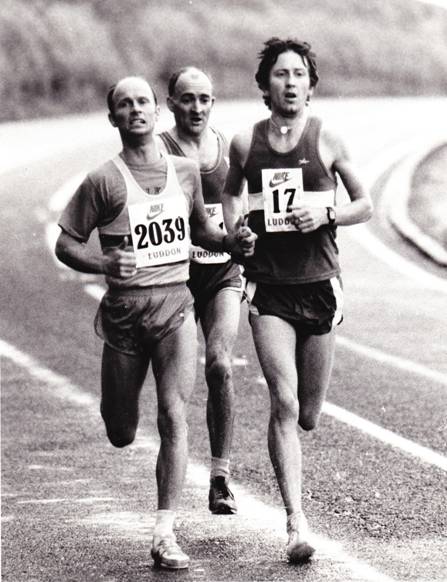
Although we have concentrated on his road running with a wee look at track times and medals, Willie was good on all surfaces running well enough over the country to have several representative appearances for Scottish teams as already noted, and he also ran in several English Cross Country Championships – at Norwich, at Luton and at Parliament Hill twice.   He also ran in some hill races – fourth in the prestigious Carnegie Hill Race, sixth in the Half Ben Nevis race, unplaced in the Glen Bash and second to club-mate Sam Downie in the classic Spean Bridge to Fort William race.   I haven’t even mentioned his running on the half-marathon scene where he raced at Alloa, Stirling and many others including the Luddon Half Marathon at Kirkintilloch which he won from its usual high standard of entries.    Road, country, track or hills – Willie   Day was a top class athlete on all surfaces.

When I asked Willie what he got out of the sport, he started by saying the satisfaction and the camaraderie and then he interrupted himself to say, very strongly, “I just loved running; I loved to run!”   He liked meeting different folk, going places, then when you think you’re quite good you get beaten and it puts things in perspective.   He wouldn’t have changed any of it.   And when you think of it “I just loved running, I loved to run”, sums up what everyone who has had a lengthy involvement in the sport feels.   It’s one of the things that unite runners of all generations from Dunky Wright and Donald Robertson right through to the present day.    Willie is currently working hard with his club, Falkirk Victoria Harriers in several different roles – coach, official, administrator – following the Harrier tradition of doing what his club needs him to do.

Graham Crawford

GC Car

Graham Crawford is one of Scotland’s best respected athletes – respected as a person but also highly respected as a runner and class performer.   On the road, over the country and on the track, he was an excellent competitor.   Look at some of his series of victories on the surfaces – three Jimmy Flockhart wins over the country, winning the Strathallan 1500 four times and the 3000m six, and of course for the half-marathon distance – don’t even go there!.   13 half-marathon wins in one year (ie 13 x 13) and a very good run in the Sun Life stage race from Glasgow to London.  When in form, he gave no one an easy time in a race.   There is a story of Ian Stewart, after being beaten by Harald Norpoth in a hard battle of a race lying on the track and asking for the TV microphone: he then said to Harald through the TV screen, in a very tight close up, that “that was a bloody hard race Harald, and next time you’ll get more of the same!”   That could well have been Graham Crawford’s thinking after a defeat.    But, as we will see below, he was just as hard on himself in training and that was maybe what made him so hard in the race situation.    I asked him to complete the questionnaire but we just passed on that and asked the professional journalist to share his own memories of his career.    You’ll agree that it makes for a fascinating read and insight into the career of a very good athlete indeed.

GC Falkirk three

Falkirk Half Marathon 1985

Graham Crawford. DOB. October 5, 1956. Occupation journalist.

Club Springburn Harriers, briefly Wolverhampton and Bilston second claim.

PBs – 800m – 1.58.4; 1,500m – 3.50; 3,000m – 8.10; 5,000m – 14.10; 10mile – 48.48; 10.3 mile – 49.19; half marathon – 63.46.

Ran for Scotland on track, road and cross country. Represented GB at half marathon.

I played football constantly as a youngster and ran everywhere. I loved being outdoors, being physical. I remember doing impromptu longish distance running races with a few pals when I was 10 and 11 years old. In my teens I did paper rounds and milk rounds, and PE was the only lesson I looked forward to at secondary school. My heart would soar, while everyone else moaned, on days the PE teacher said we were doing a cross country run. Not long after starting Bishopbriggs High I heard about ‘novice races’ being held by Springburn Harriers aimed at all the local secondaries including St Ninian’s in Kirkintilloch and Lenzie Academy. I ran my heart out over a mile and a quarter, finished about 5th, and was hooked.  Old Jack Crawford (whom the club’s annual road race is named after) invited those interested to come along to the Springburn club nights, based at the old wooden hut at the bottom of Auchinairn Road, Bishopbriggs. I quickly found out that the club had a long history of producing top young runners, including former world junior cross country champion Eddie Knox. OId Jack offered support in the early track and road races, meticulously recording our times.

I was small and skinny for my age, and was greatly encouraged when I made the Bishopbriggs High team, running against boys up to two years older, for the Lanarkshire Schools (at muddy, challenging Cleland) and Scottish Schools. Initially I tended to train autumn to spring in those days, and was delighted to be the fourth counter for a Springburn senior boys team which took second at the national cross country. A few years on, as a second year youth, I got  serious about training. The club coach was Eddie Sinclair (best known for his success with miling great Graham Williamson) but he and my clubmates were Kirkintilloch and Lenzie based, so I did my own thing. I remember doing a basic winter diet of 20-25 one-minute hill reps on Monday, Wednesdays and Fridays (I felt I lived on that hill by a Friday), a long run on a Sunday and steady sustained runs of around 55mins on other days. I backed off the hills a few weeks before the Scottish National at Drumpellier Park, Coatbridge, and did a few fast rep sessions with spikes on grass. To my delight, I finished fourth behind John Graham and Nat Muir. Not far behind me were the likes of Hammy Cox, Eddie Stewart and Graham Laing.  I also led my Springburn teammates to the team prize, and that meant a lot to me. The club subsequently went down to the English National (at Luton?) with high hopes of a successful cross-border raid, especially as our top junior Jim Lawson was eligible to join us as a youth in England, but we all thought we ran below our best. Even though we still managed second of 93 teams, a fine achievement, we were deflated. We felt we could have won.

I experienced a bigger disappointment at the Scottish Schools cross country championship. With John Graham and Nat Muir no longer at school, I was favourite in some eyes to win. However, I was unwell on the day and finished seventh. It was won by my Springburn teammate Tommy Patterson whom I had beaten by 30 seconds two weeks earlier at Drumpellier. Instead, I was a minute behind him. That hurt. I remember having a wee sob to myself later that night. However, with hindsight a lot of young Springburn runners who enjoyed success didn’t handle the transition to being a senior and quit the sport, while my lack of championship success kept a hunger alive. I’ve always missed out on individual championship medals. Four times fourth in the West District cross country is an example.

As a junior man, I again trained very hard, clocking 70-80 miles a week on my own. Nat was turning into a world class athlete, so my realistic target I felt was second in the junior National. However, I picked up a bad injury and while I was recuperating I got distracted and involved in a pretty carefree, reckless life. I partied endlessly and didn’t turn a leg for four years, and there was no coach there to say ‘hey, it’s time to get going again – there is always another race, another target’. At the age of 24, having made a pretty good job of messing things up, I was realising I couldn’t go on like that. I caught a UK marathon trial race on the television and in that moment decided it was time to start running again. Six months later, I was a match for anyone at Springburn and within two years was running cross country for Scotland and clocking the second fastest times at the McAndrew and Kilbarchan relays. I was in a hurry, and by then I was being assisted by older clubmate Harry Gorman who was advising me on pace/speed training. I really did appreciate his involvement, and it was a fruitful relationship (he was best man at my wedding. I can remember our shared delight and surprise at my relatively rapid progress on track and road. They were exciting, fun times. A very one-paced runner was discovering that with application and quality training, he could actually run quite fast.

The relationship was eventually marred by my propensity for secret overtraining and we went our separate ways. The culmination was a winter where I averaged 125 weeks for about three months, still doing quality sessions, hill work (up ploughed fields with 1kg weights around each ankle!) and circuit training. It was too much for too long. If I had the least bit of spare energy, I expended it in training. Rest was a four-letter word. After a few disappointing races where I ran flat because of my deep-seated fatigue, I was persuaded by Harry to take six weeks off. That summer, having resumed more sensible training, I set track PBs at most distances. Overtraining was a fairly common Scottish trait and I had it bad. I was very driven. I foolishly wanted to train hard and race well all the year round. I loved doing hard sessions, and loved racing – cross country, road, track, highland games, low key hill races. Dave Bedford was my boyhood hero and as well details of his legendary training, I soaked up everything from the Athletics Weekly about the many top English and Scottish runners in the seventies and eighties. It was always the more extreme trainers I tried to match. Looking back, I can see I lacked real specific targets and structure and that some other Scottish runners and plenty of English runners were clearly better at getting the balance right. While their training was goal-orientated and structured, I was a spontaneous, compulsive, obsessive, runaway train and essentially uncoachable. I once ran 50 races in 14 weeks, and over the years swung from purple patches, when I could control my training excesses, to periods of deep disappointment where my relentless desire to win was never going to be enough to overcome deep fatigue in overtrained and under-rested muscles. Perhaps because I lacked natural pace, I  was always overcompensating by trying to be tougher and stronger – endure more.

I finally learned the lesson of rest being as important as hard work in 1986, when initially my legs were so shot from a half marathon I had no option but to run easy for a week. And lo and behold, I could go out on the seventh day and run really fast again. It would be difficult to imagine a more surreal and remarkable year – and, as usual, it was not planned. In the space of eight months, I was to run 20 half marathons and win 13 of them as well as win two 15-milers, an extremely fast 10 miler and perform well in many shorter races. It remains quite a unique block of racing I believe. And, I repeat, it was all spontaneous – a fun journey of discovery.

Winning his first half marathon Dundee 85

The first half marathon – Dundee

 My first half marathon experience had been a happy baptism, at Dundee the previous October, which I won in 66.35. Two weeks later, split by the second fastest leg at the West District Cross Country relays, I ran 65.29 to win the Falkirk Half Marathon. I then had a relatively unspectacular winter’s training and racing (and yet another poor national cross country) before clocking a respectable 29.49 for the Kodak 10k starting at Crownpoint, Glasgow, won by Nat Muir in 28.45, two seconds in front of Allister Hutton.

On a windy March 23, 1986 I found myself lining up for the Inverness half marathon. I went off hard with Simon Axon and was soundly beaten by him. I ran 66.35 and he was about a minute faster. Two weeks later – split by a long leg at the six-stage relays – I set a course record winning the Glen Fruin 15 (14.6 miles?) race at Helensburgh in 75.38 just ahead of Bellahouston’s Andy Daly. Two weeks later it was the Jimmy Scott memorial 15 miler at Strathclyde Park where I led home Peter Carton of Shettleston in 78.10. Was I pleased with the run? Yes, it was hilly in parts, windy and I had spent hours moving house earlier that morning! A fortnight later, and four days after a windy 3,000m in 8.38, I had a rare dnf in the Pearl half in Edinburgh won by Neil Tennant in 64.41 on what I thought was a particularly challenging course. It was an exceptional run by Neil. Two days later I won a Sri Chimnoy two-mile race in 9.14 followed by a hilly 10k road win in Dundee in 32.23 four days after that. Eight days on, on May 18, I set off at a blast with Peter Fleming of Bellahouston in the Luddon Half Marathon, Kirkintilloch, clocking 19.05 after an undulating four miles before we hit strong wind. Peter broke the tape in 65.57 with me second in 66.35.

Six days later, I was down in Kirkcudbright for another half and fancying my chances. Looking around, I did not see anyone to worry me. From the gun, a lad tore away ahead of me. I was a fast starter in these races, and I remember thinking he must just one of those new, inexperienced guys who get carried away for the first half mile before fading. A few miles later, I was thinking otherwise. We were tramping along, locked into a relentless pace. 19 minutes at four miles INTO a wind and I’m hanging on, repeatedly thinking ‘who the hell is this guy?’, (reminiscent of Butch Cassidy and Sundance Kid wondering who were the indefatigable posse chasing them down at the start of the film). At six miles I remember thinking, ‘if this was a 10k I’ve just had a damn good race’. About a mile up the road, the elastic broke and Mike Carroll of Annan (I eventually discovered his name) went on to clock 63.32 and put nearly a minute between us. It was a class performance. He was a tough, relentless pacer. Later that year he was 30 yards ahead of the pack in the Great North Run after two miles, in a race which Steve Jones and Mike Musyoki clocked under 61 minutes, a world best I think. Carroll ran 64 something, but I remember thinking that if he had screwed the nut early on he could have clocked around 62 and taken some big scalps.

A week after Kirkcudbright, during which I sneaked in a windy track session on cinder (3x3x400, averaging 65 secs, with 30 seconds between efforts and a lap between sets), I won a six-mile road race at East Kilbride in 30.52, trying to save something for the Irvine Valley Half Marathon the following day. I won that half in 70.09 and my training diary records it was ‘quite windy and extremely hilly’. Five days of easy recovery runs later, I won a hilly Bearsden Half Marathon in 68.15, with Alasdair Douglas second in 69.54 ahead of Alan Wilson, 72.11, and Alan Adams 72.12.  I remember thinking around about then ‘this is good, let’s just roll with it – where can I race next?’ However, that euphoria was punctured eight days later when I struggled to clock just over 70 minutes to finish seventh on a very hot day at the Clydebank Half. I went off fast with Laurie Spence and Peter Fleming, but after a long sustained climb after a few miles I think Laurie and I suffered while Peter proved to be imperious in 64.17 (on a difficult course on a hot day!) Alan Wilson had quick revenge on me in second place, followed by Hammy Cox and Tommy Murray. Undaunted, a week later I won the Lochgilphead Half on a hot and windy day in 70.44, six minutes ahead of the second placer. A week later – split by a midweek 8.20 open graded 3,000m at Meadowbank behind Colin Hume, 8.09, and George Braidwood, 8.12 – I won a hilly and warm Dalry 10k in 30.47 by more than a minute from Kilbarchan’s  Gordon Tenney, and then did a fairly hard track session the following day! A week after Dalry, I won a hilly Stonehaven Half Marathon in 71.16, and then, on the following day, took the Knock Hill race at Crieff by a second from Ian Howie in 18.24. Just two days on I ran a windy 3,000m in 8.32 at Grangemouth behind George Braidwood. Four days later, I chanced my battle-weary legs at the Runsport Marathon at Stirling. In ideal conditions on a flat course, I missed the opportunity for a fast time, clocking 65.57 behind a very impressive Peter Fleming, 63.16, Simon Axon, 65.35, and Donnie Bain of Falkirk, 65.40. Six days later, I ran a 1,500 at a windy Crownpoint for sixth in 3.56 behind Nat Muir, 3.52, Braidwood and Robert Fitzsimmons, 3.53. Pleased at the time with the lack of track work, I ran a four-mile relay race leg at Dundee the following day without going flat out. Just two days later, on the Tuesday evening, I found myself locked in an epic battle with Terry Mitchell in the Crieff Half Marathon, with him collapsing over the line four seconds in front of me in 63.42. (Terry, my apologies for my ungracious behaviour after the race when I took you to task for not sharing the pace. I could be a bit of a p***k in the heat of battle at times in those days). I had been obsessed with running a fast time while Terry was thinking of winning. What was our reward for such a tough duel over 13 miles on a hot summer’s evening? Terry won 12 shuttlecocks and I received six golf balls!

Just four recovery days later, I was on the start line for the old Helensburgh Half Marathon course, a two lapper which involved twice making the climb up Sinclair Street. I was 100 metres or so clear at halfway, but looked around at 9 miles to see Dougie Frame of Law closing. He caught me by 11 miles and I hung on to him until the final mile when I chucked in the proverbial kitchen sink, determined not be beat by a close margin, as had happened at Crieff. I won by five seconds in 66.05. My prize was a medal. With the golf balls four days earlier, I remember thinking it was scant reward for two such tough races in five days. A week later I was at my beloved Strathallan Highland Games at Bridge of Allan (I was living there at the time) where I won the 3,000 metres handicap off scratch in 8.42 before finishing second in the 1500 handicap off scratch in 4.02 right behind my young clubmate Davie Donnet (off 35 metres). Three evenings after that, it was an 8.28 clocking for 3,000m at Coatbridge just behind Willie Nelson of Law. Just a further three days on, I was up at 4.30am, for the drive up to Elgin for the Moray Half Marathon. I beat Bruce Chinnick by more than a minute and set a course record of 66.09 which still stands today. The training diary says I was tired, and I did easy 40 minute and 30 minute recovery runs each day for four days and then a single easy run of five miles before winning the Blairgowrie Half Marathon by a minute from a German runner in 67.05. Just three days later, August 20, I was delighted to record 3.53 for a 1,500m at Meadowbank (Alistair Currie 3.46), barely three seconds slower than my pb. This was run on sheer condition, with no track work. (By this time my resting pulse before a weekend race was dropping to as low as 33 beats a minute). Four days on, I won the Midlothian Half Marathon in 67.20. Two days after, I did 12×400 with 40 secs recovery, and five days later, on August 31, I was on the start line for the Livingston Half. My running diary says it was undulating and quite windy, but I solo ran 64.41 to finish over a minute ahead of Dave Cavers of Teviotdale. A week of easy running later, I pushed the pace at the Land o Burns Half at Ayr (some hills, windy in parts), but was outstayed by Alex Gilmour of Cambuslang in the last mile, running 64.24 to his 64.02, with Dougie Frame third in 65.50 and Laurie Spence (didn’t beat him often) clocking 67.54. I then gave myself six days of easy recovering running, though totalling 11 to 14 miles in two runs most days, and it paid off in the Round Cumbrae  ‘10’ starting in Millport. It was a complete circuit of the island, flat and the true distance was around 10.25/10.3 miles. There was no wind, making perfect running conditions, and I tore off from the gun. Immediately on my own, I only had the lead car and mile markers for company. By mile three or four miles, I realised I was hitting a perfect beat, clocking 4.43/44 for every mile. It became a target for me to try and maintain, and I managed it. I passed through nine miles in 42.30 and reckon I was around 47.15 at ’10 miles’ and crossed the line in 49.15, a record. What thrilled me most was seeing the previous record holders’ names engraved on the tiny trophy – John Graham 49.29 and Jim Brown 49.38. Clyde Valley’s finest, and big hitters (I had gone through my teenage years and early twenties hearing Brown spoken of with awe by other runners). They may not have had as benign conditions as I had, but it was now my record. Think it still stands.  Second behind me was Cambuslang’s Charlie Thomson in 51.51, saying he felt he had a good run. The road show continued, and a week later, on September 22, I won a windy Aberfeldy Half Marathon in 67.39, ahead of Falkirk’s Martin Coyle, 68.23.

However, the first cracks were beginning to show. The diary reveals I was tired all week and six days after Aberfeldy I dropped out of the Livingston 6-mile road race, ‘weary’ at four miles. Allister Hutton won just ahead of John Robson. Not for the first time, I had failed to show my best when up against the big guns. The following week showed I was very tired. I just jogged a little and even took two days off, but on Sunday, October 5, I won the Stranraer Half in 66.02 but felt the course was short. I gave myself two weeks, including a week away on holiday up north with the wife, before picking up the Fort William Half Marathon on the way home. On a cold, wet and windy day, I ran in training shoes determined to do just enough to win in 69.06. There was just one more week to go for my last half of an incredible year, at Falkirk on October 26. I took an early lead only to be caught by Donnie Bain at around 9 miles. However, he didn’t manage to open a gap, and with a mile to go I gave it everything I had. I was tired and mentally spent from all the racing, but I really liked the idea of winning 13 races at 13 miles in one year. I got a bit of a gap and hung on to win by ten seconds in 66.45. A week later I won the Lasswade cross country, six days later was sixth (25.06) in the Glasgow Uni five mile won by Nat Muir in 24.18, and eight days later I ran the fastest leg in the second stage of the Edinburgh to Glasgow relay. Just six days on from that, I was a weary third behind Terry Mitchell in the Gauldry cross country. I think that last burst of shorter races after Falkirk was act of defiance against the stories I was hearing. People were saying that after that crazy sequence of halfs and other races that I would be burnt out and possibly never run well again.

Anyway, after Gauldry I was indeed well and truly done – for the year.

Kirkcud Mike Carroll 86

Trailing Mike Carroll in the Kirkcudbright Half Marathon

Other proud running memories? My relay team races with Springburn. Like many distance runners I was a fairly selfish athlete, however a good relay race could really arouse my passion. Three times in four years, we finished second in the Scottish cross country relays, and on the other occasion were third. We never quite got our best four of Adrian Callan, George Braidwood, David Donnet and me all firing on the same day. However, we were formidable opponents. Emphatically winning the west district cross country relay with Adrian, George and Jim Cooper was a happy day for us all, as was when we unexpectedly won the six-stage road relay at Livingston. I nearly blew that for the team and would never have lived it down. I somehow had got it into my head that the race was at Strathclyde Park where it had been before. On arrival at the park, I became increasingly uneasy at the complete lack of runners until the penny dropped that perhaps I was in the wrong place. I called Adrian’s parents and they directed me to Livingston. I drove as fast as I could, however Livingston is a big town and I could see no sign of runners there either. Spotting a police car I waved for it to stop and asked for help. They said ‘follow us’. Eight minutes later I was at the far end of the town where the race was already under way. I had five minutes to get my number on and jog to the start of my second leg. Yes, it was that close.

Another proud achievement was winning the Jimmy Flockart Memorial cross country at Drumpellier Park three times. The third time, I was 35 years old and not expected to beat the young, up and coming Stephen Wylie of Cambuslang. I remember Doug Gillon of the Glasgow Herald giving me a nice write-up for that.

I was also pleased of my achievements at Strathallan Highland Games, especially since I lived in Bridge of Allan for four years. I won the 3,000 handicap six times and the 1,500 handicap four times, and in the early years they involved pretty fast times for a grass track against good runners. I loved the highland games and would often run two or three races in a day, which helped my clock up those 50 races in 14 weeks. I guess my view was ‘when you are fit, make hay’. I might have messed up at times with that approach, but it was who I was. I loved racing, and loved winning. I also liked having somewhere to go at the weekend, and better still if it was a race I had not tackled before. I had no qualms about getting in the car and driving up to Elgin or down to Stranraer. It kept the spark alive, as did my ever-evolving training  regimes. I trained twice a day most days, but broke up the tedium of always running by mixing in circuits and weights at times, both of which I think helped me. Over the years I did land training with swimmers, and circuits with wrestlers, boxers and cyclists. I believed I made the most of my limited pace, with the weights, circuits, hill work and lots of intervals and track racing. I was 29 years old before I ran my first half marathon. Too many young runners move up distance too soon these days, and don’t run enough track in the summer. I can be a real bore about that. There is no point me giving a typical week’s training, because I’m not sure there was such a thing for me. I experimented a lot, did too much at times and generally trained hard. I don’t think it is the detail that counts, it is the essence – consistent hard training in whatever shape or form helps you. Also keeping the spark, the desire – there are many ways to climb a mountain. 3x4x400 on cinders with spikes in 62 secs, with 30secs recovery and a lap between sets was a session which served me well at peak fitness for 1,500s and 3,000s (a  distance I really enjoyed) at the start of the track season. When I was fit, 8x2mins very fast on the road with 30secs recovery was another key session. Recoveries were generally pretty short. Another memorable training period saw me doing 2min spells on the road during a 16-18 mile run. I started once a week doing about 10x2mins with 2min recoveries. Not too hard, just letting it come naturally. Each week I added on two more reps and eventually also cut the recovery. Eventually I was doing 26x2mins with one minute recovery and it felt boundless. I was getting so strong on it – and faster. As a variation, I did 10x2mins with 1min recovery and then straight into 10x1min faster with 30secs recovery and then straight in 10x30secs very fast with 30secs recovery. It felt marvellous to be able to do that and still be in one piece. A good session was as satisfying as a good race to me.

When I trained around the streets of Bishopbriggs and Glasgow on my own as a teenager in winter nights, I use to fantasise over the last few miles that I was on my way to winning an Olympic or European marathon goal. Funnily, I never did run my dream event. The half marathons I did suggested a potential for the full distance, but they also served to inform me how hard it would be to do a second 13 miles. I knew, knowing my nature, that it would have be pretty near to my half marathon pace, and because of health and injury problems I never did get the continuity of training that I knew would be necessarily to show the marathon its full respect.

Regrets? Not one. It is how the movie unfolded, but I agree with John Graham when he observed that if he was to do it again he would have been a little kinder to himself at times.

I’m deeply impressed and grateful for the compilation Brian McAusland and Colin Youngson have put together of so many of Scotland’s finest middle and distance runners, many whom have inspired me and achieved far much more. I am a running fan. Reading the stories reminds of how many good runners we had in my generation alone. Thanks guys, for the races and the memories. I’m humbled and honoured to have this opportunity to tell some of my own wee stories as well. Hopefully, 1986 at least was quirky enough to be of interest. It just happened. I just went along, fascinated, for the ride.

Colin Donnelly Oban

Graham the journalist interviewing Colin Donnelly at Oban

   Graham As A Veteran

And that’s where Graham’s own amazing story ends but we can’t leave it there.   He is still running as a V50 and as I write (March 2013) he has just been first in his category at the Jack Crawford Memorial 10K promoted by his own club, Springburn Harriers.   As an indication of his quality over the past few years, the Power of 10 website, while not comprehensive, gives a picture shown in the table below.    No comment of mine is required about the standard but it is always a source of inspiration to see man who is a lifelong runner and clearly enjoys the sport for its own sake.

  Date Event Venue Category and position Overall Position Time
9 March 2013 Jack Crawford 10K Bishopbriggs V50 1st 11th 36:13
23rd February 2013 National CC Falkirk V 50 2nd 130th 46:20
8th April 2012 Round the Loch 6K Glasgow V50 1st 6th 20:52
22nd April 2012 Fyvie Castle and Lake 5K Fyvie V50 1st 3rd 17:12
28th April 2012 Conoco Phillips 5K Balmoral V50 1st 5th 17:34
17 April 2011 Fyvie Castle and Lake 5K Fyvie V50 1st 4th 17:39
22nd October 2011 DK 10K Dinnet   5th 39:31
27th June 2010 Follow The Herring 10K Portsoy V50 3rd 6th 37:01
17th January 2009 Jack Crawford 10K Bishopbriggs V45 1st 5th 35:10
24th January 2009 Buchlyvie 10K Buchlyvie V45 1st 2nd 35:04
12th April 2009 Tom Scott Memorial RR Motherwell V45 1st 3rd 20:12
10th May 2008 Deafblind Canal Bank 10K Bishopbriggs   1st 37:12
17th August 2008 Bellahouston 5K Glasgow V45 1st 9th 16:52
31st August 2008 Oban 10K Oban V45 1st 1st 36:17

As a Relay Runner

Graham speaks in his profile of his love of relay running, and he ran many while a veteran that I have not listed above, so it might be appropriate to look at his record in these events.   In the biggest and best of them all, the Edinburgh to Glasgow 8 stage relay, he ran in nine with a net gain of eleven places.   He ran the second stage five times with the best run being in 1986 when he came from ninth to fourth with the fastest time of the day, while in 1982 he came from 17th to 10th and in 1983 from sixteenth to twelfth.     The West District Relay title won in 1989/90 that is referred to above did indeed come after several years of frustrating near misses for the club.  Third in 1982/83 with a team of Harry Gorman, Graham Crawford, Jim Martin and Adrian Callan, with Graham third fastest overall on the day, and with athletes over the next few years such as Graham, Adrian, George, Stephen Begen and David Donnet at their disposal they did not improve on it until 1987/88 when they were second.   The runners this time were Begen, Crawford, MacIndoe and Callan.   They could never, as he says, get the top four together at the same time until season 1989/90.   David Donnet ran the first stage and handed over in fourto Graham who worked his way through to first before sending Adrian Callan off.   He held first as did George Braidwood on the final stage for a long awaited triumph.   The ‘Glasgow Herald’ reported as follows: “Springburn Harriers, already winners of the Lanarkshire relay title, scored their first victory in the senior 4 x 2.5 mile event at the SCCU Western District Cross-Country relay championship defeating 120 teams at Dalmuir Park, Clydebank.   They received the Struthers Shield for their victory, having taken the lead at half distance and held on to it with some good performances from Scottish internationalists Adrian Callan and George Braidwood.”   They proved it was no fluke by being third the following year with a team of MacIndoe, Braidwood, Crawford and Donnet.   Although they did not win the National Cross-Country Relay at any point, this particular group came very close indeed.   In 1987/88 the quartet of Begen (first), Crawford (3rd), Donnet (5th) and Callan finished second; in 1988/89 it was Cooper (29th), Crawford (5th), Donnet (6th) and Callan who were second and in 1989/90 the team was Donnet (8th), Crawford (2nd), Callan (2nd) and Braidwood who finished third.  They won it again in 1993/94 with a team of Jim Cooper, Adrian Callan, George Braidwood and Graham, the picture above is of him working on the second stage of the mucky, hilly Woodilee course at Lenzie.  He refers above to the winning of the Scottish Six-Man Road Relay race in 1988 and it is indeed quite a story.   You can access Doug Gillon’s very full account of the race – in which Graham, after arriving late – ran the fastest time of the day on the third stage – at

http://news.google.com/newspapers?nid=2507&dat=19880328&id=DDlAAAAAIBAJ&sjid=OlkMAAAAIBAJ&pg=3113,7616820


That was the third stage but generally Graham seemed to specialise in running the second stage – my feeling is that the second stage needs a fighter and a hard competitive spirit – just in case the first runner has a poor one, or in case ground has to be made up, or in case a lead has to be maintained, and in any of these situations there is no more competitive runner than Mr Crawford.

West Relay, winning team

In the winning West District Relay Team.

On The Track

It is maybe appropriate to take a look at some of Graham’s running on track and over the country a bit more closely. As far as track running is concerned, his record on all surfaces is good – grass at Highland Gatherings, cinder on occasion and tartan in others all came the same to him. He progressed quite rapidly in the early 1980’s. Have a look at the table below: every year in every event was faster than the year before with the single blip at 3000m in 1985!

Year Event Time Scottish Ranking
1981 5000m 14:51.68 26th
1982 3000m 8:24.93 13th
1982 5000m 14:38.77 23rd
1983 3000m 8:14.70 12th
1983 5000m 14:25.12 17th
1984 1500m 3:50.7 24th
1984 3000m 8:10.7 5th
1984 5000m 14:13.16 6th
1985 3000m 8:17.0 17th
1985 5000m 14:11.3 10th


The 8:10.7 for 3000m noted in the table above has particular memories for him. He says, “One of my proudest races was setting my 3000 pb of 8.10 in an open graded at Meadowbank. Alastair Currie, by then a 3.41 or faster 1500m runner, was running his first serious 3000 and his brother Alan agreed to set the pace. It was quickly just the three of us at the front, and Alan dropped off the pace with three laps to go leaving Alistair in front. I was hanging on to Alistair with no particular plan other than to run a fast time. With 750 to go Alistair dropped his shoulders or arms just slightly as if he was uncomfortable for the first time and I instinctively seized the moment and rushed passed him. I had about 30 metres on him at the bell and was making a long run for home. At 250 I looked back and saw that Alistair had woken up to the fact that he could muster a finish, and a fast one. As he charged down on me and I gave everything I had around the last bend and up the home straight. I won, perhaps by a metre”.  I had caught Alistair just at the right moment because he had not run a 3k before and that little bit of doubt crept in for him.” And he continued to run well – 3:53 for 1500m and 8:28 and 8:30.94 for 3000m in 1986 which you will remember was his year for running all those half-marathons. If we put his personal best times into a table we get the following:

Event Time   Event Time
800m 1:58.4   5000m 14:10
1500m 3:50.7   10 Miles 48:48
3000m 8:8:10   Half Marathon 63:46

He also picked up several Scottish representative appearances.   “On track, I represented Scotland in some kind of match in Birmingham in a 3,000′, ran 8.14 for third in windy conditions behind two English runners. that got me picked soon after for a Celtic international 5000 (Ireland, Wales, Iceland) at Meadowbank. John Woods won in 14.06 I think and I was just a second behind Lawrie in 14.13 off a slow first mile.”

(And former Scottish steeplechase champion Tom O’Reilly told me that Graham ran in some steeplechase races for Springburn in inter-club fixtures and that he could have been a good class steeplechaser had he wanted to do so.)

There were several road honours too and when asked he said, “On the road, I ran for Scotland in a half marathon against Welsh and English teams at Stafford with Charlie Haskett and Tommy Murray. think that was in 1987, the same year I ran for Great Britain in a half marathon at Zuider on Zee in Holland in January. memorable for being colder than I’ve ever experienced before. Someone said the wind chill was minus 17. I had big lumps of ice clinging to the back of my hair where the sweat had frozen. Ran 68 minutes +” 

The British vest referred to above was won in January of 1987 and it was reported in “Scotland’s Runner” as follows under the headline “Ups and Downs of Holland.”   “When Springburn Harrier Graham Crawford discovered on his arrival at Amsterdam Airport on January 11th that his first race for Great Britain would be run over frozen sand dunes and beaches, he quickly forgot any idea of a fast time on the flats of Holland.   And when temperatures on race day plummeted to minus 13 degrees C, and were worsened by a chill wind straight off the Russian continent, the 18th International Egmond Ann Zee Half Marathon simply became a matter for survival.  

 Blairgowrie 2 Miles

In the Blairgowrie 2 Miles

The 30-year-old Scot borrowed a pair of running tights from team-mate Jimmy Armsworth and bought a ridiculous woolly hat that had him looking like a Smurf.   He didn’t care, his ears were now safe.   And lining up also with gloves and three tops, he still felt far from overdressed.   “I cannot honestly say I have experienced it colder,” he says. In the race, which attracted 7500 starters, Crawford and Ashworth started steadily and so never made contact with the leading group.   But they went through the field to finish 17th and 7th respectively, in 68:44 and 67:25.   Both felt that they had had solid runs, especially Ashworth who had clocked over 130 miles and three track sessions in the previous seven days, in his determination not to interrupt preparation for this year’s London Marathon.   The race was won by England’s Mike Bishop in the remarkably fast time (and record) of 65:11, in view of the course and conditions.   Second was Dutch 5000 metres runner, Rob de Brouwer, ahead of fellow countryman Marti ten Kate.   Belgium’s evergreen Karl Lismont was 14th, and former Olympic marathon silver medallist Gerard Nijboer 22nd.   Other British placings included Bishop twin, Martin, in eighth, and super-veteran Mike Hurd, 26th in 70:53.”  

The Stafford Race was written up in the ‘Glasgow Herald’ of 7th April 1987 as follows: “CRAWFORD HAT-TRICK OF VESTS”   Graham Crawford of Springburn Harriers, Scotland’s most successful and consistent runner over the half-marathon last summer, leads a a Scottish team in the home countries international match incorporated into the Potteries Half-Marathon at Stafford on Sunday.   Crawford gained his first major UK international honour when representing Great Britain in a half-marathon international race in Holland earlier this year and, with with previous Scottish international appearances over cross-country and track to his credit, this versatile athlete completes his full set of Scottish international vests.   Tommy Murray of Greenock Glenpark Harriers and English-based Charlie Haskett (Dundee Hawkhill Harriers (who were both in Scotland’s team in the World Cross-Country Championships at Warsaw last month) complete the three-man team.”  

While we are on the subject of road running, Graham also recorded 49:19 for 10.25 and it is fair to wonder about how well could he have run the marathon.   It’s a question he himself raises above, but with this proven speed in road races – and relatively speaking, he gets faster than most of his peers the greater the distance run.   There is no doubt that 48:48 and 63:46 are better than 1:58 and 3:50.    He was also easily strong enough for the distance – it took immense deep down strength to run as often as he did in 1986.   If there is any doubt remaining about his strength, he ran in the Sun Life Great Race from Glasgow to London in September 1990 where with runners like John Graham, Dave Moorcroft and Steve Brace dropping out for various reasons he made it all the way to London.   The report in “Scotland’s Runner” read as follows:

“The winner of the inaugural Sun Life Great Race was Paulo Catarino of Portugal who collected prize money of £35,000 for his not inconsiderable efforts. Twenty six year old Catarino completed the 230 mile, 20 stage race in the incredible time of 18-32-43. Consistency was the key to the event, illustrated by the fact that Catarino did not win a single stage over the three weeks of the race. The deciding factor in his triumph was that he did not finish any lower than eighth on any given day. Delmir dos Santos, the 24 year old Brazilian running for the American Boulder Road Runners Club took the green vest for the overall points winner. His colossal total of ten stage victories ensured his success. The first four stages of the race were dominated by 43 year old Kenyan, Kipsubei Kisgei if not always for the right reasons! Although he won all three Scottish legs, he self destructed when he was seen to strike dos Santos on the fourth stage from Gretna to Carlisle. The starting field numbered 107 when the race got under way in Glasgow on September 2nd. By the day of the final Westminster stage, only 82 runners remained. Many of the ‘big’ names withdrew or failed to finish including Mike McLeod, John Graham, Fraser Clyne (who was supposed to write a diary of the event for ‘Scotland’s Runner’), Steve Brace, Gary Kiernan and Dave Moorcroft. In the team contest, the lead changed hands many times before the Boulder outfit took the title.

Hammy Cox, representing Red Counties AC, finished 18th, the highest placed Scot and the third Briton. Brian Kirkwood, UK Elite, ended 38th with Graham Crawford, Wolverhampton & Bilston, finishing in a highly creditable 58th, after entering the event at the last minute. After recovering, Graham said, “It was a first class event which was highly professional in its organisation – especially considering that this was the first event of its kind. The word most used by competitors when describing the event was ‘fascinating.’ Both your own performance and the changes of position up front made it constantly interesting,” he said.

With the bulk of the race being run at a phenomenal sub-5 minute-mile pace it was not surprising that many athletes didn’t last the pace. However Graham found that despite the rigours, the most common reason for withdrawing was bad blisters. “The race proved that many runners under-estimate their powers of recovery,” commented Graham Crawford. As for his personal performance, Crawford was more than delighted. “I didn’t intend to run but as it got nearer, I was bitten by the bug and it was a case of ‘what the hell’ in the end. The Springburn Harrier’s worst moments occurred – ironically – in the Scottish stages. “By stage four (Gretna to Carlisle) I was unsure whether I would last one mile, never mind the 12.8!” he says.

Crawford had only one or two minor criticisms. “The organisers may have slightly under-estimated the amount of back-up needed in a race of this size. Masseurs and physios are essential in a competition of this duration,” he said. “Also, you often got the impression that 99% of the locals didn’t realise what was going on. Perhaps more emphasis could be put on publicity next time.” As for prospective entrants for next year’s race, Graham had some advice. “A period of sustained road running prior to the event is essential, aiming for at least 80 miles per week at sub six minute pace,” he said. I would certainly recommend the event to any athlete. It is certainly something you should experience.”

Finally, although the publicity he generated for his club was invaluable and stretched over decades, he was on one occasion in hot water with Springburn Harriers.  In 1991 the result of the Brampton to Carlisle road race which was won by Carl Thackray, had David Donnet of Springburn second, Mike Carroll of Annan third and Graham Crawford fourth.   There was no third runner from the club so there was no team prize.   Why was there no third runner?   Well, the race was held in the same weekend as the prestigious Edinburgh to Glasgow Relay and the club was none too pleased at two of their top three or four runners absenting themselves.

Some Thoughts On Cross-Country Running

Graham was also a good enough country runner to run for Scotland in the World Cross-Country Championships in Gateshead in 1983 when he finished eighth, he was actually two places higher eight years later when he was sixth in the National at Irvine. He was however reported as follows by Doug Gillon in “Scotland’s Runner” as saying, “It was Graham Crawford of Springburn, finishing sixth just behind hill-running specialist Colin Donnelly of Cambuslang who put the Caird Park race into perspective. Not that Crawford is a mediocre runner. His performance in last year’s Great Race, and a string of more than a dozen half marathon wins a few years ago, mark him at the age of 35 as a durable and morethan proficient performer. “But I would have to say that when I finished eighth a few years ago, I ran much better, and in far higher quality company,” he confessed with frank objectivity.”

He also represented Scotland in a home international cross country at Cumbernauld, and in several similar or televised invitational events at Gateshead, along with appearances in such events as the Inter-Area match at Cumbernauld. The cross-country talent was always in evidence. Graham wrote a piece for the excellent ‘Scotland’s Runner’ magazine which I will reproduce in its entirety here because of the insight it gives into his beginnings in the sport.

“In the beginning, there was cross-country. A harrier was measured by his ability in an event in which time and distance were only relevant in relation to those around him. Nobody started and stopped sports watches.

To me as a youngster cross-country was the be all and end all. I was the complete opposite to today’s ‘fair weather’ new runner. My season began with the return to school in August/September, peaked with the main championships in February/March, and fizzled out rapidly thereafter with the advent of Spring and its uncanny ability to convince a young lad that, in girls, there is definitely more to life than being left battered to death by hailstones, semi naked, in the middle of a farmer’s field.

Still, come Autumn, off you would trot again into the wet and windy nights, undaunted and with fresh dreams, aims, targets and schedules. The call of the wild perhaps. You certainly always returned for more, and particular races could operate a pull of their own – despite all logic.

Beith was the best. I mean the best example. New Year’s Day, up to your knees in cow shit and then back to the wooden hut and a washdown in troughs of freezing and rapidly blackening water. If you got lucky there was a ballot prize (a big attraction) and then a two hour wait for the reduced service bus to crawl its way back to Glasgow. No it wasn’t a ballot prize that made you return after saying never, NEVER, again. It was perverse logic at play. You wanted to finish in the first three and figured nobody, but nobody would go back. Of course, everyone was thinking the same, and we’d all turn up again. I did it until I was old enough to take a Hogmanay hangover with me.

Ayrshire has always been good for cross-country races on the most heart-breaking of winter days, and Stewarton is another legend. I have vivid memories of big lassies and wee lassies in their early teens come staggering down the street (true, a cross-country race that finished in the street) with bare feet, or only one loose sock with a ball of mud flapping on the end, and collapsing, sobbing, into their mother’s arms. (They weren’t so well prepared in those days – the late Sixties – and come to think of it, it was the biggest lassies that made the biggest fuss. Still, nearly every competitor had marvellous fun going back into the fields afterwards to find the shoes schlupped off in the mud.

Lanarkshire’s greatest course, sadly no longer in use, was at Cleland. Heavy, heavy going, a mighty hill and enough barbed-wire fences to have every man counting “one – two” as he crossed the line.

Ah, the memories, it’s no wonder I can’t understand new runners reeling back in horror when I suggest a wee diversion off the tarmac during a training run. Just across a few fields so I can smell the mud and the grass again.

“WHAAAT? What about the nettles? There’s a barbed wire fence. And a burn. Geez, what about the farmer?” they wail.

And I sigh, and explain, “In the beginning for all the greats and for much of their development, there was cross-country. Cram, Coe, Ovett, Moorcroft, Aouita, Foster, Hill, Bedford, McCafferty, Lopez – them all. Budd, Weitz and Kristiansen as well. They know the delights, the challenges, the benefits and the joy of running strong over a true test of stamina and grit.”

Lachie Stewart won the Stewarton race in 1968, 1969 and then made it a hat-trick in 1970, after winning the Commonwealth Games 10000 metres. And his son Glen, who is showing the same kind of talent, will probably be there this year.

So join a club, get to know the races (some can be well-kept secrets but at least there are now hot showers afterwards), and there will be more than enough satisfaction, fun and fascination to get you the door with the rest of us on the cold wet and windy nights.

And by the way, Beith is now a road race.”

The article appeared in the October, 1986, issue of the magazine and was written in conjunction with an article on Nat Muir. It is quite a powerful statement of the attractions of the sport but also indicates the depths of the love Graham has for all kinds of endurance running.

Early Cross-Country Running

The Springburn Harriers young athletes were mainly coached by Eddie Sinclair, himself a cross-country internationalist in the 1950’s and their boy’s senior boys, youth and junior teams all did very well and were among the best in Scotland, winning medals and titles at County, District and National level as well as in regular open races such as those at Bellahouston Park. The table below give some indication of this success in the National Championship for Graham’s teams.

Year Age Group Team Position Runners Comments
1971/72 Senior Boy 2nd J Fleming 6th, G Crawford 10th, P McKerracher 14th, T Patterson 23rd Youths team 1st, J Lawson 1st
1972/73 Youth 2nd J Fleming 3rd, J Lawson 6th, T Patterson 11th, P McKerracher 29th  
1973/74 Youth 1st G Crawford 4th, T Patterson 10th, J Fleming 13th, W Paterson 15th Springburn 42 pts, Shettleston 70 pts
1974/75 Junior 5th T Patterson 12th, G Crawford 27th, J Fleming 37th, P McKerracher 53rd Equal in points to fourth team, 6 pts behind the third team
1975/76 Junior 8th T Patterson 10th, G Crawford 20th, J Fleming 42nd. Fourth runner and position unknown.


As he himself says above, in season 1973/74 when they won the team title, the club realised that Jim Lawson who had been a member of the Junior team was, because of the English age groupings, eligible to run with the Youths team. The club decided to send an Under 17 team to the English Cross-County Championships. The team went down to the race and, despite running below their best, came home with the silver medals which should have been a source of great pride. This was not the case however since they felt they had not performed to their ability.

Graham’s best run in the senior national was in 1983 when he led the club home in eighth position. This led to his selection to run for Scotland in the International Amateur Athletic Federation championship which that year was held in Gateshead. He finished in 182nd and was a scoring Scottish runner.

1986 Revisited

And finally, if you want more on 1986, have a look at “Scotland’s Runner” for November 1986: his own look back is on pages 44 and 45, while Colin Shields makes some percipient observations on page 43.   The magazine is online at  http://salroadrunningandcrosscountrymedalists.co.uk/Archive/Scotland’s%20Runner/SR%20No%205.pdf . Even so, it might not be appreciated how hard he worked himself in 1986: the sheer scale of the feat can be seen if we set the results out in tabular form. (* means course record time).

Time Gap Event Place Time   Time Gap Event Place Time
  Kodak 10K   29:49   4 days Helensburgh Half Marathon 1st 66:05
  Inverness Half Marathon 2nd 66:35   7 days Strathallan: 3000m + 1500m 1st/2nd 8:53/4:02
2 weeks Glen Fruin 15 1st 75:38*   3 days Coatbridge, 3000m 2nd 8:28
2 weeks Jimmy Scott 15 1st 78:10   3 days Moray Half Marathon 1st 66:09*
10 days 3000m   8:38   5 days Blairgowrie Half Marathon 1st 67:05
4 days Pearl Half Marathon DNF     3 days Meadowbank, 1500m 2nd 3:53
2 days Sri Chinmoy 1st 9:14   4 days Midlothian Half Marathon 1st 67:20
4 days 10K Dundee 1st 32:23   5 days Livingston Half Marathon 1st 64:41
8 days Luddon Half Marathon 2nd 66:35   7 days Land o’Burns Half Marathon 2nd 64:24
6 days Kirkcudbright Half Marathon 2nd 64:   6 days Round Cumbrae 10 1st 49:10*
7 days East Kilbride 6 Miles 1st 30:52   7 days Aberfeldy Half Marathon 1st 67:39
1 day Irvine Valley Half Marathon 1st 70:09   6 days Livingston 6 Miles DNF  
5 days Bearsden Half Marathon 1st 68:15   7 days Stranraer Half Marathon 1st 66:02
8 days Clydebank Half Marathon 7th 70:+   2 weeks Fort William Half Marathon 1st 69:06
7 days Lochgilphead Half Marathon 1st 70:44   7 days Falkirk Half Marathon 1st 66:45
3 days 3000m 3rd 8:20          
4 days Dalry 10K 1st 30:47   7 days Lasswade Cross Country 1st  
7 days Stonehaven Half Marathon 1st 71:16   6 days Glasgow University 5 Miles 6th 25:06
1 day Crieff Knock Hill 1st 18:24   8 days Edinburgh to Glasgow Relay 2nd Stage Fastest Time
2 days Grangemouth, 3000m 2nd 8:32          
4 days Runsport Half Marathon 4th 65:57     44 Races: 23 wins, 8 seconds    
6 days Crown Point, 1500m 6th 3:56     20 Half Marathons: 13 victories, 5 seconds    
1 day 4 Miles Relay leg, Dundee         Also won Glen Fruin 15, Jimmy Scott 15, Sri Chinmor2, S/allan 3000m    
4 days Crieff Half Marathon 2nd 63:46     Dundee 10K, EK 6, Dalry 10K,Knock Hill, Cumbrae 10,    


The run at Ayr of 64:24 has him still placed 12th on the Scottish All-Time lists.*

In case you were wondering, Graham’s track statistics for the next few years are noted in the table below.

  Distance Time Ranking Position
1986 1500m 3:53.0 31st
  3000m 8:20.94 14th
1989 3000m 8:33.4 35th
1990 3000m 8:21.9 21st
  5000m 14:24.9 18th
1991 3000m 8:35.6 24th

The ‘Glasgow Herald’ had the results in most weeks but fairly often in the ‘In Brief’ section. He was virtually an ever present that summer. For instance the month from 21st May to the end of June had the following:

“Graham Crawford of Springburn Harriers, already a winner of several top-class half-marathons this year, successfully moved up in distance when winning the Jim Scott Memorial 15 mile road race at Strathclyde Park. Crawford covered the three laps around the loch in 1:16:10 and finished 42 sceonds ahead of Peter Carton (Shettleston Harriers).” 21/4/86

“Scottish International Mike Carroll of Annan and District AC won the Kirkcudbright Milk Half-Marathon from 300 competitors and led his club to victory in the team context. Carroll set a course record of 63:32 when winning for the second successive year with Graham Crawford of Springburn Harriers runner-up in 64:27.” 26/5/86

“Graham Crawford (Springburn Harriers) scored his second road race victory in 24 hours when he defeated 300 rivals at the Irvine Valley Half Marathon at Galston yesterday. He covered the hilly course in 70:08 to win by over 600 yards from Gordon Tenney (Linwood AC).” 2/6/86

“CRAWFORD KEEPS HIS ROAD RACE RECORD. Scottish Internationalist Graham Crawford of Springburn Harriers continued his recent series of road race successes when winning the half-marathon at Bearsden and Milngavie Highland Games at Kilmardinny. Crawford led more than 400 rivals from the start, covering the hilly course in one hour eight minutes 15 seconds to win by more than quarter of a mile from local runner Alistair Douglas (Victoria Park). 9/6/86

The report of the Clydebank Half Marathon the next week was so scanty that it only reported down to third finisher.

“Graham Crawford (Springburn Harriers) continued his string of road race victories when winning the inaugural Mid-Argyll Half-Marathon at Lochgilphead yesterday in 70 minutes 44 seconds.” 23/6/86

There was a shortage of results in the ‘Herald’ during the Commonwealth Games in 1986 which enjoyed mammoth coverage, with the European Championships a month later also getting some good coverage. But it was not long before the scribes there cottoned on to his continuing successes. Some more reports.

“Graham Crawford won the Moray Half-Marathon in 1-6-9”. 11/8/86

“Scotland’s most consistent road runner, Graham Crawford (Springburn Harriers), recorded another victory when defeating over 300 rivals in the TSB Alyth to Blairgowrie Half-Marathon in 67:05 finishing 600 yards in front of RAF Serviceman George Reynolds (Aberdeen AAC).” 18/8/86

“Graham Crawford of Springburn Harriers won the Goretex Fabrics Half-Marathon at Howdden Park, Livingston, his fourth victory in three weeks. He set a course record of 66:41 and won by 300 yards from Denis Cavers (Teviotdale). [I think he meant David Cavers!] 1/9/86.

“Graham Crawford (Springburn Harriers) brought his road running season to a triumphant close on Cumbrae when he beat John Graham’s course record for the 10.25 mile road race by 13 seconds. Crawford’s time was 49:15.” 15/9/86.

“Scotland’s most prolific road runner of the year, Graham Crawford (Springburn Harriers) scored his eleventh half-marathon victory in 20 weeks, defeating 200 competitors in the Stranraer Half Marathon yesterday – his 30th birthday. Victory won him a trip to the Paris Marathon next spring. Leading from the early stages he won in 66:02 from Ian Park (Ballydrain Harriers).” 6/10/86

It was a mad racing programme that no half sensible coach, exercise physiologist or sports scientist would have organised or recommended. If a summer like that can lead to a fastest time on the torrid second stage of the Edinburgh to Glasgow, maybe more runners should have tried it. It was a wonderful year and superb display of fitness, speed and, of course, enthusiasm. It is also a year that Graham can look back on with pride.

In fact he can look back on his whole running career with considerable pride in his achievements and his many successes over many surfaces and in all weathers. One international vest in any endurance discipline would please most athletes – to gain international recognition on the track, on the roads and over the country takes remarkable talent.   And through it all his enjoyment shines through – too many of our top runners can’t wait to get out of the sport as soon as they have, in Emmet Farrell’s phrase, “shed their silk”.   I suspect that Graham will be running for a long time yet.


Martin Craven

Martin Craven, Edin. Marathon, 1984. Photo - Graham MacIndoe

Martin Craven (448) leading the field in the Edinburgh Marathon, 1984

Martin G. Craven was born on the 15th of December 1940, at Hoylake in the Wirral, moving from there to Chester and then to Kendal when he was starting third year. He started cross-country at Heversham School when he successfully persuaded the games master that rugby was not his forte (not unusual for skinny runners!) Subsequently he joined Kendal AAC as a youth.

Martin first represented Edinburgh University Hare & Hounds in the 1959 Edinburgh to Glasgow Relay and went on to become a ‘blue’ for both cross-country and athletics. After graduating he went to Oxford University for a year and ran in the cross country and track teams. Then he worked and competed in the North of England until 1969 and was proud to wear a Kendal AC vest but maintained second-claim membership of Edinburgh Southern Harriers. During the 1960s he did a lot of road races, building fitness for the longer distances. He was surprised and pleased to win his first marathon (1966 Preston to Morecambe) in 2.24.26; and to regain his title (2.20.58) the following year.

Martin Craven’s most notable achievements included running for Scotland in the International CC in 1963; and gaining a GB vest in the 1967 Kosice International Marathon. From 1970 onwards he became a vital team member of the very successful ESH team; improved his marathon PB; and in 1981 won the M40 Scottish Veterans Cross-Country title. Martin continued to race well into his early fifties.   It is obvious that his running career explored the full spectrum: youthful exploits, peak performances, maintained competitiveness and eventual retirement while still quite fit in late middle-age. In fact, Martin Craven’s success in achieving his full potential should be inspirational.

The Edinburgh University Hare & Hounds regime was legendary. The arrival of Fergus Murray in 1961 triggered harder, faster, longer training which eventually led to an E to G record in 1965 and three victories in a row up to 1967. Although Martin Craven had matriculated in 1959, he did not graduate until 1964 so his training must have been influenced considerably. EU finished 17th in the 1959 E to G, with Martin on Stage Three. In 1960 they improved to 10th (MC fifth-fastest on Stage Five). Martin did not reappear in this prestigious race until 1970 but then ran eleven in succession for ESH.

His early cross-country running was inauspicious: 37th in the 1960 Junior National. Next season he did improve to 20th and EU finished third team. Thereafter he must have improved very rapidly, since he was selected for the Scottish team after the Senior National at Hamilton Racecourse on 22nd February 1963. John Linaker, Alastair Wood and Andy Brown were the first three, but Tom Cochrane, Calum Laing, Bert McKay and Martin Craven could not have been far behind. In the International CC Championships at San Sebastian, Martin finished 70th, only two places after Scotland’s sixth counter McKay.

A major highlight was the 1967 AAA Marathon Championship on 26th August at Baddesley Colliery, near Nuneaton. Uniquely, Scots won gold, silver and bronze, through the efforts of Jim Alder, Alastair Wood and Donald Macgregor. Martin Craven too placed highly; and he and Donald were chosen by the BAAB to wear their first British vests at the famous Kosice Marathon in Czechoslovakia on 10th October.

Olympic Marathon runner Donald Macgregor described this race in his 2010 autobiography “Running My Life”. Anyone interested in Scottish distance running should buy this detailed and fascinating book (email dfm237@hotmail.com). This was the 37th international ‘Peace Marathon’, which continues to the present day. Previous winners included the great Ethiopian athlete Abebe Bikila. There were 130 starters from 13 countries. The following extract is abbreviated.

Martin and I lined up on a damp but warm morning (22-26 degrees C). The traditional course started in the stadium and led through some outskirts of the town to the village of Sena on the Hungarian border some 13 miles away to the east, and straight back again. The route was more or less flat, so that the wind played a prominent role in determining whether or not the times would be fast. In 1967 there was a westerly breeze on the way out, so that the finishing positions would very likely be decided over the second half.

 A group of 17, including Martin Craven and me, formed from the start and remained bunched together until shortly before the turn. By 20km, reached in around 1.21.00, a cohort of five – Nedo Farcic (Yugoslavia), Meravi (Ethiopia), Craven, and the Soviets Baikov and Sucharkov – had taken 300m off the next group of five, including me. The wind was now behind us and the pace crept up. The leaders reached 35 km in 1.54.22 and Farcic and Meravi managed to break clear from the other three. By the finish Nedo Farcic was away and clear for his biggest-ever win in 2.20.53.8. The Ethiopian followed just over a minute behind (2.21.58.2) and then came a procession of nine further runners all under 2.25, the last being myself in 2.24.54.2. Martin was fourth in 2.23.14.0. Somehow neither of us felt able to do more than just keep going over the last 15 km or so, no doubt because we had not recovered fully from Baddesley.” Nevertheless, Martin Craven had every reason to be very pleased with his GB debut!

Martin running in the 1963 BUSF Championship Three Miles

Martin ran the Seventh Stage in the 1970 Edinburgh to Glasgow Relay. He recorded easily the fastest time and clawed back Shettleston’s lead to sixteen seconds. However Bill Scally withstood the challenge of Kenny Ballantyne and ESH finished second. In 1971 they were third, with Martin gaining five places on Stage Two.

By then I was living in Glasgow, running for Victoria Park AAC and before long came into direct contact with Martin Craven. On the 12th of December 1971 I managed to complete an arduous 18 mile Sunday session with Edinburgh University people, including Andy McKean, Jim Dingwall and ‘The Crab’. (This was Martin’s nickname, due to his unusual running style.) My diary notes: “Over road, fence, path, hill, bog, precipice etc.” Thereafter, whenever I went to Edinburgh for a weekend, I often trained with Martin, who seemed to wear lightweight Tiger ‘Cubs’ (costing 29/6!) on all occasions, amazingly without incurring injury.

On 1st January 1972 Martin was 8th in the Morpeth to Newcastle Road Race, while I could only manage 16th, a minute adrift. Yet in the National CC at Currie I managed to finish comfortably ahead of him.

ESH were third in the 1972 E to G, with Martin Craven third-fastest on Stage Four. Although Martin finished ahead of me in the 1973 National, when ESH won silver medals, there was little between us, as ensuing contests emphasised. On February 24th he was tenth and one place ahead of me in the Carnethy Hill Race. A week later, in the EU 10 mile road race, while Andy McKean strolled to victory, I just managed to secure second place after a great struggle with Martin and the effort almost made me sick. (Martin won this extremely hilly race in 1975, recording 49.56.)

In November 1973, ESH won the E to G, after Martin Craven moved into the lead on Stage Five, recording the fastest time. I was teaching in Sweden by then but moved to Edinburgh in August 1974 and joined ESH. Immediately our rivalry was renewed, when on the 25thof August at Meadowbank on a wet and windy day, I only just got the better of Martin to win an inglorious SAAA Track 10 Miles Championship. However on 21st September he outkicked me by one second to win the Millport 10 on the island of Great Cumbrae.

For the next seven years we were team-mates and friendly near-neighbours, frequently training together on Sundays (long run), Mondays (short rep session) and Wednesdays (longer reps), as well as battling out many close races and sharing team triumphs.

In the E to G, ESH won in 1974, 1975, 1977 and 1978, as well as finishing third in 1979 and fourth in 1980. As mentioned previously, Martin Craven ran eleven races in a row and won five gold medals, one silver and three bronze. He always made a valuable contribution but personal highlights were in 1975 and 1977. In the former, we broke the race record and were ahead all the way, with five fastest times, including Martin Craven’s record-breaking 20.42 on Stage Three, which increased our lead from three seconds to one minute 51 seconds! However Martin’s Stage 8 performance in the latter year was even more vital. We were without Alistair Blamire and Allister Hutton, and yet somehow ground out another victory. Ron Marshall’s report in the Glasgow Herald bore the headline “Craven courage on final leg of relay”. He wrote: “In one of the closest finishes for many years, Edinburgh Southern Harriers triumphed in the 37th Edinburgh to Glasgow Relay yesterday. Edinburgh AC were bridesmaids for the fifth year in a row and Shettleston, the holders, were third.

Rarely has there been a chance of any of three clubs taking the trophy as the eighth and last leg started, but that was the position as each runner sped over the city boundary – only 27 seconds separating the three. The order was: EAC, Southern, Shettleston.    Martin Craven (ESH), easily the most experienced of them, paced himself beautifully over the five and a half miles, slipping ahead of EAC’s Eric Fisher, while the early burst by Stewart Easton (Shettleston) took its toll and he fell back almost as strikingly as he had originally closed the gap.   Craven crossed the winning line in 27.58, the fastest of the stage, for an overall winning time of 3.40.24. EAC took 3.41.01, 67 seconds ahead of Shettleston.”


In the National Six-Stage Relay, Martin helped ESH to win gold medals in 1979 and 1980.    One might assume that the National CC Relay would be a little short for Martin Craven but in 1976, with the additional assistance of Ian Elliot, Allister Hutton and Alistair Blamire, ESH won the event.    In the National CC between 1973 and 1980, Martin won no less than eight team medals in succession with ESH: two gold, five silver and one bronze. His best individual placings were 12th in 1975, 14th in 1974 and 18th in 1976. In total, he won ten SCCU team titles.

On the track, Martin Craven’s fastest 5000m was 14.32.6, when he won at Meadowbank on 14th April 1973. He followed that with a 10,000m PB of 29.55.4 at the same venue on 16th June. Then in 1975, when he was especially fit, he ran 49.40 in the final SAAA 10 Mile Track event for a meritorious third place behind Doug Gunstone (48.55.4) and myself (49.00.8). His fastest Scottish Track Ten was actually 49.19.6 in 1973, when he was third after a close contest with the winner Doug Gunstone (EAC) and Colin Martin (Dumbarton AAC).

After his excellent races in 1967, Martin Craven returned to marathon running in the 1970s. He ran 2.21.05 when sixth in Manchester in 1970; 2.22.11 in the 1971 Maxol; and was fifth in the Scottish rankings with 2.20.35 in the Maxol in 1972. 1973 produced 2.22.03 at Harlow; and 1974 2.26.07 at Windsor.

However his fastest time was an impressive 2.18.38 when 11th in the AAA Marathon at Stoke on 1st June 1975. This made him third in the Scottish rankings. In addition he was picked (for Borders Counties) to run in the English Inter-Counties 20 mile road race, finishing second in an excellent 1.41.30, followed by future GB Marathon International Dave Cannon (3rd) and John Hillen (12th) which gave Borders the team title.

After this, Martin continued to battle occasionally with the classic distance, finishing with 2.25.01 when sixth in the 1979 Glasgow Marathon; and 2.31.55 as a veteran in the inaugural 1981 London Marathon.

By then, Martin Craven was the 1981 Scottish Veterans Cross Country Champion. He continued to compete well until he was over fifty years old, retiring as a well-respected, popular runner with every reason to be proud of his outstandingly consistent, successful running career.

Tony Coyne

T Coyne 1

Tony Coyne (on right) passing the baton to Billy Coyle in the 1993 E-G

Tony Coyne was a very good endurance runner with a good turn of speed who was one of the Bellahouston Harriers group of talented athletes which included Peter Fleming and Andy Daly.   After a successful career as an athlete which included a spell at Shettleston Harriers, he returned to Bellahouston Harriers where he is now a coach.    We began by asking Tony to answer a variation of the Scottish Marathon Club questionnaire.

Name:   Tony Coyne

Date of Birth:   11/08/58

Club/s:   Bellahouston Harriers/Shettleston Harriers

Occupation:   Dental Technician, the same as Lachie Stewart who used to work in the Lab that I worked in a few years before me.

List of Personal Bests:   1500:   3:51          3000:   8:24          5000:   14:36          10K:   30:20          Half Marathon   67:00          Marathon:   2:19:16

How Did You Get involved In The Sport Initially?   I worked in a Dental Lab that George Braidwood came to as an apprentice and he used to run home after work.   At that time I used to play a bit of football and as we both lived in the same part of Glasgow I used to join him on his runs home after work.   After a few weeks he invited me down to run at Bellahouston Harriers and that was the last time I kicked a ball for nearly 20 years.

Has Any Individual Or Group Had A Marked Effect Either On Your Attitude To The Sport Or n Your Performances?   I was lucky enough to be involved in the group training sessions that Frank Dick used to do at Bellahouston Sports Centre before he went on to become the sports guru to the stars.   After that I was part of the Alex Naylor group that produced a few stars in the 80’s.   The last few years of my running career were spent under the guidance of Bill Scally, the man who inspired me to become a coach and a man whom I admired greatly for his dedication to the Shettleston Harriers, his athletes and the sport of athletics in general.   I cannot begin to tell you how much I learned about training whilst part of his squad.

What Exactly Do You Get Out Of The Sport?   I have learned to be a well organised person, and I got a great sense of achievement from training and competition.

Can You Describe Your General Attitude To The Sport?   I think that athletics has made me appreciate other people more, and the efforts that they put into their training is just as great as the talented guys who pick up all the prizes.

What Was Your Best Ever Performance?   Third place in the Barcelona marathon on my debut for Scotland when the team won the team prize too.   (I even got a big hug and a kiss from Brian Goodwin as I crossed the finish line.)

And Your Worst?   One year, before the E-G I had been having an early autumn purple patch and was looking forward to the big race as I was the lead off man and feeling confident of us doing really well, but stupidly on the Friday before the race weekend I donated a nice pint of my rare blood group to the Blood Transfusion Service (doing my civic duty) not realising that giving away a pint of red blood cells would have a hell of an effect on my performance on the Sunday and I duly finished second last on the first stage blowing the club’s chances that year.   (It took me a few years to own up to that never to be repeated mistake to my team mates.).

Did you achieve all your goals or was there something that you feel you missed out on?   On reflection, I think I achieved all that I could.  Being married with a young family and mortgage meant i was not in a position to try athletics full time, but I don’t lose any sleep thinking about it.

What Did Running Bring You That You Would Not Have Wanted To Miss?   A mental toughness and a competitive edge which I feel helped me as a runner but has also helped in my chosen  career.

Could You Give Some Details Of Your Training And/Or Your Training Philosophy?   Back in the day, a typical training week would be:

Monday:   (1)   Lunchtime group interval session on the golf course in Alexandra Park with G Braidwood, F Clement, P Fleming, A Daly, G Getty and J Hendry.

(2)   pm   Easy jog home from work

Tuesday:   am: Easy jog to work;        lunchtime: gym session;           pm easy jog home

Wednesday:   am   Easy jog to work         pm   Track Session at Crown Point Track

Thursday:   Repeat of Tuesday.

Friday:   am   Easy jog to work

Saturday:   Race

Sunday:   am   Two hour group run (Braidwood, Fleming, Getty and Daly) in Pollok Park and surrounding golf courses.

My training philosophy?   Always respect other runners whatever level they are at because we were all joggers at one time.

***

An indication of the status of Bellahouston Harriers in Scottish marathon running at the time can best be seen in the Scottish Marathon ranking lists for 1983.   Only Aberdeen had more in the lists, the nearest Glasgow club was Victoria Park with four sub 2:30 men while Bella had ten!    They were


Peter Fleming 2:17:46
Andy Daly 2:19:30
Tony Coyne 2:20:07
George Braidwood 2:21:27
Graham Getty 2:24:24
Robert Marshall 2:24:42
Tom Donnelly 2:28:16
Campbell Joss 2:28:52
David Wyper 2:29:24
Jimmy Russell 2:31:25

Vicky Park’s best was 2:23:54 by Alan Wilson.    Of those above, Tony was under 2:20 in less than a year as was Graham Getty, Jimmy Russell was under 2:30 and Bob Guthrie was under 2:25.   It was a quite remarkable group.

Back to Elite Endurance

Joe Connolly

J Connolly 1

Dick Penman to Joe Connolly: Edinburgh to Glasgow, 1958

Joe Connolly was neat and tidy in everything he did – he always looked well dressed with his hair neatly parted, he was also a very neat runner, no arms flailing around, no really jaggy elbows which of course meant no wasted effort.    He was also a great Bellahouston Harrier and he was often seen out on the road at the Edinburgh to Glasgow, after he had done his stint, giving his man advice and encouragement.   But most of all he was one of the best road and country runners the country had in the 1950’s and early 60’s.   For instance, on the road, having taken a lead from Dick Penman in the E-G of 1958 he held it despite the best efforts of Binnie and Wood to chase him down; and on the country a Scottish Championship and five international vests speak of his class.   Unfortunately there were no track titles but then, with Graham Everett in the Mile and Ian Binnie, Alastair Wood and the like around, that was no disgrace.   One of the things that always interests me when talking or writing about champion athletes is how they got into the sport in the first place.   We are lucky in that respect that in June 1956, just as things were starting to happen for Joe Connolly, the ‘Scots Athlete’ had him as one of their Rising Stars with a profile by Joe Gordon.   It is reproduced in full here.

 “One of Bellahouston’s group of young members who has been improving steadily and now looks like rising to the top is Joe Connolly, a 20 years old British Railways Clerk.   Joe, small and slim, looks anything but a distance runner, but during the past year has certainly made his mark in cross-country and track.      When he joined Bellahouston Harriers in 1950, Joe had no previous running experience, but he managed to finish second in his first race, a boys two miles cross-country and in spite of vowing “never again” he carried on training.   In 1951 he won his club’s track championship, and ran in various races from 100 yards to 880 yards, managing 2 min 15 sec for the latter as his best time.   During the winter of this year, Joe ran for his club team in Youth Cross-Country races, being a non-counter in teh Renfrewshire and Midland District Championships.   the National at Hamilton however saw Joe making 15th position and being a member of the third placed team.  

In 1952 Joe improved his half mile time to 2 min 11.3 sec and qualified for the Scottish Youths 880 yards final.   During the cross-country season 1952/53, Joe began to show some indication of his form to come when he won the Bellahouston Harriers Grandison Trophy, breaking the course record in two out of three races.   In the Clydesdale Youth Race he was defeated by Ian Tierney of Cambuslang in the record time of 14 min 42 sec after having his stride broken by a dog in the finishing sprint!   His form on the country varied somewhat, but once again at Hamilton he finished 12th in the youth race, being a member of the winning team.  

Joe started track season 1953 with the intention of improving on all his performances and his best 880 yards time came down to 2 min 5.2 sec.   August of the same year saw Joe starting his National Service with the RAF but found little opportunity for serious training.   However, he says, “I feel that this period of rest from competition proved beneficial as I had continually been competing since 1951.”   

During track season 1955 Joe re-started serious training and ran in various RAF races.   He clocked 53.2 seconds for 440 yards, and the good time of 1 minutes 59.3 for 880 yards in the Technical Command Championships.   After his demob in August, he competed in half-mile handicaps and picked up several prizes.   Joe was no longer on shift work at his job on the Railways and thus was able to train every evening.   This improved his form tremendously and in the early season road relays he was running really well and ran a magnificent race to win the first stage of the Edinburgh to Glasgow Relay in 26 minutes 24 seconds, a time which is the second fastest time ever.   In the Renfrewshire Championships Joe was second counter for his team, but as they only finished second once again a championship medal eluded him.   He hopes one day to beat this ‘hoodoo’.

Later in the season Joe suffered from ‘flu which affected his running but a week’s lie-off helped and he came back with a ‘bang’ to finish fourth in the Scottish Junior National, again being a member of the winning team.   Competing in the English Junior race in Warwick, Joe feels that he ran below form and finished 37th.   After a few weeks rest, light training on the track was started and April found Joe training six times a week.   Since then he has concentrated on interval running, over distances from 220 yards to 880 yards and runs between six and eight miles during each session including approximatelytwo miles warm-up and limbering down.  Occasionally eh has an easy session on the Golf Course to provide a break in the routine.   

Jow has also been consistently clocking under 4 minutes 30 seconds  for the mile on poor tracks and with top class competition seems likely to improve vastly upon these times.   Although a self coached athlete Joe gives credit to his Bellahouston clubmates and officials for suggestions n training etc.   He aims this season to improve all his times from 880 yards to three miles and his further ambitions are to represent Scotland bothin track and cross-country which I am sure with all his enthusiasm, he can eventually realise.

J Connolly 2

Joe passes the baton to Des after the first class run in the 1958 race

That’s a pretty comprehensive report on the start of Joe’s career in the sport but as the ‘Scots Athlete’ of the same year reminded us, he was not the only star in Bellahouston.   “Bellahouston Harriers On The Upsurge.   Bellahouston Harriers are beginning to close the gap with such as Edinburgh Varsity, Shettleston and Victoria Park.   One of their up-and-coming stars is young Gordon Nelson, the new steeplechase champion who has followed in the footsteps of previous champions from the same club Bob Climie and Tommy Lamb.   Joe Connolly is also a fine versatile runner and they have three of the finest half-milers in the country in Stoddart, Fraser, Cowan.   I doubt if any club in Scotland could beat them in a 4 x 880 yards race.   They are fortunate in having several very enthusiastic club officials at their disposal.”    (Stoddart  [1:57.3], Fraser [1:58.1] and Cowan [1:59.8] were second, third and sixth in the SAAA Championship 880 yards that year.)

Came the winter 1956/57 and the previews for the season and for each separate race started to appear.   Emmet Farrell said in the October ‘Scots Athlete’, after discussing VPAAC and Shettleston Harriers, Perhaps the big two will be expected to fight out the issue again.   Yet I fancy a strong challenge may come from Bellahouston with a van composed of such as Nelson, Connolly, Goodwin, Fenion and Penman.    The support of their tail may decide the success of their challenge.”    The success of their challenge was not such as to upset the ‘big two’ too much – in the Edinburgh to Glasgow, they were third behind Victoria Park and Shettleston with Joe running the very difficult second stage and turning in the fourth fastest time – no mean feat.   But it was a Bellahouston man who was the surprise ‘hit’ of the National when Harry Fenion won the race in style; where was Joe Connolly?   “Colleague Joe Connolly just out of the junior ranks made a brilliant debut made a brilliant debut in earning his first jersey by holding off McLaren for second place.   Had Gordon Nelson not had to call off through tonsilitis,  Bellahouston might have had an incredible 1-2-3  and could possibly have won the team race.”   They were in fact second with Fenion, Connolly, Penman 22, Irving 23, Irvine 33 and Dickson 44 the other scoring runners.   In to season 1957/58 and although they were getting closer, Bellahouston split the other two and Joe continued to improve.   In the Edinburgh to Glasgow he ran the second stage and was only one second behind the fastest time on the stage.   In the National in February 1958, Joe led the club team home when he was sixth, two places ahead of Harry Fenion who was one place ahead of Des Dickson.   They were second – only ten points behind the winning Victoria Park team.    It was good enough too to get a second international cross country vest for Joe  who finished 34th which was thirty places up on the previous year’s performance and this time too he was a scoring runner for the Scottish team.

‘Continued to improve….’ he certainly did.   In the SAAA Championships for 1958, he was second in the Six Miles and third in the Three Miles.   Results were: Six Miles:   1.   AJ Wood   29:10.2;   2.   J Connolly   29:13.8;   3.   J Wright   30:22.4.   Three Miles:   1.   I Binnie   13:57.6;   2.   A Jackson   14:16.2;   3.   J Connolly   14:27.2.   There was a minor controversy after the championships/trials since it had been said that first three would go but despite his non-appearance for the event, Binnie was selected instead of John Wright (Clydesdale) for the Six Miles.   In the event he actually ran in neither!    Joe Connolly was initially selected for the Six Miles only but in the event he was selected in both Three and Six Miles.   He ran in the Six Miles right at the start of the Games and finished seventh in 30:20.4.    I will put the top ten into a table so that the calibre of opposition will be easily seen

Place Name Country Time
1. D Power Australia 28:47.8
2. J Merriman Wales 28:48.8
3. A Anentia Kenya 28:51.2
4. M Hyman England 28:58.6
5. F Norris England 29:44.0
6. AS Kanuti Kenya 30:03.6
7. J Connolly Scotland 30:20.4
8. Barry Magee New Zealand 30:27.2
9. S Eldon England 30:30.0
10. M Shah Pakistan 31:03.2

Others behind him included Hugh Foord (England) and Ray Puckett (NZ).    In the Three miles, Binnie was 14th of the 21 finishers, Connolly was 16th (and had been lapped in the process) with Wood not running.

Winter 1958/59 was not only the best season yet  for the club but Joe Connolly had an excellent season and followed this with a very good summer in 1959.    Colin Shields in his official history of the SCCU said, Bellahouston Harriers who had been so near success in past years, finally achieved the breakthrough they deserved in season 1958/59.    They won the Midland Relay title for only the second time in the history of the race as Des Dickson (Bellahouston) and William Kerr (VPAAC) led the field on the opening lap.   The Bellahouston runners, Bert Irving, Harry Fenion and Joe Connolly ran away from their rivals to win by 250 yards.”   More important yet – they won the Edinburgh to Glasgow relay in November.   After VP and Shettleston had swapped the lead for the first four laps, Dick Penman took Bellahouston into a lead on the fifth stage with Joe Connolly on the fearsome long sixth stage being hunted by Alastair Wood for Shettleston and Ian Binnie for Victoria Park.   When he kept the lead and handed over to Des Dickson and Ramsey Black for the last two stages, the team won the gold that they had so richly deserved for so many years.   Joe Connolly’s run was the one that clinched it although all the remaining outstanding runners did their share of the heavy lifting.   In the National at Hamilton in February Joe Connolly was seventh and was selected for the team to compete in Portugal where he was fifty seventh..   In summer 1959 Joe improved even further in what were to be his specialist and appeared on two Scottish ranking lists: in the Three Miles he was ranked ninth for his time of 14:26,  and in the Six Miles he was sixth with a time of 30:23.6.

November 1959 saw Bellahouston defending their title in the Edinburgh to Glasgow race and they finished second, a mere eighteen seconds behind the winners with Joe being second fastest on the long sixth stage to Motherwell’s Andy Brown.   In the Midland Cross-Country championship, Joe was third over the demanding Renton trail outside Dumbarton finishing behind Graham Everett (Shettleston) and Andrew Brown (Motherwell) and in the National in February 1960 he was fourth behind Everett, Wood and Brown to book his place to the International yet again.   He was forty fourth this time and again a scoring runner for the Scotland team.

Summer 1960 and Joe Connolly ran well enough to be ranked at no fewer than four distances.   At one mile he was eleventh with 4:19.2, at two miles he was seventh with 9:11.4, at three miles he was sixth with 14:08.2 and he was third in the six miles with a season’s best of 29:06.6.   In the championships he did particularly well with second in the Six and third in the Three Miles.    But if the 1958 Empire Games were the highspot of his track career, the winter 1960/61 would see the top performance of his country career.   Third in the Midland District Championships after helping Bellahouston to another second place in the Edinburgh to Glasgow with a sparkling fastest time on the second stage.   But it was in the National Cross Country Championships that he was at his very best with his first (and only) championship triumph.   They were all there – Everett who had had a very good winter up to that point, Alastair Wood who always wintered well, Andy Brown, Adrian Jackson, Gordon Eadie, Ian Harris and John McLaren all ran.   Again he was selected for the international, to be held in Nantes, where Graham Everett, second at Hamilton, narrowly beat him for the honour of being first Scot home.    Everett was 18th and Connolly 21st.         In summer 1961 he was again in four national track ranking lists: in the Mile he was 21st with 4:23.8, in the Two Miles 12th with 9:15.6, in the Three Miles he was 3rd with 13:53.4 and in the Six Miles he was 4th with 29:43.0.   In the SAAA Championships he was third in the Six Miles.     Over three years he had two seconds and three thirds in the Championships.   This was the last year that he was to appear in the ranking lists and there were to be no more international cross-country vests.

In fact he only ran one more Edinburgh to Glasgow race and was first on the first stage in a team that was fourth.   He did not appear in any more National Cross Country races either and his career just stopped with the 1961 eight stage relay.   Joe had represented all that was good about the sport in the sport after the war – he came into the sport as a Youth, worked to get to the top and, self-coached for his entire career, won national titles, gained international jerseys and ran well in the Empire Games.   He would be an excellent role model for any young runner in the country in the twenty first century.

Hammy Cox

H Cox

Luddon Half Marathon, 1987

Hammy Cox (2039), Graham Crawford (17) and Alex Gilmour

I joined the Scottish Marathon Club in 1960 and for one of my first races I was to be picked up by Jimmy Scott in his van outside Queen Street Station in Glasgow.   When I first arrived there was no one else waiting other than a man with glasses, a toothbrush moustache and hair slicked back.   We got talking and he was very friendly.   As the weeks and months went by, I became quite friendly with Bertie Cox who was a good class road runner for Greenock Wellpark Harriers.   We also met up at the annual inter clubs between our two clubs and at Marathon Club presentations and socials.   His son, Hammy, was to be a much better athlete than his father and known throughout Scotland from early on in his career.   No stranger to controversy, he was a very talented runner respected throughout the sport.    He came into the sport as a boy and in 1971-72 as a Senior Boy (Under 15) was 28th of the 171 finishers in the National Championship.   A year later and in the same age group he had moved up to sixth.   As a Youth (Under 17) in 1973-74 he was seventh, and then was back up to sixth in 1974-75.   He had moved that year to the new club of Spango Valley AC.   He raced in more than the National of course but his progress as marked in these events was marked.


Hamilton Cox was born on 27th May, 1957.   He showed early talent with Spango Valley AC running 3:59.5 for 1500m in 1977.   Hammy ran in thirteen Edinburgh to Glasgow Relays between 1977 and 1992 for three different clubs – Spango Valley, Bellahouston Harriers and Greenock Glenpark – the club he had started out with and with which he ended his running career.    Later in 1977 he made his debut in the Edinburgh to Glasgow eight stage road relay on Stage One.   He ran the same stage in 1978 and Stage Four in 1979.   Then in 1981 Spango Valley finished seventh (with Hammy on Stage Three) and his team won the medals for the most meritorious unplaced performance (ie the most improved team.).   By 1982 Hammy had switched to Bellahouston Harriers.  .   In the 1982  Edinburgh to Glasgow, he was second fastest on Stage Three by only five seconds and moving from sixth to second with the team ending up fourth and out of the medals    They put this right the following year.    The Bellahouston team of Peter Fleming, Andy Daly, Graham Getty, Tony Coyne, George Braidwood and Alistair McAngus had been strengthened by the addition of Hammy and Neil Black had a wonderful race to finish second.   Hammy was fastest on Stage Three, where he devastated the record with 23:48 – setting a new record and erasing the outstanding 20:18 set by Colin Youngson on the former shorter stage.  Hammy’s time stood until the race met its end.    In 1984 he moved Bellahouston from fifth to second with second fastest on Stage Three.   He did not run in 1985 but in 1986 he ran for Greenock Glenpark Harriers on Stage Six where he moved up from 15th to 13th.   Missing 1987 he ran the sixth stage again in 1988 when he held tenth position.   In 1989 he held on to ninth position but ran the third fastest time on the leg.   In 1990 he had a real stormer on the second stage moving from nineteenth to sixth.   In 1991 on the second leg again he moved up from tenth to eighth.  His last run in the great old race was in 1992 when he went from fourteenth to twelfth in a team that won the Most Meritorious medals – he had won one with Spango Valley in 1981 (and Glenpark would win them again in 1995 but without Hammy’s services

He was also a very good relay runner generally, whether on the road or over the country.   In the West District Relays he tended to specialise in the first stage where he had some really outstanding races.   In 1976 he led the first stage home and Spango Valley was third team.  The following year they were second after he led the first stage with the fastest time of the day, and in 1979-80 he won the first stage for the winning team.   In 1981-82 he was again first on the first stage with the fastest time of the day for Spango Valley.   In 1982-83 he turned out for Bellahouston where he was fifth fastest for the unplaced team.   He didn’t run again for the Bellahouston team in the West District Relays.   In 1982,  his team was second in the Scottish Relay Championships.    A great triumph was in 1985 when Bellahouston Harriers won the Scottish Six-Stage Relay championship and they added Scottish Cross-Country relay bronze that autumn.    He ran subsequently for Glenpark  Harriers in the West District Relays with his best run being in 1988-89 when the team won.   This time he ran on the second stage and brought the team from 20th to fifth.

If we stick with the country for now, he ran in nine District Championships as a Senior with many fine runs among them – 13th in 1976-77, tenth in 81-82, 12th in 84-85, 4th in 85-86, 5th in 88-89, 5th again in 89-90 and an unwilling 2nd in 1990-91: I say unwilling because Tommy Murray who had won was disqualified and Hammy was upgraded to second from third.   Equally unwilling to be elevated to first place was Alaister Russell who was quoted in the Press as saying Tommy won the race fair and square   The reason for the disqualification was simple: – Tommy had resigned from Glenpark and joined Cambuslang but had been entered for the West championship by Glenpark before his resignation.   He refused to wear a Glenpark vest and so was disqualified.   It had been a good year so far for Hammy who had been second to John Sherban in the Nigel Barge Road Race and then won the Jimmy Flockhart Memorial Cross-Country race at Coatbridge.   However none of his hoped for Scottish selections had come to pass, mainly I suppose because he ran mainly on the road.   The March 1991 issue of the “Scotland’s Runner” carried this under the headline “Cox Snubs Officials.”   Despite heaping abuse on Scottish Cross-Country Union officials, the confused Greenock Glenpark runner Hammy Cox was offered an olive branch then snubbed them again!   Cox, citing his road form, had ranted at international team manager Jim Scarbrough and his fellow selectors when he was passed over for national cross-country teams this winter.   He stated categorically that he would not compete again for Scotland.   A week later he complained that the selectors had the nerve to believe this when they read it in the papers.   “They should have checked with me,” he said.

Then, after having finished third in the West District Championships behind Tommy Murray (later disqualified) and Alaister Russell, he yelled at Scarbrough, “You couldn’t pick your nose!”   He declined to accept his medal.   “I wouldn’t shake hands with any of that lot,” he said.   But he confided he wouldn’t mind running in the Inter-County Championships.   “I can get plenty of road races on my own but I need to be selected by Scotland to run in the Inter-Counties,” he told me.  

All credit to the long-suffering Jim Scarbrough – when he heard this, he phoned Cox and offered him a place.   You’ve guessed it, Cox turned him down!

Just to confirm their good faith, Cox was named as a reserve for the Scottish squad which competed in the UK trial for the World Championships. “

In the National at Irvine on 24th February  Hammy had one of his best cross-country races and finished fourth.   Doug Gillon in the “Scotland’s Runner” for April 1991 commented as follows:   In fourth place Hammy Cox, passed over by Scotland this winter, cocked a gleeful snook at the selectors as he pointed out that several of the men preferred to him had finished in his wake.   His wife, Jayne, has taken legal advice on certain matters alleged to have passed on certain matters alleged to have passed between her husband and the SCCU officials, and this contest may run and run.”  

In June 1991, “Scotland’s Runner” had an extended interview with him by Margaret Montgomery which I will reproduce here.   The article plus illustrations are on line at

http://salroadrunningandcrosscountrymedalists.co.uk/Archive/Scotland’s%20Runner/SR%20No%2058.pdf

SURVIVING THE HEAT

At 34, Hammy Cox has been running competitively for 19 years and over the past few years has earned himself a reputation as one of Scotland’s better distance runners.  Cox, a civilian mechanic with the police in Greenock, spent his formative years as a track athlete concentrating on 800 and 1500 metres.   At 15 he was fastest senior boy in Scotland over 1500m with a personal best of 4:13 and throughout his teens also held a number of Scottish Schools and club titles over 800m.   “My father was a good athlete and he gave me lots of encouragement,” says the Glenpark Harrier whose own children, Graeme 16 and Jill 14, have distinguished themselves as junior and schools athletes.   

Cox made the move from track to roads four years ago.   His first half-marathon attempt was at the Luddon in 1987 – and not only did he win but he broke the course record!   With the event now a 10K, his half-marathon time of 64:31 presumably can not be bettered.   “I suppose I should have increased my distance years before I did,” he now reflects.   “Until 1987 I was still battling away on the track and getting nowhere.”    Having found his niche rather later in life than he might have liked, Cox didn’t waste more time making his mark.   After his revealing debut at Luddon, he decided to test his capabilities over the full 26 miles by entering the Glasgow Marathon, and although his preparation didn’t go as intended, he nonetheless managed an impressive third.   “Three weeks before I was due to run, I injured an ankle,” he recalls.   “I ripped up my number thinking I wouldn’t be able to enter and resigned myself to being a spectator.   Then the day before the race, I decided I wasn’t feeling too bad and that I’d give it a go.   Really, in the circumstances – all my preparation having gone haywire and my fitness not up to scratch – finishing at all was a bonus but getting third in 2:19:43 was great! 

It seems that since rediscovering athletics at 30, Cox has blossomed.   He is adamant however, that he wouldn’t have achieved nearly as much had it not been for forging a successful athlete-coach relationship with Joe Haverson in the aftermath of the 1988 Warsaw Marathon.   As British team manager for the Warsaw event, Haverson impressed Cox with his solicitous attitude to the athletes under his care.   Foreseeing that there wouldn’t be much of the right type of food in Poland, the manager had taken plenty of it himself and duly doled it out to the UK athletes when the reality of what they could eat struck home.   “I’d never met an official who cared so much,” comments a somewhat wry Cox, “He watched over all of us but in such a way that I didn’t feel patronised or lose self confidence.”

By his own admission, the Greenock athlete “didn’t have a clue about marathon preparation and race tactics.   Asked by Haverson prior to the race what time he hoped to run it in, Cox responded that he was looking for a 2:16.   What he hadn’t thought about, what Haverson pointed out to him, was the heat.   “It was 80 degrees,” recalled Hammy with a laugh.   Joe advised that I took half a minute off my time for every degree of the heat over the temperature I was used to.   He suggested I tried for 71 minutes at the halfway stage – I was going for 68.   In the end I took his advice and even doing that, I was surviving and no more over the last mile.   If it hadn’t been for him, I’d never have finished.”

Haverson was also keeping a bemused eye on the Scot’s eating habits.   A confessed “junk food junkie” Cox prepared his body for the Warsaw event on his usual diet of fried and fatty foods.   Haverson said nothing until after the race and then pointed out to the Glenpark runner that he was probably running at 80% of his full capability eating as he did.   During a five week rest period following the Warsaw, Cox had time to reflect on Haverson’s words and guidance.   He then phoned Haverson and asked him to be his coach.   A strictly low fat, high fibre diet followed and Hammy lost 12 pounds in two weeks.   “I couldn’t believe it when I first ran at my new weight,” he says, “I felt so much healthier and there was a marked improvement in my performances.”   As an example he quotes the British Airways 10K at Bellahouston where he came fourth behind Nat Muir, Allister Hutton and Chris Robison.    “Before I would have been lagging a minute behind that lot,” he says.   “This time I was a very close fourth, there were about three seconds separating the four of us.”       

Hammy says luck has played a big part in his athletics progress.   Had he not met Joe Haverson, he feels he would have continued approaching distance running the wrong way, and might have become discouraged and given up when his times didn’t improve.   As it is, he found not only encouragement and guidance from Haverson but also from fellow runner Gerry Helme.   The latter, who wears the hat of promotions manager for New Balance, was responsible for encouraging Cox to run in international races abroad.   He also arranged a sponsorship which provided your man with a year’s supply of New Balance clothing and shoes.   “I met Gery at the Derry Half-Marathon in 1988,” explains Hammy.   “After the race he asked me what races I was planning for the rest of the year.   When I told him my plan was to run the Dublin Marathon in six weeks, he was horrified and said I needed to run half-marathons and 10K races on a regular basis to build up to an event like that.   He said he’d find me some races abroad and before I knew it he was ringing me up telling me I had a place in a  ten miles road race in Holland the following week.   Two weeks after that I was running in a ten mile road race in Germany.”   The relationship forged with Helme has continued and even today Helme is largely responsible for the Greenock athlete’s participation in prestige road races abroad.     

“I thought that to appear in the sort of races Gerry was talking about, you’d have to be an Allister Hutton.   If it hadn’t been for him I’d still be making do with two mile cross country races in Scotland – which aren’t really enough.   On the whole I don’t think there’s enough encouragement or advice to Scottish athletes.   After all, it was just luck that I met Gerry.”   Cox says  that the fear of disappointing his friend after he has gone to the trouble of securing him a place in a big race abroad is usually more than enough to make him turn out a good performance.   He is also convinced that the higher number of quality races he now runs has played a major part in his development as an athlete.   “When I went to the 1988 Dublin Marathon, I was more prepared than I had ever been and I ran my personal best time of 2:18:04,” he avers.   “Actually I should be able to knock three or four minutes off that time, but most of the marathons I’ve run have been either very hilly or very hot.  

Although Cox enjoyed a successful start to 1990 with seventh place in the City-Pier-City in Holland and fourth in a half marathon in Denmark, he was soon knocked off his stride with injury.   Consequently he decided not to try and defend his Dublin Marathon and Land o’Burns half-marathon as planned and concentrated instead on the Sun Life Great Race.   While this doesn’t sound like much of an “easy option” for an injured athlete, Cox thought it was ideal in the circumstances.   “I wasn’t in the right condition to defend my titles so this seemed like a good compromise,” he says.   “I had to run ten or 15 miles every day for 20 days but at least other runners could have taken over if it had got too much.   However, I managed OK by by putting in about 85% effort each day.”

An unfulfilling road season behind him, Hammy decided that, for once, he’d put a lot of effort into the cross-country season.     For once?    “Usually I focus all my energy on road running and then lie low during the cross-country season,” he admits.   I normally give cross-country about 60-70%, but this time I was determined to do well after missing so many of the major road races.”   Last December he won the Renfrewshire CC Championships and in January came third and was awarded second in the West District Championships (Tommy Murray was disqualified with the rest of the field moving up a place).   His winter season included wins in the Jimmy Flockhart Memorial Race, the Glenpark Harriers Willow Bowl and the CIBA Geiggy Road Race plus second places in the Nigel Barge and Bill Elder 10K.   Despite his consistent road and cross-country form, Cox was overlooked for every cross-country international during 1990-91.       It is a subject that he feels very strongly about – not least because he claims there has been a fair measure of confusion surrounding the reporting of what he has, and has not, said about the matter.  

“It’s true that I said I didn’t want to run for Scotland again at the West Districts, but it was just one of those heat-of-the-moment things,   I was completely sickened at running so well and being passed over for the National side,” he says.   “What had particularly aggravated me was that there had been a late call-off for the international at Mallusk two weeks earlier.   The person who was asked to step in to the team hadn’t beaten me all season.   The selectors tried to tell me they had picked someone who had no family and who would be available at short notice.   But as everyone knew, I was intending running that day anyway – in the Nigel Barge.   I was prepared to put that before family commitments so I’d obviously have put the Mallusk meeting before them.   Although Cox admits he lost his cool at the West Districts (he distinguished himself by refusing to accept his medal) he says he later calmed down enough to make it known that he wanted to run in the UK Cross-Country Trials.   He says this intent was picked up – mistakenly – as the inter-counties event by a well-meaning journalist who in turn informed the selectors.   The net result was, according to Cox, that he looked like a ‘complete turkey’ who didn’t know his own mind.

“I was duly asked to go to the inter-counties but I’d already arranged to spend the morning of that race taking my daughter to a race,” he says.   “There was just no way I could go.”   I explained to international team-manager Jim Scarbrough that it was the trials I was hoping for a race at.  Unfortunately though nobody ever got to know about the mix-up and it looked as though I’d turned down the very thing I’d wanted.”   Having performed well at the West Districts and with a good cross-country season behind him, Cox was convinced that his wish to go to the Trials could not be overlooked.   He says he was supported in this belief by SCCU Secretary Ian Clifton, who indicated that the way to ensure getting to the trials was to run well at the West Districts after which the team was always picked.          Despite this alleged assurance, Cox was – once again – overlooked.   He remains bitter about the circumstances.   “Normally the team gets printed in the paper very soon after the West Districts but this time it didn’t go in for weeks,” he says.   “In the meantime I found out that a number of people had been phoned and asked to be part of the team.   It’s my belief that they held off choosing the team as long as possible in the hope that they could pass me over.   In the end it included a lot of people who weren’t running nearly as well as me .   Out of the final nine they chose, I should have been about fifth.    At the last minute I was made second reserve.”   Having put his version on the record, Cox adds ruefully that he just wants to forget it ever happened.   And despite everything he says he bears no personal grudges.

” I don’t have anything about the guys who were picked over me, even though some of them weren’t running as well as me at the time.   It’s not their fault and I dare say that if I were asked to represent Scotland over and above Allister Hutton, I’d probably do it even though I’m not his standard.    I realise it’s probably only a matter of time until some of them overtake me anyway – they’re young with lots of potential and I’m 34.   But then that is what is so hard to swallow about the whole thing – it might have been my last chance to represent Scotland at cross-country.”  

Despite the rumpus surrounding his recent performances, Cox remains as dedicated an athlete as ever, usually training seven days a week and showing no signs of disillusionment with the sport.   In many ways his life revolves around athletics.   Between Monday and Friday he pounds an average of 16miles per day.   Weekends when not spent in further training are devoted to races – running them and getting to and from them.   But for all this, Cox remains the devoted family man, managing to keep his athletics from interfering too much with the rest of his life.   Organisation is the key word, with the bulk of training taking place during lunch hours and before getting home from work for the night.   “I run home from work and get in before my wife does,” says Cox.   “In fact I’m the one who makes the tea.   At weekends I often race or train on a Saturday, but my wife works most Saturdays anyway.   On Sundays I get one long run in before lunch which leaves us the rest of the day to ourselves. “

A balanced unobsessive attitude.   But then for all the controversy he has managed to immerse himself in, Hammy Cox seems to me that sort of man.

*

Weekly training schedule: Monday – Thursday: Ten miles lunchtime, six miles home in the evening.     Mon/Tuesday: 10 x 1000 with one minute recovery; 12 x 800 with one minute recovery.   Friday: Ten Miles, or four if racing Saturday.   Saturday: 12 miles plus 20 x 400 with half minute recovery if not competing.   Sunday: 14 – 20 mile run.  

It is however as a road runner that Hammy is perhaps best known and we should have a look at some of his best races on his favourite surface.    Note, please, that his E-G third stage run in 1983 was quite outstanding and the record set on that day was perhaps one of his best ever runs.   After the race in Warsaw in 1988, he returned in June 1989 and led the field for the first half of the race but the heat got to him and he finished third in 2:22:0 behind Tony Duffy (2:18:38) and Ian Hagen (2:20:43).

In the Luddon Half-Marathon in May 1987, Hammy won by half a minute.   The picture at the top was taken after 7 miles – Graham Crawford (number 7) recalls Hammy telling him that if he had made one more surge, he would have dropped him at three miles, he was so shocked and stretched by the early speed – to which Graham replied that one more surge would have finished him as well!   Hammy won in 64:31 to Graham’s 65:06 and Alex Gilmour’s 65:24.   The time was a course record which withstood challenges from Peter Fleming, Nat Muir and Fraser Clyne before it was changed to a 10K in 1990.  In September 1987 Hammy ran very well in the Glasgow Marathon where 5516 runners started the race.   The race was won by Eire’s Eamonn Tierney in 2:19:19 with Scotland’s Terry Mitchell from Fife AC  second in 2:19:40 and Hammy only three seconds behind in a personal best of 2:19:43.   The race was very competitive with a group of 20 runners together at 10 miles.   This was reduced to five at 20 miles.   Tierney broke clear at 23 miles although MItchell closed the gap two or three times before losing touch with only a mile to go.   Fast finishing Cox (Greenock Glenpark Harriers just failed to catch Mitchell.

Hammy’s victory in the Edinburgh People’s Half-Marathon on May 1st in 66:14 from Alan Robson came before they both represented Scotland in the international team later that month over the full marathon distance at Aberdeen.   Coincidentally his son Graeme (12) won the 200m and 400m titles at the Renfrewshire Championships on Saturday and daughter Jill (10) won the Inverclyde 200 ad 800m races on the Sunday.

Then on 22nd May 1988 Hammy ran brilliantly to win the City of Aberdeen Milk Marathon which featured an international contest between England, Scotland and Wales.   The ‘Press and Journal’ report by Russell Smith tells the tale:

ENGLISH RUNNERS ROUTED

Scotland the Rave

Winner Hammy sets sights on British team

The police garage mechanic who put the brakes on England’s seven-year domination of the Aberdeen Milk Marathon has his sights set on new horizons.   For Hammy Cox. the 30 year old Greenock Glenpark Harrier, is hungry for a British vest.   The Aberdeen run was only his second marathon and Cox claimed “Not only did I win on a tough course but I had two current British Internationals behind me.”   He now plans to run a marathon trial in Nuremberg but added, “I’ll gladly go elsewhere if they want me to run for Britain.”  

Cox celebrated after the race with fellow Scottish international Frank Harper from Pitreavie who came second.   Edinburgh Southern Harrier Alan Robson Kept the English out of the medals by coming third.   Cox said “England’s Dave Jenkin was the runner we feared most, but it was the Welshman Owen Lewis who gave us most to think about.   We knew we had Jenkin beaten by the 12 mile mark.”   The Scots had it all to themselves from the 14 mile mark, having motored to the halfway stage in 1 hour 9 minutes 20 seconds.   And it was Cox who found the extra gear as Harper struggled around the 18 mile mark.   The Greenock runner finally emerged with a 65 second winning margin on a day of triumph for the Scots.   The battling Dave Jenkin salvaged some English pride in fourth place before Scottish team-mate Doug Cowie wrapped up the international team honours with fifth place.

  1. Hammy Cox (Scotland) 2:21:15;   2.   Frank Harper (Scotland)  2:22:20;   3.   Alan Robson (Scotland)  2:26:21;   4.   Dave Jenkin (England)  2:25:55;   5.   Doug Cowie (Scotland)  2:26:21.

International teams:   1st Scotland (8 points);  2nd Wales (23 points);   3rd England (24 points)

It was not made clear whether the British vest ever materialised but on 16th July that year he won the Nuremberg Marathon in 2:22:25 running for Glasgow in a Glasgow v Nuremberg match where Glasgow won the team race.   He followed this on August 14th with fourth in the Glasgow Half Marathon in 67:49.

One of Hammy’s best events was the Sun Life Great Race, referred to above, which involved a stage race from Glasgow to London – similar to the old Trans-Continental Foot Races, or the Tour de France for cyclists.   The actual event Hammy referred to is reported in “Scotland’s Runner” for November 1990 by Jason Clark under the headline of ‘Paulo wins race, but Hammy, Brian and Graham are the local heroes.’.

“The winner of the inaugural Sun Life Great Race was Paulo Catarino of Portugal who collected prize money of £35,000 for his not inconsiderable efforts.   Twenty six year old Catarino completed the 230 mile, 20 stage race in the incredible time of 18-32-43.   Consistency was the key to the event, illustrated by the fact that Catarino did not win a single stage over the three weeks of the race.   The deciding factor in his triumph was that he did not finish any lower than eighth on any given day.   Delmir dos Santos, the 24 year old Brazilian running for the American Boulder Road Runners Club took the green vest for the overall points winner.   His colossal total of ten stage victories ensured his success.   The first four stages of the race were dominated by 43 year old Kenyan, Kipsubei Kosgei  if not always for the right reasons!   Although he won all three Scottish legs, he self destructed when he was seen to strike dos Santos on the fourth stage from Gretna to Carlisle.   The starting field numbered 107 when the race got under way in Glasgow on September 2nd.   By the day of the final Westminster stage, only 82 runners remained.   Many of the ‘big’ names withdrew or failed to finish including Mike McLeod, John Graham, Fraser Clyne (who was supposed to write a diary of the event for ‘Scotland’s Runner’), Steve Brace, Gary Kiernan and Dave Moorcroft.   In the team contest, the lead changed hands many times before the Boulder outfit took the title.  

Hammy Cox, representing Red Counties AC, finished 18th, the highest placed Scot and the third Briton.   Brian Kirkwood, UK Elite, ended 38th with Graham Crawford, Wolverhampton & Bilston, finishing in a highly creditable 58th, after entering the event at the last minute.   After recovering, Graham said, “It was a first class event which was highly professional in its organisation – especially considering that this was the first event of its kind.   The word most used by competitors when describing the event was ‘fascinating.’   Both your own performance and the changes of position up front made it constantly interesting,” he said.”

Date Route Stage No Distance Stage Winner Time
September 2nd Glasgow – E Kilbride 1 12m K Kosgei 60:44
September 3rd E Kilbride – Lockerbie 2 10.6 K Kosgei 52:40
September 4th Lockerbie – Annan 3 10.5 K Kosgei 50:53
September 5th Gretna – Carlisle 4 12.8 D Dos Santos 65:09
September 6th Keswick – Grasmere 5 13.2 D Dos Santos 65:13
September 7th Windermere – Kendal 6 9 E Khattabi 44:08
September 8th Kendal – Kirby Lonsdale 7 11.5 K Kosgei 56:10
September 9th Bolton – Manchester 8 13.7 D Dos Santos 66:49
September 10th Manchester – Stockport 9 6.9 P Evans 32:55
September 11th Stockport – Macclesfield 10 13.1 D Dos Santos 65:37
September 12th          
September 13th Leek – Stoke on Trent 11 12.2 D Dos Santos 62:24
September14th Stone – Stafford 12 10.4 P Evans 50:19
September 15th Penkridge – Wolverhampton 13 12.5 D Dos Santos 62:55
September 16th Wolverhampton – Birmingham 14 15.5 P Evans 76:59
September 17th Solihull – Coventry 15 10.5 P Evans 50:31
September 18th          
September 19th Coventry – Kenilworth 16 7.3 D Dos Santos 35:33
September 20th Daventry – Northampton 17 13.1 P Evans 63:38
September 21st Milton Keynes Time Trial 18 6.5 D Dos Santos 31:26
September 22nd Hitchin – Knebworth 19 11.7 D Dos Santos 59:18
September 23rd Westminster 20 10 D Dos Santos 48:10
September 23rd General Classification   222.9 P Catarino 18:32:43

The above information was sent to me by Brian Kirkwood who might have more to add to a separate page on the Great Race but it is printed in tabular form so that the incredible performances turned in day after day by the leaders can be seen and the demands made on every one of the participants.   223 miles in 20 days!

Graham Crawford of Springburn Harriers who also ran well in the race commented, I cannot emphasise enough how impressive Hammy’s performances over three weeks in the Great Race were.   His final position of 16th in the general classification saw him on the heels of some world class runners and ahead of others he would not have expected beforehand to have bested.”

Unfortunately many of Hammy’s road races were abroad – Warsaw twice, Dead Sea in Jordan, etc – and not reported in the press back at home – it would be interesting to find what his own assessment of his best runs is.   Competitively he is better than his placings in the all-time Scottish Road Rankings would indicate.   They have him at sixteenth for 10K with a time of 29:29 run in 1991 and twenty first in the half-marathon with 64:57 run in August 1989.   Meanwhile at the marathon distance,  Hammy recalls 3 marathons in 1989. He did Barcelona (Scottish team) in the Spring (sixth). Warsaw in the Summer where he ran for Britain and came third and Dublin in October (second). He got another British vest in 1990 at the Hong Kong marathon, where he was 3rd. His last Marathon was representing Scotland in Las Vegas in 1991.

This profile began with Hammy’s Dad, Bertie who was one of the long standing members of the Scottish Marathon Club and it is fair to close by mentioning his daughter Jill who ran for City of Glasgow.   Jill was a popular and able athlete who ran right through all the age groups and who is still in action as a Vet 35.   Ranked – often in the top ten and at times even higher – in the 1500m, 3000m, 5000m on the track and at 5000m, 5 Miles and 10000 metres on the road with an excellent record over the country as well, Jill continued the dynasty into the third generation.   She had many victories to her credit including the Beith New Year’s Day race in January 2000 – the very first race of the new millennium has to be one for the scrapbook!    Indeed a talented family with Hammy certainly the best – so far – and at least two of his times will never be bettered.   The records set in the Luddon Marathon and the third stage of the Edinburgh to Glasgow both lasted until the races were finally brought to a close.


Graham Clark

6 Stage Relays 1983 - Lachie Stewrt

Graham taking over from Lachie Stewart in the 1983 Six Stage Relay

Graham Clark (born 31st March 1956) was a Scottish Cross-Country International athlete. Tragically, he died young in 2003 and since then Carnegie Harriers Running Club have organised the Graham Clark Memorial Race every August. This is 3.9 miles in length: three laps of the Knockhill Racing Circuit near Dunfermline. Below is a profile of this talented, sadly-missed runner.

At the very start of Graham’s athletic career, a major influence was Olympic Marathon runner Donald Macgregor, who contributes these memories of his young protégé.

“I first met Graham when he was a third year pupil at Dunoon Grammar School in 1972. I had just got back from the Munich Olympics and taken up my new job as Principal Teacher of Modern Languages. I had written an article for the school newsletter in which I described my experiences and asked if any pupils wanted to come running with me. Only around three or four responded. Graham was clearly the best of these, and in a group we ran around 3.5 miles round Hafton Estate. Soon Graham and I started going longer runs up Glen Massan and over the hill to Kilmun, an extremely hilly route through Puck’s Glen. On one occasion Kenny Moore (USA Olympic Marathon runner) and his wife came to visit me in Dunoon, and we went out with them on a sunny but damp day.      

Graham, whose father worked as the school janitor, by now was doing quite hard fartlek with me, although he did not come on my long Sunday runs over 15-20 miles. We were more like club mates than pupil and teacher.

At the end of fourth year (I think), he left Dunoon and went to work for the Ordnance Survey in Southampton. That didn’t last too long and he was soon back in the area, and joined Spango Valley AC.

I had left Dunoon by then, and saw him only occasionally at races.

I was shocked to hear of his early death. Purely by coincidence I saw an ad for a ‘Graham Clark Memorial Race’ and on enquiry established that it was him. I then discovered that his wife Angela taught at Bell-Baxter High School in Cupar, not far from St Andrews. I went to see her and showed her some souvenirs from my Dunoon days, and later presented her with a cup from the Fukuoka Marathon (in Japan) for the winner of the race in Graham’s memory at Knockhill.Graham was a fine cross-country runner and competed twice for Scotland in the World Championships.”

Cameron Spence, who ran for Northern Ireland four times in the World Cross, was a key member of Spango Valley. He wrote the following. “I first met Graham in 1975. Dave Martin had brought him over for the ‘Sail Away Greenock’ Relay. I got him signed up and what an asset he proved to be to Spango. He helped us to establish the club as one of the best in Scotland and to win many, many championships. But for me his finest performance was at Irvine in 1980 at the Senior National CC, where he finished fourth. This was at a time when Scottish Athletics was on the crest of a wave, because we had so many talented runners in those days and to make the top ten or even twenty you had to be good. Graham was. He represented Scotland at two World CC Championships and won many individual titles on track, cross-country and road.”

In the Edinburgh to Glasgow Road Relay, Graham Clark first appeared for Spango Valley in 1977, when they finished 21st and last. However Graham moved up four places on the classy Stage Two and finished only three seconds slower than his erstwhile mentor Don Macgregor. In 1978, Graham’s club improved considerably to tenth, and he was sixth-fastest on Two, gaining five places. In 1979 Spango repeated tenth place, but Graham gained no fewer than eight places on Two and was third-fastest. In 1981, Spango won the most meritorious performance medals for finishing seventh, with Graham gaining three places on Stage Four (third fastest). Finally in 1984 Spango Valley were the third team to reach George Square, with Graham having moved them into that position on the long Stage Six.

In the Six-Stage Road Relay, Graham Clark’s best run was in 1980, when Spango ended up fourth and he was sixth fastest on the long leg. Then in 1984 he was one of the team that won bronze medals in this Scottish Championship event.

Graham’s best times on the track all dated from 1982: 3000 metres (8.13.5); 5000m (14.38.42); 10,000m (30.28.4).

There was little doubt that his favourite surface was the country. In the West District Senior CC he was third in 1978; second (by six seconds to Brian McSloy) in 1979; and second again (by only three seconds to McSloy) in 1980. In the West District CC Relay, Spango finished second in 1977, but enjoyed a day of triumph in 1979, when Hammy Cox, Graham Clark, Tom Dobbin and Cameron Spence led from start to finish. Graham recorded the third-fastest time in that event.

Other highlights recalled by Cameron Spence include the following.

“Graham first ran for Scotland in 1977 and finished second. He won his first Renfrewshire title in the 10 mile Road Race Championship in 1979; in the same year he won his first Renfrewshire CC title.

In 1982 he won the famous Beith road race on New Year’s Day, after he had been up all night celebrating. This was even mentioned in the national press.”

The Scottish Senior National CC Championship was perhaps the setting for Graham Clark’s greatest runs. In 1979 he was seventh, and unlucky not to be selected for the World CC. However he made no mistake at Irvine in 1980. In his centenary history of the SCCU, Colin Shields wrote the following.

“The Championships were held over the level, well-drained grassland course at Beach Park, Irvine…….The course, which received fulsome praise from competitors as the best championship trail for over a decade, was conducive to fast running except for the final 600 yards of each of the three laps in the Senior race. A long, sweeping downhill stretch led to a 150 metres stretch of strength-sapping sandy beach, and this was closely followed by a 1 in 5 sandhill that had the fittest athletes walking up with their hands on their knees by the final lap. Defending champion Nat Muir recorded his usual outstanding performance, turning in a decisive mid-race surge that brought him home 17 seconds clear of John Robson, with 1978 champion Allister Hutton finishing third a further 29 seconds behind.”

Graham Clark finished an excellent fourth, only 8 seconds down on the illustrious Hutton, and in front of so many international runners, such as Lawrie Spence, Gordon Rimmer, Brian McSloy, Jim Brown, John Graham, Cameron Spence, Ron MacDonald, Fraser Clyne etc. In the World CC Championships on the Longchamps Racecourse in Paris, Graham Clark was sixth counter in the Scottish team which finished seventh. This was to prove Scotland’s best team performance in the World Cross while participating as an individual nation between 1973 and 1987.   Graham was tenth in the National in 1981; ran for Scotland again in the 1982 World Cross; and finished 13th in the 1983 National.   Cameron Spence added the following.

“Graham moved south in the early 1980s and continued running down there. He moved back to Scotland, to Dundonald in fact, in the 1990s and rejoined Spango. He wasn’t the same runner who had left ten years earlier but he still enjoyed competing. He then moved to Dunfermline and made the sensible decision to join Carnegie. I had a phone call from one of their members and he was very glad that Graham had joined them. Graham started competing for them, joined the Committee and became Secretary. Then he started coaching. He had a great bunch of lads under his wing and they were all improving. During his final year he became their President. He will be sorely missed.”

Back to Elite Endurance