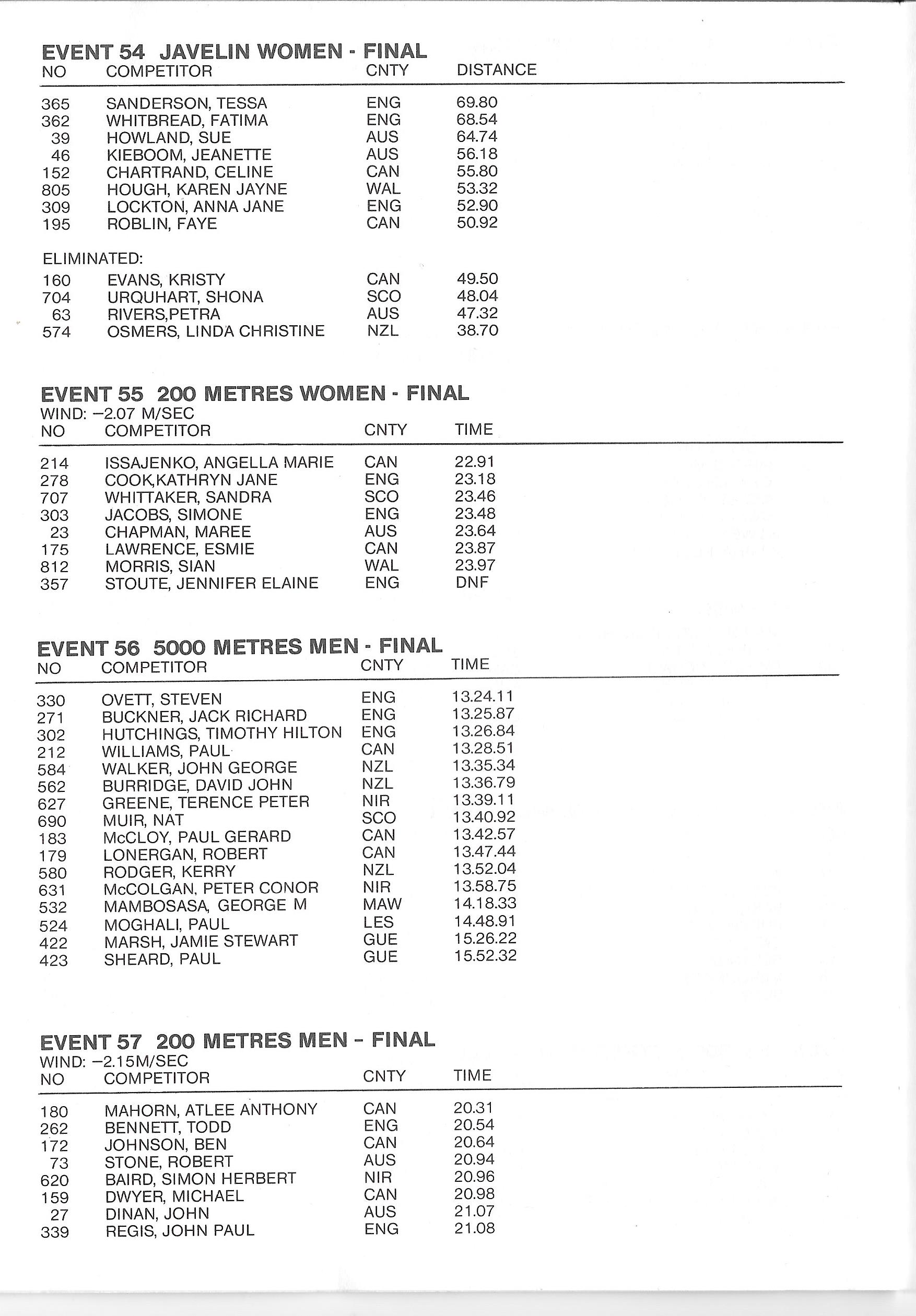
1986 Games Programmes

70MC Cvr

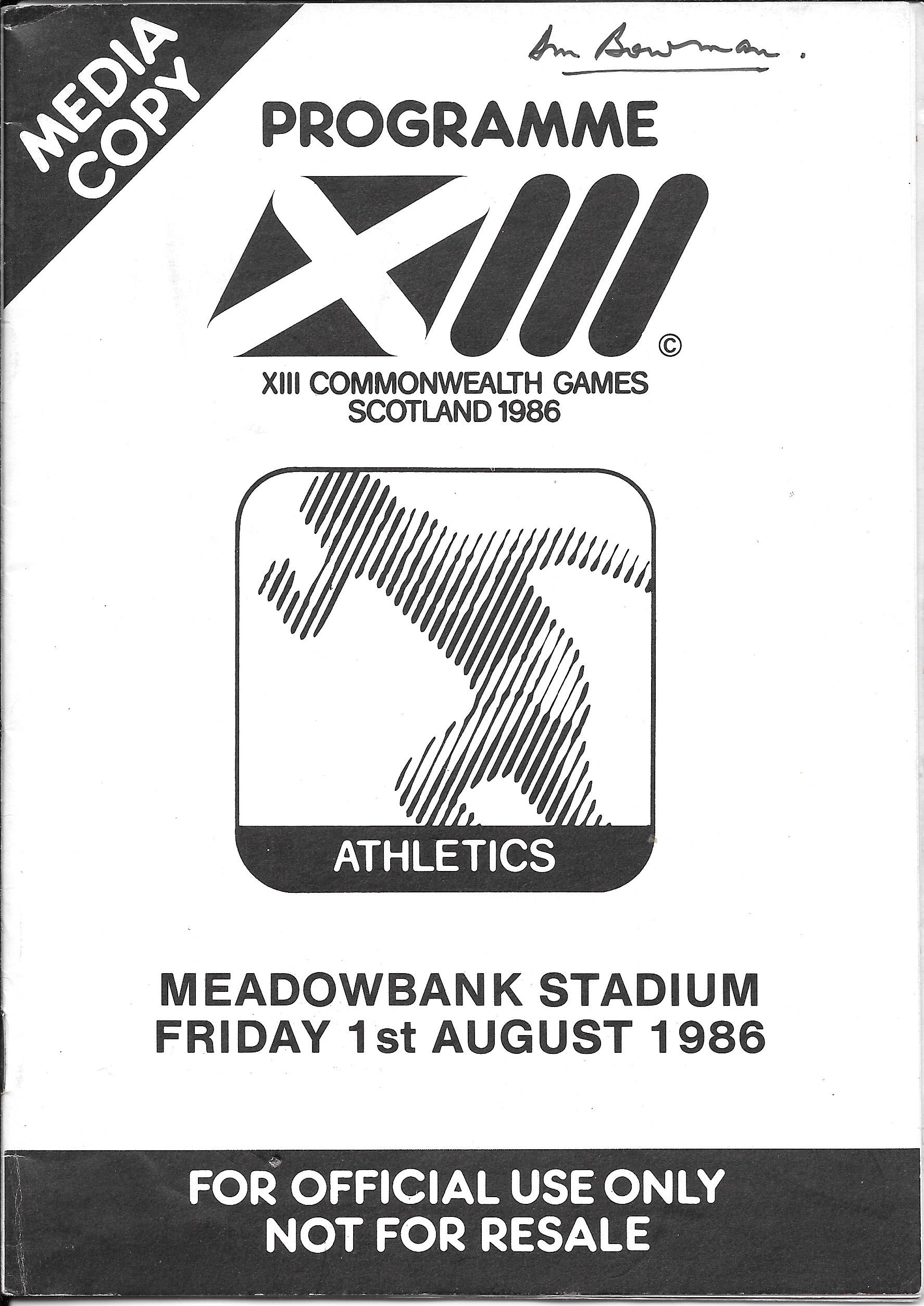
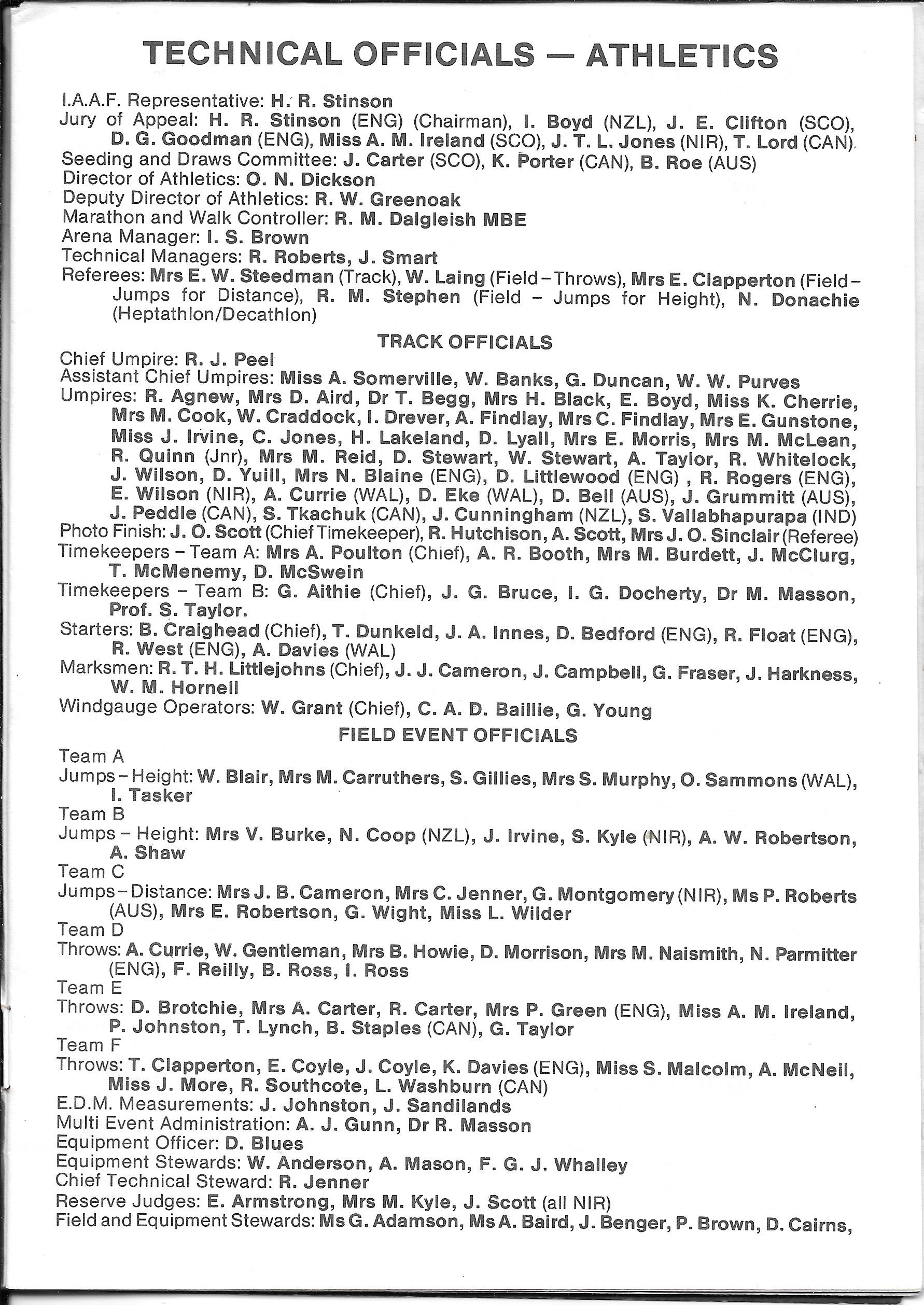
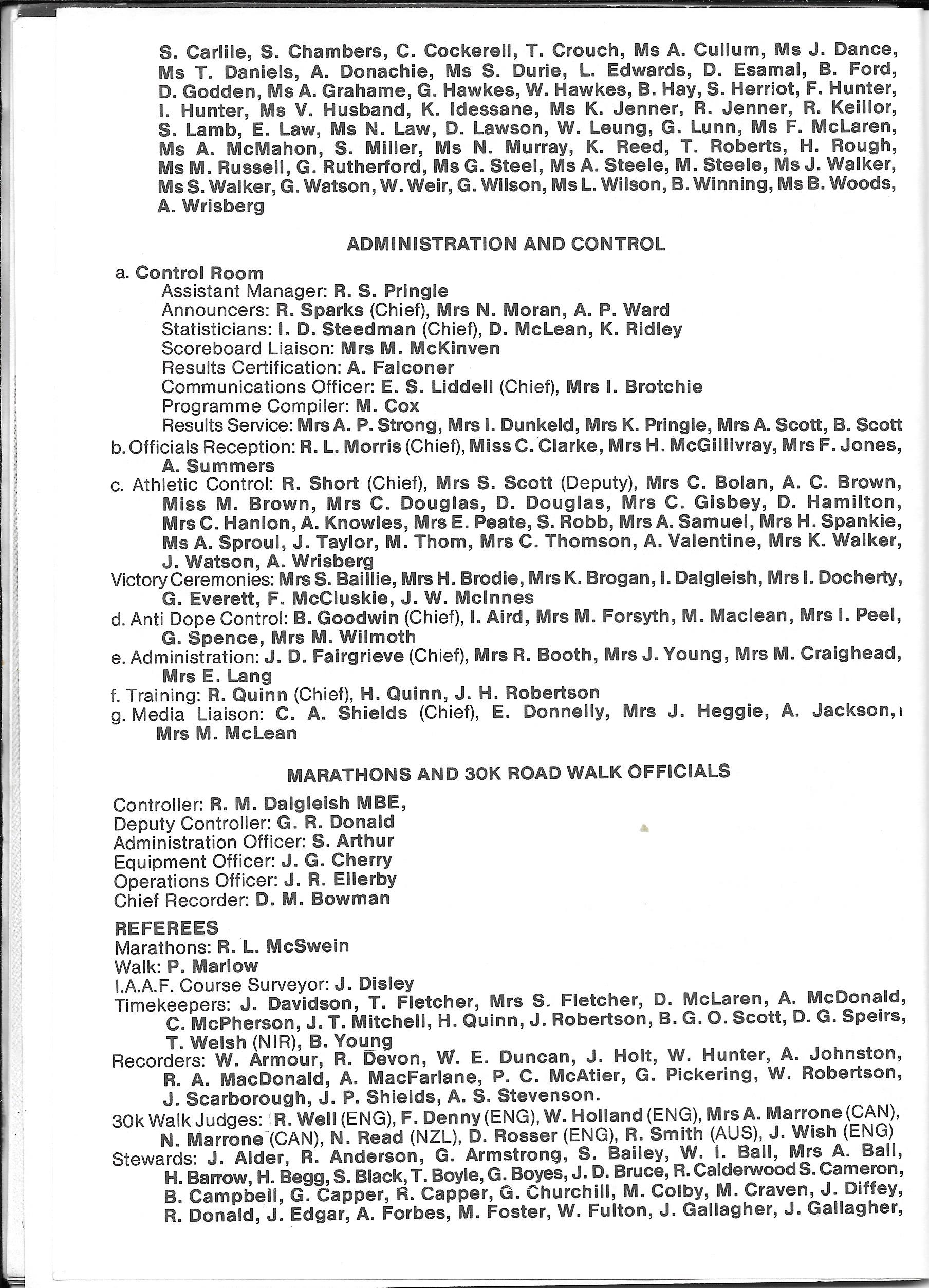
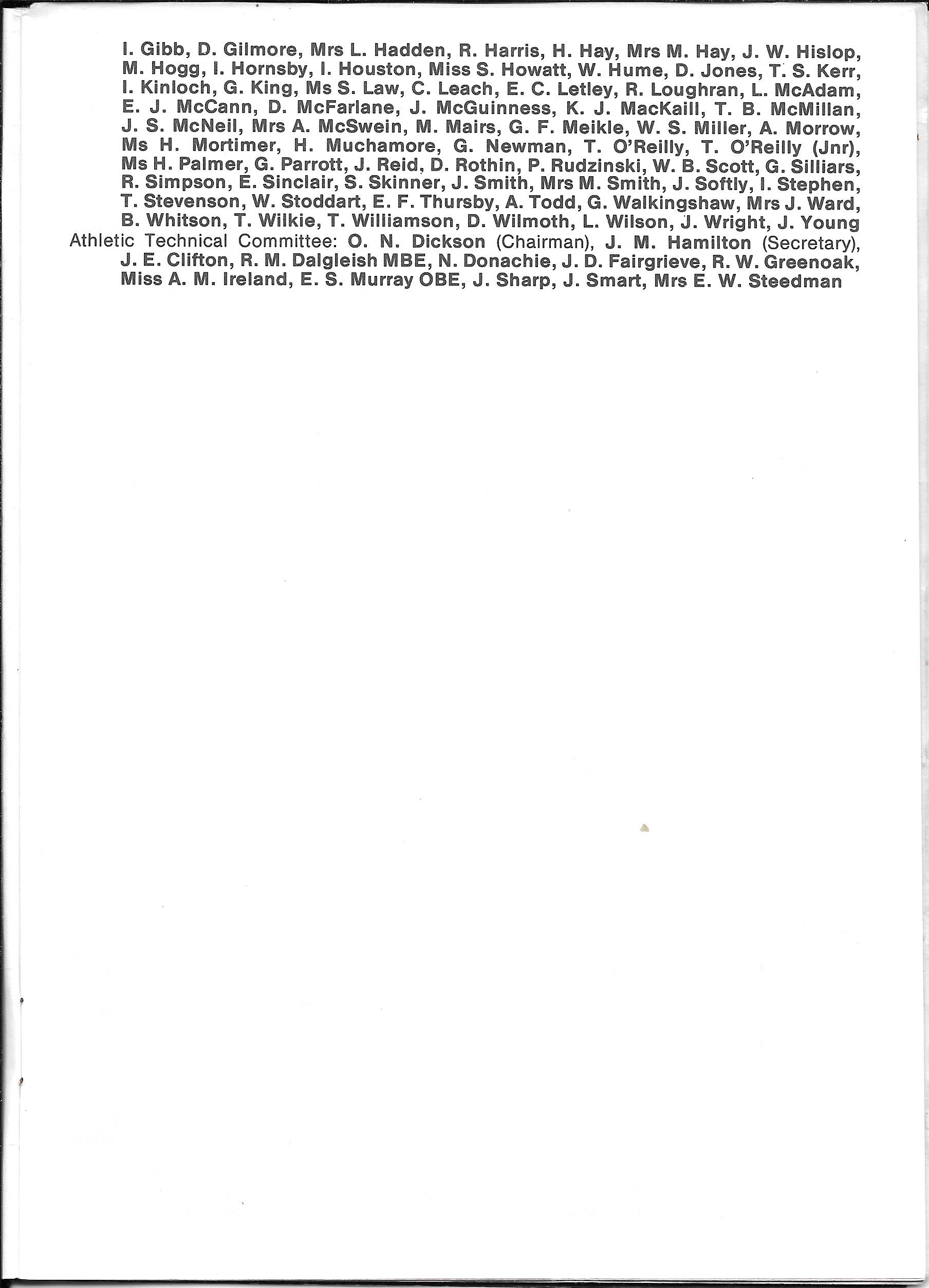
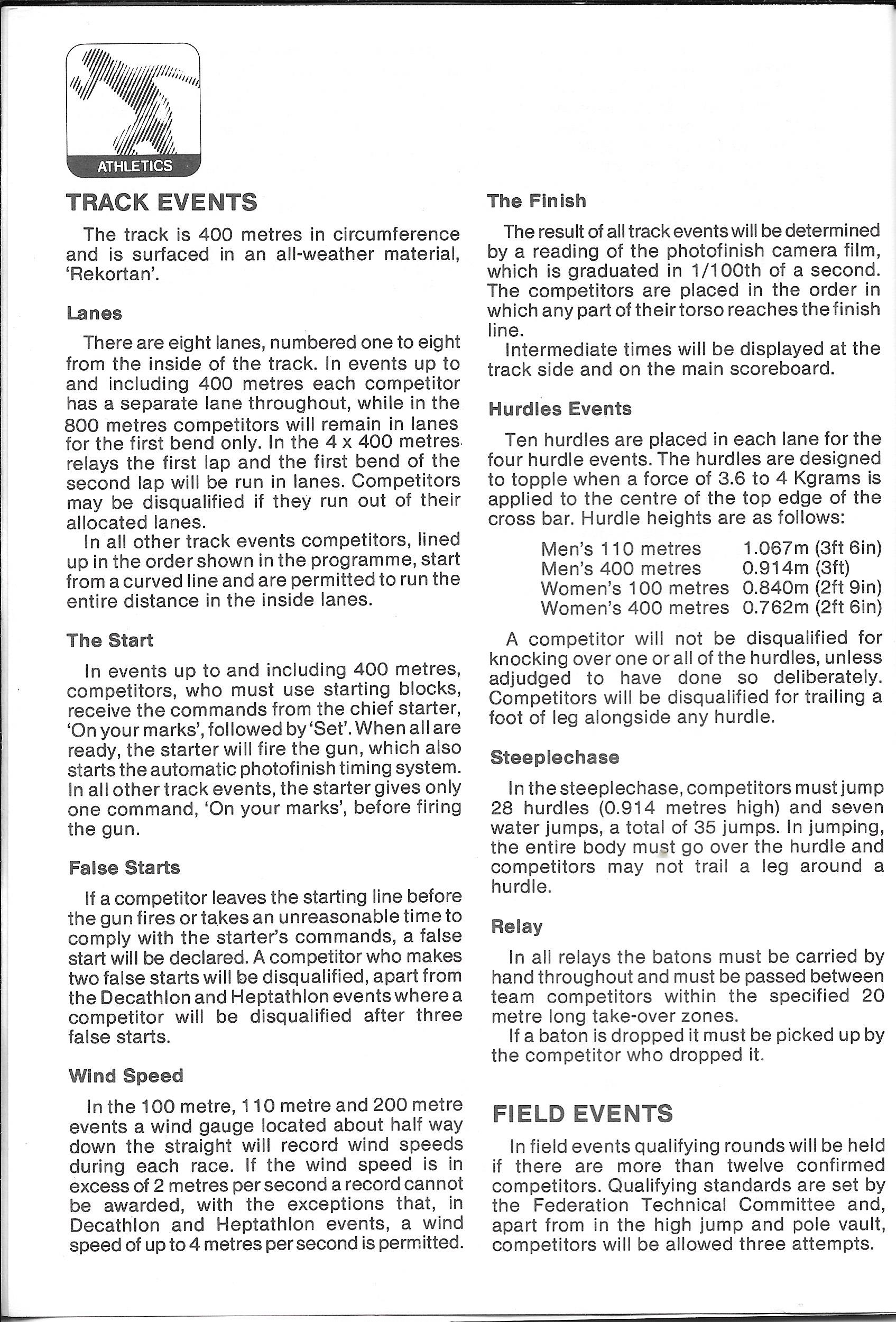
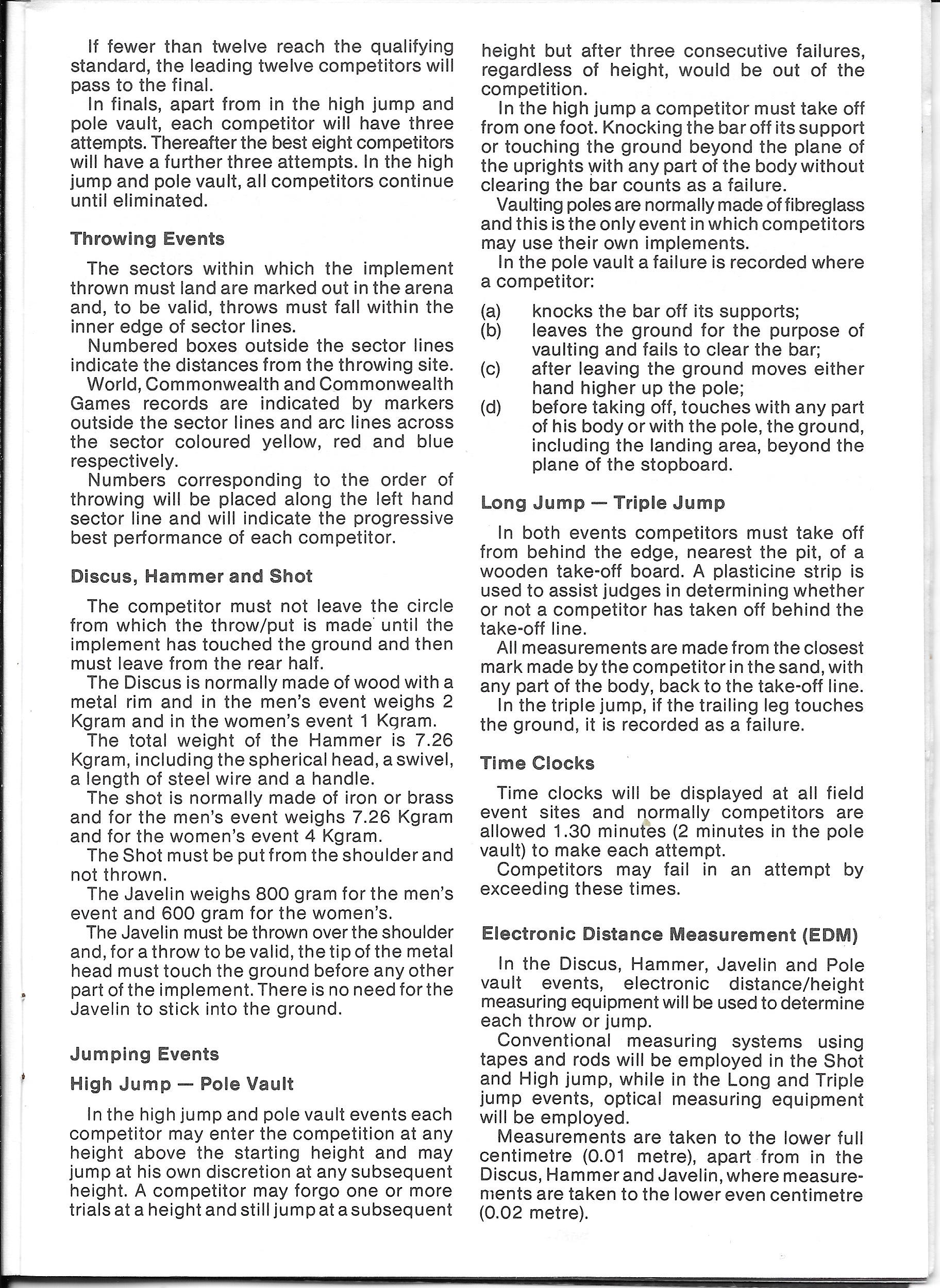
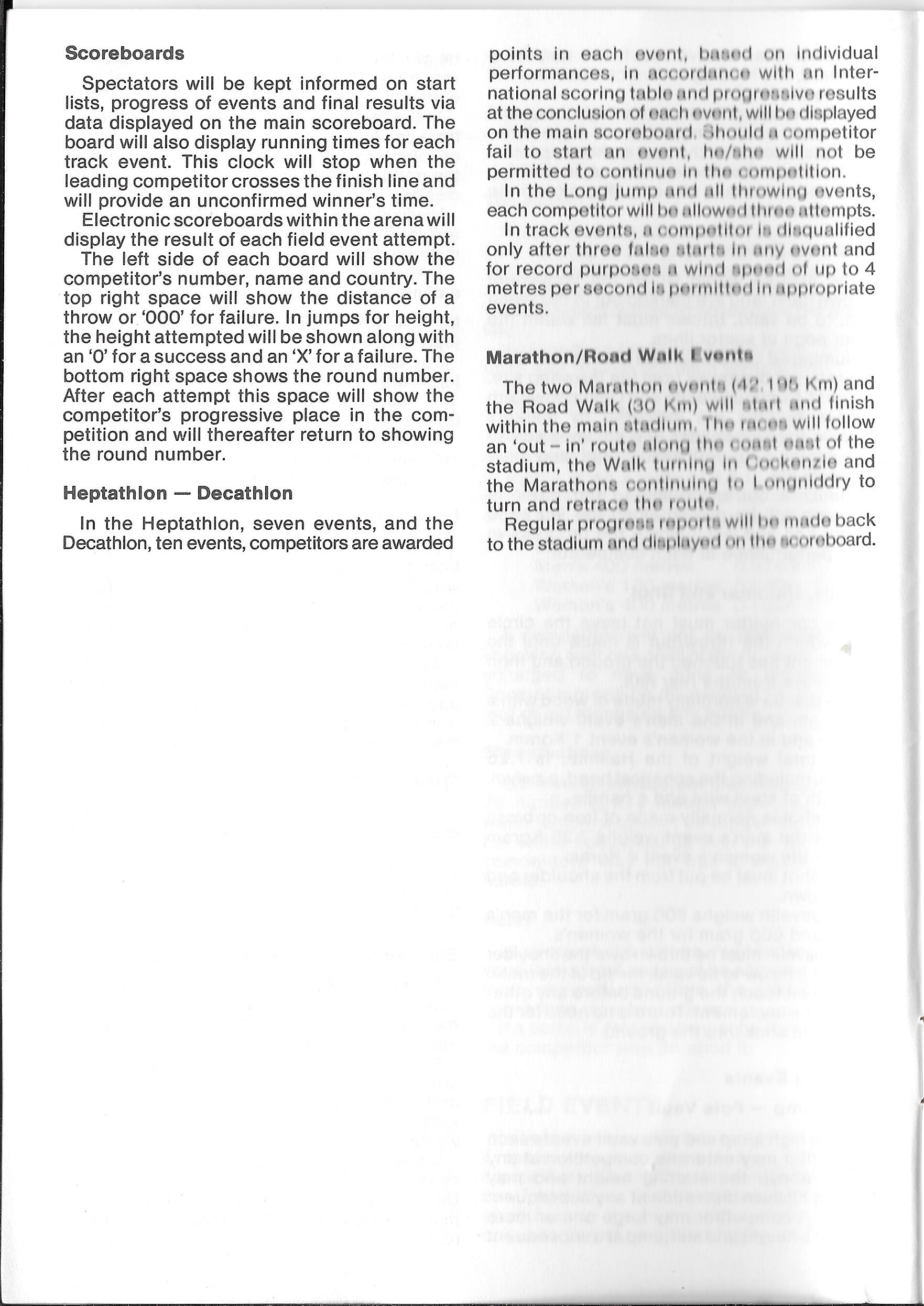
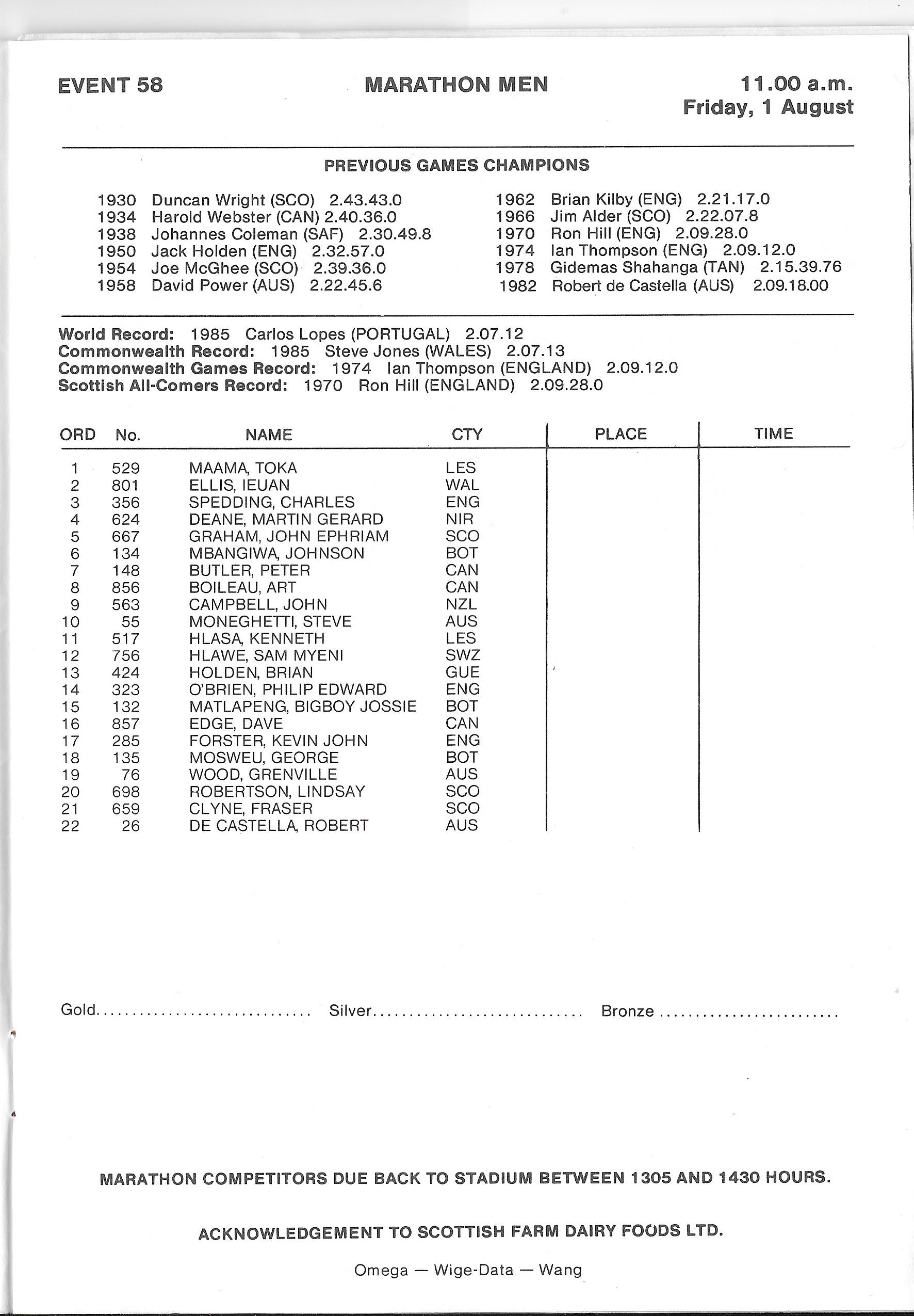
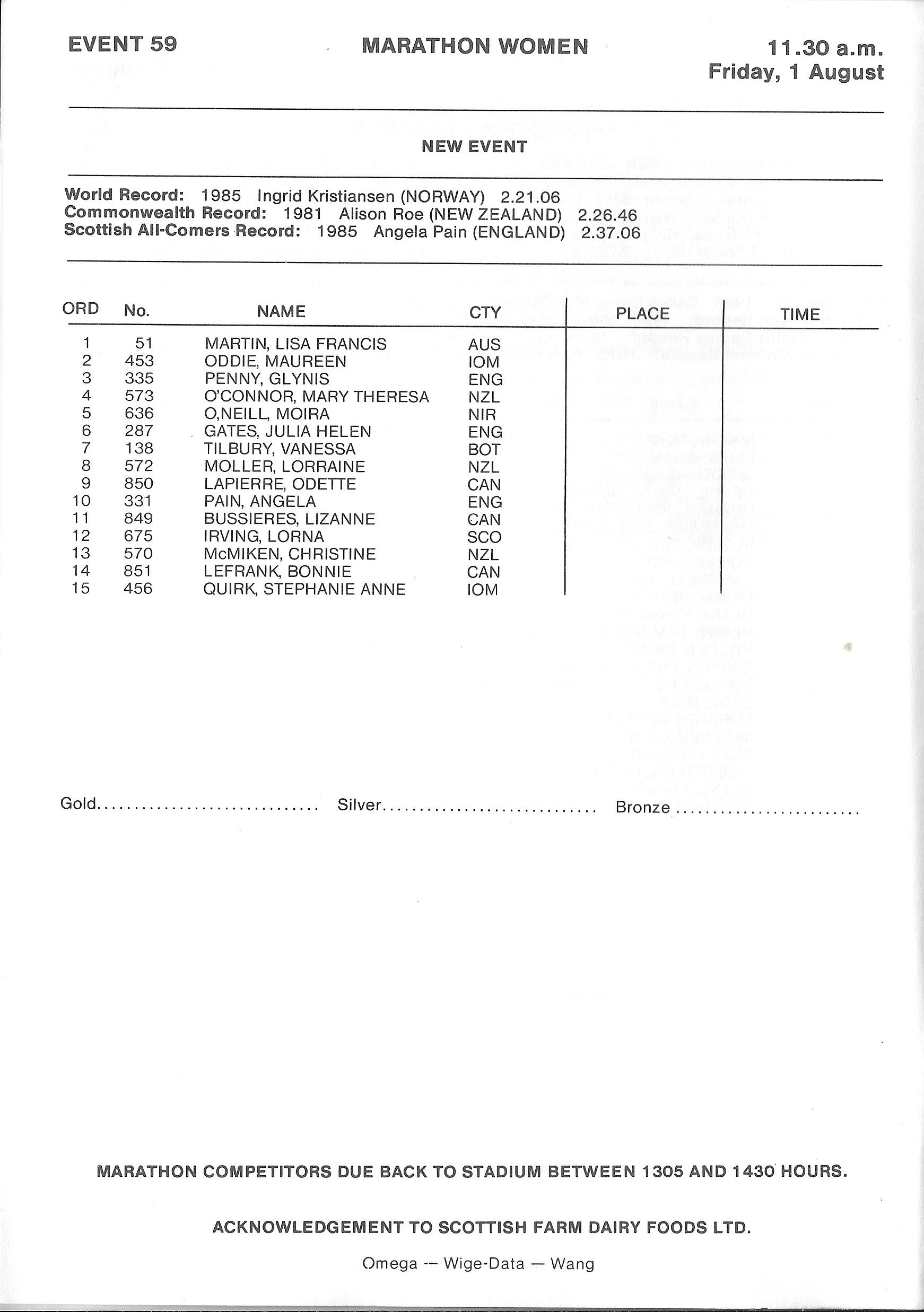
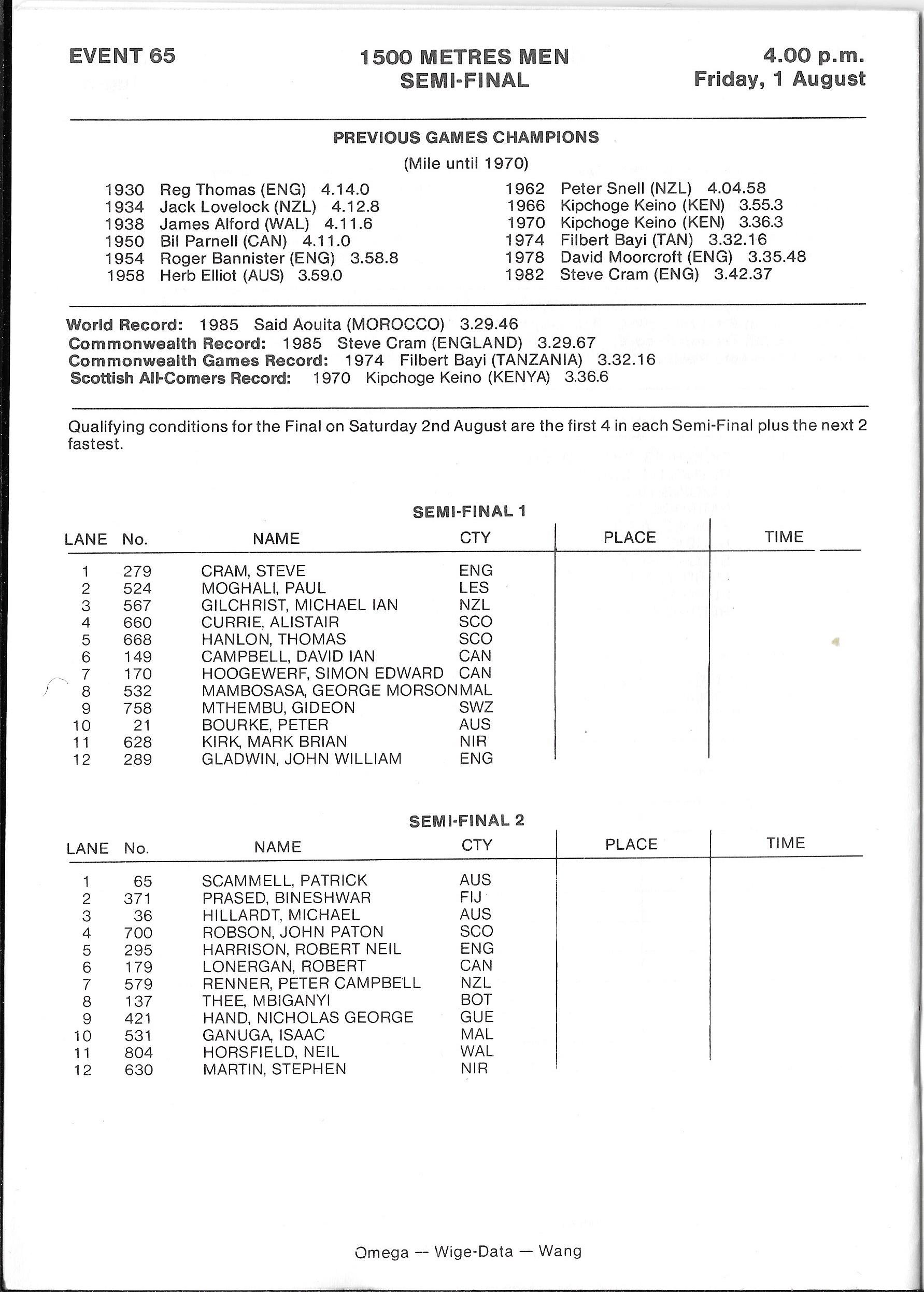
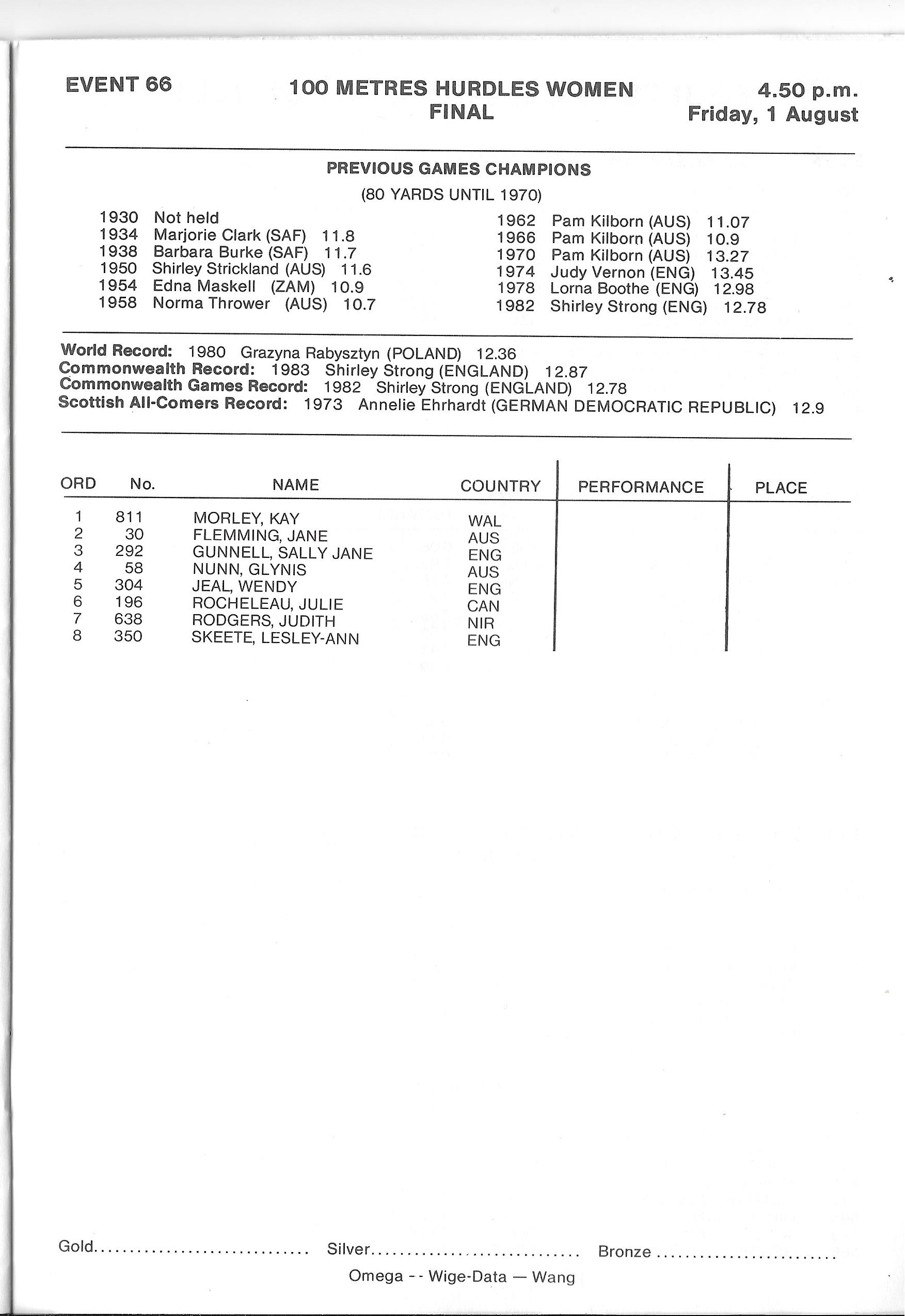
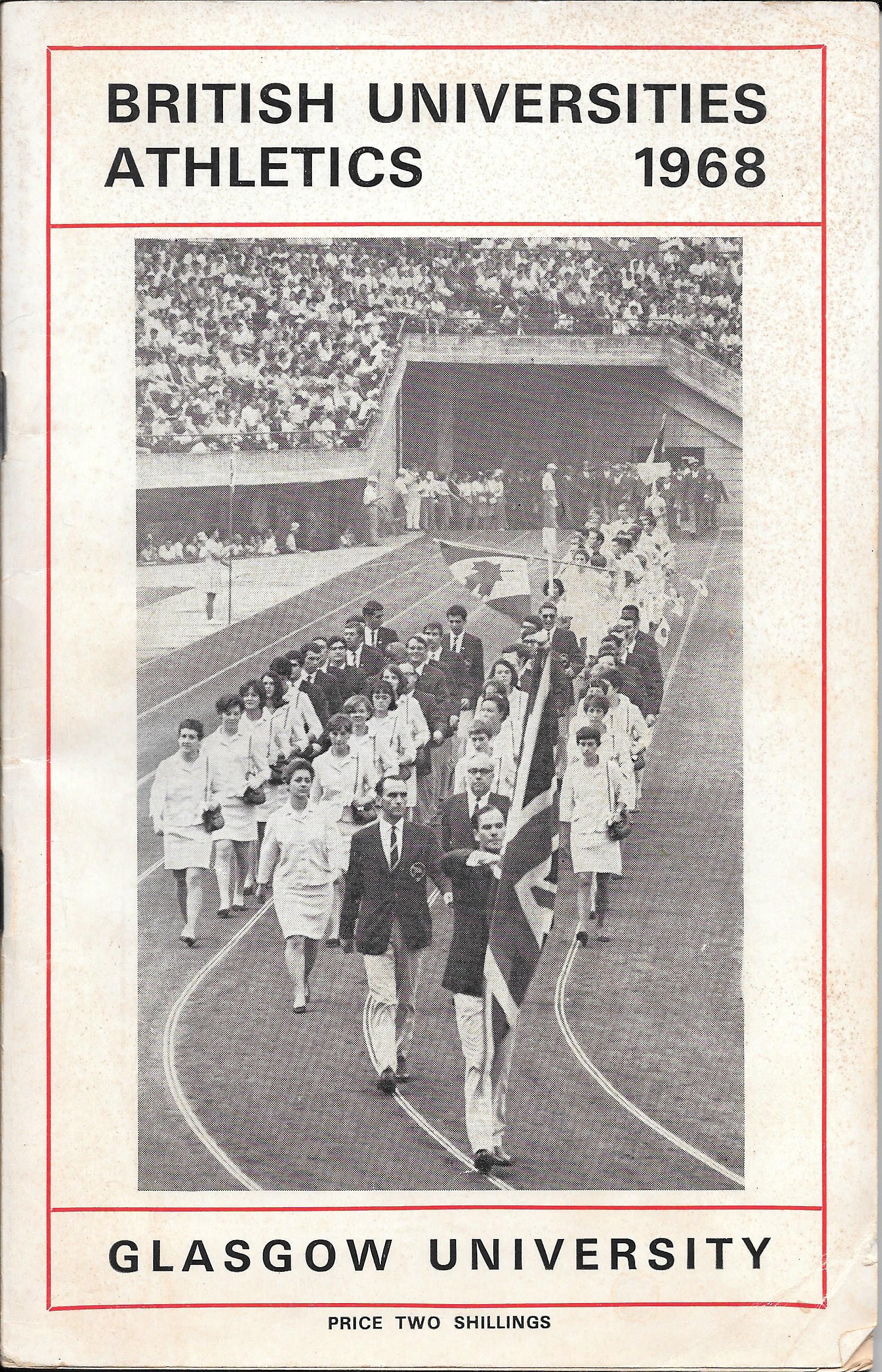
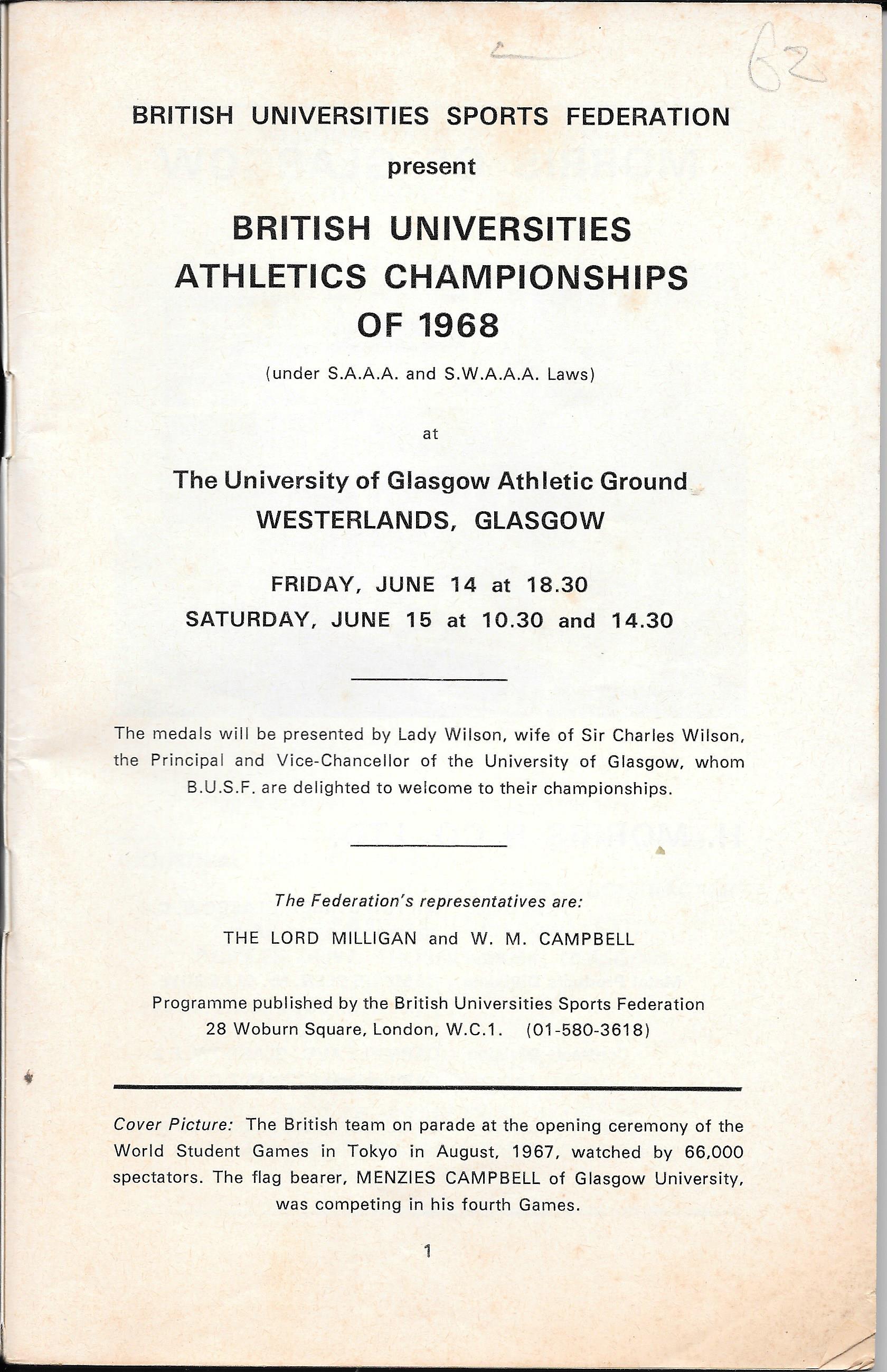
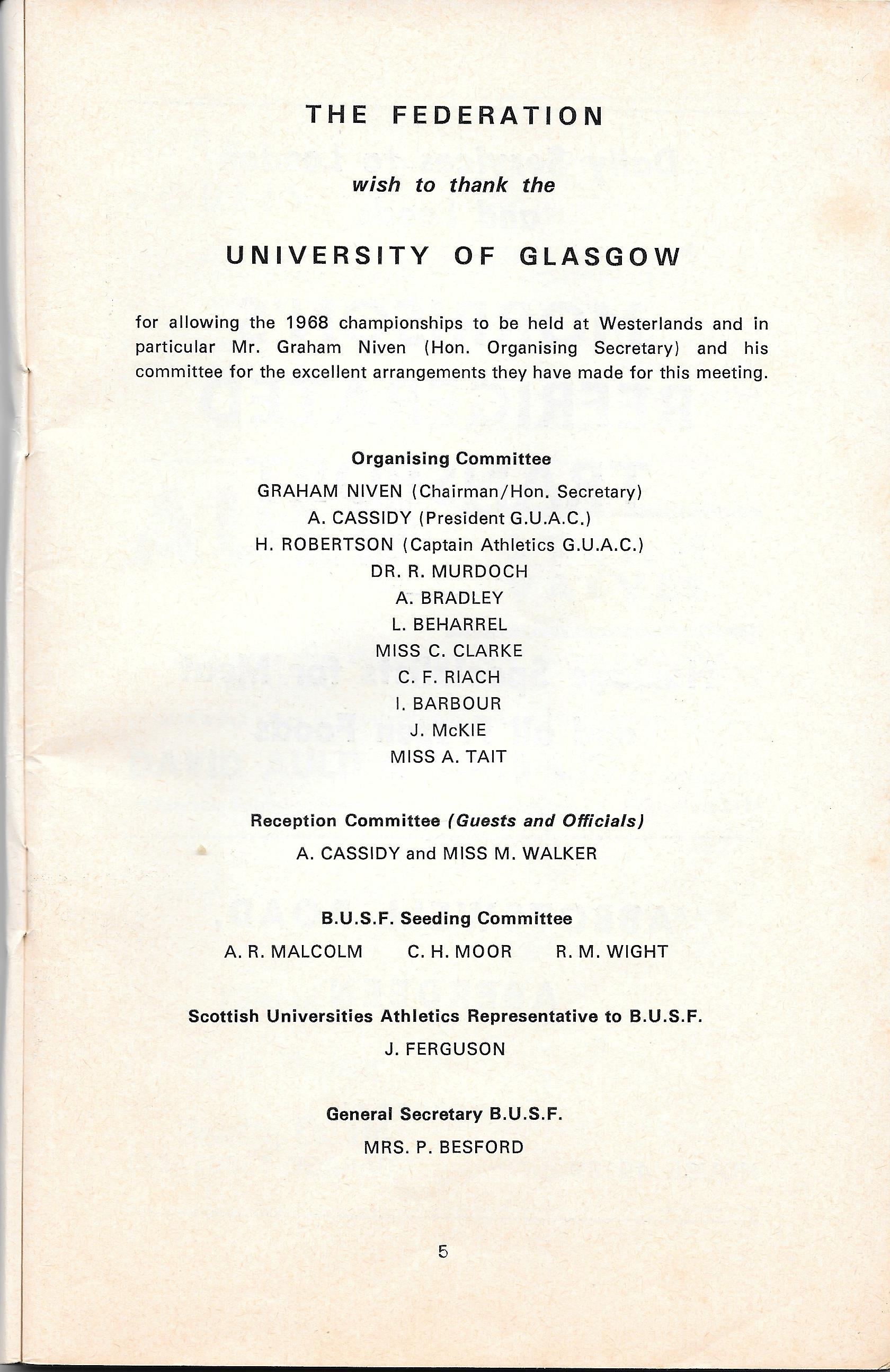
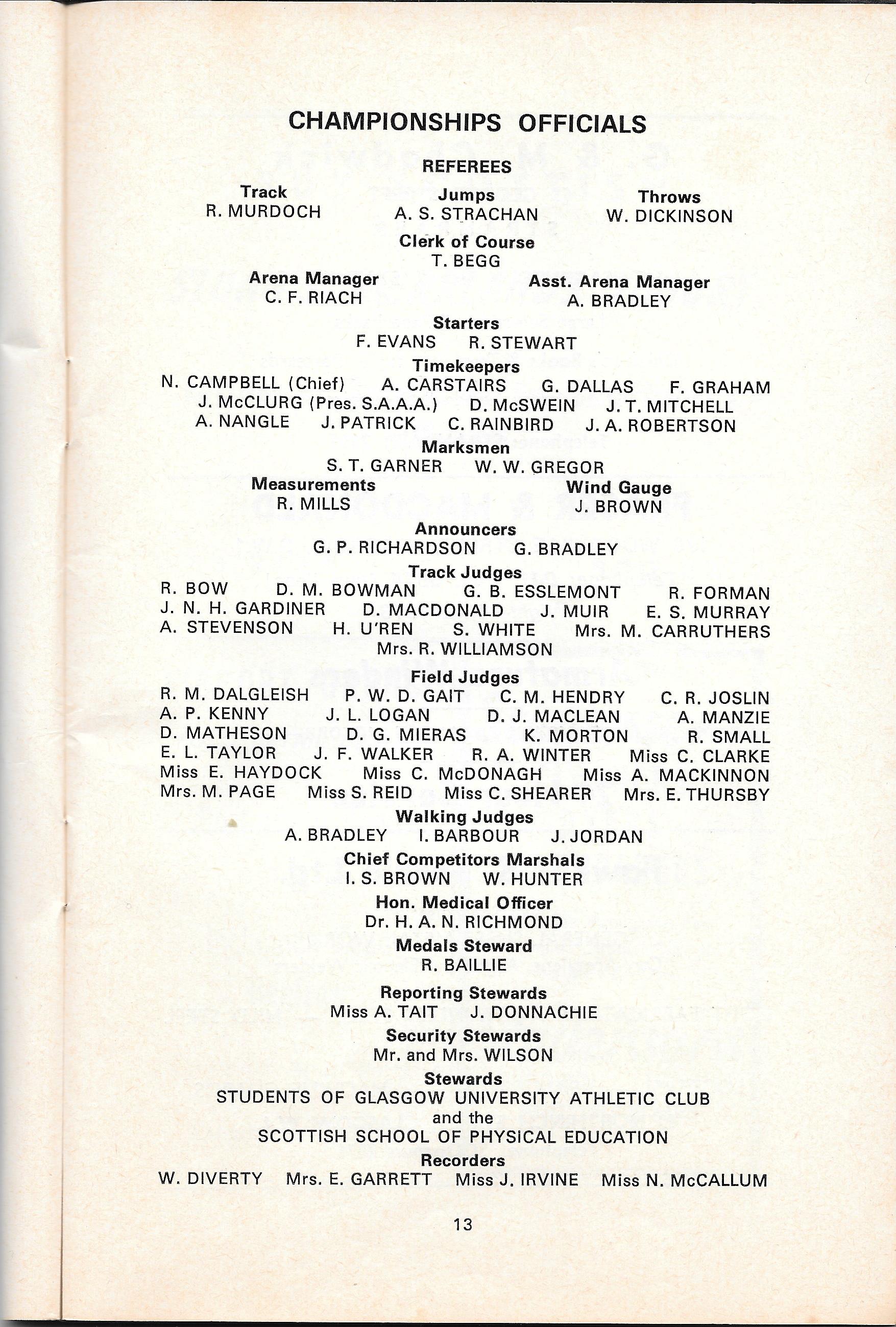
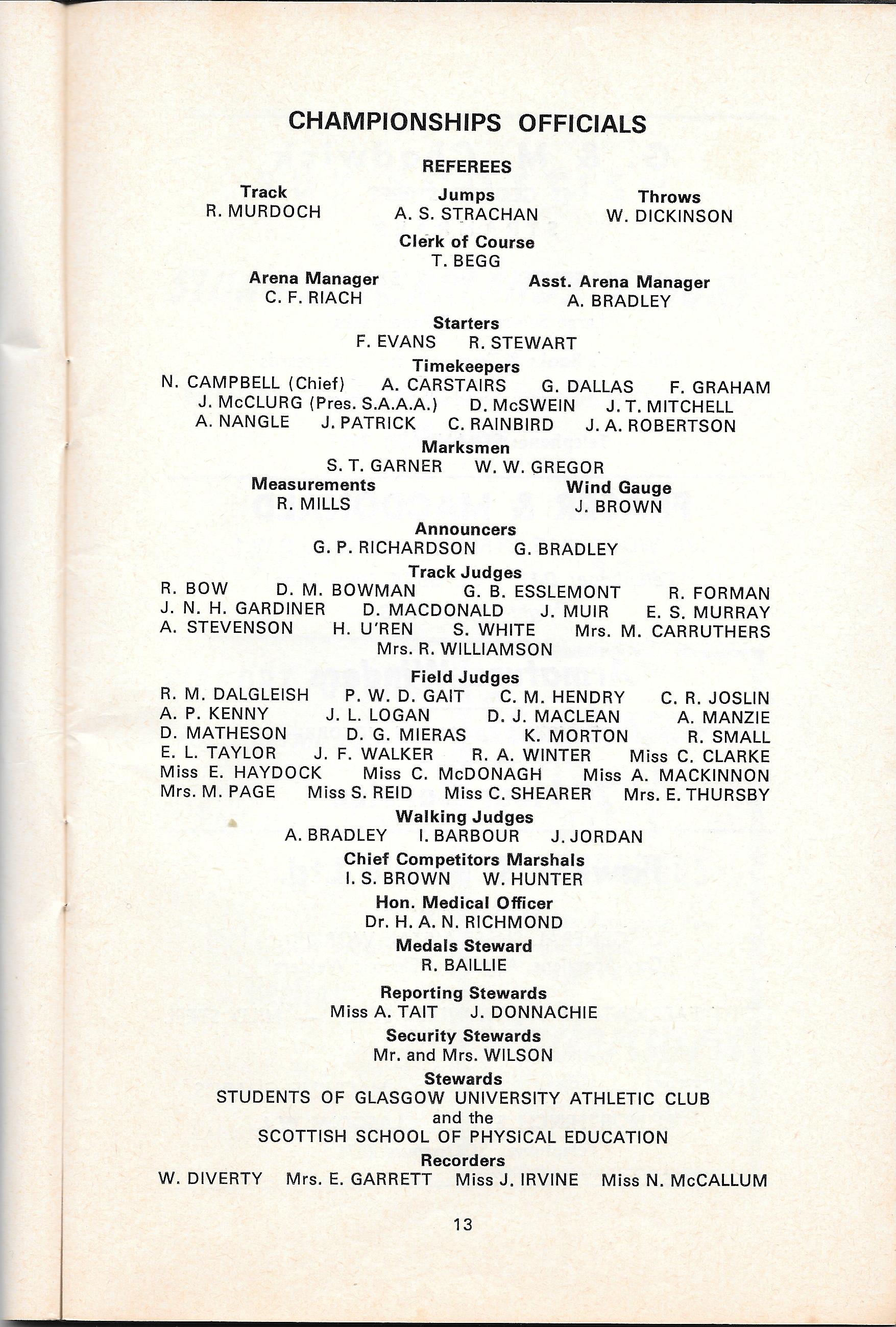
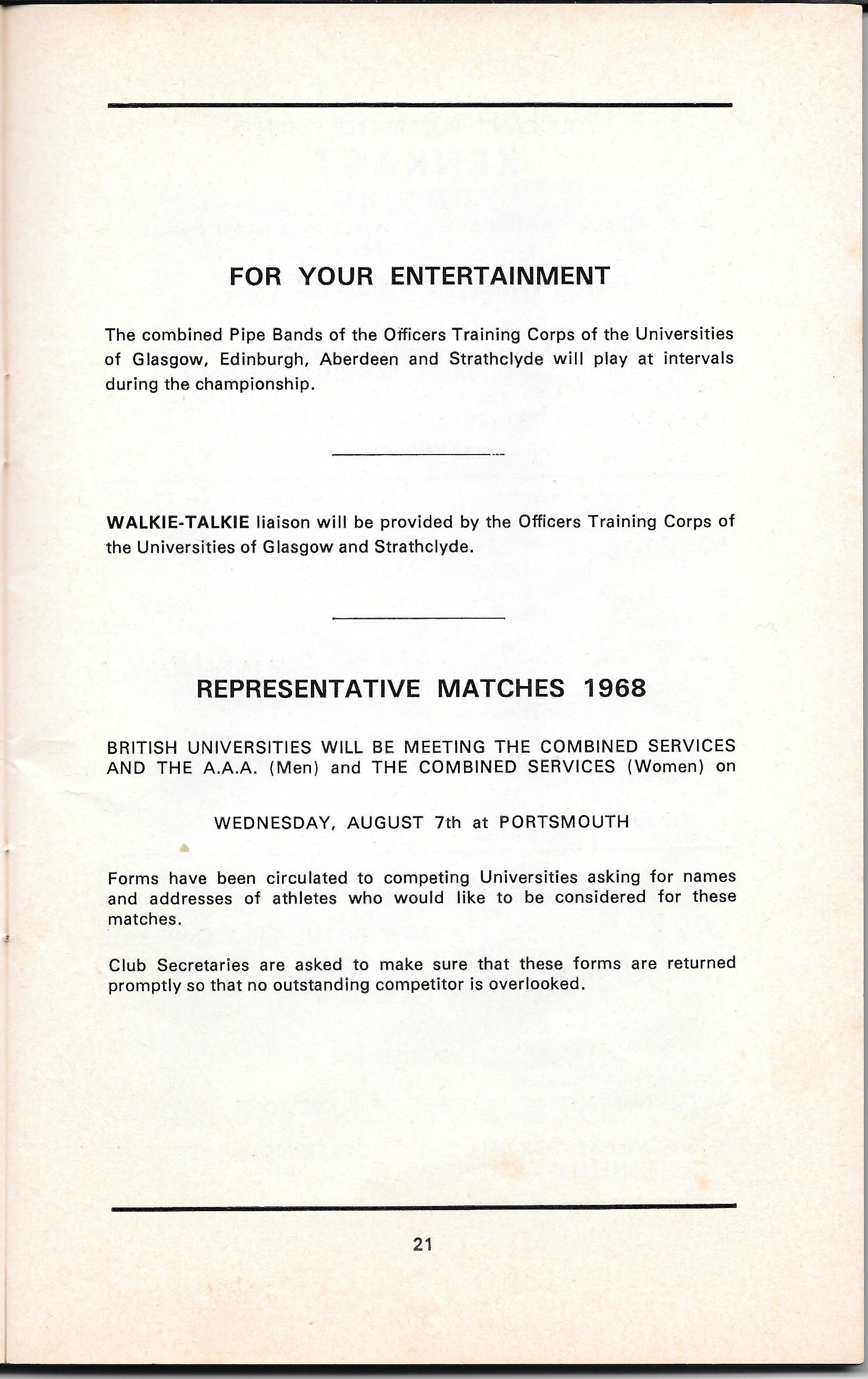
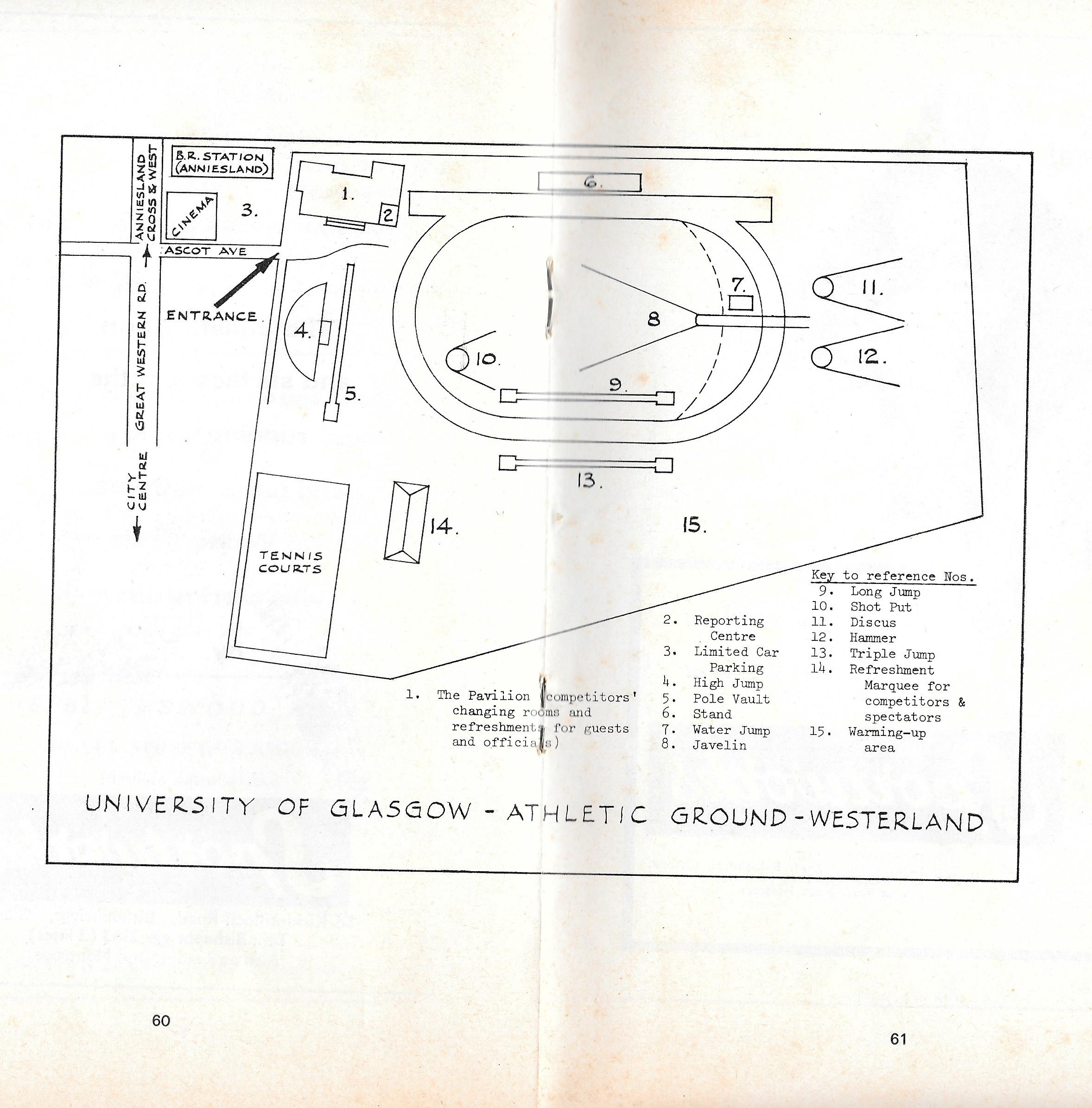
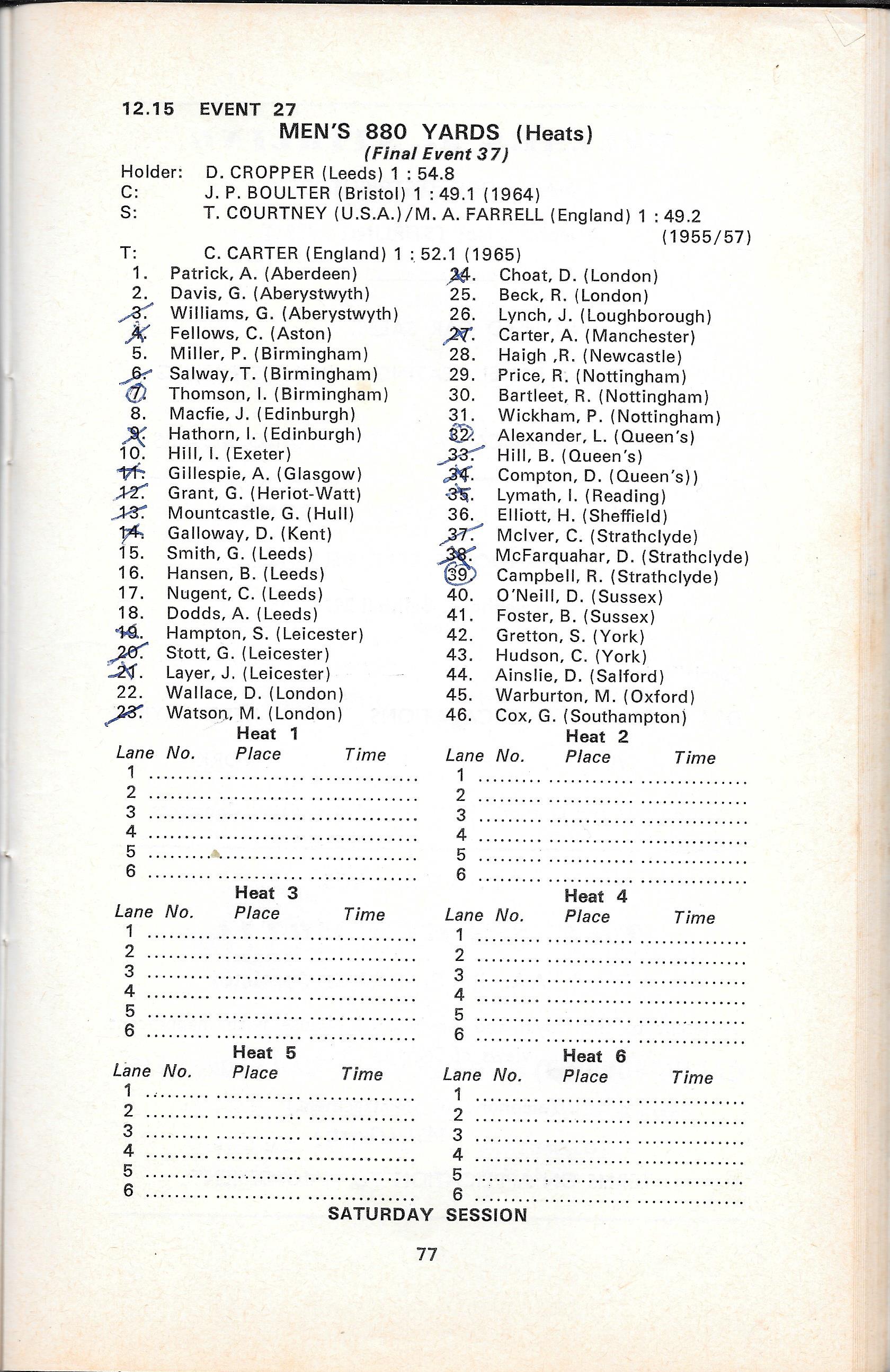
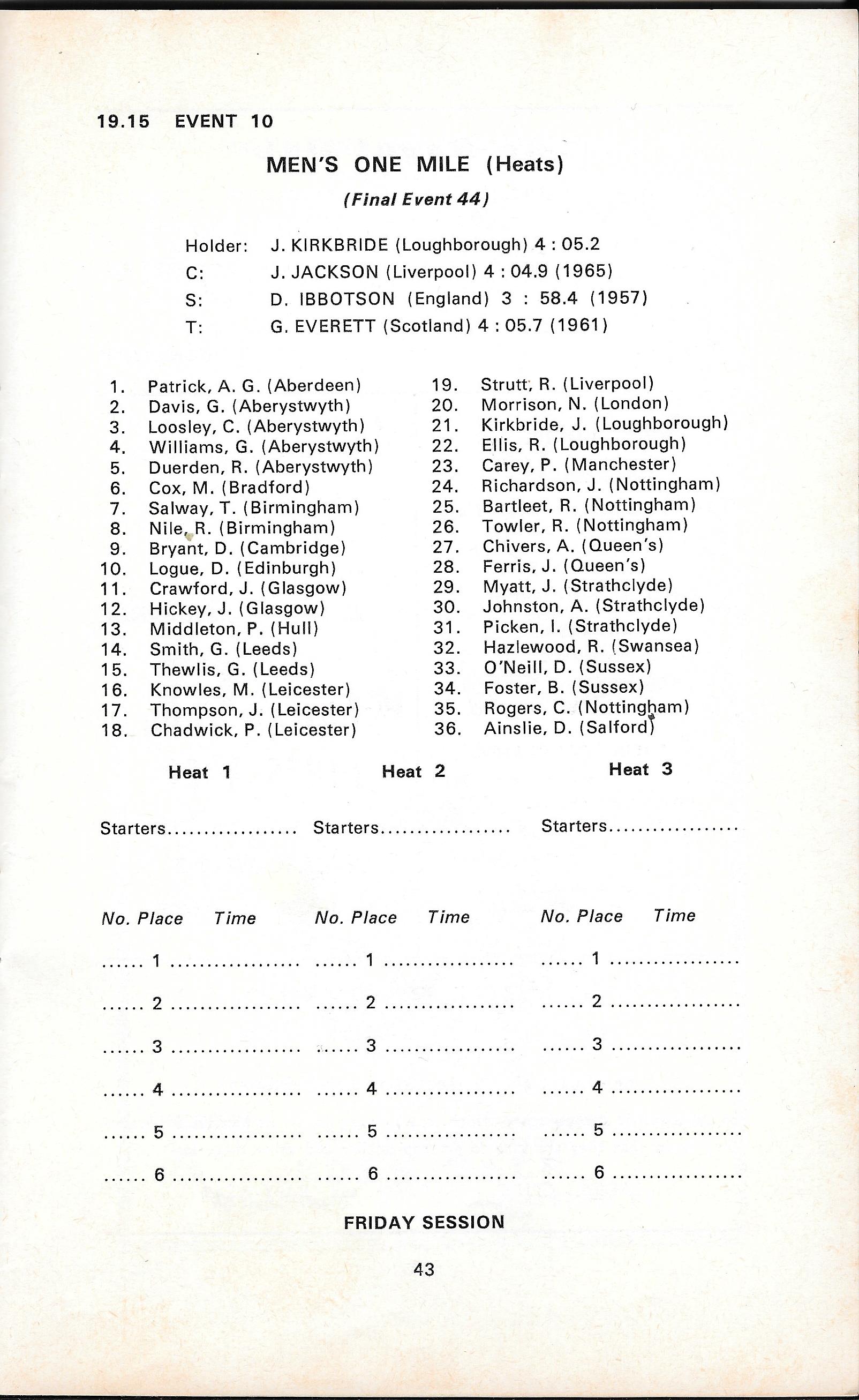
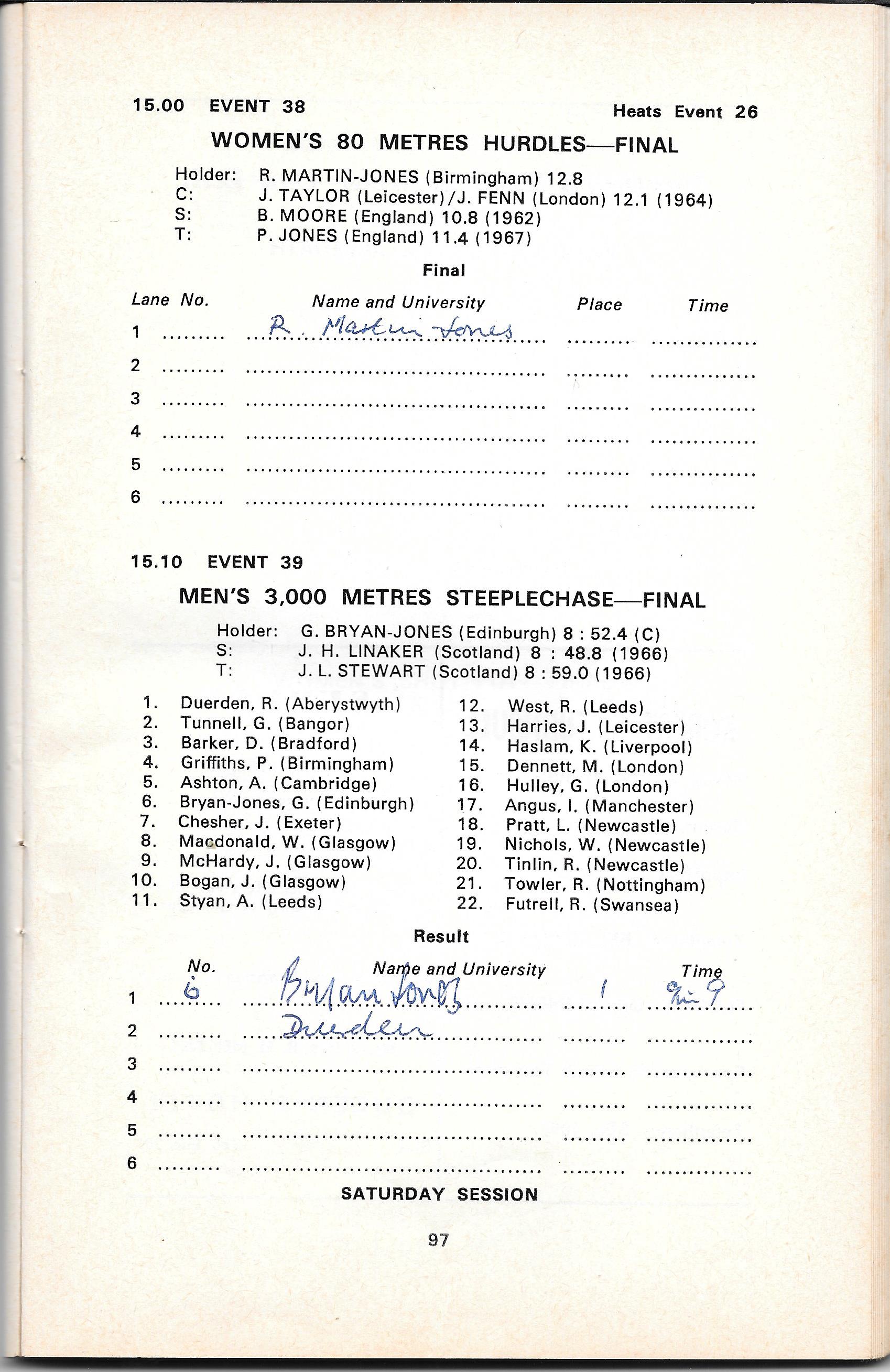
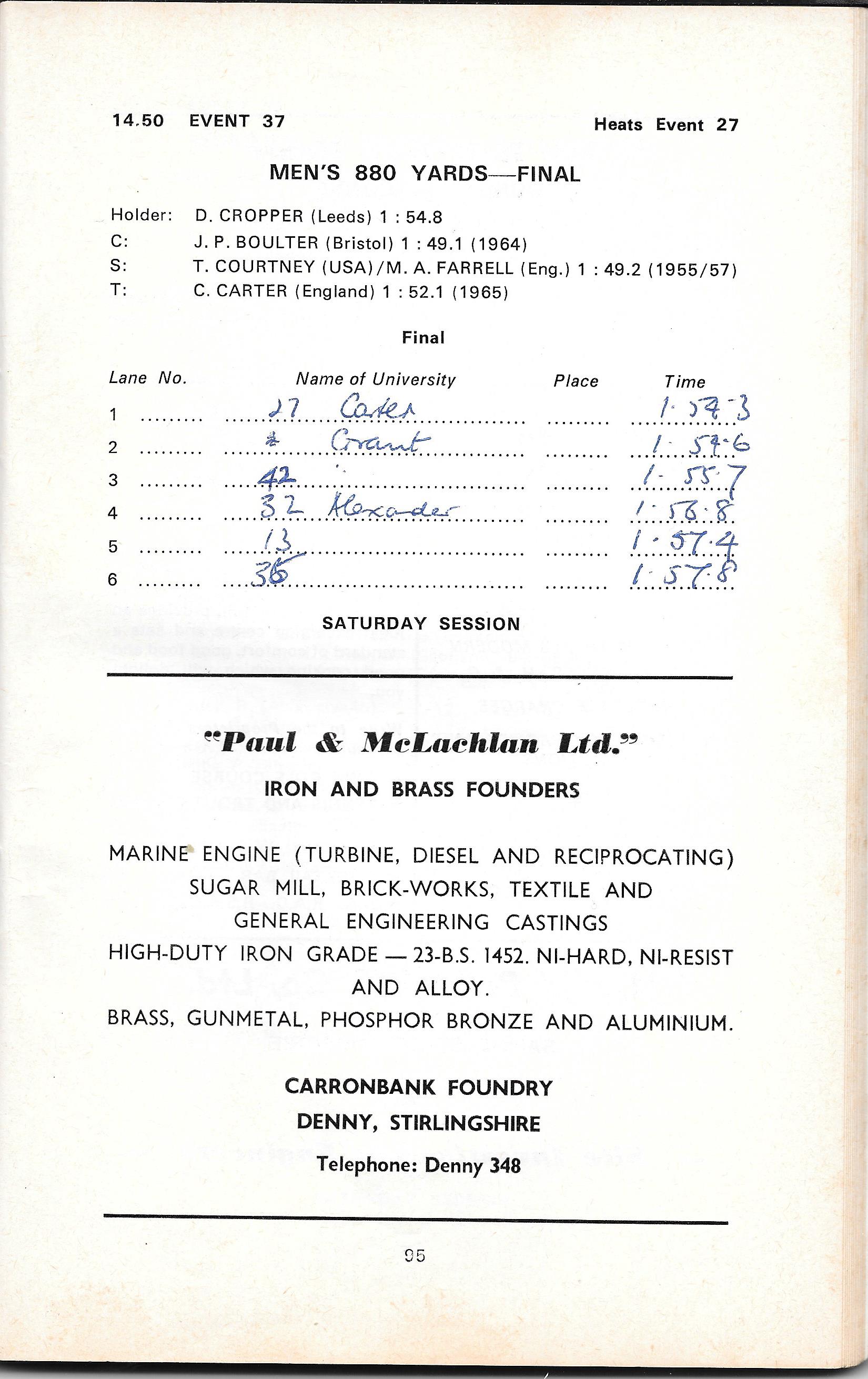
Among the significant documentation provided for the Games was the programme, but in fact there were two.   The one least seen was the ‘Media Copy’ and we’ll have a look at that first.   I have a number of copies of both – almost all from Des Yuill but a couple from David Bowman – and this one was chosen because it was for the day of the marathon races, men’s and women’s.   The Media Copy ran to 24 pages of thin, matt finish paper, not ‘built to last’ so to speak and it was issued to ALL officials and to Press, TV and Radio.   It had all the information you needed but was a thin, flimsy document.  When you opened the document up, the first information was about the officials with comprehensive lists.

70MC p3

70MC p4

70MC p5

Then came basic technical information …

70MC p6

70MC p7

70MC p8

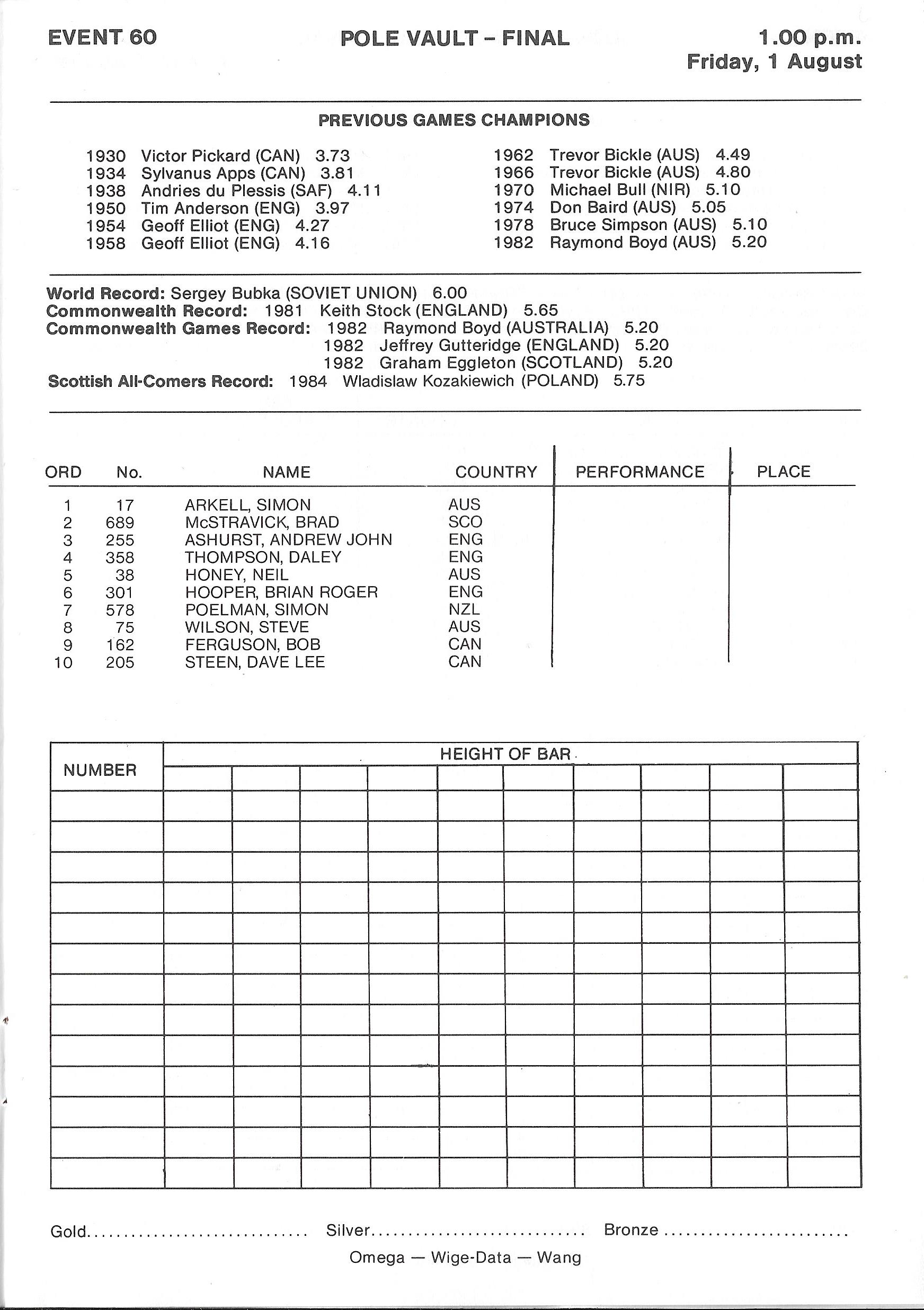
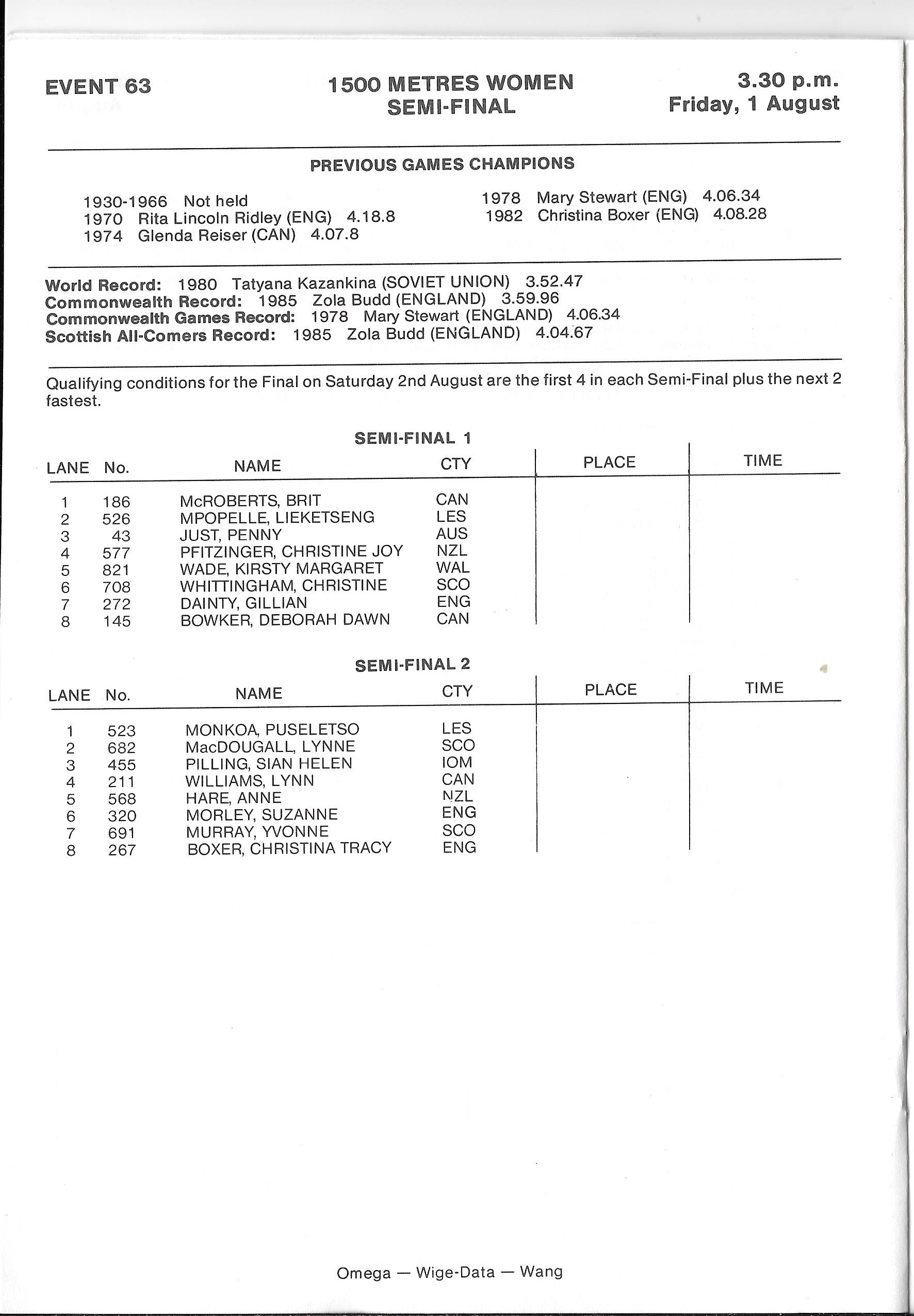
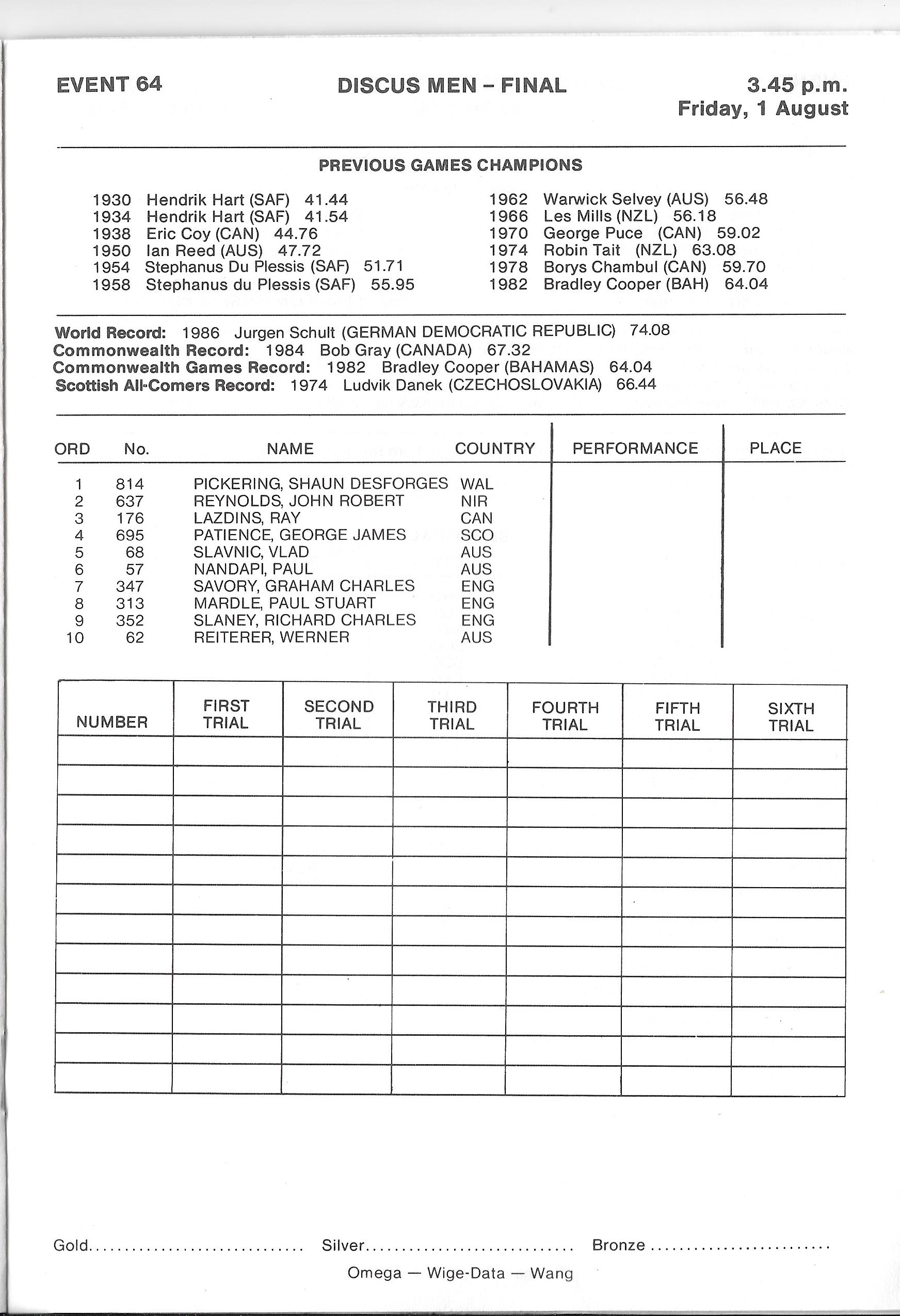
Then came the details of the day’s events, after only Seven pages including the cover.

70MC p9

70MC p10

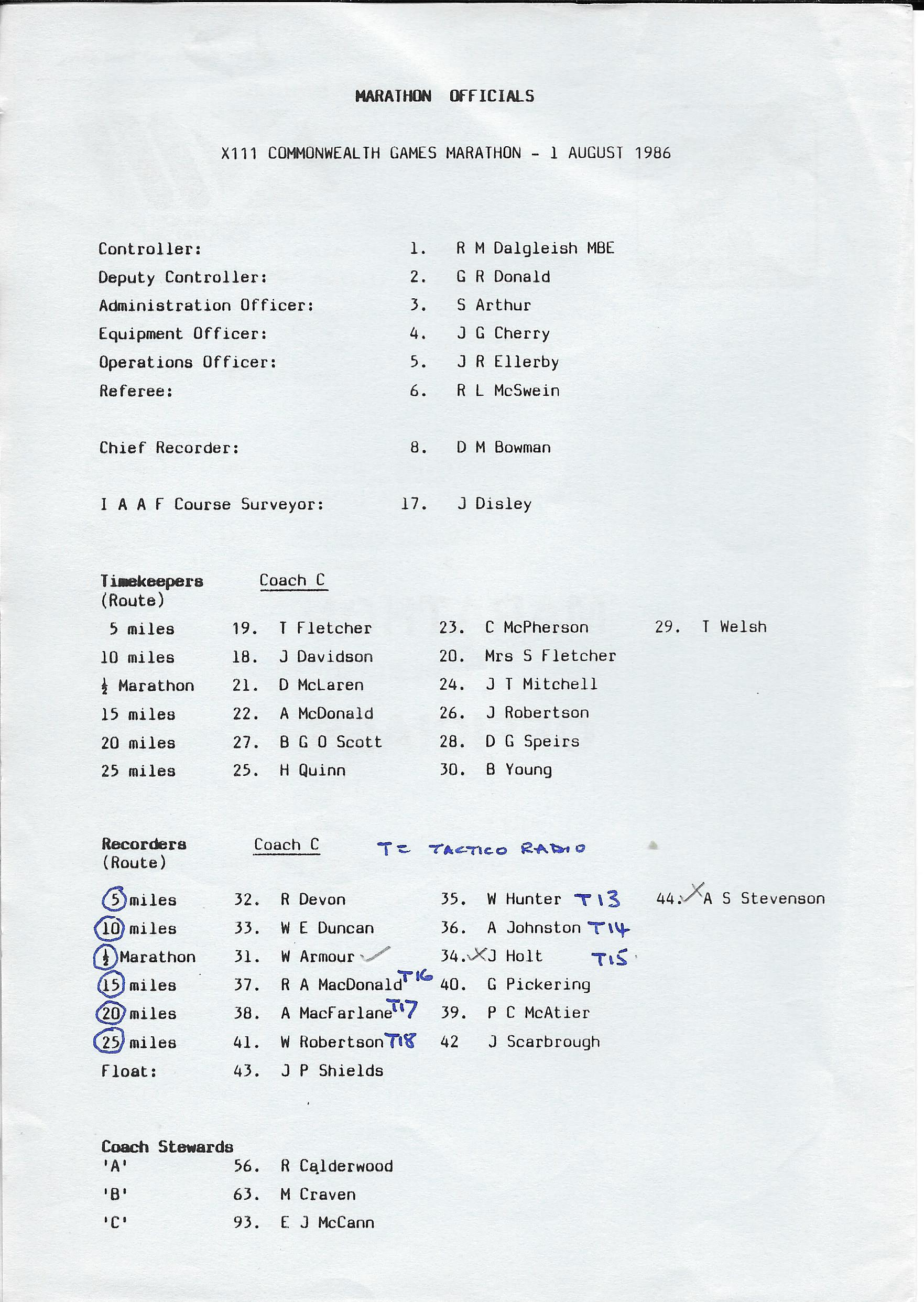
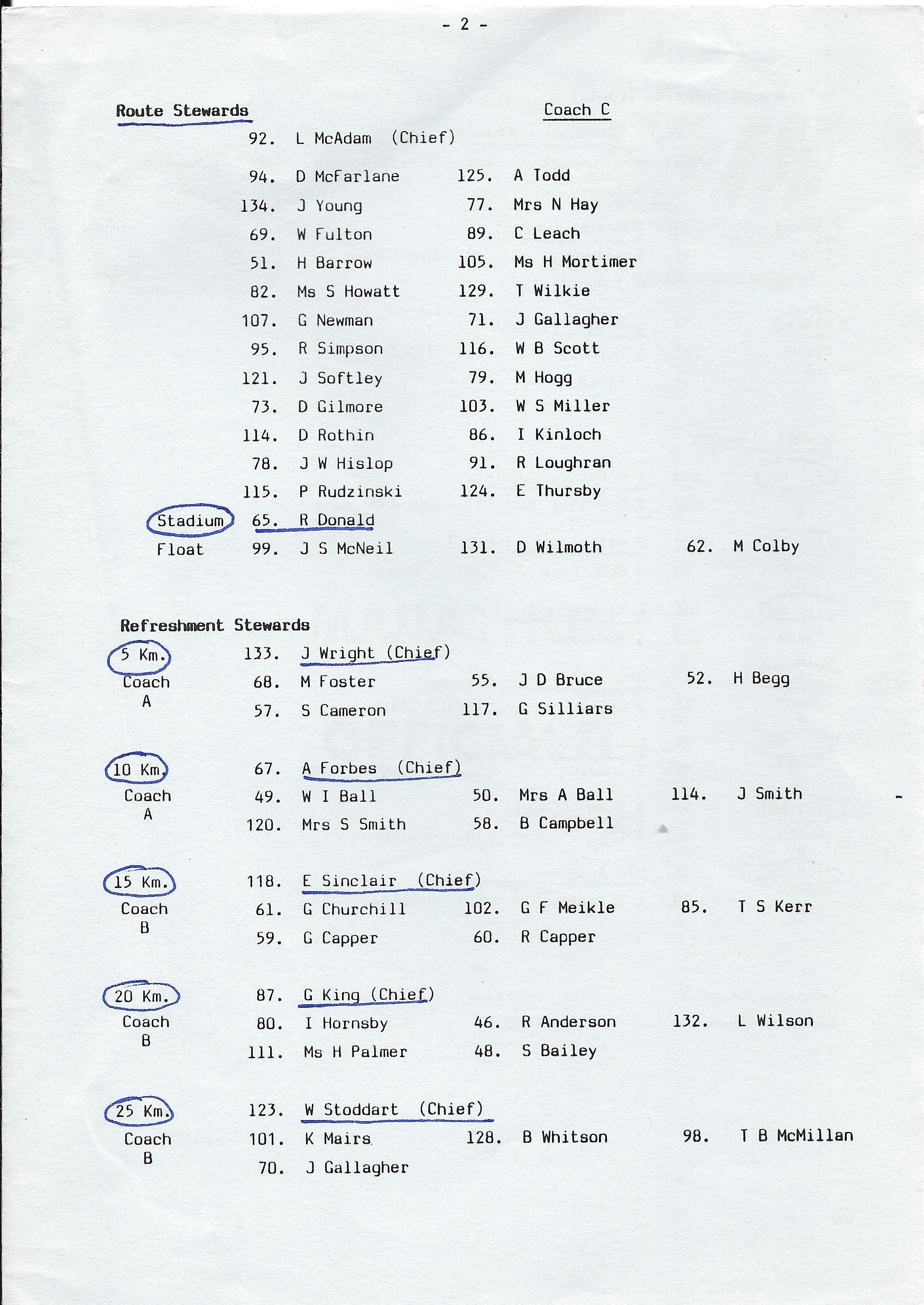
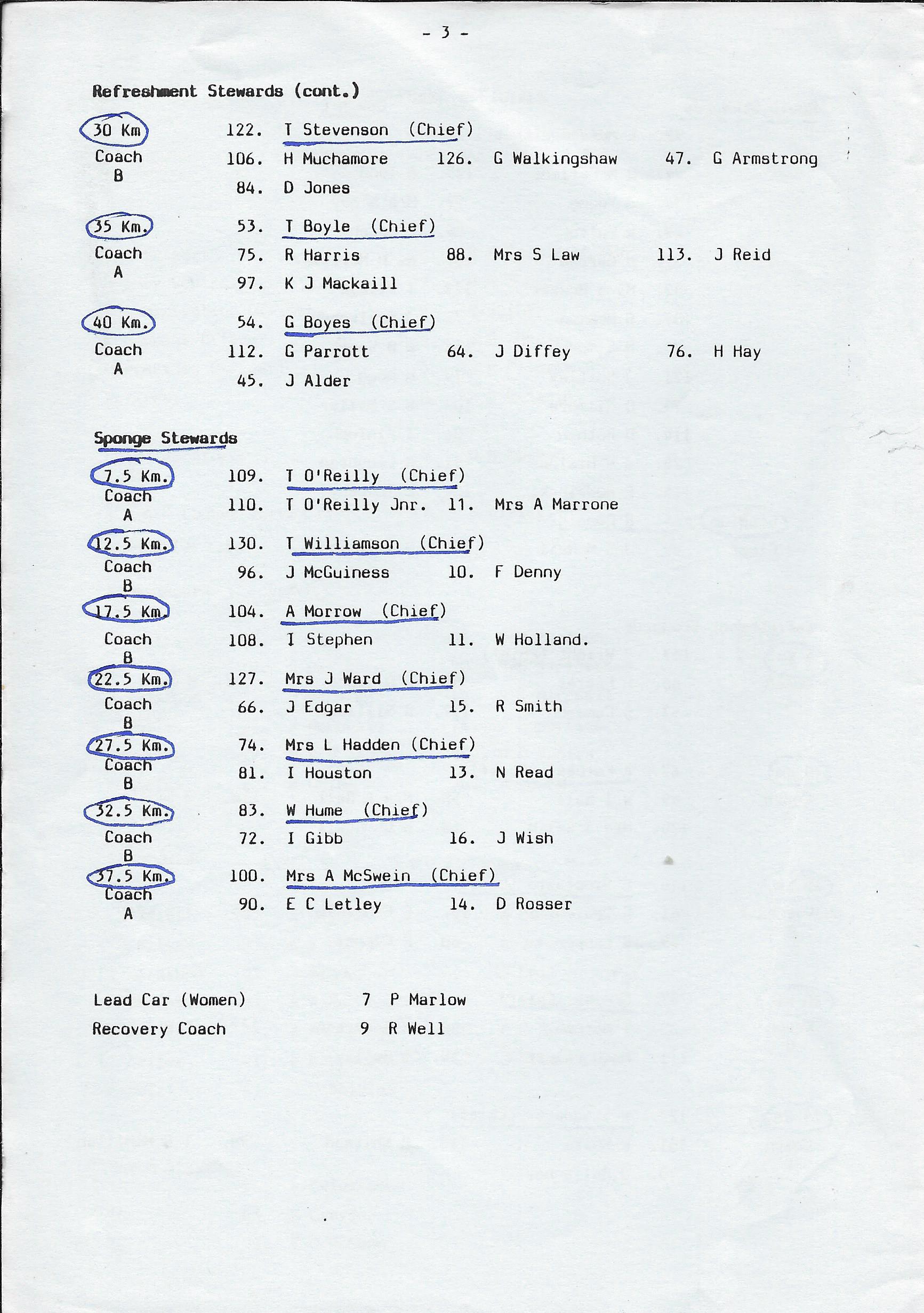
This particular programme belonged to David Bowman who was largely responsible for organising the marathon, as he had been in the 1970 Games and as such it had an insert not generally available.   This listed the officials for the event in great detail – the four sheets that follow have David’s notes on the day.

70MC Insert 10002

70MC Insert 2

70MC Insert 3

70MC Insert 4

Even a cursory glance at the list of officials above reveals many well kent names in Scottish athletics who were prepared to perform all sorts of tasks to keep the show on the road – George King and Bil Stoddart from Greenock Wellpark, Tommy Boyle, Tom O’Reilly, Tom Stevenson, Tom Williamson, Alastair Macfarlane, Dunky McFarlane, many, many more.

The programme continued

70MC p11

70MC p13

70MC p14

70MC p15

70MC p16

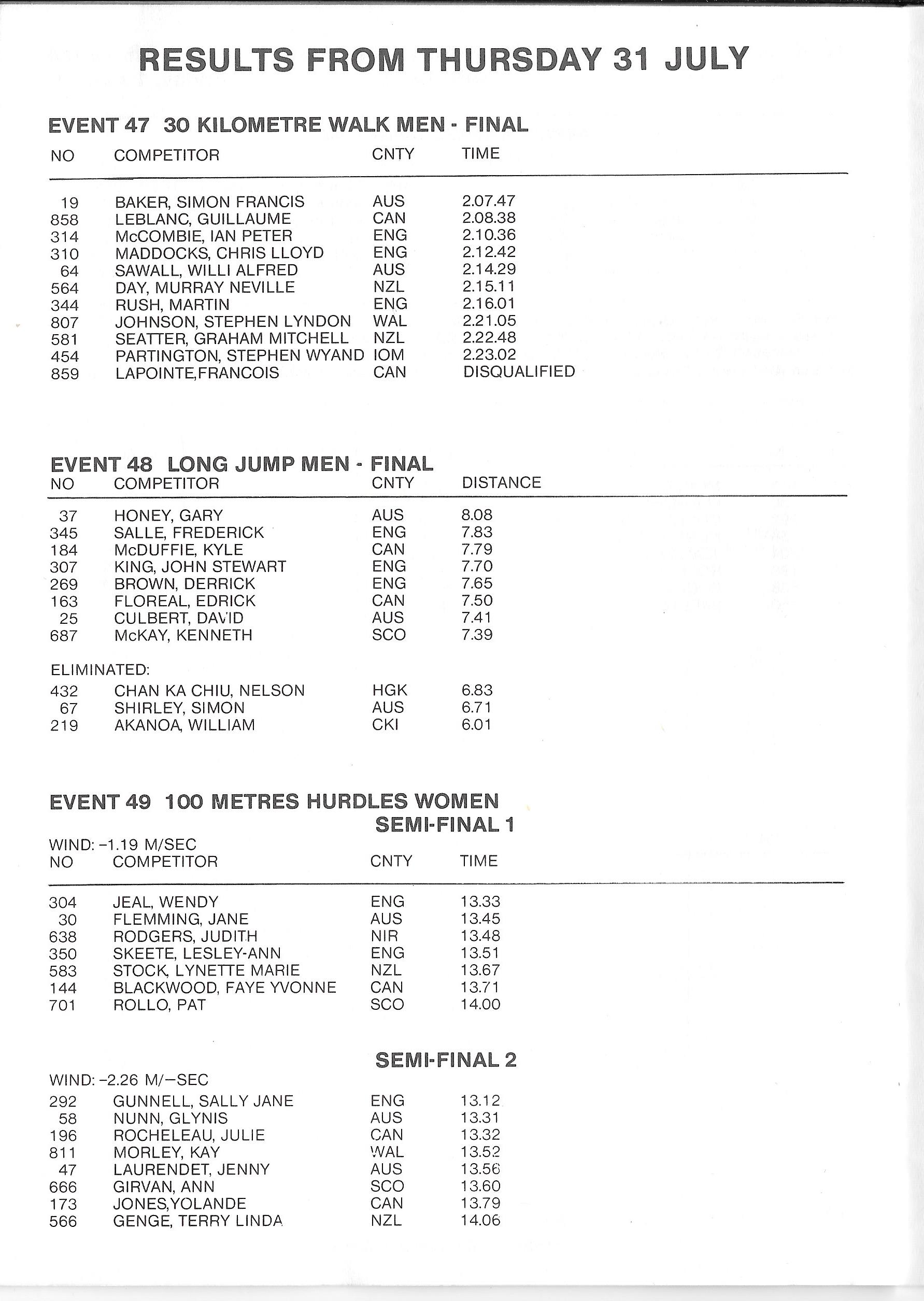
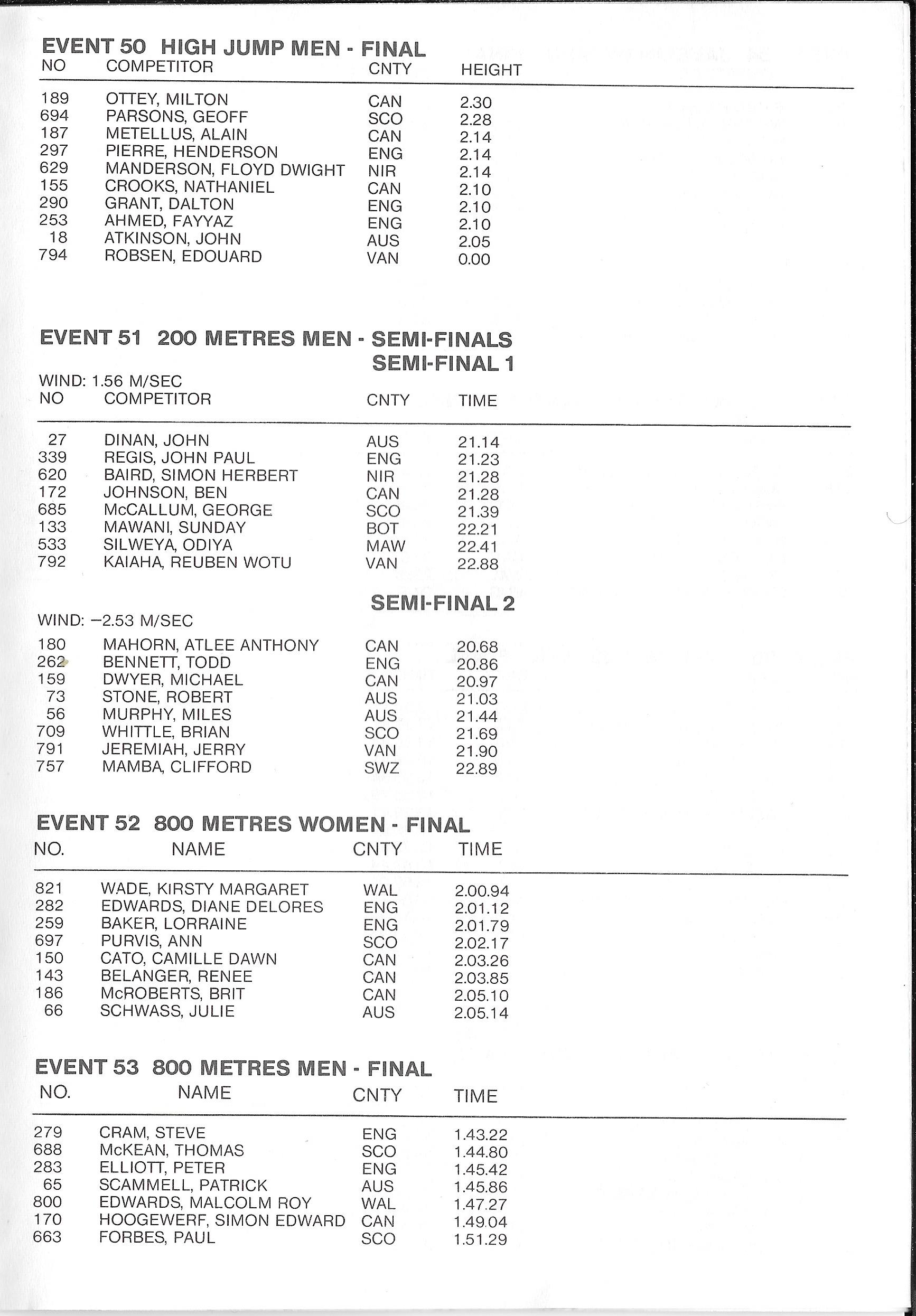
Every day the programme contained the results of the previous day’s events –

70MC p17

70MC p1870MC p190002

That was the media copy of the programme – not many left now of the hundreds that were printed.   It was basic information – lists of officials, technical information, events of the day, yesterday’s results and the people in charge of each event had an event specific insert.   This one was free of course …..

The copy sold to the public had 60 pages of strong, shiny paper, 32 single page adverts, two double page adverts and a list of advertisers.  It contained everything that was in the Media Copy.  The adverts were for firms many and varied – 4 breweries and 5 distilleries for a start along with many prominent Scottish firms such as Wang in Cumbernauld, and international companies – Nikon, Rank Xerox, British Telecom, Coca-Cola, Omega.   Obviously meant to be kept for a souvenir.   Cost was 75 pence.   Des gave me copies of both for most days.

Hamish Stothard Part Two

www.rastervect.com
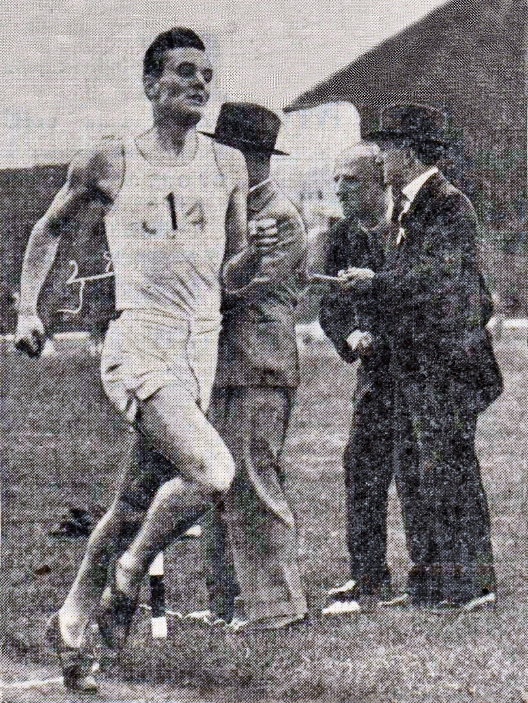
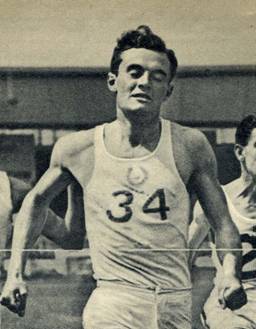
The 1935 International University Games were held in the Hungarian capital of Budapest from 10-18 August with a total of 774 athletes from 62 nations competing in a programme featuring ten events.   Stothard ran in the Medley Relay on the 16th August for the British students team which won the race by one second from the Germans with his own contribution being a fast last stage.   This served as a useful pipe-opener for the 800m first round the next day and he won the first heat in a comfortable 1:59.1, and a day later won the final in 1:56.0, half a second ahead of Georg Pochat of Germany.   The ‘Glasgow Herald’ reported as follows:

“UNIVERSITIES GAMES AT BUDAPEST.   JC STOTHARD WINS THE 800 METRES.   JC Stothard, the Cambridge University runner,won the 800m final in 1:56.0.   Stothard covered the first 400m in 56 8-10th, when he was lying a comfortable second.   On the back straight he went away with his customary dash and had a five yard lead on entering the home straight, which he maintained to the finish.   Georg Pochat (Germany) was second and P Faure (France) was third”

His season ended with a victory over 800m in a fixture between the British Universities team and a Yugoslavian team at Zagreb on 22nd August in a reported 1:50.8.   It had been a remarkable year in which he had not lost a single 800m race and with the Berlin Olympics looming in 1936 he seemed a certainty for the team, and even for a medal once there.

*

The 1935 season had started with College and University fixtures in February and continued from there but 1936 did not start until June – he won the Mile at the Sports Dispatch Meeting held at Hawkhill in 4:35.0, defeating Ian H McDonald of Edinburgh University (who was off 9 yards) by 1.5 seconds on the ninth of the month.   That was the Tuesday, on the following Saturday, 13th June) where he was second in the first heat of the half mile in the Kinnaird Trophy meeting in 2:03.   In the final the following day he could do not better than third in an estimated 1:56.3 seconds behind John Powell (1:55.4) and Brian McCabe (1:55.8).   This was a second and a half quicker than the previous year’s winning time but these were runners who did not normally figure above him in the results.   The “Glasgow Herald” merely said that there was a surprise in the half mile when Sothard was forced into third place.   On 18th June Stothard was back  to the Mile at Goldenacre and he won in 4:25.2 from GA Smith who had run from 20 yards in the handicap.   Came the Scottish Championships the following week and Stothard was again out in the Mile – but he was against good experienced milers all starting level.   The race was won by Bobby Graham in 4:12.5 with Stothard 50 yards back and Ian McDonald a further 20 yards away.

“Strange to relate, one of the most thrilling and yet of the most easily won of the afternoon’s  sport, was the Mile which fell to Robert Graham of Maryhill Harriers – a title vacated by the indomitable Tom Riddell.   Interest in this race was intensified by reason of two outstanding contenders, one of whom was JC Stothard , who had relinquished his half-mile title in order to have a crack at Graham over the Mile.   Over the first quarter- mile of this race, a clubmate of Graham, R Osborne, set a merry pace, clocking 60 sec., with Graham about eight yards behind and Stothard lying handy behind Graham.   At the close of the half-mile stage Graham took the lead, timed at 2 min 6 5-10th sec, and here the impression was gained that Stothard felt none too happy.   Stothard was still nursing Graham at the three-quarter mile mark in  min 11 2-10th sec.   Graham increased his pace, compelling Stothard to extend himself much more than he could stand to retain his natural poise and balance.   Piling on the pace Graham built a perceptible lead at the 300 yards mark, and from that point Stothard was hopelessly beaten in a race which was a great tactical victory for Scotland’s greatest miler, and now by common consent one of Britain’s representatives at the Olympic Games.   The time of 4 min 12 1-10th sec has only been beaten once in Scotland, and that by himself, and his 4 min 12 sec of last season stood as a British record until the other day, when SC Wooderson broke it in the Southern Championships.  

Note the quarter mile times of this race – 61 sec, 65 5-10th, 64 7-10th and 61 3-10th.   Graham can easily improve his second lap without impairing his final lap because Graham took time to glance round as he entered the home straight, reserve which may be more suitably distributed in a more even schedule of running.”

 The next Tuesday, before a crowd of 15,000 spectators at Helenvale Park in Glasgow, Stothard and Graham stepped on to the track together for the invitation 1000 yards handicap.   Now read on: “JC Stothard (Atalanta) avenged his defeat by R Graham (Maryhill) in the Mile Championship on Saturday when setting up new Scottish all-comers and native records in the invitation 1000 yards handicap.  

Stothard allowed Graham to make the pace behind the long mark men for almost half a mile, but just before the penultimate bend, the AAA Half-Mile Champion made his effort, passed Graham in a terrific burst and drew away confidently to beat him by six yards in 2 min 13 3-10th sec.   This time lowers the all-comers record, made by the famous American Ray Dodge,  at the Rangers Sports in 1925 by 3-10th sec.   It also reduced Tom Riddell’s native record by 1 3-10th sec.   Graham who also finished very strongly was 6-10th inside Riddell’s figures.

This augurs well for Stothard’s half-mile and Graham’s mile prospects at the AAA Championships at the AAA Championships on July 10th and 11th.”  

It maybe augured well, but auguries can be wrong – or at least wrongly interpreted for Stothard failed to qualify for the final of the 880 yards where his time of 1:57.5 was not good enough and failed to finish the Mile.   Graham was third in the Mile behind Wooderson and Lovelock and selected for the Olympics. The year for which so much was hoped by Stothard’s supporters, was in tatters.

His season ended there.   What had happened to make it such a disappointment?   Keddie in his centenary history of the SAAA puts it down to ‘untimely injuries which led to a loss of form over the half-mile.’   He also mentions the experiment with the Mile.   It may be that his build-up for the Mile as well as the half, was more strenuous than he could cope with and led to some of the injuries.   We don’t know though and we will probably never know.   His annus mirabilis had come 12 months too early.

He returned to the 880 in 1937, running in excess of 20 races and winning nine of them including the 800m at the World Student Games.   He started the year earlier than 1936 on 29th May at the Kinnaird Trophy meeting in London where he was third in the Mile behind Wooderson and Frank Close in an estimated 4:19.3.    This was the fastest he had run the distance since June 1935 and promised a better season.   A month later at the SAAA Championships he was first in the second heat of the 880 yards in 2:03.2, following it up with first in the Final a day later in 1:57.5 beating John Lees by 10 yards.

“Memories of JC Stothard’s brilliant 1935 season returned when the Old Merchistonian regained the half-mile in most facile fashion.   A fast quarter-mile pave was set by Olaf Hoel but the Norwegian was passed in the back straight and Stothard ran on strongly to win by fully ten yards in 1 min 57.5 sec.   This time, although short of his best, reveals Stothard to be right back in form and fully capable of breaking 1 min 55 sec when the occasion arises.  JAH Lees also finished strongly to secure second place and RTH Littlejohns who used to be a championship sprinter, pipped Hoals for third place.”

The following Tuesday, he again won the 1000 yards at Helenvale in the Transport Sports, this time in 2:14.8 which was a second slower than in 1936 – albeit without the spur of Robert Graham this time.

On 2nd July in an international at Wuppertal in Germany, Stothard won the 800m in 1:53.4 from Mostart of Belgium and Powell of Britain.   The AA’s championships, his next outings over 880 yards, were held that year on 16th and 17th July at White City and this time he was entered in one event only – the half-mile.    He began well enough, winning the second heat in 1:57.3 before the final one day later.   The final turned out to be a hard battle for supremacy.

“JC Stothard, from whom much was expected in the half-mile, appeared very agitated when he lined up with seven other runners, including another Anglo-Scot, ADG White.   AJ Collyer and three others mastered him in one of the most arresting races of the day.  

Collyer led at the bell with McCabe and Stothard at his heels.   In the back straight Stothard  got into swing and appeared to have the race within his grasp.   A ding-dong struggle ensued with the tenacious McCabe compelling Stothard  to race hard into the straight to maintain his lead, and then Collyer came with a rush and so did FR Handley, and by this time the Scottish champion began to falter under the persistent challenge.   He was pegged back by Collyer, and then by Handley, and just on the tape he was beaten by the Welsh champion, Alford.   As fourth man, Stothard’s time would be about 1 min 54 sec.”

Better than 1936 but not what he might have wanted.   On 8th August, Stothard was racing in an international meeting in Amsterdam where he won the 800m in 1:58.8 from Schmidt.   He must have liked the track at Helenvale because he was back there for the second time that season on 17th August for an invitation 1320 yards (ie three laps of the track) handicap where he finished fourth in the race won by RUC man Alex Haire off 22 yards in 2:59.

Only one week after racing in the East End of Glasgow, Stothard was out in the World Student Games in Paris.   On 26th August he was second in the first heat in 1:57.8.   On 27th he turned his attention to two events other than the 800m.  Running on the first stage of the medley relay for the British team which won from Germany in a time of 3:28.3, he followed that with the heat of the 1500m where he was second to  Wales’s Jim Alford, also running in the GB colours of course.   He had qualified for the finals of both 800m and 1500m which were held on the 28th August and he ran well enough in the former to finish second to Alford in 1:554.3 to the winner’s 1:54.1 with the third man (Arady  of Hungary) also recording 1:54.3, while fourth, fifth and sixth times were  1:54.4, 1:55.5 and 1:55.5.   Six men within four tenths of a second.   A marvellous race.. which was probably the reason why he did not turn out in the 1500m final.   The short turnaround did not seem to affect Alford however who won the race n 3:56.0.

Stothart raced five more times that year, every one an international contest.   On4th and 5th September he competed for a GB team in Helsinki against Finland.   On the first day he was part of a 4 x 800m relay team which set a British record of 7:39.9, with the other team members being Collyer, Powell and Handley.   On the second day he ran in and won the 800m in 1:53.8 from Teiliri of Finland who was only one tenth behind.   Two days later in Stockholm Britain took on Sweden in a one-day international and Stothard competed in the Mile.   Beaten by Archie San Romani of America who won in 4:08.4, and Henry Johnsson of Sweden (4:08.8) his time of 4:16.4 was good enough to beat Reg Walker and Robert Graham.   Four days later, GB competed against Norway in Oslo over two days and Stothard ran on both days.  Second to Arthur Collyer in the 800m on Day One in 1:54.2 to Collyer’s 1:53.5, he ran in the 1500m the next day and was again second – this time to H Lehne of Norway (3:53.2) in 3:54.5 with Graham third in 3:56.7.

And that was pretty well the end of Stothard’s athletics career.   He was a remarkable athlete and when the SAAA History was written in the 1980’s he was still the only man to have won a medal in the Commonwealth/Empire Games 800m – Tom McKean ended the reign when he won silver at Meadowbank in 1986.   Scottish records, multiple championship wins and international vests (for Britain as well as Scotland) all came his way.   The “What if … ” question comes up again with Stothard – what if he had stuck to 880y/800m in 1936?   It would be very interesting to hear any informed comment on the question.   Regardless, Scotland, and Britain has a lot to thank Hamish Stothard for.

 Stothard’s Race Record

Hamish Stothard’s Races

H Stothard 1

The following comprehensive list of Stothard’s races was drawn up by Alex Wilson – there is always a wealth of research involved in compiling such a list and we are grateful to him for it.


25.03.1928

Colinton Merchiston Castle Games 100y 12.2 1
25.03.1928 Colinton Merchiston Castle Games 300y hcp 39.4 (scr) 1
25.03.1928 Colinton Merchiston Castle Games 400y 56.8 1
25.03.1928 Colinton Merchiston Castle Games 880y 4
02.04.1928 Colinton Merchiston Castle Games CC 22:28.6 1 Junior race; won very easily


23.03.1929 Colinton Merchiston Castle Games 880 2:09.0 1
23.03.1929 Colinton Merchiston Castle Games LJ 5.41 m 1
26.03.1929 Raeburn Place Merchiston Castle v Edinburgh Academy 880 2:12 or thereabouts 2
04.04.1929 Colinton Merchiston Castle Games CC 21:46.6 1 Junior race; won easily; record (previously 22:08)


15.03.1930 Colinton Merchiston Castle Games CC 26:55 1 59 ran; won by quarter a mile
19.03.1930 Colinton Achilles v Merchiston 880 2:07.6 1 2 – W.C. Wentworth (Achilles) 20 y (ran 4 y wide as handicap!!)
19.03.1930 Colinton Achilles v Merchiston LJ 5.51m 4 1 – R.W. Revans (Achilles) 6.86m (competed at 1928 Olympics)
. 03.1930 Colinton Merchiston Castle Games Mile 4:44.6 1 Equals school record set by L.H. Weatherill in 1924 (competed for England in 1934 and 1938 Empire Games)
26.03.1930 Colinton Merchiston Castle Games 440 54.4 1 School record (previously figures of 55.2 were jointly held by G.O. Turnbull in 1893 and W.H. Welsh in 1898); windy
29.03.1930 Colinton Merchiston Castle Games 880 2:04.4 1 School record
01.04.1930 Colinton Merchiston Castle v Edinburgh Academy 440 55.0e 2 1 – J.R.S. Watson (E.A.) 54.6; 2 – J.C. Stothard (Merchiston) 3 y

windy and wet

01.04.1930 Colinton Merchiston Castle v Edinburgh Academy 880 2:10.0 1 2 – J.D.A. Anderson (Merchiston) 10 y


26.03.1931 Colinton Merchiston Castle Games Mile 4:43.2 1 2:25 at 880; magnificent last quarter; won by 40-50 y; school record; cold wind blowing
31.03.1931 Raeburn Place Merchiston Castle v Edinburgh Academy 880 2:13.2 1 2 – I.L. Young (Academy) 40 y
31.03.1931 Raeburn Place Merchiston Castle v Edinburgh Academy Mile 4:55.6 1 2 – H.J.S. Matthew (Academy) 20 y
31.03.1931 Raeburn Place Merchiston Castle v Edinburgh Academy 4×220 1:42.0 1 Ran anchor leg; won by 10 y
31.03.1931 Raeburn Place Merchiston Castle v Edinburgh Academy LJ 5.65 m 3 1 – D.R.S. Milne 5.97m


18.03.1932 Colinton Achilles v Merchiston Castle School 880 2:05.0 1
23.03.1932 Colinton Merchiston Castle Games 440 53.6 1 School record
24.03.1932 Colinton Merchiston Castle Games Mile 4:39.0 1 School record
26.03.1932 Colinton Merchiston Castle Games 880 2:03.8 1 School record
30.03.1932 Colinton Merchiston Castle v Edinburgh Academy 880 2:22.0 1
30.03.1932 Colinton Merchiston Castle v Edinburgh Academy Mile 5:07.8 1
03.12.1932 Cambridge Intervarsity 4×880 7:58.4 1 A.K. Pardhy, Forbes T. Horan, J.C. Stothard, C.J. Tucker; equals record


02.03.1933 Cambridge Cambridge Uni. sports 880 2:02.2 1h1
04.03.1933 Cambridge Cambridge Uni. sports 880 1:59.4 2 1 – Forbes T. Horan 1:59.4; 2 – J.C. Stothard inches; 3 – Cyril J. Tucker 7 y
18.03.1933 White City Intervarsity 880 2:00 e 3 1 – Norwood P. Hallowell (Harvard & Balliol) 1:55.8: 2 – F.T. Horan (Cambridge )12 y; 3 – Stothard (Cambridge) 12 y
25.03.1933 Colinton Merchiston Castle Games 100y 10.7 2 Open to Merchistonians; 1 – P.C. Barkla 10.6; 2 – Stothard; 3 – D.R.S. Milne; less than a yard covered the first three
28.03.1933 Glenalmond 440 1
20.05.1933 White City U.A.Uni. champs 880 1:58.2 1 1 – J.C. Stothard (Cambridge, Alverstone) 1:58.2; 2 – C.W.J. Claydon (London) 6 y; 3 – E. Illingsworth (Leeds) 1 ½ y
09.06.1933 Cambridge AAA v Cambridge Un. 880 1:58.4 1 2 – Thomas H. Scrimshaw (AAA) 4 y; 3 – C.J. Tucker (Cambridge)
08.07.1933 Cambridge, MA, USA Oxbridge v Harvard & Yale 880 3 1 – Pen Hallowell (Oxford) 1:54.0; 2 – J. White (Harvard); 3 – J.C. Stothard (Cambridge)
15.07.1933 Princeton, NJ, USA Oxbridge v Princeton & Cornell 880 4 1 – R.W. Bonthron (Princeton) 1:53.0; 2 – N.P. Hallowell (Oxford) 1:53.8; 3 – P. Vipond (Cornell); 4 – J.C. Stothard (Cambridge)
08.11.1933 Oxford Inter-College Relays 4×440 3:32.2 1 Ran last leg for Caius
25.11.1933 Oxford University Relays 4×880 8:04e 2 Oxford won by 40 yards in 7:56.4; Stothard ran 1:57.8 on third leg


14.02.1934 Cambridge Inter-college meeting 880 2:06.4 1  
22.02.1934 Cambridge Cambridge Uni. Handicaps 1320y hcp 3:09.2 1 Won from scratch
26.02.1934 Cambridge Cambridge Uni. sports Mile 4:38e 2h1 E.V. Hope won by 40 y in 4:30.6
01.03.1934 Cambridge Cambridge Uni. sports Mile 4:23.6 1 2 – Michael John Kent Sullivan 12 y; 3 – E.V. Hope 7y
03.03.1934 Cambridge Cambridge Uni. sports 880 1:56.6 1 2 – M.J.K. Sullivan 4 y; 3 – E.V. Hope 2 y
10.03.1934 White City Intervarsity 880 1:54.6 2 1 – N.P. Hallowell (USA & Balliol) 1:54.2 (record); 2 – J.C. Stothard (Merchiston & Caius) 1:54.6; 3 – C.J. Tucker 6 y
05.06.1934 Cambridge Cambridge Un. v AAA 880 1:59.8 1 2 – Michael H.C. Gutteridge 5 y
14.06.1934 New Goldenacre Atalanta v Heriot’s School AC 880 hcp 2:03.5 [estimated] 1 Won in 2:09.4 (conceded 36 yards by running wide)
23.06.1934 Hampden Park SAAA 880 1:58.8 1 2 – R. Graham 10 y; 3 – I.A. Murray
21.07.1934 White City Oxbridge v Princeton & Cornell 880 1:58.6 1 2 – Bill Bonthron (Princeton) 1:59.0 (2 y); 3 – Steve Sampson (Cornell) 10 y
04.08.1934 White City British Empire Games 880 1:56.0 1h3 2 – Jerry Sampson (CAN) 9 y; 3 – Clive Whitehed (ENG)
06.08.1934 White City British Empire Games 880 1:55.6 3 1 – Phil Edwards (CAN) 1:54.2; 2 – Willie Botha (RSA) 1:55.5; 3 – J.C. Stothard (SCO) 1:55.6; 4 – John Powell (ENG) 1:55.6
06.08.1934 White City British Empire Games 4×400 3 1 – England 3:16.8; 2 – Canada 4 y; 3 – Scotland (Wallace, Wylde, Stothard, Hunter)
01.12.1934 Cambridge University Relays 4×880 7:58.5 1 1:59 anchor leg; Cambridge won by 90 y
01.12.1934 Cambridge University Relays 4×440 3:24.2 1 Anchored Cambridge to victory by 6 y


08.02.1935 Cambridge Inter-college meeting 440 51.5 1 Won by 10 yards
08.02.1935 Cambridge Inter-college meeting 880 2:02.8 1 Won by 7 y
14.02.1935 Cambridge Inter-college meeting LJ 5.98 m 3  
14.02.1935 Cambridge Inter-college meeting 880 2:08.6 1  
14.02.1935 Cambridge Inter-college meeting 3 miles 16:27.2 1 Tied with M.F. Dutton (Caius)
26.02.1935 Cambridge Cambridge Uni. Handicaps 1320y 3:04.8 1 Won from scratch
05.03.1935 Cambridge Cambridge Uni. sports 880 2:00.0 1 2 – J.L. Capper 8 y
07.03.1935 Cambridge Cambridge Uni. sports Mile 4:18.8 1 2 – Peter D. Ward 50 y
23.03.1935 White City Intervarsity 880 1:55.4 1= Tied with M.J.K. (Cambridge)
23.03.1935 White City Intervarsity Mile 4:23.2 1 2 – W.T. Squires (Oxford) 4:23.2 (inches)
18.05.1935 White City U.A.Uni. champs. 880 1:56.6 1 2 – M.J.K. Sullivan 1:57.4; 3 – Jim Alford (Cardiff) 1:58.0
25.05.1935 White City Kinnaird Trophy 880 1:57.2 1 2 – Tom Scrimshaw 1:58.1e (5 yds); 3 – Brian F. McCabe 1:58.1e
10.06.1935 White City British Games Mile 4:30.2 1 2 – L. Nilsson (SWE) 10 y
15.06.1935 Cambridge AAA v C.U. Mile 4:15.8 1 2 – Aubrey V. Reeve (AAA) 4:18. (18 y); 3 – B.C. Eccles (AAA) 12 y
22.06.1935

Hampden

SAAA 880 1:53.6 1 2 – W.C. Botha (E.Uni. & RSA) 1:56.6; 3 – A.D.G. White (TVH)
29.06.1935 Hampden GBR v FIN 880 1:57.4 1 2 – John Powell 1:58.2 (5 y)
29.06.1935 Hampden GBR v FIN 4 x 880 7:52.0 1 A. Collyer, J. Powell, T. Riddell, J. Stothard
30.06.1935 Antwerp Achilles v BEL clubs 800 1:57.4 1
03.07.1935 Craiglockhart Atalanta v Eastern Dis. 440 52.4 1
03.07.1935 Craiglockhart Atalanta v Eastern Dis. 880 2:00.6 1 2 – W.H. Whalley 2:01.0
12.07.1935 White City AAA 880 1:56.1 1h1
12.07.1935 White City AAA 880 1:53.3 1 2 – John Powell 1:53.8; 3 – Ralph Scott 1:54.0
20.07.1935 White City Oxbridge v Harvard & Yale Mile 4:26.8 1 2 – John Scheu (Harvard ) 4:29.6; 3 – Roswell Brayton (Harvard) 20 y
27.07.1935 White City GBR v FRA 880 1:57.4 1 2 – J. Powell 1:57.4 (inches); 3 – R. Soulier (FRA) 8 y
11.08.1935 Munich (Dante Stadium) GER v GBR 800 1:54.4 1 2 – W. Dessecker (GER) 1:54.6; 3 – H. König (GER) 1:56.4; 4 – T.H. Scrimshaw (GBR) 1:56.8
16.08.1935 Budapest World Student Games Medley; last leg 3:31.2 1 1 – B.U.A.C. 3:31.2; 2 – Germany 3:32.2; 3 – Czechoslovakia 3:33.8
17.08.1935 Budapest World Student Games 800 1:59.1 1h1
18.08.1935 Budapest World Student Games 800 1:56.0 1 2 – Georg Pochat (GER) 1:56.5; 3 – Paul Faure (FRA) 1:56.6
22.08.1935 Zagreb B.U.A.C.v YUG 800 1:50.8 1 Doubtful


09.06.1936 Hawkhill Sports Dispatch Trophy Mile 4:35.0 1 2 – Ian H. MacDonald (E.U.) 4:36.5 (9 y)
13.06.1936 White City Kinnaird Trophy 880 2:03 2h1
13.06.1936 White City Kinnaird Trophy 880 1:56.3e 3 1 – John Powell 1:55.4; 2 – Brian MacCabe 1:55.8 (2 ½ y); 3 – J.C. Stothard 1:56.3 (3 y); 4 – Reg Thomas 1:56.5
18.06.1936 New Goldenacre Ed. Un. & FP v Western District & FP Mile 4:25.2 1 2 – G.A. Smith 20 y
27.06.1936 Hampden Park SAAA Mile 2 1 – R. Graham 4:12.5; 2 – J.C. Stothard 50 y; 3 – Ian MacDonald 20 y
30.06.1936 Helenvale Park Glasgow Transport Sports 1000 hcp 2:13.3 1 2 – Bobby Graham (scr) 2:14.2 (6 y)
10.07.1936 White City AAA 880 1:57.5 2h4 DNQ for final
10.07.1936 White City AAA Mile d.n.f.


29.05.1937 White City Kinnaird Trophy Mile 4:19.3e 3 1 – S. Wooderson 4:17.1; 2 – Frank Close 10 y; 3 – J.C. Stothard 3 y
25.06.1937 Hampden Park SAAA 880 2:03.2 1h2
26.06.1937 Hampden Park SAAA 880 1:57.5 1 2 – John A.H. Lees 10 y; 3 – R.T.H. „Dick“ Littlejohn 5y
29.06.1937 Helenvale Park Glasgow Transport Sports 1000 hcp 2:14.8 1 2 – W. Gowans (Garscube, 40y) 2:15.0
02.07.1937 Wuppertal Int. meeting 800 1:53.4 1 2- Joseph Mostert (BEL); 3 – John Powell (GBR)
16.07.1937 White City AAA 880 1:57.3 1h2
17.07.1937 White City AAA 880 1:55.2 5 1- Arthur Collyer 1:53.3; 2 – Frank Handley 1:53.5; 3 – Jim Alford 1:54.3; 4 – Brian MacCabe 1:55.1; 5 – Stothard 1:55.2; 6 – Jack Powell 1:55.3
08.08.1937 Amsterdam Int. Meeting 800 1:58.8 1 2 – Schmidt (GER) 1:59.0
17.08.1937 Helenvale Park Glasgow Transport Sports 1320y hcp 3:04.0 4 1 – Alex Haire (RUC, 22y) 2:59.0
26.08.1937 Paris World Student Games 800 1:57.8 2h1
27.08.1937 Paris WSG Olympic  relay 3:28.3 1 (800x200x200x400) 1- B.U.A.C. 3 (Stothard; Pennington, Cyril Holmes, Barnes) 3:28.3; 2 – GER 3:31.4; 3 – FRA 3:34.6
27.08.1937 Paris WSG 1500 2h1 1 – P. Denizet (FRA) 4:48.0; 2 – J.C. Stothard 200y
28.08.1937 Paris WSG 800 1:54.3 2 1 – Jim Alford (GBR) 1:54.1; 2- Stothard (GBR) 1:54.3; 3 – J. Arady (HUN) 1:54.3; 4 – G. Istenes (HUN) 1:54.4; 5 – P. Faure (FRA) 1:54.5; 6 – W. Dessecker (GER) 1:55.5
28.08.1937 Paris WSG 1500 d.n.s. 1 – Jim Alford (GBR) 3:56.0; 2 – Jack Emery (GBR) 3:57.0; 3 – H. Stieglitz (GER) 3:59.9
04.09.1937 Helsinki FIN v GBR 4×800 7:39.9 1 A.J. Collyer, J.C. Stothard, J.V. Powell, F.R. Handley

British record

05.09.1937 Helsinki FIN v GBR 800 1:53.8 1 2 – O. Teileri (FIN) 1:53.9; 3 – Frank  Handley (GBR) 1:54.2; 4 – T. Peussa (FIN) 1:54.6
07.09.1937 Stockholm SWE v GBR Mile 4:16.4 3 1 – A. San Romani (USA) 4:08.4; 2 –  Henry Johnsson (SWE) 4:08.8; 3 – J.C. Stothard 4:16.4; 4 – Reg Thomas; 5 – Robert Graham
11.09.1937 Oslo NOR v GBR 800 1:54.2 2 1 – Arthur Collyer 1:53.5; 2 – J.C. Stothard 1:54.2; 3 – A. Hansen (NOR)
12.09.1937 Oslo NOR v GBR 1500 3:54.5 2 1 – H. Lehne (NOR) 3:53.2; 2 – J.C. Stothard (GBR) 3:54.5; 3 – R. Graham (GBR) 3:56.7


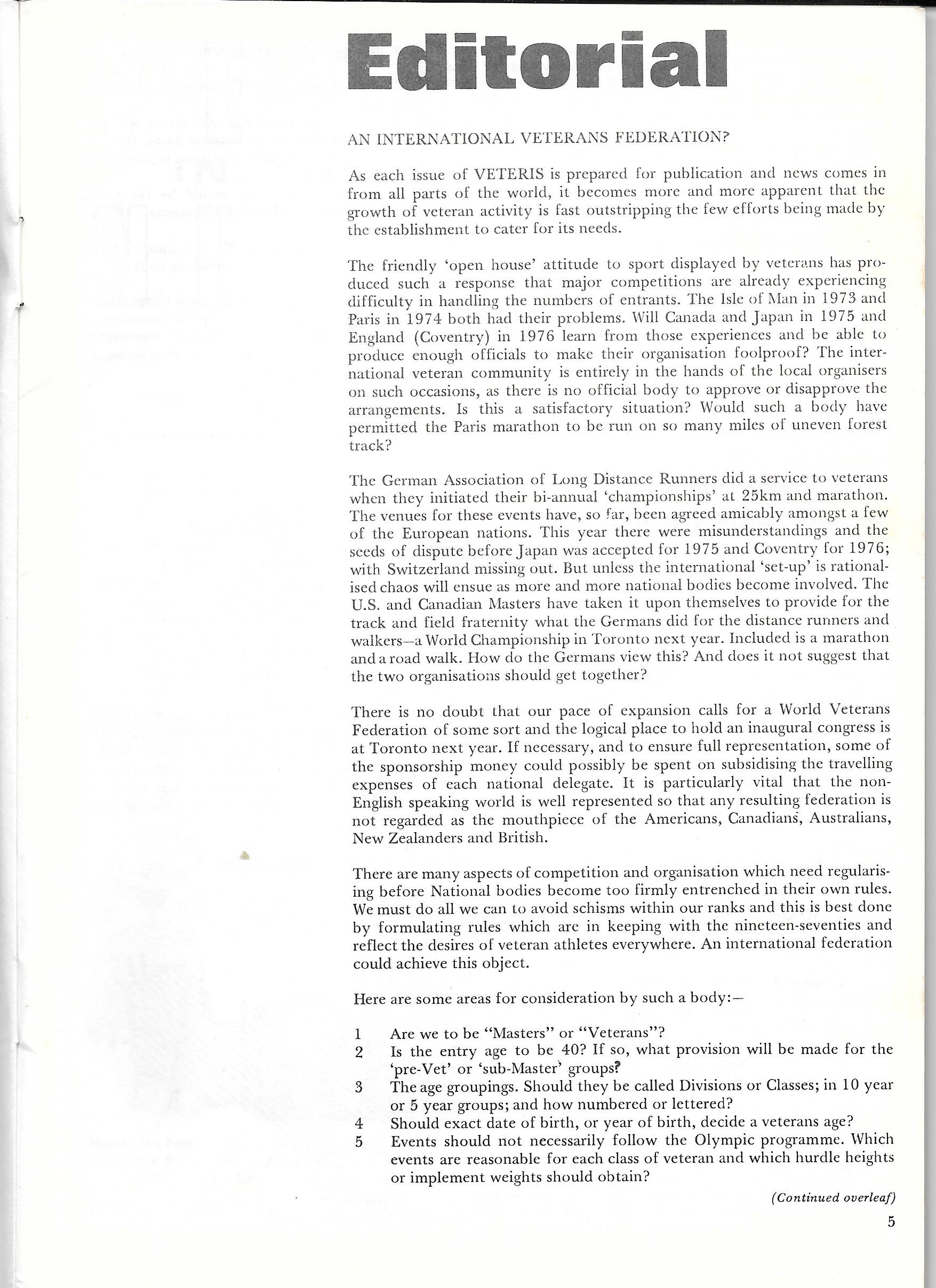
Veteris Editorial, July 1974

The Veteris editorial in the July 1974 edition is interesting because it was written at a time when Veterans athletics were in their infancy.   The issues raised in this editorial were crucial to the development of the sport and deserve a bit of attention.

Veteris Edi 1

Veteris Edi 20004

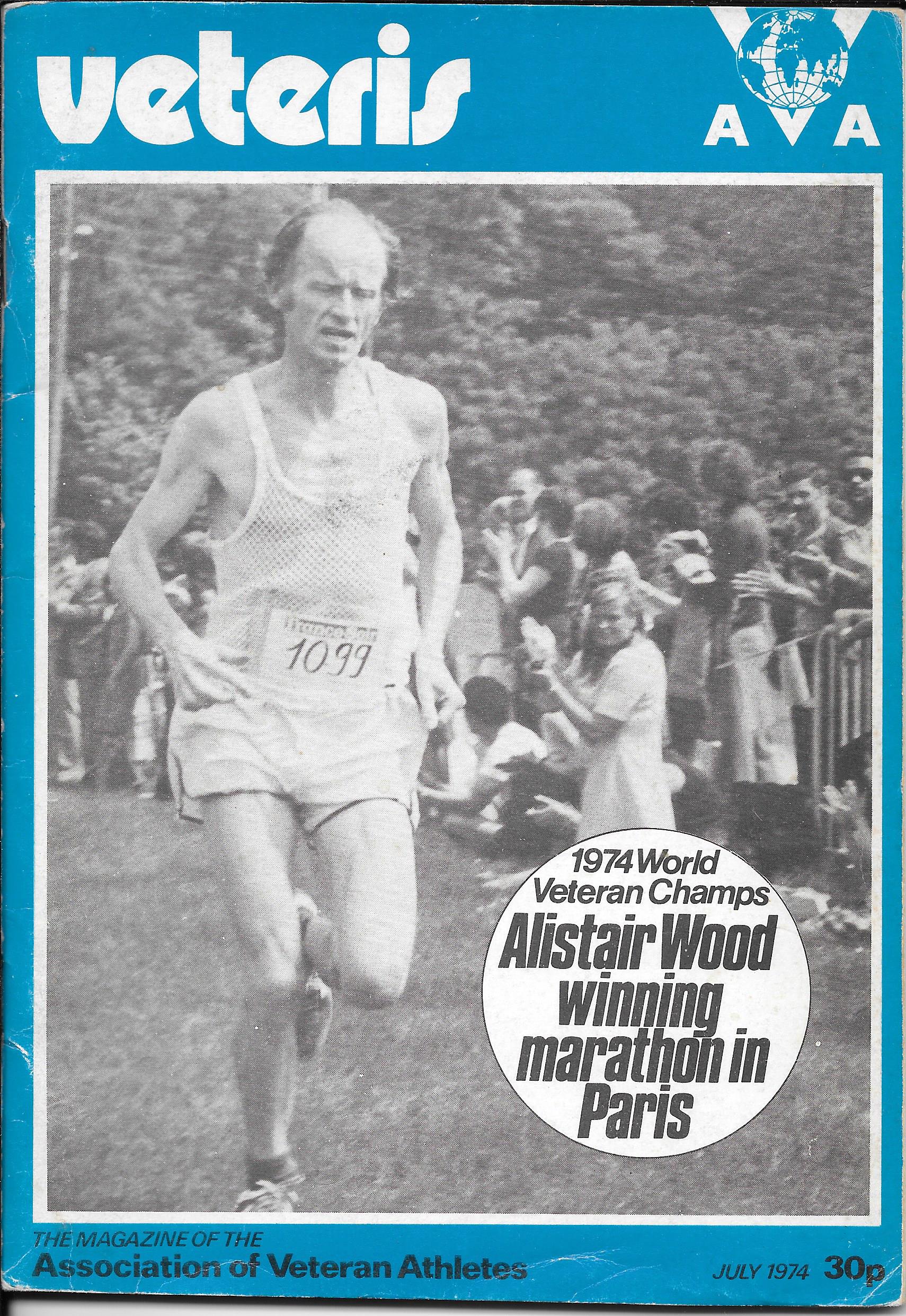
Alastair Wood, Vets 1974 Marathon

Veteris Wood

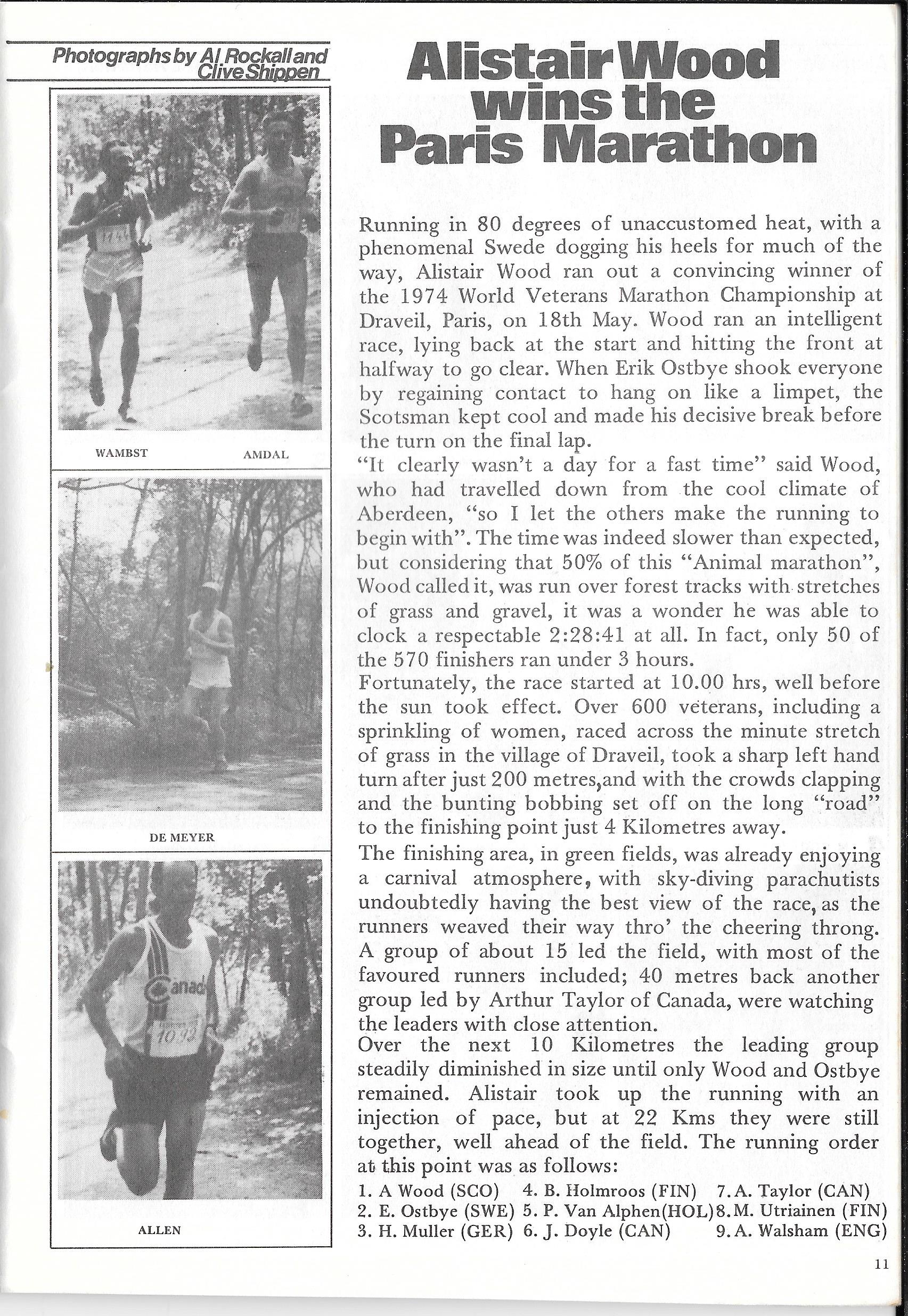
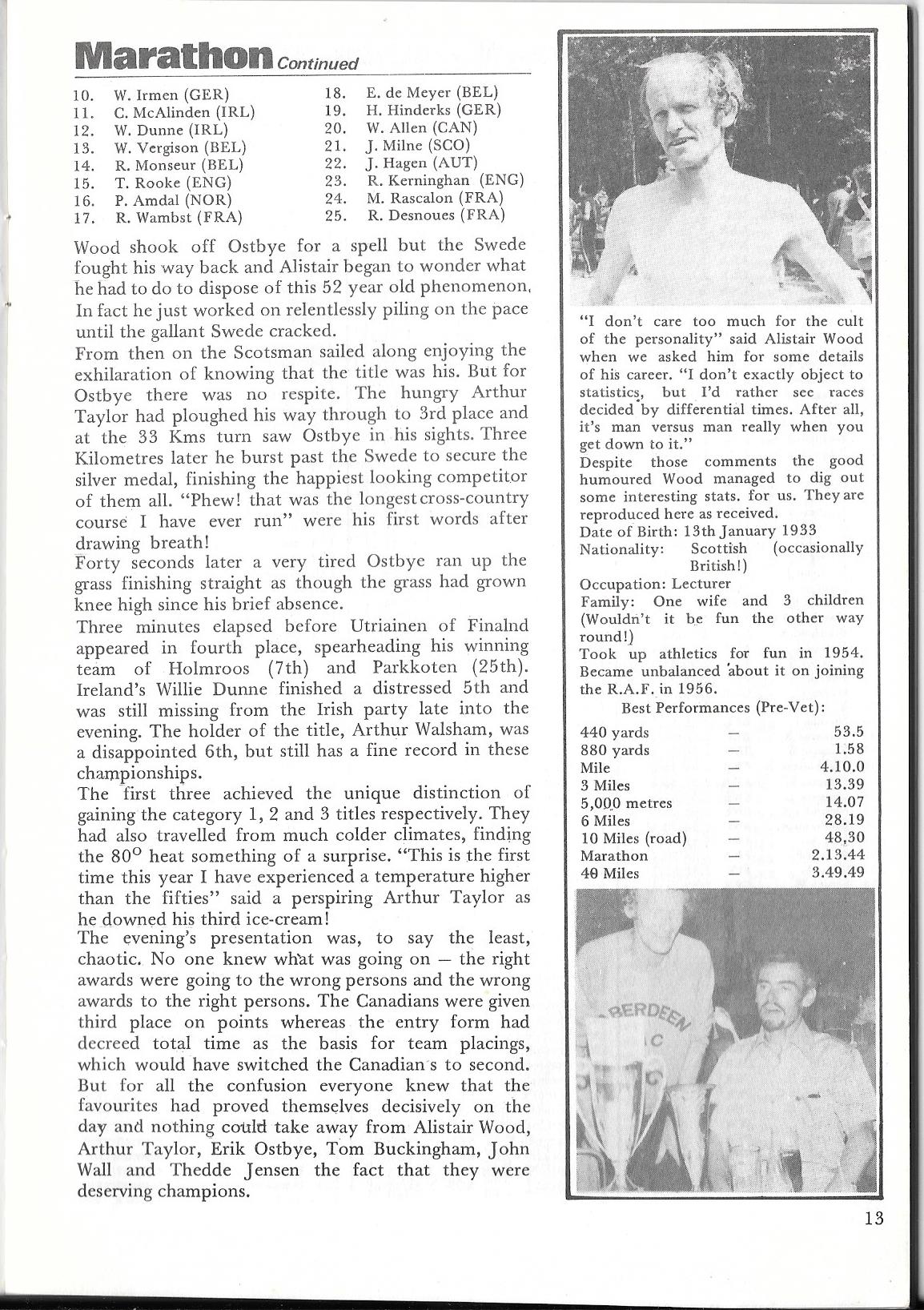
Alastair Wood had a wonderful career as a distance runner with international vests over at least three distances on the track as well as on the roads and over the country.   One race that is possibly not as well remembered as it might be is his victory in the World Veterans Marathon held in Paris in 1974.   Thanks to Colin Young sending the programme, the report is below.

Veteris AJW 1

An excellent time against top class opposition and another World Championship for Scotland!

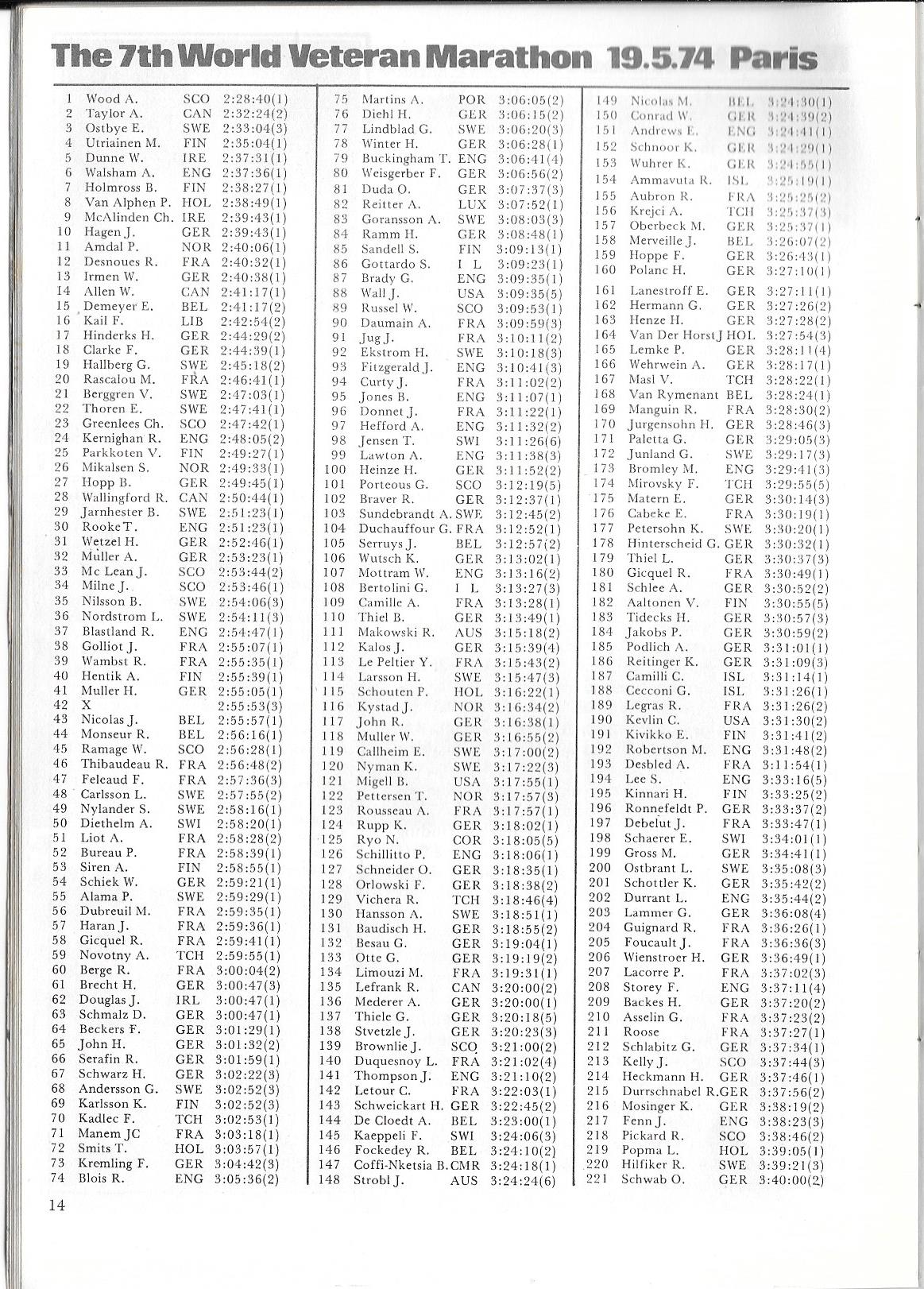
The report continues:

veteris 2b

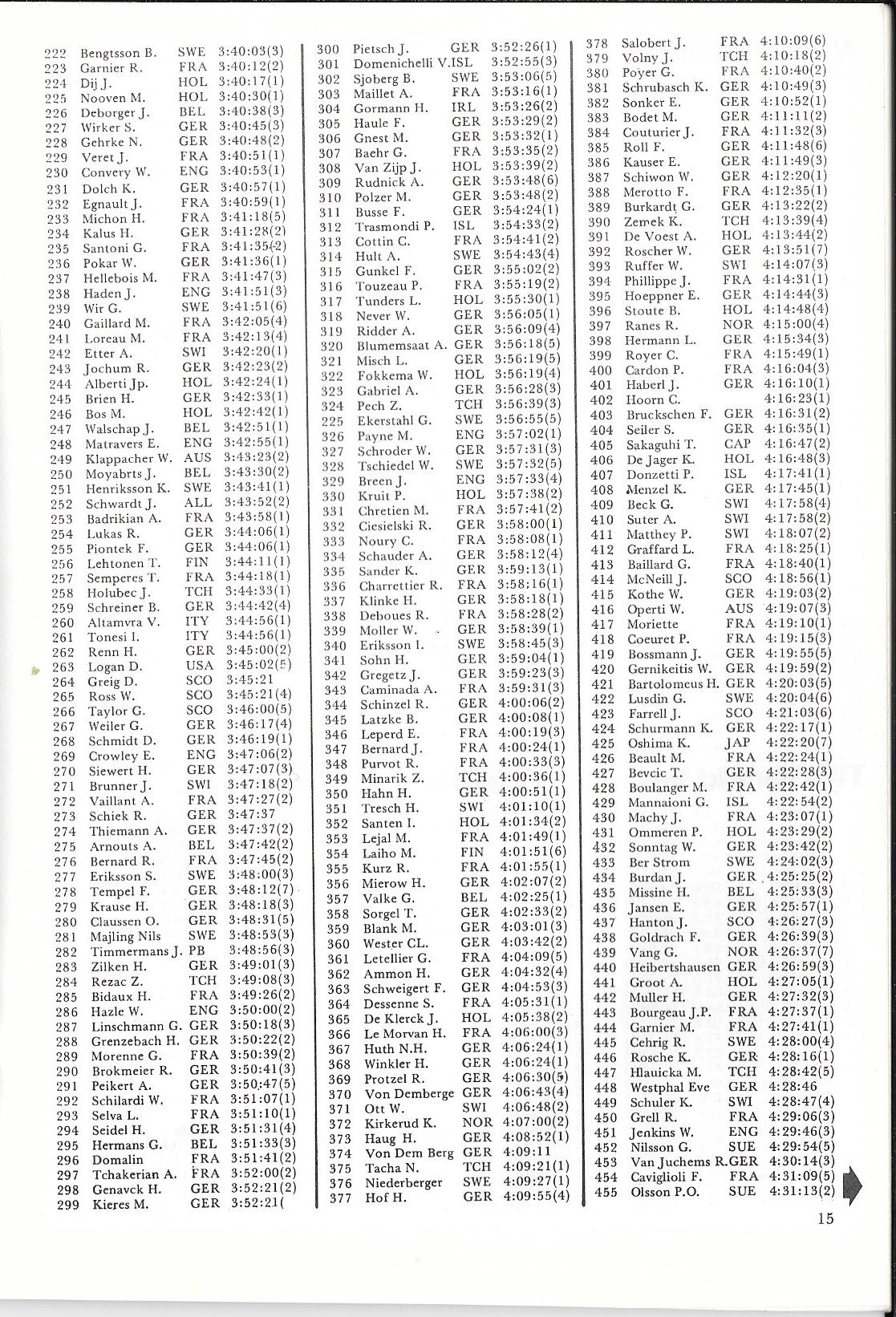
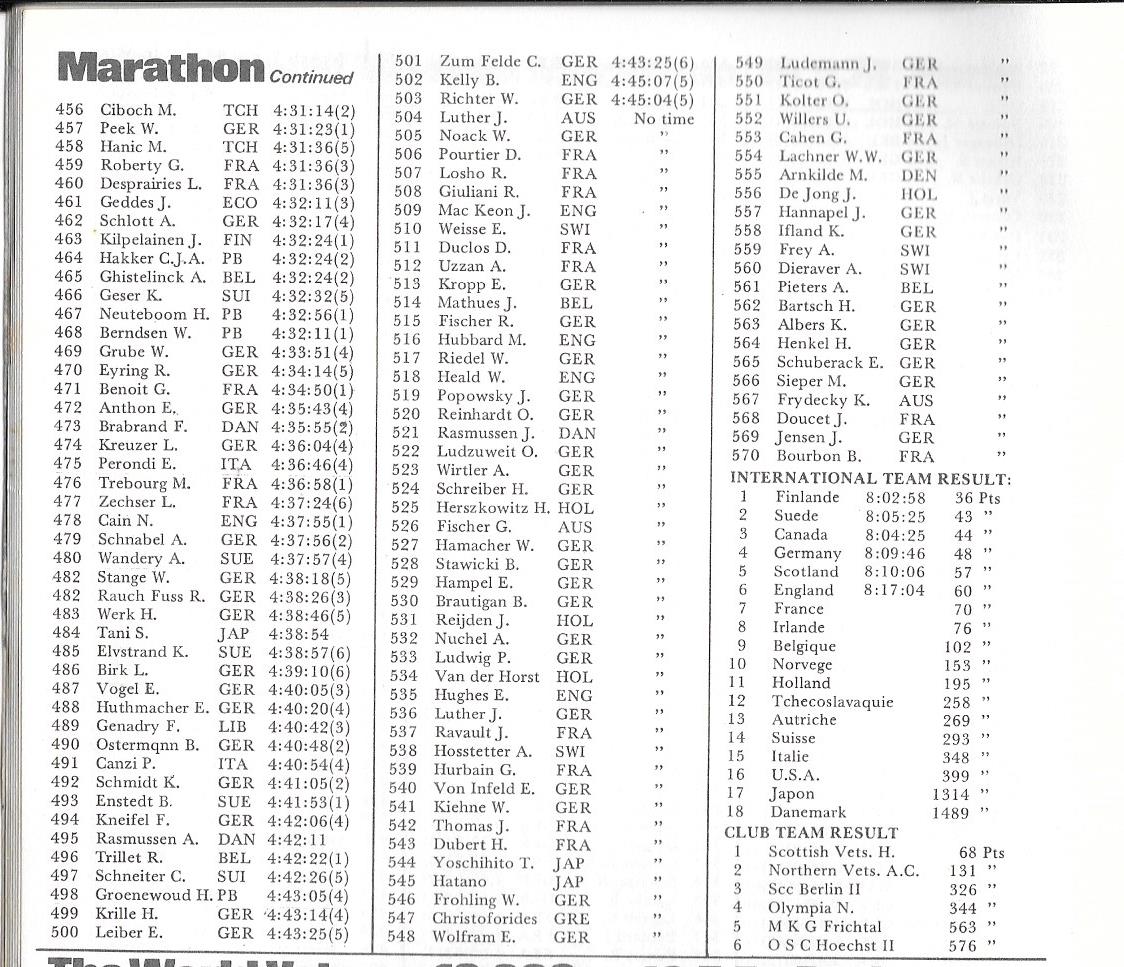
And the results

veteris 3aveteris 3bveteris 3c0004

Stuart Barnett

Stuart%20Barnett%20pic[1]

Stuart Running in the Scottish Schools Championships at Irvine

Stuart Barnett was one of Scottish athletics best ever club men, staying loyal to Victoria Park AAC for his entire athletics career from Junior Boy (Under 13) right through to veteran.    He supported all his club’s endeavours and won the club championship in every age group including an amazing 16 years in a row as club champion.    For a club with the proud record of Victoria Park that is a really outstanding statistic.   I’ll list some of his achievements below but we should not lose sight of the fact that he was also a very good athlete indeed – one who would have graced any club in the country.   The standard locally and nationally during his early years in the sport was very high indeed with the short-lived Clydebank AAC and Cambuslang Harriers in the West of Scotland both having very good athletes, and of course Edinburgh Southern was also a formidable force from the east.   He more than held his own in that company and it is unfortunate that his many fine runs in relays over the country are not properly recognised.   I don’t doubt for a second that he received many overtures from other clubs at times – clubs that only went for the best.   And at his best Stuart was very good indeed.    He was one of the country’s best runners as a boy, youth and Junior athlete who never quite replicated these performances at senior level.

For me he did himself and his talent most justice over the country where his long flowing stride with the characteristic slight forward lean ate up the miles and won him many honours.    If we look at what he did achieve, starting with his personal best times, we get :

Distance Time   Distance Time
200m 24.9   3000m 8:44
400m 52.9   5000m 15:11
800m 1:57   10000m (road) 31:19
1500m 3:58   Half Marathon 73:00

He won six Scottish vests – three for Scottish Schools and three for the Scottish Junior team (see below).   His record through the age groups in the West District and Scottish National Cross Country Championships was as follows.

  National   Age Group West District  
Year Place Team Position   Place Team Position
1984 19th 1st Junior Boy 29th 3rd
1985   DNR   7th 3rd
1986 15th 3rd Senior Boy 10th Unpl
1987 4th 2nd   2nd 1st
1988 23rd 3rd Youth DNR 2nd
1989 2nd 4th   5th Unpl
1990 12th Junior Man 19th 2nd
1991 8th 1st   ? 2nd

When he started running for Victoria Park, they were one of the top cross-country, road running and track distance running clubs in the country with very good teams turning out in all age groups.   Unfortunately many of the individual runners left the club for various reasons – international athletes such as Frank McGowan, Grant Graham and Allan Adams all left to join other clubs and others such as Mark Wallace, Stuart Gilmour and Mel Fowler left for career reasons to join up with the police force, the armed services or were simply sent further afield by their employers.   They left too big a gap for the club to fill easily and Stuart was suddenly left almost on his own as a senior man after most of his training partners and team mates had gone.   Although he kept running at a high level, it must have an effect on his morale as well as on company on training nights.

We should maybe have a look at his early career though.   There is a separate gallery of his cuttings and photographs which can be reached from the foot of this page as well as bigger versions of the three SSAA team pictures on this page.   As a Junior Boy in 1984 and 1985,  his team mates were Graeme Wiseman, Chris Sandground, Stuart Low and Ian Storer with the trio of Barnett. Sandground and Wiseman being the usual three man team medal winners.    You can see from the table above that they had medals in the National and District in both years and there were more in County Championships and open races such as the Edinburgh Southern Harriers annual events.   As a Junior Boy Stuart won the Edinburgh Southern Harriers race in Edinburgh, was a member of the team that won the Dunbartonshire Championships, ran fourth in the West Relays where his team was second by one point, was seventh in the West District Championships, and in the first-ever six-stage relay for young athletes, Stuart was the fastest in his age group over the trail in a race which Victoria Park won.

As a senior boy, Graeme Wiseman seemed to drop out of the picture with Chris Greenhalgh and Stuart Low taking up closer order and helping win several medals at County District and National level.   Frank McGowan was only a year older than Stuart and every second year they were team mates as well as club mates.  Stuart continued to excel and among his results were the following –

  • Second and then first in club championships as a senior boy;
  • Victory in the Garscube Harriers Road Race by a distance;
  • Victory in the Bellahouston Harriers Cross-Country Race on a tough muddy trail;
  • Victory in the Inter-Area race on a heavy Cumbernauld course;
  • Second to Gordon Reid (Kilmarnock) at Beith;
  • plus the District and National cross-country championships noted above.   In is interesting in view of the comments in his replies to the questionnaire below that the local paper said this about his fourth place in the National: “In the Senior Boys race, Stuart Barnett despite recovering from his first cold this winter, did well to finish fourth.”  

  It was as a senior boy that he qualified for the Scottish Schools team pictured below after finishing eighth to represent his country in the British Championships in Wales.   Everybody was pleased for him – his school bulletin noted that “Mr Webster took a team of boys to the Scottish Cross-Country Championships on 12th March.   Following on an excellent performance in this event Stuart Barnett of 2E has been selected to represent Scotland in the British Schools International  event to be held in Wales next Saturday.” 

Stuart%20Barnett%20Denbigh%2085[1]

1985  Denbigh at the British Schools Cross-Country Championships,

Stuart was Under 15 and is on the right of the second back row

The Victoria Park notes in the ‘Milngavie Herald’ read as follows: “In the British Schools Cross-Country Championships in Denbighe, Wales, Stuart Barnett had an outstanding run to finish twelfth.   He missed being first Scot home by just a few seconds.   When one considers Stuart only qualified as eighth finisher in the Scottish Schools final, one realises how well he performed on the day.”      His time for the three mile course was 16:27.

When he moved up to the Under 17 age group, Stuart’s running also moved up a gear.   Between July 1987 and May 1989 he represented Scotland or Scottish Schools another five times.   His performances at club level in addition to the running in the District and National results noted in the table above included a shock victory in the Inter-Counties Championship beating Scottish Champion Gordon Reid in the process.    The story of his running at Under 17 and Under 20 has to centre on the international appearances.

Stuart%20Barnett%20Boyle[1]

Scottish Schools Senior and Junior Boys Cross-Country teams at Boyle, County Roscommon in Ireland

Stuart was Under 17 at the time and is third from the left in the back row.  

The Senior Boys team for the international, pictured above consisted of G Stewart, S Beaton, S Jarvie, J Divers, A Thain, S Barnett, G Reid and J Brown.   Some famous names in there with District and National Champions included.    Nevertheless when it came to the crunch in Ireland on 4th July, Stuart was twenty first over all in a time of 22:45 to be second Scot to finish for the second time.    July 1987 really was a great month for him because on the eighteenth of the month he represented the Scottish Schools again – this time on the track at when he was fifth in the British Schools Championships in 9:09.    The entire squad, boys and girls, is pictured  with Stuart again hiding in the back row.

Staying on the international theme, it was less than six months before he donned the blue of Scotland again: his running as a Junior saw him selected to run in the prestigious match against Wales and Ireland in the Celtic International over a course he knew well at Irvine.   Stuart finished thirteenth this time round and it was to be a year until he ran in this international again.   Away from the representative occasions, he was second in the National Junior Cross-Country Championships and he won the Scottish Schools Under 19 Championships from two very good runners in Alan Kinghorn and Andy Russell.   This latter feat was reported in the ‘Glasgow Herald’ as follows:   “Stewart Barnett of Victoria Drive School who has shown consistent form in races over road and country throughout the winter, broke a domination of the boys’ individual titles by the East of Scotland when he took the senior title in convincing form.   He won by 60 yards from fast-improving Alan Kinghorn of Musselburgh Grammar School who is coached by Bill Gentleman, former mentor of European 3000m gold medallist Yvonne Murray.   Result:   1.   S Barnett (Victoria Drive )   23:23;   2.   A Kinghorn (Musselburgh GS)   23:34;   3.   A Russell (Douglas Academy)   23:46.”   He was by now too old to compete in the Schools International where the appropriate age groups were Under 15 and Under 17 and he was now in the Under 19 age group.   The picture at the top of the page is from this race.

Stuart’s next international race was in the Celtic International again, this time on 8th January 1989 when he improved by his last performance by one place – twelfth in 21:46.   By now a Junior he was still running well enough during the summer season to be picked for the Scottish Juniors to compete against Scottish Universities and the Scottish Men’s League at Grangemouth on 17th May when he raced to a personal best of 8:44.

Stuart became a Senior Man in winter 1990-91 and celebrated by winning the club senior cross-country title and so start one of the most amazing streaks of victories in any club in the land at any time – many have won their club championship five or six times, some have even made it to ten or eleven, but I can’t think of another who has won their club’s principal cross-country trophy sixteen times in succession.   The previous record had been five times and here is how the Milngavie Herald reported his victory: ” Victoria Park running sensation Stuart Barnett is set to enter the record books after winning his fifth title in a row at the club’s cross-country championships.   Over the usual tough course Stuart was an easy winner of the Senior race recording the excellent time of 30:01 and equalling the record of five titles, held jointly by Pat Maclagan and John McLaren.”    

Stuart appeared in the annual rankings in various events over the 1987 to 1990 period and these are in the following table.   All were age group rankings except for the 5000m in 1990 which was the Scottish rankings.

Year Age Group Event Time Ranking
1987 Youth 3000m 9:06.9 5th
1988 Youth 3000m 9:05.96 3rd
1989 Junior 800m 1:59.0 17th
    1500m 4:07.5 17th
    3000m 8:44.6 5th
    5000m 16:23.68 11th
1990 Junior 3000m 9:14.9 12th
    5000m 15:48.6 10th

Stuart answered the questionnaire for us and the replies are below

Name:  Stuart Barnett

Club:   Victoria Park AAC

Date of Birth:   31st August 1971

Occupation:   Heating Engineer/College Lecturer

How Did You Get Involved in the Sport?   PE teacher at Secondary School arranged for me to go to Victoria Park AAC.

Has Any Individual or Group Had a Marked Influence on Your Attitude or Individual Performance?   Wallace Crawford and his selfless devotion to club and athlete.

What Exactly Did You Get Out of the Sport?   Unbelievable enjoyment from the people I feel privileged to have met.   The opportunity to have competed for a great club, pride of competing for your country and the opportunity to excel at something.

What Do You Consider To Have Been Your Best Ever performance Or Performances? Under 13 Glasgow Schools 1500m.    A guy with the surname Logan (Vicky Park) told me just before the start that I would be beaten by a fella from his school.    I kicked that fella’s backside going down the home straight to the din of a stand full of screaming kids!   Great!

And Your Worst?    Has to be all the Nationals that I turned up with colds.  My mother would fill me up with Vitamin C but to no avail.

What Ambitions Do You Have That Were Unfulfilled?   I should have broken 15 minutes for 5000m.   You always feel you should have trained harder.

What Did You Do Away From Running To Relax:   Fishing and Cycling when I wasn’t working.

What Did Running Bring You That You Would Not Have Wanted To Miss?   Everything – the people, the competitions and the fitness.

Can You Give Some Details Of Your Training?   Monday:   Track.   3000m/5000m session;         Tuesday:  Six Miles;          Wednesday:   Track.   1500m/800m  session.          Thursday:   Six Miles.        Friday:   –   ;         Saturday:   Track or reps in park:  10000m/5000m session.          Sunday:   10-12 mile run.

Stuart was an outstanding runner all the way from Junior Boy through to second year Junior Man.    Coaches always like to say the “Talent never goes away,” but there are many cases of good athletes (possibly not as good as Stuart) who don’t make the transition as well as they would hope.   Why does this happen?   Several things contribute I feel

Stuart continued to run well but it was a time when the standard in Scottish athletics was high.    In his case the Senior men that he was up against included Chris Robison, Tommy Murray, Bobby Quinn, and many more were operating at a very high level.   It was hard for a new Junior or Senior to slot in.

In addition, senior men are reluctant to let an eighteen or nineteen year old get the better of them and all sorts of tricks are tried by the older guys to keep up-and-coming young athletes in their place.  For instance, one Junior Internationalist in his first year against senior men in the Scottish track championships, slipped through between an Olympic medallist and the track curb in the heats of the championship making the senior look not too smart.  He came off the track in the Final the next day with legs that looked like a road map so many red scores and bloody lines had they.   It’s called making a point and keeping young runners in their place.  After two years of this, not many come through, I believe that the confidence of many takes a severe dent.

Stuart was for some years the club’s main man and this possibly came too early in his career.   He was not sheltered from the demands of senior competition by an older wiser head for his first couple of years as a senior, and he also had to take on responsibility at an age when he was still feeling his way in the upper echelons of the sport).

But as already said, many young seniors find the transition difficult.

Stuart himself has some comments on his senior career that are worth repeating:

“Looking back my senior years, they  were disappointing.    I struggled to make the transition from youth to junior and then junior to senior.  I trained at a good level but did not race much and often found myself using races for training. I trained hard with yourself and then Bill Parker but the race results were disappointing.    When I trained with Bill I assisted Vicky McPherson for a few years as a training partner.

I gave up on both National and West District track after failing to make the 1500m final on a couple of occasions (it was not my distance but I enjoyed doing 800m and 1500m).   I enjoyed the men’s league and captained Victoria Park to a few league wins.   It was the norm for me to do the 800m,  1500m,  5000m,  4 x 400m  and field events in the one match.   I enjoyed getting the points and leading by example. I also ran at the Scottish and North West track meets.

I remember running in the Helensburgh 10K in the early 1990’s where I set my PB.    I finished 12th and had a real feeling that I would never get to the front of a competitive race, something I had been used to.

On reflection I have no regrets and I achieved everything I could, I enjoyed the training more than the racing. When I joined your group it was fantastic, the strength in depth was amazing and long rep sessions became very manageable/enjoyable, sometimes the group was that big you only had to take one rep.”

Stuart turned out in the Senior Championships, District Championships, County Championships, National Relays, District Relays, County Relays, Edinburgh to Glasgow Relay, Scottish Six-Stage Relays regularly, and in the representative inter-district match at Cumbernauld or inter-counties quite often!    There are of course other important events to add to the championships: events such as the McAndrew Relay (promoted by Victoria Park, so a ‘must run’), Glasgow University Road Race and Nigel Barge Road Race.    The results of all the National and District cross-country championships plus road relays and E-G are on the official Scottish Athletics Road and Cross-Country website at www.salcrosscountryandroadrunningmedalists.co.uk and Stuart’s performances in all age groups are there for all to see.

McAndrew Personals

Personals 1

The question is: What do Hugh Barrow (No4) and John Tarrant (no number) have in common?

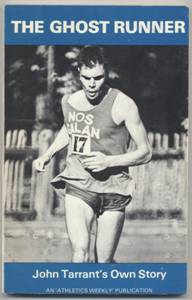
For those of the present generation, the old notion of amateurism v professionalism is uncharted territory.   Athletes in the twenty first century find it hard to imagine runners not getting money prizes – even children are able to win money in the Highland Games circuit.   But for many, many years money was taboo.   The belief, not entirely without foundation in their experience, brought corruption in its wake.   In the 1890’s several athletes were banned for accepting expenses and schemes such as ‘ringing’ (several athletes agreeing among themselves to pool their prize money and then share it out between them) and deciding who was going to win were often indulged in.    In the twenty first century with big money prizes on offer and obscene financial deals available to winners in the major Games has led to the abuse of drugs, etc.    However the knock-on effect on everyday athletes was disproportionate.   There is the famous story of the child who won a packet of fruit gums being banned from amateur athletics.    I have just bought a book called “The Ghost Runner” by Bill Jones about John Tarrant who had, as a 17 year old got £17 in expenses as a boxer being totally banned from amateur athletics for life.   He ran in races, having changed behind a hedge or some trees and more often than not won them.  It’s a book worth reading.    I’ll come back to him.   Some of the situations experienced by athletes of the 50’s and 60’s are recounted below.   The latest addition is about the late nineteenth century professionalism and corruption in the sport in Scotland and comes largely from the official history of the SAAA’s by John Keddie.

This first piece was written by Hugh Barrow on what was for a long time an aspect of the sport that we could have well done without.   It was something that I knew about, disapproved of but which very seldom, if ever, bothered me.   Hugh had a talent and attitude that brought it to his attention and the tailpiece of his article is most interesting – and the mindset is probably incomprehensible to the modern athlete.   Hugh speaks:

Not so long ago, well maybe slightly longer ago than one would wish, there existed in Scottish athletics a form of apartheid between those who ran for money and those of the so-called amateur code and woe betide those who crossed the great divide.    That sounds simple but it was certainly not that.  A boy who accepted something like 20p in new money for a Sunday school race could lose his amateur status for life such was the draconian line taken by the Amateur authorities.   All this stemmed from the birth of the SAAA in 1883 born as a reaction to corruption in Victorian athletics, sometimes called Pedestrianism, including drugs, betting and race fixing.   Nothing new there you may say.   From that time to the 1970’s that body (the SAAA) saw itself as the guardian of the amateur code and woe betide anybody who crossed the line.   You were not even allowed to compete against the pros even though you yourself did not receive any cash prize such were the “contamination rules”.   At one point you could not compete in amateur athletics if you were a PE teacher and professional footballers who went to Jordanhill College to train as teachers could not represent the College at athletics.

The professional meetings/games tended to be in the Highlands and in the Borders while the amateur meetings tended to be in the Central Belt.   There were exceptions but that was the trend.   The professional games were often more amateur in spirit that the amateur meetings.   But that was the strangeness of it all.   It all hinged round accepting prize money instead of prizes. Even though the prizes could well exceed the prize money, it was the principle.   Ways of getting round the rules became part of the folklore.   Whilst broken-time payments eased professionalism into soccer, and saw the birth of Rugby League, more devious methods were adopted in athletics.   Amateur athletes sometimes ran under assumed names or in disguise at pro games to avoid the authorities.   One well-known field events athlete was caught out by his photo appearing in a Glasgow paper even though he had changed his name for the day.

Of course at the top level, appearance money also came into play especially in Europe.   One well-known Olympic gold medallist appeared in Dublin and proceeded to set a world record for which he was due a substantial purse.

Hugh appeared on the Scotsport television programme in 1966 (after all the hassle that Tarrant suffered as described below) and was contacted the following morning by Rab Foreman of the SAAA telling him that any money had to be repaid –  Hugh had to send the cheque for £1:1:0 back to STV!    The cheque and the letter are shown here – once the link is re-established, for a proper view, click on each picture in turn.

Hugh ran in many races in all sorts of places but on the subject of rewards for running and drawing in the crowds he has this to say about a race at Hawick in the mid 1960s: “In the aftermath of the Olympics in Tokyo in 1964, where both Alan Simpson (Rotherham) and John Whetton (Sutton) both made the final of the 1500m, they became the dominant force in British in the middle distance scene at a time when ‘invitation miles’ were highlights in the programme for many meetings the length and breadth of the country.   However  Whetton, the King of the Boards’, was dominant indoors and Simpson, the ‘Head Waiter’, dominated outdoors.    This outdoors domination of Simpson led to promoters starting to lose interest in putting on invitation miles so it was felt that Whetton had to get an outdoor win over his rival to whet spectator appetite.   So on a June Friday evening in 1965, we arrived at Mansefield Park, Hawick, for the Common Riding Invitation Mile.   The field also included former world record holder Derek Ibbotson, along with the likes of Teviotdale’s Craig Douglas, VP’s Graham Peters and myself.   It was felt that a Whetton win would help the attendance when the show rolled on to the Rockingham Miners’ Gala Day in Barnsley scheduled for the following day.   On a tight five laps to the mile grass track   laid out on the rugby pitch, such was the dominance of the dynamic duo, it was agreed that Whetton would edge out Simpson coming off the last bend.   However Graham Peters was not in the script and boxed Whetton in.   I can still hear him shout to Simpson that he had to go it alone.   As commentator we had the legendary Bill McLaren and although he sure knew his rugby he was a bit off the pace when it came to running and got a bit confused by what was happening.   probably just as well.   For the record:    1.  A Simpson   4:03.7;    2.   J Whetton   4:04.4;   3.   H Barrow   4:06.0

John Tarrant was a different case and his story is told in detail in the book referred to above and also in the earlier book produced by ‘Athletics Weekly’ shown here.

JT2

John as a young man was very energetic and took up boxing as an outlet for the energy and maybe anger at the hand he had been dealt as a child.   It was a more glamorous sport than football with long reports on Randolph Turpin v Sugar Ray Robinson and the money available.   He joined a local club and did some training, including roadwork, and was talked into a couple of bouts against friends in the same club and a couple of guys from other clubs.   Altogether he gained £17 in expenses before he decided he would rather be a runner – he enjoyed the road work and had a natural talent.   That meant joining a club so he applied to join Salford Harriers, his local club.   He filled in the application and in the space asking if he had ever earned money for any sporting activity, he swithered for a long time before telling the truth.   His form came back with his 5/- membership form – he couldn’t join.    The area AAA’s Committee said that since he had been a boxer who had earned money he would have to be cleared by his local Amateur Boxing Association Committee.   They had a reciprocal arrangement with them and could not accept him as an amateur unless the ABA gave him clearance.    This was not forthcoming.   he was desperately keen to run so he turned up at a couple of races in his vest and shorts but covered with a long overcoat and a cap pulled down over his eyes.   When the race started he removed the ‘disguise’ and joined in.   Officials tried to pull him out of the race without success and he led for most of it.   The Express newspaper gave him the title of ‘The Ghost Runner’ because he ran without a number, never appeared in the results and was totally ignored by the establishment.    He got on well with the other runners, spectators liked to see him in action and soon promoters realised that an appearance by the ghost added to the attraction of their race.   As the momentum built up he was invited to appear on David Coleman’s Sportsnight  programme.   The interview was sympathetic and at the end he was wished good luck by Coleman.    He was contacted by the AAA’s who asked for the money to be repaid!    He was not an amateur by their lights but he couldn’t accept money for a TV interview.   The sum involved was £1:18:0 [£1:90].  The Gordian Knot of acceptance as an amateur was cut by the recognition, rather late in the day, that since he had never ever actually been a paid up member of the ABA, he didn’t need their clearance!    After three years of being a ghost, he was accepted into the amateur fold.   [While he was banned and after the big movement for his clearance had really gained momentum, he had been invited to a race and instead of a number he wore a card reading ‘GHOST’]     The new book is very good, the AW one is out of print but he was a remarkable man and I can’t recommend his story too highly for anyone wanting to know about the divide and more importantly about this man and his part in helping bring down the wall.

Graham MacIndoe sent these two links to articles about Tarrant:

http://www.independent.co.uk/sport/general/john-tarrant-sad-shadow-of-the-ghost-runner-still-stalks-the-track-2305959.html

and

http://www.bookdepository.co.uk/Ghost-Runner-Bill-Jones/978145966065

So there you have it!!!   Hugh Barrow and John Tarrant both had to give back the money paid for a TV interview.     The situation did provide some lighter moments – not always for officialdom, however.

For instance there was the time when AAA’s supremo Jack Crump went to Ireland in the immediate post-war period to investigate rumours of illegal payments being made to athletes.   Following his investigation, he was about to board a flight back to London when somebody rushed forward and thrust a box of eggs into his hand and Press photographer snapped it for the record.    The significance?   Eggs were still rationed in Britain!    No more was heard of that investigation!

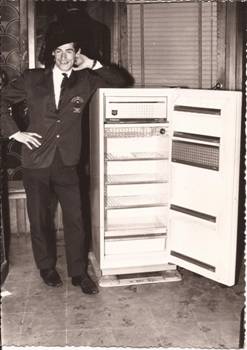
The Continental take on the ‘shamateur’ business was quite straightforward.   When athletes travelled to their big races, the were awarded prizes such as refrigerators, washing machines, television sets, etc  on the Saturday after the race; these ‘trophies’ were then sold at a special sale on the Sunday and the proceeds given to the owner (ie the runner who had won them!    The picture below is of Lachie Stewart with his prize from the race at Elgoibar in Spain before he sold it on.

“On 2nd November 1893 the General Committee of the SAAA appointed a sub-Committee ‘to enquire into various alleged abuses in amateur athletics’.   The sub-Committee comprised: Donald C Brown (West of Scotland Harriers) – vice president of the Association;   Alex MacNab (Clydesdale Harriers); Farquhar Matheson (Abercorn FC); James Caw (Edinburgh Harriers) and David S Duncan (Royal High School FC) who acted as secretary.   In the following two months the Committee held seven meetings – four in Glasgow and three in Edinburgh – at all of which various representatives of Sports-holding clubs, Association officials and prominent competitors were interviewed.   In all, thirty one witnesses appeared before the Committee, three of whom were recalled, while signed statements were received from another three who were were unable to attend personally.   All the evidence accumulated from these investigations was distilled into findings submitted to the General Committee on 15th January, 1894.   These findings revealed a none-too-healthy state of affairs: 

(1) The payment of competitors expenses, including Hotel expenses, was general throughout Scotland, but only in the case of prominent athletes from a distance.   This applied particularly to prominent English athletes who appeared at meetings in Glasgow and Edinburgh but applied also to Scots athletes who competed at Blackburn and Sunderland at various times between 1889 and 1893l

(2)   It was proved that payments of money had been made in particular to

          AR Downer, the Scottish Champion sprinter, who not only had received £3 for ‘expenses’ in a meeting, but also had overtured for payments to several clubs.   (Downer denied this but apparently his evidence was judged to be of a ‘very untruthful and unsatisfactory character’!)

          S Duffus (Arbroath), an outstanding Scottish distance runner, who admitted to receiving £2 in the name of expenses from a club;    and

          TE Messenger (Salford), an Englisg sprinter who received £5 in the name of expenses from a club.

(3)   It was found that a club had paid a round sum to an individual resident in England on account of ‘travelling expenses’  for a party of English athletes whose hotel expenses were also defrayed;

(4)   In the west of Scotland payment of entry fees was not enforced by clubs as it ought to have been.   This was mainly found to be the case with cycling entrants;

(5)   Betting was prevalent in Edinburgh and Paisley, and was n the increase in Glasgow;

(6)   ‘Roping’ was spreading and this, together with the betting was found to be demoralising amateur sport.

All the witnesses were given the assurance that no action would be taken against clubs or individuals for any infringements which had come to light.   That immunity protected the athletes cited.   Downer and Messenger later turned professional and the former, in his ‘Running Recollections’ (which appeared after he had turned pro) lifted the lid on the hypocrisy abroad in his amateur days.    Thus in the course of a decade of its life, the Association had passed from a state of idealism to one which revealed the stark materialism which had permeated amateur sport.   But still more testing times were ahead.!”

More of this saga to come with details of the men who were suspended, banned and otherwise punished.

Amateurism

HB4

For those of the present generation, the old notion of amateurism v professionalism is uncharted territory.   Athletes in the twenty first century find it hard to imagine runners not getting money prizes – even children are able to win money in the Highland Games circuit.   But for many, many years money was taboo.   The belief, not entirely without foundation in their experience, brought corruption in its wake.   In the 1890’s several athletes were banned for accepting expenses and schemes such as ‘ringing’ (several athletes agreeing among themselves to pool their prize money and then share it out between them) and deciding who was going to win were often indulged in.    In the twenty first century with big money prizes on offer and obscene financial deals available to winners in the major Games has led to the abuse of drugs, etc.    However the knock-on effect on everyday athletes was disproportionate.   There is the famous story of the child who won a packet of fruit gums being banned from amateur athletics.    I have just bought a book called “The Ghost Runner” by Bill Jones about John Tarrant who had, as a 17 year old got £17 in expenses as a boxer being totally banned from amateur athletics for life.   He ran in races, having changed behind a hedge or some trees and more often than not won them.  It’s a book worth reading.    I’ll come back to him.   Some of the situations experienced by athletes of the 50’s and 60’s are recounted below.   The latest addition is about the late nineteenth century professionalism and corruption in the sport in Scotland and comes largely from the official history of the SAAA’s by John Keddie.

This first piece was written by Hugh Barrow on what was for a long time an aspect of the sport that we could have well done without.   It was something that I knew about, disapproved of but which very seldom, if ever, bothered me.   Hugh had a talent and attitude that brought it to his attention and the tailpiece of his article is most interesting – and the mindset is probably incomprehensible to the modern athlete.   Hugh speaks:

Not so long ago, well maybe slightly longer ago than one would wish, there existed in Scottish athletics a form of apartheid between those who ran for money and those of the so-called amateur code and woe betide those who crossed the great divide.    That sounds simple but it was certainly not that.  A boy who accepted something like 20p in new money for a Sunday school race could lose his amateur status for life such was the draconian line taken by the Amateur authorities.   All this stemmed from the birth of the SAAA in 1883 born as a reaction to corruption in Victorian athletics, sometimes called Pedestrianism, including drugs, betting and race fixing.   Nothing new there you may say.   From that time to the 1970’s that body (the SAAA) saw itself as the guardian of the amateur code and woe betide anybody who crossed the line.   You were not even allowed to compete against the pros even though you yourself did not receive any cash prize such were the “contamination rules”.   At one point you could not compete in amateur athletics if you were a PE teacher and professional footballers who went to Jordanhill College to train as teachers could not represent the College at athletics.

The professional meetings/games tended to be in the Highlands and in the Borders while the amateur meetings tended to be in the Central Belt.   There were exceptions but that was the trend.   The professional games were often more amateur in spirit that the amateur meetings.   But that was the strangeness of it all.   It all hinged round accepting prize money instead of prizes. Even though the prizes could well exceed the prize money, it was the principle.   Ways of getting round the rules became part of the folklore.   Whilst broken-time payments eased professionalism into soccer, and saw the birth of Rugby League, more devious methods were adopted in athletics.   Amateur athletes sometimes ran under assumed names or in disguise at pro games to avoid the authorities.   One well-known field events athlete was caught out by his photo appearing in a Glasgow paper even though he had changed his name for the day.

Of course at the top level, appearance money also came into play especially in Europe.   One well-known Olympic gold medallist appeared in Dublin and proceeded to set a world record for which he was due a substantial purse.

Hugh appeared on the Scotsport television programme in 1966 (after all the hassle that Tarrant suffered as described below) and was contacted the following morning by Rab Foreman of the SAAA telling him that any money had to be repaid –  Hugh had to send the cheque for £1:1:0 back to STV!    The cheque and the letter are shown here – once the link is re-established, for a proper view, click on each picture in turn.

Hugh ran in many races in all sorts of places but on the subject of rewards for running and drawing in the crowds he has this to say about a race at Hawick in the mid 1960s: “In the aftermath of the Olympics in Tokyo in 1964, where both Alan Simpson (Rotherham) and John Whetton (Sutton) both made the final of the 1500m, they became the dominant force in British in the middle distance scene at a time when ‘invitation miles’ were highlights in the programme for many meetings the length and breadth of the country.   However  Whetton, the King of the Boards’, was dominant indoors and Simpson, the ‘Head Waiter’, dominated outdoors.    This outdoors domination of Simpson led to promoters starting to lose interest in putting on invitation miles so it was felt that Whetton had to get an outdoor win over his rival to whet spectator appetite.   So on a June Friday evening in 1965, we arrived at Mansefield Park, Hawick, for the Common Riding Invitation Mile.   The field also included former world record holder Derek Ibbotson, along with the likes of Teviotdale’s Craig Douglas, VP’s Graham Peters and myself.   It was felt that a Whetton win would help the attendance when the show rolled on to the Rockingham Miners’ Gala Day in Barnsley scheduled for the following day.   On a tight five laps to the mile grass track   laid out on the rugby pitch, such was the dominance of the dynamic duo, it was agreed that Whetton would edge out Simpson coming off the last bend.   However Graham Peters was not in the script and boxed Whetton in.   I can still hear him shout to Simpson that he had to go it alone.   As commentator we had the legendary Bill McLaren and although he sure knew his rugby he was a bit off the pace when it came to running and got a bit confused by what was happening.   probably just as well.   For the record:    1.  A Simpson   4:03.7;    2.   J Whetton   4:04.4;   3.   H Barrow   4:06.0

John Tarrant was a different case and his story is told in detail in the book referred to above and also in the earlier book produced by ‘Athletics Weekly’ shown here.

JT2

John as a young man was very energetic and took up boxing as an outlet for the energy and maybe anger at the hand he had been dealt as a child.   It was a more glamorous sport than football with long reports on Randolph Turpin v Sugar Ray Robinson and the money available.   He joined a local club and did some training, including roadwork, and was talked into a couple of bouts against friends in the same club and a couple of guys from other clubs.   Altogether he gained £17 in expenses before he decided he would rather be a runner – he enjoyed the road work and had a natural talent.   That meant joining a club so he applied to join Salford Harriers, his local club.   He filled in the application and in the space asking if he had ever earned money for any sporting activity, he swithered for a long time before telling the truth.   His form came back with his 5/- membership form – he couldn’t join.    The area AAA’s Committee said that since he had been a boxer who had earned money he would have to be cleared by his local Amateur Boxing Association Committee.   They had a reciprocal arrangement with them and could not accept him as an amateur unless the ABA gave him clearance.    This was not forthcoming.   he was desperately keen to run so he turned up at a couple of races in his vest and shorts but covered with a long overcoat and a cap pulled down over his eyes.   When the race started he removed the ‘disguise’ and joined in.   Officials tried to pull him out of the race without success and he led for most of it.   The Express newspaper gave him the title of ‘The Ghost Runner’ because he ran without a number, never appeared in the results and was totally ignored by the establishment.    He got on well with the other runners, spectators liked to see him in action and soon promoters realised that an appearance by the ghost added to the attraction of their race.   As the momentum built up he was invited to appear on David Coleman’s Sportsnight  programme.   The interview was sympathetic and at the end he was wished good luck by Coleman.    He was contacted by the AAA’s who asked for the money to be repaid!    He was not an amateur by their lights but he couldn’t accept money for a TV interview.   The sum involved was £1:18:0 [£1:90].  The Gordian Knot of acceptance as an amateur was cut by the recognition, rather late in the day, that since he had never ever actually been a paid up member of the ABA, he didn’t need their clearance!    After three years of being a ghost, he was accepted into the amateur fold.   [While he was banned and after the big movement for his clearance had really gained momentum, he had been invited to a race and instead of a number he wore a card reading ‘GHOST’]     The new book is very good, the AW one is out of print but he was a remarkable man and I can’t recommend his story too highly for anyone wanting to know about the divide and more importantly about this man and his part in helping bring down the wall.

Graham MacIndoe sent these two links to articles about Tarrant:

http://www.independent.co.uk/sport/general/john-tarrant-sad-shadow-of-the-ghost-runner-still-stalks-the-track-2305959.html

and

http://www.bookdepository.co.uk/Ghost-Runner-Bill-Jones/978145966065

So there you have it!!!   Hugh Barrow and John Tarrant both had to give back the money paid for a TV interview.     The situation did provide some lighter moments – not always for officialdom, however.

For instance there was the time when AAA’s supremo Jack Crump went to Ireland in the immediate post-war period to investigate rumours of illegal payments being made to athletes.   Following his investigation, he was about to board a flight back to London when somebody rushed forward and thrust a box of eggs into his hand and Press photographer snapped it for the record.    The significance?   Eggs were still rationed in Britain!    No more was heard of that investigation!

The Continental take on the ‘shamateur’ business was quite straightforward.   When athletes travelled to their big races, the were awarded prizes such as refrigerators, washing machines, television sets, etc  on the Saturday after the race; these ‘trophies’ were then sold at a special sale on the Sunday and the proceeds given to the owner (ie the runner who had won them!    The picture below is of Lachie Stewart with his prize from the race at Elgoibar in Spain before he sold it on.

JLS Fridge

“On 2nd November 1893 the General Committee of the SAAA appointed a sub-Committee ‘to enquire into various alleged abuses in amateur athletics’.   The sub-Committee comprised: Donald C Brown (West of Scotland Harriers) – vice president of the Association;   Alex MacNab (Clydesdale Harriers); Farquhar Matheson (Abercorn FC); James Caw (Edinburgh Harriers) and David S Duncan (Royal High School FC) who acted as secretary.   In the following two months the Committee held seven meetings – four in Glasgow and three in Edinburgh – at all of which various representatives of Sports-holding clubs, Association officials and prominent competitors were interviewed.   In all, thirty one witnesses appeared before the Committee, three of whom were recalled, while signed statements were received from another three who were were unable to attend personally.   All the evidence accumulated from these investigations was distilled into findings submitted to the General Committee on 15th January, 1894.   These findings revealed a none-too-healthy state of affairs: 

(1) The payment of competitors expenses, including Hotel expenses, was general throughout Scotland, but only in the case of prominent athletes from a distance.   This applied particularly to prominent English athletes who appeared at meetings in Glasgow and Edinburgh but applied also to Scots athletes who competed at Blackburn and Sunderland at various times between 1889 and 1893l

(2)   It was proved that payments of money had been made in particular to

          AR Downer, the Scottish Champion sprinter, who not only had received £3 for ‘expenses’ in a meeting, but also had overtured for payments to several clubs.   (Downer denied this but apparently his evidence was judged to be of a ‘very untruthful and unsatisfactory character’!)

          S Duffus (Arbroath), an outstanding Scottish distance runner, who admitted to receiving £2 in the name of expenses from a club;    and

          TE Messenger (Salford), an Englisg sprinter who received £5 in the name of expenses from a club.

(3)   It was found that a club had paid a round sum to an individual resident in England on account of ‘travelling expenses’  for a party of English athletes whose hotel expenses were also defrayed;

(4)   In the west of Scotland payment of entry fees was not enforced by clubs as it ought to have been.   This was mainly found to be the case with cycling entrants;

(5)   Betting was prevalent in Edinburgh and Paisley, and was n the increase in Glasgow;

(6)   ‘Roping’ was spreading and this, together with the betting was found to be demoralising amateur sport.

All the witnesses were given the assurance that no action would be taken against clubs or individuals for any infringements which had come to light.   That immunity protected the athletes cited.   Downer and Messenger later turned professional and the former, in his ‘Running Recollections’ (which appeared after he had turned pro) lifted the lid on the hypocrisy abroad in his amateur days.    Thus in the course of a decade of its life, the Association had passed from a state of idealism to one which revealed the stark materialism which had permeated amateur sport.   But still more testing times were ahead!”

Running Books

Lincon Elliott

This is a fairly comprehensive list of books sent on to me by Hugh Barrow for comment.  While the list seems a long one, there are certain obvious omissions that I won’t add or tackle.   Regard it as complementary to Colin Youngson’s page on the same topic.   Hugh has divided the list into three groups – biographies, coaching books and a wee section on fiction.   Coming into the sport in 1956 as I did, there were two books available – Franz Stampfil on “Running” which I bought for 2/6d (17.5p) and Roger Bannister’s book “The Four Minute Mile” for the same price.   Both were paperback and both were published by Four Square books.   Bannister’s was educational but mainly inspirational while Stampfl (Bannister’s coach) had written a text book on distance running based almost entirely on Interval Training.   At one point in the 1980’s when one athlete complained that training was boring, I sat him down with Stampfl’s book and we went through the training for a Miler.   Twice a week in October it was 10 x 400 in a set pace; in November it was 10 x 400 twice a week at the two seconds faster pace; in December the same year it was 10 x 400 two seconds faster each; ditto in January, February and March.   Boring maybe but it worked for Bannister, Brasher, Chataway and many others and then when Stampfl emigrated to Australia, it produced Merv Lincoln (Elliott’s great Australian rival) and Ralph Doubell, Olympic 800m champion.   Not long after that Herb Elliott was the Man and Percy Cerutty the Coach, who also worked with Allan Lawrence, Albert Thomas and many other champions.   The Unbeaten Elliott set world records and won the Olympic 1500 metres but when it came his biography (The Golden Mile) was a disappointment to me – the same could not be said of Cerutty’s extensive writings on the subject of clean living, exercise and the making of champions.   Two wee Cerutty stories: first, he spoke of using the track to learn the pace and then going away to parks and golf courses to practice running at that pace until you felt you could carry it in a race and the story is told of him training Elliott in a park with the runner going easily until the coach yelled ‘Ding-a-ling-a-ling’ or some such at which point Elliott had to sprint for 60 seconds flat out;   second, he also reputedly often used to call out ‘Another 100, another 100’ when the athletes were nearing the end of one of their 400m reps so that always knew that no matter how tired they THOUGHT they were, they could always go further.   Elliott is still the hero of many milers of the time and beyond.
Halberg

He was followed by New Zealand’s Peter Snell who was coached by Arthur Lydiard (athletes like Jeff Julian, Bill Baillie, Murray Halberg, Barry Magee).   Snell set a world half mile record on a grass track in the mid sixties and set more records and was also an Olympic champion.  His biography was “No Bugles, No Drums” and was better than Elliotts in my opinion.   Lydiard started the whole jogging movement – started in Australia it was taken up by Bill Bowerman in the USA and then it spread around the world.    Lydiard went on to produce world record breakers in Mexico and Finland as well as NZ.     Lydiard’s first book was “Run To The Top” and became the Bible for runners all round the world – 100 miles per week, long hill reps, planning the year down to the last hour of the last week of the year, he was regarded as infallible.   One of his runners met him one afternoon just as he was finishing his run and Lydiard was in his car: “The 100 mpw is working well, should I increase it?” asked the runner; Lydiard joked that he should increase it to 200 mpw – and the runner dutifully did.   But no good came of it.   The moral is do not joke with runners if you are a coach!    In addition to Snell, Halberg wrote an excellent book called “A Clean Pair of Heels” and there were others such as ‘Arthur’s Boys’, which my wife bought for me when she was in NZ on holiday before it was available here.     Lydiard’s own books are sprinkled all the way through the list.   And the writer Garth Gilmour did most of the writing for the books – his name appears beside Lydiard, Snell and Halberg.
Snell

I may make some more comments but have a look at the list – every book on it is still available.   You might even buy one – libraries often sell old books and they are a good source of material like this; internet book sites are also very good for all sorts of things.   I have a friend who has a series of pictures in frames with glass all the way up his stairs – he bought the photographs, several signed, on the net and then he got autographs also from the net and had them framed at the foot of the pic.   A very interesting display of his heroes signed photographs or magazine covers.    Another wee idea for you – or for a Christmas present for your loved one.   What could be nicer that a signed cover of AW in an attractive frame?

However, what came after Stampfl, Cerutty and Lydiard?   World middle distance focus moved to the United States and Bill Bowerman’s Oregon squad – Dyrol Burleson, Jim Grelle, et al.   Bowerman is maybe best known these days for the Nike Shoe and Clothing Company that he founded but he really was one of the world’s best coaches at the time and his men were among the best in the world but there was another squad from across the Atlantic and at the far east of the European continent coached by the Czechoslovakian Mihaly Igloi who was known for the huge volumes of mixed track work outs that his charges (Sandor Iharos, Stanislav Jungwirth,  Laszlo Tabori, and many others) were put through.   Igloi moved to the States latterly and among the top men he coached were Jim Beatty, a first class miler, and Bob Schul, OIlympic 5000m champion..   But while Bowerman and his athletes produced several books on what they did and how they did it, there was no such information coming in print form from the Igloi camp.   There were of course magazine articles and interviews galore but to the best of my knowledge there were no text books or biographies written.

BIOGRAPHIES
Herb Elliot – The Golden Mile 
Kiwis Can Fly 
The Legend of Lovelock
Lovelock: New Zealand’s Olympic Gold Miler
A Clean Pair Of Heels (Murray Halberg)
No Bugles No Drums (Peter Snell)
Arthur’s Boys
Golds Aren’t Easy (Dick Taylor)
Zatopek! Zatopek! Zatopek!
Deek
Steve Moneghetti: In the Long Run 
Why Die? (Percy Cerutty)
Sebastian Coe: A Life In Athletics 
Sebastian Coe: Coming Back 
Sebastian Coe: Running Free 
Duel In The Sun (Beardsley & Salazar)
Ron Clarke
The Unforgiving Minute (Ron Clarke)
The Lonely Breed
Arthur Lydiard
Lydiard

The Jim Ryun Story Gil Dods:

The Flying Parson Lon (Lon Myers)

The Self Made Olympian (Ron Daws)

In The Long Run (Bob Schul)

Jim Ryun: Master Of The Mile

Olympic Gold (Frank Shorter)

On The Run (Marty Liquori)

Jumbo Elliot: Maker Of Milers Maker Of Men

Marathoning (Bill Rodgers) Corbitt (Ted Corbitt) Pre

The Perfect Distance: Coe & Ovett

In The Long Run (Jim Peters)

Running To The Top (Derek Clayton)

Best Efforts (Kenny Moore)

A Cold Clear Day (Buddy Edelen)

Steve Cram: The Making Of An Athlete

Flying Feet (Brian Hewson)

The Four Minute Mile (Bannister)

The Perfect Mile

Running With The Legends Fast Tracks

: The History of Distance Running

John Walker: Champion

Run With The Champions

Ovett Steve Ovett: The Portrait Of An Athlete

The African Running Revolution

The Flying Scotsman (Eric Liddell)

Guiness Book Of The Marathon

Running To Stand Still (Sonia O’Sullivan)

Brendan Foster  Brendan Foster’s Olympic Heroes

The Long Hard Road: To The Peak And Beyond (Ron Hill)

Guiness Book of Olympic Records

The Quotable Runner

Track’s Greatest Champions World Record Breakers In Track & Field Atheltics

The Fastest Men On Earth

Running: The Power & Glory

1976 Olympic Images

Talking Track: The Best Of Track & Field News Interviews

Who’s Who In Brittish Athletics

Zola (Zola Budd)

3:59.4: The Quest For The Four Minute Mile

Olympic Track & Field (statistics)

Athletes At The Games

How They Train: Long Distances

Bowerman And The Men Of Oregon

  How Long’s The Course (Roger Black)

 Haile Gebreselassie : The Greatest

Jesse Owens: An American Life

Paula: My Story So Far

In Quest Of Gold (Jim Ryun, 2 copies, one signed by Ryun)

Michael Johnson: Slaying The Dragon

Bannister & Beyond: The Mystique Of The Four Minute Mile

Staying The Course: A Runner’s Toughest Race (Dick Beardsley)

Sub 4:00: Alan Webb And The Quest For The Fastest Mile

Running With The Buffaloes (by Chris Lear & Adam Goucher)

Great Moments In Athletics Lap Of Honour
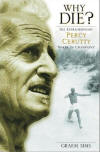
Cerutty

Percy Cerutty

On the coaching front, the best books available for most of my running and coaching career were the AAA’s Instruction Manuals.   In the mid 50’s the book had a picture of Herb Elliott on the front with a nice pink strip at the top and dealt with Middle Distance Running and was by the Welshman Jim Alford.   It was interesting, spoke about shaping the year and gave some specimen schedules as well.    The replacement manual was by Bruce Tulloh and Martin Hyman in the 60’s who came up with the question, “How little do you need to do to be world class?”   What a hook to get readers into your book!   It was a good book but the one that made a real impression was by the Scotsman Norman Brook: an excellent lecturer and part of the national coaching set up he seemed to subscribe to the complex training methods of the Eastern Europeans.   Intensely practical and a real ‘user’s guide’.  But possibly the one that that every new coach should have had on his bedside table is Frank Dick’s  “But Firest …” which is a primer for those starting out on the coaching road.   In A4 format, well illustrated with line drawings it is an excellent book for its purpose.   It is unfortunately, like lots of good books, out of print now but it’s worth every club having one.   Frank Horwill, was concerned with the state of British Middle Distance running in the late 50’s and early 60’s and was a founder member of the British Milers Club which had the express aim of raising the standard of British miling.   He himself came up with the five pace system of training and advocated it tirelessly in print and in person.   He made sense of what some of us were struggling with at the time: how do the different paces relate to one another?   Alford was all very well with the advice to run faster than race pace and further than race distance, etc, but how much faster and ho much farther?   Frank with his definite definitions of what constituted 800m pace, what constituted 1500m pace etc, and what recoveries were appropriate really helped the debate along.    Peter Coe adapted a lot of Frank’s ideas and altered the terminology of the five pace training to the five-tier system.   It worked well with Seb and he too produced several books with David Martin and Seb himself.   A third top British coach was Harry Wilson who worked with Steve Ovett, Lesley Kiernan, Tony Simmons and others started from the point of view – what are the demands of the event and what does this particular athlete bring to it?   His book is one that found favour with many, many athletes and coaches in this country.
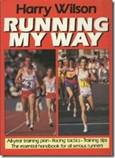
Wilson

The Americans were never backward in coming forward into print with their ideas and the list below notes Bill Dellinger (Tokyo Olympics 5000m bronze medallist), Bill Bowerman, Bjorkman and Fred Wilt.    His was a very good and under-rated book.   Probably because the reader had to do some work himself: Wilt surveyed various methods of training and put them side by side.   He also divided the year up in different ways for the reader to use as was appropriate.   He was not peddling his own wares, he was selling the sport.   That was ‘Run, run, run’ but he also had a collection of training programmes of different, mostly American, runners in ‘How They Train’.

COACHING BOOKS
Run To the Top 
Jogging: Bill Bowerman 
Running to the Top
Running To The Limit: Paul Tergat
Winning Running: Peter Coe
Endurance Running: Norman Brook
Run To Win: The Training Secrets Of The Kenyan Runners
Middle Distance Running: Cliff Temple
Running The Lydiard Way
Train Hard Win Easy: The Kenyan Way
The Competitive Runner’s Training Book: Bill Dellinger
Road Racers And Their Training
Run Run Run: Fred Wilt (very old)
Cross Country Running (very old)
Tackle Athletics: Denis Watts
The Best In Track & Field From Scholastic Coach
Endurance Running Events: Norman Brook
Distance Training For Young Athletes: Lydiard
Marathoning: Manfred Steffny
The Complete Middle Distance Runner: Denis Watts, Harry Wilson, Frank Horwill 
Better Training For Distance Runners: Peter Coe, David Martin
Training Distance Runners: Peter Coe, David Martin
Long Distances: Jess Jarver
High Powered Plyometrics: Jim Radcliffe
Run With The Best: Irv Ray
Advanced Marathoning: Pete Pfitzinger
Road Racing For Serious Runners: Pete Pfitzinger
Galloway’s Book On Running
The Complete Book Of Running: James Fixx
Long Distance Runner’s Guide To Training & Racing: Gary Bjorklund
Champions In The Making: Payton Jordan
The Competitive Edge
Winning Running: Bill Dellinger
Marathon Running: Richard Nerurkar
Success In Sport & Life: Percy Cerutty
Be Fit Or Be Damned! Percy Cerutty
DeCastella On Running
Running For Fitness: Sebastian & Peter Coe
Training Lactate Pulse Rate: Peter Jansen
Running With Lydiard: Lydiard
Horwill

Frank Horwill

FICTION

For reasons that I can’t fathom, the two Tom McNab books – ‘Flanagan’s Run’ about the foot race across America and ‘The Fast Men’ about the sprinters in the Old West (gives a new meaning to the fastest man in town!)  have been left off the list.

Pain
The Olympian
Once A Runner
Runners And Other Dreamers
SupernovaSprint From The Bell

Hugh followed up the above list with one which is only of Scottish publications although of a much wider interest.   We can start with the stories of some of our best known and longer lived clubs, including Clydesdale Harriers, Scotland’s premier athletic club.   A surprising omission is that of Victoria Park AAC: one would have thought that someone would have written an account of the origins and development of such a club.    How about it VP?

Club histories
Bellahouston Harriers (1992)
Clydesdale Harriers, a centenary history 1885-1985 (1988). Brian McAusland, c80 pages.
Edinburgh Southern Harriers (1947, 1972, 1987, 1997)
The Story of Edinburgh University Athletic Club (1966). CM Usher, 439 pages.
Garscube Harriers (1998)
Glasgow University Athletic Club: the story of the first hundred years (1981). RO MacKenna, 128 pages.
Glenpark Harriers (1998)
An East End Odyssey: One Hundred Years of Shettleston Harriers (2004). John Cairney, 460 pages.
First Hundred: Teviotdale Harriers Centenary, 1889-1989 (1988). John L Coltman, 200 pages.
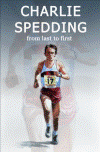
Spedding

In keeping with the theme of the website, we go on to the books by individuals who have graced the National scene: it goes wider than just endurance running and even includes the noted strong man Donald Dinnie.

Biographies and autobiographies
Scottish Athletic Celebrities Album (1886). Scottish Athletic Journal.
Marathon and Chips [Jim Alder] (1981). Arthur T McKenzie, 136 pages.
The Celebrated Captain Barclay (2001). Peter Radford, 342 pages.
Running Recollections and How to Train (1900). AR Downer, 150 pages.
Donald Dinnie, the First Sporting Superstar (1999). David Webster and Gordon Dinnie, 158 pages.
The Universe is Mine (1993). John Emmet Farrell, 92 pages.
Eric Liddell: the making of an athlete and the training of a missionary (c1945). DP Thomson, 40 pages.
Scotland’s Greatest Athlete: the Eric Liddell Story (1970 pb; 1971 hb). DP Thomson, 240 pages.
The Flying Scotsman [Eric Liddell] (1981). Sally Magnusson, 191 pages.
Eric Liddell: Pure Gold (2001). David McCasland, 333 pages.

Running My Life (2010). Donald Macgregor, 378 pages
Queen of the Track, the Liz McColgan Story (1992). Adrianne Blue, 192 pages.
The Unique Double (1983). George McNeill, 96 pages.
P CoePeter Coe