Hugh’s World Best

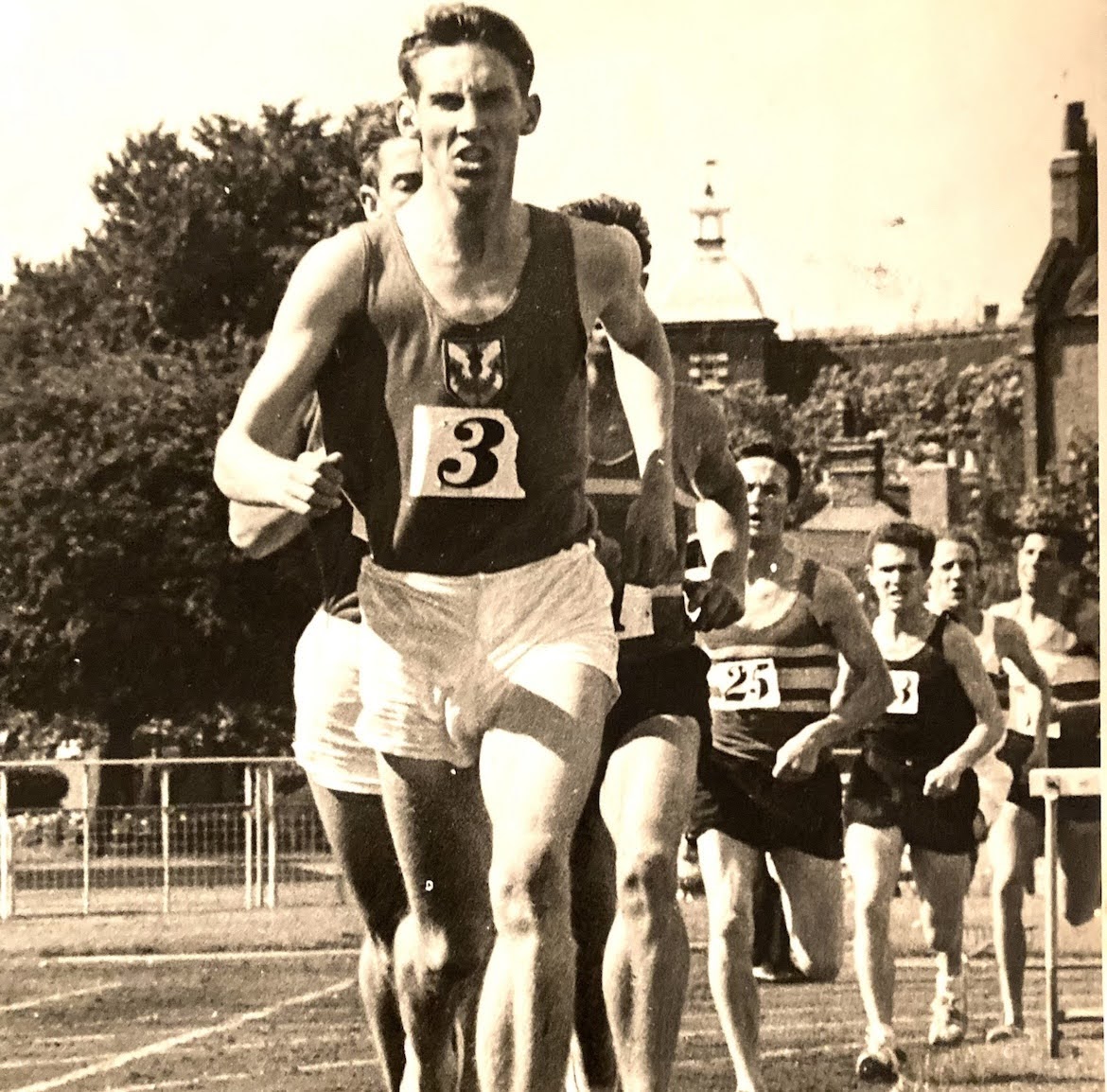
Hugh Barrow, leading (above) in 1962, is a weel kent figure in Scotland’s sporting circles and is known in athletics as Scotland’s only world record holder for the Mile.   Actually it was a world best time he set in 1961 as a 16 year old but it lasted until a chap from East Wichita called Jim Ryun beat it.   Marvellous run and it was celebrated by a presentation at the World Sports magazine’s annual dinner.   Nowadays there are two things that stand out for me.   The first is that the detail of the race is not known by most of the country and it should be; and how it felt to be the best in the world.   I have seen many big moments in Scottish athletics but never a world’s best mile by a Scot.   The second is in the fact that he was faster than Herb Elliott had been at the same age.   Nobody seems to know that – it would be a great question for an athletics quiz.    
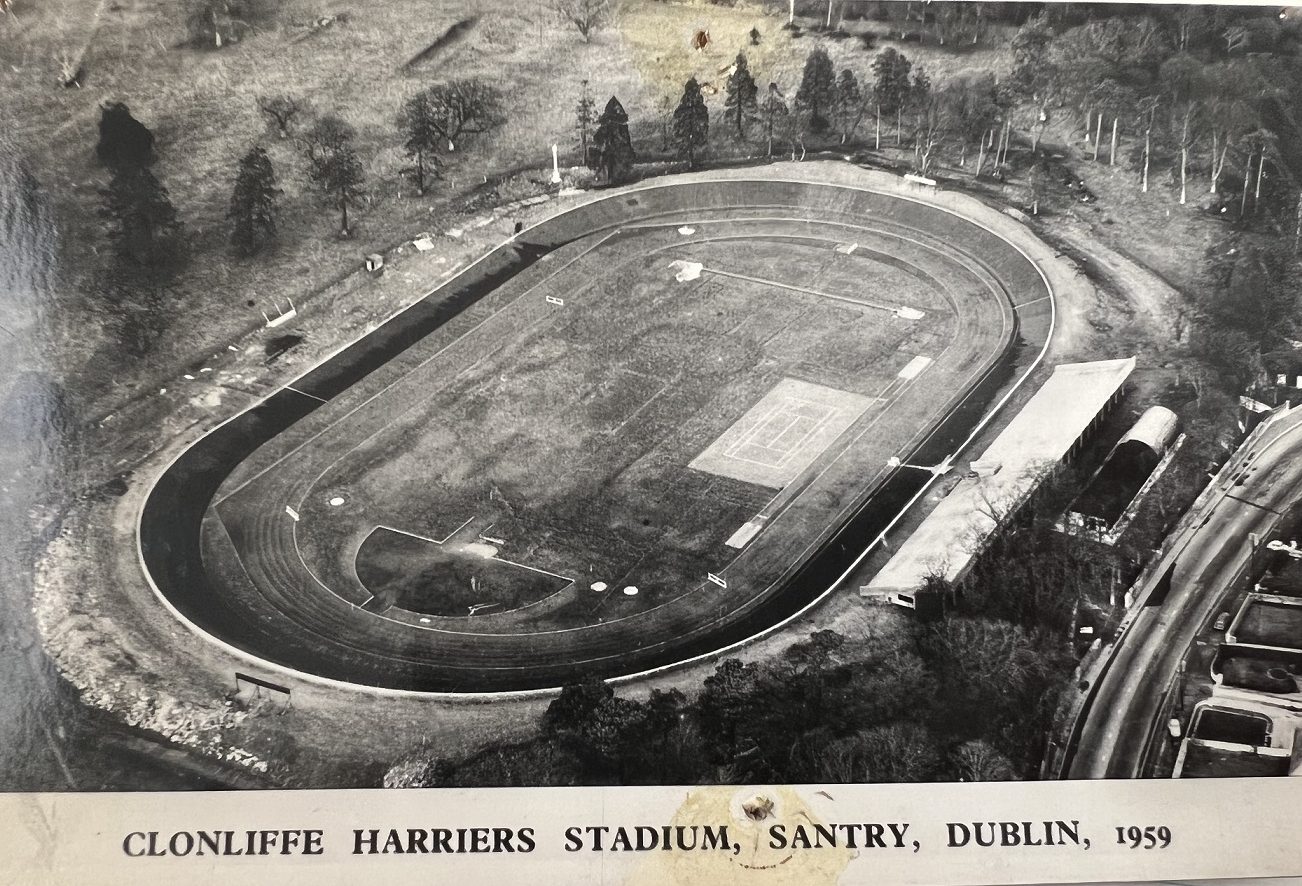
The Stadium.

The race was part of a big athletics meeting.   Billy Morton and Santry Stadium were legendary.   Billy Morton was a life long member of Clonliffe Harriers and in the 1950’s started a series of meetings to bring the world’s best to Dublin.   The club’s history, written by Dominic Branigan, describes him as “Ireland’s first, and finest, sports impressario and the first promoter to hold a press conference before his meetings where he would announce to the public that records would be broken and patrons would get great value for money.”    

But even in the era of amateur athletics it was an expensive business.    The stadium is known these days as Morton Stadium but .everybody at the time referred to it as Santry.   The stadium was opened in 1958 with a cinder track. An inaugural series of meetings was held, and on 6 August 1958, Australian Herb Elliott shattered the world record for the mile run with a time of 3 minutes 54.5 seconds. This was the first race in which five athletes had run a four-minute mile.   The IAAF certification of the world record (as reproduced by Branigan) is below.   The first five in the race were:

  1.   Elliott  3:55.4;   2.   Merv Lincoln   3:55.9;   3.   Ron Delany   3:57.5;   4.   Murray Halberg   3:57.5;   5.   Albie Thomas   3:58.6   
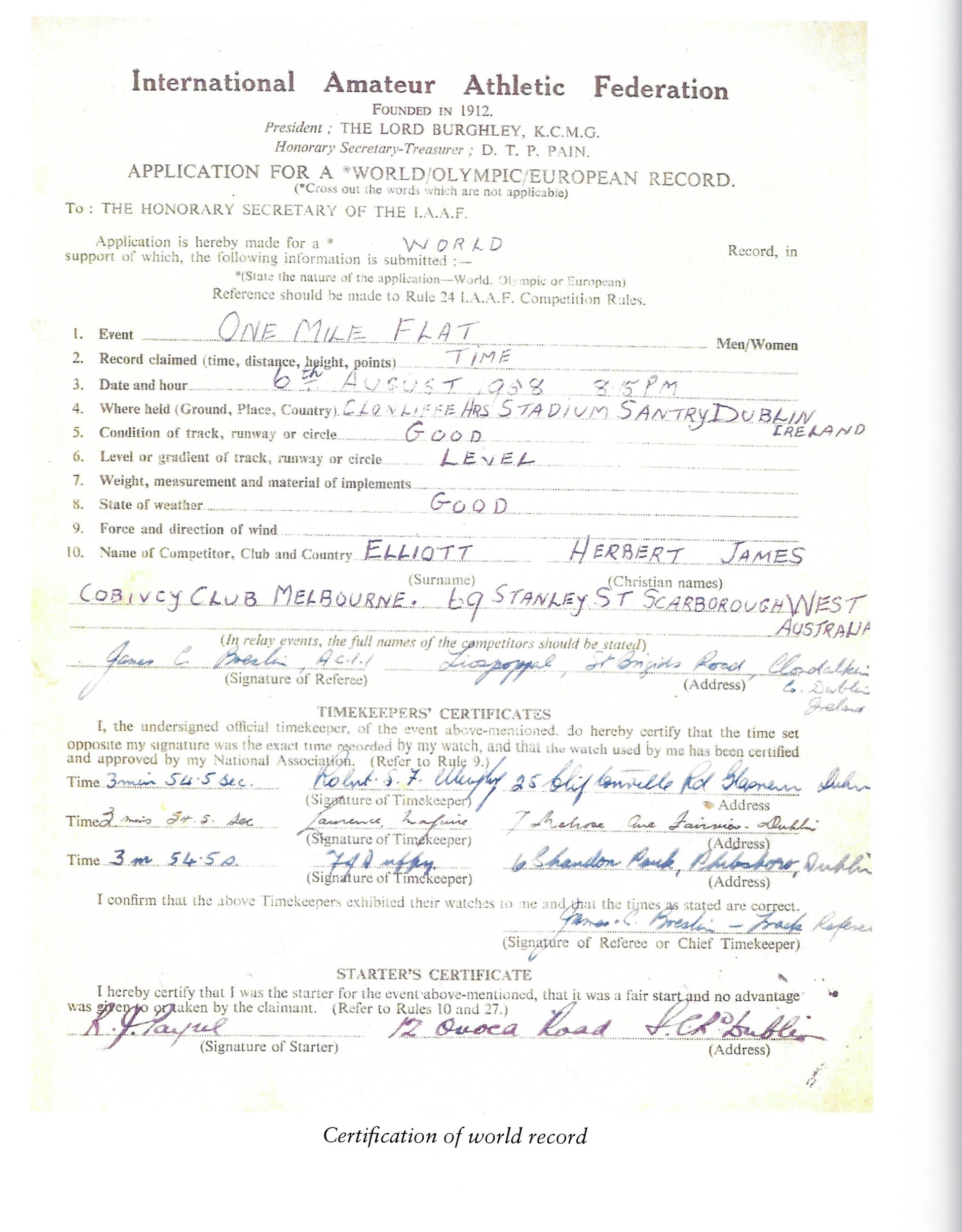


The track became legendary at that moment – never before had five men been below four minutes in the same race, within two years three would be Olympic Champions and the other two Olympic silver medallists.  It was a moment that Billy Morton cultivated and developed.   To be invited to run there was an honour and just stepping on to the track was an awe-inspiring, great experience for any aspiring middle distance.   The crowds were big and they were knowledgeable.   For a 16 year old it must have been just a bit daunting – or maybe inspiring to run on the track where your hero Elliott had set the record.    

The Background

Like all Billy Morton promotions it would be a big night with many household names taking part.   So how did a 16 year old Glasgow Schoolboy get in there?

The summer of 1961 proved to be a very good one for Hugh Barrow.  School exams were in March back then, much earlier than today when late May and June tend to be the dates, so once they were over it meant that sport took centre stage for the Summer term.   Inspired by the exploits of his schoolboy hero Herb Elliott he got his championship season off to a good start winning the Glasgow Schools 880 yards title at Scotstoun in 1m 55.8 which was the fastest time in UK by a 16 year old by the end of that season and third on the UK all time list behind Roger Givan and Derek Fernee who had fought out a torrid duel in London two years earlier.    

This was followed by a win in the Scottish Schools Mile on grass at Goldenacre in 4m 24.1 which was a Championship record   This was followed by taking the SAAA Youths 880 yards on cinders at Meadowbank in 1m 57.5 another Championship record.   The Scottish Schools win led to selection for the Scottish Schools Team to face England and Wales at Maindy Stadium, Cardiff.

Travelling in very good company with the likes of Sandy Sutherland and future Lisbon Lion Jim Craig, whose son James would later represent Scotland at rugby, it was a daunting task to face the All England Schools team.    In a tactical race Hugh beat Mark Gillespie and Dave Wilkinson  of England in 4m 21, again a Championship record

The Meeting

What followed was an invitation from Dunky Wright to represent Scotland at a two day meeting at Santry Stadium Dublin in early August, on the very track that, three years earlier, Herb Elliott had destroyed the World Mile record by recording  3m 54.5.   The small Scottish team flew to Dublin and stayed in Mrs Doyle’s Guest House opposite  the stadium.   Also in the Scottish team were  sprinter Mike Hildrey, the ‘Balfron Bullet’, Willie Morrison and steeplechaser John Linaker.   Also accommodated in the same guest house was the great Gordon Pirie.   The Santry meetings back then really were justifiably famous for attracting top athletes from around the world.   

The meeting was held over two nights, Hugh was in action on both of them – half mile on the Wednesday, Mile on Thursday.   It was a genuine quality meeting.   The ‘Belfast Telegraph’ on Wednesday, 9th August was looking forward to George Kerr of Jamaica having a crack at Tom Courtney’s world record on Thursday. Kerr was also going to break the Irish All-Comers record for 440 yards which was held by Milka Singh (India). The Mile would have men like Ken Wood, Mike Berisford, Graham Everett, Ron Delany and Colin Shillington, while Gordon Pirie and Derek Ibbotson would compete in the Three Miles. 

The Race

On  the first night Hugh ran in a Junior 880 yds where he headed off future Ulster star Derek Graham in 1m 56.5  and, although  this was not remarked on in the Scottish Press, it was picked up by the Belfast Telegraph which said that Derek Graham (9th Old Boys) was beaten by three yards by the Scot WH Barrow in 1 min 56.5 in the 880 yards Junior.”      This set up the return race over 1 mile the following day.    Hugh says when asked, Strangely I don’t recall very much. I had spent most of the day just relaxing with fellow Victoria Park athlete Mike Hildrey and, as the guest house was just next to the stadium, we changed there and walked over.  Wearing my Scottish Schools vest, I took the early pace in the race but Derek took over pretty quickly and I just sat in.   The conditions were good with no wind at all.   Have to say I didn’t realise it was that fast and it felt relatively comfortable. I wasn’t aware of laps times.” 

Down the back straight of the last lap he really had to dig in to hang on to the older Derek which he managed to do all the way home.  He was only beaten by 0.5s.   When asked how he felt after the race he replied, “The reaction was swift. I felt grim and just hung over a steeplechase barrier and that’s when I became aware of my time –  Ronnie Delany congratulated me and then it became a bit euphoric.   I didn’t sleep much that night but the next morning Mike and I caught a plane to London. He was heading for the White City and I wa s off to meet up with parents on holiday in Eastbourne.    There I met up with athletics journalist Bob Sparks and then realised where that time stood relative to my peers”

It had been basically a two horse race, Hugh  recorded 4m 10.9 which was a World best for a 16 year old, taking 6 seconds from the previous best held by Martin Heath of  Waterloo Harriers of whom more later The press latched on to the fact that Herb Elliott’s best at the same age was 4m 20 and this led to lots of headlines and speculation.   

Afterwards

This best performance stood as the best in the world for the age group for two years  and was broken by a schoolboy from Witchita East High School, Jim Ryun, who ran 4 m 07.8    Jim later went on to set a World Mile record of 3 m 51.1  at Bakersfield California in 1967 and in later life become a USA Senator.   

There were two Scots milers in action that night – Graham Everett ran in the Senior invitation mile which was won by Ron Delany in 4:04.3 from Ken Wood (4:04.9), with Everett third in 4:05.0 and Colin Shillington fourth in 4:05.6.   The Belfast Telegraph described the attempt on the world 880 yards record as ‘farcical’ with the field of eleven runners being too big and a lot of jostling taking place at the start.   Kerr’s time was only 1:49.3.   The paper said of Hugh’s race “Derek Graham won the Junior mile in a sound 4:10.4, beating 16-year-old schoolboy W Barrow (Scotland).   Barrow’s time of 4:10.9 broke the British schoolboy record by 6 seconds and bettered his previous best by 10 seconds.   A real prospect for the future.”

It was a very good race on a track where his hero Herb Elliott had set a world record, and in a great atmosphere, but Hugh had handled the pressure well and produced a superb performance.   Note too that Graham was almost exactly 3 years older than Hugh (Derek’s Date of Birth was 3rd September 1941, Hugh’s 12 September 1944).
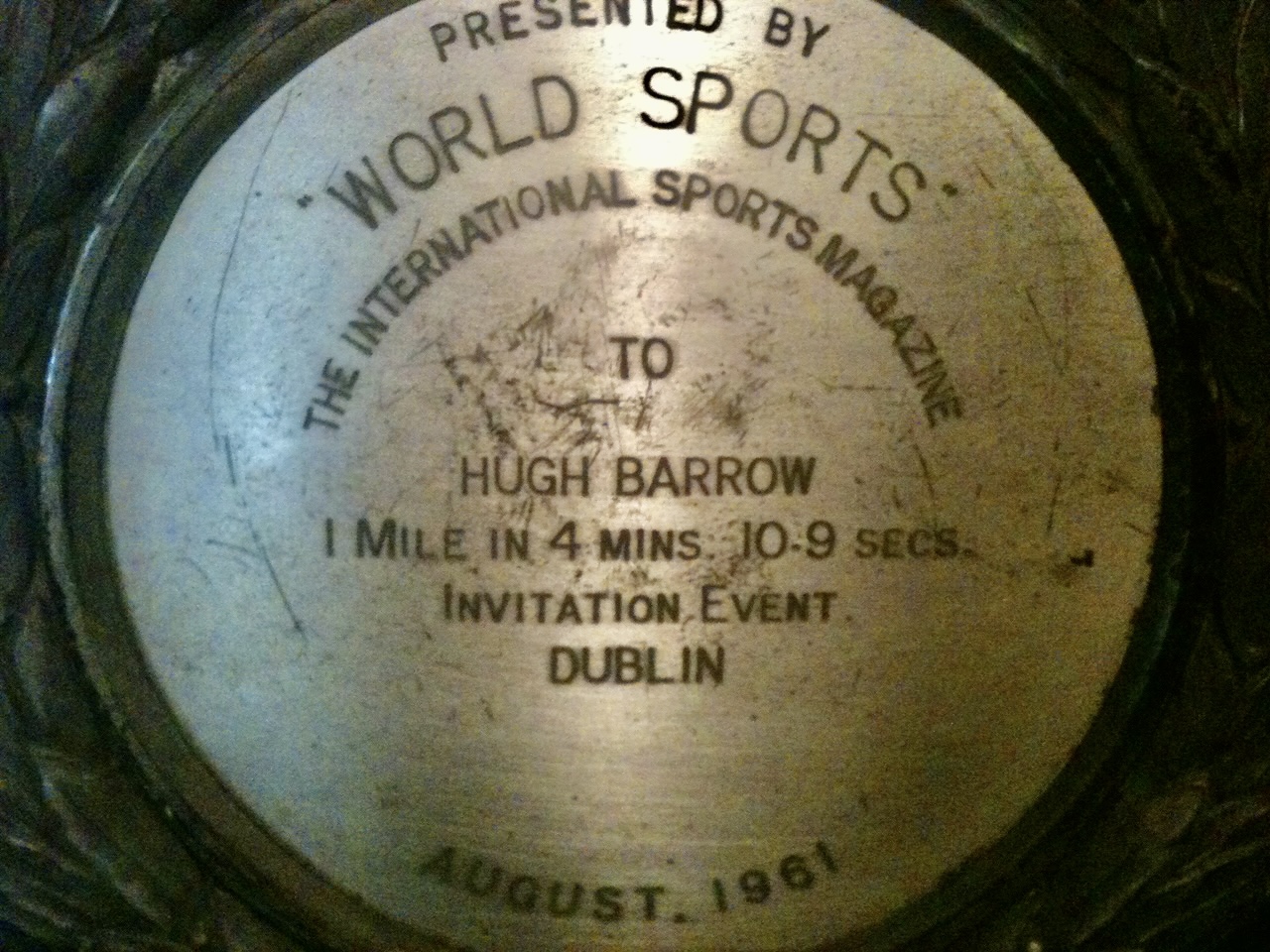
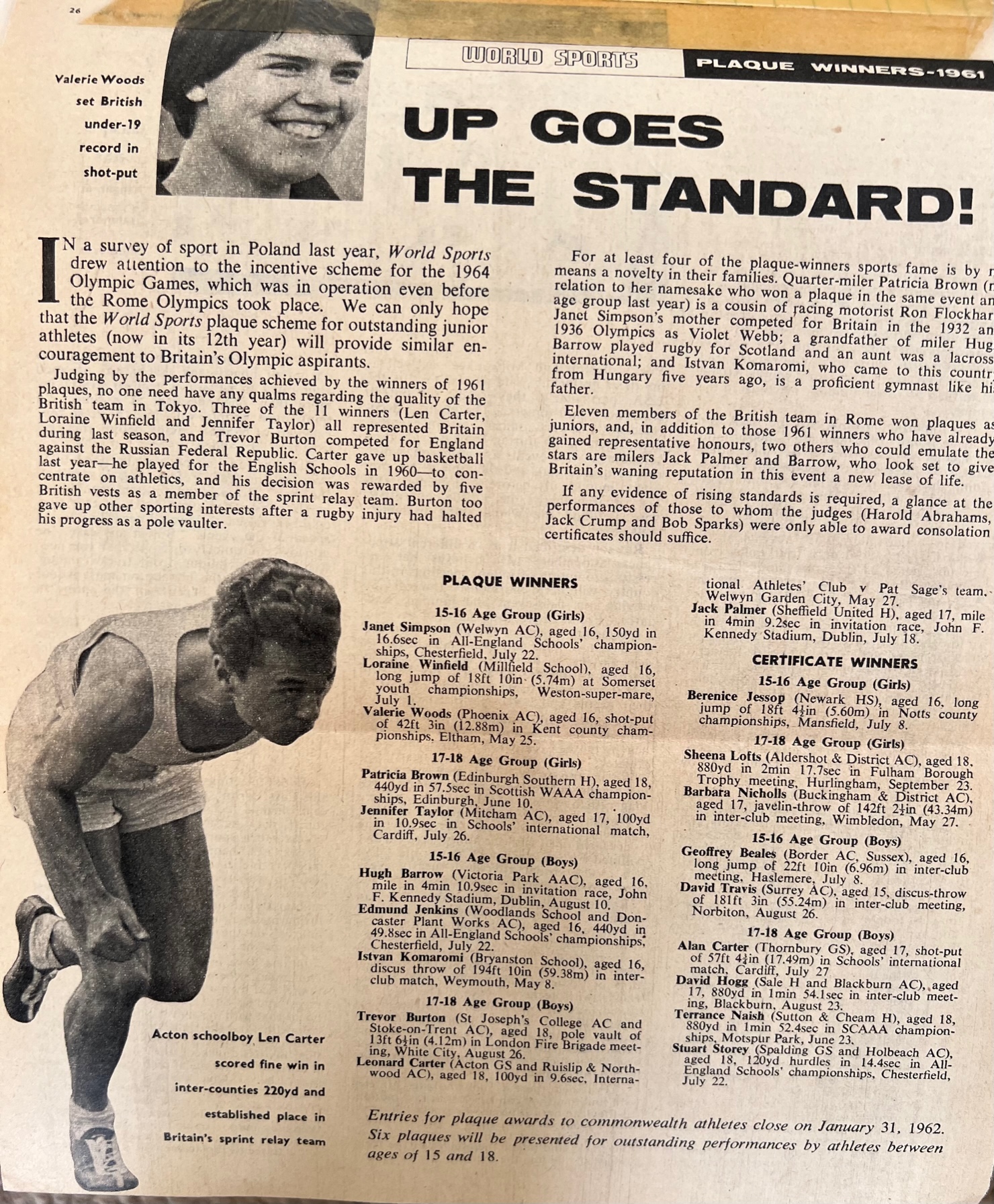
There were of course awards and presentations later in the season and one of the biggest was at  the World Sports presentation in London.   There was a World Sports plaque (above) and a wonderful tribute in the magazine.   Ir was a very good multi sports magazine in full colour and it covered Hugh’s career in some detail.   You can read the report   at this link.   A short extract reads: “Glaswegian Hugh Barrow bears the burden of being one of the fastest-ever 16 year old school milers with typical Scots equanimity.   When one remembers that at the same age Elliott ran 4:20.8 and Burleson 4:33.4, Barrow’s astonishing 1961 time takes on even greater significance.”   It is a very good article and well worth reading.

Subsequently, in a strange twist, Martin Heath and Herb Elliott arrived at Cambridge University at the  same time and met in a Freshers Mile where Martin so nearly beat Herb, who had lost of fitness since his triumph at the Rome Olympics, but Herb held on – only just – to win in a time of 4m 16s.   Although he continued to compete on track and cross country for Cambridge, he never again raced over the Mile.    

Hugh went on to set two more UK under 19 records for the Mile in 4m 8.9 and 4m 7.7 both at Witton Park Blackburn.   He never achieved his ambition to be the first Scot to break the 4min Mile getting down to 4m 1.0 at Stretford Manchester in 1968.   He did have a very good career as a senior athlete though, running on all surfaces – road, track and country – in the Mile, Two Miles, Three Miles, Six Miles, 5000m, 10,000m and distances on the road up to the marathon after 1979.   A talented athlete and a real credit to the sport.   

Incidentally – we spoke of the cost of running a meeting like those at Santry and Hugh’s prize that night is shown in the picture below
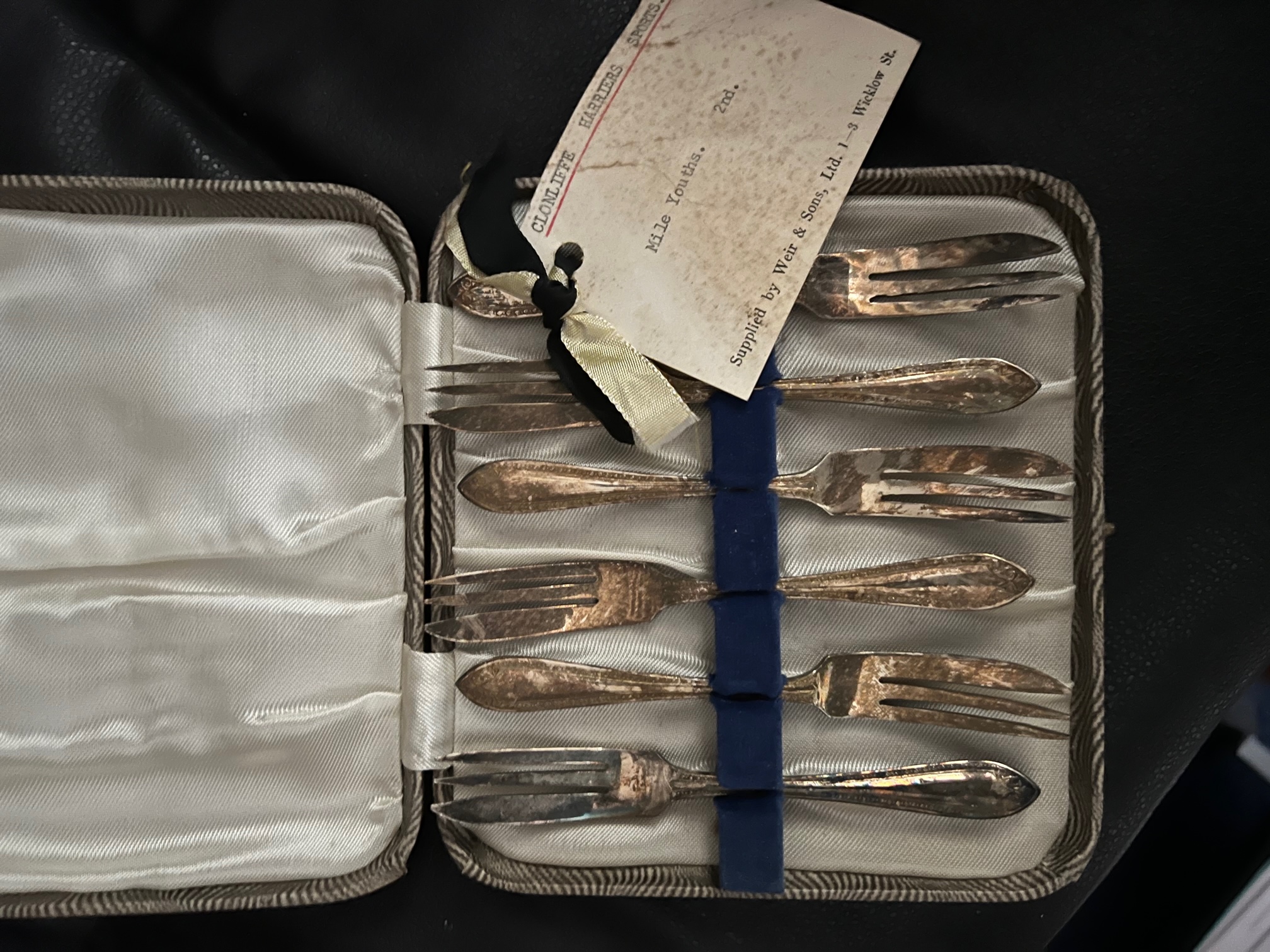
Are they spoons or forks???    These were the days of amateurism when no one was allowed any money as a prize and, when money was in short supply, as it usually was in athletics, the prizes were priced accordingly.    The Clonliffe Harriers history referred to above tells of an international match in Ireland where Ireland put up £4000, being half the running costs of the event.   The prizes for this 7-nations meeting were noted in the book.
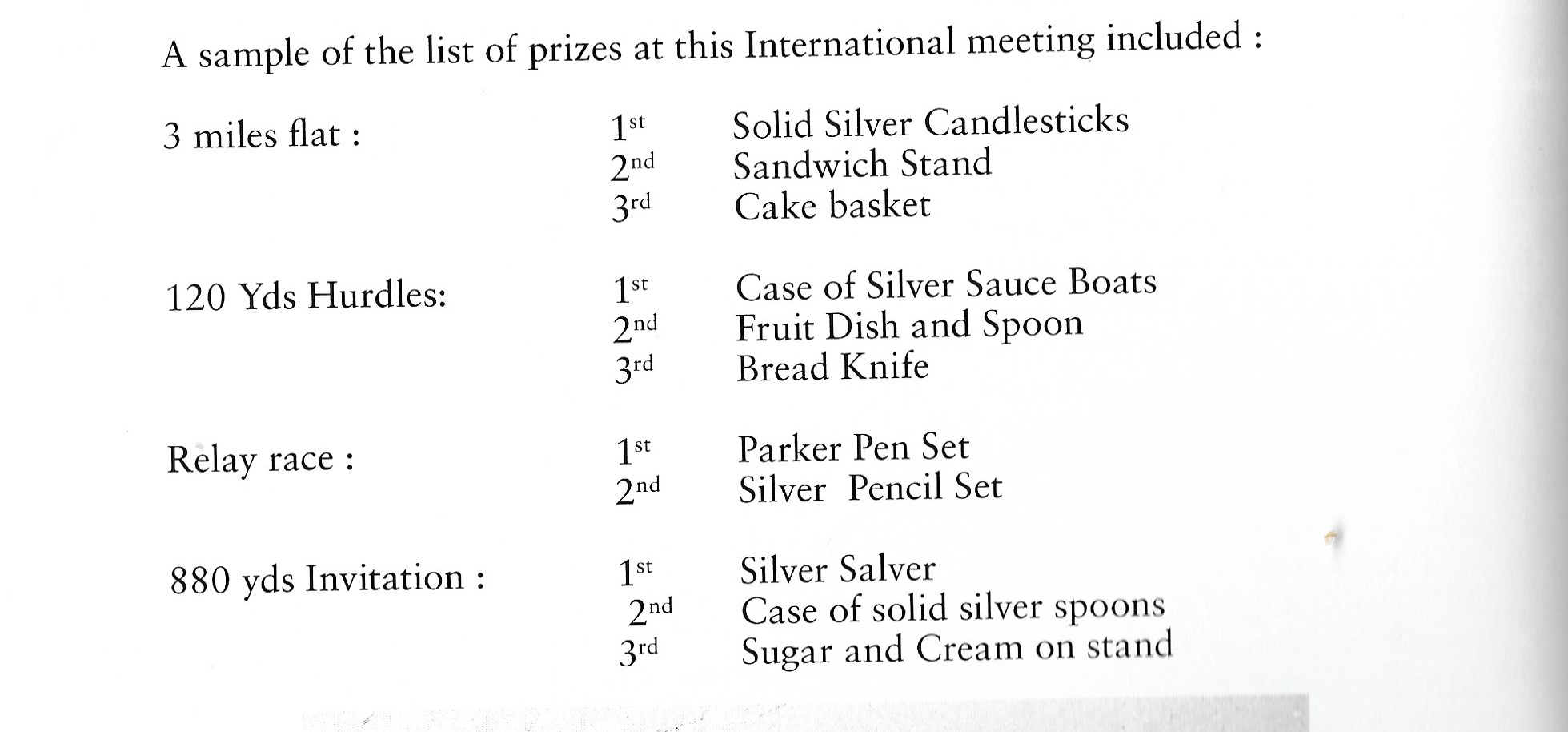
Who were the winners?  Harrison Dillard who had 4 Olympic golds to his credit won the 120 yards hurdles, John Joe Barry won the Three Miles from Curtis Stone and Fred Wilt.      Every one an amateur!
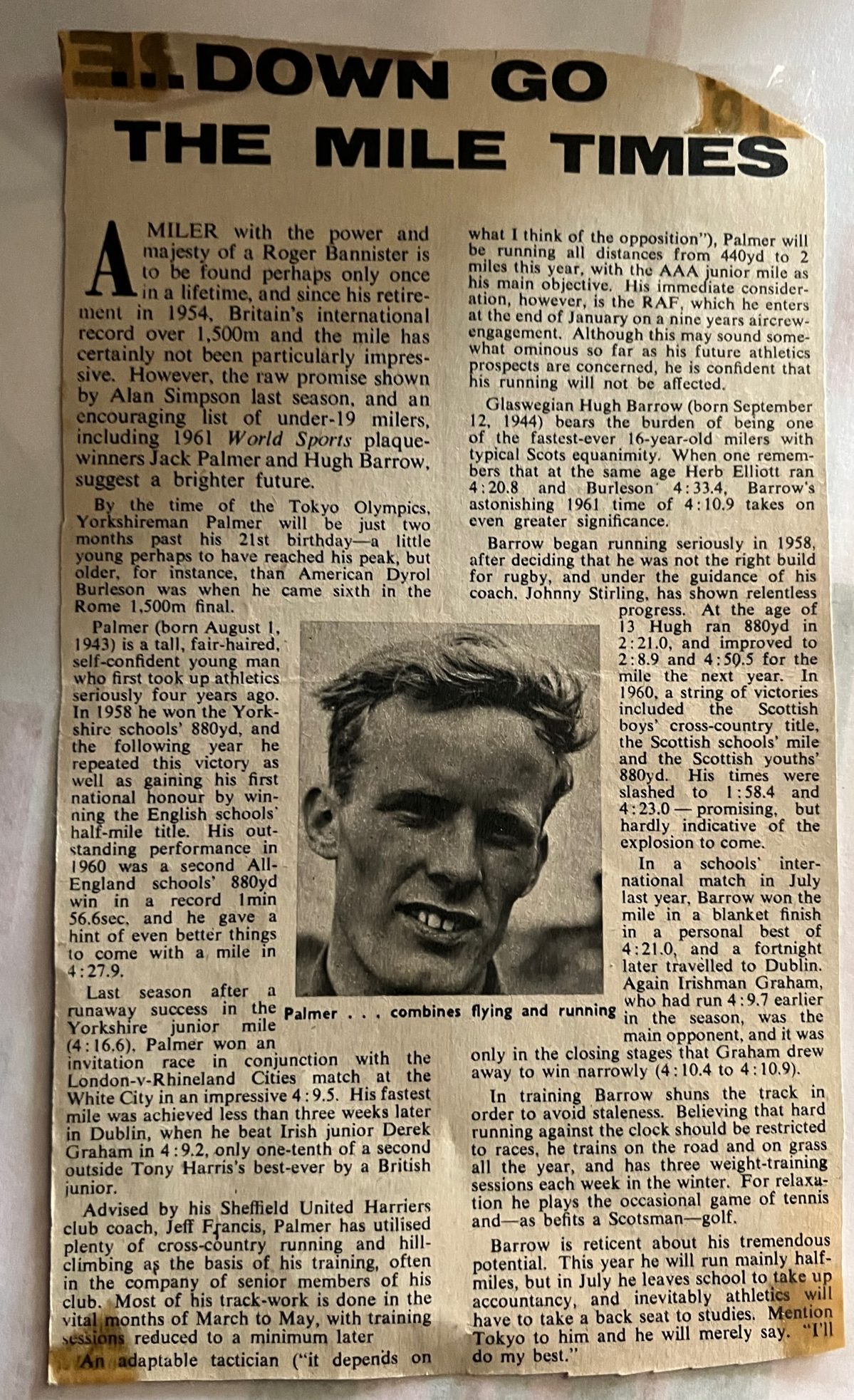


Hugh Barrow: World Sports, 1966

World Sports listing of all the 1961 winners many of whom are well known athletes – Stuart Storey, Janet Simpson, Trevor Burton and Alan Carter maybe the best known – but only two were Scots.   Hugh of course and Sheena Lofts from Aldershot and the Anglo-Scots team, who ran for Scotland on the track and over the country.

Ronnie Macdonald

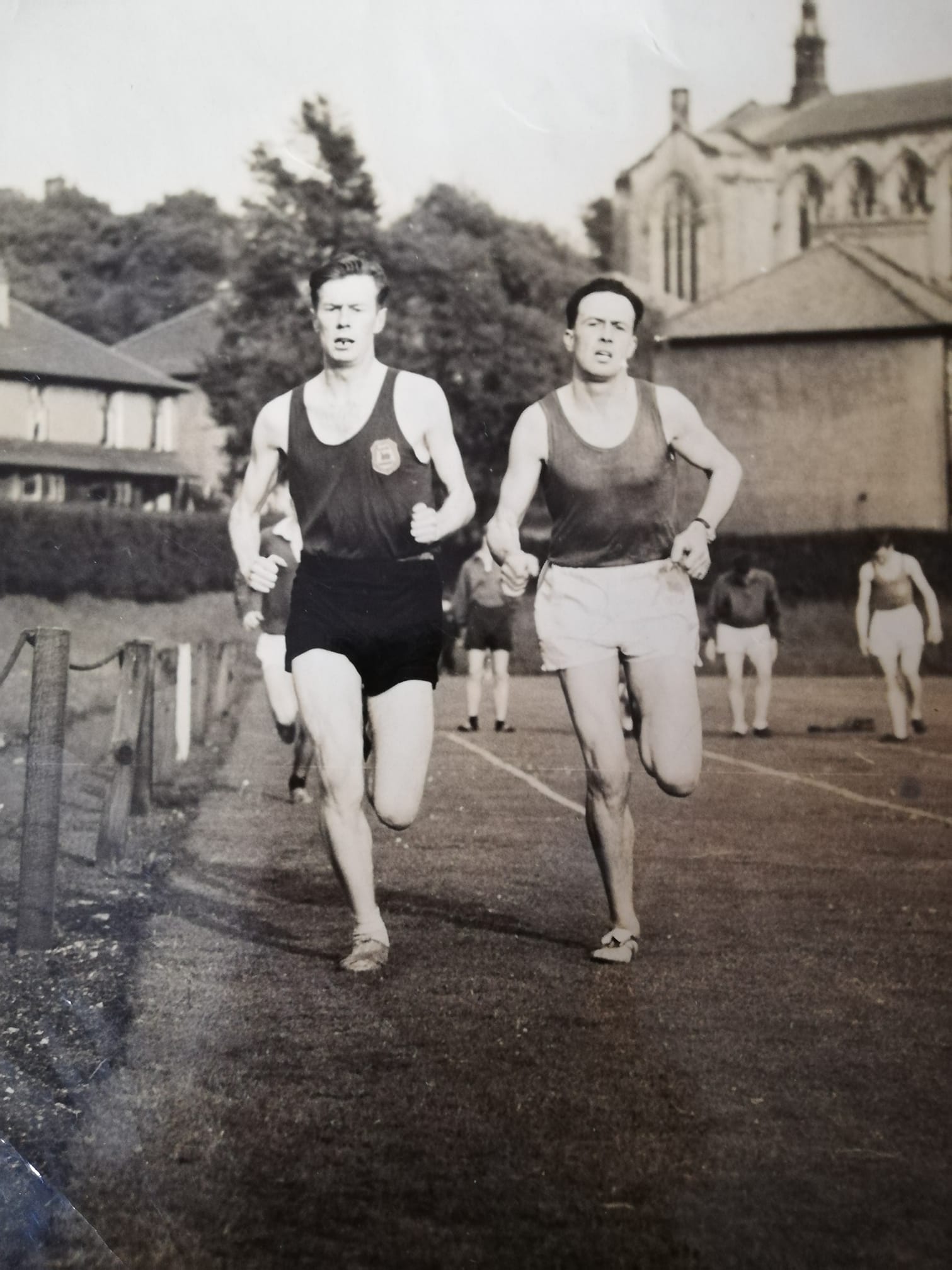
The picture above shows Ronnie Macdonald of Maryhill Harriers on the left with Graham Everett of Shettleston Harriers on the right training together at Balgray in the West End of Glasgow in 1960.   Graham would go on to win the SAAA Mile title eight times from 1959 and represent Scotland on the track and over the country.   Ronnie would have a good career as a runner but not quite as illustrious as Graham’s although both men would go on to serve their clubs and Scottish athletics for decades.   

Ronnie joined Maryhill Harriers in 1947 and stayed with the club all his life.   He was an honorary club member, an honour only given in recognition of service to the club.   Ronnie did serve the club well – as a runner, as an administrator, as an official, as a coach and, like all club men of his generation,  in ways that do not fit into any of these categories.   

As a runner, he performed well right from the start.   In season 1948/49 he won the Mitchell Shield which was presented for the club’s Youth (Under 17) championship.   Two years later he won the Rangoon Trophy which went to the first club Junior athlete to finish in the National Championship.  He is however better known as a cross-country man and his best years as a runner were the 1950’s.   If we look at his performances over that period in the Edinburgh to Glasgow Relay and the National Cross-Country Championships we see this.

                                 Edinburgh to Glasgow Relay                                        National Cross-Country Championship             

Year Stage Performance Age Group Place Place in Club Team
1949 7th 8th – 8th Youth 35th 1st
1950 5th 12 – 10 Junior 56th 4th
1951 4th 17 – 15 Junior 17th 1st
1952 5th 11 – 10 Junior 31st 3rd
1953 5th 11 – 10 D N R
1954 4th 14 – 10 Senior 94th 5th
1955 D N R Senior 114 5th
1956 5th 18 – 18 Senior 130 6th
1957 D N R Senior 123 6th
1958 4th 15 – 17 - Senior D N R
1959 D N R - - Senior 104 3rd
1960 5th 18 – 19 Senior 154 6th

You can see that over the period he ran in 9 Edinburgh – Glasgow Relay Races at a time when the standard was very high – Victoria Park, Shettleston and Bellahouston Harriers all had very strong teams for instance – only twice did he drop a place but over 7 races he picked up no fewer than 10 places.  He ran in two after the 50’s – in 1961 he he ran on the 5th stage and in 1962 on the 8th stage.   Over the country, he was a scoring runner for the club in the national in every race during this period and was in the first three home for the team four times.    

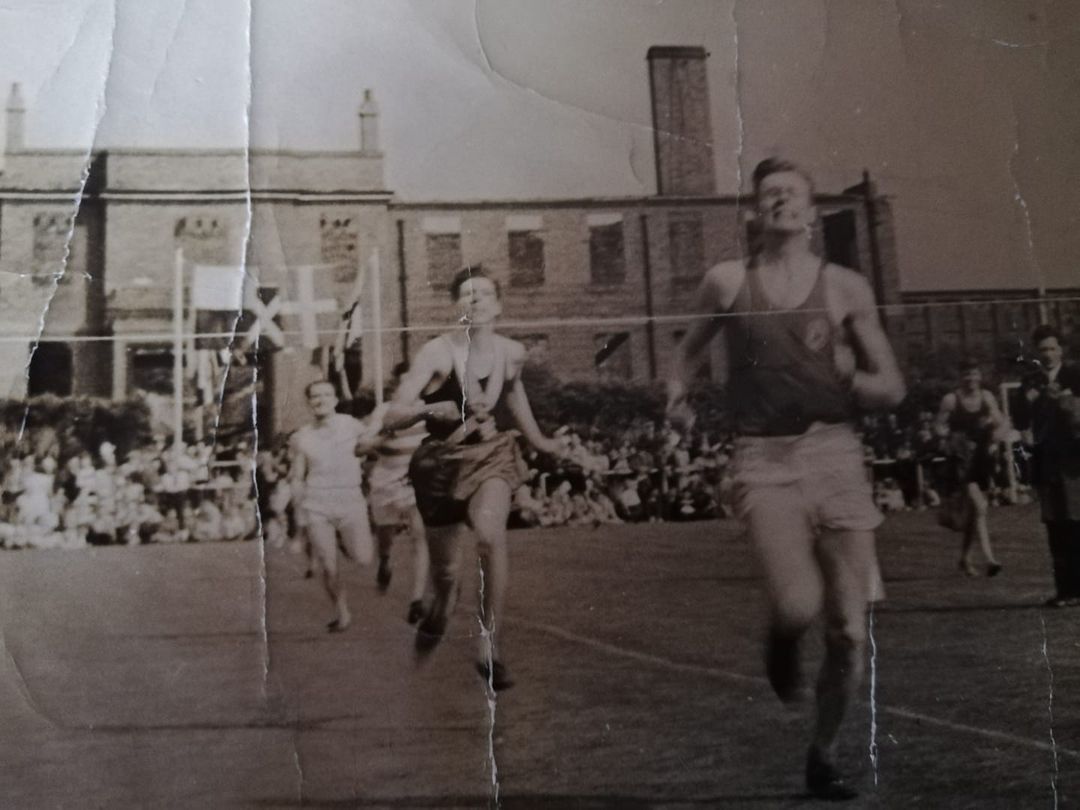
Ronnie winning the handicap mile race at Singer’s Sports in Clydebank

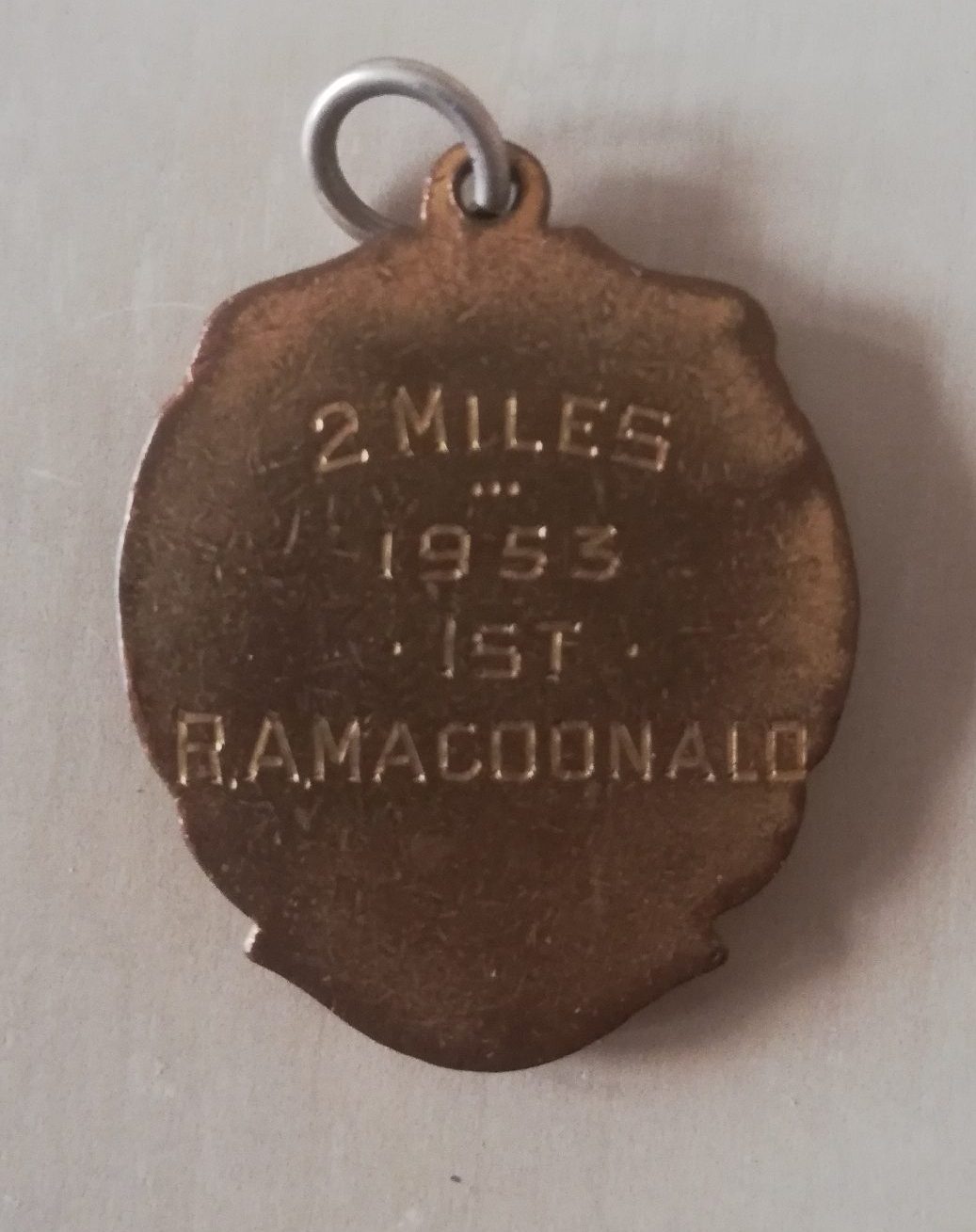
On the track, Ronnie ran in almost all of the Sports meetings: Highland Games, championships at club,  local, district & national levels as well as club events.   There was a fair degree of success too as the medals on this page show and, at a time when money never changed hands and prizes were in kind rather than cash, one of his trophies was a Westminster chiming clock.   He ran in the Glasgow Police Sports as well as in the Rangers Sports at Ibrox, two of the biggest meetings in Britain never mind Scotland.   One of the best supported meetings in Glasgow at the time was the Transport Sports at Helenvale track and he was there too.   He did of course run in the Maryhill Harriers club championships and some of the medals won are shown on this page.

The photograph from Singers Sports above is very interesting.   The runner in the Bellahouston Harriers vest with the St Andrews cross is a chap called Henry Kennedy who emigrated to Canada soon after this and ran for that country in the 1954 Empire Games in Vancouver.   He ran in the three miles and finished 11th out of the 20 entries, one place behind Al Lawrence of Australia, in 14 minutes 20 seconds.   He was four places behind Scotland’s Ian Binnie.  The summer season does not only cover track & field; there is also a comprehensive hill running programme.   Ronnie was involved there too: he tackled Ben Nevis no less.   He ran in 1968 finishing in a time of 3:04:04 and in 1969 he finished  in 3:16:43.   

Club Two Miles Championship, 1954

By 1970 he had  been running since 1947 – 23 years – on all surfaces using shoes that for many years were simply plimsolls with no padding or cushioning at all. Ronnie was a big man and consequently he was starting to have trouble with his knees.  They would eventually stop him running seriously  although he could still be seen out training with Maryhill team mate Tommy Harrison.   When the Scottish Veteran Harriers appeared on the scene in 1970, Ronnie embraced the concept of age-related competition and joined in as enthusiastically as he could.   John Emmet Farrell spoke of the ‘approximately twelve apostles who were in at the start of the movement’ and Ronnie was one of them. The first Scottish Veteran Harriers race at Pollok Estate on 20th March 1971 was held over 5 Miles.   Approximately 30 runners from an entry of 42 took part, which included eight teams.   There were age categories for Over 40, Over 50 and Over 60.    The races were a terrific success – at one point a 39 year old runner was allowed to run for a year as a “pre-vet”!    Ronnie ran as many as he could – eg in 1977 the SVHC published race results which included Ronnie in the following results::  in a 10 miles at Grangemouth on 9th April, he was timed at 76 minutes exactly; in a  5000 metres run at Bellahouston on 15th June where there were two races (an A and a B), he ran in the A race and was clocked at 19:43,  and in a 10,000 metres on the track at Bellahouston on 7th December, he ran 43:45.

He ran in open and veteran races at home in Scotland and abroad too.  For instance, further afield,

  • there was a world veterans 25K race in the Isle of Man on 20th May, 1973, where he finished 242nd of 500 finishers in 1;50:31.   There were athletes from 23 countries taking part.  In addition to the home countries of Scotland, England, Wales and Isle of Man, there were teams from Germany, Belgium, France, Luxembourg, Italy, Holland, Poland, Austria, Czechoslovakia, Norway, Sweden, Finland, Canada, USA, Japan, Korea and Australia.   The teams are mentioned because veteran championships would keep growing – by 1979 in Bolton there were all these countries plus.   The vets movement was worldwide and Ronnie embraced the whole concept while not abandoning the domestic scene.   Indeed his club had many members who enthusiastically supported Veterans (or Masters) athletics – names like Emmet Farrell, Gordon Porteous and Tommy Harrison were top class competitors in this form of athletics.   
  • he took part in the first World Masters Championships in Toronto in 1975, and in the World Masters 25K Road Race in Glasgow in the 1980’s.   He also competed in the Shot Putt in the Scottish Veteran Harriers Championships.    
  • in Bolton in 1979, there were World Vets 10K and 25 K races.   He ran in both.   In the former he was 349th of 791 finishers in 41:39, and in the latter he was 432nd of 632 who completed the course, his time being 1:56:26.   By now there were athletes from Guyana, Venezuela, New Zealand, South Africa, Lebanon and Romania in addition to those who had competed at Isle of Man in 1973.

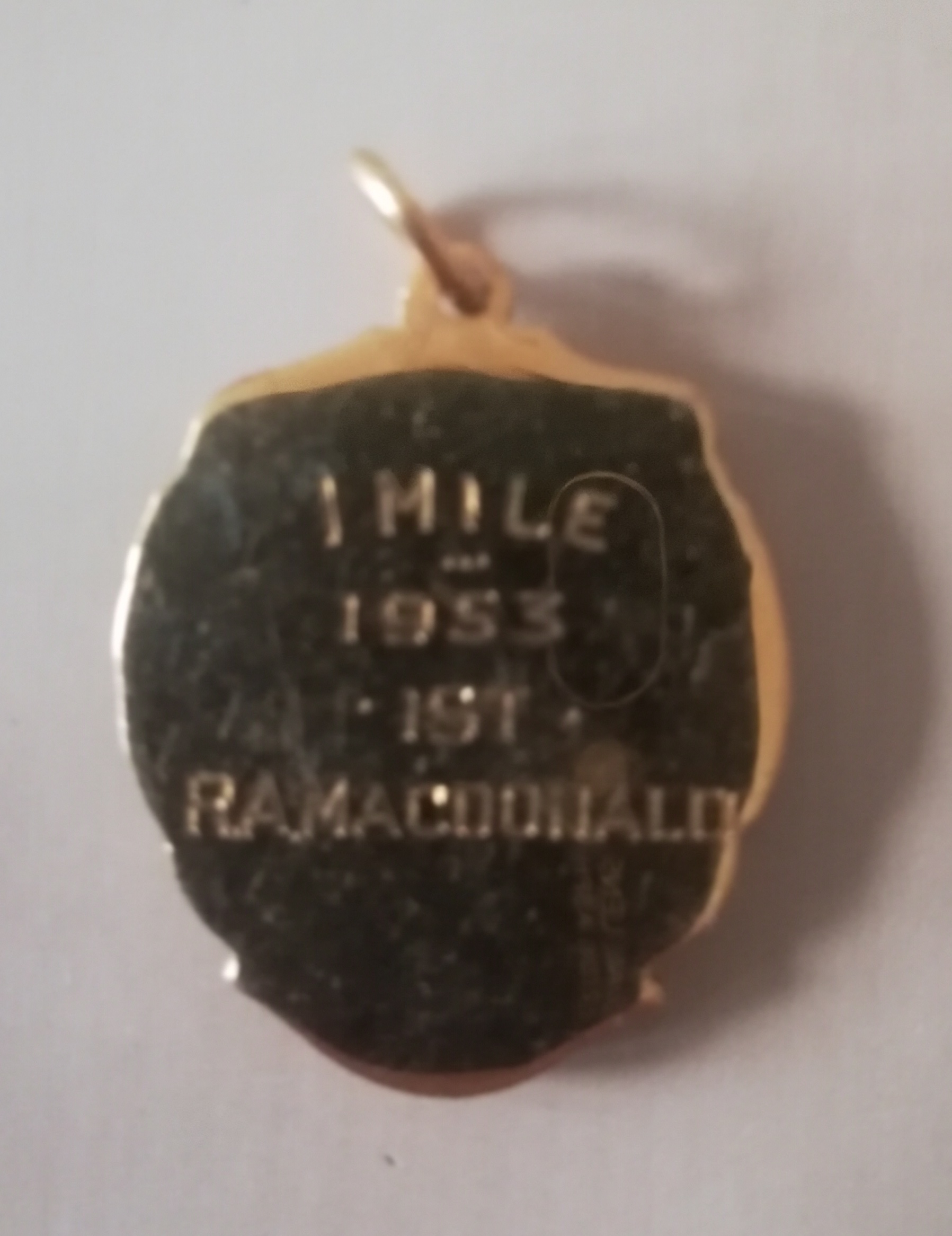
Club 1 Mile Championship Medal, 1953

At home, The SVHC Magazine in 1977 had the following results :  In a  10 miles at Grangemouth on 9th April he was timed at 76 minutes exactly; in a  5000 metres run at Bellahouston on 15th June where there were two races (an A and a B). he ran in the A race and was clocked at 19:43;  and in a 10,000 metres on the track at Bellahouston on 7th December, he ran 43:45.   On the country he ran in almost every vets championship and in 1978 he he was 58th at Irvine Moor – four places and 11 seconds ahead of his training partner Tommy Harrison.

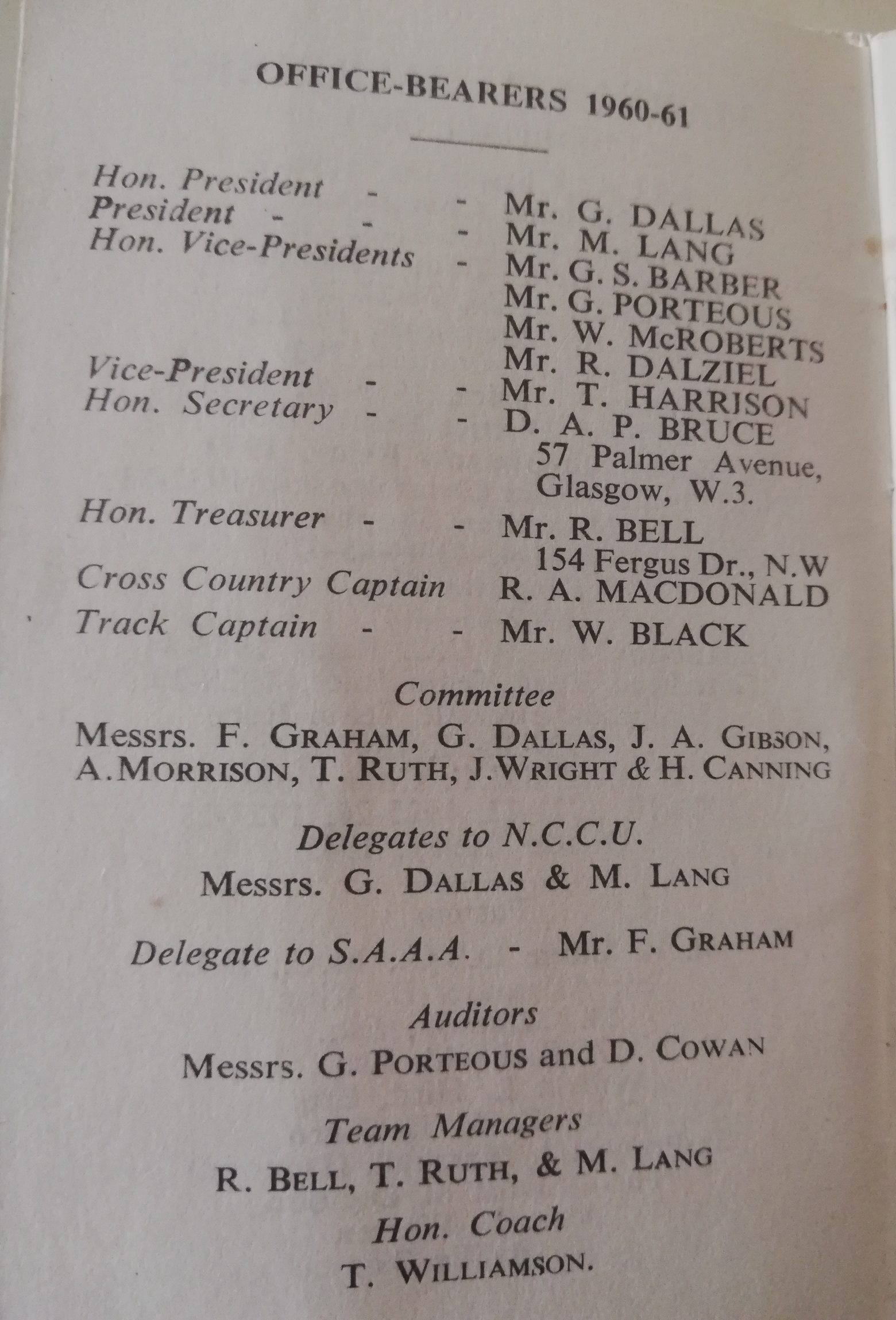
He was also operating in the wider sphere of athletics administration at this time.  Although Ronnie was a runner, there was more to his contribution to the sport than that.   The 1950’s was a time when most members followed the belief that “you did what your club needed you to do”.   It was also usual for club members to attend the club’s Annual General meetings and for there to be nominations “from the floor” for the various committee positions.   Ronnie followed this pattern and, he was elected club Secretary for season 1957/58 – a mere ten years after joining the club as an Under 17.   For some reason he missed the following season but was elected again in 1959/60 and 1960/61 as Club Captain.   He stepped back a bit for a year and was a General Committee member in 1962/63.   He went on to hold every post of any significance in the club and was President in 1968, the year of the club’s 80th birthday celebrations.     The page from the club handbook below indicates the quality of committee members at the time – George Dallas. George Barber, Gordon Porteous, Tommy Harrison, David Bruce, Freddie Graham were all significant contributors to Scottish athletics. 


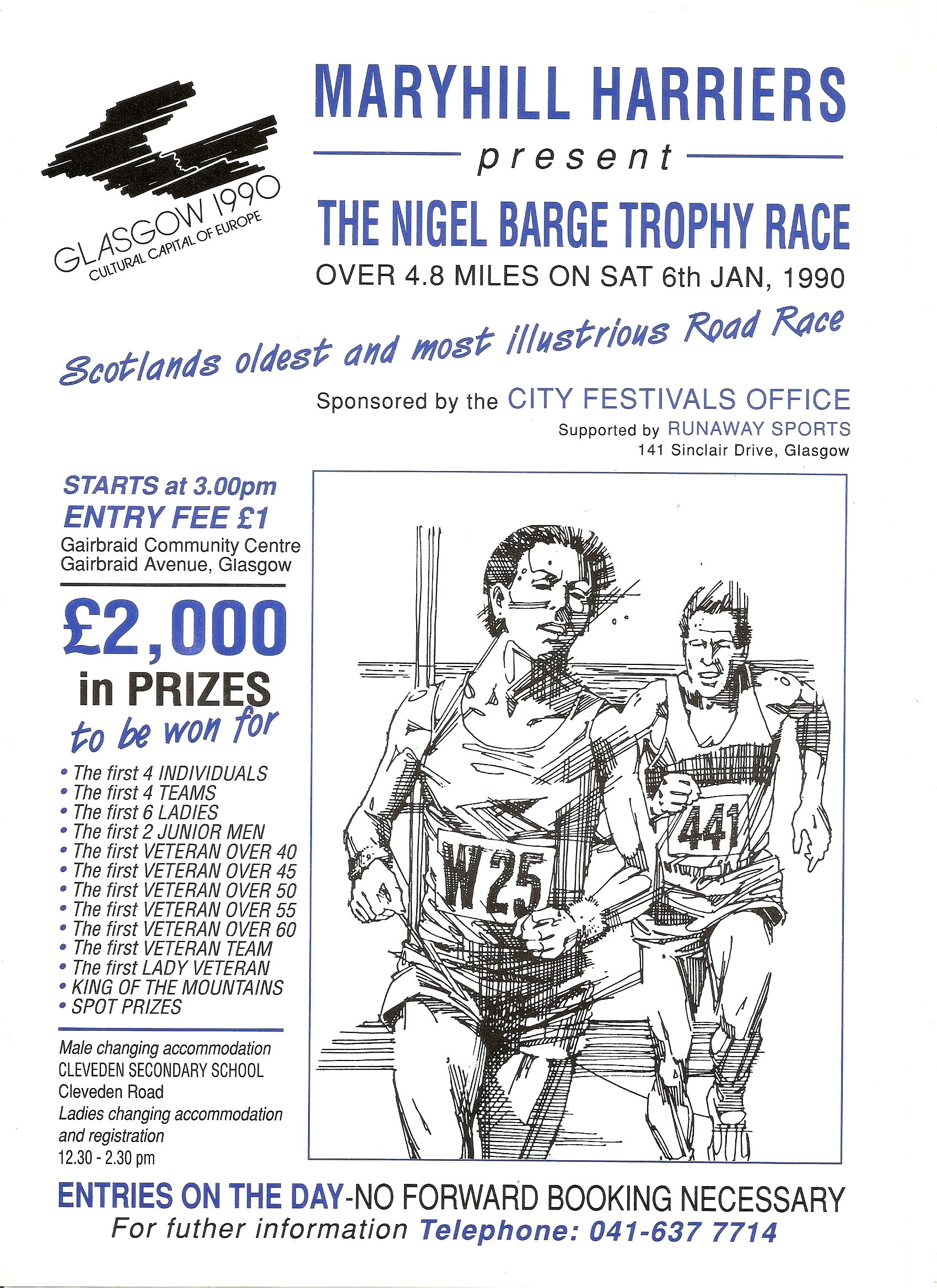
Ronnie worked his way up through the stages on club, County, West District, and National Cross-Country Union Committees.    These led to him officiating at Cross-Country races from club events to national championships.    In the District and National Championships he worked all through the 70’s and 80’s, usually as one of a team of recorders or with the Area Control Stewards.    The other major event of the winter season was the Edinburgh to Glasgow eight stage Relay and there he also officiated, usually as a recorder on two stages of the race.  Of course as an experienced  and established member of the SCCU, he was also one of the selectors for National teams, and travelled with them to the race.   Within the club, he was one of the principal organisers of the Nigel Barge Road Race,  the second longest running event on the winter calendar with only the Beith New Years Day race being of an older vintage.   

 Ronnie had several qualities that are sadly lacking in many officials in most sports: first, he was a very good organiser; second, had a sense of proportion; third, he had common sense; fourth, he was always clear in what he had to say – no obfuscation, deliberate or otherwise.  And of course having been a runner he understood the sport from the competitors point of view.  A wee story: 

At the 1985 National Cross-Country Championship at the Jack Kane Sports Centre in Edinburgh, one of our club members arrived early and declared the team for the Senior Race.   There was a good athlete there who unfortunately was not in the programme but the chap collecting the team numbers gave him the number of another athlete who was not going to be there.   The chap ran in the other athlete’s place.   The chap ran well.   This was spotted and a complaint raised.   Two of us from our club were summoned to meet a disciplinary panel in Glasgow the following Tuesday where we met a three man panel, one of whom was Ronnie.   Two of them were very picky and sticky, telling us that we shouldn’t have done it.   In vain we told them that it was an unauthorised alteration to the club team and then Ronnie spoke in his usual good mannered, good humoured fashion and said something like:  “Every team manager, if he is being honest, will tell you that at some time or other he runs an athlete under someone else’s name.   But if you are going to do it, make sure that you don’t use the name of someone who has run several times for Scotland, and make sure he doesn’t interfere with the race!”   And that was it. After minimal discussion, we promised to discipline the errant club member who declared the team, were warned not to do it again, and that was it.   That was Ronnie dealing with the matter in a good, common-sense fashion.   There was no lecture, he just listened to what was being said, and then cut through the waffle and that was issue dealt with, and did it in a manner that offended neither the panel members nor the club representatives.

But it should be noted that he could be a tough negotiator when he had to be.   For instance, in season 1971/2 when the SCCU granted a permit to Springburn Harriers for their Springburn Cup race to be  held on the first Saturday in the New Year – traditionally the date for the Nigel Barge – there was what the politicians would call a ‘frank exchange of views’ between the club and the governing body.   Some of the correspondence was carried out by Ronnie.   This was not his usual or preferred method of working however.   eg at a time when the ‘amateur code’ ruled and prizes had to be ‘to the value of’ rather than simply money being awarded, Ronnie waited until the January Sales began, then went round the local shops  to buy the prizes for the Nigel Barge Road Race (and often talked them into giving him an extra discount because it was for a good local cause).   His ‘people skills’ were of the highest order!

He was also imaginative coming up with ideas for races like the Christmas handicap race round Postie’s Park in Dumbarton for Council employees (he worked in the Council Offices there) with extra awards – such as for the runner who most accurately forecast his time round the course.    

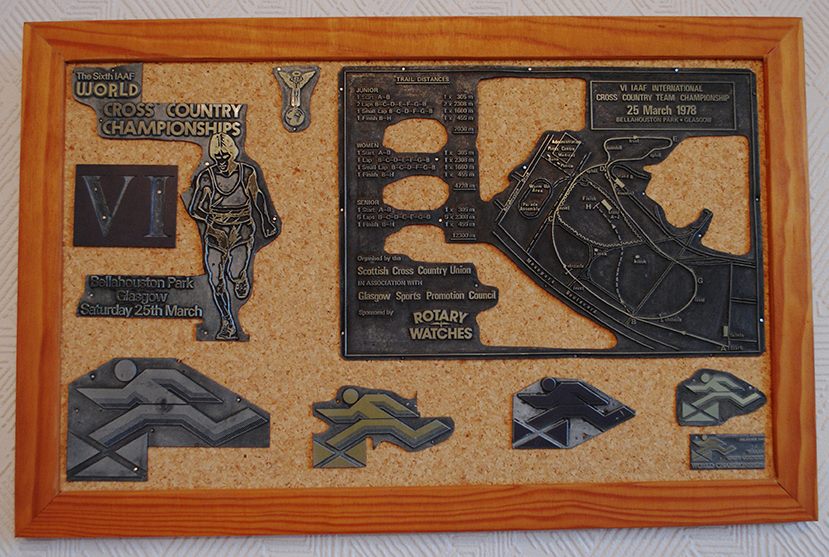
When the International Cross Country Union held their World Cross-Country Championships in 1978, Ronnie was asked to take charge of the production of the programmes which he did with his usual efficiency and the printer’s blocks are shown below.

Busy all the way through the 60’s and 70’s he was also listed in the 1977 SAAA Handbook as: 

  • Grade 1 official for Track, for Throws, and for Jumps.   These were three different qualifications, each having a different pathway to Grade 1.
  • Club Coach for Middle Distance, Sprints and Relays.   (There were three grades of coach – Assistant Club Coach, Club Coach and Senior Coach.   Club Coach was approximately equivalent to the current Level 3 qualification.)

Ronnie was always a person who would encourage and help athletes as much as he could and in any way that he could.   Peter McGregor of Victoria Park tells me that at an inter-club fixture, early in Peter’s career in the sport he was told by Ronnie “stay with me and you’ll be OK.”   Valuable encouragement at the start of a career that would lead to many excellent races and several sub 2:30 marathons.

Although he did not coach a squad of his own as a squad, he would help others to develop their skills and to enjoy their sport.   But, being Ronnie, it was not a case of uttering well-sounding homilies, or well-worn cliches: he went to the courses, learned a bit about the events and helped in a practical way.   His coaching continued until at least 1990 when he appeared in that year’s AAA Handbook as a club coach for both Sprints and Middle Distance running.   His long time friend and sparring partner Des Yuill tells us that Ronnie had a camper van that he used to ‘take runners to races, near and far’.

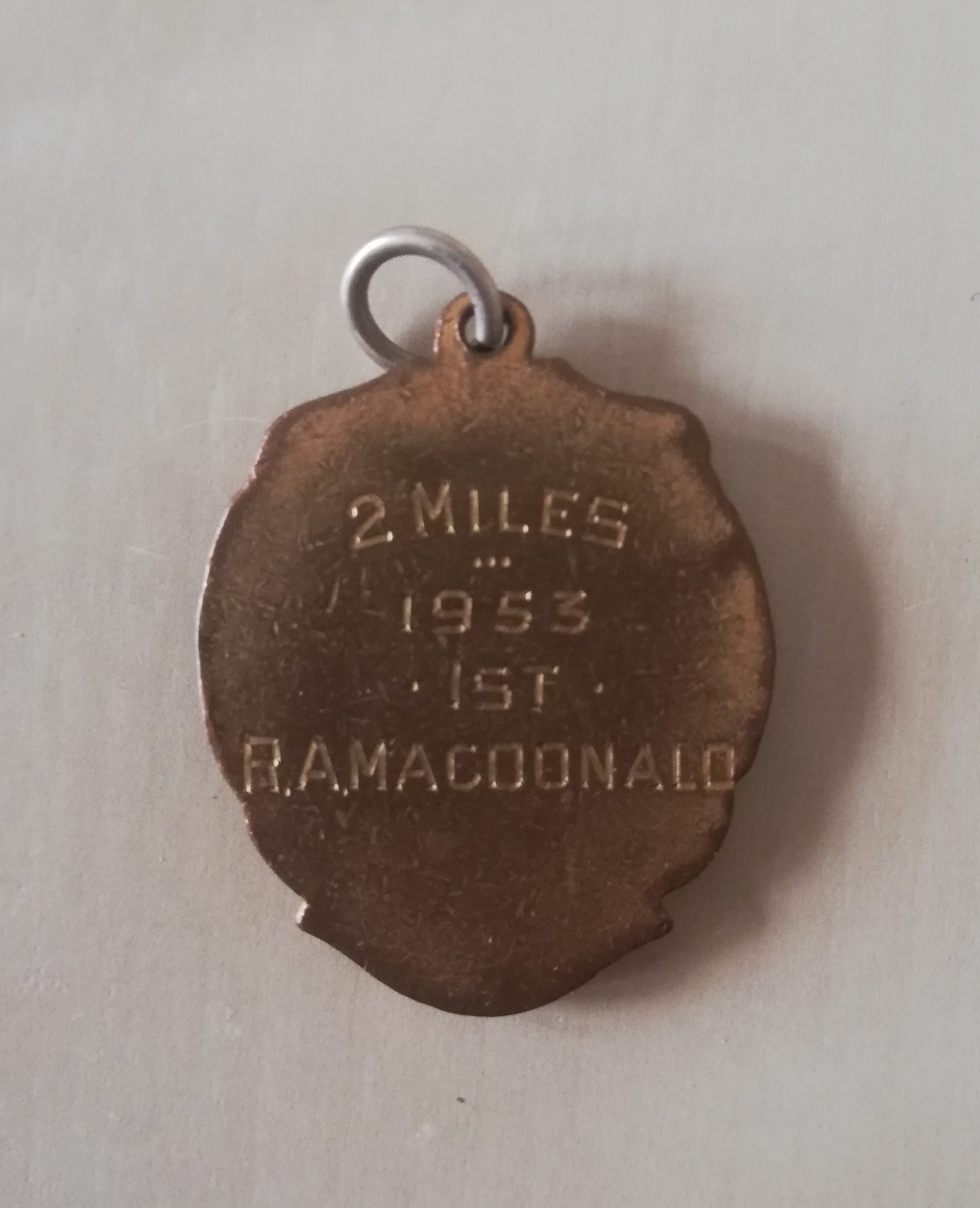
Club Two Miles Championship, 1953

As a track official he obviously worked at meetings large and small – highland games, local sports, championships and track leagues.   As a grade 1 official he was often asked to officiate as a referee – mainly on the track.     One of the requirements for a club in any of the track leagues is that they provide a quota of officials as well as cover as many of the events taking place as possible.   Ronnie filled in in both categories – qualified officials are worth their weight in gold to a team manager at these meetings, and to have a Grade 1 on the books is possibly worth his weight in platinum.   When officiating at a highland games, Ronnie could often be seen working at the high jump: after all he had a Grade 1 for field events too!

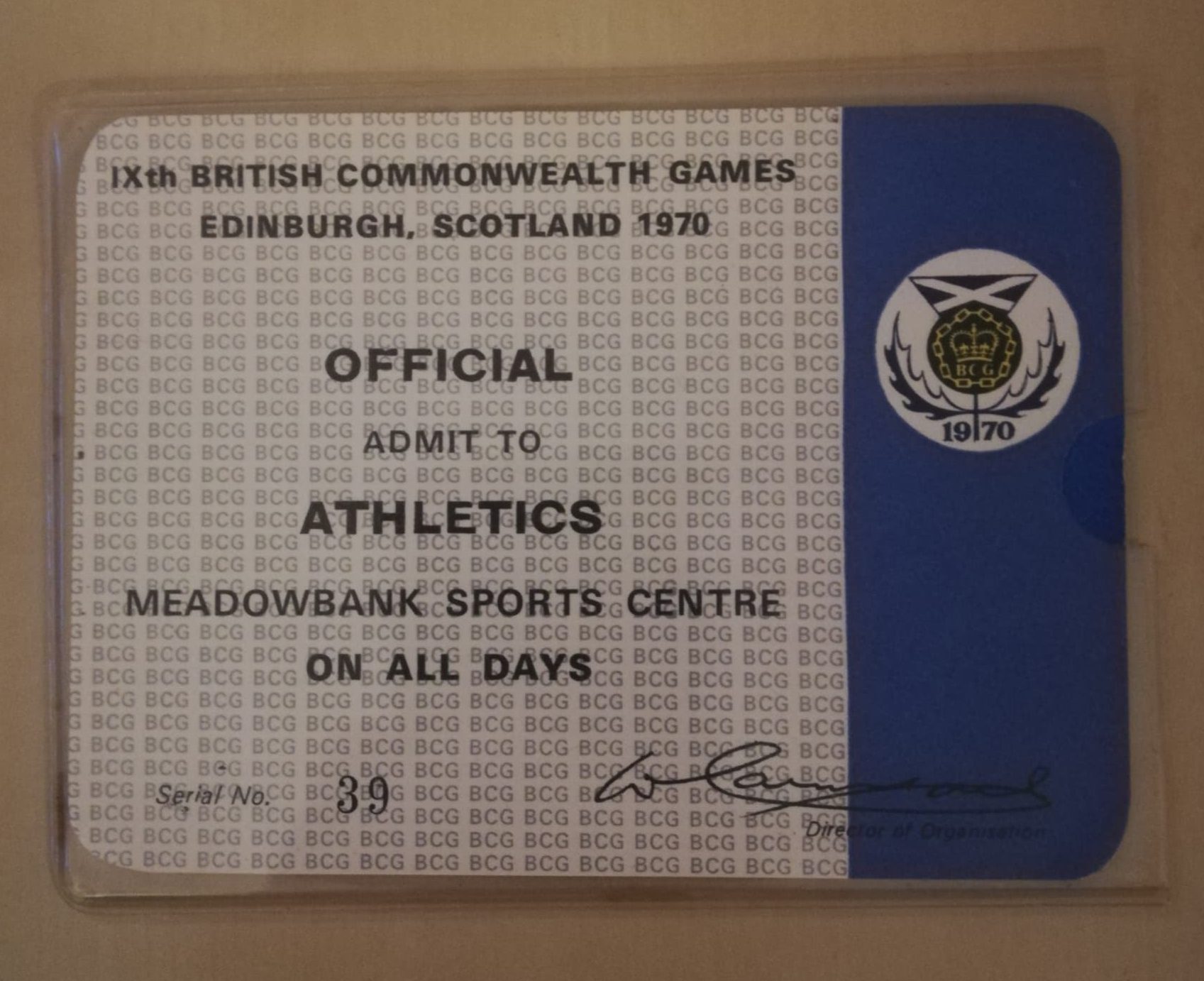
He also officiated at international fixtures on all surfaces – below is his official’s pass for the 1970 Commonwealth Games at Meadowbank, and he also worked at the 1986 Games at the same venue.  In 1986 he was one of the recorders for the marathon.  And, of course, as a long-standing member of the SCCU, he officiated at cross-country international and representative meetings. 

 The 1990 SAAA Handbook tells us that he was still listed as a Grade 1 Official-  but by now it was only for Track events, he had dropped the Throws and Jumps.   At that time it was possible to keep yourself listed as an official but with an asterisk added which was marked ‘inactive’.  Many took that decision but  Ronnie was still active though – 53 years after joining the club.   He was certainly still officiating at cross-country and road races and an active member of the Scottish Cross-Country Union. 

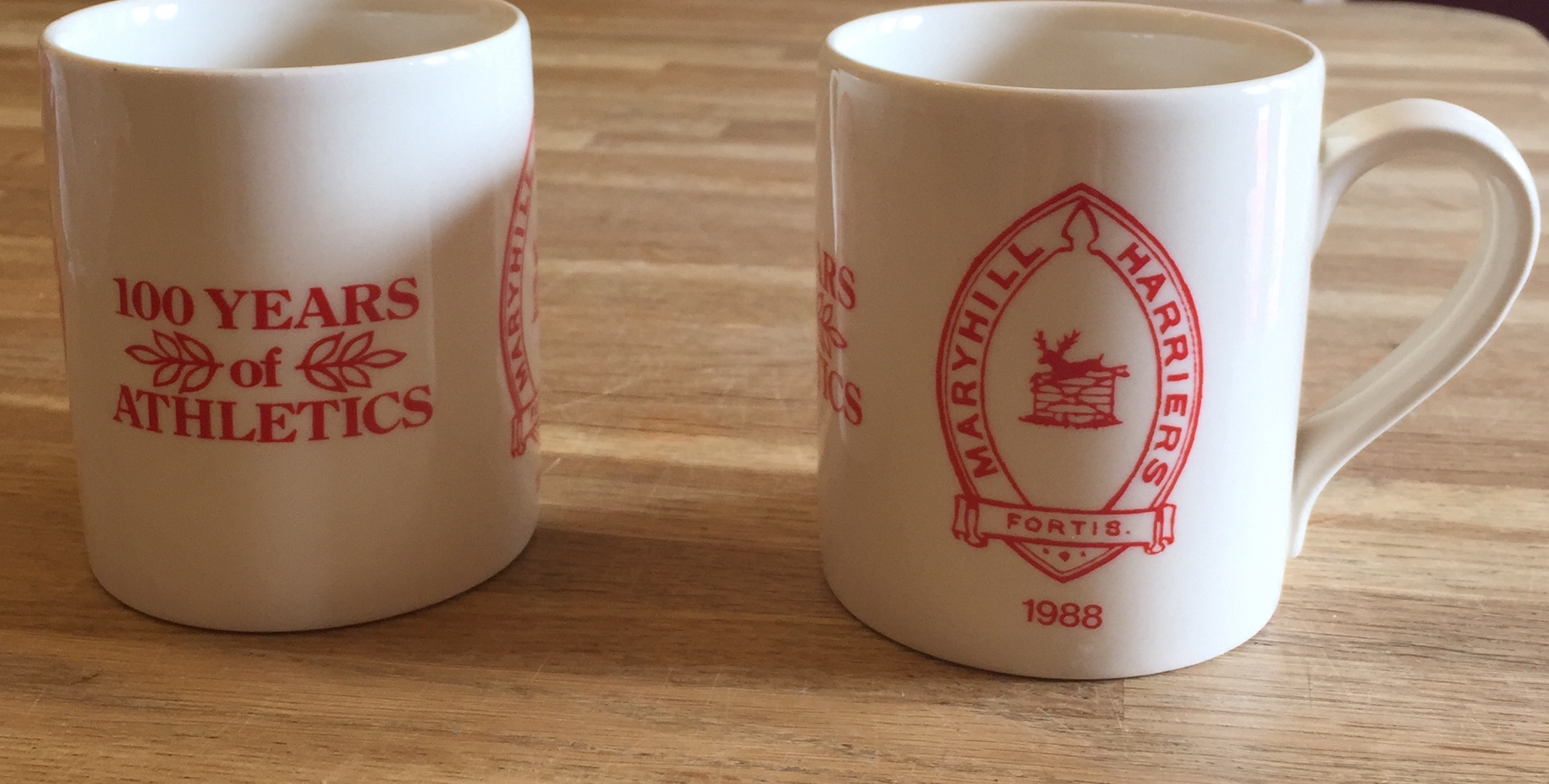
As a member of Maryhill Harriers for his entire time in the sport, he  contributed his share – and more – to the sport locally in Glasgow and across the nation’s athletics communities.   At the time of the club’s centenary celebrations Ronnie displayed another talent – he designed special mugs for the celebration.   They came in red and blue; there is one illustrated below.   

We said at the start that Ronnie was justifiably made an Honorary Life Member of the club.   He was a man who enjoyed his time in the sport, and  really did make a difference on many levels.