The Administrators 2: Leslie Roy

Leslie-Roy-3

 Leslie Roy is one of the best known and hardest working officials in Scottish – maybe in British – athletics.   She’s always the same, always smiling and always doing her best for the athletes.   Leslie however started out in athletics as a very promising young runner, winning team and individual medals and trophies with her original club, Victoria Park AAC in the west end of Glasgow.  She went to Scotstoun one Thursday and the following Saturday she was in a team competing in Balloch Park where she finished sixth.    The following December she ran in the West District Championships at Bellahouston Park where she finished second in the Under 13 Girls race and then in the National cross-country championships she finished sixth.

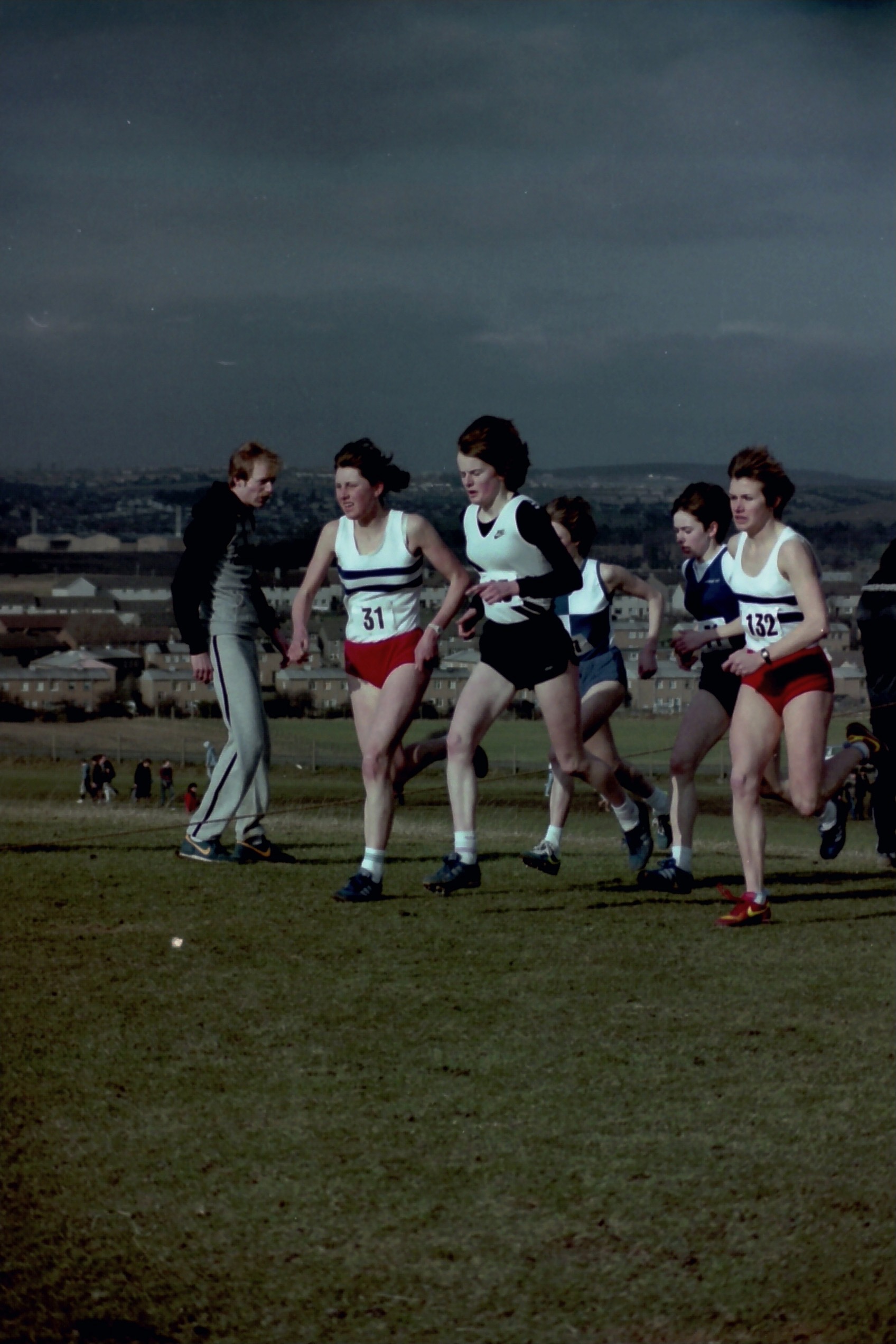
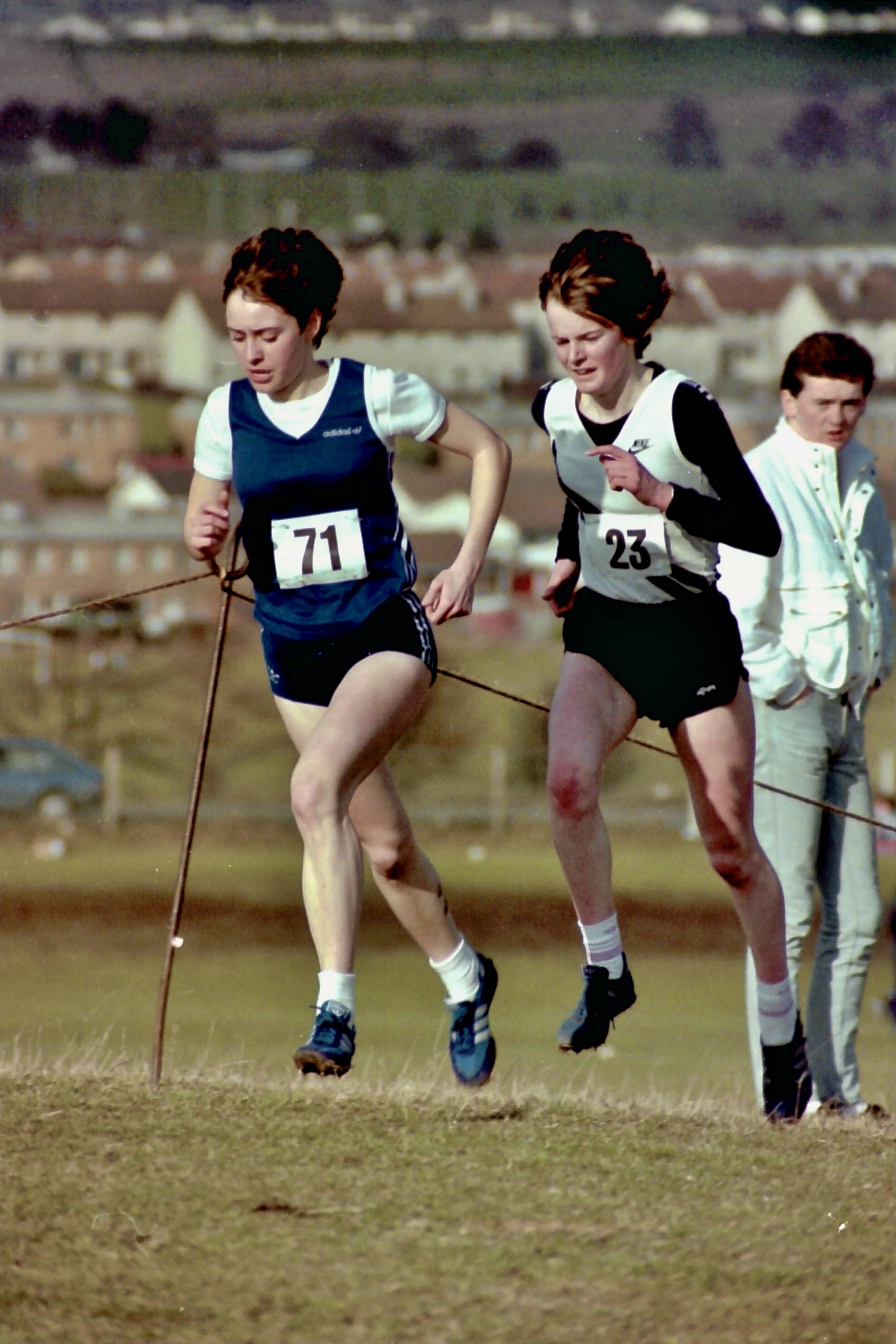
Leslie Judith

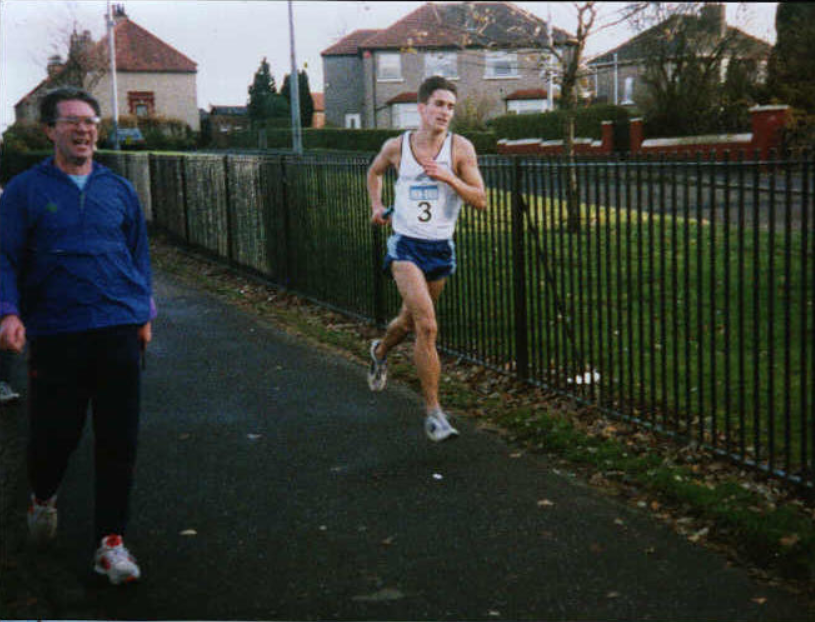
Leslie finishing behind Judith Shepherd at Coatbridge, 1978

Clearly a promising young runner she specialised in the 800m on the track where she progressed from 2:21 in summer 1974 to a best of 2:12.6.

If we start in 1974, Leslie was second in the West District Championships and shortly afterwards she was fourth in the East v West match at Meadowbank on 26th May in that pb of 2:21.   Leslie followed this up on 1st June, 1974,  in the SWAAA championships for girls, juniors and intermediates at Grangemouth where she was fourth in a 1500m 5:09.1.   In between times she won a 100m at the  Glasgow Championships in 13.8 seconds.

Her best 800m in 1975 was 2:20.0 which ranked her number 20 in Scotland.

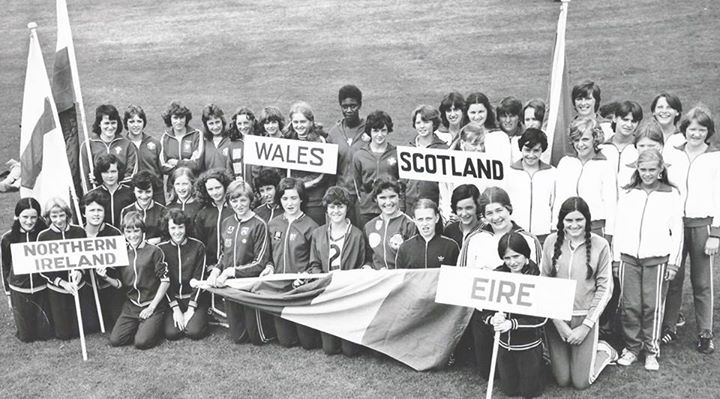
Early in the 1976 season, on 28th April, in a match between Glasgow AC, Glasgow University and Shettleston Harriers Ladies she won the 800m in 2:24.5.  Then in the Glasgow Highland Games on 15th May, Leslie finished third in the 800m which was won by Evelyn McMeekin.   That was followed by a third in the West District Championships at Grangemouth in the 800m with 2:26.4.     At the national championships in June she was third in the Intermediate age group championship in 2:21.9.   These performances were such that she was selected for and competed in the first Celtic Games, held at Balgownie, Aberdeen, on 14th August 1976 for the 800m.   Scotland with 110 points defeated Wales (94), Republic of Ireland (84) and Northern Ireland (51).    Her best performance that year was 2:15.8 which ranked her fourteenth in the country.

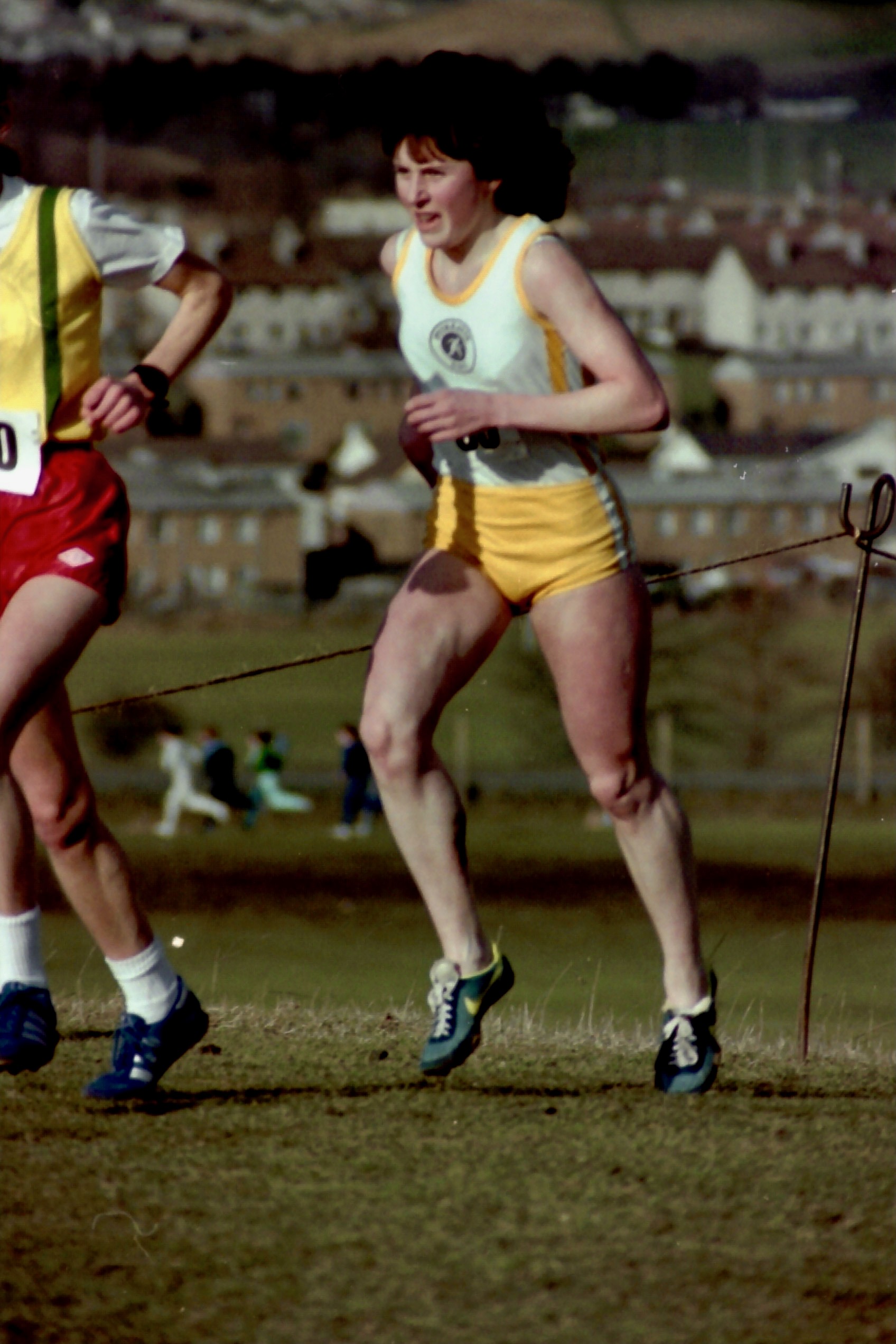
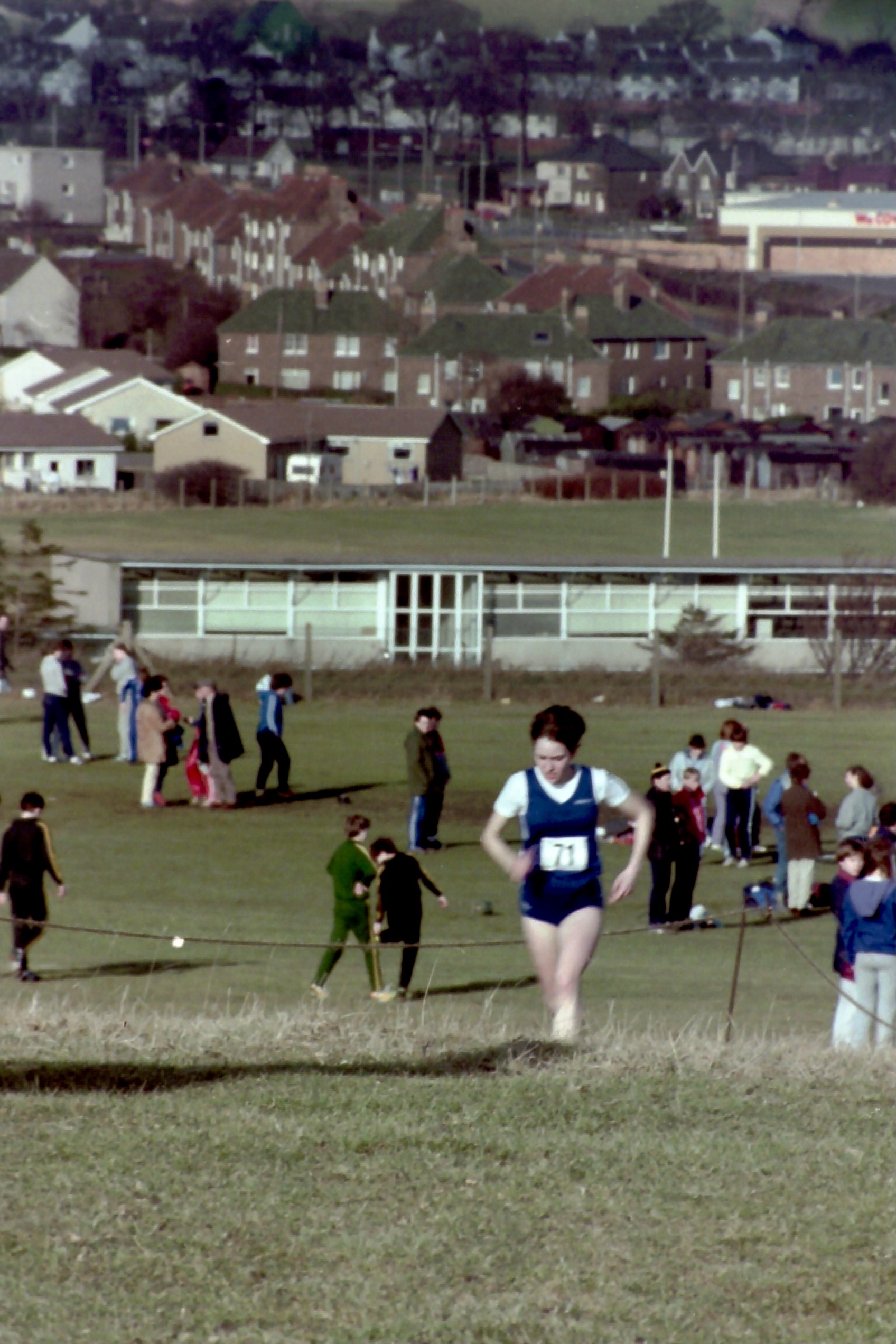
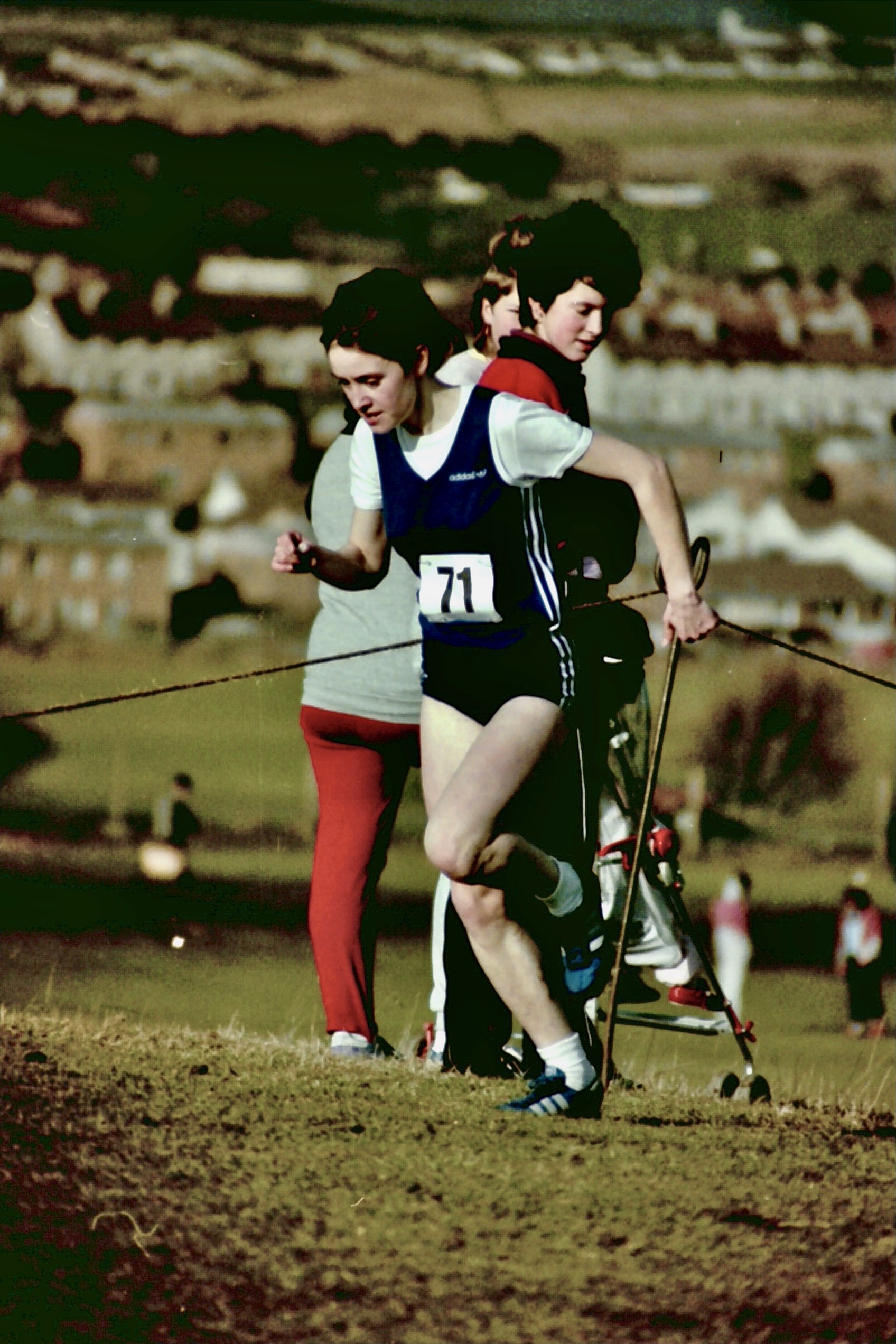
Roy at Scotstoun

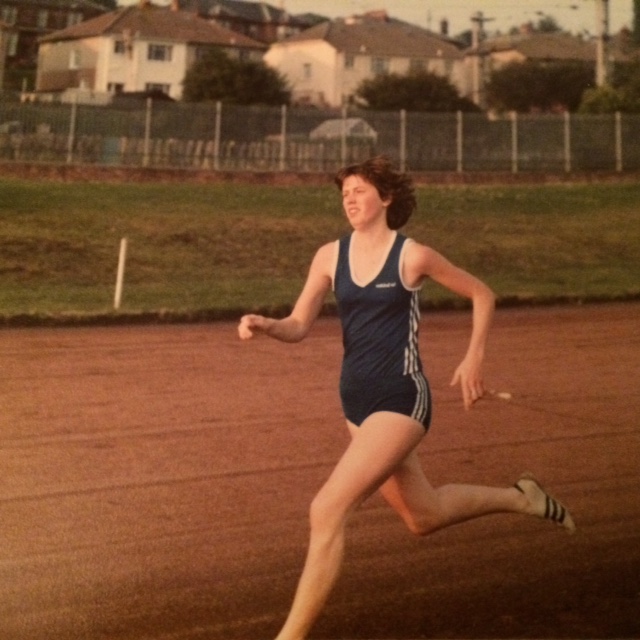
Leslie running at Scotstoun in 1980

A good club member she competed in several events in inter-club fixtures all over the country and was ranked every year from 1974 to 1983, usually in two events  with best performances of 2:12.6 for 800m,  3:01.3 for 1000m,  4:43.3 for 1500m, 10:58.3 for 3000m and 68.07 for the 400m hurdles.

 In 1977 in the SWAAA Championships Leslie ran 2:17.6.   In 1978 she ran even better: In the East v West competition she finished second in 2:14 and then on 3rd June the result for her was a 2:12.6 timing in the SWAAA Championships at Meadowbank.   This last was in a Commonwealth Games year and the standard was very high but the time ranked her eleventh among Scottish women that year: one place in front of Rosemary Wright (best of 2:14.1 with another future OIympian – young Lynne McDougall – further back again with 2:15 for the season.)

As a young senior she finished second to Christine McMeekin in the West District 1500m championship on 3rd May 1980.   Now, in the twenty first century, there are many leagues providing competition as well as demands from team managers for athletes to turn out as often as possible but there were few leagues in the 1970’s and athletes ran in sports meetings and highland gatherings all over the country.   Leslie was no exception and raced at such as Shotts, Carluke, Strathallan, Glasgow and Gourock.   Leslie won various events on the circuit  e.g. she won the 400m from scratch in the Gourock Highland Games in 67 seconds in May 1981; on 5th June 1982, Leslie won the 800m at the East Kilbride Games off a mark of 28 metres.    Still running well in 1982 Leslie won the 800m in the East Kilbride Games in 2:24 and finished the year with a 68.07 for 400m Hurdles placing her eighteenth in the rankings and in 1982 she ran 3000m in 10:58.0 and 400m H in 69.5 seconds.

Clearly a good athlete, Leslie said in response to direct questions on that part of her career in the sport that her training partner in the 1970’s was Alice Linton who was second in the SWAAA 800m twice and had a personal best of 2:06.   From about 1980 on she was coached by Iain Robertson and trained with Sandra Whittaker, Angela Bridgman and Yvonne Anderson.   Iain was in my estimation the best Scottish coach that I had the pleasure of knowing and working with and the athletes mentioned were all really top class runners with Sandra being a fairly successful Olympian.

Her best race, in her own opinion, was the 1978 SWAAA 800m at Meadowbank where in a top class field of Ann Clarkson, Evelyn and Christine McMeekin and Alice Linton among others, the field was bunched at the bell with Leslie right in there.   Then the athlete that she was tracking dropped out and she lost concentration.   Easily done – tactics are often keyed to another runner and when that athlete disappears from the track when you are travelling at speed there is always a temporary lapse.

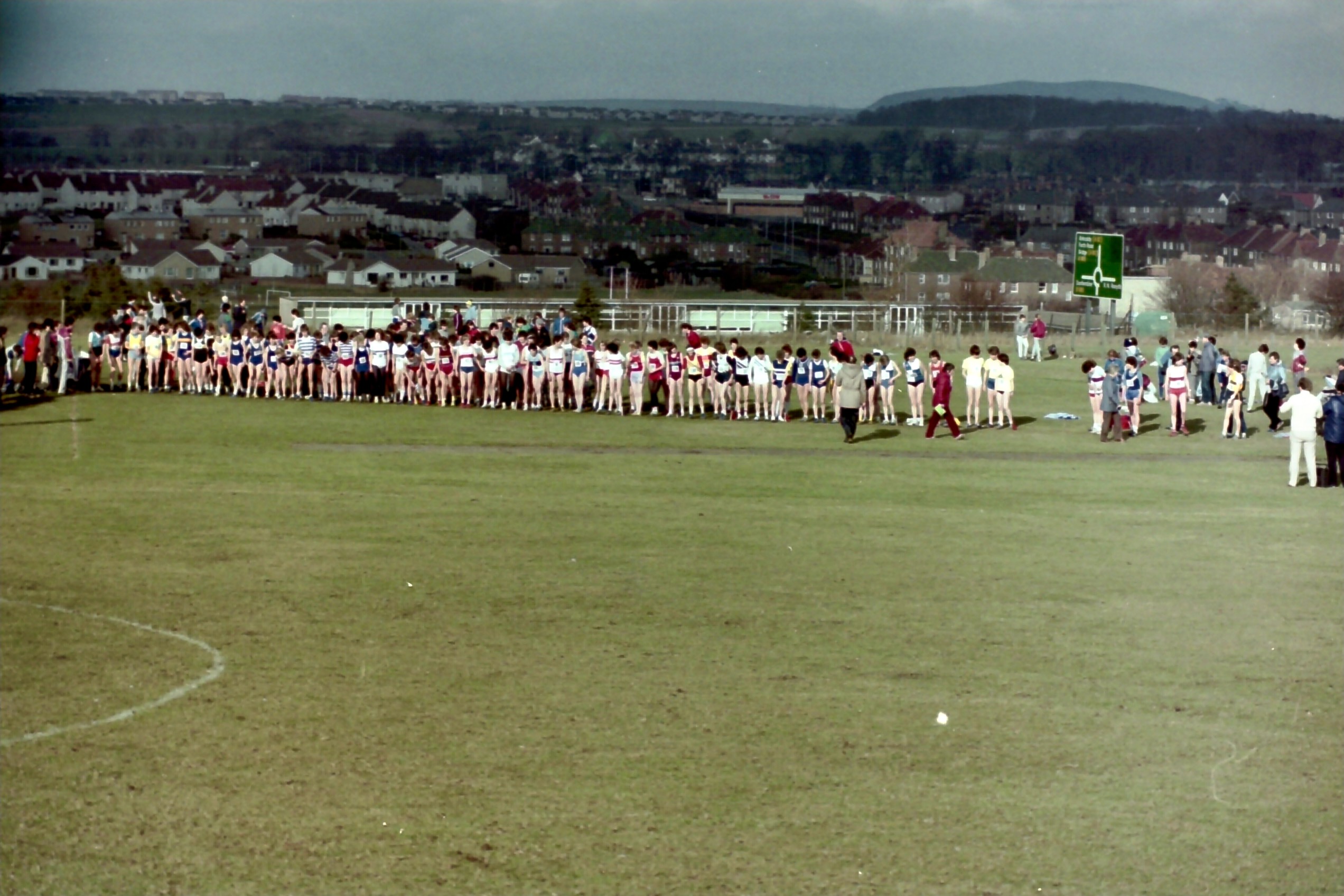
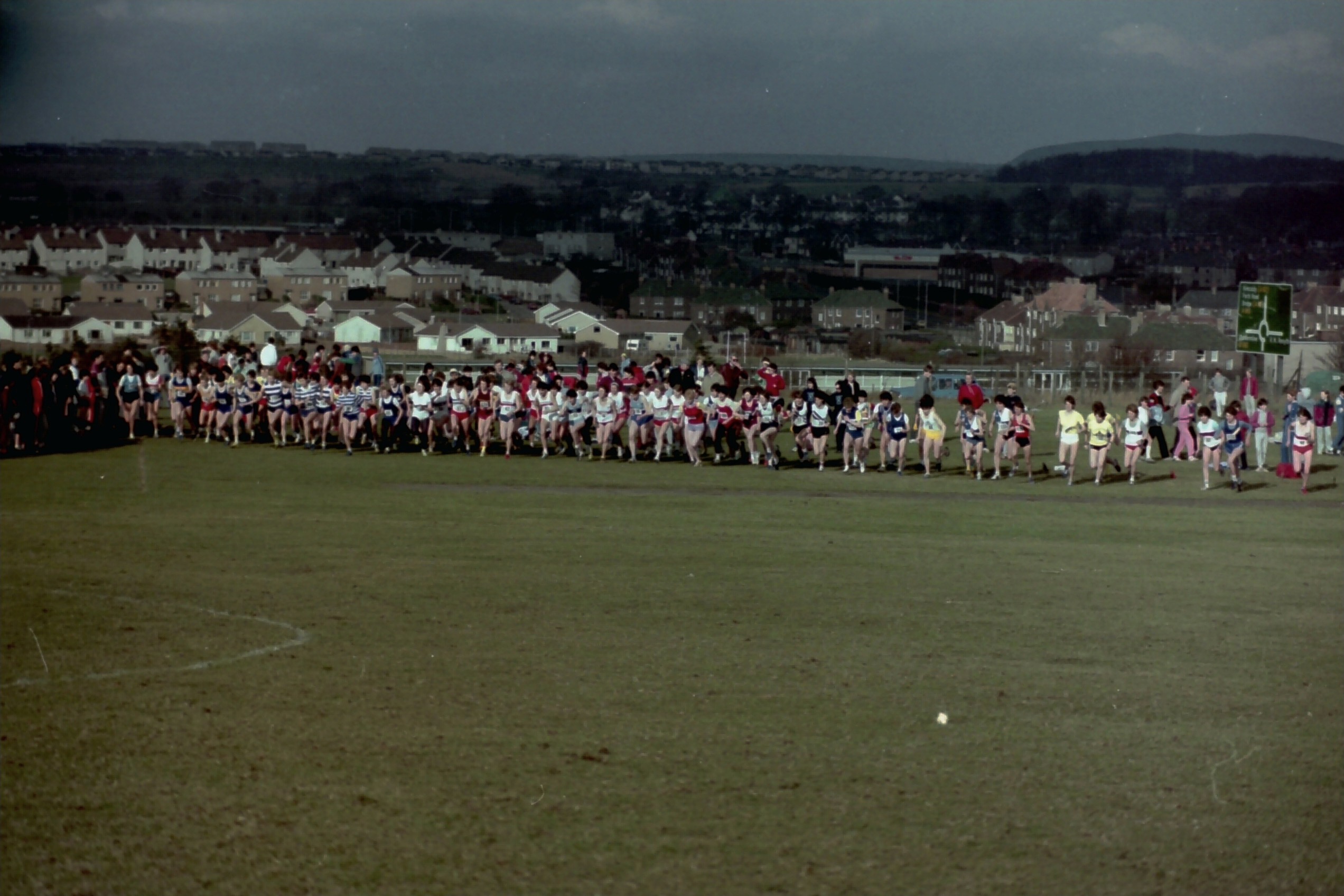
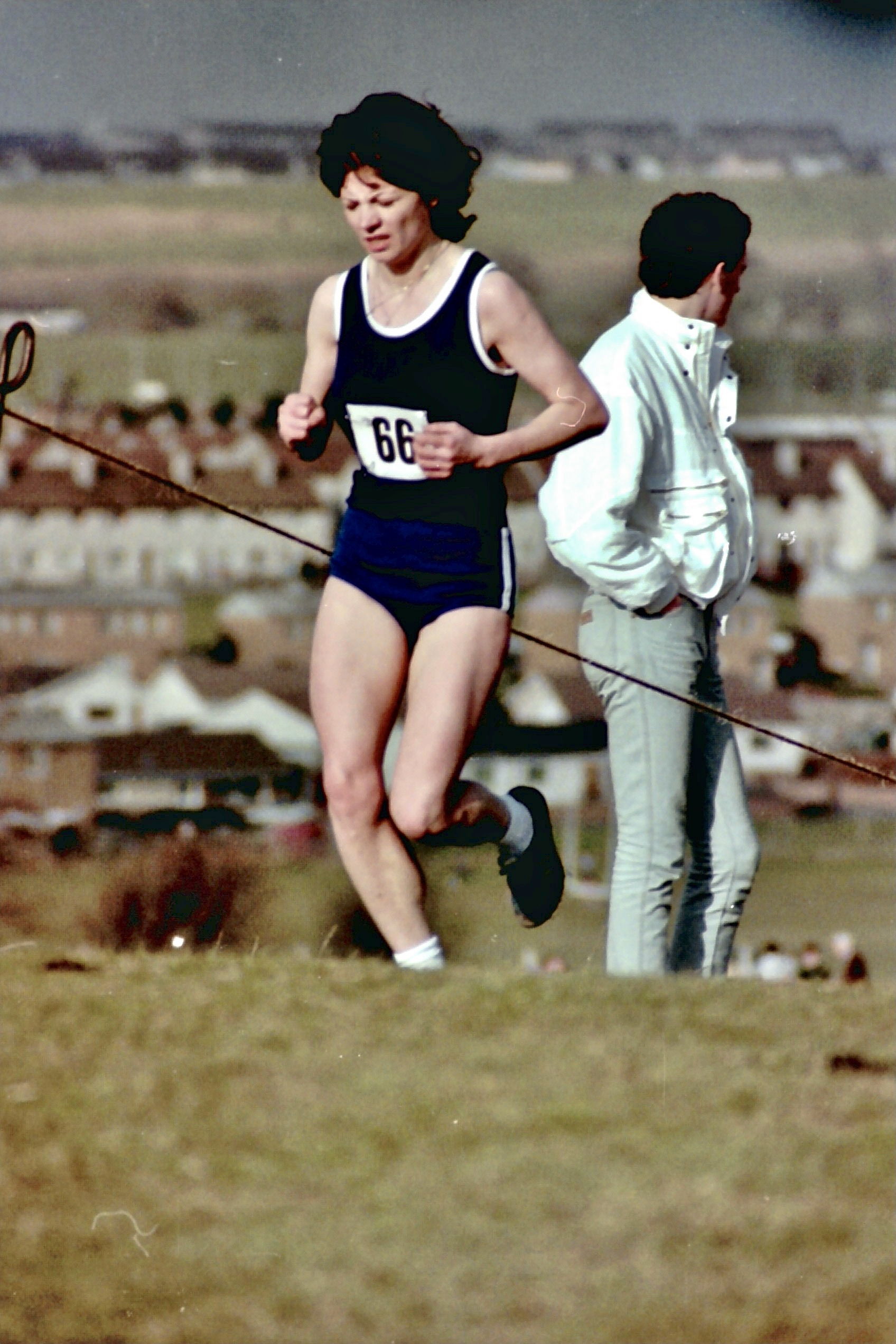
   Roy at CG 76

Celtic Games, 1976: Leslie is in the back row, to the right of the flag.

Leslie’s athletic career came to an end because of injury problems and, having been club captain in the early 80’s, she became club secretary in October 1985.    This was a post that she held in Glasgow AC and then City of Glasgow AC  until October 1999.   She had already become involved in activities outside the club and from 1982 she had been officiating in admin roles such as presentations, helping with the preparations for meetings, getting to know the officials and generally learning the ropes.   In 1984 Leslie got her qualification as a field events official: unfortunately it was just too late for her to officiate at the 1986 Meadowbank Commonwealth Games but she volunteered and got a job as a fire steward in the main stand which, she says, was a great position from which to watch all the athletics.  From that date she has officiated at meetings of all standards: open graded, league meetings, championships at all levels and at UKA TV meetings.

Roy Presentations 1984

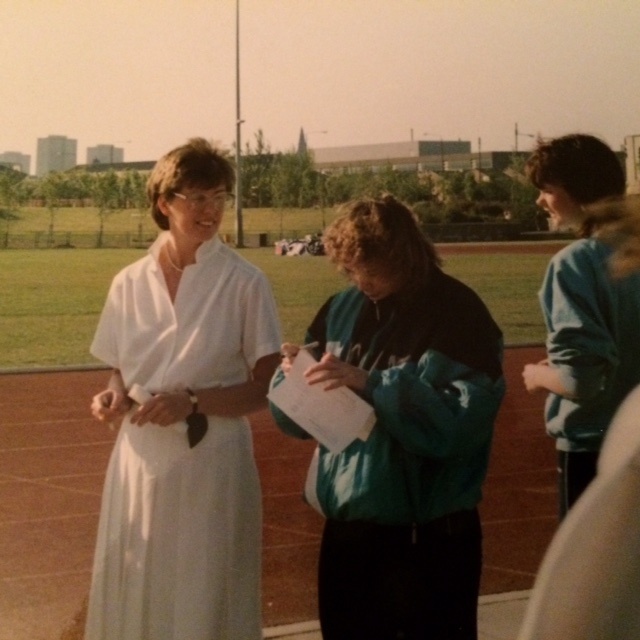
Leslie as presentations official in 1984

Like all good committee members she became a club representative.  In Leslie’s case she quickly became Division 1 secretary of the Scottish Women’s Athletic League (SWAL)  28th November 1989 until November 1992 when she was elected to the position of SWAL secretary.   Leslie held that post until 2008 – 16 years in all.    In addition to the club and league duties, Leslie had become the West District Representative on the SWAAA Executive Committee in 1990 and stayed there until the formation of the Scottish Athletics Federation in 1992.

   Halfway through this period Leslie’s abilities and willingness to work were recognised and more roles were put in her way:

  • In 1996 she was elected West District Track & Field Secretary, a post held until 1999; and again from 2006 – 2011;
  • More importantly she was first elected to the Scottish Athletics Track & Field Selection Committee in 1996 and is still a member of that body and has been chair since 2011;
  • Also from 1996 Leslie has been part of the Scottish team management.

You will note the number of roles running parallel at this point with responsibilities encompassing Scottish athletics activities at club, district, national and (via team management and selection) international levels.   All this in the short period since she had stopped running and racing.    This was the point when Scottish athletics was being reorganised; when the SAAA, SWAAA, SCCU, SWCCU and Hill Runners all came under the one umbrella of the Scottish Athletics Federation.   There were problems but it was generally a period of great excitement in the sport despite the inevitable teething troubles.   In addition to the changes in Scotland, there were changes in the other governing bodies in the British Isles and in the relationship with UK Athletics.

With her prodigious appetite for hard work, her administrative experience gained since she had retired from running and her can-do attitude Leslie was a natural component of the new order.   Her appointment on the Track & Field selection committee has already been mentioned and in 1999 she became chair of the Track and Field Commission and a member of the UKA Track & Field Advisory Group.    In 2000 she became a Scottish athletics representative on the UK Athletics fixtures meetings.   At the 2003 World Indoor Championships in Birmingham, Leslie was a technical official working in the technical information centre.   New responsibilities came her way in 2011:

  •  President of Scottish Athletics;
  • Chair of the Scottish athletics Track & Field Timetabling committee;
  • Member of UK Members Council;
  • From 2011 to 2013 was a Commonwealth Games Scotland Board Member;
  • From 2012 to 2015 was a Commonwealth Games Scotland Selection Panel member.

A considerable range of posts with a range of skills required do any of them properly.

Leslie presentation speech 2

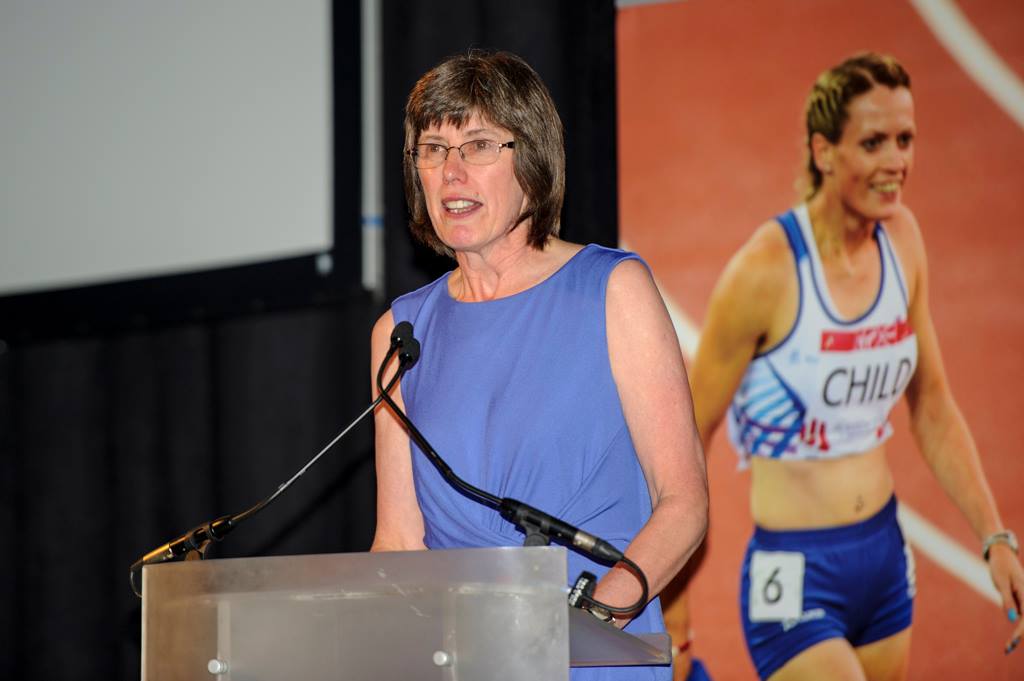
Leslie at the scottishathletics awards presentation in 2015

Just as with the athletes, officials and administrators regard being involved in any major Games as a highlight of their career.   Leslie has been involved with these since 2000.   They can be easily listed:

  • 2000 – Commonwealth Youth Games as Assistant General Team Manager.   This was the first ever CYG and was held in Edinburgh.
  • 2002 – Commonwealth Games in Manchester – Athletics Team Manager;
  • 2003 – Part of the management team for the GB & NI Team for the European Under 23 team in Bydgoszcz, Poland.
  • 2004 – Commonwealth Youth Games in Bendigo, Australia as part of the General Team Management.
  • 2005 – Part of management team for GB & NI team for European Under 23 Championships in Erfurt in Germany.
  • 2006 – Commonwealth Games in Melbourne – Athletics Team Manager.
  • 2008 – Commonwealth Youth Games in Pune, Australia as part of General Team Management.
  • 2010 – Commonwealth Games in Delhi as General Team Manager for Transport and Logistics (for all 17 sports!)
  • 2011 – Commonwealth Youth Games at the Isle of Man as a Field Official.
  • 2014 – Commonwealth Games in Glasgow.   General Team Manager for Transport & Logistics (again for all 17 sports).
  • 2016 – Commonwealth Games in the Gold Coast.   General Team Manager for Transport & Logistics (All 17 sports).

Ten major events: none of these is a straightforward task: the problems of organising transport for 17 sports over several weeks in Delhi, for instance, must have been many and varied.  To be involved at that level over a 15 year period represents a considerable dedication to the job.   Many would be incapable of doing these jobs at all, some would be able to do several of the jobs, and others while competent would be unable.   Leslie has always, as far as I am aware, had a good relationship with the athletes that she is working with.   Indeed one young athlete that I spoke to after his first Commonwealth Games compared Scottish officials most favourably with the English ones and mentioned Leslie in particular as being helpful.   The Gold Coast appointment is her fifth consecutive Commonwealth Games and must surely be some kind of record.

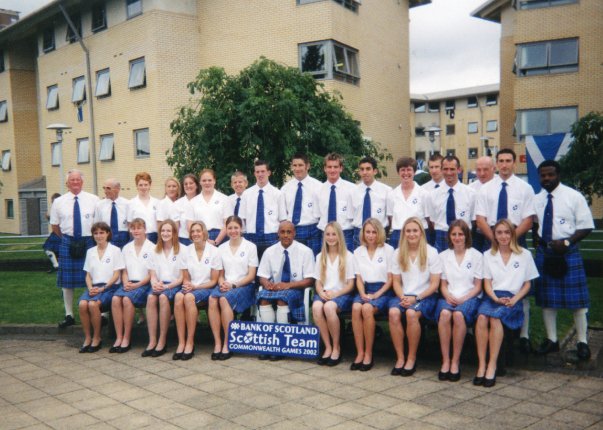
Roy CG 2002

Athletics team at the Commonwealth Games, 2002

Undoubtedly Leslie has many outstanding qualities but in the beginning, and maybe for several years along the way, she would have had examples of how to do the work and when asked she said that there were three main influences.

“Isobel Dunkeld:   was club Vice President and then President in the 70’s and 80’s and I learned a lot about club athletics from her.

George Duncan was my mentor.   He encouraged me and helped me to recognise my own abilities.   He and I ran the SWAL together for many years and were instrumental in making changes to the league.   We recognised that clubs were struggling to field full teams so instead of small clubs turning out with a handful of athletes we encouraged clubs to get together and form a composite team thus reducing the league down to one division which created better competition for the athletes.

In fact George and I introduced this long before it ever happened at UK level.   We would say that UKA got the idea from us.

Organisation of meetings was probably Margaret Brown.   I picked up a lot of tips when she was West District Secretary and I got to know all the officials, constantly asking “Who’s that?”

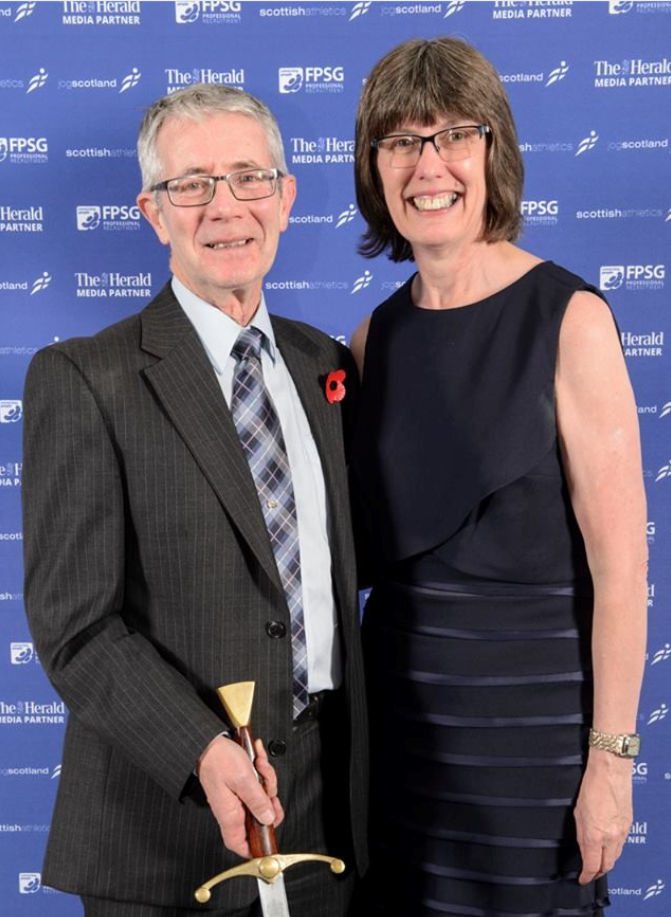
She has over the course of her career so far collected several honours and awards but three that mean a lot to her are the life-membership of her club City of Glasgow AC which was awarded on 25th October 2000, life membership of scottishathletics in 2008 and the Tom Stillie sword which was presented in 2002 after the Commonwealth Games in Manchester.

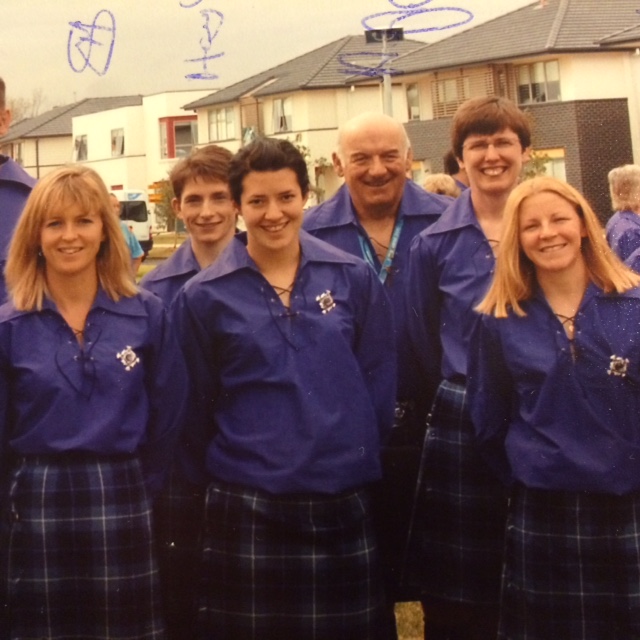
Leslie CG Group

Leslie (centre) at the Commonwealth Games 2006

Leslie started out in athletics in the mid-70’s  and started her officiating career in the 80’s – which are 30 and 40 years ago respectively, but she doesn’t seem to have lost either interest or momentum.   In fact she is probably doing more and gaining momentum with every passing year.

Rodger Harkins, Director of Coaching at Scottish athletics, said: “I have known Leslie for a number of years.   We first worked together on the Scottish Athletics Junior Commission in the early 90’s, as team managers for Scottish U15/U17 teams mainly Celtic Games, U20 teams at that time with the likes of Darren Ritchie, Sinead Dudgeon, Alison Curbishley, Lee McConnell, Ross Baillie, Andy Young, Ian Mackie and many others, U23’s and Senior teams.   

I have always had the utmost respect for Leslie and her ability to ensure that the right thing is done.   She is a very meticulous person in every detail and always manages to see things from various angles.   Leslie is a very passionate lover of athletics and that is probably why she has been, and still is, involved with so many aspects of our sport.”

Hugh Murray, National Coach Mentor for Throws, has also worked fairly extensively with her and says this.

“I had worked with Leslie on Team trips prior to 1999. But it was round about then that circumstances  brought our athletics involvement much closer together.

 Leslie had been deputy to George Duncan who I believe saw her as his successor, and his untimely death resulted in Leslie being appointed as the Convenor of the Track and Field Commission which back then was a very important role. This coincided with an invitation to myself to take on the role of Director of Performance and Excellence (sounds more important than it was), with Scottish Athletics, as a replacement  for John Anderson who was moving down South. So we sat on the Board of Management together.  Meg Stone was still National Coach at the time. 

It was a time of change at Scottish Athletics as they were in the process of becoming a professional National Governing Body and were changing from being a Federation to a Limited company which carried its responsibilities.

After a pretty lacklustre performance in Kuala Lumpur, we had a challenge. First of all we had to put together a fair and reasonable Selection Policy and process for Manchester 2002. We had to look at what progression over the next three years looked like for our athletes. The Bank of Scotland squads had not been going long but they were starting to produce some promising prospects, Chris Baillie, Richard MacDonald, Mhari Walters, Susan Scott to mention just a few. We also had to ensure that our promising athletes had the correct level of competition in their programme to prepare them for the big occasions. Leslie was key to all these decisions and to the work that went into it. Her organisational and logistical skills never failed to surprise me.

 Our first trip to Gothenburg to the European Athletics Calendar Conference resulted in what was to become an Annual event for our Juniors of a match with Cyprus. Israel and  Greece. We also achieved small team opportunities  through to many European countries including Russia, Hungary, Belgium, France, Estonia, Lithuania and Croatia. Leslie ‘Team-Managed’ many of these trips and I ‘Team-Coached’.

 Her organisational and management ability on these trips were second to none. I remember on one trip we had to do a transfer from one terminal to another at Heathrow airport.  One young athlete on her first trip was somewhat confused, and said to me, “Hugh how do you know your way from one terminal to another?”  As we stepped on an escalator I said to her, “I don’t – but don’t worry dear, when we think we are lost just look in front of you and you will find Leslie pointing you in the right direction.” We stepped off the escalator at the top and to her surprise, not mine, there was the smiling Leslie pointing in the right direction.

Roy and Hugh

Leslie with Hugh and team members in 2006

Whenever we did trips together Leslie was always the tour rep. In our down time, and that could be substantial after competitions abroad  Leslie could always be guaranteed to fix up a sight seeing trip to places of interest be it Red Square in Moscow, the old own of Tallin in Estonia or Reykjavik in Iceland and she was so well informed she could give you a guided tour without a tourist booklet.

 Her dedication to Team Manager responsibilities is also an example to others. In 2002 after 2 gruelling days of competition in Manchester at the test event 2 weeks prior to the Commonwealth Games it was 7 pm and I had just escaped the Manchester traffic and was about to hit the M6 for the long drive home. I had on board Leslie and the Team Physio when her mobile phone rang. The call was from one of our more experienced Senior athletes who had been pulled for a drugs test after the last competition of the day. “Do you want a chaperone” says Leslie.  I was already turning the car around by the time she told me we were going back. At 10 pm that evening the athlete finally peed. We were all grateful. She went on to team manage her first Commonwealth Games team two weeks later.

 Our next big adventure together came with her appointment as Team Manager and mine as Head Coach to the Commonwealth Games Team for Melbourne in 2006. Her Team preparation from 2 years out was meticulous. Melbourne unlike Manchester was an early Spring Games on the other side of the World. Preparing the Team was the biggest challenge either of us had ever faced. We had  had a practice with the Commonwealth Youth Games in 2004 in Australia and we drew upon that experience but this was something else. Together with Mary Anderson at Scottish Athletics Leslie spent hundreds of hours in advance looking after all the details such a trip requires. She worked closely with Commonwealth Games Scotland, Sports Scotland the Scottish Institute of Sport, our kit sponsors to mention just a few.

We had athletes leaving Scotland at different times to prepare for the Games in several different locations including Melbourne, Brisbane, and Johannesburg. I went out with the advance party but she made all the arrangements, and “Kept me right” until her arrival with the main party.

 In 2010 I was not working for Scottish Athletics and so made my own way to Delhi for the Games as I had athletes taking part. Quite a challenge. Imagine my surprise when clearing Customs at the airport  to look up and see Who?  That’s right – Leslie Roy, the first person I saw on my arrival in a country with a population of 1.4 Billion. She  gave me a hearty welcome and then guided me  to the area where my driver was waiting. It turned out she was at the airport as part of her role as Transport Manager for Commonwealth Games Scotland. For anyone who has ever visited the capital city of India you will be aware of the nightmare of travelling across the city. Who better then to have in charge than Leslie Roy. No sacred cow is going to stand in her way as she moves athletes from the Village to the Competition venues.

 I could give you so many more instances when Leslie has gone beyond the call of duty in the interests of our sport. The last one will be the cabaret act she put on for us at the Glasgow Games. At Major Championships like the Commonwealth Games there are often time when there is  lot of waiting around  especially at opening and closing ceremonies, and Glasgow was no different. About one and a half hours for each. To alleviate the boredom Leslie decided to single handedly entertain the troops. and what a great job she made of it. It included, singing, dancing and climbing high structures much to the delight of the Boxers and Rugby Sevens whose chant of ” Go Leslie” echoed in all our ears.

 I have known Leslie for almost 30 years I have accompanied her on numerous trips including Team Duties, Warm Weather Training and Official Meetings. Her contribution to athletics is immeasurable she has served the sport as Administrator, Manager with Scottish and GB Athletics as well as Commonwealth Games Scotland, as well as Official and Athlete. She is currently President of Scottish Athletics. But I think if you were to ask her which part of these duties is closest to her heart it would be the Celtic Games. Leslie competed as an athlete in the very first Celtic Games when it used to be an all female event. I don’t think she has missed one since.

 As the youngsters would say today  –   ” Leslie Roy” athletics legend.”

That’s where Hugh’s comments end but I should add that he knows whereof he speaks: his wife is a constant worrier when he travels without her to look after him.   He is quite forgetful and she knows better than anyone.   When she knows he is going on an athletics trip she asks who is going with him.   When he says it’s Leslie, she breathes a sigh of relief and says, “You’ll be OK then.”   They’ve never met but they have spoken many times on the phone.   That, for me, sums up Leslie’s reliability and reputation.

Roy 2015 officiating YAL

Leslie officiating at the scottishathletics Indoor Open, 2015

Several contractors say on their business cards and advertisements  “No job too big, no job too small” and despite all the committees, despite all the Games, despite all the honours Leslie could in all honesty say the same.   I have known coaches and officials say that they had outgrown working with young athletes, or with athletes who were not of international class: that could never be said of any really good official or coach and it certainly is not true of Leslie.   Two examples, the picture above shows her working in an open meeting in Glasgow in 2015 and until it ceased publication, Leslie could be seen walking round arenas selling copies of the Scottish Athletics Yearbook.

Leslie Glasgow 2014

 Leslie with athletics team staff, Glasgow 2014

Looking over this amazing career in the sport Leslie replied when asked what her biggest challenge so far had been:

“In some respects taking over from George Duncan as chair of the Track & Field Commission.    George was very respected within the sport and was extremely knowledgeable, not just from a Scottish perspective but on any athletic subject UK wide.   Due to ill health George was standing down so it was pretty daunting to take over from him.”   

“The Commonwealth Games – every Games has been different with different challenges.  From purchasing and arranging for 24 fridges to be delivered through security into the Glasgow 2014 village, making arrangements for 300 team Scotland members to get from the closing ceremony to the team party and not leave anyone behind in India and Glasgow and managing the athletics team on the other side of the world in Melbourne at the 2006 Games.”

What was her most rewarding experience as an administrator?

“Probably two things.   

The Celtic Games have always been close to my heart, probably because I competed in the very first back in 1976!   However it is always great to see the enthusiasm of youngsters starting out on their international journey.  

The Commonwealth Games – there have been many great memories, many challenges, lots of hard work and friendships made from the Games I have been involved in but overall it is one of the most rewarding experiences I have ever had.

 It has been a wonderful career in the sport – so far.   Who knows what the future will bring for Leslie Roy?

195

Colin Youngson: The Glasgow Years


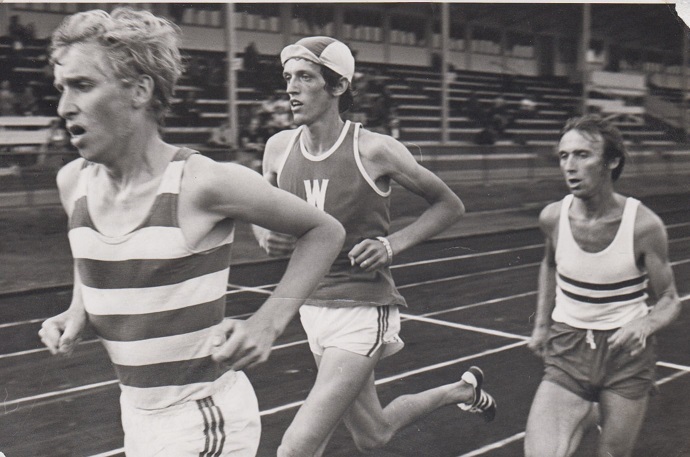
Above: Summer 1972, 10,000m. In Turku, Finland, Colin leads Pekka Paivarinta, who became 1973 World Cross Country Champion. Guess who won the sprint very easily?  

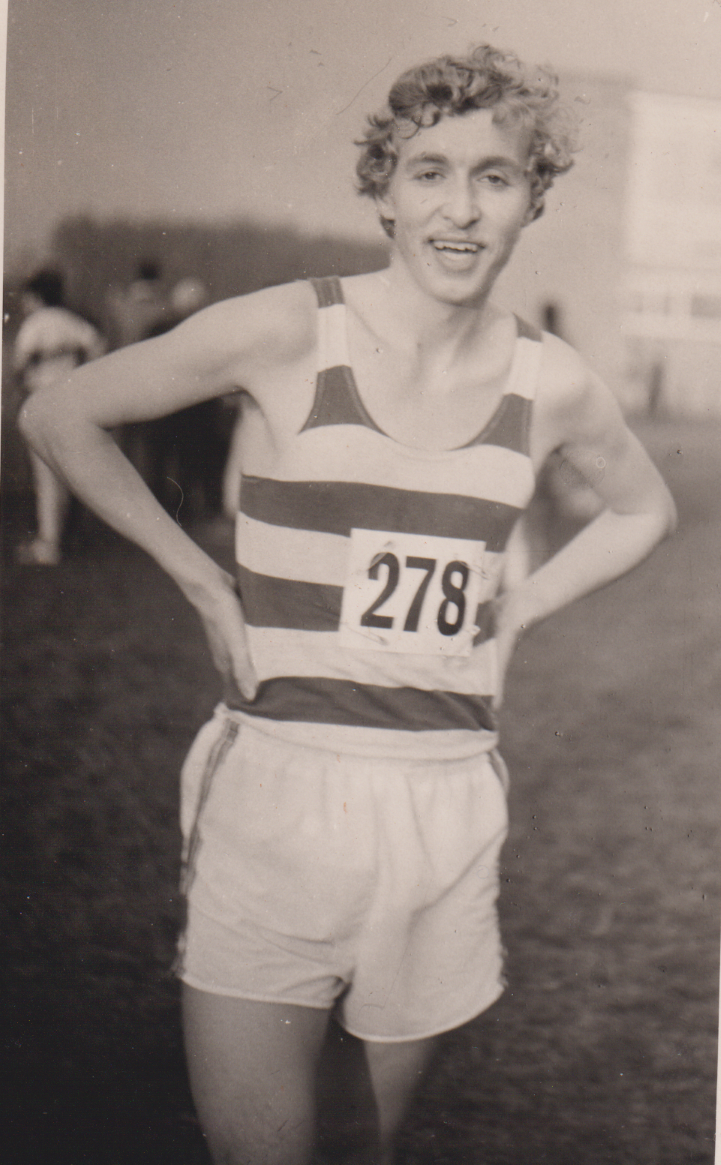
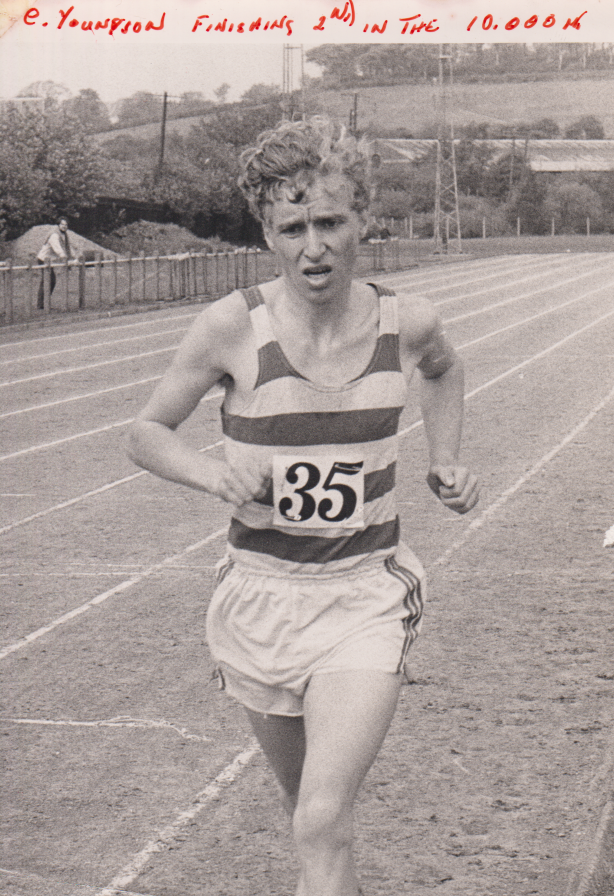
Colin as we all know was a good quality Scottish International endurance runner on all surfaces – he was a ferocious competitor on the track, over the country and especially on the roads.   This talent was best shown on the roads where he turned in record breaking performances at all distances from the various stages of the Edinburgh to Glasgow relay up to and beyond the marathon.    We have covered most of his career elsewhere on the website but what we have here is detailed coverage of the years that he spent in Glasgow running in the colours of Victoria Park AAC.   Everything done over this period is covered whether local races or national events with some insights into the way that clubs trained at the time.   Also covered is Colin’s 10 months in Sweden where he had some memorable race: the picture above shows him in front of  double Olympian and 1973 World cross-country champion Pekka Paivarinta in Sweden.   What follows is in Colin’s own words.

Victoria Park days: 1971-1973 

Victoria Park AAC was a traditional Glasgow club, heavily influenced by pre- and post-war training patterns. Tuesdays and Thursdays might feature club races or time-trials round the streets made familiar by the McAndrew Relay. Yet the usual system involved a slow pack and a fast pack, both with a ‘Pace’ to choose appropriate leg-speed and a ‘Whip’ to ensure that the pack kept together. However, by the early 1970s we were less amenable to regimentation. Ronnie Kane the coach would give stern instructions that the slow pack were to be given at least two minutes start, as a five-mile route like the ‘Shorter Knightswood Backward’ was tackled, but Alastair Johnston, Pat Maclagan, Ian Binnie, Albie Smith and co normally started chasing the moment their less talented clubmates were round the corner, swept past and bashed on mercilessly in the dim light of winter streetlights. No prisoners! On Sundays, only Pat and Alastair (and me) did long runs, which lesser men found ridiculously fast. The alternative was a testing cross-country effort out at Milngavie. Nearly all Vicky Parkers preferred the roads.

In late August 1971 I moved to Glasgow and started teaching English at Kelvinside Academy. Victoria Park AC was the club I joined and, as I built up some fitness, I first took part in the famous McAndrew Road Relay. The organisers VPAAC were very much a road-running team, and apart from Pat Maclagan, tended to underachieve on muddy cross-country courses. Winter club runs were all on short, fast, traditional pavement routes. It might be expected that the E to G would be the most important race of the season for such a club. Not at all. For it wasn’t even The McAndrew  – it was the midweek Vicky Park Trial for that event! After trundling round disconsolately on a Tuesday night with a streaming cold, I could only finish eighth on the course which was just short of three miles.

Eleven days later on Saturday 2nd October I was feeling better and ready to give it a go for the VP second four-man outfit in the McAndrew Relay proper. 79 teams took part, including all the best runners from the West. There was quite an atmosphere as the first stage runners charged off and swerved left out of sight. A restless crowd of expectant team-mates jogged and strode up and down the hill outside Thomas Aquinas School, which was used for changing. Watches were checked constantly, then at last a lone figure swung into sight and sprinted up to the line, while the others jostled and made room for the incomer and the crowd yelled encouragement. Willie Day from Falkirk was first man home, although his team eventually finished fifth. Alastair Johnston did well to come in second, just behind him and four seconds clear of Bill Scally of the holders, Shettleston Harriers.

The fireworks exploded on the second stage as Lachie Stewart sped into the lead to record 13.39. However that young rocket Jim Brown (Monkland H) showed scant respect by closing Lachie down, sprinting from 12th to second in 13.22, which proved to be the day’s fastest time. He had achieved a similar feat the previous year.

On the third stage, I took over for the VP second team in eleventh position and ran as hard as I could, up the little hill, swing left then right, along a residential street, hard left onto busy Crow Road (keeping to the pavement) and round past Anniesland Cross, over a long gradual hill, down to the entrance to Danes Drive, past Scotstoun track entrance, up a short hill, down again and then the final effort to the line. I could only record 14.21 but this was enough to take my team up to seventh. Eventually, Shettleston (Scally, Stewart, Henry Summerhill, Dick Wedlock) won by 21 seconds from VPAAC (Johnston, Innis Mitchell, Pat Maclagan, Hugh Barrow), with Monkland third and VP Two tenth. Wow! What a dramatic event!

The Allan Scally Memorial Relay at Garrowhill was named in honour of Shettleston Harriers’ legendary coach. Traditionally it came after the Kingsway and McAndrew and before the Glasgow University Road Race. These events enabled selected teams to finalise their eight-man squads for the prestigious E to G. Despite usually running for good teams, I dreaded the Scally Relay and found it absolutely exhausting. The bustling start, followed by a long gradual downhill which endangered suspect hamstrings, was bad enough; the brutally steep hill after the sharp right turn was worse; and the energy-draining seemingly-endless back straight, usually into a headwind was torture; and then one had to hang on and hope to avoid being outsprinted on the way down to the changeover. The host club were, at the time, the fastest in the land, so a heavy defeat seemed inevitable!

On Saturday 30th October 1971 I faced up to this delightful prospect for the first time. Although Pat Maclagan (22.32) moved us into the lead on the second stage, Shettleston had gone into the lead just before the final changeover. Lachie Stewart (22.36) had  no difficulty burning me off (23.27) but at least VP finished well ahead of third placers Monkland, for whom Jim Brown (22.09) was fastest of the day, with Ron McDonald (22.24) second-fastest. 

On 13th November, I managed fifth place (25.28) in the Glasgow University Road Race. Pat Maclagan (25.05) won by one second from VP team-mate Alastair Johnston, in front of Colin Martin, Mike Bradley, me, Andy McKean, Dave McMeekin, Hugh Barrow, Don Ritchie, Jim Dingwall, John Ferguson, and others including Dave Logue, Albie Smith, Eddie Knox and  Alistair Blamire ex 150. My diary comment was ‘Okay but chickened kick’.

The 1971 Edinburgh to Glasgow Road Relay on Saturday 20th November was described in the press as ‘one of the most exciting races of a long series’ and I remember it with an awful clarity. I had started work as a teacher in Glasgow, and joined Victoria Park AAC. Quickly I realised that this was a real ROAD-runners’ club – one sight of genuine mud and they chickened out immediately (apart from Pat Maclagan, who was, of course, different). As has been mentioned, the most important race of the year, I was told, was the TRIAL for the McAndrew Relay and then the McAndrew itself. However, in practice, the E to G team was a constant topic of conversation from the moment the previous race finished!

Naturally, after the 1970 race, most punters reckoned that only E.S.H. could provide the mighty Shettleston team with any kind of opposition. Yet, by the time that the baton got to me at the beginning of the Fourth Stage, it had turned into a contest between ourselves and the holders. Hugh Barrow, Pat Maclagan and Davie McMeekin had run exceptionally well to give me a twenty-one second lead over the young prodigy Paul Bannon (much later a Commonwealth Games marathon bronze medallist). I remember really belting off, full of determination and sure I was set for the run of my life. My hopes were shattered a few minutes later when, blind to the road signs, I charged straight ahead and didn’t turn right for Bathgate! Realising with horror what I had done (where was the bloody marshal?) I struggled across a patch of mud back onto the correct route. By then Paul had turned a lead of almost a hundred yards into nothing. Despite trying hard to retain some composure, I lost a further ten seconds by the end of the stage. Joe Reilly ran out of his skin to overtake Norman Morrison on the next leg, but Dick Wedlock timed his effort well on the long stage to draw clear of Alastair Johnston. Despite brave efforts by young Fraser Logue and Albie Smith, Shettleston finished with a 59 second lead. The rest of their fine team: Tommy Patterson, Lachie Stewart, Les Meneely, Tom Grubb and the inevitable Henry Summerhill. Probably they would have beaten us anyway, but I will always feel very guilty about my orienteering mistake, and frustrated because I really might have held Paul off. (Like John Robson in the future, I did my very best to make up for my grievous error by running exceptionally hard in subsequent Edinburgh to Glasgow Relays.)

On Saturday 27th November, I was a late selection to represent the Scottish Cross-Country Union team versus the very strong Northern Counties CC Association and the Army at Catterick Camp. The route was three muddy two-mile laps with two fences per lap. My notes read: ” Ran as hard as I could, finished 15th from 27 and sixth Scot. Sam Downie 9th, John Ferguson 10th, Allan Faulds 11th, Bill Stoddart 13th, Colin Martin 14th; beat Willie Day, Lawrie Spence, Paul Bannon. A minor disaster, almost three minutes behind winner David Slater. Interesting trip, nice people, despite bad run.” North won from Scotland and Army.

On 11th December, ran for SCCU Select versus Scottish Universities at Merchiston Playing  Fields. A close team contest, with SCCU winning by only five points from SU. I finished 12th. Andy McKean, Ron Macdonald, Don Ritchie, Jim Wight, Alastair Johnston, Frank Clement, Jim Dingwall, Henry Summerhill, Bill Stoddart, Gareth Bryan Jones, Dave Logue. Beat David Lorimer, Allan Faulds, Alistair Blamire, Lawrie Spence. Comment: “Ran quite well until last lap. Should have beaten Gareth and Dave. Don Ritchie just took off two laps out!”

1972

Morpeth to Newcastle 13.6 miles road race on New Year’s Day

I first competed in this famous race in 1972, running for Victoria Park AAC. We travelled down by train. I remember reading the big build-up for the favourite Jim Alder, the Geordie Scot, in the local newspaper ‘The Journal’. There was an enormous field (for that era) of 209 runners, who had to be entered by 9th December. Most of us took the free bus from Central Station, Newcastle, out to the start, and then we left our kitbags in a van which departed for the finish, leaving us ‘warming up’ in the rain. The race started at 1.45 p.m. Once the fast men shot off, the rest of us struggled along as well as possible. My training diary noted: “Raining throughout and quite cold. Not 100% effort but legs and feet sore. Tried fairly hard. A reasonable run, considering my fitness.” Jim Wight from EAC outsprinted Jim Alder by seven seconds to win in 1.05.47. My team-mate Alastair Johnston was an excellent third in 1.05.56. I ended up 16th (1.09.11) and Willie MacDonald was 45th (1.13.23), well under the standard medal time of 1.14.30. Vicky Park finished third team and each of us won a frying pan worth £1! What I remember most is that the great Jim Alder, Commonwealth Marathon gold and silver medallist, modest, tough, honest and generous, actually walked his fellow Scots more than a mile to the train station, chatting away in his inimitable relentless fashion.

Saturday 19th February was the date of the SCCU 75th Annual Championships, held at Currie High School. In the Senior Race, I ran surprisingly well (for a road man) and was very pleased to squeeze into the top twenty in 19th place. Ian McCafferty won, from Jim Alder, Alistair Blamire, Andy McKean, Lachie Stewart, Jim Wight, John Myatt, Doug Gunstone, Gareth Bryan Jones, Eddie Knox, Colin Martin, Tommy Patterson, Don Ritchie, Sam Downie, Alex Wight, Pat Maclagan, Allan Faulds and Norman Morrison. Willie Day was 20th and I also beat Matt Paterson (Steve Ovett’s training mate), John Ferguson, Henry Summerhill, Martin Craven, Kenny Ballantyne, Alan Partridge, Bill Cairns, Alastair Wood, Steve Taylor, Sandy Keith, Martin Walsh, Graham Milne etc.

Saturday 4th March was the English National Cross-Country Championsips at Sutton Coldfield. Very very cold! This legendary chill-fest was won by tough Malcom Thomas. Three thousand took part in Arctic conditions. Heavy snow fell. I went fairly well for two 3 miles laps, then faded slowly. Finished 112th (still have the disc) but chose not to hand it in since the queue was long and I needed to get dressed to avoid death by hypothermia! Scots in front were Dick Wedlock (15th, Jim Wight (16th), John Myatt (78th), Doug Gunstone (89th) and Tommy Patterson. I out-survived: Allan Faulds, Lachie Stewart (fell in a ditch but finished 149th), Tom Grubb, Willie Allen, Ian Macintosh, Ian MacMillan, Colin Martin (187th). Hugh Elder, Ron Paton, Kenny Fyffe, Phil Dolan and Dougie Gemmell. Nine Miles in snow? Never again!

Also in March, the Glasgow County Cross Country Championship was held. Due to bad weather, this turned into a six miles road race! I won, thirty seconds clear of my hero and good friend Dave Logue. Glasgow champion? In name only!

From Sunday 9th April at 4 pm to for 80 hours, 25 minutes and 53 seconds, Aberdeen AAC (My second-claim club) tried to break the record for the John o’ Groats to Land’s End Relay (with a ten-man team).  Despite a valiant attempt to speed up during the last hundred miles, we finished 45 minutes outside the record. Ours was the second-fastest-ever team time and the fastest north to south, but we were very disappointed. Yet we resolved to try again in 1973.

Then it was time for a series of 80 miles training weeks.

The Glasgow Corporation Parks Department Annual Championship Meeting (otherwise known as the Glasgow Highland Games) was held on the cinder track at Scotstoun Playing Fields. However one event only finished there – the gruelling Drymen to Scotstoun Road Race, contested over at least 15 miles. This was one of Vicky Park’s most important home fixtures. On 20th May 1972, recovering from a sore knee, I was ready for only a fairly hard session. It was very hot and sultry as the runners left the pleasant village of Drymen. Shortly after the start, the course ground painfully up a very long steep hill up the Stockiemuir road to the Queen’s View at the five mile point. Willie Day (Falkirk Victoria Harriers) was very fit and departed up the road, while I found myself isolated in second. After a pit-stop, I kept going downhill through Bearsden and into Glasgow, up and down some testing dips until the welcome flatlands of Danes Drive and the final lap of the track had been negotiated. Steady hard training, which meant that Willie (1.19.48) was more than four minutes in front.

Nevertheless, this race became a personal favourite, because the early uphill section suited my strengths, assuming I was up to the challenge on the day. Consequently I ran the Drymen another five times, even after I was based in Edinburgh.

By 1972, Colin Martin had become one of my main rivals. He was undoubtedly faster but I was gaining in stamina. Two races illustrate this. At Meadowbank on the 27th of May, we both had a go at the SAAA Ten Mile Track Championship. EAC’s Andy McKean went off with Colin in close attendance but then dropped him before going on to win easily. My training diary states: “Caught CM at three miles after a big effort and then we took two laps each until I made a break at seven miles and struggled to the finish. Andy 49.25, me 50.15, Colin 50.45.”

1972 saw the amazing Alastair Wood’s final victory (his sixth) in the Scottish Championship marathon – and a suitably crushing one it was too.

On Saturday 24th June, a tailwind produced a brisk pace and by eleven miles the leading group was down to five: Alastair Wood, Bill Stoddart, Willie Day, Davie Wyper (a marathon specialist from West of Scotland ) and Colin Youngson (Victoria Park AAC). The latter, an Aberdonian, was running his third marathon. Youngson was teaching English at Kelvinside Academy and training hard with the likes of Pat Maclagan, Alastair Johnston and that illustrious star of the fifties, Ian Binnie. Encouraged by second place to Andy McKean in the SAAA Track 10 (50.15), Colin was about to discover that marathons inflicted fresh levels of discomfort!

By the turn (and logically into a stiff headwind) Stoddart dropped back, followed in turn by Wyper and Day. Only the foolhardy Youngson sheltered behind the tough near-veteran Wood. This might have gone on for some time, but Wood glanced behind and barked imperiously something like, ‘Please do some work, you lazy good-for-nothing!’ Accustomed to being inferior to the great man, who had humiliated him so often (by tongue and leg-speed) during Sunday sessions back in Aberdeen, Colin obeyed instantly. After half a mile of battling the breeze he heard a brief derisive chuckle and could only watch vacantly as Alastair Wood, tactical mastermind, surged past and disappeared into the distance and out of sight.

Youngson’s training diary reads ‘Kept going fairly well till 21; cracked up from there. Curious shivery increasingly weak feeling – must do the ‘diet’ next time. Detached observation of crack-up. Must have lost at least 600 yards on Davie Wyper in last three miles. Innis Mitchell shouting a warning outside the stadium was no use – or losing silver on the track. Couldn’t have cared less – extremely careful walk/jog up the final straight. Albie Smith timed my last 200 metres at 80 seconds! Surrounded by blankets, old nurses and eager stretcher bearers. Hot very sweet tea. A. Wood’s ruthless but still very good. Determined but tired booze-up later.’

Finishing times were: first Alastair Wood in 2.21.02; second Davie Wyper (West of Scotland) in 2.26.14; and third Colin Youngson in 2.26.45 (a personal best, nevertheless).    Athletics Weekly’ summed it up brusquely. ‘Alastair Wood (39) scored a decisive sixth victory in the marathon, and from all accounts is ready for more yet. He was home and dry for more than five minutes before the next man.’

Jim Logan, a good supporter of Victoria Park AC, was more dramatic in the ‘Bearsden and Milngavie Herald’. ‘Unfortunately in the stadium there was a complete absence of progress reports on the marathon. With an exhausted Colin Youngson being passed on the final circuit by David Wyper (reminiscient of Tom Richards similarly overtaking the late Etienne Gailly at Wembley in 1948), there must have been an exciting chase over the later stages.’

When interviewed by Brian Meek in the Scottish Sunday Express, ‘the most popular winner’ of the SAAA Championships, Alastair Wood ‘fresh and relaxed after the race’ said, ‘I took the lead after 15 miles and was on my own from then on. These youngsters are getting slow nowadays. This is the tenth anniversary of my first marathon win. I intend to go on running as long as I enjoy it.’

Saturday 8th July: Mamore Hill Race. First: Bobby Shields (1 hour 42 minutes 4 seconds); second Pete Duffy (1.43.31); third Colin Youngson (1.46.25); fourth Brian Finlayson (second in Ben Nevis last year) in 1.48.53. Comment: ” one mile road, medium long steep stony hill, long section of undulating very sharp and stony ‘path’ through burns, peaty mud etc. Then very long climb (too much chicken walking), and very treacherous descent (went wrong, semi-precipice, flat soles a mistake here, should have worn ripples), then seven miles of hilly road, caught BF, but too far behind, mainly due to descent. Not flat out but quite glad to finish. Soreish thighs, lift home with Pete Duffy and family. Not as tough as Nevis or marathon.”

12th July to 11th August: Finnish Trip with Don Ritchie.  I ran two races in Finland. Their Olympic Trial Marathon (6th in 2.32.18) in Helsinki; and, on a famous running track in Turku, a personal best 10,000m (30.39). Here are the relevant descriptions.

Tuesday 25th July: MARATHON RACE DAY.

Lie-in, much eating of sugary foods and more. Into town and to Olympic Stadium for medical check – Finnish competitors a bit stand-offish but doctors helpful and our good friend Tapio turned up, which eased matters further.

We were taken into the ‘torture chamber’ two at a time – a fiendish den packed with cycling machines instead of racks – neither of which were used. Stage 1 was a series of questions about the state of our health, accompanied by various prods and taps and pulse and blood pressure. Stage 2 was a blood sample from left arm, inside elbow. The nurse was sympathetic, but no chocolate to mend the wound, just cotton wool and sticky tape.

We each received a big envelope with numbers, programme, instructions etc, and Don and I were considerably tickled to note that, in a little envelope marked ‘Great Britain’, we were given a formally phrased card: ‘We have the honour to invite You to the closing banquet of the inter-nation match Finland – G.B. – Spain at Restaurant Royal on July 26th, 1972 at 22 o’clock. Suomen Urheilulutto r.y. Finnish A.A.A.’

Back to Hiekkaharaju, more food and drink and rest, fixing numbers to vest etc. Into the stop before Helsinki and a slow stroll to the stadium – attracting the usual amused/incredulous attention due to the kilts. The crowds streaming to the match were very large – football is minor here compared to athletics, and one can understand why the Finland-Sweden ‘derby’ athletics contest is reputedly sold out three months in advance.

We got past the guard dogs with no difficulty, due to little green tickets, and then changed into kit. Many of the British team were recognisable at once, both those parading in the arena while the anthems were played, and those warming up on the indoor tartan strip. Les Piggot (Scottish sprinter) seemed particularly worked up for the start – not of the sideshow marathon trial – but of the main event: a triangular international athletic contest between Finland, GB and Spain.

Soon our turn came, and we marched round the outside lane, looking at the colourful crowd stacked in tiers around us. Jogging about at the start went on for a minute or two, while 100 metres and high jump continued, then we were lined up, checked, instructions given (ours spoken aside by the doctor). The command was given, gun fired and we were off! Four laps of the track (we held back) and then exit, down an incline, and into the first lap of 14 round the environs of the stadium – mainly flattish, first half probably uphill, second downhill. A fair amount of people surrounded the route, which was cordoned off from traffic, marshalled by policemen, with two sponge and drink stations. Some heckling went on, especially from little kids – all rather good-humoured.

In the race itself, we held back, established a group which began to catch some of those who dropped off the leading bunch (bent on Olympic selection). On another day, we would have hung on, but were both conscious of inadequate preparation and basic non-recovery from previous races (Scottish Marathon and Mamore Hill Race for me – Forres Marathon for Don).

Unfortunately, just as things were progressing steadily, about 12 km Don contracted stomach cramp and, unknown to me, had to stop, indulge in a frantic search for a bog, sojourn there awhile, then start off again, by which time he had lost three minutes on our little bunch. After that he staged a great comeback and was catching everyone apart from the top three at the finish.

Meanwhile, at about 18 km, I lost patience and shot forward, gaining about 50 seconds in a lap, caught the lad that eventually finished in front of me in fifth, sailed past and felt good until 25 km. Then, from 30 km onwards, slowed considerably, especially from 35 km to 41 km. This ‘collapse’ can be put down to lack of fitness, lack of company in front or behind (no one in sight) and an overwhelming desire to finish above all, which led to conservation of remaining energy, some ‘chickening’ and getting stuck in a slower pace.

Tapio kept yelling out pace schedule, another lad practised his English on ‘laps to go’, kids chased, people added what sounded like cheerful insults, and the organisers of one sponge station smilingly got out of the way when I came past, grabbing a sponge in characteristically splashy fashion.

On entering the stadium, I felt better, strode out, and took the opportunity of waving to the ribald crowd, on being announced as Colin Youngson from Scotland!

I finished sixth (2.32.18) with Donald eighth (2.33.37) not far behind. Twelve finished and eleven dropped out (mainly fast guys who did not make the three-man Finnish Olympic team). I felt rather weak afterwards, then made myself rain sweat and feel sick by rapidly consuming one bottle of orangeade and another of Vichy water. Tired in the shower, but managed to stagger from dressing room to station – en route meeting Tapio’s sunburned sister and being induced to sign some autographs – it was mainly because of the kilts.

Collapsed into bed when we eventually reached Hiekkaharju.

Wednesday 26th. Restless night, little sleep – but up at 6 a.m. for sandwich and three pints of liquid, watching a thunderstorm. Up again at 8 a.m. for breakfast and one litre milk, and rest of morning writing, reading, filling in results and listening to tape recorder – Scots dance music, mouth music and quavering genuine folksong. Tatties, eggs and yoghurt for lunch. Cleaned and tidied and into town – to the Old Stadium.

Jogged twice round sawdust path – nice and bouncy for bare feet – but unfortunately there are stretches of gritty sand, stones and tarmac – my poor old tootsies! Shower and wait for Don – search for coke and wait some more for Don – watching the immense Finnish crowds flocking to the stadium – running the gauntlet of insistent raucous programme sellers and one determined youth with lungs of steel and two feet tall, yelling something like ‘Korrvo’ and blowing a horn – he seemed to sell them all too!

The match, seen from the athletes’ section of the seats, was very exciting and of a high standard – umpteen records being set. Highlights included David Jenkins 200m – straining every fibre round the bend; the Javelin – with the entire crowd behind its heroes; Mariano Haro’s runaway 10,000m win, with castanet clapping from the Spaniards; a fine Steeplechase; Geoff Capes powerful record-breaking shot – his jubilation; and finally the men’s 4x400m relay, including the Swedish team and an extra British one as well as the Finns and Spaniards – GB2 barging and making David Hemery drop the baton – then Jenkins incredible 300m to close the gap, though he couldn’t quite do it – thrilling stuff.

After the National Anthems we were rather at a loss about what to do, since we could not see Tapio around, and did not know the way to the Restaurant Royal ourselves. However, we bumped into the useful doctor again and he courteously arranged for us to tag along with the Finnish team bus – after we had suggested that we could rather not announce our presence to the British team!

Consequently, we followed Markku Kukkoaho, who I presume was the captain, and who had snatched that thrilling 4×400 victory just before. He was still warming down, but afterwards we accompanied him and Ari Salin, the hurdler (13.8; 49.5) back to the hotel, where we got onto the bus, which eventually took us, with some of the team (including attractive blonde ladies) to the restaurant, which we found was near the station.

The crush was considerable – three teams, officials, hangers-on – but the place was rather plush (plus patio) and the buffet was magnificent – plates too small to try everything – though we tried, and I annexed some cheese. We sat quietly in a corner, enjoyed our meal, talked to a couple of English official-types, and departed about midnight, after the speeches (Finnish – polite, Arthur Gold – longwinded, Spanish – short) and the presentations, including long-service silver tea service to Jorma Kinnunen) and, during a thunderstorm, we had time to catch the ‘boozers’ train. Bed by 1 a.m.

Friday 4th August

Halfway through another large tea, Markko suddenly intimated that there was a 10,000m track race in the district championships that very night – if we felt like it! Stuffed with food (especially Don), legs ruined, the two mad Scotsmen found themselves accepting this lunatic challenge – at two hours notice! ‘We won’t have to train today if we race,’ said Don.

Slightly bemused by our own lack of sense, we sat around for a bit and vaguely prepared. I attempted a new packing system, then Don and I and Kullikkie and Markko walked down to Turku track.

After a few moments bickering with officials, we were allowed to run as non-counters. Warming up was half a mile stagger and then sit down again. We both felt useless – too much holiday and Finnish food, too little training! However, certain of the amused glances from the local spike-wearing athletes at the start, as we joined in, clad in unfamiliar kit and flat shoes, needled me a bit, and I promised myself that certain of the less fleet-looking individuals would not be allowed to beat me – at any rate they would at least be behind me when I dropped out!

Last night’s viewing of the 5000m had convinced me that there was only one first class athlete – Pekka Paivarinta, the Finnish International Steeplechaser (8.25.4, second versus GB and Spain behind his own man Kantanen). I guessed that I might be able to hang on to the rest for a while at least, fat and unfit or not, and that P.P. an angular though cheerful character wearing a jockey cap, might not push the pace, since he had already run a 400m hurdles (58.6 for second place) and a 1500m (3.53.6 for first) that night.

Therefore, when the starting gun fired, I tagged on to the leading bunch at the extreme end, finding the pace fastish but not unbearable. Don’s fruit-full tum put paid to him, unfortunately, though he was announced as me, and vice versa, till over halfway. At 8 laps or so, I was feeling tired but gradually moving up as the bunch decreased in number, and encouraged when one bloke stepped off the track in front of me! Luckily, the pace slowed about then, until the ten laps to go stage (i.e. 15 gone) – PP was just jogging, as I’d surmised.

Getting bored with standing on the heels of a fellow with a headband (the local Frank Shorter) as quoted later in the newspaper, I made a fairly ill-considered move into the lead, pushed for a lap, then reined it in again, waiting for someone to take over – nothing happened! PP sat on my shoulder, grinning in reply to my rude Scottish exhortations not to be so lazy.

However, I noticed a couple of the group of six were sagging so, at six laps out, delivered my ‘finishing kick’ which lasted about one and a half laps, enough to drop the third guy Risto Lindstrom by 20 yards or so.

Seeing that my legs were coming off, and hearing the grampus-like puffing noises, PP jogged past and away. Somehow, I managed to con RL into waiting too long to sprint – my last lap was truly pathetic, but the gap was held until the final straight, too late for him.

First: Pekka Paivarinta 30.24; Second CJY 30.39; Third Risto Lindstrom 30.40.6. For me, this was a marginal personal best! On a windless night on the fast coal dust track by a fat Youngson – sub 30 minutes must be on when I am fit and prepared. Exactly three minutes outside the world record – Ron Clarke breathes again….

(In early Spring 1973, Pekka Paivarinta became World Cross Country Champion!)

Having stopped blowing, and shaken hands, I didn’t stop laughing for half an hour afterwards. M and K had seen my ‘strategy’ and appreciated the joke, I think. There are advantages being an unknown from famous Britain – they don’t realise how bad you are!

Tuesday 22nd August: Victoria Park AAC 10,000m ‘championship’ on Scotstoun track. I won in 30.44, with Pat Maclagan finishing in 30.51. Very uneven pace, felt rotten but eventually got away. Innis Mitchell lapped.

By the 16th of September Colin Martin was much fitter. In the afternoon at the Grangemouth so-called Highland Games, he sprinted away in the 3000m to produce a PB of 8.21.4, five seconds clear of me (in my PB 8.26) and young Lawrie Spence. According to the SATS Yearbook, that evening at Meadowbank in a 5000m, Colin set another PB in a time of 14.18.0. As I said, a hard man!

In Autumn 1972, VPAAC suddenly realised we had a good short relay team. Between 30th September and 4th November, we won one road relay (and achieved two second places and one third in three others) and finished first in two cross-country relays,  one important.

The first victory, on 30th September, involved a trip across to the capital to contest the Edinburgh Southern Harriers Road Relay. This was based next to Fernieside, the home club’s small cinder track which nurtured many Scottish champions and one Olympic gold medallist – Allan Wells.

The course (2 and a half miles?) involved a right hand circle, a long gradual downhill and a vicious finish hill, followed by a lactic nightmare finishing straight. Incoming runners tend to collapse into the comforting embrace of a hedge. Davie McMeekin and Hugh Barrow gave us a good start; and then I put us into the lead with 11.53 (the day’s fastest time) and Pat Maclagan (11.58) held off a strong challenge from ESH’s Olympic marathoner Don Macgregor (11.59). The Western raiders accepted the cup and pennants and headed home, leaving the promoting club somewhat miffed.

In the 1972 McAndrew Relay, on the 7th of October, I was fitter and had qualified for the Vicky Park first four. Although Shettleston led from start to finish (55.22), once again the man of the day was Jim Brown. I ran the second stage, taking over sixth, but had moved through to second as the finish approached. Suddenly I had an uneasy feeling that I was being stalked and then Jim burst past and was five seconds clear at the line. Afterwards, I discovered that my time had been 13.36, fifth fastest, but Jim Brown had run 13.02, to break Lachie’s seven-year-old record by an astonishing 18 seconds! Ron Marshall reported: “Wearing the now fashionable hairband, and resembling some obsessed dervish, he thrashed his way round the course, dragging his club from thirteenth to an unbelievable second.” Shettleston (Norman Morrison, Wedlock, Tommy Patterson, Stewart) won by 25 seconds from VPAAC (Davie McMeekin, me, Albie Smith and Pat Maclagan) with ESH third and Clydesdale fourth.

On the 14th of October, Victoria Park won the Dunbartonshire XC Relay Championship. Over two and a half miles of fast grass, we raced well. I ran the first leg (in 12.39, second-fastest of the day to Paul Bannon’s 12.31). I handed over 19 seconds clear of Colin Martin. Innis Mitchell, Dave McMeekin and Hugh Barrow ensured victory.
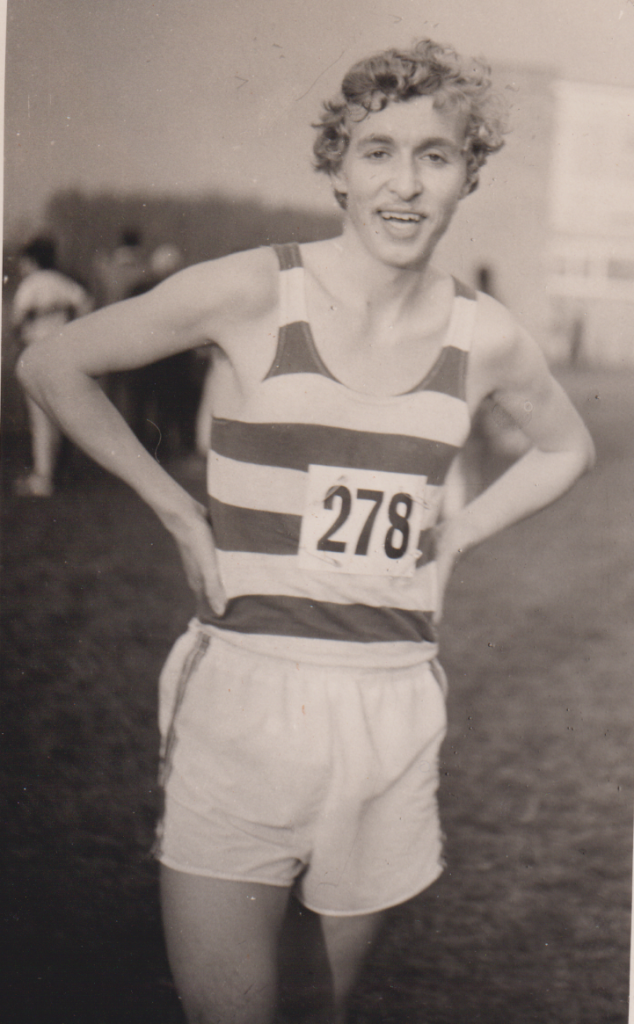
                                                                                                         

After Dunbartonshire Cross-Country Relays 

1972 Kingsway Relays, Dundee, 21st October. I have a full set of results for the Kingsway that year. Edinburgh Southern (Allister Hutton, Martin Craven, Gareth Bryan Jones and Fergus Murray) won in 55.17; with VPAAC (Davie McMeekin, Colin Youngson, Hugh Barrow and Albie Smith) second in 56.15. However we led until halfway! Third in 56.34 were Clydesdale Harriers (Alan Marshall, Phil Dolan, Allan Faulds and Dougie Gemmell). Amazingly, my 13.32 was fastest of the day, one second in front of Gareth, and I was presented with the Brannen Memorial Cup. The engraved names of past winners seemed embarrassingly illustrious. The prize was a Boots token for, I believe, half a crown, and I still possess the Pears Cyclopaedia and Dictionary I bought with it. Professional Athletics, eh?    [NB:   £1 in 1972 has the  purchasing power of £15:70 in 2026 so Colin’s 2/6d would be worth just over £1:40 today]

On 28th October, In the 1972 Allan Scally Memorial Relay,  Shettleston won again, very easily from EAC and VP. At least I improved a little to 22.59 but that looked dismal compared to the amazing Mr Brown’s new record 21.52. Andy McKean (EAC) was only six seconds slower; and Norman Morrison of the host club ran 22.06.

On 4th November, Vicky Park achieved the club’s greatest victory for a long time. Dave McMeekin, Hugh Barrow, Pat Maclagan and Colin Youngson, having led from the start, won the Midland District Cross-Country Relay, well in front of Clydesdale and Law and District. It was the first victory for VPAAC in this event for twelve years. We received a big annual cup and S.C.C.U. plaques. 

The Glasgow University Road Race, organised by the GU Hares & Hounds on 11th November, attracted many of the top Scottish runners and gave hopefuls a real opportunity to gauge improvement. It was a great race for ‘scalps’, since some stars were content with a brisk stride round. The Westerlands atmosphere was always carefree and somewhat bohemian, since university distance runners enjoyed their running almost as much as their beer.

On the 11th of November, a week before the 1972 E to G was my opportunity to win the race but I failed, due to lack of confidence. Having run very aggressively early on, and dropped nearly all the rest of a slightly substandard field, I really belted up the Cleveden hill and gained 20 yards on Doug Gunstone of Dundee Hawks. Then on the long downhill to Great Western Road, I fell prey to ‘leader’s doubt’ and Doug caught me up again. Eventually he sprinted off to win in 25.21, with me ‘kicking myself’ two seconds down.

The 1972 Edinburgh to Glasgow Road Relay on 18th November saw probably the best single performance in the fifty-year history of the event. I refer to the great Ian Stewart’s magnificent run on the second leg to smash the opposition and the record. Many who were spectating that day will remember Stewart, his feet barely skimming the ground, zooming up the hill to the finish, with no one else in sight. A bemused Fergus Murray came in a minute behind, with the third man a minute after him! Norman Morrison did well to run ‘only’ 40 seconds more slowly than Ian’s 27.14, which was never beaten and is the longest-lasting E to G record.

There were other very good performances, but they were put in the shade by Ian Stewart’s. Jim Brown sped to the best time on Stage Four; Dick Wedlock broke the record on leg five; Gareth Jones set a new standard on the Seventh Stage; and Albie Smith equalled the record on the last leg. Andy McKean came within six seconds of Fergus’s 31.07 on the long stage, way in front of Jim Wight, Lachie, Dave Logue and me. But I was faster than that man Macgregor! Shettleston Harriers enjoyed a crushing victory, two minutes clear of Aberdeen and E.S.H. Vicky Park finished an honourable fourth.

On December 2nd at Strathleven, I struggled round a dreadful hilly dangerous course (uphill fences held up by barbed wire etc) in the Dunbartonshire Cross-Country Championships. Only finished tenth to qualify narrowly for January’s Scottish Inter-Counties XC.

17th November was the SCCU training session at Cleland. 12 miles including fences and ploughed field, followed by a five miles jog and lots of free food (mince, sausage, soup, fruit – what more could be desired Even the pep-talks from Jim Morton and Ewan Murray seemed to be entertaining.

1973

27/1/73 won Scottish Inter-Counties XC at Irvine, on a flat seaside circuit adjoining a golf course. Four laps. Tiger cubs slippery at start but an advantage on 400m road alternative each lap. John Ferguson eleven seconds back, Ronnie Macdonald ten more. Dunbartonshire lost to Lanarkshire by only three points. A much more suitable course for me! This was reported in the Glasgow Herald by Ron ‘Unimpressed’ Marshall as “Youngson’s First Notable Victory”. Horrible former sprinter…..

The Scottish Senior National XC at Coatbridge on 17th February was over slippery packed snow. Unsurprisingly, I underachieved with 30th in 39.38, five seconds behind Hugh Barrow but four ahead of Pat Maclagan. VPAAC finished sixth team. 

The Edinburgh University Ten Miles Open race:

On Saturday 3rd March 1973 Andy McKean won in 50.21. After a race-long contest with Martin Craven I just managed to escape before the finish. Our times were 50.43 and 50.49. My training diary comments: “Almost sick at the end. Very hard.   Andy mucking about in front. At least I beat five who got me in the National including Jim Dingwall.”

Saturday 10th March 1973 was my first attempt at another West classic – the Balloch to Clydebank Road Race (12 and a quarter miles). I can only remember the course as quite flat and fast, with one decent uphill and a thoroughly inconvenient downhill from Bowling to the finish. On this occasion a group of six was intact until nine miles with EU’s Richard O’Brien leading most of the time. I made an effort up the hill, rested a bit and then went as hard as I could with two and a half miles to go. This got rid of Colin Martin and three others but I had no chance of countering the final sprint of Jim Dingwall (Edinburgh University). He won in a new record of 60.52, with me (VP, 60.57) getting a plaque as Dunbartonshire champ. Colin (Dumbarton) finished in 61.23; and Clydesdale Harriers Phil Dolan (61.39) and Dougie Gemmell (62.19)  were next; followed by Richard O’Brien (63.26). 47 ran; and Clydesdale, with Ian Leggett seventh (63.44) won the team prize.

Betweeen noon on Saturday 7th April and eight minutes past seven pm on Tuesday 10th, Aberdeen AAC (my second-claim club) at their second attempt, broke the record (by half an hour) for the John o’ Groats to Land’s End road relay. (During this epic, having covered 110 miles myself), I needed five whole days with no running at all to recover, followed by two easy weeks to get back to 70+ training miles per week.

In May 1973, not long before I left Vicky Park for Sweden, I ran the Drymen to Scotstoun for a second time, recording 1.22.01 to win by seven minutes from weaker opposition. Jim Logan’s column in the local paper generously made me VP Athlete of the Week! Jim mentioned the distinguished history of the race. He wrote: “There are some good names inscribed on the Dunky Wright Trophy, including Commonwealth Games gold medallist Lachie Stewart and multiple Scottish marathon champion Alastair Wood. The greatest name on the cup, of course, is that of the man who made this race over the Stockiemuir his own, in the days when it finished at Firhill Park. It is fitting that the trophy for the modern race should bear the name of Dunky Wright, who was on familiar territory as he sped past Bearsden Cross: Dunky was a pupil of the school there when it was known as New Kilpatrick Academy.” I was pleased when the famous Dunky himself presented me with his trophy.

I also learned that the course record had been set by that exasperatingly good old champion, Alastair Wood, who ran 1.17.53 on the 24th of May 1969, to finish a minute clear of Pat Maclagan. Wouldn’t it be great to beat that record? Dream on ….

(My other Drymen to Scotstoun victories were recorded in 1975 (after an extremely hard battle over those nasty dips to hold off Willie Day and Sandy Keith and record just under 1.19); 1976, defeating Maryhill’s Bill Yate; 1977 when I finished a minute clear of my ESH friend Martin Craven; and 1978, when in scorching heat after breaking clear early on, I had considerable difficulty in fending off Garscube’s Tommy Wiseman by 28 seconds. This race in late May was always a real challenge and excellent preparation for the Scottish Marathon a month later.)

Sunday 20th May: Meadowbank, wet and windy 5000m (6th in 14.53, in front of Ian Elliot and Alastair Wood). Not too bad.

Saturday 26th May: West District Track Championships at Westerlands. 10,000m: Colin Martin (30.29, me 30.47). First mile 4.35, half way 14.50, then slow collapse. Extremely hot weather, sore legs, very tired. Good effort, though, followed by big party and a curry.
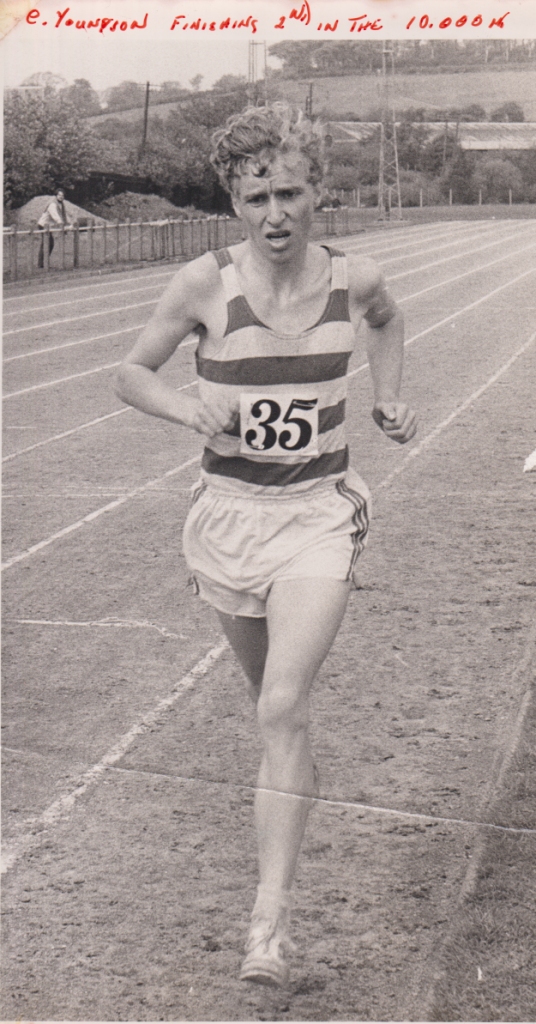
                                                                     

West District 10,000m. After Colin Martin moved away, I struggled to the finish. Afterwards, at least he seemed really tired as well.

Friday 1st June: Airdrie Highland Games ’13 miles’ road race. Hilly and sore legs, could be worse. Second in 62.36; to Colin Martin 62.06 once more.

1973 Personal Bests:

9/6/73 5000m 14.29.4 (‘lifetime best’ for me).

At Meadowbank, a hard, evenly paced, rather satisfying solid race. Don Macgregor won in 14.26.6, with Jim Wight second (14.29.2. Behind me were Martin Craven, Alex Wight.

16/6/73 SAAA 10,000m 29.54.8.

Meadowbank again. Hard (14.40/15.15 splits) but slipped back in final quarter – should have finished sixth. Good to break 30 minutes, though. Lachie Stewart (28.59.2), Jim Wight (29.22.2), Doug Gunstone (29.32.6, Fergus Murray (29.38), Alex Wight (29.38), Jim Dingwall (29.53.6), Don Macgregor (29.53.8). Then Tony Moore, Martin Craven – and Colin Martin.

A tragic occurence during this race was that a stray athletics hammer was hurled onto the track and smashed my friend and team-mate Alastair Johnston’s leg – just when he was about to win a silver medal. Although he did recover and race well again, he was prevented from fulfilling his excellent potential (for a 2.15 marathon, in my estimation).

23/6/73 Scottish Marathon, fifth in 2.24.01.

Meadowbank out and back. Very hot day. Went well for eleven miles or so, hanging on to leading bunch (Don Macgregor, Alex Wight, Jim Wight, Tony Moore, Rab Heron, Martin Craven, Bill Stoddart. Dropped Bill Stoddart. Then I let the leaders go and, still feeling strong, ran with Martin Craven. After the turn into the headwind, we were caught by Willie Day and Alastair Wood. At the same time my sore gut turned into an agonising stitch and cramp. (Wet vest and cold wind). Had to stop twice and run doubled over for five miles approximately. Then passed Martin again. At 20 miles, Alastair Wood (cramp). 23 miles: Alex Wight (blisters). 24 and a half miles: Willie Day (walking). Felt weakish but managed to keep running (pre-marathon ‘diet’ must have helped) and finished in considerably better shape than last year, though sunburnt and sickish from heat. Under Scottish Senior National Standard. Don won, from Jim, Rab and Tony Moore. End of serious season!

Before arriving in Stockholm, Sweden on 11th August, I did some ‘desultory training’ and managed a few wee races.

Elgin Highland Games: won 5000m from Pat Maclagan; and ran 1500m in 4.4.6, second to John Ferguson. 

Lochaber Highland Games (after a week climbing hills near Glen Affric), fifth in 3000m (8.42) behind Frank Clement, Norman Morrison, Colin Martin and Gerry Hannon. Victoria Park won the team event and (later infamous) Games Chieftain Jimmy Savile presented the prizes. Then I finished fifth in the handicap 1500m, beating John Ferguson….Not sure of the date, but I also ran the 1973 Carnethy Hill Race and finished a decent 11th in 59  minutes 17 seconds, four seconds behind Martin Craven but nine seconds clear of Jimmy Jardine and 21 seconds in front of the legendary Joss Naylor. Dave Cannon won in 54.05 from Jeff Norman in 54.36 – both went on to be GB Marathon Internationals (Jeff an Olympian).

Sweden: Fredrikshof Idrottsforeningen 1973-974 

Fredrikshof Idrottsforeningen, was a wealthy Stockholm club that provided free kit and paid my racing expenses during the ten months (1973-1974) I taught in Sweden. Sadly, since I lived in Orebro, a hundred miles away from the city, I was forced to train alone but managed that very well. When I did join up with the team, it struck me that the pace was a lot friendlier than back in Scotland. However, most of them were not very fast competitors!

From September 1973 to May 1974 I ran in Sweden for Fredrikshof IF and won eight races from fifteen in Sweden (plus two more in Finland, where I did not win).

Arrived in Stockholm on 11th August (short training course to teach English as a Foreign Language to Swedes for ten months). Moved to Orebro on 2nd September.

Race 1: Saturday 8th September 973. Rockhammersloppet. 17 or 18 km of sandy road, grit, path etc. Suicidal start to bridge, then gradually worked through and gave one ‘dig’ to finish 4th ex 150 in 57.35. (Winner 55.45). First run for Fredrikshof – lovely facilities, food and prizes, ‘expenses’ etc. ‘Bastu’ sauna. Rather stiff and sore afterwards. Beat Mike Rowlands (from Cardiff, 2.16 marathon man).

Race 2: Sunday 16th September. Ludvika Hogberg’s rundown of results and certificate. Worse than last week. Incredible sandy, sawdusty switchback ski-trail. A bit chicken and puffed. 9Th – beaten mainly by off-season cross-country skiers! Toaster prize.

Race 3: Sunday 7th October. Lidingoloppet – a very famous mass event. 20th ex 3000 starters! 30 km cross-country. Went off too fast – wooded paths, ten million treeroots, 1 hour 47 minutes 33 seconds. Autumn tints but did not see them! Mad rush at start, up to tenth then hang on – tired and puffing by 3 km! Constant ups and downs, boulders, ruts, branches and other obstacles. Thousands of spectators. “Heja Hofvet!” (Surprise). Started dropping at 10 km then moved up a little, towed by someone till 20 km – getting very tired – no sponges, just warm glucose water! Some fiendish gradients, slowing again but still 12th with five or six km to go. However very weak and had to walk up hill – then lost 8 places in last three miles – very sad but exhausted, so very glad to finish. Not too bad considering difficult terrain – as hard (or worse) than a marathon. Afterwards, drank pints of glucose drinks – medal and expandable fishing rod prize. Fine meal with team-mates and Stella.

*Race 4: Sunday 21st October. Nykoping BIS 16 km road. First in 47.41. 2nd Hans Jonsson 48.31; 3rd Hannu Partanent 48.41. Both in hats and tights! Sunny, slippery at times. Steady until ten minutes – one burst and they didn’t bother! Fast at times, not feeling too great, but  first win in Sweden! Nice watch prize. Jog back to Chris’s flat. Then onto pre-marathon ‘diet’.

*Race 5: Saturday 27th October – my 26th birthday. Stockholm and Uppsala Combined District Marathon. First in 2.22.28 (Personal Best). Beautiful day, slightly undulating course, little wind, fairly warm yet cool. Broke away at 7 km – series of surges with Ulf Johansson (2.23.42). Then both settled down and he led most of the way to 30 km. Then a planned kick away and held on till the end (74 seconds up). Friendly bloke, very light on feet. He laughed at my attempt to kick at a drink station. Felt strong throughout until last km kick, despite sore feet. “Easiest” marathon ever since first half split almost exactly same as second half. Amazingly even pace. 3rd Dave Bendy 2.28.18 (PB); 4th Jan Ost 2.28.34 = three Fredrikshof runners in first four! A good day! (Received a Fredrikshof Cup for this).

Race 6: Saturday 3rd November. Kilsbergsleden. Orebro Karlslund. 1st: Leif Andersen; 2nd me; 3rd Bertil Larsson. Silver medal and tankard. Not recovered properly from marathon but tried very hard to get rid of LA in first four km – lost lead halfway and dropped, as expected, on very rough underfoot conditions – not bad though, considering everything – never could “win ’em all”.

*Race 7: After training/racing nine miles over an average of 62 for 14 weeks, I eased down for a more important marathon. Sunday 25th November: ‘Vintermaran 73’. First place from 200 starters. Time: 2 hours 26 minutes seven seconds. Minus five degrees centigrade – snowed half the time – loop plus seven times six km including a 2 km ‘beach’. Windy then sheltered course. Fastish start (tracksuits, hats, tights, gloves etc – self polo shirt and vest, track top, tights and shorts. Hat and gloves came off after half a lap! Hung on to sub-2.20 pace till halfway (group of 6, including Max Holmnas and Hans Jonsson) till gradually, surprise, down to Urban Larsson (2.27.16) and self. I had been ‘sitting’ most of the way, conserving energy in cold and wind, so kicked a little when he slowed and got away! Cautious, stiffening struggle round another two plus laps – hamstring solidifying, and home to victor’s wreath, interviews etc. Third was the redoubtable Leif Andersen (2.29.43). Swedes all rather surprised! Me too. Extremely satisfying to defeat so many rivals, including all the best Swedish Marathoners! Almost perfect. Newspaper headline: ‘Scottish Teacher Causes A Sensation!” End of Serious Winter Season.

In Finland by Thursday 20th December. Cross-country ski-ing tuition (not a natural…). Sunday 23rd, 3 miles ski-ing across a frozen lake to cottage! My hosts: Charlie Greenlees and Marja Ulpovaara.

Race 8: In Finland! Tuesday 1st January 1974. Korso Road Race (11 km). 4th ex 50 in about 35.40. First Matti Salonen (34.32 – record), second Antti Pasanen 35.15 (2.17 marathoner), third Seppo Tuominen 35.30. Start in middle of large drunken crowd on the stroke of midnight, outside Korso church (beside square, entertainments etc). Mad shoving at start – pools of darkness, candle-lit areas, some ice and slippery roads – sharp hills and descents. Four laps. Kept up as best I could for a lap but very tired by halfway. Cold in stomach and unused to speed. After Pasanen got away (2 and a half laps), I knew Tuominen would catch me – but enjoyed trying to outkick him twice before demolition on last hill. Hard run – fine Finnish glass bowl – beat Mikko Ala Lepilampi (Olympic Steeplechase finalist), a polite, modest lad. Back to Orebro by 5th January?

*Race 9: Sunday 10th February. Lidingo 15 km. First in 48.02. 2nd Rune Radestrom; 3rd  Borje Israelson; 4th Stefan Johansson. Roads (snowy) and paths for a bit. Group of three got away – loose by 5 km but didn’t get too far in front – stitch last 4 km – could be worse!

16th and 17th February: watching World Nordic Ski-ing Championship in Falun. Very exciting 30 km cross-country ski-ing speedily through twisting forest paths and narrowly past spectators sheltering by trees.

*Race 10: Sunday 17th March. Sundyberg IK ‘Tva Sjoar Runt’ 11km race (road/paths). Tenth  Jubilee event. First in 33.34 (course record). 2nd Max Holmnas (34.02); 3rd S. Johansson; 4th Hans Jonsson; 5th R Radestrom. Start very fast – wrong stance – fight and push up hill to front – slacken and follow until one and a half miles? Then noticed Swedish  3 km champ and gap behind (No Max yet!). So kicked and got away very soon. Puffing, but well up at halfway and held it quite ‘easily’. Satisfying race – perhaps surprised them (and me). Many cheers – interviews with Stockholm Radio and the main Swedish ‘Dagens Nyheter’ newspaper! Plaque, carnations, and large primus double ring cooker. Incentive for training at last????? Headline in newspaper: “Okand Skotte Bast i Terrangpremiaren” (plus good action photo).

*Race 11: Saturday 23rd. Race/Training. ‘Mogetorpsloppet’. Orebro local event. Tried to keep company but no oppo, so good training with racing bicyclist’s conversation for company. 22Km? First in 1 hour 14 minutes, 28 seconds (record). Bottletop puppet souvenirs! These were fashioned by Fritz Schreiber, a friendly multi-lingual German who later became World M80 200 metres gold medallist.

Saturday 6th April: paid hotel for guest runner in Kil. Coloured TV! ABBA won Eurovision!

*Race 12: Sunday 7th April. ‘Frykstaloppet’ in Kil. 25 km road. First in 1 hour 18 minutes 30 seconds (a record by 70 seconds). 15 and a half miles approximately = average of 5 minutes seven seconds per mile pace). 2nd Leif Andersen 79.20. Five km splits: 4.50, 15.20, 15.05, 17.20. 15.55.

L.A. started fast, I sat in, then Lars Enquist (previous record holder)  surged and we dropped L.A. so I kicked to get rid of Enquist. Stretched it until past 15 km, but then felt bad on the hilly stretch, before rolling home with Leif closing slightly. Rather too tired for pleasure but good training although feet hurt in thin shoes. Briefcase, interviews, umpteen photos, plaque (Snabbast Herr!) and most obscene and enormous annual trophy, bedecked with Varmland Eagles! With thanks, after accepting a photo of me holding this monster, I gave it back. Pleasant rest with Jan Ost and Tommy Mattson, wife and kids before Stella and I went off on holiday.

Thursday 11th weekend in Copenhagen.

Race 13: Sunday 21st April. Palma Relay in Lahti, Finland. First leg: first Pekka Paivarinta (1973 World XC Champion). I was a very poor 12th, two minutes behind. Felt rough, hurt foot on cobbles, off too fast and gave up too fast. Fredrikshof only 15th in team race. Finns seem much faster than Swedes or indeed Scots.

Race 14: Sunday 28th April. Samstags Varterrang 11km. Bumpy paths and some sandhills. First: Nedo Farcic. I was second. Ran a stupid race – off too fast and felt poor when the winner caught up – but good training when not at my best.

Race 15: Wednesday 1st May. Vaxjo 24 km XC plus road race. Mainly bumpy country and roughish paths. 4th in 79.32. First: Ivan Jocic, Yugoslav 78.45 (13.30 5000m); second Leif Andersen 79.15; third Ove Malmquist 79.26; fifth Lars-Erik Stahl; sixth Max Holmnas.

Revenge on last two names for Finland relay disaster but Leif certainly going well! Sensible start for 5 km on rough roads but quick break-up when hit bumpy country. Eventually I.J. got well away. L.A., O.M. and I together for half race, only breaking up in final km, when I was too tired to compete. Getting away on road but lost on country. Very hard and good training. 300 kronor and glass vase plus teeshirt. Tour of Sweden in Jan Lind’s car before and after – very beautiful.

Race 16: Saturday 11th May. Fredrikshofs own Stadtsloppet. Team nowhere, self third on first leg (2900 metres). Seemed very fast. 8.15 for me?

*Race 17: Sunday 12th May. Koping 14 km. First in 45.17. 2nd Leif Andersen (sore gut) 45.40, Lars Wallin 45.57, Bertil Rehn 46.12. Dusty ‘A’ roads and undulating paths, fast start, got away about 4 km and increased lead in second circuit, easing off a bit near the end. Would have won anyway, I think, since L.A. had the same complaint at Vaxjo and it did not slow him there! 8th win in Sweden. 200 kronor prize – very useful. 

Left Orebro on Saturday 25th May. After Stockholm, train to far north and Lapland. Kiruna, Jukkasjarvi, Riksgransen, Narvik in Norway, Trondheim, Oppdal (climbed snowy 5000 feet hill), repetition session on Oppdal hostel running track, Oslo, jog round Vigelandpark, inspecting sculptures, Bergen jogged up vertical road to famous track where Gordon Pirie broke a world record, then ferry  to Britain and eventually home to Aberdeen on Tuesday 11th June.

Sunday 16th June: more than 22 miles followed by low carbs ‘diet’ then onto stodge by Wednesday, followed by two days totalling merely six miles jogging

Saturday 22nd June 1974. Scottish Championship Marathon out and back to Meadowbank. Third place/bronze medal in 2.21.36 Personal Best. First Don Macgregor 2.18.8; second Rab Heron 2.19.18. Beat Alan Partridge, Gordon Eadie, Sandy Keith, Alex Wight, Don Ritchie etc. Started into wind, so stuck behind leaders (Don Mac, Rab, Don R, Sandy and Tony Millard). Dropped Tony and Don R on hill (six miles). Lost Sandy when Rab H surged about ten miles, stuck until 14 miles (very fast pace on return). Knee increasingly bad so took great care on way back – or else sub 2.20? Four minutes clear of fourth finisher. Surprisingly good considering injury. Steady improvement continues. Swedish good form was no fluke!
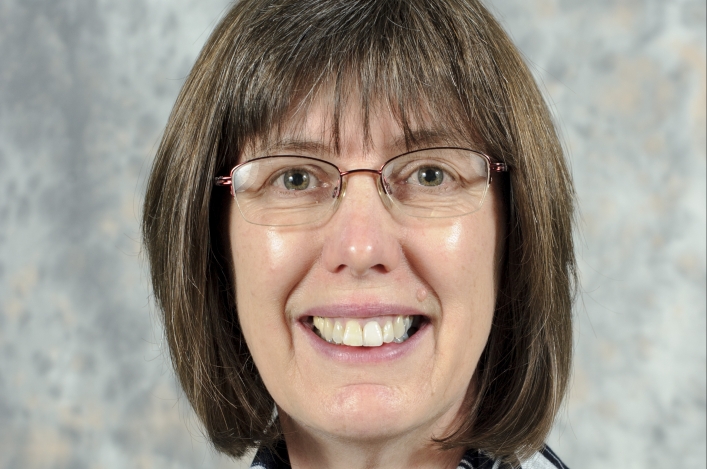
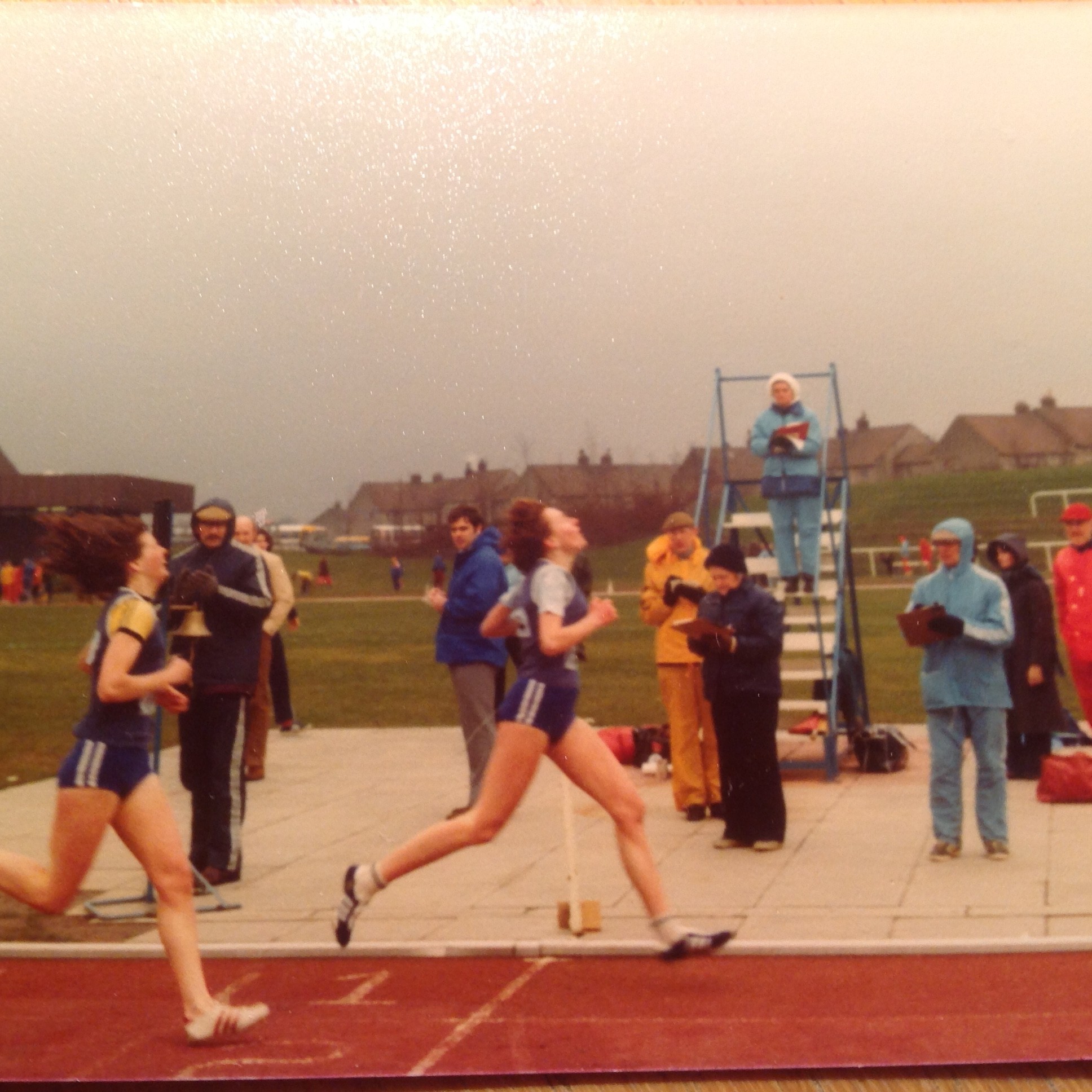


Dave Cooney : An Update

Dave with his son, Alan at the Pier to Pier Race in South Shields in 2022.   The race came after a series of health scares but he finished fifth MV70  in the 7 miles race in a time of 64:19.   Read the full story below.

Dave helped in writing a profile of club mate Mike Johnston and we took the opportunity , since we had done his own profile in 2020, of asking him to update his athletics career so far for us.   It is quite a story in its own right, not simply an add-on to his profile.  A series of injuries and illnesses seriously tested his dedication to the sport and there have been many ups and downs.   He still loves the sport and its people and his dedication has been honoured by the King in January 2023.   

David says.

My 5K Scottish M70 effort in  May 2019 resulted in having to take an enforced 8 weeks break from running due to having aggravated my ankle problem. I did eventually get back to some light running which was interrupted by having fractured my ribs in a heavy fall and then developing ongoing lower back issues.  Unfortunately I fractured some ribs again in February 2020 when slipping on ice.  Another setback arose in April when I had a mini stroke/TIA supposedly caused by catching Covid but fortunately there were no lasting effects and I eventually managed later in the year to resume and sustain some easy running up to August 2022.  I even managed 2 races in May of that year.  In spite of my longest single training run being only 3 miles I tackled the 7 Miles Pier to Pier Race from South Tyneside to Roker Pier while visiting my eldest son and family who live in Sunderland.  My son Alan was competing for the organising club Sunderland Strollers.  Not surprisingly I began to tire just after half way but did finish 5th M70.  11 days later I clocked 14.41 for the 3K on the Green for an improved performance albeit over a shorter distance.  Any thought of fitting in a few more races sadly evaporated when I tripped over a tree route to avoid a lunging Alsatian dog.  Needless to say I damaged my ribs again and shortly afterwards Covid reared it’s ugly head once more thus leading to another 4 months of rest.  Training was resumed in December and then history repeated itself.  A heavy fall on ice caused a problem behind my right knee which did not clear until March 2023. 

In the interim period I was very surprised to find out that I was to be awarded a BEM in the King’s First Honours Award in January 2023 for services to Cambuslang Harriers and to Scottish Athletics.  I accepted the honour which I regarded as not solely being for me but was also for the many other dedicated members of Cambuslang who had helped to transform the erstwhile parochial club into one of Scotland’s leading distance clubs over the last 50 years.

On the running front the familiar pattern of blocks of training being punctuated by recurring back and posterior knee problems and then a new ailment surfaced – first degree burns to my upper feet.  This was caused by exposing my feet for only a short time after bathing in the Dead Sea on the last day of a holiday to Jordan, the highlight of which was visiting the ancient city of Petra.  The burnt feet issue sustained at 430 metres below sea level was literally the lowest point of the holiday.  A recovery period of 5 weeks followed but the re-emerging back and knee issues limited training. 

Moving into 2024 my problems eased a bit which allowed me to put in 46 weeks of continuous running.  During that time I averaged 20 miles per week with my longest run being 5 miles.  Having turned 75 in April I had privately set myself the target of competing in the 5000M at the Scottish Track Championships in mid July.  Although a trapped nerve down my left left leg was beginning to cause me some discomfort I tackled the hilly Sunderland 5K Parkrun and managed 28.53 for first M75.  My left leg had held up.  6 days later I did the 3K on the Green in a time of 15.32.  This was meant to be my final workout before the track 5000M but unfortunately I aggravated my trapped nerve.  In spite of 10 days of rest and easy running with some physio thrown in my injury had become too painful and I reluctantly had to give up the idea of competing.  I felt gutted that I was unable to try for a M75 Scottish medal to add to my masters age group awards.

Dave with 2025 M75 1500M Outdoors Track Gold.   See below.

I spent the rest of 2024 mainly walking with an average of 5 miles a week jogging while my back issue was investigated.  The verdict given on Xmas eve was that I had osteoporosis and 3 compressed fractures on my spine.  One of my first questions to my GP was could I continue with my running.  The answer was a definite no.  After 55 years of running this news was a body blow.  However, I followed the advice for 8 months.  Nevertheless, I continued walking an average of 20 miles per week which was permitted.

I still felt I had unfinished business with running.  With warmer weather arriving in April, 2025, and with my back easing a little I tentatively started to build in some short jogging efforts into my walks.  It was like learning to run again.  It took 6 weeks before I actually ran a mile without stopping.  My ambition became to enter the Scottish Masters 1500M in July.  A 5K was totally out of the question.  It was going to be a delicate balance of doing a minimum of training without breaking down again or worsening my osteoporosis.  I plugged away for a further 6 weeks of slow running with my longest continuous run only being up to 1.2 miles and my average weekly miles being six.  My pace at around 11 minutes per mile was very pedestrian.  With 2 weeks to go to the race I renewed my Scottish Athletics membership which I had not done since my enforced retiral  from the sport.  My entry was duly put in. When I saw the entry list a few days before the event I noticed that I was the only M75 entrant and therefore had only myself to beat.  At best I was hoping to break 10 minutes but on the day I surprisingly managed to record 8.54.80.   Although I was a distant last I had achieved my own private goal of achieving a Scottish Medal in the M75 category.   I had come out of retirement to achieve this goal and now felt  content to retire on my own terms.  

I do not envisage running another race again but am presently continuing with my walking with a few short slow runs thrown in.
 
On the non running side of things I am still on the Cambuslang Harriers committee and sit on the selection committee for the senior and masters teams along with Mike Johnston, club captain Kirsty O’Brien and coach Iain Crawford.  I also serve as team manager for those two age groups at district and national team events as well as maintaining a regular update of club achievements.  56 years on from first joining the club I still get the same sense of satisfaction from any Cambuslang  individual or club achievements.
 
I did recently update my previous 50th anniversary history of Cambuslang Harriers to take the story up to its 75th anniversary in late 1973.  I was greatly indebted to the support in this task I received from club stalwarts Mike Johnston and the recently deceased and sadly missed Colin Feechan.
 
Having read the story in his own words add some flavour of his determination – an example to all athletics competitors, officials, administrators and supporters.   The photographs above shows a determined younger David working up a hill in the Mamore Hill race in 1975 – maybe not as hard a task as some other problems that he has faced.


Mike Johnston, Cambuslang Harrier

.Cambuslang Harriers with the AT Mays Trophy in 2019.   

Presented by Leslie Leslie Roy with team manager Dave Cooney.   

The photograph above is notable, not just for Cambuslang but because Mike is second from the left in the second row from the front as a club man despite the fact that he had already done so much for Scotland, for instance working at endurance coach at four Commonwealth Games, at two fell and ultra championships and twice for GB teams.   And he’s standing there as one proud club member among many.   The following summary and tribute is by Dave Cooney, a man who himself has done a power of work for the club as runner, administrator, official and team manager.   Dave has also taken the step of asking some of Mike’s young club athletes to add their own comments.

Mike Johnston joined Cambuslang Harriers in 1983.  His main interest at that time was squash and he hoped that some endurance running would benefit his squash performance.  However, he quickly caught the running bug and his loss to the sport of squash became both Cambuslang Harriers’ and Scottish Athletics’ gain.  Fast forward 43 years on and he is still very much a highly respected and prominent figure within Cambuslang Harriers and Scottish and UK Athletics.

Mike focused on his own running for the first 4 years of his time as a Cambuslang Harriers before developing an interest in the coaching of younger athletes.  He gained his assistant coach badge in 1985 and from 1988 on he embarked on his senior coaching courses until he achieved UK Endurance Level 4.  While still continuing to run himself coaching had become his real passion and he and the club were to reap the rewards in the decades ahead on an individual and team basis. 

Mike’s contribution as a coach to Cambuslang athletes for over almost 40 years has been immeasurable.  His stable of former young athletes and current athletes is impressive.  Names which come to mind in the former category are Scottish XC medallists such as Mark McBeth, Eddie McCafferty, David MacPherson, Craig Cleland, Alan Reynolds, Iain Reid, Iain Munro, the Kealey brothers Joe and Kevin, Jasmair Pal, Iain MacCorquodale, Chris McLew, Katie Bristow, Alex Lamond and Eve MacKinnon.   Both Graham Ferguson and Iain Reid also lifted UK track medals as U20 athletes.  Mike along with fellow coaches Owen Reid and Robert Anderson played an important role in amassing multiple Scottish XC team medals over the age groups and in regularly winning the AT Mays Trophy awarded to the most successful male club in the Scottish XC Championships.

His current training group of Cambuslang athletes includes Katie Clubb, formerly Bristow, Eve Mackinnon, Chris McLew and Gavin Smith who have been coached by him from early in their running careers.  Craig Jardine and Jamie MacKinnon have also been under Mike’s wings for a number of years while more recent members include Stefanie Tucker, Zoe Pflug, Andrew McGill, Callum Tharme and Rory Muir.  All mentioned have progressed well under Mike’s watchful eye.  In the last year Andrew broke the 4 minutes barrier for the mile and now has a sub 8 minutes 3000M and a sub 14 minutes 5000m to his credit.  Jamie too has also broken 14 minutes for the longer distance.  Stefanie has just broken the club’s female record for 3000M road when clocking 9.19 for 6th place at the Armagh International Road Race and then a few days later achieved 5th place with a time of 9.13 at the UK 3000M Indoor Championships.

If he was to be pushed his 3 most satisfying club achievements would be attracting and developing women athletics at Cambuslang, winning and twice breaking the senior men 3 x 800M title/record and the lengthy coaching association with Katie Bristow, now Clubb, since 2010.

Mike himself has aptly summed up his philosophy as a coach which still holds true today.

“I just enjoy coaching.  I like to see people improve.  It doesn’t have to be winning medals.  I like to see people get the most out of athletics and just enjoy the sport.  That is the key thing.”

Mike spoke to me several years ago of a young male athlete who made an inauspicious start to athletics.  He was however keen and persistent and gradually began to improve.  Mike predicted he would be “a slow burner” and was proved correct.  This athlete now has pb times of 8.52, 14.49, 30.58, 70.52 and 2.24.21 for 3000M, 5K, 10,000M, half marathon and marathon.  Well done to Mike and Andrew Carey.

Mike’s training group is not just confined to Cambuslang athletes.  His thinking is that others are welcome as they can contribute to the quality of sessions thus benefitting club and non club members alike.

Although Mike religiously attended all the club AGMs from 1984 onwards he did not join the committee until 1992 and then stayed in post as an ordinary member until 2008.  His balanced and measured opinions and responses were always highly valued by the committee.  Even after leaving the committee to focus on his wider demanding job as Scottish National Endurance Coach, a position he held from 2004 until 2014, he still worked closely with the Cambuslang committee and coaches. For example, he set up and chaired a coaches’ forum within the club and worked with Owen Reid and Iain MacCorquodale in drawing up both summer and winter club training sessions.  He has also mentored new aspiring coaches such as former athletes Jim Orr and Carol Anne Thomson, former protegees Iain MacCorquodale and Iain Reid and parents of Cambuslang young athletes Colin Stephen and Iain Crawford.  The latter two have now obtained their UK Level 3 Endurance Coaching Award.  He has organized and chaired too several club question and answer sessions with invited guests such as the late Ron Hill, Bobby Quinn and Clare Gibson and during covid he delivered a club coaches forum via zoom so that they did not feel isolated.  When it comes to selecting Cambuslang teams for senior men and women district and national relay road and cross country teams he is central to any discussion given that the majority of possible contenders are coached by him and therefore he is very much aware of their current fitness.  Therefore, he is still a very influential member within Cambuslang Harriers.


His contribution to Scottish Athletics is also considerable.  For example, as the National Scottish Endurance Coach he delivered numerous training sessions and seminars throughout Scotland.  Further he has been involved with the Scottish team at 4 Commonwealth Games.  Currently he is the current Scottish Road and Cross Country Convenor.  His services to Scottish Athletics was popularly acknowledged in 2017 when he was presented with the Tom Stillie Award and UK recognition came his way in 2023 with a British Writers Association Award.

It is fitting that the final words on Mike should come from some of his current athletes.

What his athletes say about Mike

Katie Club formerly Bristow

“Mike came into my life at a transitional point, leaving Shetland at 17, moving to the mainland of Scotland, starting university and navigating the change from junior athletics into my senior running career.  His brilliance is evident when you take a second to think through his athletics coaching achievements – old and new – the Scotland/GB vests , the times, records, team performances etc.  But what we get to experience is so much more.  His kindness, unwavering support and genuine regard for our health and well being as people is what propels Mike from a great coach to an exceptional person.

For the last 15 years I have thanked my lucky stars that I have the privilege of being coached by Mike and also having him as a guiding light in my life.”

Eve MacKinnon

“I feel incredibly lucky to have Mike as my coach and I have no doubts that the other athletes Mike coaches feel the same way.  He has been and continues to be a constant and extremely significant figure in my life and has helped me to develop not only as a runner but as a person.  Mike is generous with his time and knowledge and the impact that he has on athletics in Scotland extends far beyond the Glasgow Green on a Tuesday night.  I look forward to going to training every week and the training environment we have as a group is testament to Mike’s character.  He cares deeply about his athletes and is committed to supporting each and everyone of us to reach our goals.  Most importantly Mike ensures that we enjoy it, both training and racing, and I can’t thank him enough for his support over the years.  It is a privilege to be coached by him.”

Stefanie Tucker

“I have been working with Mike for the past 3 years since moving to Glasgow.  Having him as a coach is an absolute joy.  Mike has an abundance of knowledge, patience and experience and it is a real pleasure to benefit from all 3.  I feel incredibly fortunate to work with a coach who takes pleasure in learning from his athletes, continually adapting sessions and plans so that each person can fulfil his/her potential.  His own interest, enjoyment and passion for the sport is abundantly clear in every way.

I feel incredibly fortunate to be the beneficiary of his decades and wealth of experience in the athletics’ world and hope to continue benefiting for years to come.”

Gavin Smith

“For the past 10 years Mike has been my coach.  In that time he has been an extremely important figure in my life on and off the track.  He has guided me to heights in running I thought were unattainable and given me confidence that I have brought into other areas in life.  I’m sure there are many other athletes who would attest to this in their own experience.

Mike is caring to all his athletes, no matter their ability or where they are in their running journey.  There is a feeling that he genuinely loves the challenge of seeing his athletes achieve their goals regardless of that level.  Above all of this, he asks nothing in return.

He has been a massively positive influence on so many young people’s lives and been one of the top coaches in Scotland.”

Jamie Mackinnon

“From my time in running Mike has been the best coaching influence I’ve worked with.  On the technical aspects of running he is incredibly  knowledgeable, but what sets him apart from anyone else I ‘ve worked with is how he cares for his athletes as people. Mike coaches 30 plus athletes and has a genuine interest in in everyone’s racing and work/life schedules.  He is equally capable of coaching elite athletes competing at the highest level in the UK as he is of athletes competing at club level in Scotland while working stressful jobs.”

Andrew McGill

“When I say that Mike is a very special coach, I know I’m not just being swayed by my personal regard for him as an individual – I am speaking the objective truth about his coaching ability.

I’ve been working with Mike now for 4 years and in that time, despite his decades of experience in the sport, he has never stopped trying to learn more about me as an athlete.  Rain or shine you can count on him being there on a Tuesday evening or a Saturday morning observing us all closely and then afterwards pouring over the heart rate data, splits and comments we’ve left on our uploaded runs. 

What is particularly special about him is that he wants to take the athlete along on the journey with him too.  His influence has definitely rubbed off on me and working together these past few years we have been able to learn a significant amount about what training works for me.

Mike once said to me that he believes a good coach can make a 10% difference to an athlete.  I believe I’m getting every one of those per cents with him in my corner”.

Dave Cooney adds:    ” Andrew McGill, who features in your piece on Mike and who comments on him, set an indoor 1500M pb and indoor Scottish native record of 3 37.69 breaking the old one by 3 seconds in the Emirates Arena on 2nd March, 2026..   A further testimony to Mike’s coaching ability.”

Dave himself finishes with:

In conclusion, having known Mike since 1983 he has dedicated himself to his athletes, Cambuslang Harriers and Scottish Athletics.  The awards he has won as a coach and the glowing comments from his athletes are richly deserved.  He is not only a coach to his athletes but is also a fatherly figure whose only desired reward is to see them become the best that they can be.”


Mike Johnston          Mike Johnston: What His Friends Say . . . 

Mike Johnston: His Friends Say . . .

Hugh Murray with Mike

Some of Mike’s friends have been asked to talk of their relationship (coach, administrator, athlete) to Mike and on this page we have comments from fellow coaches who have worked with him in various venues and events around the world as well as  here in Scotland.   We hear from Hugh Murray and Leslie Roy.   On the next page we hear about Mike as a club member with Cambuslang Harriers from Dave Cooney and from several of his athletes.

Hugh Murray says: 

The first time I remember meeting Mike Johnston was at a Scottish Athletics Awards Ceremony in 2000.

He was nominated for a Coaching Award and I was presenting one and we were sat at the same table.

Little did I know at that time we would become colleagues and very good friends which we still are.

He was coaching at that time with Cambuslang Harriers although he was helping other athletes and coaches from other clubs.

At about that time Scottish Athletics had just received funding to appoint full time paid coaches/Performance Managers to work with and assist our lottery funded athletes and coaches.

Mike, Eamon Fitzgerald and myself were employed to cover Endurance, Jumps and Throws.

This led to many happy and fruitful years of not only supporting our best but developing our events and future stars.

Mike was a natural for this and fought tooth and nail to get his developing coaches the appropriate development opportunities and the developing athletes the appropriate competitions.

No easy task.

He was and still is a great team coach having already team coached at four Commonwealth Games and many other International events.

There is no doubt in my mind that the current strength and success at international and World Class level of Scottish Endurance athletes is in some part due to the hard work and support given to that event by Mike Johnston.

A modest man Mike continues to coach with and support athletes at club level.

Commonwealth Games Team Staff with Mike third from left and Leslie in the middle.

Leslie Roy has known and worked with Mike for several years now and, like Hugh, has a high opinion of him, the result of co-operation in a variety of roles.   She says:

I have known Mike for many years going back to the 2006 Commonwealth Games when I was Athletics Team Manager and Mike was Endurance Coach, a role he continued into the following three Commonwealth Games in 2010 (Delhi); Glasgow (2014) and Gold Coast (2018).
Mike is a very safe pair of hands, being calm in all situations. His knowledge of the sport, especially endurance, is second to none and I believe it was Mike who set up the endurance athlete pathway that is still in place today within scottishathletics and has led to the sport having world class athletes – Laura Muir, Jake Wightman, Josh Kerr, Eilish McColgan, Jemma Reekie to name a few.   Mike is a respected coach among not only his peers, but also with endurance athletes.
Mike has an analytical mind and I have always found it beneficial to listen to his ideas and comments whether that be as a fellow Board member, Team Coach or dealing with the challenges when officiating.   He is meticulous in everything he does and very reliable.
In recent years I have worked with Mike at Cross Country Championship events where we both work on presentations. Mike is easy to work with, calm in pressure situations and organised.

Mike Johnston          Mike Johnston: Cambuslang Harrier

Mike Johnston

There are many athletics coaches, officials and administrators who make it their business to be easily recognised by all at sports meetings, conferences and meetings of any sort. Some do it by having a particularly loud voice and hailing all that they meet, others by the clothing that they favour or even by the jokes that they tell.   None of these apply to Mike Johnston.   Probably the quietest coach in my time to hold a national post of any consequence he speaks quietly, dresses appropriately for the occasion and goes about his business efficiently and skilfully.    These last two adjectives – skill and efficiency – have led to a remarkable career in the sport.    But to begin at the beginning, Mike answered the questionnaire for us.   He has filled so many roles that we broke it into sections.

Name: Mike Johnston

Date of Birth: 23/05/1948

Occupation: Retired

Club: Cambuslang Harriers

As a runner: 

I was always aware of the sport as my father and uncle were founder members of Victoria Park and as a youngster remember being taken to Scotstoun Show Ground to watch the athletes train when we visited Glasgow.

The school I attended dabbled in the summer term in athletics but their main sport was football. There was however an annual cross-country race which I competed in each year I was eligible. I ran a little bit through college in Aberdeen but really regarded running as keeping fit for football, badminton and squash.   I played a lot of squash into my 30s and then switched the emphasis of my training to running as travelling with work made regular squash difficult. Sucked into the 80’s marathon boom, I ran the 1982 Glasgow Marathon. A few weeks later I ran the Lanarkshire 10-mile championship, and the following week joined Cambuslang Harriers.

Joining the club opened up many opportunities to race. Training for running in a group was new to me and I thoroughly enjoyed the camaraderie of racing and training with the club. With so many good athletes at the club there was always great advice for this inexperienced runner.  Favourite club sessions were the Tuesday Hampden runs and the long Sunday runs organised by Robert Anderson over the local countryside through the winter.

Enjoying the longer road races, I tackled another 4 marathons running 2.52 for my last one in Glasgow in 1984.

Mike Johnston in 2023 when the Cambuslang Harriers trio of Gavin Smith, Jamie MacKinnon and Chris McLew broke the Scottish 3x800m Record 

As a Coach

In the winter of 84, knee and Achilles issues restricted my training and I volunteered to help Jim Scarborough who was coaching the club’s youngest athletes. I started my official coaching pathway in 1985. Others who attended that first course included Lachie Stewart and Janice Hendrie. The group of athletes I first worked with at Cambuslang had interests across the spectrum and began winning medals in jumps, throws; sprints and endurance. There was year on year success that fooled me into thinking that coaching was easy. I was having some influence but most of the success came from natural talent and them getting bigger, stronger and quicker each year as they matured. As the group developed coaching skills had to change as they reached maturity.

I was fortunate to work with some good endurance athletes in those early days such as Eddie McCafferty and Mark McBeth who won a number of age group titles and went to the US on scholarships. However, that same group had very successful jumpers such as Gary Woods and Colin Bell.

Although I continued to train and race for the next few years the emphasis had definitely changed to coaching. My last National Cross Country was in 1991 in Dundee when I was a DNF not through injury but so that I could watch athletes finish the race.

The coach education process contributed greatly to my athletics knowledge but also confirmed my interest in all aspects of endurance running. Around this time, I was also introduced to the workings of the British Milers Club which influenced my early coaching. However perhaps the greatest influence during this process was the long weekend of the Senior Coach Endurance Coaching Theory lead by Harry Wilson.

When I completed my Senior Coach award I was invited to travel with Scottish age-group teams to various competitions across Britain. Then from 1994 to 2000 I undertook various voluntary coaching positions in middle distance and cross country, working with Alex Naylor and Brian McAusland who became my mentors and willing respondents to my many questions.

In 2000 UK Athletics were rolling out new coach education courses and I was approached to get involved. I delivered courses throughout the UK as part of a new group of tutors and from 2001 to 2003 I was involved in Tutor Training as well delivering the new courses up to Level 4 Performance.

As an administrator

In 2004 I was recruited into a position of event development and athlete program management with Scottish Athletics and remained in that employment until 2014. The role had an ever-changing remit but was mainly described as National Endurance Manager. Initially based in Tayside and Fife Institute of Sport and then at Grangemouth; Scotstoun and eventually Emirates Arena. The remit was huge and rapidly became 24/7. I’m grateful to Vikki Strange at Tayside Institute of Sport for advising how best to prioritise the many strands of the program and my colleagues Hugh Murray and Eamon Fitzgerald for their advice through my first couple of years in post. During my 10 years of employment, I reported to 7 different Scottish Athletics Head Coaches and 4 different CEOs, however the key element was always the development of the athletes and the events and that was best served by forming relationships with the many knowledgeable endurance coaches in the UK. These were best formed with those coaches in their own environment.

I was fortunate to go to four Commonwealth Games (the last after I retired) as Team Scotland athletics endurance coach as well as 2 Mountain and Ultra Commonwealth Championships, as endurance coach with UK Athletics at the U20 European Championships in Serbia and UK Team Leader at the Chiba International Ekiden. The title coach at these competitions is slightly misleading for although you need good coaching knowledge the rolls are much more administration and organisation. They did however create great learning experience for me from the coaches and athletes that you meet in those environments.

Back to Coaching

Those years with Scottish Athletics were good for my coaching knowledge but not quite so good for my own personal coaching, as the policy on myself and colleagues actively coaching, varied from the extremes of being encouraged or discouraged as management changed. Since retiral my coaching group has gradually grown and it gives me great pleasure to see athletes improve. It’s nice when athletes in the group get Scottish and UK medals or representative vests but I enjoy it just as much when someone hits their own personal annual target. I also get a kick out of watching a road or cross-country race and see the number of M40s and 50s still competing that were part of my early coaching groups.

Through the years I’ve been privileged to work with many talented, hard-working athletes. It’s also true to say that one of the greatest sources of knowledge as a coach comes from athletes’ feedback and I’ve been fortunate to work with some individuals whose input has helped and continues to help their development.

I don’t intend to list them as I value them all and would hate to miss one name.

In 2017 at the Scottish Athletics Awards dinner, I was Awarded the Tom Stillie award for services to the sport in Scotland. I was surprised and delighted but my shock was even greater in 2023 when I received the Ron Pickering British Athletics Writers Award for services to Athletics.

Mike with Leslie Roy and the Tom Stillie Sword

The Future

During 2021 I was approached to take up a volunteer position with Scottish Athletics Road Running and Cross-Country Commission and accepted the opportunity to become the Convenor. During my employment with Scottish Athletics, I had served on the group as a management representative so was familiar with the workings. I intend to continue in this position for the next couple of years.

Coaching athletics continues to give me great satisfaction and I hope to be active as long as I can contribute to the development of enthusiastic athletes.

The future

Hopefully I have many more years in the sport as a volunteer coach.   

Mike with fellow coach Eamonn Fitzgerald

You will have noted from the above that Mike is not at all work shy.    I worked with him for several years in a coaching capacity in the late 80’s and early 90’s and he was always well prepared, having done his homework before the task allocated.  He was also quite quick to spot something during a race, often quite early on. Two  examples:

a) I was standing with him watching the Heats of the Scottish Under 20 Track Championships when he commented on the Irish runner on the starting line who had done a very good time earlier that week in Ireland.   Mike remarked that the runner did not have a kick but preferred to wind the race up from 500 metres to go.   I didn’t know where he had found that out, but having known him for a wee while, I talked to my runner about it when we met before the final, tweaked the race plan and that helped my runner win.   

b) On another occasion watching the Scottish Championships at Crown Point in Glasgow, I had a runner hoping for a medal but the well known Englishman led off and after a single lap, Mike commented that the runner couldn’t water jump.   The appropriate advice was bellowed out to my man who finished second.

Note too that the information was practical and not theoretical or removed from the competitive arena.   

If you add to that work ethic the desire to improve his own skills, then Mike lives up to the motto:  “The athlete should never suffer for the coach’s limitations.”    It is important to realise that even early in his coaching career he travelled to venues all over Scotland and to British Milers Club weekend AGM’s and also to the British Endurance Group weekends run by Norman Poole, asking questions, talking to other coaches from all over the British isles.   

Mike didn’t mention his role as a member and supporter of the club he had joined in the 1980’s.   He was not however one for following races like the Edinburgh to Glasgow in a car or in the official transportation  –  he was an active supporter.   Where possible he was out on the road at the Edinburgh to Glasgow for instance,  jogging along waiting for them to appear, see if they were holding their position or catching the opposition.   We see from the photograph of the seventh stage of the relay in 1995 that he has had a long day supporting the red and white vests – at this point they were running second, two minutes up on Ewan Calvert of Clydesdale Harriers.   Following the team on foot as much as was possible, kept him in touch the whole sport on the ground, talking to athletes and officials from other clubs and getting to know them, being seen to be part of the sport and not remote from the realities of it. 

The question arises: How did a good clubman progress to the position that he holds today?   He says, and it is manifestly true, that he loves coaching and working with athletes.    When asked about his career as a coach and then in administration he recorded the progression as follows.

Started Coaching Pathway in 1985

Volunteer Coach with Cambuslang Harriers from winter 1984

Voluntary Position Summary – Scottish Athletics Federation-

1994-5 National Event coach for 800m/1500m

1995-7 Chief Coach for Cross Country and Road Running

1996 – 2000 Coach with Scottish Teams at track and field and road and cross events

UK Athletics

2000 – 2003 Coach Education Tutor

(2001 – 2003 Tutor Trainer)

Joined Scottish Athletics as a full-time employee in 2004.

Between 2004 and 2014 the job had various titles but mainly National Endurance Manager

Commonwealth Games Scotland

Endurance Athletics Coach at 4 Commonwealth Games –

2006 – Melbourne

2010 – Delhi

2014 – Glasgow

2018 – Gold Coast

Head Coach for Scotland at Commonwealth Games Fell and Ultra Championships

Keswick 2009

Llandudno 2011

UK Athletics Team Positions

Team Leader at Chiba Ekiden in Japan 2010

Endurance Coach at European U20 Championships in Serbia 2009


Having done so much in the sport at club, national and UK level is quite extra ordinary, and of the tributes paid to him, none is more revealing of the athletes perception of his work than extract which is taken from this article on the Scottish Athletics website

‘The pathway in Scotland deserves a lot of credit’ – World Champion Jake – Scottish Athletics

Geoff (Wightman) also spoke to Stuart Weir on our behalf and he was also keen to mention the system in Scotland.   In fact, Geoff name-checked Mark Pollard, our Head of Performance, for supporting Jake recently and the role played by Mike Johnston, formerly Head of Endurance, in Jake’s early years.   It’s just as well he did, because the chances of Mark or Mike talking about it publicly are slim to zero . . .

‘Mark Pollard has been great supporting Jake and I want to highlight the work Mike Johnston did a number of years ago,’ said Geoff.   ‘He gave Jake his first Scotland vests a number of years ago and that was key to his development.’   Jake told BBC Scotland: ‘I wasn’t amazing when I was 13, 14, 15 and I would probably have got swallowed up if I was in England, whereas coming from Scotland I was able to have enough success to keep me hungry.’

Mike’s contribution to coaching and to the sport more generally has been recognised at Scottish and British levels.    Principal Awards are undoubtedly the Tom Stillie Award  and the The British Athletics Writers Merit Award.

The former is awarded annually by Scottish athletics to the person who has contributed the most to Scottish Athletics within the preceding year.   Previous winners include Allan Wells (1986), Cameron Sharp (1982), George Duncan (1999), Alan Bertram (1992) and others in various categories – coach, athlete, official, administrator.   It is a standout award because the criteria for nomination are high and also because it comes in the form of a huge sword which is impressive in its own right but also distinct from the more normal cups, shields and other annual presentations.

The British Athletics Writers Merit Award, also known as the Ron Pickering Memorial Award for Services to Athletics, was awarded to Mile in 2023.   The citation says as follows: 

The Ron Pickering Memorial Award for Services to Athletics, gifted by the BAWA Committee, was given to distance coach Mike Johnston, regarded as the godfather of the crop of Scottish middle-distance athletes that have taken major medals over the past decade. He joined Cambuslang Harriers 40 years ago and his skills in nurturing talent were deployed by Scottish Athletics as head of endurance until his formal retirement. He remains an active coach and mentor to a new generation.

“I just enjoy coaching,” he said. “I like to see people improve. It doesn’t have to be winning medals or making teams but I like to see people get the most out of athletics and just enjoy the sport. That’s the key thing. But we did have a good phase where things went well on the endurance side in Scotland. The big thing was identifying and supporting the right people, especially the coaches, in setting up a good framework. And Mark Pollard has done a great job taking it on and expanding on it since I retired.”

A few of the other awards on the same night went to Josh Kerr who won the John Rodda Award for Male Athlete of the Year, Katarina Johnston-Thomson for the Cliff Temple Female Athlete of the Year, and Hannah Cockcroft as Female Para Athlete of the Year.     Not bad company.

 Mike, Eamonn Fitzgerald, Darcy Cummings and Hugh Murray.

The above concentrates on Mike’s activities as a coach partly because he regards himself as principally one of the coaching fraternity, and partly because his career has been mainly centred on that aspect of athletics.   There is more about his activities as an administrator of the next page in which some of his friends have their say at these links;

Mike Johnston: What his Friends Say . . .                              Mike Johnston: Cambuslang Harrier


Rangers Sports 1955

Photograph from The Rangers Story Facebook Group

When I started running in the 1950’s there were three major athletics meetings held before big crowds in Scotland.   There was the Edinburgh Highland Games which was held at Murrayfield on a short grass track.   The crowds were big, there were many top ranked athletes taking part but it was on grass which could be slippery when wet.   The short track made it difficult for distance runners to judge pace really accurately.   Then there were two which were held on standard sized cinder tracks – Cowal Highland Games and the Rangers Sports.   Cowal had the attraction of the trip doon the watter and the pipers practising on the boat on the way down and the really dramatic finish with the march of 1000 pipers coming over the hill from the houses above the start of the back straight.   The really big one however was the Rangers Sports.   It had everything – a super track well marked and a well laid out infield for the field events, the very highest class of athlete that you could wish to see – Olympians, World Record Holders – competing against each other and against the top Scots of the day, and there were many open events for locals to run in.   Occasionally one of the international athletes would have a run out in an open race.   For club runners and officials to compete on the same track and to brush against the shoulders of the mighty on the way on to or from the track was inspirational in a way that no other event on the calendar could manage.    The picture above show just how big the crowd could be as well as the range of ages striving to get the best view possible of the race on the track.    This meeting is the one held in 1955 before a crowd of 50,000.    

Photograph from The Rangers Story Facebook Group

The race that grabbed all the headlines with the three main contenders in the finishing straight battling it out was the men’s half mile.    The field included Tom Courtney of the USA, Brian Hewson of the AAA’s, Derek Johnston also of the AAA’s and Audun Boysen of Norway.   All superb runners and record holders.   Johnston had won the British Empire Games 800m in Vancouver in 1954, Courtney had won the NCAA 880 yards title in 1955 and would go on to win the Olympic 800m in 1956, Brian Hewson had won the AAA’s 880 in 1953 and 1954 and took silver at the 1954 Empire Games in Vancouver and Audun Boysen had set three Norwegian records over 1000m the last one being in 1955 when he ran 2:19.   All champions and all went head to head – not as part of a three ring circus grand prix either.   said the ‘Glasgow Herald’, and with some justice.   The report on the race said –

 Never has so brilliant a half mile been held in Scotland – eight yards covering the first four, three of whom returned times within the previous all-comers record of 1 min 50 sec.   T Courtney (US), BS Hewson and DJN Johnston (AAA’s) and A Boysen (Norway) have all been in record breaking form in recent days so when the first lap, with S Oseid (Norway) in the lead ended in 52.8 sec, and Boysen, holder of the record, went to the front, a stirring finish was inevitable.   Up the finishing straight it was still anybody’s race.   Only over the last 30 yards did Courtney gain the front, and despite determined efforts by Hewson and Johnston the American held on and won by half a yard in the marvellous time of 1 Min 42.9 sec.   His performance was rated even better than the time indicates for a troublesome wind faced the runners in the finishing straight and the track was very loose – factors that may well have added two seconds to the time and deprived Cortney of a world record.”

The “Scotsman” went one better the the “Herald” when they described the race as follows:   “The 40,000 spectators saw what must surely have been the best and most thrilling half-mile race ever run in Britain, one that from the start was tense.   Pacemaker was a Norwegian runner, Sven Olseid, closely followed by a compatriot, A Boysen the record holder.   Over the last 200 yards there was a great struggle between T Courtney, USA, and the AAA’s runners B Hewson and DJN Johnston,   In a race that was the very essence of athletics, the American won by half a yard, but the first three runners all beat the Scottish all-comers record.    Courtney’s time of 1 min 49.2 sec was only 6-10ths of a second outside the world record.”

So many superlatives, and even if we take the “Scotsman’s” estimate of the attendance, tens of thousands of Glaswegians got to see these world stars in action, and many Scottish club athletes got to see them up close and walk beside them on the track or the infield.   How much motivation was there for the young lads in that picture at the top of the page?   Very top end of Primary School, first or second year secondary seeing a race like that and feeling the emotions of the crowd.   As for the runners – from Victoria Park, from Monkland Harriers, from Clydesdale or Shettleston or Maryhill – they could tell all their stories to friends and club mates for weeks afterwards.   The athletics events went from the sprints to an invitation One Hour Race which was won by George King of Greenock Wellpark Harriers from Hugo Fox of Shettleston Harriers with Dave Clelland of Falkirk Victoria Harriers with a distance of 10 miles 1625 yards.   The race had been set up to help Ian Binnie of Victoria Park better  the Scottish records for the hour run but he was forced to retire after eight miles.   The Scotsman says: 

Photograph from The Rangers Story Facebook Group

Although the half mile was the headline story in reports of the meeting, Rangers Sports were never about one top class event to bring in the crowds.  The main point of this page – the whole meeting is covered elsewhere – is to illustrate the quality of the meeting. If we look at the results of the invitation events in 1955, we see this:

Now we should look at some of the athletes competing in the various events.

120 yards:   1st D Blair USA: Ran 11.4 in the Heat and then again in the Final.   Would have been all-comers record but for following wind; 2nd Brian Shenton GB: won gold in 1950 European championship 200m, silver in Vancouver 1954 Empire Games; 3rd E Sandstrom GB:  won the AAA’s 100 yards in 1955, two gold medals as part of a  4 x 110 relay team in the European championships in 1958, and in the Empire Games in Cardiff the same year.

220 yards: Two races  including the best Scots sprinters against the international athletes –

First Race 1st D Blair USA;   2nd ER Sandstrom GB; 3rd W Henderson Watsonians  21.8 seconds; 

Second Race:  1st MJ Ruddy AAA; 2nd B Shenton AAA’s; 3rd AS Dunbar Victoria Park 22 seconds

440 yards:   1st MG Wheeler AAA’s Member of the GB Olympics team in 1956 and won bronze  as member of the 4 x 400 team; set many records over the distance including at schools level as well as being joint English record holder in 1955; 2nd A Christiansen Denmark; 3rd FP Higgins AAA: An English sprinter mainly at 440 yards, who was part of the bronze medal winning 4 x 400m team at the 1956 Olympics with Michael Wheeler, John Salisbury and Derek Johnston.   .

880 yards:    See above,

One Mile:  1st G Nielsen Denmark:  Competed in two Olympics and one European Championships:  in 1954 he was fourth in the 800m in exactly the same time as the third placed runner; in the Europeans that year he was second behind Roger Bannister and set a new Danish record, and in the 1956 Games in Melbourne he won his heat of the 800m, did not run in the semi final but chose to run the 1500 where he finished tenth; 2nd K Wood AAA:  Wood won the Emsley Carr Mile four times, won the AAA’s Mile in 1956 and 1959, in 1956 he was second behind Sandor Iharos, Hungary, with both runners breaking the world record for the distance.   He ran in the 1956 Olympic Games at 1500 finishing ninth in the final.  3rd B Seaman USA: In 1956 he set a UCLA record by running the Mile in 4:01.6 – the second fastest ever by an American.   In 1962 in a star studded field in London he was fourth in 3:58.07 which made him the fourth American to break 4 minutes for the Mile.   

Two Miles:    1st Derek Ibbotson AAA:  What to say about Derek Ibbotson?   He set a World Record for the Mile in 1956, won bronze in the Melbourne Olympics over 5000m; won the AAA’s one mile and three miles titles; ran several very fast times over the Mile and Three Miles in Scotland where he was a great favourite – too much for here but just check him out online.   2nd BT Barrett AAA:  No information;  3rd  K Norris AAA:  British 6 Miles champion in 1955 and 1966; Olympic 10000m runner in 1956.    

220 yards hurdles1st Peter Hildreth  Won the AAA 120 yards hurdles in 1950 and one month later won bronze in the European championships.   In June 1952 he was the first ever AAA champion at 220 yards hurdles, at the 1952 Helsinki Olympics he reached the semi final of the 110 m hurdles, he won three more AAA titles over the hurdles before heading for the Melbourne Olympics and also ran at the Rome OLympics,   He broke the British record for the 110 hurdles five times.     2nd RD Shaw AAA  Second in the AAA hurdles in 1954, he won in 1955.   Running for Wales he was third in the hurdles in Vancouver Empire Games in 1954; he ran in the 400m hurdles at the Melbourne Olympics in 1956.   3rd  PAL Vine AAA No information

Pole Vault: 1st I Ward AAA: British Pole Vault champion in 1956 and 1957; competed in the Empire Games in Cardiff in 1958;   2nd G Schmidt AAA:   3rd A Broad AAA       No information on 2 or 3.

 That is only at one of the Rangers Sports Meetings.   11 Olympians, numerous European and Empire competitors and national champions, plus national and world record breakers.   And they were all there in Glasgow on the same day.   Most meetings are lucky if there is one Olympian or world record breaker present and competing.   This was exceptional and there are no such meetings on the calendar today.   Times have changed, professional athletes – and that’s a change in itself – have managers and coaches telling them where and when to race.   The question is – where do the wee boys like those seen in the photograph at the top of the page get that kind of inspiration?   Truth is probably nowhere with the 2026 Commonwealth Games having only ten sports on display.

There was also the not inconsiderable effect on the runners, jumpers and throwers of seeing and rubbing shoulders with the ‘Greats’, and even in some cases competing in the same races (note the two races in the 220 yards for examples) and even jogging with some of them.   I spoke to one who did a warm up jog with Arthur Wint, the superb West Indian some thirty years after it happened and he still remembered it very clearly.    Among the club athletes were the winners of the open events.   These were as follows:

EVENT NAME AND CLUB PERFORMANCE HANDICAP
100 Yards P Parlane, Springburn H 9.8 seconds 6 Yards
220 Yards G Rodger, Clydesdale H 22.3 seconds 10 yards
880 Yards W McBrinn, Monkland H 1 min 55.6 sec 60 Yards
Mile W Mulroney, Cambuslang H 4 min 14.5 sec 165 Yards
Steeplechase (Eight Laps) F Nelson, Bellahouston H 9 min 32 sec 205 Yards
Long Jump M Jamieson, Springburn H 25 feet 1 inch 5 feet
Youths 100 Yards AG Wilson, Shettleston H 10.2 seconds 1 Yard
Junior 220 Yards JG Campbell 22.7 seconds 13 Yards

These were not the very best that Scotland had to offer although they were all good athletes, they were good club men who made the best of their handicaps and who had in most cases naviugated their way through at least two round, in the case of the sprints it was probably through rounds.   For the Mile and Steeplechase there was only the one race with handicaps up to 165 yards.    For these athletes, going to their club on the following Tuesday, it was something to be talked about for many Tuesdays to come – what they ran, how they finished, what if anything they won – and what they often kept to themselves was what they saw of the top talent – what they wore (vests, T shirt, track suit or sweater and flannels, what kind of shoes they wore) what drills they did as part of the warm up, what their routine was before the race and how long they took to do it, and so on.

The Rangers Sports, and the Murrayfield HG too, were one of the best things to happen to athletics in the country and it is a tragedy that no one has found a way to replicate it\ 


Edinburgh to North Berwick: 2022 to Date

Immediately after the start, 2023: Ewan Cameron leading the field on Portobello Prom

Many  Scottish road race classics have been dropped from the calendar.   There are many reasons for the demise of such races as the Strathallan 20 miles, the Bute 18, the Clydebank to Helensburgh 16 and the races at Shotts and Dunblane.   There have also, alas, been races dropped from the calendar simply because of a lack of will to keep them going.   The Edinburgh to North Berwick was a real classic having been run by many of the very best distance runners in the country, used by dozens of club runners as a stepping stone to the full marathon distance and it was also one of the Scottish Marathon Club sponsored races.   It dropped from the calendar in 2017 but was revived and revitalised by Alan and Alistair Lawson and their team in 2022.     It went well that year and has gone from strength to strength since with a team race being incorporated in 2015.   There are also videos of the event by Jim Sheach and his wife Kate Crichton – the 2025 one is at https://www.youtube.com/watch?v=Q0BZxWv3lhc .     

It has its own website which you can see at https://www.e2nb.org.uk   from which the photographs here have been taken and which have all details of the races have been obtained.   Before going straight into the results, it might be salutary and have lessons for other now defunct races, were we to look at how the resurrection came about.  

When asked about what motivated him, Alan replied: “I had run in the E2NB in 2013, 2014 and 2015 and thought it was a fine race. From 2009 to 2017 it was heavily supported by East Lothian Council, who provided staff to do much of the admin and organisation (and also for the North Berwick Law race and a couple of road races at Haddington). The E2NB also had a committee with reps from 7 clubs — Dunbar, Haddington ELP, Musselburgh, Portobello, Edinburgh AC, Hunters Bog Trotters and Ferranti, but after 2017 the Council withdrew their support, and the leading lights of the 7 clubs decided that the event could not be kept going. The race didn’t happen at all in 2018, ’19, ’20 or ’21;  the race had been killed off.  I though this was a disaster, given the event’s long history and its roll-call of famous winners. It was also the only 20-mile race left in Scotland, and was relatively unusual in being a point-to-point… always a more attractive proposition than circular courses or out-and-backs. It is also, I suspect, the only hard-surface, point-to-point 20-mile race anywhere in Britain.

I decided to resurrect the event.   I had co-founded the Seven Hills of Edinburgh in 1980 and organised it ever since.  I also operated a half-marathon at the Barry Buddon military training area near Carnoustie in 2014/15/16, although dreadful obstructionism by Landmarc (the MoD’s agents) then killed it off.”

We see from the above the motivation that drove the restart of the race, and some of Alan’s own athletics organisational experience but there were other aspects of the event that needed some attention.    Alan continues. 

There were a lot of aspects of the E2NB’s operation which were not good (including its finances), so I changed almost everything apart from the 20-mile course!  I had good cooperation from Brian Howie — a long-time E2NB enthusiast — who provided some documents from the past.  I also created a dedicated website for the event — something which it had never previously had.  And I found the venerable trophy — which had been lost for 10 years!   There have been other new trophies obtained for women and for veterans. The resurrected event has now been run 4 times with last year seeing a record historical field, 227 finishers. And the post-match catering is excellent and much appreciated by the runners!”
As with other race organisers he has had difficulties with unco-operative elected officials.   Many race committees say pretty well the same things.   Relations between the  Council   and the race have effectively collapsed.    Informative and educational and a lesson for others who would follow in his footsteps.

Ewan Cameron after his epic third victory in 2025

The first race back was an undoubted success with more than 170 finishers from over 20 clubs which ranged geographically from Fulham Running Club to Metro Aberdeen.    The first five finishers in 2022 were as in the table below.

Name Position Time Club Category
Ewan Cameron 1 1:53:41 Edinburgh AC Senior 
Callum Reid 2 1:54:00 Edinburgh AC Senior 
Charles Houston 3 1:58:11 Hunters Bog Trotters Senior 
Stuart Campbell 4 1:59:07 Corstorphine AC MV 50
Graeme Doig 5 1:59:15 PH Racing Club Senior 

There were over 40 women taking part in the race with Victoria Campbell being first woman to finish (she was 48th) in 2:30:04, followed by Amanda Ferguson  (FV 45) in 56th in 2:32:40, and Heather Darling in 57th in 2:33:33.    There were male veterans in almost all categories with the first three being Stuart Campbell in fifth, Duncan Ryan (Perth Road Runners) sixteenth in 2:09:30 and John J Duffy (Shettleston) twentieth in 2:25:55.   Seventy runners of the 150 finishers were veterans.   There was also a team competition included in the race and it was won by Edinburgh AC’s team of Ewan Cameron 1st, Callum Reid 2nd and John Morris 7th.   Second and third were Hunters Bog Trotters OFY and EAC BB Team.   It should be noted that the team was open to groups of individuals who had just grouped themselves into groups of three as well as existing club team members and there were teams such as Party@Porty, Tyne Bridge and Runners are Smilers.   

2023

Jennifer Wetton, Central AC, Women’s winner in 2023 in 2:10:35

In 2023 the field of runners was slightly bigger with 175 finishers of whom 45 were women and there were 72 vets (including women).   The first five are in the table below.   Ewan Cameron won the race as in 2022 and Stuart Campbell also occupied the same places as the year before – fourth overall and first vet.   Ewan can be seen in the photograph leading the field after the start, a position he held safely to the finish.

Name Position Time Club Category
Ewan Cameron 1 1:55:04 Edinburgh AC Senior
Stuart Johnston 2 1:58:59 Edinburgh AC Senior
Michael Rimicans 3 1:59:01 EU Hare & Hounds Senior
Stuart Campbell 4 2:01:24 Corstorphine AAC MV50
Julian Sinke 5 2:02:43 LG eXa Leipzig e V. Senior

There was also a team race and in the tradition of the first race, not all teams were club teams.   It was won by EdinburghAC with a team of Ewan Cameron (1st), Stuart Johnston (4th) and John Hancock 16th.   The remaining teams in order were Ultra Attacking AC, Portobello Boys, We Should Be On A Team, Carse AC, Lauderdale Limpers, NB Too Slow, Lothian Running Club, Penicuik Harriers, Haddington Running Club and Edinburgh Running Club.   The teams could be runners from the same or different club, unattached runners or teams of combined genders.   It is a growing practice in many ultra and hill races and has the virtue of giving people in weaker clubs or who are not in any club the opportunity to gain a prize, adds an element of fun to the procedings and probably increases the number of entries,  

2024

Tom Martyn, winner in 2024 with Trophy

Tom’s time in 2024 was record for the 20 mile distance – more than two minutes clear of the second runner but a huge difference from the previous years’ times reported above.   He also led the winning team home, as indeed did Ewan in the first two events.

In 2024 there were many more runners – in fact the event attracted 196 athletes and it would surely only be a matter of time before the 200 barrier was broken.   The times were also good with the first two runners being quicker than in either of the first two races of the new series. both set by Ewan Cameron who was second this time round beating his own time of 2022.   Stuart Campbell, fourth in each of the first two races, ran again and finished 13th to retain the title of first veteran (he was a V50) which he now had three times in a row.   Jennifer Wetton was again first woman to finish, this time in 2:12:04.

Name Position Time Club Category
Tom Martyn 1 1:48:45 Hunters Bog Trotters Senior
Ewan Cameron 2 1:51:07 Edinburgh AC Senior
Charles Houston 3 1:54:48 Hunters Bog Trotters Senior
Antony Buchanan 4 2:00:40   Senior
Telfer Gray 5 2:01:27 Corstorphine AAC Senior

In the team race, the winning outift was Hunters Bog Trotters led home by Tom Martyn and had a low total of 12 points with the other team members being Charles Houton (3rd) and Charles Williamson (8th).   Second and third were Thursday Crew with 125 points and A Porty Scran, also with 125 points.   There were also two all-ladies teams – Portobello Running Club Ladies (4th) and Musselburgh and District Female (5th with 320 points) who were ahead of Musselburgh and District Men (6th with 360).

2025

With numbers increasing year on year, how did 2025 compare?   It was a bumper year with 227 finishers 31 more than the previous year.  More than 80 vets were in the race – another increase – and 46 women took part. First vet was Rob Souter from Musselburgh in 2:13:01 and first woman Esther Everitt in 2:14:54.  The race grew in another respect too when the organisers added a team prize to the already impressive awards on offer.   

Name Position Time Club Category
Ewan Cameron 1 1:52:48 Edinburgh AC Senior
Daniel Combe 2 2:02:10   Senior
Garrie Nobbs 3 2:04:06 Nairn Road Runners Senior
Richard Kitto 4 2:05:05 North Berwick Runners Senior
Nicholas Trowell 5 2:06:06 NB Runners Senior

The first and maybe most obvious feature of the ’25 race was the winning individual being Ewan Cameron making it three wins in four races – and he was second in the fourth.   This victory was special because it was his third in the race with only one man having done so in any incarnation of the race – Colin Hutt of Bo’ness Road Runners was the man and he won it in 1997 (2:08:07), 1998 (2:06:19) and 1999 (2:06:57).   His feat had not been equalled in 28 years before Ewan did so.    In the team race the first three teams were NB Runners Fast Boys with 21 points,  Interval with 48 points and Maryhill Harriers with 164 points.    

There are several links with previous races but single most passionate man about the race is without doubt Brian Howie who won the M70 prize in 2022, ’23 and ’25.   Brian has a website of his own about the race that goes a long way back with all the results contained therein and available to the public.   It can be found at  Brians’s home pages    He has run in the race over various courses and distances for many years and his website is well worth a visit.    The race organisers have done a superb job in getting this wonderful event restored to the calendar – especially when so many others are falling by the wayside with little if any co-operation from local politicians and police forces.    Alan and brother Alistair  are determined to keep it going, whatever it takes.   

The race for 2026 will be on 2nd May – note it in your Diary.   It is well organised, there is a fairly extensive prize list with spot prizes in addition to individual and team award..   ie Trophies for Male and female winners, as well as for M40 and F45 veterans, prizes for first 4 men and women.  Age group prizes are also in place.      All finishers get a memento in the form of a specially designed coaster.   2nd May, 2026 is the date.

Scottish Women’s Cross-Country Championships, ’84/’85

Lining up at the start of the SWCCU Champs, 23rd February, 1985, at the Fleet Grounds, Rosyth 

Alastair Shaw’s photographs already on the site have deservedly elicited many complimentary remarks.   He has covered track and field championships. Commonwealth Games and a whole set of very good pictures of officials – the unsung heroes and heroines of the sport (don’t confuse them with the administrators) – and the Glasgow Marathon.   The photos here are of the Scottish Women’s Championships held at Rosyth on 23rd February 1985.

Rosyth and Pitreavie always had a special place in SWAAA/SWCCU athletics.   When I started in athletics at the end of the 1950’s, the SWAAA Championships were always held at Pitreavie, and when my daughter took up running, she ran in the Cross-Country Championships at Rosyth.  They were not always held there but the men never ran their championships over that course.   The course itself was a tough, testing course.   Just look at the faces and body language of the women as they come up to the crest of the hill and you can see the effort required.

This was a tough race between two of Scotland’s best ever cross-country exponents.    They had many a hard battle over the years on track and country.   Both Olympians, Lynne won this time.   A short report on the race is attached at the end.  Thanks Alastair for a great set of pictures telling the story of the race.

The start

Early on, Yvonne and Lynne are clearly seen with Jean Lorden (31) and Violet Blair (132), both Edinburgh, and Chris Haskett’s Dundee vest can be seen between Yvonne and Lynne

Pitreavie girls were on their home course: This is Liz McArthur who finished 11th

Lynne and Yvonne crest the hill: the effort shows on  their faces but their running action gives nothing away – look at the height of their feet above the ground 

Janet Higgins working hard at the top

A great picture showing how steep the hill is: see how high Lynne has climbed up in such a short distance

Look at the determination on the face of the winner who is now in the clear 

Yvonne, in second place and still almost sprinting.

Morag Taggart – Pitreavie AAC


Hugh’s Gems 14

Before we go on to the memorabilia, I will draw your attention to an article from Racing Past which deals with miling and in particular the career of John Joe Barry who ran in Scotland as a member of the St Machan’s club in Lennoxtown for several years.   The article, a very good read, is at  https://www.racingpast.ca/bob-phillips.php?id=34       Picture below is of John Joe leading in the AAA’s championships of 1949.   He set a world record for the one and a half miles which was not recognised as such because the distance was not recognised by the IAAF for world record purposes.   Read it but first have a look at this collection of memorabilia.


Hugh really does have some really good stuff in his collection and also has an eye for the outstanding items on Facebook and internet pages.   The first one here is a real gem – I’ve never seen anything like it.   Sent by Ian Binnie’s daughter Shelley Pedersen it is a badge from the Empire Games in Vancouver in 1954.   Ian’s profile is on the website at  this link.  

Of course Hugh’s interest in the history of the sport is well known and among the items on this page we have this letter inviting a club to take part in the Five-a-side tournament at the Rangers Sports in 1954.   

There is I think almost universal regret that the short relays in October have pretty well all gone – there was the McAndrew Relay at Scotstoun on the first Saturday of the month, followed by the County Relays, followed by the District Relays and then the National relays.   Before the National relays there was the Dundee Kingsway Relay – like all the rest it was a 4 man, just short of 3 miles, relay and like the McAndrew it was on the roads.   Hugh of course was in a winning team and shows us his plaque.   


There are not many with his knowledge of the early days of the sport and the overlap between football and athletics and here we have an article from the Scottish Athletics Journal.   You will note that Tom Vallance was a top class all round sportsman and the first man ever to hold the national record for the long jump.

Many of us remember the statue on the canopy outside Bishopbriggs Leisure Centre.   It was one of three casts of a statue made by John  Longden and was simply called the Runner.    It was removed after the Centre was refurbished and ended up for a short while inside in Hugh’s office.   both runners are pictured with the metal one wearing what looks like a rugby or football top.

More to come!